This guide provides essential insights into navigating busy French city streets, focusing on the unique challenges faced by delivery vehicles. You'll learn about legal double parking regulations, the importance of driver patience, and how to apply the French Code de la route for effective urban traffic management. Mastering these urban driving conventions is vital for both your exam preparation and your daily commute.
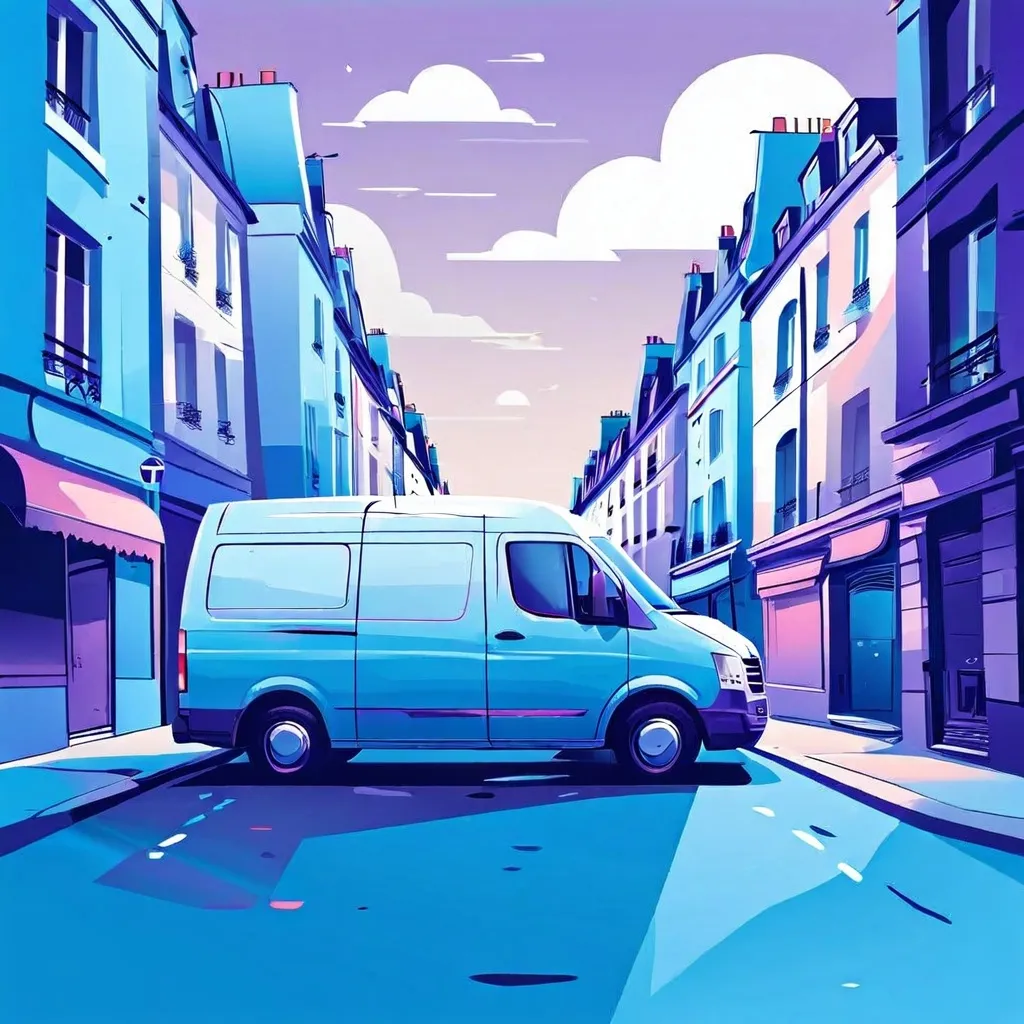
Article content overview
Navigating the bustling urban centres of France presents unique challenges for all road users, but particularly for those operating delivery vehicles. The efficiency of commerce relies heavily on timely deliveries, yet this must be achieved without compromising the safety and flow of general traffic. Understanding the specific regulations within the French Code de la route concerning delivery vehicles, the judicious use of double parking, and the overarching principle of driver courtesy is paramount. This knowledge is not only crucial for daily operations but is also a key component of success in the French driving theory examination, the Épreuve Théorique Générale (ETG).
Delivery vehicles, encompassing vans, trucks, and smaller commercial cars, are the lifeblood of urban economies, ensuring goods reach businesses and consumers. However, their frequent stops and starts, often in already congested areas, can exacerbate traffic flow issues. The French driving theory curriculum places significant emphasis on how these vehicles should operate, focusing on minimising disruption while adhering strictly to the law. Drivers must be acutely aware of their responsibilities, not only to make their deliveries but also to co-exist safely and efficiently with other road users, including pedestrians, cyclists, and other motorists. This requires a keen understanding of spatial awareness, particularly regarding the larger blind spots inherent in commercial vehicles, and the implications of their size and manoeuvrability in confined city streets.
The Code de la route provides specific guidelines for delivery operations to manage these challenges. These rules are designed to balance the necessity of deliveries with the broader need for traffic order and safety. For the purposes of the ETG, learners must demonstrate an understanding of how these vehicles are permitted to behave, under what specific conditions, and what actions are absolutely forbidden. This includes recognising the importance of pre-planning routes, understanding designated loading and unloading zones, and being aware of local arrêt et stationnement (stopping and parking) regulations that might differ from standard rules in urban environments.
Double parking, the act of stopping or parking a vehicle adjacent to another parked vehicle, is a situation that frequently arises with delivery vehicles needing to access kerbside premises. In France, as in many countries, double parking is generally prohibited and can result in penalties, including fines and loss of points on the permis de conduire. However, the Code de la route does allow for limited exceptions, particularly for delivery services, but these are strictly defined and require precise adherence to conditions to be legal. The key distinction often lies in whether the vehicle causes an obstruction or significant danger to other road users.
When double parking is permitted, it is typically only for the absolute minimum time required to complete a delivery or collection. The vehicle must not impede the passage of other vehicles, especially emergency services or public transport. Drivers are expected to remain with their vehicle, ready to move it at any moment, and to activate hazard warning lights to alert other drivers to their presence and temporary obstruction. The presence of a driver ready to move the vehicle is a critical factor in distinguishing a potentially tolerated manoeuvre from an illegal obstruction. The theory exam often tests this by presenting scenarios where a driver must decide if double parking is a viable option, with the correct answer usually highlighting the immediate risks or legal prohibitions.
In French urban traffic, double parking is an exceptional measure. Unless explicitly permitted by signage or a traffic officer, and only when it does not obstruct traffic flow or pose a danger, it is considered an infringement of the Code de la route. Always prioritize not impeding other vehicles, especially emergency services.
Beyond the strict letter of the law, effective urban driving in France, especially for delivery personnel, hinges on a strong sense of road etiquette and mutual patience. Congested city streets are stressful environments where delays are inevitable. Demonstrating patience and courtesy towards other road users can significantly improve traffic flow and reduce the likelihood of road rage incidents. This includes allowing other vehicles to merge when appropriate, not unnecessarily blocking intersections, and being considerate of cyclists and pedestrians who often share these spaces.
For drivers of larger vehicles, understanding the concept of "anticipation" is crucial. This means looking ahead, predicting potential hazards or traffic slowdowns, and adjusting speed and position accordingly. For instance, anticipating a narrowing of the road or a known bottleneck allows a driver to position their vehicle proactively, perhaps yielding to smaller vehicles or single-occupancy cars that might be able to navigate the space more easily. The theory exam may ask questions about maintaining a safe distance, observing other road users' intentions, and adapting one's driving to suit conditions, all of which fall under the umbrella of good urban road etiquette.
The French driving theory places a strong emphasis on hazard perception, and this is amplified in urban settings with delivery vehicles. The large blind spots, or angles morts, of trucks and vans are a significant concern. These blind spots can completely obscure vulnerable road users like cyclists, motorcyclists, and pedestrians, creating dangerous situations during turns or lane changes.
French urban areas often feature specific zones or regulations designed to manage traffic and environmental impact. Low Emission Zones (Zones à Faibles Émissions - ZFE) are becoming increasingly common, restricting access for vehicles that do not meet certain emission standards, often indicated by a Crit'Air sticker. Delivery vehicle operators must be aware of these zones, their entry requirements, and any specific times during which deliveries are permitted. Failure to comply can lead to substantial fines and operational disruption.
Furthermore, many cities have designated loading and unloading zones. These are typically marked with specific signage and have time limits. While these zones are intended to facilitate deliveries, they can become points of contention if not used correctly. Drivers must ensure they are parked within the designated bay, not exceeding the permitted time, and not obstructing access to other services or residential areas. The Code de la route emphasizes the importance of respecting these zones to prevent a free-for-all that would paralyse urban traffic.
The search for parking for a delivery vehicle in a busy city can be a significant challenge. In situations where dedicated loading zones are occupied or unavailable, drivers might consider alternatives, but always within the legal framework. For instance, if a specific delivery requires stopping on a street with double yellow lines, this is unequivocally forbidden. However, on streets with single yellow lines, stopping might be permitted during specific hours, often outside of peak traffic times, but parking is usually prohibited. These nuances are critical for the ETG, as questions will often probe a driver's ability to correctly interpret parking and stopping restrictions in varied urban contexts.
One of the most critical aspects of driving larger vehicles in urban environments, particularly for delivery purposes, relates to angles morts (blind spots). These are areas around the vehicle that the driver cannot see directly in their mirrors or through the windows. For a truck or a large van, these blind spots are significantly larger and more numerous than for a passenger car. This poses a severe risk to vulnerable road users, such as pedestrians crossing behind the vehicle when it reverses, or cyclists riding alongside when the vehicle intends to turn.
The French driving theory extensively covers hazard perception related to blind spots, especially when discussing larger vehicle categories like C (trucks). Understanding where these blind spots are located – typically to the rear, sides, and directly in front of the vehicle – is essential. Drivers are trained to perform thorough checks, including visually scanning all angles, before initiating any manoeuvre, especially reversing or turning. This often involves using mirrors specifically designed to mitigate blind spots and, where possible, having a second person assist with signalling or spotting.
When driving or observing vehicles with significant blind spots, always assume the driver may not see you. Maintain a safe distance, make yourself visible, and never try to squeeze past large vehicles that are signalling to turn or manoeuvre.
The Épreuve Théorique Générale (ETG) assesses a broad range of knowledge, and urban driving scenarios, including those involving delivery vehicles and their associated challenges, are frequently tested. Questions often focus on interpreting road signs related to parking and stopping, understanding priority rules in complex urban intersections, and assessing the risks posed by different road users. Specific emphasis is placed on recognizing situations where a vehicle's size or function (like a delivery truck) might necessitate different considerations or grant specific, albeit limited, privileges.
Learners are expected to understand the implications of environmental regulations, such as ZFE zones and Crit'Air stickers, and how these affect vehicle access and operation in cities. Questions related to double parking will typically test the driver's understanding of when it is permissible and, more importantly, when it is strictly forbidden due to obstruction or danger. The exam also probes the driver's ability to demonstrate courtesy and anticipation, essential components of safe and efficient urban traffic management in France. Mastering these concepts is key to achieving a passing score and, more importantly, to becoming a safe and responsible driver on French roads.
This article covers the essential French urban driving rules for delivery vehicle operations, with particular focus on the strict conditions governing double parking, which is generally prohibited unless for the absolute minimum time with hazard lights active and the driver ready to move. The content explains how Low Emission Zones (ZFE) and Crit'Air stickers affect vehicle access in French cities, and emphasizes the critical danger of blind spots (angles morts) on larger commercial vehicles that require constant vigilance around vulnerable road users. Learners must understand that designated loading zones have time limits and specific signage requirements, while single versus double yellow lines determine whether brief stopping is permitted. These concepts frequently appear in the ETG exam, testing both legal knowledge and hazard perception skills for urban driving.
A short set of high-value points that capture the most important ideas from this article.
Double parking in France is generally prohibited but may be tolerated only for the minimum time needed to complete a delivery with the driver remaining ready to move
Drivers of delivery vehicles must remain with their vehicle and activate hazard lights when temporarily stopping, distinguishing legal brief stops from illegal obstructions
Low Emission Zones (ZFE) restrict delivery vehicle access based on Crit'Air emissions stickers, which delivery drivers must display and understand
Angles morts (blind spots) on larger vehicles pose severe risks to vulnerable road users, requiring thorough visual checks before any manoeuvre
Designated loading and unloading zones have specific time limits and signage that must be strictly respected to avoid penalties
The presence of a driver ready to move the vehicle is the critical factor distinguishing a tolerated brief stop from an illegal obstruction
Double parking is prohibited unless signage explicitly permits it or a traffic officer authorizes it, and it must never obstruct emergency services or public transport
Single yellow lines may allow stopping (not parking) outside peak hours, while double yellow lines prohibit all stops
Critical'Air stickers classify vehicles by emissions level and determine access to ZFE restricted urban areas
Larger vehicles have significantly larger blind spots to the rear, sides, and front that can completely obscure cyclists, pedestrians, and motorcyclists
Assuming double parking is always permitted for deliveries without checking signage or understanding the strict time and presence requirements
Confusing stopping (arrêt) with parking (stationnement) — stopping is brief and does not require leaving the vehicle, parking involves leaving the vehicle
Entering a ZFE without the required Crit'Air sticker, resulting in fines even if the vehicle is technically compliant inside the zone
Failing to perform thorough visual checks for blind spots before turning or reversing, especially in urban environments with many cyclists and pedestrians
Blocking intersections or bus stops when making deliveries, which are clear obstructions under the Code de la route
Article content overview
A short set of high-value points that capture the most important ideas from this article.
Double parking in France is generally prohibited but may be tolerated only for the minimum time needed to complete a delivery with the driver remaining ready to move
Drivers of delivery vehicles must remain with their vehicle and activate hazard lights when temporarily stopping, distinguishing legal brief stops from illegal obstructions
Low Emission Zones (ZFE) restrict delivery vehicle access based on Crit'Air emissions stickers, which delivery drivers must display and understand
Angles morts (blind spots) on larger vehicles pose severe risks to vulnerable road users, requiring thorough visual checks before any manoeuvre
Designated loading and unloading zones have specific time limits and signage that must be strictly respected to avoid penalties
The presence of a driver ready to move the vehicle is the critical factor distinguishing a tolerated brief stop from an illegal obstruction
Double parking is prohibited unless signage explicitly permits it or a traffic officer authorizes it, and it must never obstruct emergency services or public transport
Single yellow lines may allow stopping (not parking) outside peak hours, while double yellow lines prohibit all stops
Critical'Air stickers classify vehicles by emissions level and determine access to ZFE restricted urban areas
Larger vehicles have significantly larger blind spots to the rear, sides, and front that can completely obscure cyclists, pedestrians, and motorcyclists
Assuming double parking is always permitted for deliveries without checking signage or understanding the strict time and presence requirements
Confusing stopping (arrêt) with parking (stationnement) — stopping is brief and does not require leaving the vehicle, parking involves leaving the vehicle
Entering a ZFE without the required Crit'Air sticker, resulting in fines even if the vehicle is technically compliant inside the zone
Failing to perform thorough visual checks for blind spots before turning or reversing, especially in urban environments with many cyclists and pedestrians
Blocking intersections or bus stops when making deliveries, which are clear obstructions under the Code de la route
Explore related topics, search based questions, and concepts that learners often look up when studying French Urban Delivery & Traffic Rules. These themes reflect real search intent and help you understand how this topic connects to wider driving theory knowledge in France.
Find clear and practical answers to common questions learners often have about French Urban Delivery & Traffic Rules. This section helps explain difficult points, remove confusion, and reinforce the key driving theory concepts that matter for learners in France.
Double parking for delivery vehicles in France is generally prohibited unless explicitly permitted by local signage or traffic authorities for very short durations, typically to load or unload goods. Drivers must ensure they do not obstruct traffic flow or create hazards.
The Code de la route mandates that all vehicles, including delivery vehicles, must not impede traffic. Drivers are expected to use designated loading zones where available and exercise patience and courtesy to manage congestion.
Delivery drivers are expected to be particularly considerate, anticipate the movements of other road users (pedestrians, cyclists, motorcyclists), signal intentions clearly, and avoid aggressive driving behaviours to ensure safety and smooth traffic flow.
Yes, many French cities have designated loading and unloading zones with specific time restrictions. Drivers must pay close attention to local signage (e.g., 'Zone de Livraison') to comply with these regulations and avoid fines.
The French theory exam assesses knowledge of all traffic rules, including specific situations like those involving delivery vehicles in urban areas. Understanding these rules demonstrates awareness of traffic management and safety priorities, which are key exam topics.
Continue your preparation for the French permis de conduire exam. Dive deeper into specific Code de la route sections, practice scenarios, or review official procedures. Use our comprehensive article collection to master every aspect of driving theory.