
This unit provides the essential foundation for obtaining your Category AM licence in France. You will explore the legal requirements for operating cyclomoteurs, scooters, and light quadricycles while learning to navigate French traffic with safety and confidence.
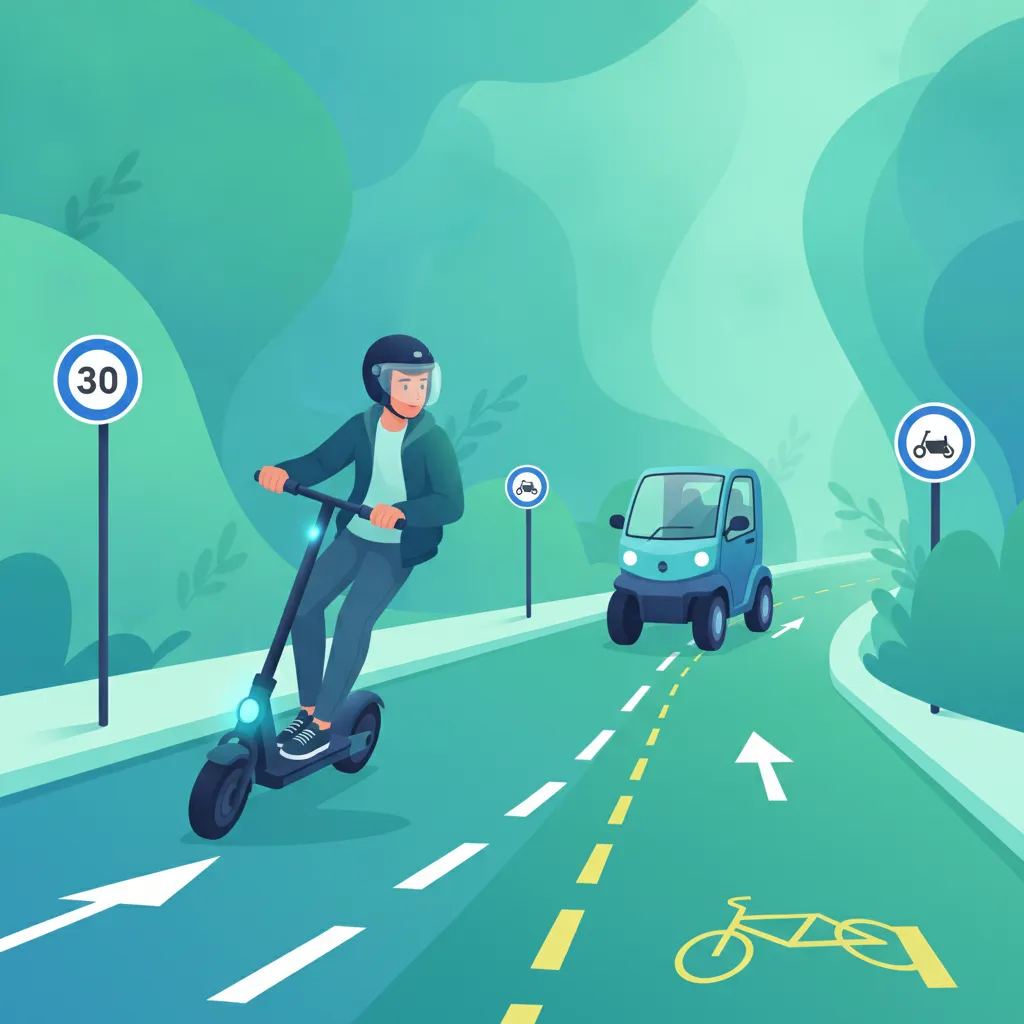
Browse all lessons that make up AM Licence Basics and Small Vehicle Responsibility. Each lesson focuses on specific topics, learning objectives, and core concepts, helping you build essential knowledge and follow a clear, structured progression toward your study goals in France.
Learners are introduced to the specific vehicle categories encompassed by the AM licence, focusing on cyclomoteurs, scooters, and light quadricycles, and their defining technical specifications. The lesson details the criteria such as engine displacement, maximum speed, and weight restrictions that determine vehicle eligibility for this licence category in France. By understanding these classifications, learners can accurately identify vehicles they are permitted to operate, ensuring compliance with French traffic regulations.
This lesson outlines the complete administrative process required to obtain an AM licence, from acquiring a NEPH number through the ANTS portal to registering for the theoretical exam. Learners will gain insight into the necessary documentation, the role of France Titres in the licence issuance, and the legal obligations that accompany licence acquisition. Understanding this framework ensures that candidates are prepared for both the procedural and legal aspects of becoming licensed AM drivers in France.
Learners explore the specific responsibilities that accompany operating a small, exposed vehicle, emphasizing the need for heightened defensive driving techniques under French law. The lesson stresses the importance of maintaining visibility and predictability, adhering strictly to the Code de la route, and understanding the dynamics of sharing the road safely. By internalizing these responsibilities, riders can significantly reduce risks and contribute to a safer traffic environment for all users.
This lesson focuses on the inherent vulnerability of AM vehicles due to their limited mass, exposure, and visibility within mixed traffic flows on French roads. Learners will examine how blind spots, sudden lane changes by larger vehicles, and higher impact severity affect small vehicle safety. The content underscores the necessity for riders to adopt proactive safety measures, maintain safe distances, and be constantly aware of surrounding traffic dynamics.
In this lesson, learners receive an overview of the Code de la route, with a focus on rules and regulations directly applicable to AM licence holders. Topics include specific speed limits for light vehicles, priority rules, permissible road markings, and mandatory lighting requirements. By mastering these particularities, riders will be equipped to navigate French roads safely and legally, ensuring full compliance with national traffic standards.
Explore high-intent keywords and long-tail search topics learners use when researching AM Licence Basics and Small Vehicle Responsibility. These terms reflect how people search for reliable study materials, structured explanations, and unit-level theory preparation support in France.
Find clear answers to the most common questions learners ask about AM Licence Basics and Small Vehicle Responsibility. Understand how the unit is organized, what learning goals it supports, and how it contributes to your study progression with structured explanations and practical guidance tailored for learners in France.
The AM licence allows you to drive cyclomoteurs (up to 50cc) and light quadricycles. This includes scooters and small motorized vehicles designed for one or two passengers.
In France, you can begin the process for the AM licence from the age of 14. You must complete the required theoretical and practical training modules to be eligible.
The AM licence is a specific category for light motorized vehicles and is distinct from the Category B (car) licence. It focuses on the specific safety and operational needs of two-wheeled or light four-wheeled vehicles.
Yes, all motorized vehicles, including scooters and cyclomoteurs, must be registered in the official French system. You must display your registration plate clearly at all times.
All included lessons
Lessons in AM Licence Basics and Small Vehicle Responsibility
See who benefits most from studying AM Licence Basics and Small Vehicle Responsibility. This overview explains how the unit supports different learning needs, what level of knowledge is helpful before starting, and how it fits into the overall study path in France.
This unit is designed for beginners pursuing their first driving qualification in France. It is also highly beneficial for anyone needing a refresher on the regulatory framework governing small motorized vehicles under the Code de la route.

Begin your structured journey towards passing the French ETG exam by exploring our comprehensive driving theory curriculum. Each course is designed to guide you through the Code de la route, ensuring you gain the knowledge and confidence for exam success. Find your ideal study path now.
Explore Theory CurriculumExplore all units and lessons included in this driving theory course.
Begin your structured journey towards passing the French ETG exam by exploring our comprehensive driving theory curriculum. Each course is designed to guide you through the Code de la route, ensuring you gain the knowledge and confidence for exam success. Find your ideal study path now.
Explore Theory Curriculum