
Extent plates are crucial traffic signs that tell you the distance over which a particular hazard, instruction, or restriction remains in effect. They help you understand whether a condition is short-lived or applies for a significant stretch of road. Learning to interpret these signs correctly is vital for both your theory test success and for navigating traffic safely.
An explanation of how France Extent Plates road signs apply in real traffic situations in France. Learn where these signs are typically placed, what drivers are expected to do when they appear, and how correct reactions help you stay safe, avoid fines, and succeed in your French driving theory exam.
Extent plates, most commonly the M2 sign, are used in conjunction with other traffic signs to clarify the length of their application. You will frequently encounter them alongside signs indicating speed limits, parking restrictions, or warnings about specific road features like sharp curves or roadworks. For example, a speed limit sign might be accompanied by an extent plate showing '500m', meaning the reduced speed must be maintained for the next 500 metres. Similarly, a sign warning of falling rocks might have an extent plate to indicate the section of road where this danger is present. Drivers must pay close attention to these plates to know when a rule or hazard begins and, more importantly, when it ends, allowing them to resume normal speed or behaviour only after passing the indicated distance.
An overview of the key learning outcomes when studying the France Extent Plates road sign category. Understand the main concepts, sign meanings, and traffic situations covered here so you can recognise patterns, answer theory questions more confidently, and build a solid foundation for safe driving in France.
Master French extent plates, crucial for understanding how long traffic rules and warnings are in effect. These signs, often paired with speed limits or restrictions, clarify the distance or duration of their application, aiding your theory test revision and safe driving practices in France.
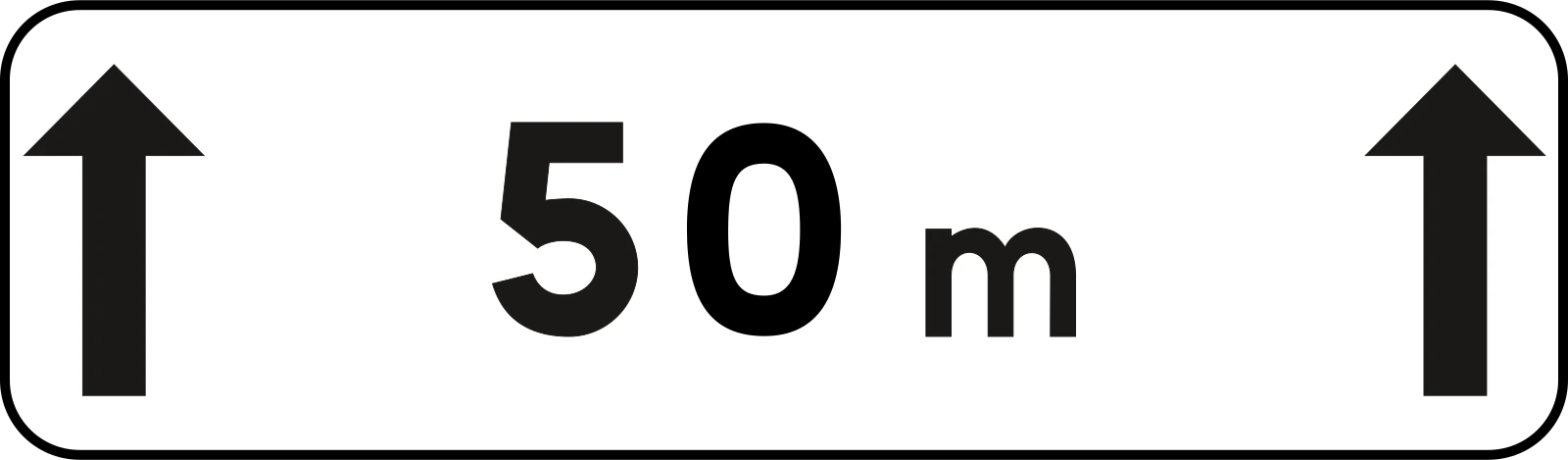
The M2 Extent sign clarifies how long a hazard or restriction lasts.
Clear answers to common questions about the France Extent Plates road sign category. Use this FAQ to review tricky rules, understand how these signs appear in exam scenarios, and remove confusion that often leads to mistakes in the French driving theory exam in France.
The main purpose of an extent plate is to inform drivers about the distance over which a preceding sign's instruction or warning is valid. It clarifies the duration of a restriction, hazard, or special rule, helping drivers to adjust their behaviour accordingly and know when the condition will cease.
Extent plates typically display a distance, such as '500m' or '1km', and are placed directly beneath the primary traffic sign they modify. The most common type is the M2 extent plate, which simply shows the distance in metres. They are rectangular and designed to be easily readable when mounted below another sign.
If you see a speed limit sign combined with an extent plate showing a distance (e.g., 70 km/h with '300m' below it), it means you must adhere to that reduced speed limit for the specified 300 metres. After you have travelled that distance, the speed limit indicated by the extent plate no longer applies, unless another sign overrides it. Always be aware of your surroundings and look for signs indicating the end of the restriction.
Extent plates are most commonly used with regulatory signs (like speed limits or parking restrictions) and warning signs. Their primary function is to add specificity regarding the length of application, so they are typically paired with signs that impose a condition or alert to a danger over a certain distance rather than simple information signs.
You know the restriction ends when you have travelled the distance indicated on the extent plate. Often, there might be a supplementary sign or the end of the road section associated with the warning or restriction. If in doubt, continue to adhere to the restriction until you see a sign indicating its cancellation or a change in conditions.
Ready to deepen your understanding of French road signs? Dive into our comprehensive overview of official sign categories and groups. This structured approach will help you learn Code de la route classifications more effectively, preparing you thoroughly for your Permis de Conduire theory exam.
Explore Sign Categories