Traffic lights are fundamental devices for orderly traffic flow and preventing accidents, especially at busy intersections. This page details the specific meaning of red, yellow, and green lights as per the Code de la route, including important distinctions for turning arrows and the unique rule for a flashing yellow light. Pay close attention to the yellow light phase, as it often causes confusion for new drivers.
Theory topic content overview
Read the full theory topic guide for Traffic Light Rules with structured, easy-to-scan content built for learners in France. This detailed section explains the exact rule, meaning, traffic context, comparison points, and exam logic behind this French driving theory topic so you can study faster, understand the concept more clearly, and avoid common interpretation mistakes on the theory test.
Traffic lights, known as feux de signalisation or simply feux in France, are indispensable tools for managing vehicle and pedestrian flow, primarily at intersections, but also at other critical points like railway crossings or pedestrian zones. Governed by the Code de la route, these signals are designed to prevent collisions, organize traffic, and ensure safety for all road users. Understanding their precise meaning and your required response is fundamental for safe driving and a key component of your French driving theory exam (ETG).
Misinterpreting traffic light signals, particularly the yellow light phases, is a common source of accidents and test failures. This section will clarify each signal, its implications, and specific French road rules.
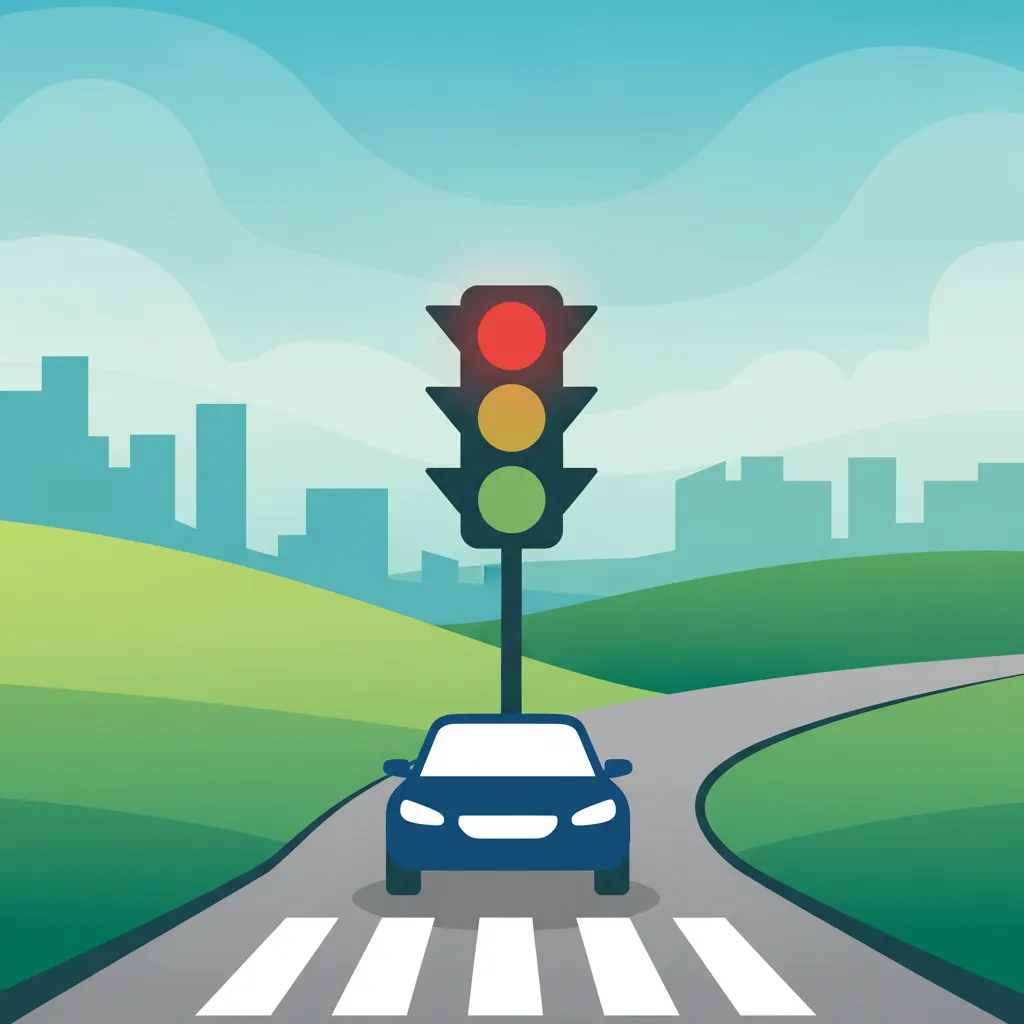
Each color carries a specific instruction that drivers must obey without exception.
A green light indicates that you may proceed through the intersection or along the road, provided it is safe to do so.
The yellow light, or feu jaune (sometimes called feu orange in informal speech), is a transitional signal indicating that the light is about to turn red. It requires a critical decision from the driver.
A red light, or feu rouge, means you must stop.
Many traffic lights in France include arrow signals that regulate traffic flow for specific directions (e.g., straight, left turn, right turn).
This is a particularly important and often misunderstood signal in French driving, explicitly differentiating it from a steady yellow light.
Understanding these nuances is vital for both your ETG exam and safe driving on French roads.
Learners frequently make mistakes related to traffic lights, often due to misinterpretation or lack of anticipation.
In France, traffic lights are more than just stop-and-go signals; they are integral to a precise system of traffic management. Your success in the driving theory exam (ETG) and your safety on the road depend on your ability to:
Mastering traffic light rules according to the Code de la route ensures smooth, safe driving and a confident approach to French intersections.
French traffic lights regulate vehicle and pedestrian flow at intersections according to the Code de la route, with each color carrying a specific legal instruction: green permits safe movement, yellow warns of an imminent red requiring a safe stop decision, and red demands an absolute stop before the ligne d'arrêt. The most critical distinction for French learners is between a steady yellow light (prepare to stop) and a flashing yellow light (give way and proceed with caution, often reverting to priorité à droite rules). Turning arrows grant priority for specific movements but still require confirmation the path is clear, and a green light never overrides your responsibility to avoid blocking the intersection or failing to see vulnerable road users.
A short set of high-value points that capture the most important ideas from this theory explanation.
A green light permits proceeding, but you must always check the intersection is clear and never block cross-traffic by entering when congested.
A yellow light means prepare to stop safely; only proceed if you are too close to stop without causing danger to yourself or following traffic.
A flashing yellow light is not a 'go' signal—it requires giving way to other vehicles, often invoking priorité à droite at unregulated intersections.
Turning arrows grant priority for that specific movement, but you must still confirm the path is safe before proceeding.
In France, turning right on red is prohibited unless a specific green arrow or signal permits it.
Steady yellow = prepare to stop; Flashing yellow = give way and proceed with extreme caution.
Green light does not give absolute priority; always watch for pedestrians, cyclists, and vehicles that may be obstructing.
Stop before the ligne d'arrêt (stop line) at red or yellow lights; blocking the intersection is an infringement.
When turning left on green without an arrow, give way to oncoming traffic proceeding straight or turning right.
Red light violations in France result in significant fines and penalty points on your permis de conduire.
Speeding up to 'beat' a yellow light instead of preparing to brake safely for the red phase.
Treating a flashing yellow light as a priority signal and failing to apply priorité à droite rules.
Entering an intersection on green without confirming there is space to clear, causing gridlock.
Assuming a green light means the path is completely clear and forgetting to watch for pedestrians still crossing or cyclists.
Proceeding straight through an intersection when only a directional green arrow for a turn is illuminated.
Start with a short, direct summary of Traffic Light Rules before reading the full explanation below.
In France, traffic lights regulate vehicle and pedestrian flow at intersections using red, yellow, and green signals. A red light means stop, a green light means proceed when safe, and a yellow light indicates the signal is changing, requiring you to stop if safe to do so. A flashing yellow light means give way and proceed with caution. Always pay attention to specific arrow signals for turns to ensure you proceed correctly and safely.
Review the most important terms, rule signals, and traffic concepts linked to Traffic Light Rules.
Explore related theory topic pages connected to Traffic Light Rules and continue with the next useful rule explanation.
See the common search queries learners use when trying to understand Traffic Light Rules in France.

Continue your journey by exploring specific French driving theory topics, from road signs and priority rules to vehicle safety and administrative procedures. Deepen your understanding of the Code de la route and prepare effectively for your permis de conduire ETG exam to ensure success and safe driving practices.
French Driving Theory Topics & RulesTheory topic content overview
A short set of high-value points that capture the most important ideas from this theory explanation.
A green light permits proceeding, but you must always check the intersection is clear and never block cross-traffic by entering when congested.
A yellow light means prepare to stop safely; only proceed if you are too close to stop without causing danger to yourself or following traffic.
A flashing yellow light is not a 'go' signal—it requires giving way to other vehicles, often invoking priorité à droite at unregulated intersections.
Turning arrows grant priority for that specific movement, but you must still confirm the path is safe before proceeding.
In France, turning right on red is prohibited unless a specific green arrow or signal permits it.
Steady yellow = prepare to stop; Flashing yellow = give way and proceed with extreme caution.
Green light does not give absolute priority; always watch for pedestrians, cyclists, and vehicles that may be obstructing.
Stop before the ligne d'arrêt (stop line) at red or yellow lights; blocking the intersection is an infringement.
When turning left on green without an arrow, give way to oncoming traffic proceeding straight or turning right.
Red light violations in France result in significant fines and penalty points on your permis de conduire.
Speeding up to 'beat' a yellow light instead of preparing to brake safely for the red phase.
Treating a flashing yellow light as a priority signal and failing to apply priorité à droite rules.
Entering an intersection on green without confirming there is space to clear, causing gridlock.
Assuming a green light means the path is completely clear and forgetting to watch for pedestrians still crossing or cyclists.
Proceeding straight through an intersection when only a directional green arrow for a turn is illuminated.
Start with a short, direct summary of Traffic Light Rules before reading the full explanation below.
In France, traffic lights regulate vehicle and pedestrian flow at intersections using red, yellow, and green signals. A red light means stop, a green light means proceed when safe, and a yellow light indicates the signal is changing, requiring you to stop if safe to do so. A flashing yellow light means give way and proceed with caution. Always pay attention to specific arrow signals for turns to ensure you proceed correctly and safely.
Review the most important terms, rule signals, and traffic concepts linked to Traffic Light Rules.
Explore related theory topic pages connected to Traffic Light Rules and continue with the next useful rule explanation.
See the common search queries learners use when trying to understand Traffic Light Rules in France.
Continue your journey by exploring specific French driving theory topics, from road signs and priority rules to vehicle safety and administrative procedures. Deepen your understanding of the Code de la route and prepare effectively for your permis de conduire ETG exam to ensure success and safe driving practices.
French Driving Theory Topics & RulesUse this exam-focused revision tip to understand how Traffic Light Rules is likely to appear in theory questions for learners in France. This section helps you identify the most testable part of the rule, avoid common traps, and remember the concept more effectively during French driving theory exam preparation.
Pay special attention to the yellow light (feu jaune) and flashing yellow light (feu jaune clignotant) rules. Learners often confuse these or misjudge when it's safe to stop. Remember: 'yellow means prepare to stop safely' and 'flashing yellow means give way and proceed with extreme caution, often indicating priority to the right'.
Read direct answers to the most common learner questions about Traffic Light Rules in France. This FAQ focuses on rule confusion, practical meaning, comparison with similar concepts, and the exact uncertainties that appear most often in French driving theory revision and exam preparation.
A red light (feu rouge) means you must stop before the stop line. A yellow light (feu jaune) means the signal is about to change to red, so you must stop unless it is unsafe to do so. A green light (feu vert) means you may proceed, provided the intersection is clear and it is safe.
The Code de la route specifies that if the yellow light appears when you are already in the intersection or so close that stopping safely is impossible, you should proceed cautiously. Otherwise, you must stop before the intersection.
Arrowed traffic lights (feux de circulation à flèches) indicate that the signal applies only to the direction of the arrow. For example, a green arrow for turning left allows only left-turning traffic to proceed, even if the main light is red for straight-ahead traffic.
Yes, a flashing yellow light at an intersection or junction means you must give way to traffic from your right or traffic already in the intersection, and proceed with extreme caution. It effectively warns of a potential hazard or converts the intersection into a priority-to-the-right situation.
Traffic lights often work in conjunction with pedestrian signals (feux pour piétons). When vehicle traffic has a red light, pedestrians usually have a green signal to cross. Drivers must always be aware of pedestrians, even on a green light, and yield if they are crossing.
Running a red light (franchir un feu rouge) is a serious offense in France. It typically results in a significant fine, a reduction of six points from your permis de conduire, and potential suspension of your driving license, reflecting the high danger it poses.
Ready to focus your study? Use the practice search to find exactly the French driving theory questions you need for the Code de la route and permis de conduire ETG. Refine your knowledge on specific topics or challenging rules to boost your confidence and exam readiness.