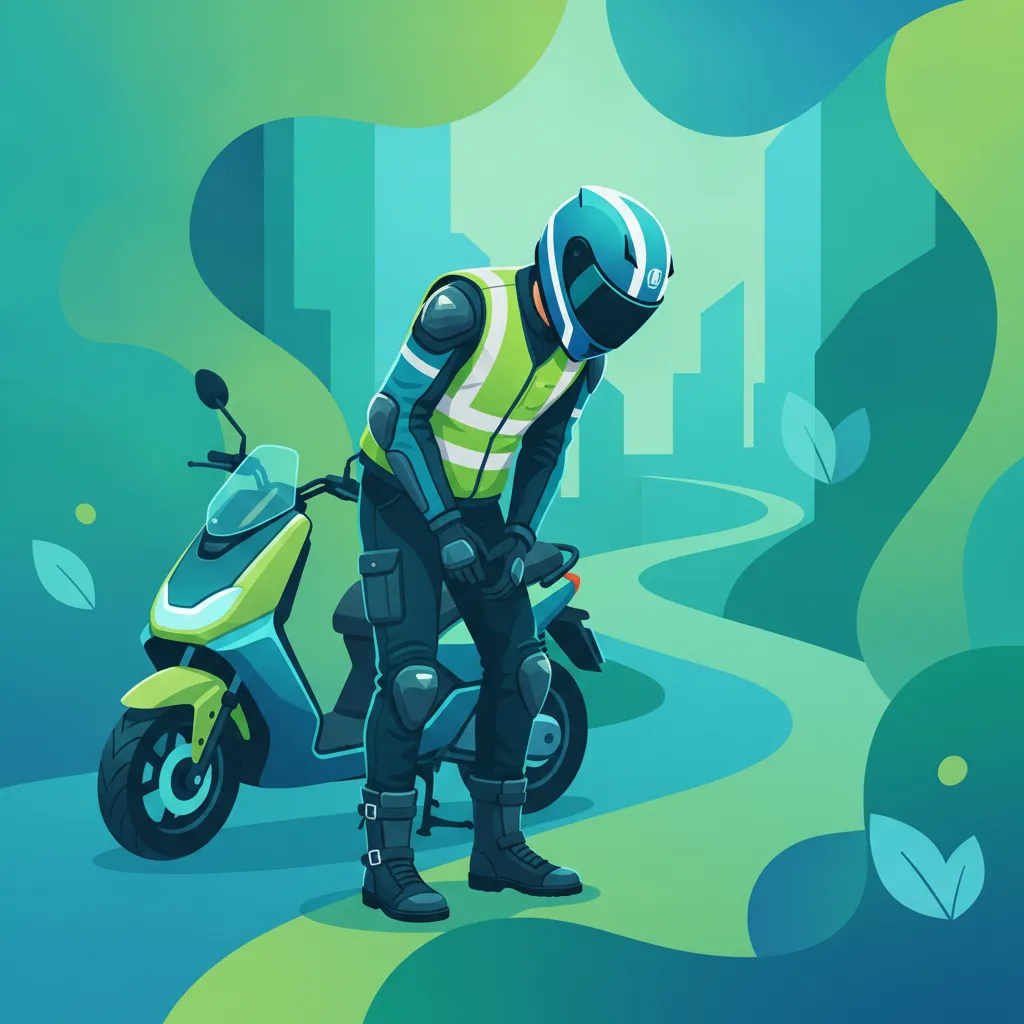
This unit focuses on the vital protective measures required for AM licence holders in France, ensuring you understand how to safeguard yourself on the road. You will cover the legal requirements for helmet usage, the importance of high-visibility gear, and how to adopt predictable, safe riding habits. Mastering these concepts is essential both for passing your theory exam and for your long-term safety as a rider.
Browse all lessons that make up Helmet, Visibility and Protective Behaviour. Each lesson focuses on specific topics, learning objectives, and core concepts, helping you build essential knowledge and follow a clear, structured progression toward your study goals in France.
Learners will explore the legal mandate for wearing a helmet while operating an AM vehicle, focusing on the specific protective standards that helmets must meet in France. The lesson details how to correctly fit a helmet, secure straps, and verify certification markings such as the CE label. Understanding these requirements is essential for compliance with French law and for maximizing head injury protection in the event of an accident.
This lesson focuses on the importance of wearing appropriate protective clothing and gear, such as jackets, CE-certified gloves, and durable boots, that meet safety standards for impact and abrasion resistance. Learners will examine the material properties that provide optimal protection while ensuring comfort and adaptability to various weather conditions. Selecting correct gear helps mitigate injury severity and promotes long-term safety habits among AM riders.
Learners will examine how the strategic use of lighting and reflectors significantly enhances rider visibility to other road users, especially in low-light conditions. The lesson outlines the legal requirements for front and rear lights, the benefits of daytime running lights, and the role of retroreflective strips on clothing. By following these guidelines, AM riders can improve their conspicuity, reducing the risk of collisions during both day and night riding in France.
This lesson addresses the distinct safety considerations for riding during daylight hours versus nighttime, covering topics such as managing glare from the sun and ensuring adequate lighting after dark. Learners will learn strategies to maintain visibility, stay alert, and adapt riding techniques to varying light conditions, including the use of reflective gear. Emphasis is placed on proactive planning to mitigate risks associated with reduced visibility, thereby fostering safe riding practices.
Learners will focus on the importance of clear and consistent signalling to convey intentions to other road users, thereby enhancing predictability and safety on French streets. The lesson covers both hand signals and vehicle indicators, detailing correct usage, timing, and the legal obligations associated with each. By mastering these communication techniques, AM riders can reduce misunderstandings and potential conflicts, contributing to a smoother traffic flow.
Explore high-intent keywords and long-tail search topics learners use when researching Helmet, Visibility and Protective Behaviour. These terms reflect how people search for reliable study materials, structured explanations, and unit-level theory preparation support in France.
Find clear answers to the most common questions learners ask about Helmet, Visibility and Protective Behaviour. Understand how the unit is organized, what learning goals it supports, and how it contributes to your study progression with structured explanations and practical guidance tailored for learners in France.
You must wear a helmet that is officially approved (homologated) according to current European or French standards. It must be securely fastened, and if it is an open-face helmet, it must be used with an eye-protection visor or goggles that meet safety regulations.
While specific reflective clothing rules may vary, it is strongly advised to wear high-visibility gear, especially at night or in low light. In the context of the Code de la route, ensuring you are visible is a critical component of your duty to act as a responsible and defensive road user.
Because AM vehicles are often smaller and less conspicuous than cars, clear and early signalling is vital to let other drivers know your intentions. Failure to signal or signalling late significantly increases the risk of collisions at intersections or when changing lanes.
The exam frequently tests your knowledge on the specific equipment requirements and safety obligations for motorized two-wheelers. By mastering the details of protective gear and signalling as per the Code de la route, you will be able to answer these practical safety questions with confidence.
All included lessons
Lessons in Helmet, Visibility and Protective Behaviour
See who benefits most from studying Helmet, Visibility and Protective Behaviour. This overview explains how the unit supports different learning needs, what level of knowledge is helpful before starting, and how it fits into the overall study path in France.
This unit is designed for candidates pursuing the French Category AM licence, including those preparing for their first exam. It is also highly beneficial for current riders looking to refine their defensive riding knowledge and ensure full compliance with the Code de la route.

Begin your structured journey towards passing the French ETG exam by exploring our comprehensive driving theory curriculum. Each course is designed to guide you through the Code de la route, ensuring you gain the knowledge and confidence for exam success. Find your ideal study path now.
Explore Theory CurriculumExplore all units and lessons included in this driving theory course.
Begin your structured journey towards passing the French ETG exam by exploring our comprehensive driving theory curriculum. Each course is designed to guide you through the Code de la route, ensuring you gain the knowledge and confidence for exam success. Find your ideal study path now.
Explore Theory Curriculum