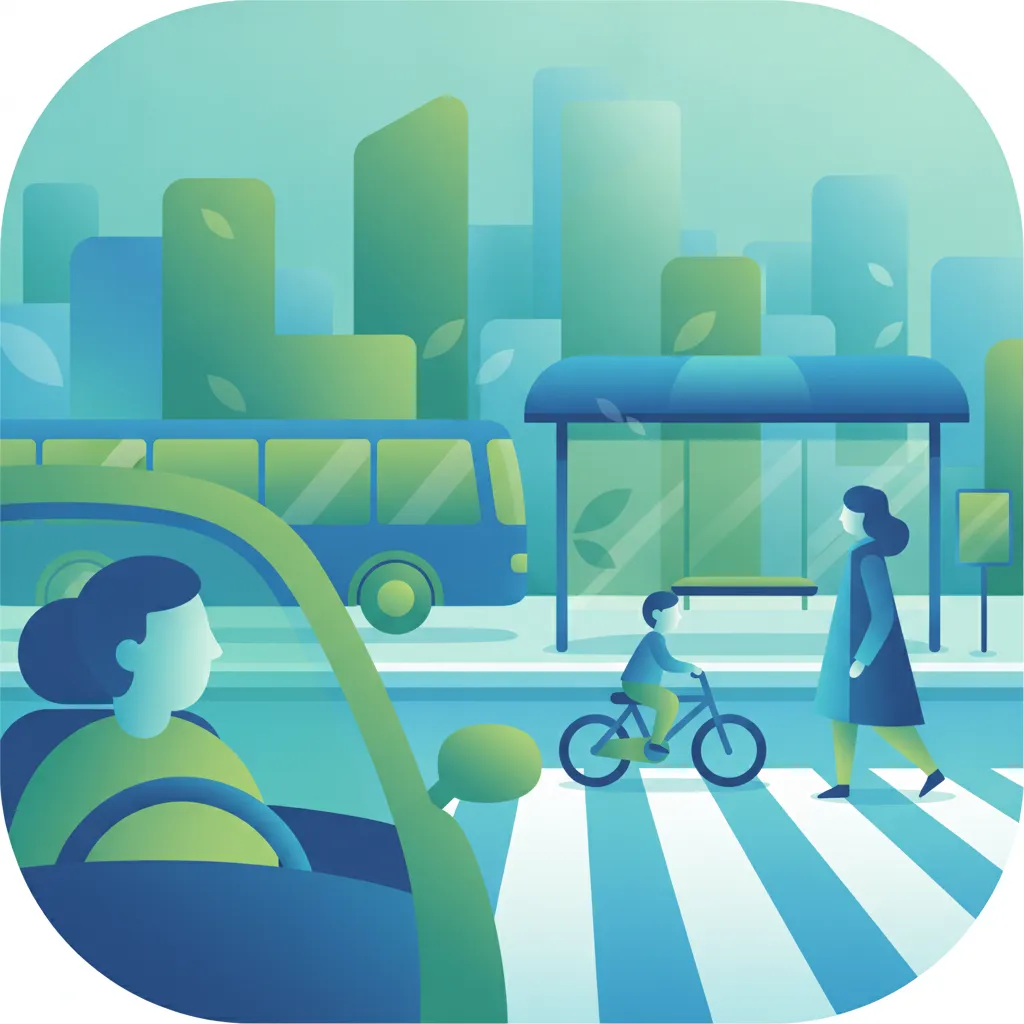
This unit focuses on the critical safety rules regarding vulnerable road users, including pedestrians, cyclists, children, and the elderly. You will learn how to safely navigate crossings, interact with public transport like trams and buses, and apply specific speed limits in high-risk zones. Mastering these defensive driving habits is essential for both your ETG theory exam and safe daily driving.
Browse all lessons that make up Pedestrians, Crossings, Cyclists and Vulnerable Road Users. Each lesson focuses on specific topics, learning objectives, and core concepts, helping you build essential knowledge and follow a clear, structured progression toward your study goals in France.
In France, pedestrians have clear legal priority when stepping onto or indicating an intent to use a crossing (passage pieton). This lesson details standard zebra crossings, refuge islands, and pedestrian crossings managed by synchronized traffic light systems. You will learn to scan crossings ahead, anticipate pedestrian movements, and safely come to a stop whenever a pedestrian attempts to cross.
Bicycles represent an eco-friendly transport method with specific rights on French public roadways. This lesson teaches you how to identify dedicated cycle paths, respect bike lanes, and understand cyclist turning privileges at intersections. You will learn the legal minimum safety distance required when overtaking a cyclist: 1 meter in urban areas and 1.5 meters outside city limits.
Public transit vehicles like city buses and streetcars (trams) have clear legal priorities and dedicated infrastructure in urban areas. This lesson teaches you to recognize reserved transit lanes and your legal obligation to yield to buses exiting their designated stops. You will also learn safe driving strategies near tram tracks, ensuring you never block public transit lines or risk passenger boarding areas.
Certain groups of road users require heightened defensive attention from drivers due to physical limitations or unpredictable behaviors. This lesson covers how to recognize signs of visual impairment (white canes), mobility challenges, and the unpredictability of young children. You will learn to reduce your speed, extend yielding patience, and proactively secure extra space to protect these vulnerable users.
French municipalities utilize distinct low-speed configurations to foster pedestrian safety in residential and educational neighborhoods. This lesson details speed restrictions in 'zone 30', pedestrian-only districts, and shared 'zones de rencontre' where speed is capped at 20 km/h. You will learn how priority hierarchies shift in these zones, giving pedestrians legal priority to use the entire roadway.
Explore high-intent keywords and long-tail search topics learners use when researching Pedestrians, Crossings, Cyclists and Vulnerable Road Users. These terms reflect how people search for reliable study materials, structured explanations, and unit-level theory preparation support in France.
Find clear answers to the most common questions learners ask about Pedestrians, Crossings, Cyclists and Vulnerable Road Users. Understand how the unit is organized, what learning goals it supports, and how it contributes to your study progression with structured explanations and practical guidance tailored for learners in France.
Yes, if a pedestrian has engaged in crossing the road or has clearly indicated their intention to cross, the driver must yield and allow them to pass. Failing to stop for a pedestrian at a crossing is a serious infraction in the French Code de la route.
Trams generally have priority and must not be obstructed. You must be extra cautious as they cannot swerve to avoid you and have long stopping distances, so always check for tram signals and tracks before turning.
While there is no single nationwide speed limit for all school zones, you are expected to slow down significantly and be prepared to stop instantly for children who may step into the road. Look for signage indicating specific speed reductions near schools.
You can overtake a cyclist, but you must maintain a lateral safety distance of at least 1.5 meters outside urban areas and 1 meter within urban areas. Always ensure the road is clear and it is safe to do so.
All included lessons
Lessons in Pedestrians, Crossings, Cyclists and Vulnerable Road Users
See who benefits most from studying Pedestrians, Crossings, Cyclists and Vulnerable Road Users. This overview explains how the unit supports different learning needs, what level of knowledge is helpful before starting, and how it fits into the overall study path in France.
This unit is designed for all Category B licence learners preparing for the French theory exam. It is especially beneficial for beginners building defensive driving habits and for those who want to improve their awareness of road safety beyond basic traffic signs.

Begin your structured journey towards passing the French ETG exam by exploring our comprehensive driving theory curriculum. Each course is designed to guide you through the Code de la route, ensuring you gain the knowledge and confidence for exam success. Find your ideal study path now.
Explore Theory CurriculumExplore all units and lessons included in this driving theory course.
Begin your structured journey towards passing the French ETG exam by exploring our comprehensive driving theory curriculum. Each course is designed to guide you through the Code de la route, ensuring you gain the knowledge and confidence for exam success. Find your ideal study path now.
Explore Theory Curriculum