
This final unit explores the critical responsibilities of a driver, focusing on the dangers of impaired driving and the importance of road safety. You will learn about legal substance limits, the consequences of distractions, and the French points-based licence system. Additionally, we provide essential guidance on handling road accidents and emergency situations effectively.
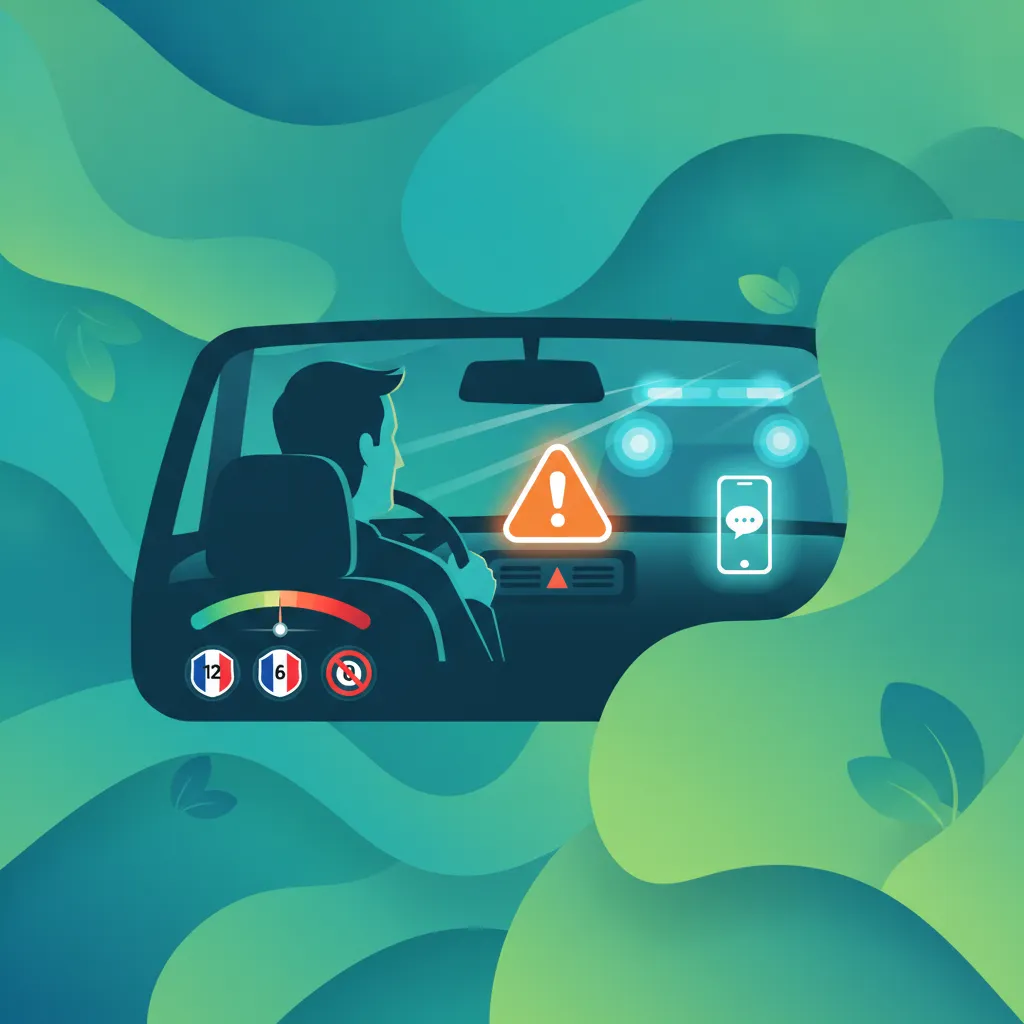
Browse all lessons that make up Alcohol, Drugs, Fatigue, Penalties, Emergencies and Responsible Driving. Each lesson focuses on specific topics, learning objectives, and core concepts, helping you build essential knowledge and follow a clear, structured progression toward your study goals in France.
Alcohol consumption severely impairs coordination, visual depth perception, decision-making capabilities, and physical reaction times. This lesson outlines the legal Blood Alcohol Concentration limits in France: 0.5 grams per liter for standard drivers, and 0.2 grams per liter for probationary drivers. You will learn how alcohol levels are measured by police breath tests and the severe penalties for driving over the limit.
Illegal narcotics and certain over-the-counter or prescription medications severely affect a driver's focus and neurological coordination. This lesson details drug screen procedures (saliva tests) and the zero-tolerance policy for driving under the influence of narcotics. You will also learn to read the standardized warning triangles on French pharmaceutical boxes, which classify medications from level one to three.
Fatigue and digital distractions are primary causes of motorway collisions, leading to severe lack of reaction time. This lesson teaches you to recognize early signs of drowsiness, such as heavy eyelids, frequent yawning, and wandering thoughts. It also highlights the strict bans on hand-held phone use or earphone kits, explaining the points penalties and safety risks associated with distracted driving.
Traffic violations in France entail direct points deductions, financial fines, and administrative actions managed online. This lesson explains how traffic offenses are classified and how points are deducted from your total allowance of twelve. You will learn the process for paying fines, how to formally contest a citation via official channels, and the rules for attending points-recovery training.
When encountering or participating in a road accident, following a strict safety protocol protects lives and prevents secondary crashes. This lesson covers the essential 'Protect, Alert, Rescue' (PAS) protocol, which involves wearing a yellow high-visibility vest, placing a warning triangle, and calling 112. You will also learn basic first-aid practices, how to secure victims, and the correct way to fill out an accident report.
Explore high-intent keywords and long-tail search topics learners use when researching Alcohol, Drugs, Fatigue, Penalties, Emergencies and Responsible Driving. These terms reflect how people search for reliable study materials, structured explanations, and unit-level theory preparation support in France.
Find clear answers to the most common questions learners ask about Alcohol, Drugs, Fatigue, Penalties, Emergencies and Responsible Driving. Understand how the unit is organized, what learning goals it supports, and how it contributes to your study progression with structured explanations and practical guidance tailored for learners in France.
For those on a probationary licence, the legal limit is 0.2 grams of alcohol per liter of blood, which essentially equates to a zero-tolerance policy. It is strictly recommended to avoid any alcohol consumption before driving to ensure safety and compliance with the Code de la route.
New drivers start with a probationary 6-point licence. Points are deducted for traffic violations, and failure to maintain these points or committing serious offenses can lead to licence invalidation or the requirement to attend mandatory road safety courses.
You must follow the PAS protocol: Protect the area, Alert the emergency services by calling 112, and Succor (provide basic first aid) only if you are trained and it is safe to do so. Always ensure your own safety before attempting to assist others.
No, it is illegal to use any device that requires wearing an earpiece, headset, or headphones while driving, as it distracts from the road. The use of hand-held mobile phones is also strictly prohibited and carries heavy penalties including points deduction.
All included lessons
Lessons in Alcohol, Drugs, Fatigue, Penalties, Emergencies and Responsible Driving
See who benefits most from studying Alcohol, Drugs, Fatigue, Penalties, Emergencies and Responsible Driving. This overview explains how the unit supports different learning needs, what level of knowledge is helpful before starting, and how it fits into the overall study path in France.
This unit is designed for all Category B learners preparing for their French theory exam who need to master the ethical and legal aspects of driving. It is also ideal for drivers seeking a refresher on current penalties and safety protocols to ensure responsible behavior on French roads.

Begin your structured journey towards passing the French ETG exam by exploring our comprehensive driving theory curriculum. Each course is designed to guide you through the Code de la route, ensuring you gain the knowledge and confidence for exam success. Find your ideal study path now.
Explore Theory CurriculumExplore all units and lessons included in this driving theory course.
Begin your structured journey towards passing the French ETG exam by exploring our comprehensive driving theory curriculum. Each course is designed to guide you through the Code de la route, ensuring you gain the knowledge and confidence for exam success. Find your ideal study path now.
Explore Theory Curriculum