This lesson explores essential techniques to ensure you remain visible to other road users while riding in Ireland. Understanding how to use protective clothing, lighting, and strategic lane positioning is critical for your safety and success in the Category A motorcycle theory exam.
Lesson content overview
A significant percentage of multi-vehicle collisions involving motorcycles occur because another road user failed to see the rider in time. Due to a motorcycle's relatively small frontal profile and the complex, often overcast Irish traffic environment, establishing high visibility—or conspicuity—is one of the most critical defensive riding skills you can master.
This lesson provides an exhaustive exploration of strategies for improving your visibility to other road users on Irish roads. Building on your understanding of protective gear and rider fitness, you will examine the physical principles of light and human perception, legal obligations regarding vehicle lighting, and tactical lane positioning strategies designed to keep you safe and visible.
The human brain is wired to look for larger, familiar shapes like cars, vans, and heavy goods vehicles (HGVs) when scanning the road. A motorcycle occupies a fraction of the visual space of a passenger car, making it easy for drivers to overlook a rider, misjudge their speed, or miscalculate their distance. This phenomenon is often referred to in collision reports as a "Looked But Failed to See" incident.
In Ireland, variable weather conditions, coastal mist, frequent rain, and rapidly changing light levels further degrade a driver’s ability to detect a rider. To compensate, you must adopt an active, layered approach to visibility. This means you do not rely on other drivers to spot you; instead, you take proactive physical and tactical measures to ensure you cannot be missed.
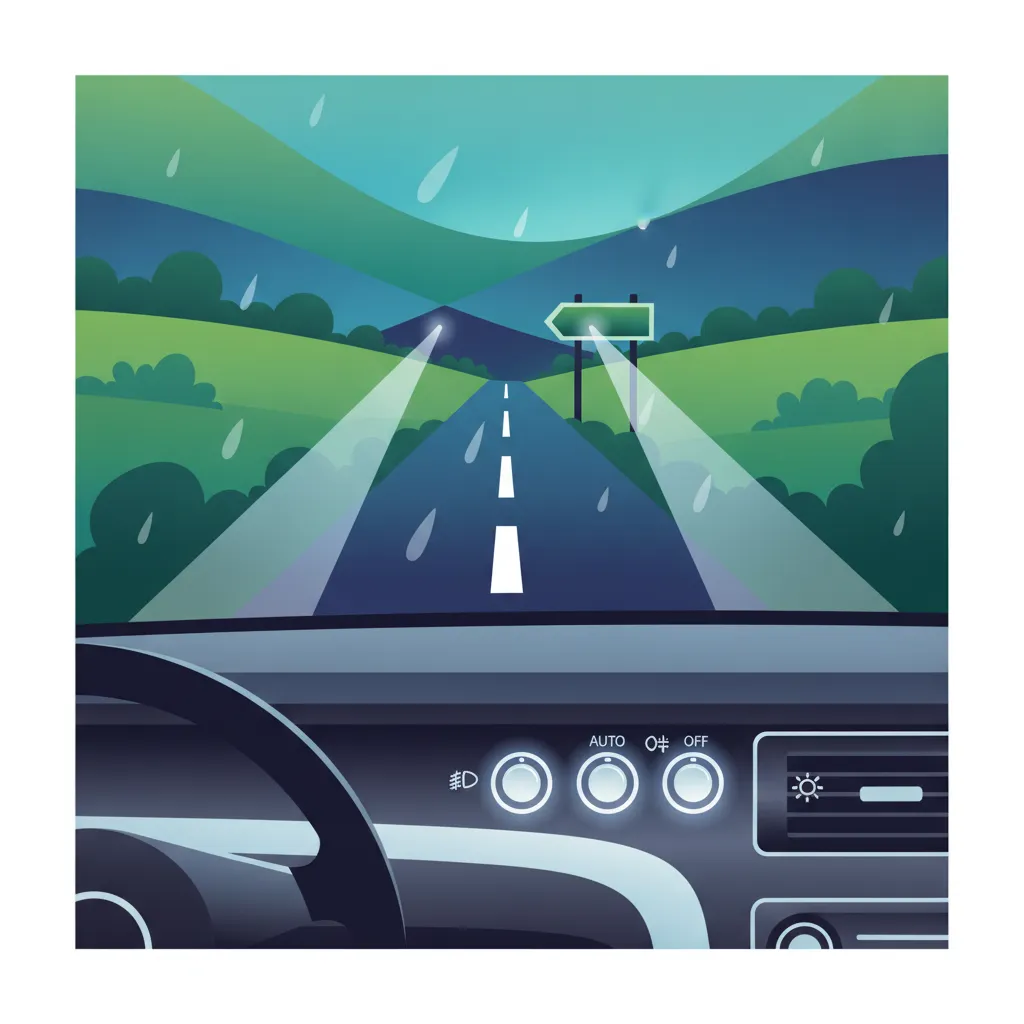
The constant use of a motorcycle's low beam (dipped) headlights during both day and night is one of the simplest and most effective ways to make your vehicle stand out. An active headlight provides a bright focal point that contrasts sharply with the surrounding environment, drawing the attention of oncoming drivers and those waiting at junctions.
Low beam headlights designed to illuminate the road ahead and make the vehicle visible to others without causing glare or dazzling oncoming road users.
Under Irish road traffic legislation, motorcyclists are required to use appropriate headlamp illumination during the hours of darkness and at any time when visibility is seriously reduced by weather or atmospheric conditions.
Relying solely on automatic headlight systems can be dangerous. Sensor-based systems may fail to activate promptly when you enter a dark tunnel, run into sudden heavy rain, or ride through dense tree canopy cover. Always manually verify that your dipped headlights are active.
While daytime use of dipped headlights is highly recommended by the Road Safety Authority (RSA) for all Category A, A1, and A2 riders, there are specific scenarios where headlight use is strictly mandatory:
Using high beams (full headlights) during the day is not an acceptable alternative to dipped beams. High beams can dazzle oncoming drivers, obscure your front indicators, and make it incredibly difficult for others to judge your speed and distance.
Using colour theory and high-contrast styling helps break through visual clutter. When riding through Irish towns or rural corridors, your background shifts constantly between grey asphalt, green hedges, stone walls, and colourful storefronts. Your gear must contrast sharply with these backgrounds to be detected quickly by the human eye.
Bright, fluorescent colours react to the ultraviolet (UV) rays in natural daylight, making them appear extraordinarily vibrant to observers.
A common misconception among learner riders is that wearing a bright yellow jacket or helmet guarantees safety. It is critical to understand that fluorescent materials do not glow in the dark. Without ultraviolet light from the sun, fluorescent garments lose their extra vibrancy and behave like ordinary colours.
At night, a fluorescent yellow jacket is only as visible as the light falling on it from streetlights or other vehicles' headlights. To maintain visibility after dark, you must transition your strategy to include retro-reflective materials.
Retro-reflective materials are engineered to bounce light directly back to its source, rather than scattering it in all directions. When the headlights of an oncoming or following car strike a retro-reflective panel on your gear, the light is reflected straight back to the driver’s eyes, making you appear highly luminous against the dark.
[Oncoming Car Headlights] ----------> [Retro-Reflective Material]
                                                |
[Driver's Eyes] <-------------------------------| (Light bounces directly back)
To ensure you are visible from all angles (front, rear, and sides), retro-reflective materials should be integrated across your gear and motorcycle:
The Helmet: Apply retro-reflective adhesive strips to the front, back, and sides of your helmet. Because the helmet is the highest point of the rider's profile, it is often the first thing visible over crests and obstacles.
Torso and Jacket: Look for jackets with integrated retro-reflective piping or wide panels across the shoulders and lower back. A high-visibility Sam Browne belt or reflective vest worn over your protective gear is highly effective.
Gloves and Sleeves: Having reflective strips on your sleeves and the back of your gloves ensures that when you use hand signals or extend your arm, your movements are immediately visible to others.
Motorcycle Wheels and Bodywork: Rim tape applied to the outer edges of your wheels reflects light from vehicles approaching at perpendicular angles, such as at crossroad junctions or roundabouts.
Road grime, salt, and dirt will quickly coat reflective surfaces, drastically reducing their ability to return light. Regularly clean your helmet, motorcycle reflectors, and high-visibility clothing following the manufacturer’s instructions. Do not apply solvents to reflective tape, as this can degrade the specialized microscopic glass beads or prisms that make the material functional.
Your physical position within your lane is a dynamic shield. You must constantly adjust your position to maximize your line of sight and ensure that you are visible to other road users, particularly around large vehicles and junctions.
Heavy Goods Vehicles (HGVs), buses, and agricultural machinery have vast blind spots (often called "No-Zones") directly behind, to the sides, and immediately in front of their cabs.
If you ride too close behind a large vehicle, you are completely hidden from the driver’s mirrors. Furthermore, your forward view of the road is blocked, preventing you from anticipating oncoming hazards, road signs, or changes in traffic flow.
To stay visible when following a large vehicle:
A classic collision scenario involves a vehicle turning right or left from a side road directly into the path of an oncoming motorcycle. To prevent this, use your lane position to make your profile more distinct:
Your visibility strategy must adapt to the specific road type, weather, and motorcycle state you encounter.
Dusk and dawn are the most hazardous periods for motorcycle visibility. During these transition windows, the sky may still appear relatively bright, prompting some drivers to delay turning on their headlights. However, ground-level shadows are long and dark, making it incredibly easy for a motorcycle to blend into the landscape. Always run your dipped headlights during these hours, and treat every junction with heightened caution.
Heavy Irish rain, sea mist, and winter sleet present a double challenge: they reduce the amount of light reaching the eye, and they coat visors, windscreens, and mirrors with water droplets that distort light.
In these conditions:
When carrying a pillion passenger or heavy luggage, the rear of your motorcycle will compress. This alters the angle of your chassis, tilting your headlight upward.
An upward-tilted headlight acts like a high beam, dazzling oncoming traffic and failing to illuminate the road surface directly in front of you. Always adjust your rear suspension pre-load and your headlight aim downward when carrying heavy loads to maintain correct, safe illumination.
Understanding where riders commonly fail can help you avoid making the same critical errors:
To reinforce what you have learned about motorcycle visibility and lane positioning, explore these related topics and practical study materials.
Explore all units and lessons included in this driving theory course.
Lesson content overview
Explore all units and lessons included in this driving theory course.
Explore search topics learners often look for when studying Enhancing Visibility on Irish Roads. These topics reflect common questions about road rules, driving situations, safety guidance, and lesson level theory preparation for learners in Ireland.
Browse additional driving theory lessons that cover connected traffic rules, road signs, and common driving situations related to this topic. Improve your understanding of how different rules interact across everyday traffic scenarios.
Learn how to use optimal lane positioning to maintain visibility and protective space from other road users. This explanation details how to adjust your position to avoid blind spots and increase awareness of your presence during routine Irish driving conditions.
This lesson explains how to choose the safest riding position within a traffic lane, considering the standard left-side driving rule in Ireland. It details the concept of dominant positioning to prevent other vehicles from crowding your space, while remaining visible to oncoming traffic. Riders will learn to adjust their track constantly to avoid road surface hazards, oil deposits, and wind currents.

Irish driving theory demands that drivers keep to the left-hand side of the road unless overtaking or turning right. This lesson explains how to maintain consistent lane discipline on multi-lane roads, how to perform safe lane changes, and the dangers of drifting. You will learn the safety sequence of checking mirrors, checking blind spots, signalling, and smoothly executing a lane change without disrupting trailing traffic.

This lesson provides actionable strategies for Category AM riders to remain visible, focusing on lane positioning and eye contact. It teaches how to avoid riding in the blind spots of larger vehicles and how to signal early and clearly. Cultivating a proactive attitude toward road visibility helps prevent collisions and builds mutual respect on Irish roads.
Large passenger vehicles must maintain consistent lane positioning to prevent side-swipe incidents and sustain smooth urban traffic patterns. This lesson covers standard lane selection rules, safe overtaking procedures, and how to use designated public transit corridors correctly. Drivers will learn the importance of checking mirrors continuously and planning lane changes well in advance.
This lesson explains the critical meanings of solid, broken, and continuous lines painted on Irish road surfaces. It defines the legal rules surrounding bus lanes, bicycle lanes, and yellow box junctions in urban settings. Riders will learn correct lane discipline to ensure their safety and maintain proper separation from surrounding traffic.
This lesson emphasizes the critical importance of being highly visible to other road users under various lighting conditions. It reviews the legal requirements for front and rear lights on Category AM vehicles and the active use of reflective materials. Proper maintenance of lighting systems is discussed to ensure continuous operation during adverse weather.

Navigating multi-lane roundabouts requires precise lane selection, continuous scanning, and timely signaling. This lesson teaches you the 'clock rule' for determining which lane to enter, how to yield to traffic already on the roundabout from your right, and when to activate your left indicator to exit. Mastering these procedures minimizes lane-drift accidents and ensures a seamless flow of traffic on busy roundabouts.

Driving at night presents severe challenges due to reduced visibility, driver fatigue, and headlight glare from oncoming vehicles. This lesson teaches you how to manage your headlights, use road edge markers to steer through dark curves, and look away from oncoming bright lights. You will learn to drive within the range of your headlights and remain highly alert for pedestrians or cyclists not wearing reflective gear.
This lesson details the location of blind spots on passenger cars, commercial trucks, and buses, explaining how to avoid staying in these danger zones. It teaches the vital importance of the lifesaver glance or physical shoulder check before executing any lateral lane change or turn. Motorcyclists will learn how to monitor other drivers' mirrors to verify if their motorcycle is visible.

Your vehicle's lighting system is crucial for illuminating your path and making your presence and intentions clear to other road users. This lesson explains the legal requirements for using dipped headlights, full beams, fog lights, and hazard signals in Ireland. You will learn when to switch from full to dipped beams to avoid blinding oncoming drivers, and how to perform simple checks to ensure all bulbs are working.
Understand the legal obligations and best practices for using dipped headlights and reflective materials in Ireland. This guide clarifies how to enhance your visual presence during day, night, and adverse weather conditions to meet official road safety standards for motorcyclists.
This lesson emphasizes the critical importance of being highly visible to other road users under various lighting conditions. It reviews the legal requirements for front and rear lights on Category AM vehicles and the active use of reflective materials. Proper maintenance of lighting systems is discussed to ensure continuous operation during adverse weather.
This lesson details the use of daytime running lights to raise a rider's profile during daylight hours on Irish roads. It discusses the installation guidelines, legal restrictions, and safety benefits of auxiliary lighting systems on mopeds. Special care must be taken to prevent dazzling oncoming traffic while ensuring the vehicle remains highly recognizable.
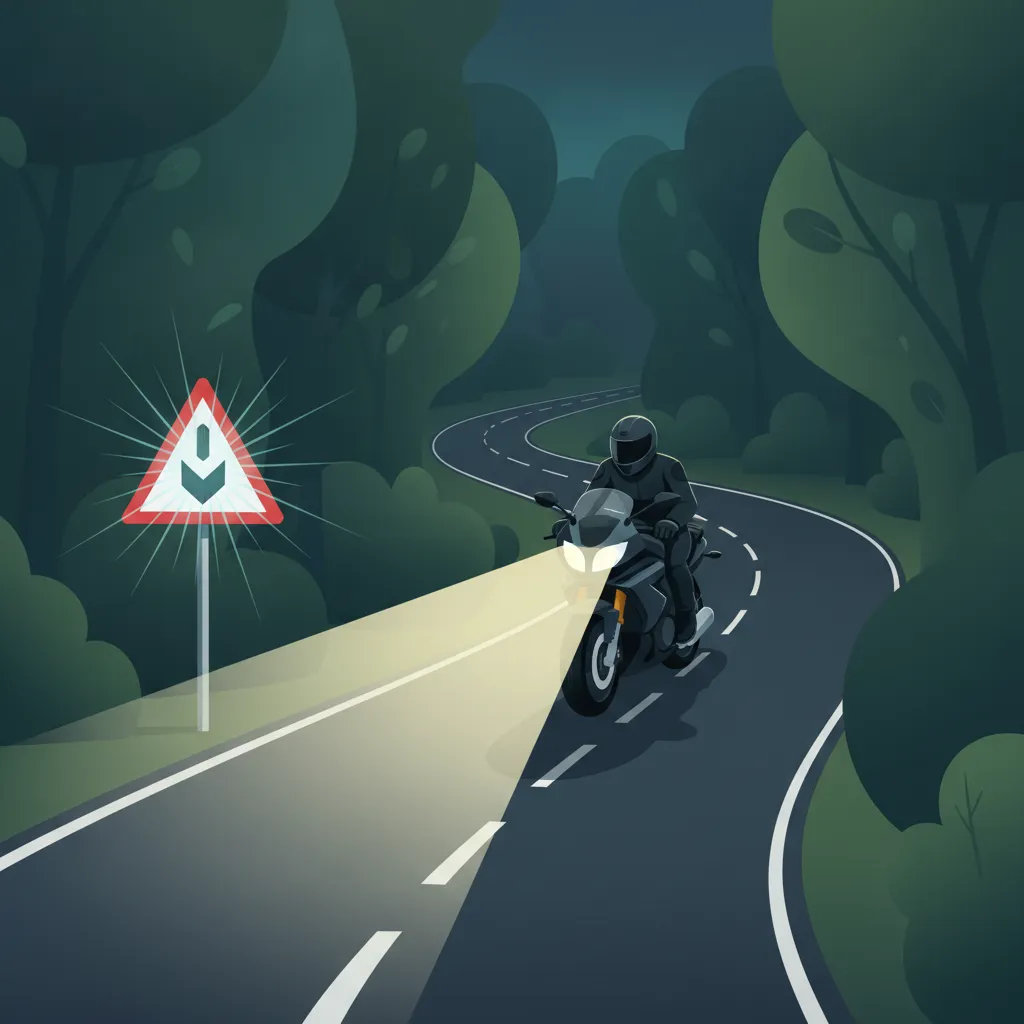
This lesson details safety strategies for riding in dark or poorly illuminated environments, focusing on headlight management and visibility limits. It explains when to use dipped and high beams to avoid blinding other motorists while maximizing your own view of the road. Riders will learn how to scan for reflective markers, manage oncoming glare, and adapt their speed to their headlight range.
Your vehicle's lighting system is crucial for illuminating your path and making your presence and intentions clear to other road users. This lesson explains the legal requirements for using dipped headlights, full beams, fog lights, and hazard signals in Ireland. You will learn when to switch from full to dipped beams to avoid blinding oncoming drivers, and how to perform simple checks to ensure all bulbs are working.

This lesson describes the legal obligations regarding motorcycle helmets in Ireland, detailing safety certifications like ECE 22.05 or 22.06. It explains the differences between full-face, modular, and open-face helmets, emphasizing how impact absorption protects the head. Motorcyclists will learn how to verify a secure chin-strap fit and inspect helmets for structural damage after any minor drop.
This lesson outlines the European standards and CE markings for motorcycle protective clothing, including jackets, trousers, and boots. It explains the protective performance of high-durability fabrics, leather, and built-in impact armor at joint zones. Riders will understand how appropriate garments minimize serious abrasion injuries and protect against cold or wet Irish weather environments.

This lesson details the legal requirements for motorcycle insurance under Irish law, emphasizing the absolute necessity of holding valid third-party cover. It outlines the rider's responsibility to maintain their motorcycle in a completely roadworthy condition, focusing on critical safety components like tyres, brakes, and lights. Learners will examine how mechanical failures and non-compliance with maintenance standards compromise legal eligibility and safety.
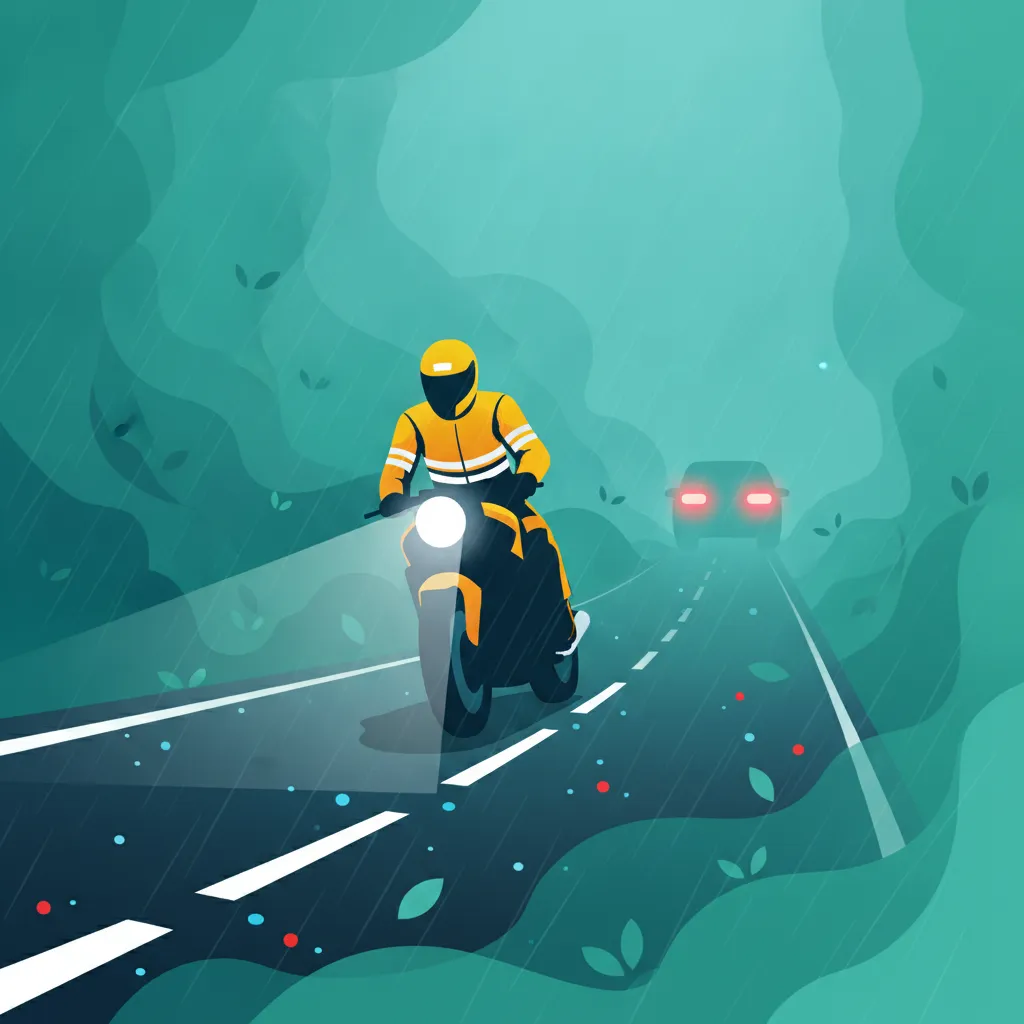
This lesson focuses on the critical techniques required to ride safely during severe rain or heavy fog in Ireland. It teaches riders how to handle aquaplaning risks, use headlights correctly, and significantly increase their following distances. Adapting speed to visibility ensures that riders can brake safely when road conditions deteriorate.
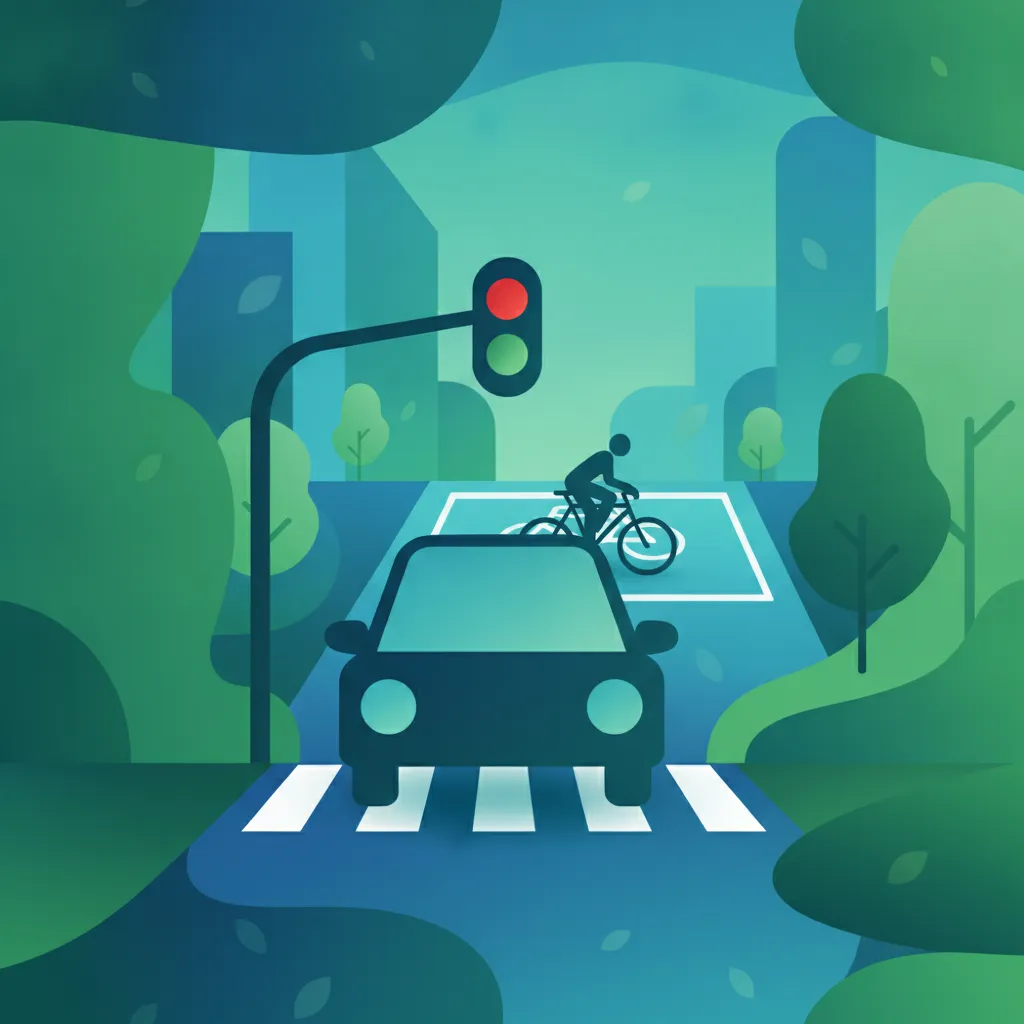
This lesson outlines the standard traffic light sequence in Ireland, detailing the exact legal requirements for red, amber, and green signals. It covers green arrow filters, flashing amber lights, and the specific cycle-friendly traffic signals encountered in urban areas. Recognizing these signals helps riders anticipate traffic patterns and execute safe maneuvers.

This lesson outlines how motorcyclists should respond when permanent road signs are dirty, damaged, or hidden by overgrown trees and hedges. It introduces the temporary signage, warning cones, and detour markers commonly deployed at active roadwork zones in Ireland. Riders will learn to read the road ahead defensively, reducing speed when visual information is incomplete or compromised.
Find clear answers to common questions learners have about Enhancing Visibility on Irish Roads. Learn how the lesson is structured, which driving theory objectives it supports, and how it fits into the overall learning path of units and curriculum progression in Ireland. These explanations help you understand key concepts, lesson flow, and exam focused study goals.
Using dipped headlights increases your motorcycle's profile, making it much easier for other road users, especially car drivers, to notice you from a distance or in low light conditions.
Yes, choosing the correct lane position allows you to be seen more easily in mirrors and prevents you from disappearing into the blind spots of larger vehicles like trucks or buses.
While specific garment requirements exist for safety, you should always opt for high-visibility gear to ensure you are as conspicuous as possible to other traffic, which is a core concept tested in the RSA theory exam.
Position yourself in the 'active zone' of your lane where you are most likely to be seen by oncoming drivers and those waiting at junctions, and always check your surroundings before committing to a turn.
Use the practice question search tool to pinpoint specific topics, road signs, or rules you need to master for your official Driver Theory Test. Refine your study strategy and ensure comprehensive preparation for all aspects of the Irish driving exam. Start your focused revision now and build confidence for your learner permit test.