
This lesson guides you through the official Irish traffic light sequences and the specific rules for cyclists and moped riders in urban traffic. By mastering these signals, you will gain the confidence to navigate complex junctions safely and correctly, a vital skill for your Category AM theory test and your future riding.
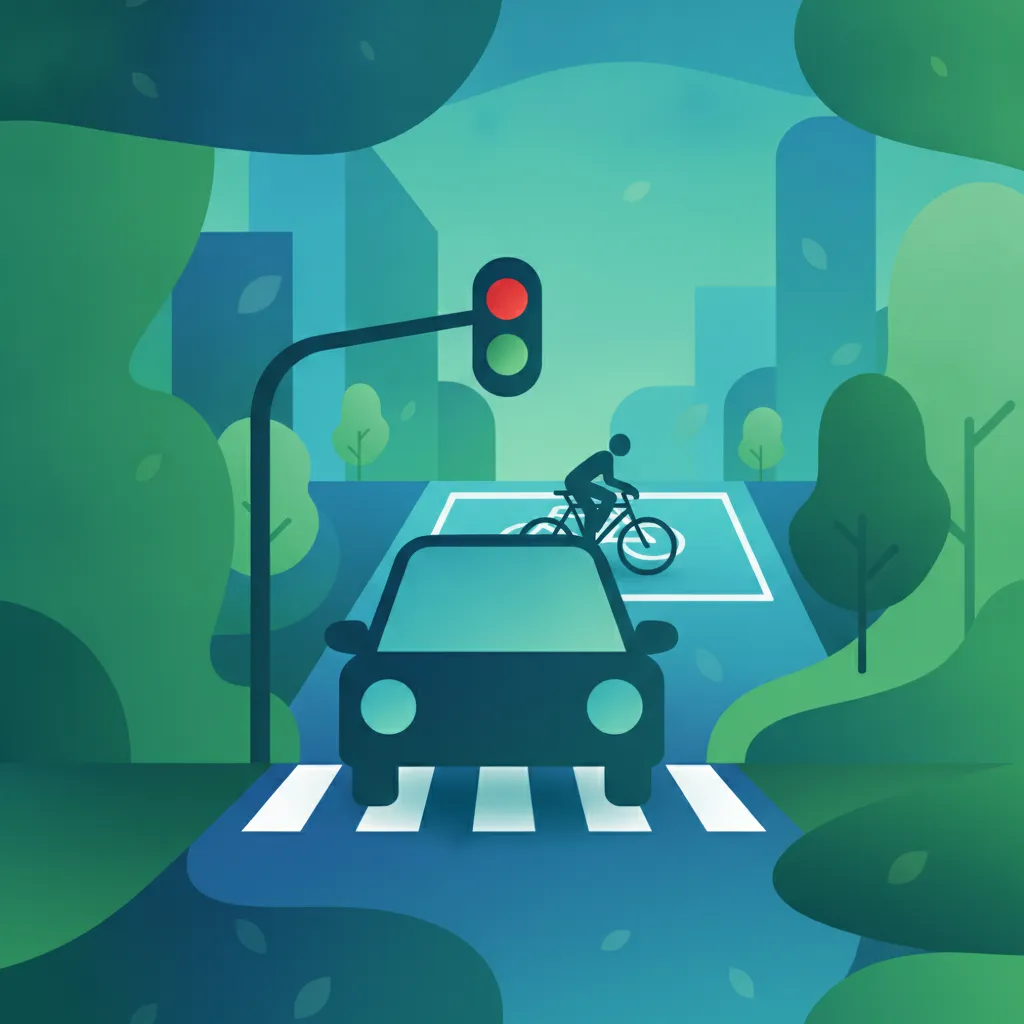
Lesson content overview
Understanding traffic signals, light sequences, and specialized lane rules is a core requirement for passing the Irish theory test and safely operating a vehicle on Irish roads. For Category AM (moped and light quadricycle) riders, mastering these signals is doubly important. Because mopeds are smaller, less visible, and more susceptible to road surface hazards, anticipating traffic flow at light-controlled junctions can prevent serious collisions.
This lesson details the exact legal requirements for all traffic light phases in Ireland, explores specialized cycle and pedestrian signals, and provides the defensive riding strategies you need to navigate urban environments safely.
Unlike several other European countries, Ireland does not use a combined red-and-amber phase to signal that the light is about to turn green. The sequence transitions directly from red to green. Understanding this exact sequence is highly testable and vital for anticipating traffic movements.
A red light means you must stop your vehicle behind the white stop line on the road. Proceeding past the stop line while the red light is illuminated is a serious road traffic offense known as "running" or "breaking" a red light.
For moped riders, ensure you stop completely without rolling forward. Keep your feet planted and stay clear of the pedestrian crossing area.
When the light turns green, you may proceed straight ahead or turn, provided the way is clear and it is safe to do so. A green light does not give you an absolute right-of-way; you must still yield to pedestrians already crossing the road and to any traffic remaining within the junction from the previous phase.
The "Yellow Box" Rule at Green Lights: Never enter a junction on a green light if your exit is blocked by stationary traffic, as you will block the intersection when the lights change. The exception is when you are turning right and are prevented from completing the turn only by oncoming traffic.
A solid amber light means you must stop before the stop line, unless you are already so close to the junction or stop line that stopping safely is impossible or would cause a rear-end collision with vehicles behind you.
Many collisions occur because drivers accelerate to "beat" an amber light instead of preparing to stop. On a moped, braking abruptly on wet or greasy road markings can cause your wheels to lock up, leading to a slide. Always monitor your mirrors and assess your stopping distance when approaching a junction where the green light has been active for some time (a "stale green").
In Ireland, flashing amber lights are used under specific circumstances. Their legal meaning varies depending on whether they are installed at a pedestrian crossing or a standard traffic junction.
At a Pelican crossing (a pedestrian crossing controlled by traffic lights), a flashing amber light replaces the red light before the system returns to green.
Occasionally, you will encounter flashing amber lights at intersections, especially late at night or when traffic control systems are undergoing maintenance.
Many modern junctions in Ireland feature green arrow filter lights alongside or below the standard three-lens traffic lights. These arrows control specific movements, such as left turns, right turns, or straight-ahead lanes.
A green arrow indicates that traffic traveling in the direction of the arrow may proceed, even if the main traffic light is red.
Identify your destination lane early and position your moped in the center of the appropriate lane.
Observe the filter arrows. If the main light is red but your lane's filter arrow is green, check your mirrors and blind spots.
Proceed smoothly along the path of the arrow, keeping a sharp lookout for pedestrians crossing the street you are entering.
Never make a sudden lane change to chase a green arrow; if you miss the phase, wait for the next sequence.
Urban areas in Ireland are increasingly designed with infrastructure to protect vulnerable road users, particularly cyclists. As a Category AM moped rider, you must understand these signals and respect the physical boundaries established for non-motorized traffic.
An Advanced Stop Line consists of a designated area for cyclists at the front of a traffic lane, marked with a bicycle symbol and bordered by two stop lines.
Some intersections feature miniature traffic lights containing a bicycle symbol. These lights control dedicated cycle tracks.
Pedestrian safety is a high-priority topic on the Irish Theory Test. You must be able to distinguish between different types of light-controlled crossings and understand your legal obligations at each.
Pelican crossings are controlled by two-way pedestrian push buttons. They follow a specific light sequence for drivers:
Puffin (Pedestrian User Friendly Intelligent) crossings are equipped with smart sensors that detect the presence of pedestrians on the crossing and on the pavement waiting to cross.
A pedestrian crossing controlled by traffic lights where the transition from red to green includes a flashing amber phase, during which drivers must yield to pedestrians but can proceed if the crossing is clear.
An intelligent pedestrian crossing equipped with sensors that adjust the light timings based on pedestrian movement. It does not feature a flashing amber phase; the sequence goes straight from Red to Amber to Green.
Riding a moped (Category AM) introduces unique physical dynamics that you must manage when approaching traffic lights.
Mopeds have a smaller tire contact patch than cars, meaning they have less grip. Irish roads are frequently damp, making painted road markings (such as stop lines, pedestrian crossings, and yellow boxes) exceptionally slippery.
When stopped at a red light, keep your moped stable:
Mopeds generally accelerate slower than larger motorcycles and modern cars. When the light turns green:
| Light Phase | Driver/Rider Action | Legal Meaning in Ireland |
|---|---|---|
| Solid Red | Stop completely before the stop line. | Mandatory stop. |
| Solid Green | Proceed if the way is clear. | Proceed with caution; yield to existing traffic/pedestrians. |
| Solid Amber | Stop unless it is unsafe to do so. | Prepare to stop; do not accelerate to beat the light. |
| Flashing Amber (Crossing) | Yield to pedestrians; proceed if clear. | Cautionary phase at Pelican crossings. |
| Flashing Amber (Junction) | Yield to traffic already in the junction. | Treat as a "Yield" sign; proceed with caution. |
| Green Arrow Filter | Proceed only in the direction of the arrow. | Permission to move for a specific lane or direction. |
Situation: You are riding your moped at 45 km/h on a main urban road. Ahead of you, the traffic light has been green for the entire time it has been in your line of sight.
Situation: You are stopped at a red light in the left-hand lane. To your left is a dedicated cycle track. The light turns green, and you intend to turn left.
This lesson covers the complete Irish traffic light sequence for Category AM riders, emphasizing that Ireland skips the combined red-and-amber phase used elsewhere. It explains the mandatory stop at red, the cautious proceed at green (yielding to existing traffic and pedestrians), and the conditional stop at amber. Special attention is given to flashing amber signals, which require yielding at Pelican crossings but act as a yield at junctions. The lesson also covers Advanced Stop Lines, the difference between Pelican and Puffin crossings, green arrow filters, and the critical rule that moped riders must never use cycle lanes or follow cyclist-specific signals. Practical moped safety considerations, such as avoiding heavy braking on painted markings and performing a Lifesaver scan on green, round out the lesson.
A short set of high-value points that capture the most important learning from this lesson.
Ireland's traffic light sequence goes directly from Red to Green with no combined red-and-amber phase, unlike many other European countries
A green light does not give absolute right-of-way; you must yield to pedestrians already crossing and traffic remaining in the junction
A solid amber light means stop unless you are already so close that braking would cause a rear-end collision
Flashing amber has different meanings depending on context: it signals caution at junctions but requires yielding to pedestrians at Pelican crossings
Category AM riders must obey standard vehicular traffic lights and cannot use cycle lanes or follow cyclist-specific signals
Explore all units and lessons included in this driving theory course.
Remember the full signal order: Red (stop) → Green (proceed with caution) → Amber (prepare to stop)
Yellow box rule: never enter a junction on green if your exit is blocked, unless turning right and blocked only by oncoming traffic
At Advanced Stop Lines (bike boxes), stop behind the first stop line on red; the reservoir is reserved for cyclists only
Puffin crossings have no flashing amber phase; they go straight from Red to Amber to Green based on sensor detection
A 'stale green' light (green for a long time) should be treated as likely to change soon—ease off and cover your brakes
Assuming that a green light means you can proceed without checking for pedestrians or remaining traffic in the junction
Attempting to 'beat' an amber light by accelerating instead of preparing to stop, which is especially dangerous on wet road markings
Entering the cyclist reservoir (bike box) at an Advanced Stop Line when stopped at red, which is illegal
Treating flashing amber at a Pelican crossing the same as at a junction—the rules for yielding to pedestrians differ
Riding in cycle lanes or following cyclist-specific traffic signals, which is not permitted for Category AM moped riders
Lesson content overview
A short set of high-value points that capture the most important learning from this lesson.
Ireland's traffic light sequence goes directly from Red to Green with no combined red-and-amber phase, unlike many other European countries
A green light does not give absolute right-of-way; you must yield to pedestrians already crossing and traffic remaining in the junction
A solid amber light means stop unless you are already so close that braking would cause a rear-end collision
Flashing amber has different meanings depending on context: it signals caution at junctions but requires yielding to pedestrians at Pelican crossings
Category AM riders must obey standard vehicular traffic lights and cannot use cycle lanes or follow cyclist-specific signals
Explore all units and lessons included in this driving theory course.
Remember the full signal order: Red (stop) → Green (proceed with caution) → Amber (prepare to stop)
Yellow box rule: never enter a junction on green if your exit is blocked, unless turning right and blocked only by oncoming traffic
At Advanced Stop Lines (bike boxes), stop behind the first stop line on red; the reservoir is reserved for cyclists only
Puffin crossings have no flashing amber phase; they go straight from Red to Amber to Green based on sensor detection
A 'stale green' light (green for a long time) should be treated as likely to change soon—ease off and cover your brakes
Assuming that a green light means you can proceed without checking for pedestrians or remaining traffic in the junction
Attempting to 'beat' an amber light by accelerating instead of preparing to stop, which is especially dangerous on wet road markings
Entering the cyclist reservoir (bike box) at an Advanced Stop Line when stopped at red, which is illegal
Treating flashing amber at a Pelican crossing the same as at a junction—the rules for yielding to pedestrians differ
Riding in cycle lanes or following cyclist-specific traffic signals, which is not permitted for Category AM moped riders
Explore search topics learners often look for when studying Traffic Lights, Signals and Cycle Rules. These topics reflect common questions about road rules, driving situations, safety guidance, and lesson level theory preparation for learners in Ireland.
Browse additional driving theory lessons that cover connected traffic rules, road signs, and common driving situations related to this topic. Improve your understanding of how different rules interact across everyday traffic scenarios.
Understand the legal requirements for yielding at junctions, roundabouts, and crosswalks according to Irish traffic law. This guide clarifies right-of-way hierarchies and safe maneuvering strategies for category AM vehicle riders navigating complex urban road networks and intersections.

Uncontrolled junctions represent a high-risk scenario because they lack physical signs, lines, or lights to dictate priority. This lesson covers the crucial 'priority to the right' principle, where you must yield to any traffic approaching from your right-hand side. You will learn the importance of reducing your speed, preparing to stop, and verifying the intentions of other drivers at these equal-status crossings.
This lesson covers the absolute rules of priority that regulate junctions, roundabouts, and pedestrian crossings in Ireland. It teaches riders when they must yield, who has right-of-way, and how to read Stop and Yield signs correctly. Understanding these priority hierarchies prevents collisions and maintains orderly, predictable movement at busy junctions.
This lesson teaches the fundamental principles of priority and right-of-way at controlled and uncontrolled intersections across Ireland. It explains the legal obligations at yield signs, stop lines, and when meeting oncoming traffic turning across your lane. Motorcyclists will learn to carefully verify other drivers' intentions rather than assuming they will yield the correct right-of-way.
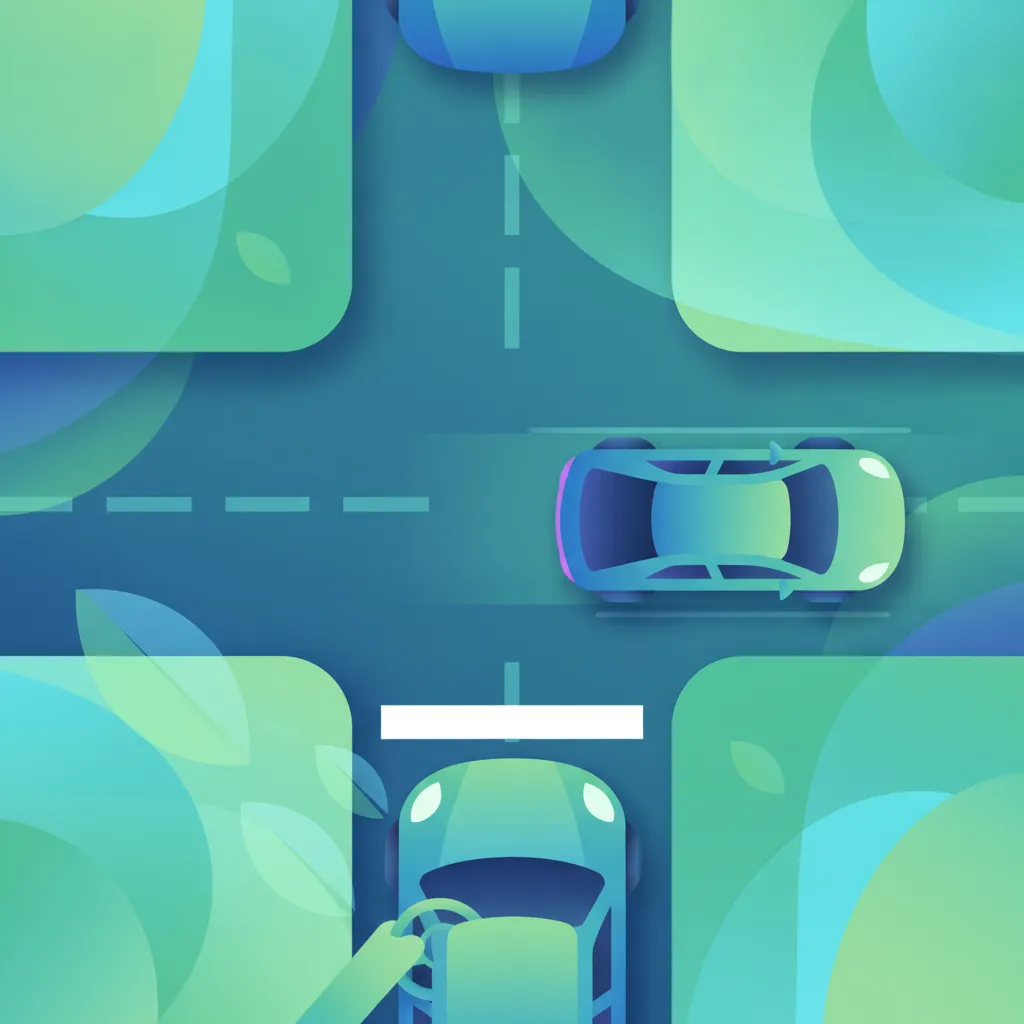
Right-of-way rules establish a clear order of precedence when the paths of two or more vehicles cross. This lesson explains how traffic on a major road has priority over traffic emerging from a minor road, and the general rule of yielding to oncoming vehicles when turning right. You will develop a solid understanding of how to approach intersections defensively, assessing speed and distance to make safe decisions.

Navigating multi-lane roundabouts requires precise lane selection, continuous scanning, and timely signaling. This lesson teaches you the 'clock rule' for determining which lane to enter, how to yield to traffic already on the roundabout from your right, and when to activate your left indicator to exit. Mastering these procedures minimizes lane-drift accidents and ensures a seamless flow of traffic on busy roundabouts.
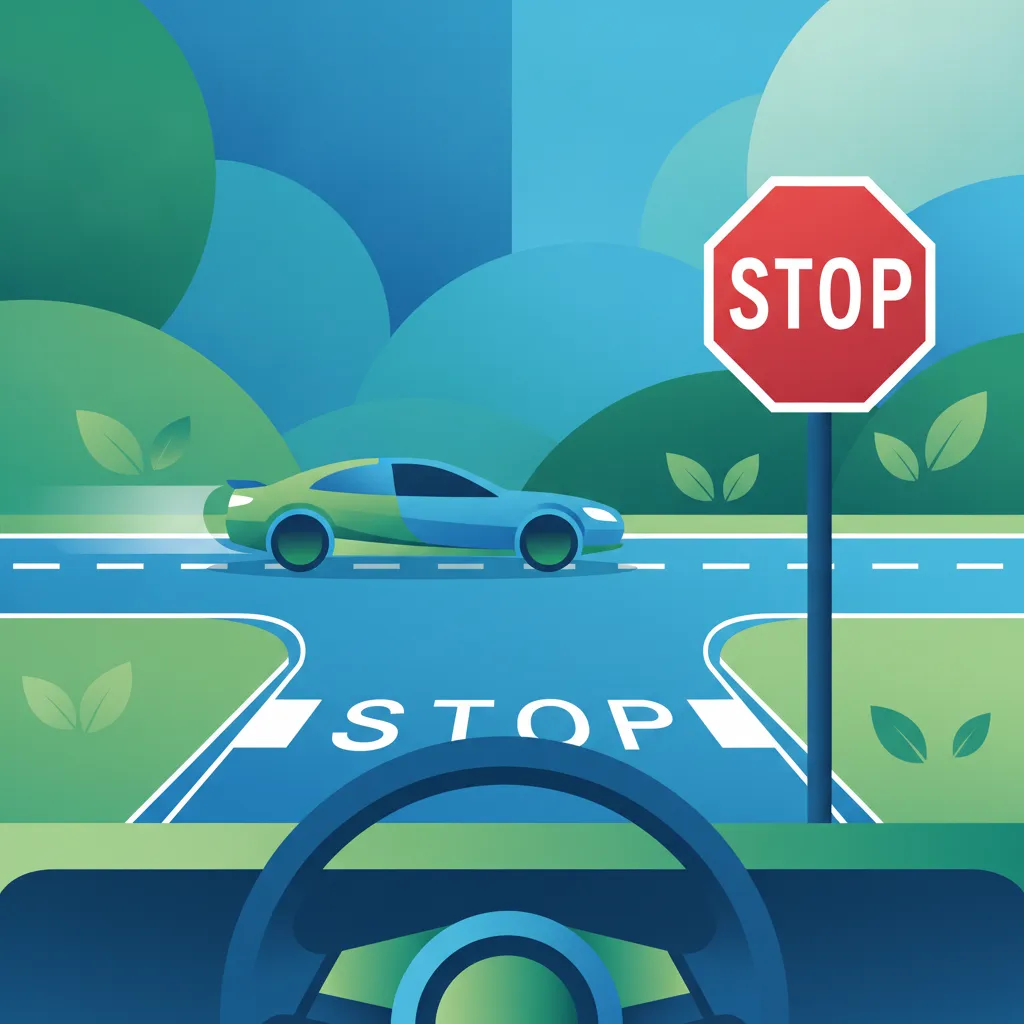
Stop and yield signs require drivers to surrender right-of-way to crossing traffic, but they command different physical actions. This lesson explains that a stop sign mandates a complete, absolute halt behind the line, whereas a yield sign requires you to slow down and stop only if other traffic is approaching. You will learn how to manage restricted visibility at junctions and how to creep forward safely when clear.

This lesson focuses on the safe approach and execution of turns at T-junctions, staggered intersections, and blind crossroads. It explains the critical mirror-signal-manoeuvre routine and how to select the best position for maximum visibility to cross-traffic. Motorcyclists will learn to identify potential hazards like vehicles pulling out suddenly or turning across their direct path.

This lesson details the sequential steps required to approach and exit junctions safely under the Irish driving rules. It teaches riders how to select the correct lane, utilize mirrors, apply early signals, and reduce speed appropriately. Effective observation strategies are highlighted to help riders identify crossing pedestrians or approaching side traffic.
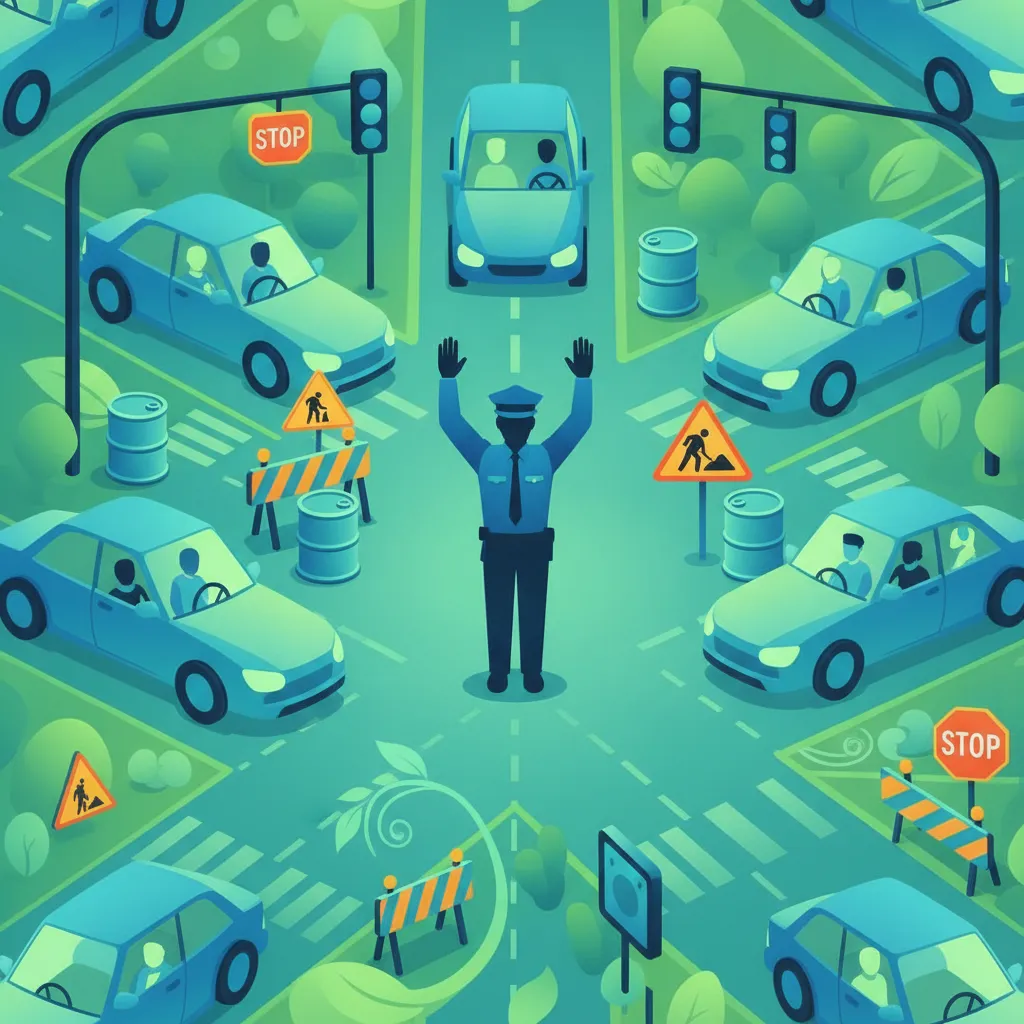
When traffic control is actively performed by a Garda, a school warden, or authorized marshals, their hand signals override all standard traffic lights and road signs. This lesson illustrates the common hand gestures used by officers to stop, release, or slow down traffic. You will learn your strict legal obligation to obey these manual commands, ensuring public safety during emergencies, events, or school crossings.

Traffic light installations manage complex priority conflicts at urban junctions to ensure the safe and efficient movement of vehicles and pedestrians. This lesson explains the legal meaning of each signal phase, including the exact rules for the amber light and the flashing amber pedestrian phase. You will also learn how green filter arrows grant exclusive right-of-way and how to approach signalised junctions with care.
Learn how to optimize your road position relative to larger vehicles and cyclists in busy urban environments. This lesson covers essential defensive riding techniques for managing blind spots and maintaining space cushions, helping you anticipate traffic patterns in challenging road conditions.

This lesson analyzes traffic flow characteristics in dense municipal areas and teaches safe riding methods for congested gridlock situations. It covers the maintenance of adequate safety cushions, scanning for opening car doors, and monitoring pedestrians stepping from between parked cars. Riders will learn to manage frequent stopping, constant clutch wear, and the stress of urban commuting.

This lesson provides actionable strategies for Category AM riders to remain visible, focusing on lane positioning and eye contact. It teaches how to avoid riding in the blind spots of larger vehicles and how to signal early and clearly. Cultivating a proactive attitude toward road visibility helps prevent collisions and builds mutual respect on Irish roads.

This lesson teaches how to cultivate a proactive defensive riding mindset, focusing on situational awareness and constant hazard scanning. It describes the system of motorcycle control, encouraging riders to anticipate potential mistakes from other drivers, pedestrians, and cyclists. Motorcyclists will learn to position themselves defensively, leaving clear escape routes in all driving environments.

This lesson teaches riders how to actively identify and eliminate blind spots through proper mirror adjustment and physical shoulder checks. It explains the concept of a safety cushion, which represents the defensive space maintained around the moped at all times. Managing these zones ensures adequate reaction time and mitigates the impact of sudden braking.
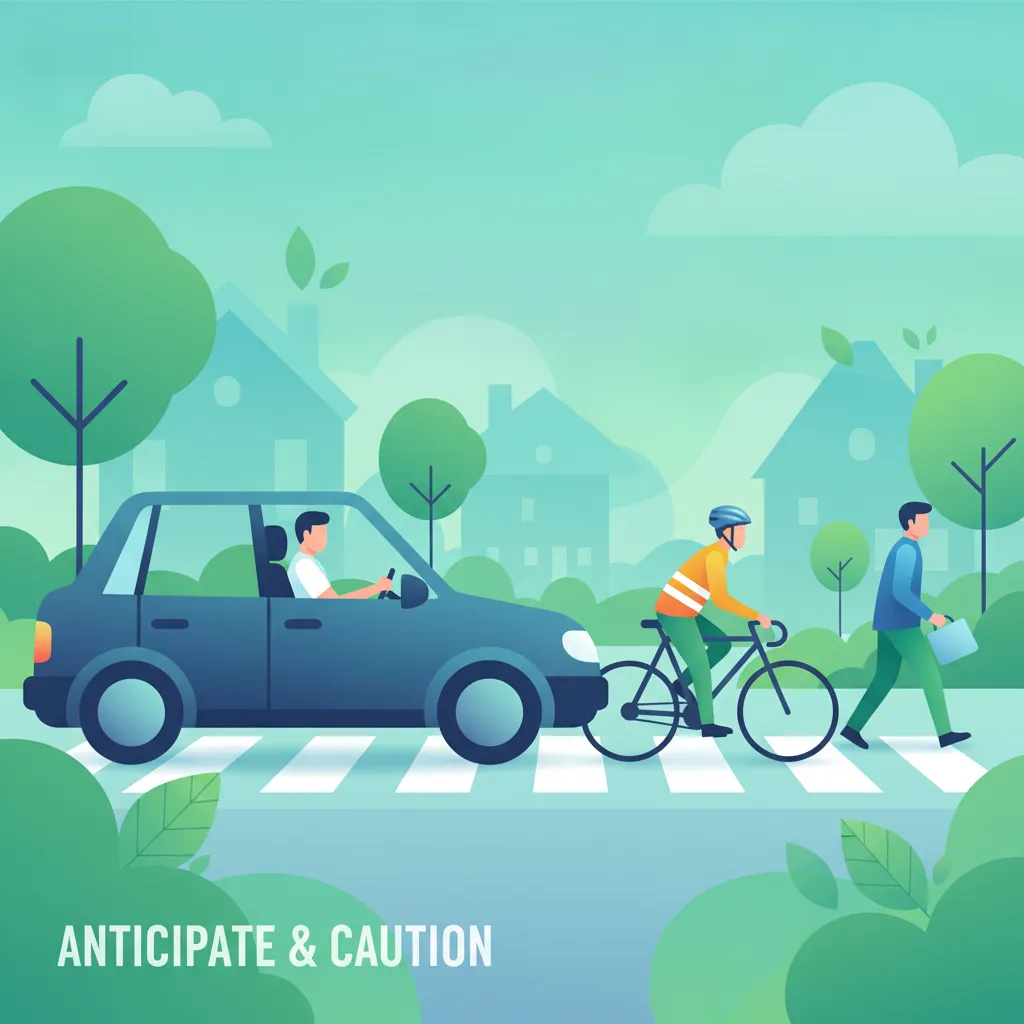
Safeguarding vulnerable road users requires more than simple obedience to traffic signs; it demands a defensive driving mindset. This lesson summarizes safe practices, including scanning far ahead in urban areas, keeping massive safety margins in wet weather, and executing thorough blind spot checks before reversing. By anticipating the unpredictable movements of others, you can prevent accidents and support a safe road culture.

This lesson explains how to choose the safest riding position within a traffic lane, considering the standard left-side driving rule in Ireland. It details the concept of dominant positioning to prevent other vehicles from crowding your space, while remaining visible to oncoming traffic. Riders will learn to adjust their track constantly to avoid road surface hazards, oil deposits, and wind currents.

This lesson teaches riders how to create and preserve a protective safety envelope around their motorcycle under various traffic densities. It explains the two-second rule for dry conditions and how to expand this buffer zone in adverse weather or heavy traffic. Motorcyclists will learn to manage tailgaters by gradually increasing their following distance from the vehicle ahead to prevent sudden braking.

This lesson explains the extensive blind spots of heavy goods vehicles, buses, and other large trucks on Irish roads. It teaches Category AM riders how to maintain safe following distances and position themselves where truck drivers can see them. Proper space cushion management is emphasized to protect riders from the wind turbulence of passing trucks.

This lesson covers the rules governing zebra, pelican, and toucan pedestrian crossings, focusing on driver obligations and rider safety. It details how to interact safely with cyclists, personal mobility devices, and pedestrians in busy urban sectors. Motorcyclists will learn to scan pavement edges, yield right-of-way, and maintain safe overtaking distances when passing slower road users.
This lesson focuses on the safe approach and execution of turns at T-junctions, staggered intersections, and blind crossroads. It explains the critical mirror-signal-manoeuvre routine and how to select the best position for maximum visibility to cross-traffic. Motorcyclists will learn to identify potential hazards like vehicles pulling out suddenly or turning across their direct path.
Find clear answers to common questions learners have about Traffic Lights, Signals and Cycle Rules. Learn how the lesson is structured, which driving theory objectives it supports, and how it fits into the overall learning path of units and curriculum progression in Ireland. These explanations help you understand key concepts, lesson flow, and exam focused study goals.
In Ireland, an amber light means you must stop unless you are so close to the stop line that doing so would be dangerous. It is not an invitation to speed up to beat the light.
Yes, a green arrow indicates that you may proceed in the direction of the arrow. You must still yield to pedestrians or cyclists who may have priority, even if your signal is green.
No, cycle lanes are for bicycles only. You must ride in the main carriageway, but you should be extra vigilant for cyclists crossing into or out of these lanes at junctions.
A flashing amber signal indicates that the traffic light system may be out of order or operating on a part-time basis. You should proceed with extreme caution and treat the junction as uncontrolled, prioritizing safety.
Use the practice question search tool to pinpoint specific topics, road signs, or rules you need to master for your official Driver Theory Test. Refine your study strategy and ensure comprehensive preparation for all aspects of the Irish driving exam. Start your focused revision now and build confidence for your learner permit test.