
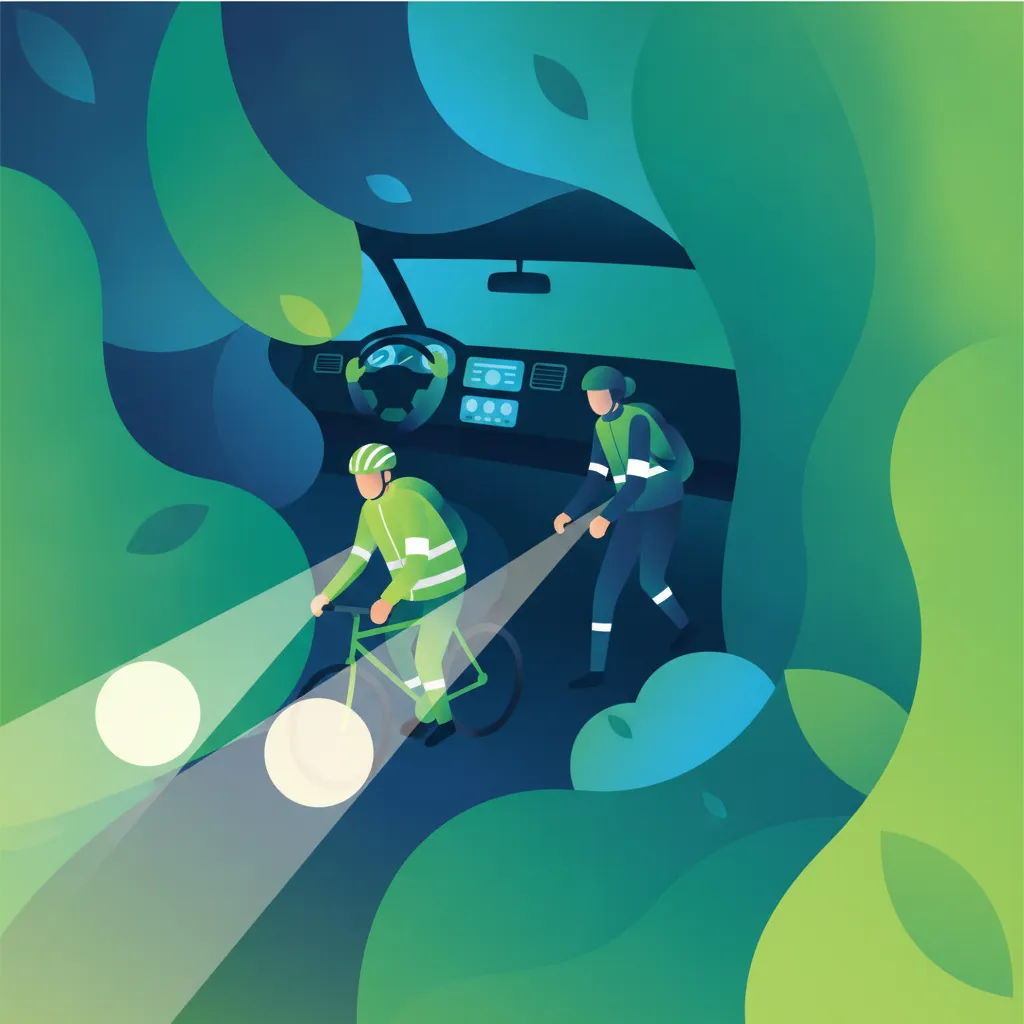
This lesson explores the vital safety measures needed to ensure you are seen by other road users while operating a moped. You will learn the legal requirements for lighting and the best practices for using high-visibility gear to stay safe on Irish roads.
Lesson content overview
Operating a Category AM vehicle—which includes mopeds, light quadricycles, and speed pedelecs—requires a deep understanding of road safety dynamics. Because these vehicles have a smaller physical profile than passenger cars or heavy goods vehicles, they are naturally less conspicuous on the road. This vulnerability makes visibility the single most important factor in preventing collisions.
To ride safely and legally within the Irish road network, you must understand how to utilize your vehicle's lighting systems, maintain them in perfect working order, and supplement them with active reflective wear. This lesson covers the core principles, legal requirements, and practical habits necessary to ensure you are always visible to other road users under all environmental conditions.
To share the road safely with larger vehicles, every Category AM rider must adhere to two fundamental safety principles. These concepts form the basis of the official Rules of the Road compiled by the Road Safety Authority (RSA) of Ireland.
This principle states that all road users, particularly those operating smaller or slower vehicles, have a responsibility to make themselves and their vehicles as visible as possible under all lighting conditions.
The primary goal is to increase your detection distance—the distance at which another driver can identify your presence and classify what type of vehicle you are operating. A driver who detects a moped 200 metres away has significantly more time to react, slow down, or adjust their road positioning than a driver who only spots a moped 30 metres away.
This principle dictates that every lighting instrument fitted to a vehicle must be fully operational, clean, and used correctly according to the prevailing conditions.
Lighting is not merely for the rider to see the road ahead; it is a primary communication tool. Your lights signal your presence, your width, your deceleration, and your directional intentions to everyone else on the road premises.
The front lighting system on a Category AM vehicle is designed to illuminate your path and make your vehicle instantly recognizable to oncoming traffic. It consists of two primary settings: dipped beam headlights and main beam headlights.
Also known as low beams, these headlights are angled downward toward the road surface. They are designed to illuminate the path ahead without casting a glaring light into the eyes of oncoming drivers.
Also known as high beams, these headlights project a strong, high-intensity light parallel to the road surface. They maximize the forward viewing distance in extremely dark conditions but will dazzle other road users if used improperly.
Under Irish road traffic regulations, your front lights must be used systematically:
The Danger of Glare: Failing to dip your headlights is a serious safety hazard. Blinding an oncoming driver can cause them to lose control, veer into your lane, or fail to see obstacles directly in front of them.
Your rear lighting system communicates your presence and your actions to drivers approaching from behind. Because rear-end collisions are a major risk for mopeds, the maintenance of these lights is critical.
Your vehicle must be fitted with a red rear tail light that is illuminated whenever your headlights are turned on. This light must be visible from a clear distance at night, ensuring that vehicles traveling faster than you can identify your presence early.
Your brake light is a high-intensity red light that must illuminate automatically the instant you apply either the front or rear brake controls.
If your Category AM vehicle is registered and requires a rear registration plate (as is standard for registered mopeds and light quads in Ireland), a dedicated white light must illuminate the plate. This must operate automatically when your tail lights are active, ensuring the plate is legible to other road users and law enforcement at night.
Many modern Category AM vehicles come equipped with Daytime Running Lights (DRLs). These are low-energy, highly visible front lights that turn on automatically when the engine starts.
Some riders choose to install auxiliary lights, such as spotlights or high-mount lights, to increase their light output on dark rural roads.
While auxiliary lights are legal under specific conditions, they must conform strictly to Irish vehicle equipment standards:
Active lighting is only half of the visibility equation. In low-light conditions, your safety is greatly enhanced by the use of retroreflective materials. Unlike standard neon colors, which require daylight to look bright, retroreflective materials are engineered to bounce light directly back to its source (such as a car's headlights).
Under Irish road safety standards, reflective materials are not merely recommended; they are legally required on specific items:
The Road Safety Authority strongly recommends that all riders wear high-visibility clothing, such as a high-visibility vest, jacket, or sash, over their protective riding gear.
Clean all lenses: Ensure your headlight, tail light, indicators, and reflectors are free from road dirt, mud, and salt, which can reduce light output by more than 50%.
Test the front lights: Switch on the ignition and check both the dipped beam and main beam settings.
Test the brake light: Pull the front brake lever and look for the rear brake light illumination. Release, and repeat the test using only the rear brake pedal/lever.
Inspect indicators: Turn on your left and right indicators to ensure they flash at a consistent rate.
Check reflective gear: Inspect your helmet stickers and high-visibility clothing for wear, tear, or dirt that could reduce their retroreflective performance.
Your visibility strategy must change dynamically depending on the road environment, the weather, and the actions of those around you.
When entering a tunnel, your eyes require several seconds to adapt to the sudden drop in ambient light.
Many riders find themselves in hazardous situations due to easily preventable mistakes. Understanding these common pitfalls will help you maintain a perfect safety record:
To master your driving theory, always link your lighting decisions directly to physical and behavioural outcomes on the road:
Explore all units and lessons included in this driving theory course.
Lesson content overview
Explore all units and lessons included in this driving theory course.
Explore search topics learners often look for when studying Enhancing Visibility: Lights and Reflective Wear. These topics reflect common questions about road rules, driving situations, safety guidance, and lesson level theory preparation for learners in Ireland.
Browse additional driving theory lessons that cover connected traffic rules, road signs, and common driving situations related to this topic. Improve your understanding of how different rules interact across everyday traffic scenarios.
Learn how to detect potential traffic dangers early and maintain a safe space cushion. This guide focuses on visual scanning techniques for small vehicle riders and managing blind spots in various Irish road conditions to improve your overall awareness and safety.
This lesson highlights the importance of smooth throttle adjustments for maintaining traction and stability on a moped. It teaches riders how to anticipate potential road hazards early, reducing the need for sudden emergency braking. Developing strong observation habits allows riders to adjust their speed smoothly and respond safely to traffic changes.

This lesson explains the extensive blind spots of heavy goods vehicles, buses, and other large trucks on Irish roads. It teaches Category AM riders how to maintain safe following distances and position themselves where truck drivers can see them. Proper space cushion management is emphasized to protect riders from the wind turbulence of passing trucks.
Proactive hazard perception involves constantly scanning the road ahead to identify potential dangers before they turn into actual emergencies. This lesson covers active scanning techniques, helping you look far ahead, check mirrors regularly, and identify subtle risk clues such as exhaust smoke from parked cars or children playing near kerbs. Anticipating these developments gives you the time to adjust speed and position safely.

This lesson explores common surface hazards encountered on municipal and rural Irish roads, including loose gravel and wet leaves. It explains how these surface conditions rapidly reduce tyre traction and affect overall handling and braking control. Riders will learn visual scanning techniques to identify these hazards early and execute safe evasion maneuvers.
This lesson focuses on the critical techniques required to ride safely during severe rain or heavy fog in Ireland. It teaches riders how to handle aquaplaning risks, use headlights correctly, and significantly increase their following distances. Adapting speed to visibility ensures that riders can brake safely when road conditions deteriorate.

This lesson teaches riders how to actively identify and eliminate blind spots through proper mirror adjustment and physical shoulder checks. It explains the concept of a safety cushion, which represents the defensive space maintained around the moped at all times. Managing these zones ensures adequate reaction time and mitigates the impact of sudden braking.
This lesson covers the strategic aspects of journey management, emphasizing the safety benefits of proactive route planning and weather checks. It teaches riders how to select safer roads, avoid high-congestion zones during rush hour, and schedule regular rest intervals. Motorcyclists will learn to pack essential tools, emergency contacts, and spare safety gear to remain prepared for any roadside situation.

This lesson outlines how motorcyclists should respond when permanent road signs are dirty, damaged, or hidden by overgrown trees and hedges. It introduces the temporary signage, warning cones, and detour markers commonly deployed at active roadwork zones in Ireland. Riders will learn to read the road ahead defensively, reducing speed when visual information is incomplete or compromised.

This lesson provides actionable strategies for Category AM riders to remain visible, focusing on lane positioning and eye contact. It teaches how to avoid riding in the blind spots of larger vehicles and how to signal early and clearly. Cultivating a proactive attitude toward road visibility helps prevent collisions and builds mutual respect on Irish roads.

This lesson teaches how to cultivate a proactive defensive riding mindset, focusing on situational awareness and constant hazard scanning. It describes the system of motorcycle control, encouraging riders to anticipate potential mistakes from other drivers, pedestrians, and cyclists. Motorcyclists will learn to position themselves defensively, leaving clear escape routes in all driving environments.
Understand the specific legal requirements and safety strategies for operating a moped during rain, fog, and low light conditions. Learn how weather impacts vehicle grip, braking distance, and your visibility to other motorists according to the official Irish Rules of the Road.
This lesson focuses on the critical techniques required to ride safely during severe rain or heavy fog in Ireland. It teaches riders how to handle aquaplaning risks, use headlights correctly, and significantly increase their following distances. Adapting speed to visibility ensures that riders can brake safely when road conditions deteriorate.
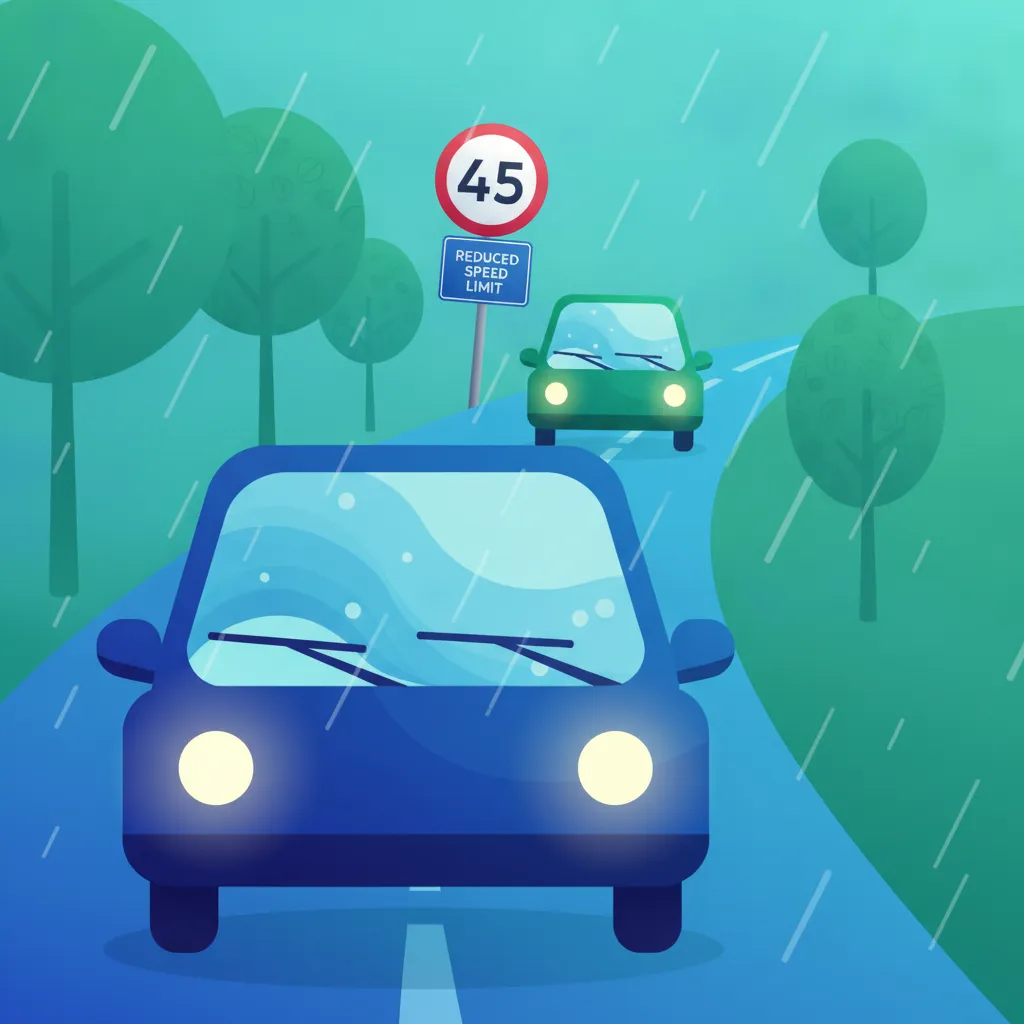
Adverse weather severely compromises tyre traction and forward visibility, demanding immediate speed reductions and extra space. This lesson focuses on the physics of aquaplaning in heavy rain, driving safely on black ice, and navigating thick fog using designated fog lamps. You will learn how to manage your windshield defoggers, adjust wipers, and handle high crosswinds that can destabilise your vehicle.
This lesson details the use of daytime running lights to raise a rider's profile during daylight hours on Irish roads. It discusses the installation guidelines, legal restrictions, and safety benefits of auxiliary lighting systems on mopeds. Special care must be taken to prevent dazzling oncoming traffic while ensuring the vehicle remains highly recognizable.
This lesson explores common surface hazards encountered on municipal and rural Irish roads, including loose gravel and wet leaves. It explains how these surface conditions rapidly reduce tyre traction and affect overall handling and braking control. Riders will learn visual scanning techniques to identify these hazards early and execute safe evasion maneuvers.
This lesson explains how to modify riding techniques when navigating wet tarmac, focusing on the heightened risk of hydroplaning and reduced tire grip. It details the necessity of increasing following distances, avoiding painted road markings, and executing smoother control inputs. Riders will understand how surface water accumulates in ruts, presenting severe hazards during heavy rainstorms.
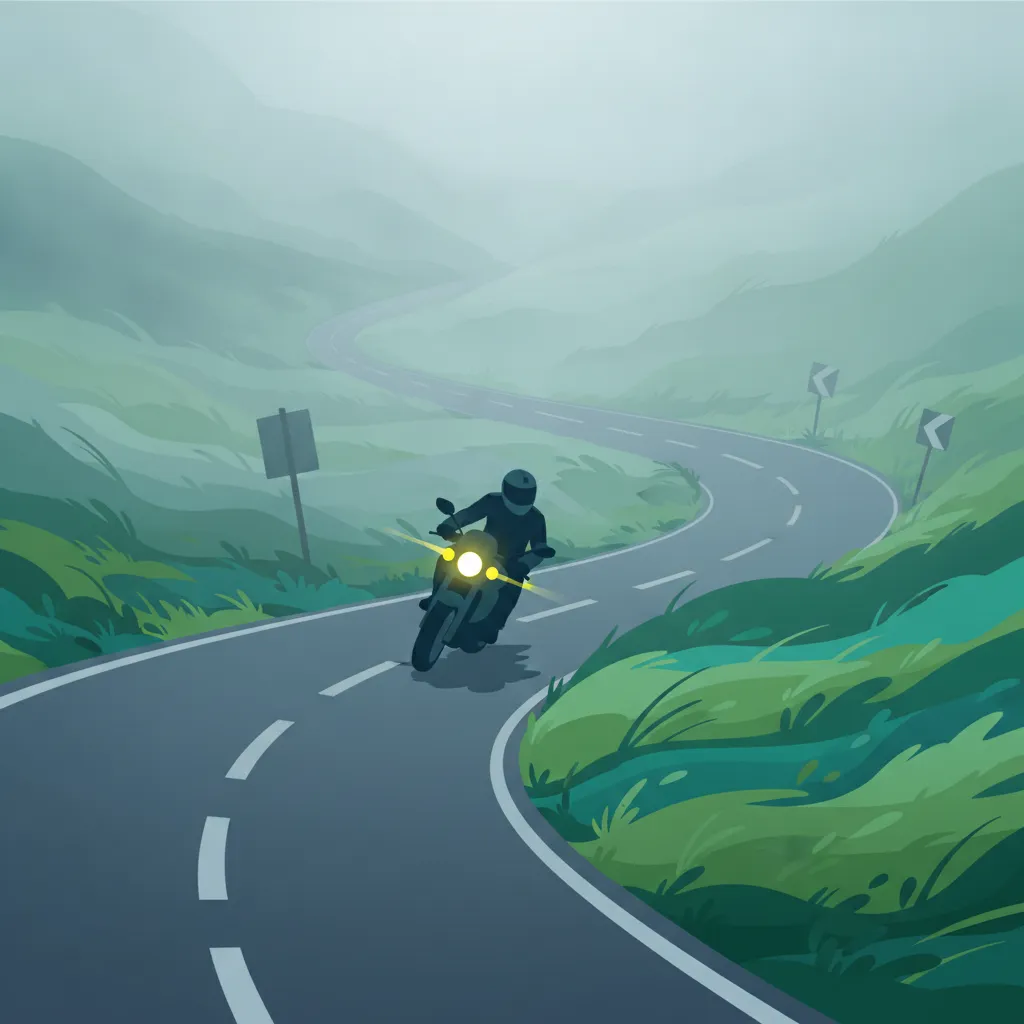
This lesson teaches riders how to manage extreme weather conditions such as high crosswinds, thick fog, and low sun glare. It details how wind forces can push a motorcycle off course and how to use minor body adjustments and lane placement to maintain stability. Riders will learn how to manage visibility limits in dense fog, utilizing specialized riding gear and reducing speeds safely.
This lesson highlights the importance of smooth throttle adjustments for maintaining traction and stability on a moped. It teaches riders how to anticipate potential road hazards early, reducing the need for sudden emergency braking. Developing strong observation habits allows riders to adjust their speed smoothly and respond safely to traffic changes.
This lesson teaches riders how to actively identify and eliminate blind spots through proper mirror adjustment and physical shoulder checks. It explains the concept of a safety cushion, which represents the defensive space maintained around the moped at all times. Managing these zones ensures adequate reaction time and mitigates the impact of sudden braking.
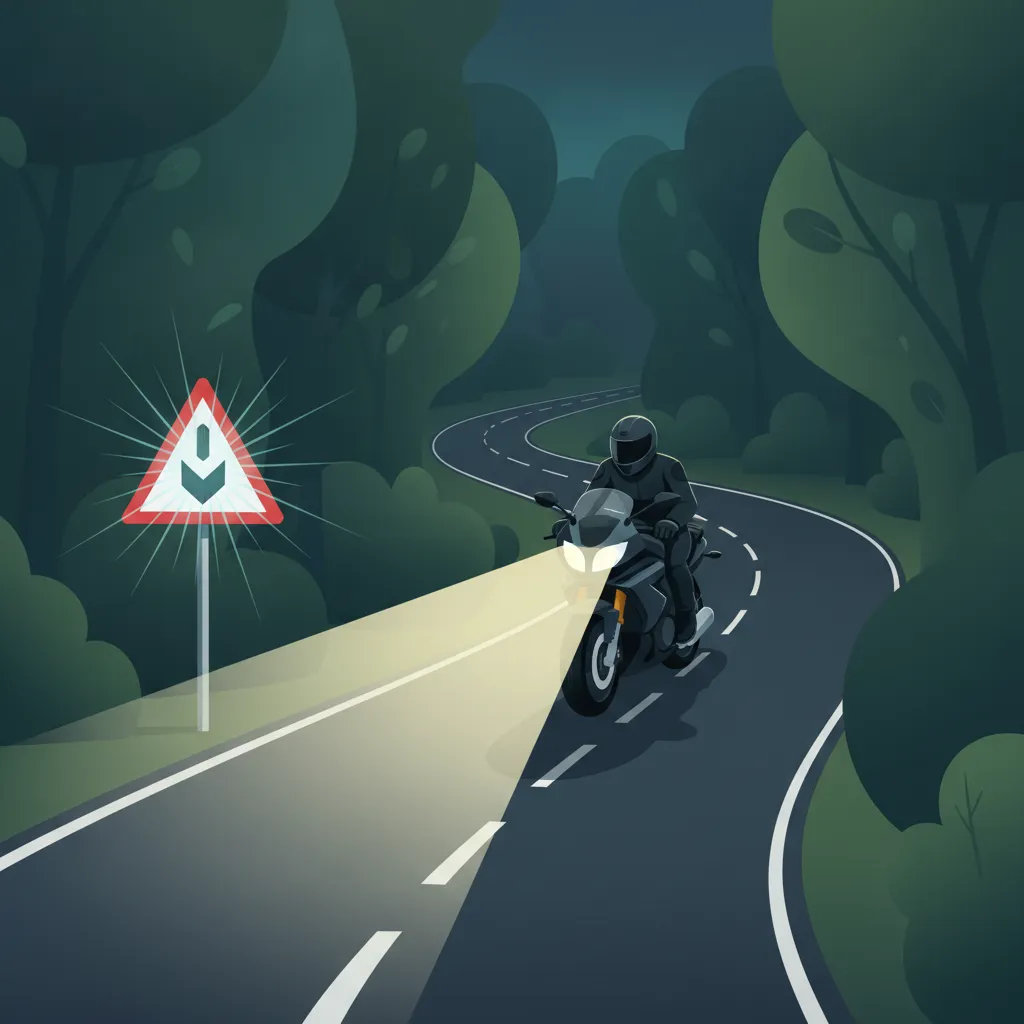
This lesson details safety strategies for riding in dark or poorly illuminated environments, focusing on headlight management and visibility limits. It explains when to use dipped and high beams to avoid blinding other motorists while maximizing your own view of the road. Riders will learn how to scan for reflective markers, manage oncoming glare, and adapt their speed to their headlight range.
This lesson provides actionable strategies for Category AM riders to remain visible, focusing on lane positioning and eye contact. It teaches how to avoid riding in the blind spots of larger vehicles and how to signal early and clearly. Cultivating a proactive attitude toward road visibility helps prevent collisions and builds mutual respect on Irish roads.
Find clear answers to common questions learners have about Enhancing Visibility: Lights and Reflective Wear. Learn how the lesson is structured, which driving theory objectives it supports, and how it fits into the overall learning path of units and curriculum progression in Ireland. These explanations help you understand key concepts, lesson flow, and exam focused study goals.
Yes, many modern mopeds feature daytime running lights. Even if not mandatory for every older model, keeping your headlight on at all times is highly recommended to increase your visibility to other drivers.
Fluorescent yellow or orange is most effective during the day, while retro-reflective silver or white materials are best for nighttime visibility when hit by the headlights of other vehicles.
You should perform a quick 'vitals check' of your lights, indicators, and brake light before every journey to ensure they are functional and clean, which is a key part of your legal responsibility.
Yes, the theory test frequently includes questions about vehicle maintenance, the legal requirement for functioning lights, and the defensive strategy of maximizing your visibility in traffic.
Use the practice question search tool to pinpoint specific topics, road signs, or rules you need to master for your official Driver Theory Test. Refine your study strategy and ensure comprehensive preparation for all aspects of the Irish driving exam. Start your focused revision now and build confidence for your learner permit test.