
This lesson focuses on the critical human factors of driving, specifically how to identify signs of fatigue and manage your alertness behind the wheel. As part of our final unit on responsible driving, this material is essential for understanding your duty of care and passing your Category B theory test.
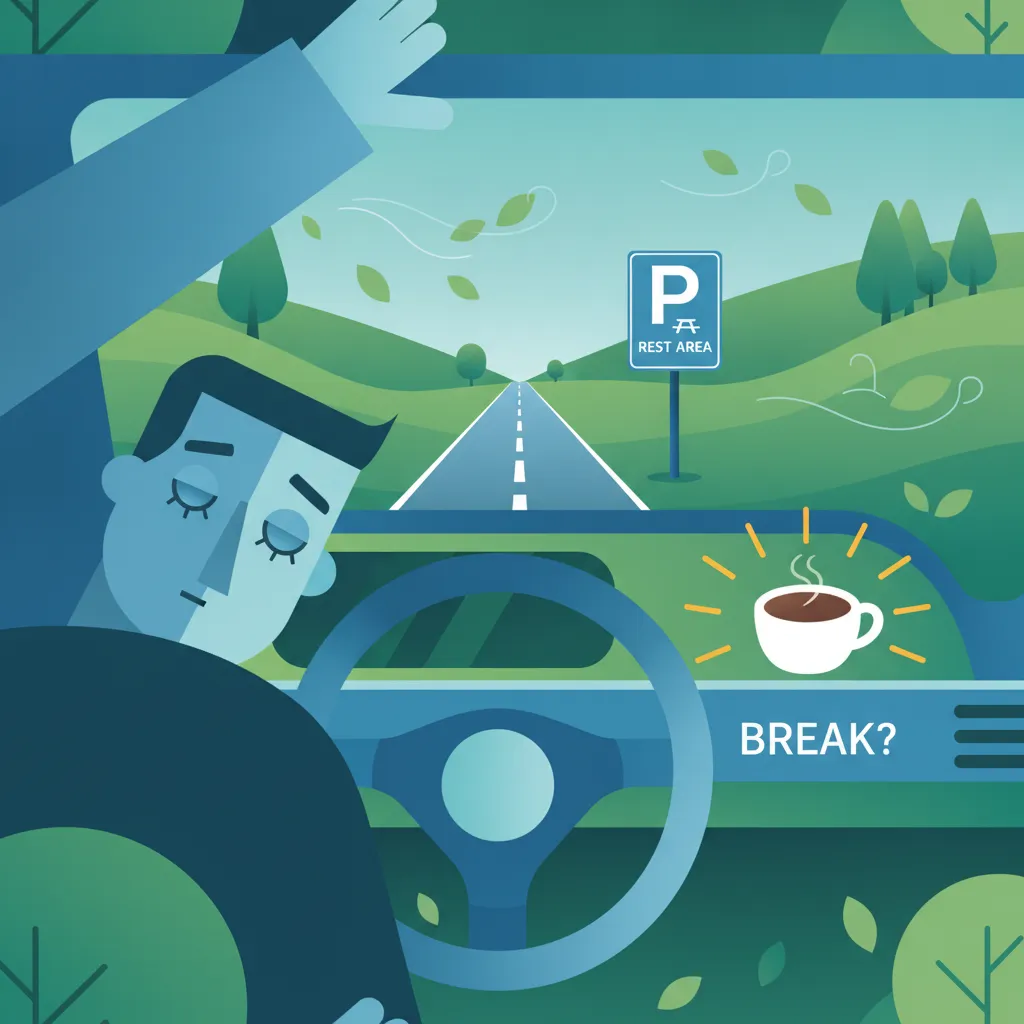
Lesson content overview
Driver fatigue is one of the most significant, yet frequently underestimated, hazards on our roads. Often referred to as a "silent killer," fatigue stealthily degrades a driver's cognitive and physical capabilities long before they actually fall asleep at the wheel. According to the Road Safety Authority (RSA), fatigue is an underlying factor in up to 20% of fatal road collisions in Ireland.
For candidates preparing for the Irish Driver Theory Test (Category B), understanding how to identify, manage, and prevent driver fatigue is not just a requirement for passing the exam—it is a fundamental pillar of lifelong safe driving. This lesson covers the physiological mechanics of fatigue, practical prevention strategies, and your legal responsibilities as a motorist.
Fatigue impairs your driving performance in ways that closely mirror the effects of alcohol consumption. Physiological research shows that being awake for 17 hours reduces your driving ability to the same level as having a Blood Alcohol Concentration (BAC) of 0.05%—the legal limit for fully licensed standard drivers in Ireland. If you remain awake for 24 hours, your impairment level is comparable to a BAC of 0.10%, which is well over the legal limit.
A physiological state of reduced mental or physical performance capability resulting from sleep loss, circadian phase, or high workload (mental and/or physical) that can impair a driver's alertness and ability to safely operate a vehicle.
When you are fatigued, your brain struggles to process visual information, anticipate hazards, and make rapid decisions. Reaction times slow down significantly. For example, a delayed reaction of just one second at a motorway speed of 120 km/h means your vehicle travels an additional 33 metres before the brakes are even applied.
Furthermore, fatigue severely diminishes your spatial awareness and lateral control, frequently causing drivers to drift across lanes, run off the road, or fail to notice vulnerable road users like cyclists and pedestrians.
To manage fatigue effectively, you must understand the biological mechanisms that control sleepiness and alertness. Drowsiness is not merely a matter of willpower; it is governed by deeply ingrained physiological systems.
The human body is regulated by an internal 24-hour biological clock known as the circadian rhythm. This rhythm dictates natural peaks and troughs in alertness throughout the day. Regardless of how much sleep you have had, your body naturally experiences two distinct "circadian dips"—periods where your biological drive for sleep is strongest:
Planning journeys during these high-risk hours requires extra vigilance and proactive rest scheduling.
One of the most dangerous consequences of driving while fatigued is the occurrence of micro-sleeps.
A brief, involuntary episode of sleep or loss of consciousness lasting anywhere from a fraction of a second up to 10 seconds.
Micro-sleeps occur when the brain desperately attempts to force sleep upon an exhausted body. During a micro-sleep, your eyes may remain open, but your brain ceases to process environmental input. If you experience a 4-second micro-sleep while driving on a motorway at 120 km/h, your vehicle will travel more than 130 metres completely out of your control. This is the primary cause of high-speed, single-vehicle collisions where no braking marks are found on the road.
Fatigue does not always happen in a single day. Cumulative fatigue, often referred to as "sleep debt," builds up over several days of insufficient rest.
If you sleep for only 5 hours a night over three consecutive nights, you accumulate a sleep debt of approximately 6 to 9 hours. This chronic deficit makes you highly susceptible to sudden sleep onset, slower hazard perception, and erratic driving behavior, even if you feel relatively alert at the start of a short journey.
Waiting until your eyes close or your head starts nodding is a critical mistake. Safe drivers monitor their physical and mental state constantly, looking for the early warning signs of sleepiness. These warning signs are categorized into physical, cognitive, and physical control behaviors:
| Category | Warning Signs | Practical Danger |
|---|---|---|
| Eye-Related & Physical | Heavy eyelids, frequent yawning, burning or dry eyes, and frequent blinking. | Visual processing slows; you fail to spot road signs or changing traffic lights. |
| Cognitive Indicators | Daydreaming, wandering thoughts, difficulty concentrating, and difficulty remembering the last few kilometres driven. | High risk of missing junctions, exits, or failing to anticipate hazards ahead. |
| Vehicle Control | Drifting out of your lane, tailgating, missing your exit, or making sudden steering corrections. | Immediate danger of colliding with adjacent vehicles or striking road barriers. |
The "Forgotten Kilometre" Warning: If you suddenly realise you cannot remember passing a recent landmark or driving the last two to three kilometres, your brain is already operating in a state of extreme cognitive fatigue. You must stop driving at the next safe location immediately.
The only true cure for fatigue is sleep. However, proactive planning and strategic use of scientifically proven counter-measures can keep you safe on long journeys.
When planning a long-distance journey across Ireland—such as driving from Dublin to Galway or Cork to Belfast—you must schedule regular rest intervals.
The Road Safety Authority recommends taking a minimum 15-minute break for every two hours or 200 kilometres of continuous driving. Do not wait until you feel tired to take these breaks; make them a non-negotiable part of your trip itinerary. Use this time to step out of the car, stretch your legs, and get fresh air to stimulate circulation.
If you begin to feel drowsy while driving, turning up the radio, opening the window, or blasting cold air are only temporary distractions that do not prevent micro-sleeps. Instead, you should implement the clinically proven "caffeine and power nap" sequence:
Stop in a safe place: Pull into a designated motorway service station or safe parking area. Never stop on the hard shoulder of a motorway unless it is a genuine mechanical emergency.
Consume caffeine: Drink one or two cups of strong coffee, tea, or another caffeinated beverage containing roughly 150 mg of caffeine.
Take a short power nap: Immediately lock your doors and take a quiet nap for 10 to 20 minutes. Set an alarm on your phone to prevent sleeping longer.
Wake up and walk: Wake up before 20 minutes have passed. This prevents you from entering deep-stage sleep, which causes grogginess (sleep inertia). Walk around for a few minutes to allow the caffeine to enter your bloodstream (it takes roughly 20 to 30 minutes to take effect).
The Caffeine Crash: Be aware that caffeine is a temporary measure. Once the effects of caffeine wear off (typically within 1 to 2 hours), you may experience a "caffeine crash," resulting in a rapid onset of sleepiness that is more severe than your initial fatigue.
Your susceptibility to fatigue changes depending on external driving conditions and vehicle characteristics.
Maintaining driver alertness is not just a safety recommendation; it is a legal obligation under Irish road traffic legislation.
All motorists have a legal "Duty to Rest." Driving while unfit due to extreme fatigue is an offence. If you are involved in a collision and it is proven that you ignored early warning signs or fell asleep at the wheel, you can be prosecuted for dangerous driving, which carries severe penalties including heavy fines, penalty points, driving disqualifications, and potential imprisonment.
While private Category B car drivers are governed by general road safety laws regarding fitness to drive, professional drivers (such as HGV and bus drivers) are subject to strict, legally mandated European Union (EU) Tachograph and Drivers' Hours Regulations.
Professional drivers must record their driving and rest times electronically. The core regulations include:
Employers of professional drivers share corporate liability. They must schedule deliveries and journeys in a manner that allows drivers to comply with legal rest hours. Pressuring a driver to bypass rest breaks to meet a deadline is a serious criminal offence for both the driver and the company.
To ensure you are fully prepared for the road and your theory test, review these common misconceptions:
Managing your alertness requires a proactive, structured approach. Before embarking on any drive, assess your fitness to drive. Ensure you get adequate sleep the night before, schedule stops every two hours, and respect your body’s natural biological clock. By treating fatigue management as a vital part of your vehicle pre-checks and journey planning, you protect yourself, your passengers, and all other road users.
Explore all units and lessons included in this driving theory course.
Lesson content overview
Explore all units and lessons included in this driving theory course.
Explore search topics learners often look for when studying Recognising Fatigue and Managing Driver Alertness. These topics reflect common questions about road rules, driving situations, safety guidance, and lesson level theory preparation for learners in Ireland.
Browse additional driving theory lessons that cover connected traffic rules, road signs, and common driving situations related to this topic. Improve your understanding of how different rules interact across everyday traffic scenarios.
Learn proactive driving strategies for anticipating hazards and managing risk on Irish roads. This lesson builds on fatigue awareness by explaining how constant observation and defensive positioning help you maintain safety in varying traffic conditions and complex road environments according to official Irish driver theory and safety guidelines.
Proactive hazard perception involves constantly scanning the road ahead to identify potential dangers before they turn into actual emergencies. This lesson covers active scanning techniques, helping you look far ahead, check mirrors regularly, and identify subtle risk clues such as exhaust smoke from parked cars or children playing near kerbs. Anticipating these developments gives you the time to adjust speed and position safely.

Defensive driving prepares you to react safely when facing unexpected mechanical failures or immediate road hazards. This lesson explains how to execute an emergency stop using Anti-lock Braking Systems (ABS) and how to recover from front and rear-wheel skids on slippery roads. You will learn the importance of remaining calm, avoiding panic-steering, and applying controlled evasive actions to prevent collisions.

This lesson teaches how to cultivate a proactive defensive riding mindset, focusing on situational awareness and constant hazard scanning. It describes the system of motorcycle control, encouraging riders to anticipate potential mistakes from other drivers, pedestrians, and cyclists. Motorcyclists will learn to position themselves defensively, leaving clear escape routes in all driving environments.
Warning signs in Ireland are typically diamond-shaped with yellow backgrounds and black symbols, indicating potential dangers on the road ahead. This lesson details signs for upcoming sharp bends, narrow roads, steep hills, pedestrian activity, and animal hazards. Learning to spot these warning indicators early allows you to reduce speed safely and adjust your vehicle positioning before encountering the hazard itself.

Irish rural roads are often narrow, winding, and bordered by high hedges, presenting unique hazards compared to urban streets. This lesson focuses on scanning for hidden hazards such as slow-moving farm machinery, mud on the road surface, and loose livestock. You will learn how to adjust your speed before entering blind bends, sound your horn at blind crests, and safely share the road with local agricultural traffic.

Maintaining an extensive buffer zone ahead of a large passenger vehicle is critical to ensuring enough space for emergency maneuvers. This lesson teaches the time-gap method, detailing how following distances must double on wet roads or increase with full passenger loads. It builds hazard anticipation skills, teaching drivers to read distant traffic cues and react early to hazards.

Heavy vehicles require continuous visual scanning to identify small or slow-moving road users who may enter the path of travel. This lesson explores the typical behaviors of young children, elderly pedestrians, and visually impaired road users. Drivers will build strong hazard perception skills to anticipate sudden movements, ensuring they can brake safely and avoid serious accidents.
Wet roads, heavy winter fog, and strong lateral winds present major safety challenges for high-sided passenger vehicles in Ireland. This lesson explains how to prevent aquaplaning, double following distances on wet surfaces, and use fog lights correctly to maintain visibility. Drivers will learn handling adjustments to counteract sudden wind gusts when crossing exposed bridges or motorways.
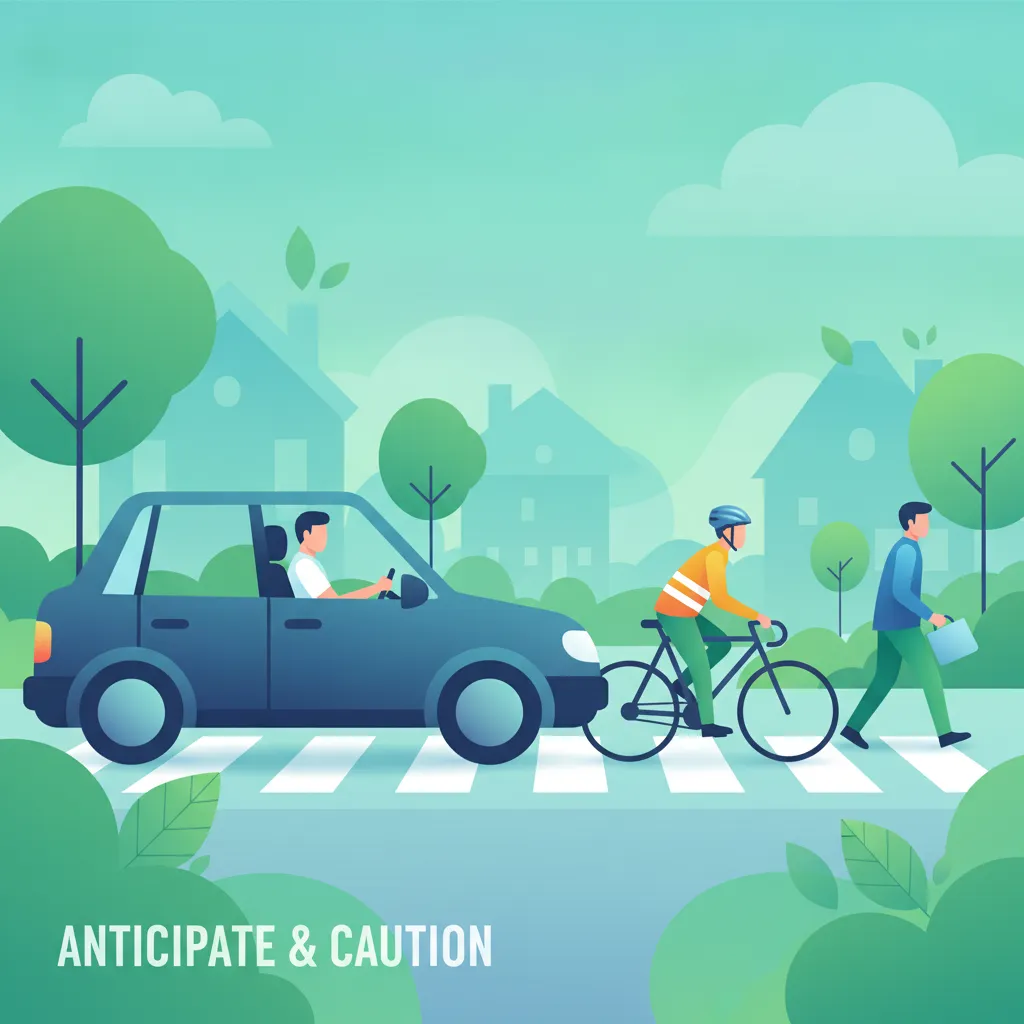
Safeguarding vulnerable road users requires more than simple obedience to traffic signs; it demands a defensive driving mindset. This lesson summarizes safe practices, including scanning far ahead in urban areas, keeping massive safety margins in wet weather, and executing thorough blind spot checks before reversing. By anticipating the unpredictable movements of others, you can prevent accidents and support a safe road culture.

Irish rural routes are often narrow, lacking central markings, and bordered by tall hedges that restrict forward visibility on sharp bends. This lesson teaches drivers how to negotiate blind curves, anticipate slow-moving agricultural machinery, and respond to wandering farm animals. Drivers will learn to regulate vehicle speed proactively, maintaining a safe stopping margin in rural areas.
Understand the critical steps required if you are involved in or encounter a road traffic collision. This lesson provides an overview of legal obligations, scene management, and first aid priorities under Irish road traffic law, ensuring you are prepared to act safely and responsibly in emergency roadside situations.

This lesson outlines the vital actions required from a professional driver immediately following a collision on Irish roads. It details the correct protocols for contacting emergency services, assisting injured parties safely, and securing the accident scene to prevent secondary incidents. Additionally, the lesson explains the legal requirements for documenting the event, exchanging insurance details, and reporting to authorities.
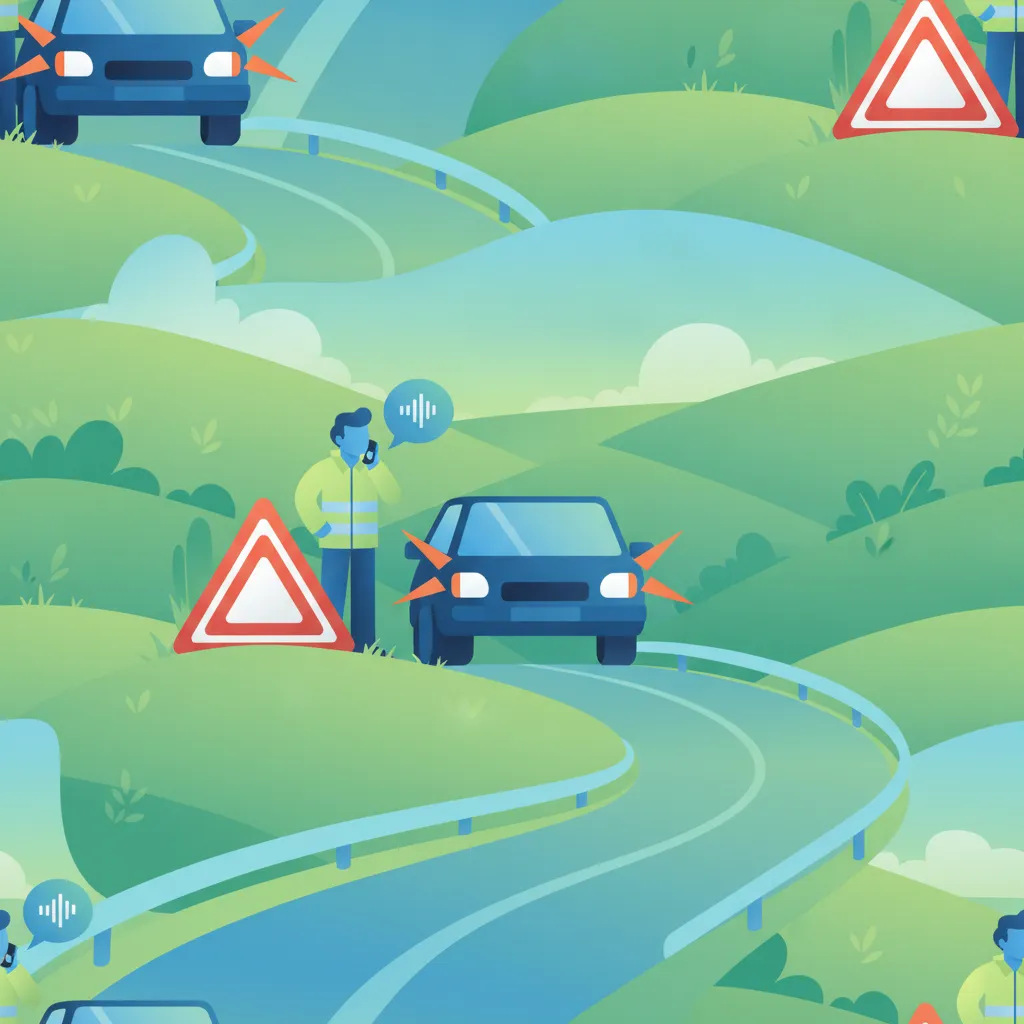
This lesson outlines the immediate, structured actions a rider must take when witnessing or being involved in a road traffic collision in Ireland. It covers securing the scene, contacting emergency services via 999 or 112, and administering basic first aid while waiting for paramedics. Motorcyclists will learn how to handle injured riders safely, emphasizing that helmets must not be removed unless breathing is compromised.

Arriving at or being involved in a road traffic collision requires immediate, structured action to protect lives and prevent secondary crashes. This lesson covers how to safely secure an accident scene, activate hazard warning lights, place a warning triangle, and contact emergency services on 112. You will learn your legal duties to stop and share details, along with basic life-saving first aid principles for crash victims.

This lesson outlines the immediate steps to take during a mechanical breakdown or a traffic collision on public roads. It covers how to secure the scene to prevent secondary accidents, apply basic first aid, and contact emergency services using 112 or 999. Riders will also study the legal obligations for reporting accidents to the Gardaí.

When emergencies strike, a passenger driver must remain perfectly calm and execute structured emergency procedures to protect human life. This lesson outlines safety protocols for roadside breakdowns, engine fire isolation, and handling acute passenger medical emergencies. Drivers will learn how to secure the accident scene and report incidents to emergency services as required by Irish law.

Drivers bear the legal responsibility of ensuring that all passengers under seventeen years of age are properly secured in the vehicle. This lesson covers Ireland's strict seatbelt laws and the requirement to use an EU-approved child restraint system appropriate for the child's height and weight. You will learn how to locate ISOFIX anchorage points, fit child seats correctly, and deactivate passenger airbags when using rear-facing seats.

This lesson outlines how motorcyclists should respond when permanent road signs are dirty, damaged, or hidden by overgrown trees and hedges. It introduces the temporary signage, warning cones, and detour markers commonly deployed at active roadwork zones in Ireland. Riders will learn to read the road ahead defensively, reducing speed when visual information is incomplete or compromised.
Find clear answers to common questions learners have about Recognising Fatigue and Managing Driver Alertness. Learn how the lesson is structured, which driving theory objectives it supports, and how it fits into the overall learning path of units and curriculum progression in Ireland. These explanations help you understand key concepts, lesson flow, and exam focused study goals.
The only safe way to combat genuine sleepiness is to stop in a safe place, such as a motorway service area or parking zone, and take a break. A short nap or a caffeine drink followed by a rest can help, but you should never attempt to drive while struggling to stay awake.
Yes, the Irish Driver Theory Test includes questions about the dangers of driving while tired. You will likely face scenarios asking for the correct course of action when you feel your concentration slipping, which always involves stopping the vehicle.
Fatigue slows your reaction time, impairs your decision-making, and reduces your ability to maintain lane discipline. It can cause you to experience 'micro-sleeps' where you momentarily lose consciousness, often leading to drifting into oncoming traffic or running off the road.
While there isn't a single 'fatigue limit' like there is for alcohol, driving while you are not fit to do so is a breach of your duty of care. If you are involved in an incident because you were too tired to drive safely, you could face legal consequences.
Use the practice question search tool to pinpoint specific topics, road signs, or rules you need to master for your official Driver Theory Test. Refine your study strategy and ensure comprehensive preparation for all aspects of the Irish driving exam. Start your focused revision now and build confidence for your learner permit test.