
This lesson prepares you for the specific challenges of driving on rural Irish roads, where narrow paths and hidden hazards are common. You will learn to anticipate risks like farm machinery, mud, and blind crests to stay safe and exam-ready.
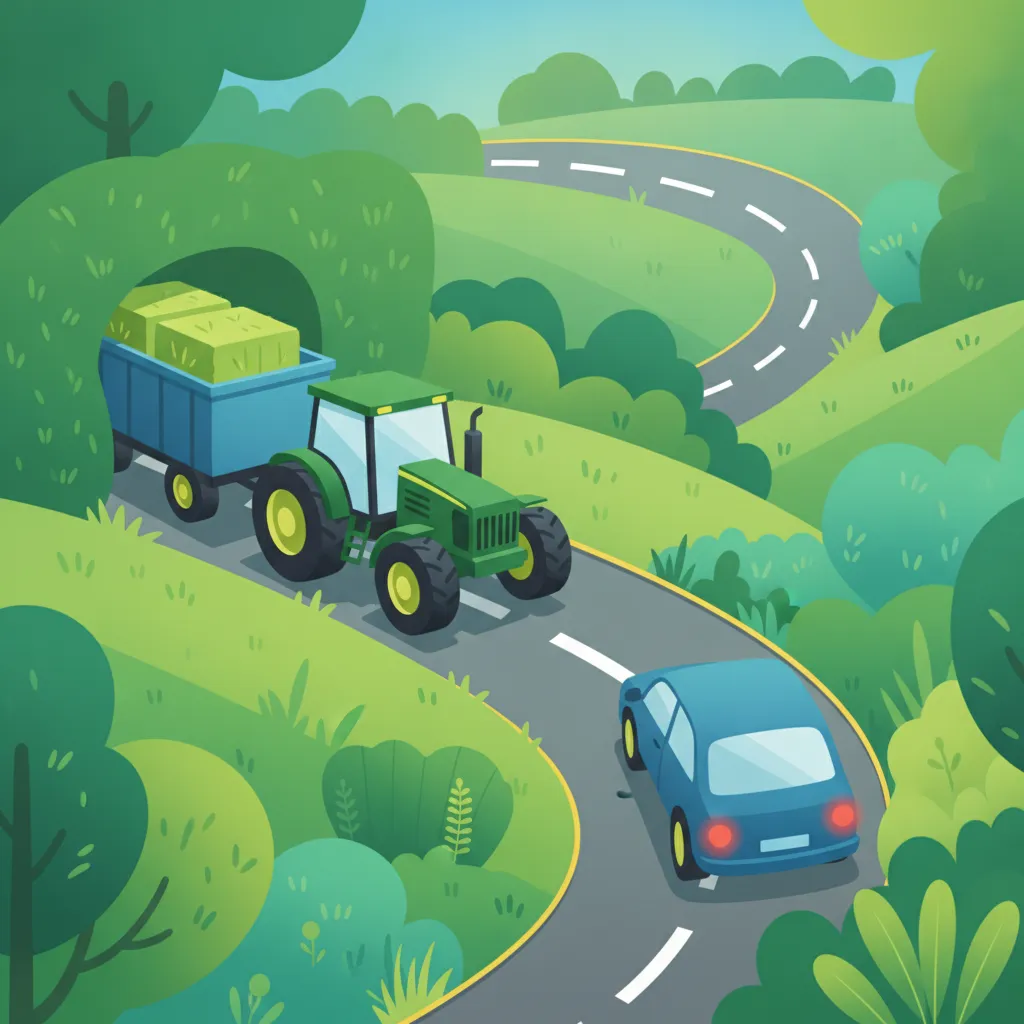
Lesson content overview
Driving on Irish rural roads requires a fundamental shift in mindset from urban driving. While motorways and city streets are highly engineered for predictable flow, Ireland's network of regional (R) and local (L) roads—often colloquially called country lanes or "boreens"—presents a dynamic, organic environment. These roads are frequently narrow, winding, bordered by high mature hedgerows, and shared with slow-moving agricultural machinery, livestock, and vulnerable road users.
Statistics from the Road Safety Authority (RSA) consistently highlight that a disproportionate number of fatal and serious collisions occur on rural roads. This lesson provides the deep hazard perception skills, speed management techniques, and sharing-the-road rules required to pass your Irish Driver Theory Test (Category B) and safely navigate the countryside.
To safely navigate rural roads, you must first understand how their physical layout differs from urban environments. Many rural roads in Ireland were developed from historic pathways, meaning they follow the natural contours of the landscape rather than straight, cleared corridors.
Many local and regional roads are not wide enough for two standard passenger vehicles to pass comfortably without one or both slowing down or pulling into a passing place. Often, these roads lack central dividing lines or edge-of-carriageway markings.
Unlike urban areas with wide verges and pavements, Irish country lanes are typically bordered by:
The default speed limit on national roads (N) is 100 km/h, while regional (R) and local (L) roads generally carry an 80 km/h limit. However, a speed limit is a legal maximum, not a target. On many narrow L-roads, driving at 80 km/h would be extremely reckless. You must always drive at a speed that allows you to stop safely within the distance you can see to be clear.
Hazard perception is the ability to identify potential dangers before they develop into active emergencies. On rural roads, you must look for subtle clues in the environment rather than waiting for warning signs.
A skilled driver uses clues from the landscape to anticipate what lies ahead:
The furthest point along the road ahead at which you have an uninterrupted view of the road surface. This is also referred to as the "vanishing point."
To use the limit point technique:
A common driver error on rural roads is entering a bend too quickly and attempting to correct the vehicle's speed mid-curve. This destabilises the vehicle and can cause a dangerous skid.
When a vehicle enters a bend, centrifugal force acts to pull the vehicle outward. Your tyres rely on friction (grip) to counteract this force and steer the car. If you apply the brakes heavily while steering through a bend, you ask the tyres to handle two intense forces at once: stopping and turning. This easily exceeds the available tyre grip, leading to:
To negotiate any bend safely, use the systematic approach outlined below:
Information: Constantly scan for warning signs, road markings, or natural clues indicating the severity of the bend. Check your mirrors to assess traffic behind.
Position: Position your vehicle safely. For a right-hand bend, keep towards the left-hand side of your lane to maximise your view around the corner. For a left-hand bend, position towards the centre of the road (without crossing the white line) to open up your line of sight, provided there is no oncoming traffic.
Speed: Gently apply your brakes while your vehicle is still travelling in a straight line. Reduce your speed to a level where you can stop within your visible limit point.
Gear: Once your speed is correct, select the appropriate gear for the speed and the gradient of the road. Engaging the correct gear before entering the turn ensures engine braking assists your stability.
Accelerate: Maintain a balanced, neutral throttle through the bend to keep the car's weight distributed evenly. Only accelerate gently once you see the road straighten out and the exit of the bend is clear.
A blind crest is a point where the road rises over a hill, completely blocking your view of what lies directly on the other side.
When approaching a blind crest, you must assume there is a hazard immediately over the brow of the hill—such as a broken-down vehicle, a cyclist, or a herd of animals.
Avoid Excessive Horn Use: Do not hold the horn down or use it aggressively. A brief "one-second" blast is all that is required to act as a courtesy warning. Never use your horn in a residential or quiet rural area late at night (between 23:30 and 07:00) unless it is a genuine emergency.
Irish country roads frequently feature old stone bridges that are only wide enough for a single vehicle.
Agriculture is a cornerstone of rural Irish life, meaning you will regularly interact with tractors, silage harvesters, trailers, and other wide farm implements.
Agricultural vehicles behave very differently from passenger cars:
Overtaking a slow-moving tractor requires patience and strict adherence to safety protocols:
Be Patient: Many farmers are courteous and will pull into a layby or gate entrance to allow a queue of cars to pass. Do not sound your horn or flash your lights to pressure them into pulling over; wait until it is safe and legal for them to do so.
Under Irish law, livestock (cows, sheep, goats) and horses have a recognized right to use the public highway under proper control. You must treat animals with extreme caution, as they are highly unpredictable.
Farmers frequently move herds of cattle or flocks of sheep between fields along public rural roads.
Horses are flight animals; a sudden movement, noise, or shiny object can cause them to rear or bolt into the path of your vehicle.
Country roads are highly exposed to the elements, and their surfaces degrade faster than heavily trafficked urban motorways.
| Rule / Hazard | Legal Status & Safe Practice | Rationale |
|---|---|---|
| Speed Adjustment | Mandatory. You must drive at a speed that allows you to stop safely within the distance you can see to be clear. | Prevents collisions with hidden hazards around blind corners. |
| Stopping for Livestock | Mandatory. Drivers must stop when requested by a herder or when animals block the road. | Protects human and animal life, preventing severe impact damage. |
| Overtaking Farm Machinery | Mandatory. Only overtake where there is a clear view ahead and no solid white line is crossed. | Prevents head-on collisions with oncoming traffic hidden by the tractor. |
| Horn at Blind Crests | Recommended. Use a short, sharp horn when visibility is severely limited at a hill brow. | Warns oncoming drivers who may be hugging the center of a narrow lane. |
| Positioning | Recommended. Stay close to the left edge of the road, keeping clear of soft verges. | Maximises passing space for oncoming large vehicles. |
Irish rural roads require a defensive driving mindset because they are narrow, winding, and often lack markings, with hazards hidden by hedgerows and crests. The limit point technique guides your speed by tracking how quickly the vanishing point approaches; if it rushes toward you, you must slow down before you can see what lies ahead. Farm machinery, livestock herds, and horses are legitimate road users you will encounter, each requiring specific protocols such as stopping for herders, maintaining distance from horses, and only overtaking tractors on clear straight stretches. Speed management before bends using the IPSGA method—adjusting speed while still travelling straight—prevents the dangerous skid scenarios caused by braking mid-corner.
A short set of high-value points that capture the most important learning from this lesson.
Speed on rural roads must always be governed by your ability to stop within the visible distance ahead, not the posted speed limit.
Use the limit point technique: if the vanishing point appears to rush toward you, reduce speed immediately before entering the bend.
Apply IPSGA systematically on bends: Information, Position, Speed, Gear, then Accelerate only after the road straightens.
Mud on rural roads becomes extremely slippery when wet and can cause loss of control similar to black ice.
When encountering livestock on the road, stop completely, turn off high beams, and follow the herder's instructions at walking pace.
Explore all units and lessons included in this driving theory course.
Oncoming vehicles at blind crests: sound a short horn before cresting if visibility is severely restricted.
Tractor speed is typically 30-50 km/h; closing speed difference is significant compared to passenger vehicles.
Keep at least 1.5 metres clearance when passing horses and reduce engine revs to avoid startling them.
Only overtake farm machinery on straight road with clear visibility and never cross a solid white line.
Soft verges conceal drainage ditches and can pull your vehicle off the road if driven onto at speed.
Braking heavily while already steering through a bend, which can cause understeer or oversteer by exceeding tyre grip.
Attempting to overtake tractors at junctions, bends, or crests where oncoming traffic is hidden.
Treating 80 km/h as a target speed on narrow L-roads rather than a legal maximum that may be unsafe to use.
Using the horn aggressively or at night (23:30-07:00) in quiet rural areas when a brief courtesy blast is all that is required.
Driving too close behind farm trailers, blocking your own forward view and creating a blind spot the tractor driver cannot see.
Lesson content overview
A short set of high-value points that capture the most important learning from this lesson.
Speed on rural roads must always be governed by your ability to stop within the visible distance ahead, not the posted speed limit.
Use the limit point technique: if the vanishing point appears to rush toward you, reduce speed immediately before entering the bend.
Apply IPSGA systematically on bends: Information, Position, Speed, Gear, then Accelerate only after the road straightens.
Mud on rural roads becomes extremely slippery when wet and can cause loss of control similar to black ice.
When encountering livestock on the road, stop completely, turn off high beams, and follow the herder's instructions at walking pace.
Explore all units and lessons included in this driving theory course.
Oncoming vehicles at blind crests: sound a short horn before cresting if visibility is severely restricted.
Tractor speed is typically 30-50 km/h; closing speed difference is significant compared to passenger vehicles.
Keep at least 1.5 metres clearance when passing horses and reduce engine revs to avoid startling them.
Only overtake farm machinery on straight road with clear visibility and never cross a solid white line.
Soft verges conceal drainage ditches and can pull your vehicle off the road if driven onto at speed.
Braking heavily while already steering through a bend, which can cause understeer or oversteer by exceeding tyre grip.
Attempting to overtake tractors at junctions, bends, or crests where oncoming traffic is hidden.
Treating 80 km/h as a target speed on narrow L-roads rather than a legal maximum that may be unsafe to use.
Using the horn aggressively or at night (23:30-07:00) in quiet rural areas when a brief courtesy blast is all that is required.
Driving too close behind farm trailers, blocking your own forward view and creating a blind spot the tractor driver cannot see.
Explore search topics learners often look for when studying Rural Road Risks, Bends, and Farm Vehicle Interactions. These topics reflect common questions about road rules, driving situations, safety guidance, and lesson level theory preparation for learners in Ireland.
Browse additional driving theory lessons that cover connected traffic rules, road signs, and common driving situations related to this topic. Improve your understanding of how different rules interact across everyday traffic scenarios.
Learn the systematic approach to identifying hazards before they develop into emergencies. This guide covers scanning techniques, using the limit point to manage speed, and reading environmental clues to anticipate dangers on diverse road surfaces and weather conditions throughout the Irish road network.
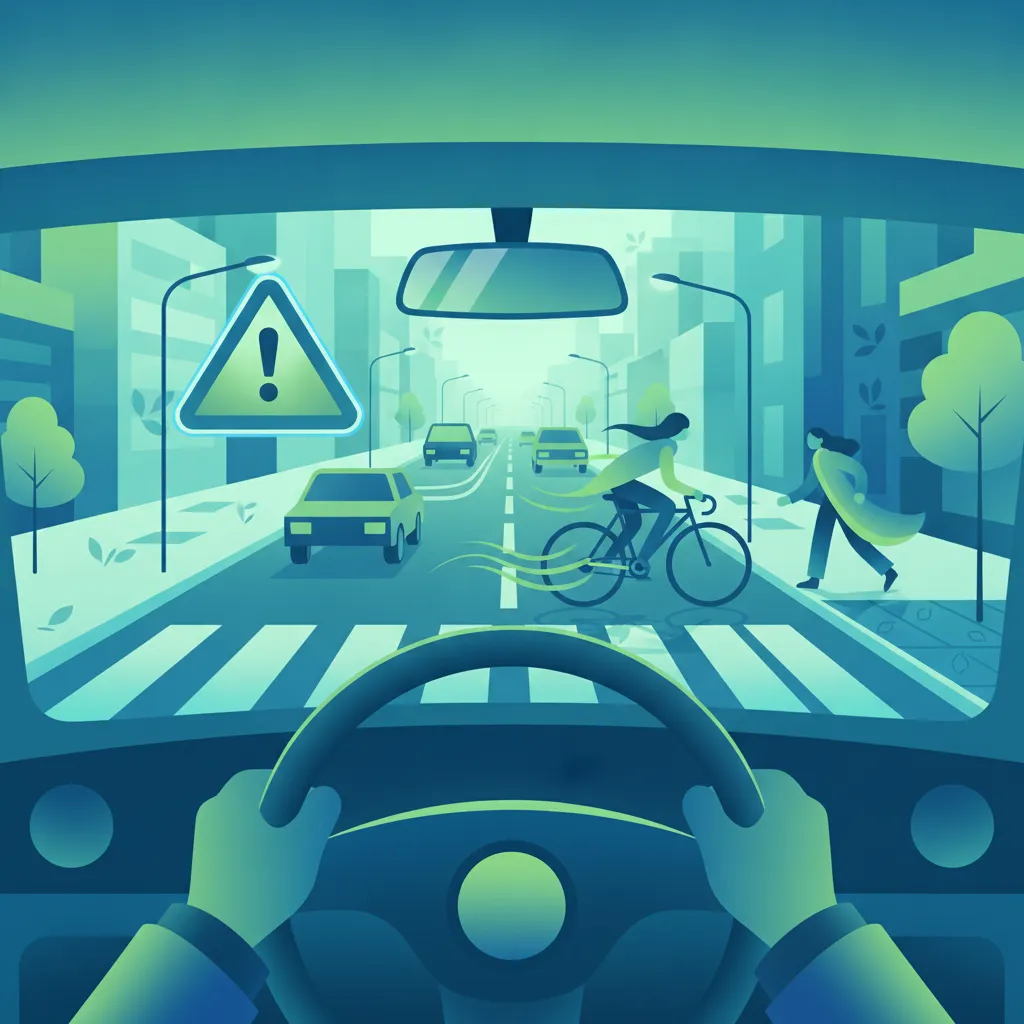
Proactive hazard perception involves constantly scanning the road ahead to identify potential dangers before they turn into actual emergencies. This lesson covers active scanning techniques, helping you look far ahead, check mirrors regularly, and identify subtle risk clues such as exhaust smoke from parked cars or children playing near kerbs. Anticipating these developments gives you the time to adjust speed and position safely.
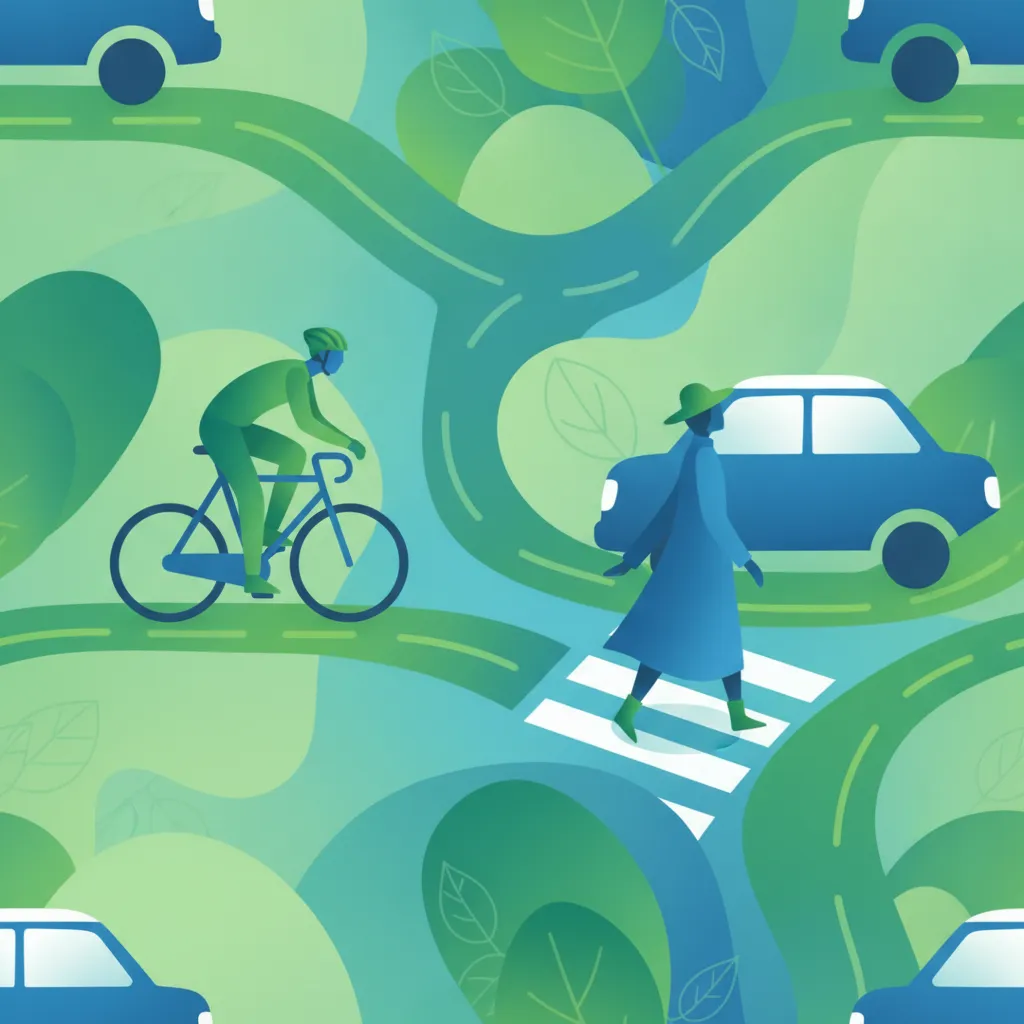
Heavy vehicles require continuous visual scanning to identify small or slow-moving road users who may enter the path of travel. This lesson explores the typical behaviors of young children, elderly pedestrians, and visually impaired road users. Drivers will build strong hazard perception skills to anticipate sudden movements, ensuring they can brake safely and avoid serious accidents.
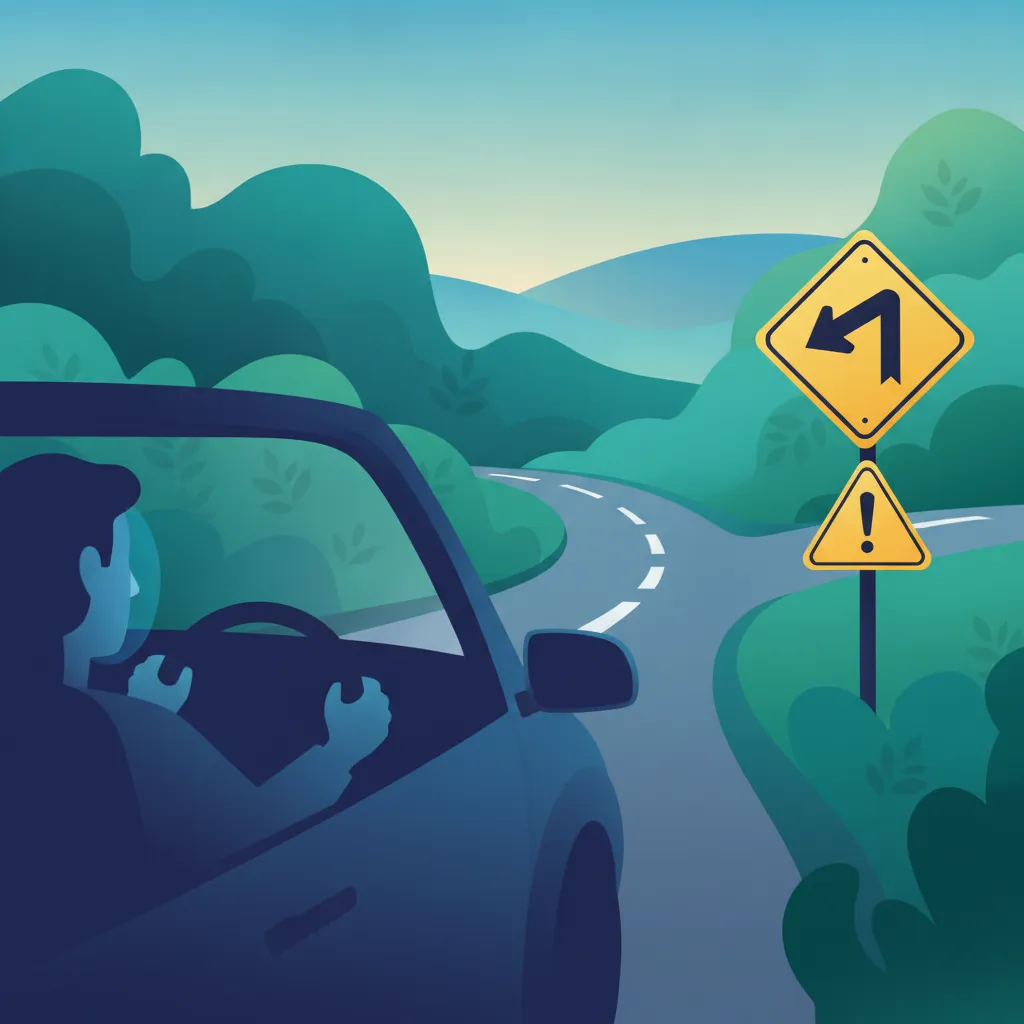
Warning signs in Ireland are typically diamond-shaped with yellow backgrounds and black symbols, indicating potential dangers on the road ahead. This lesson details signs for upcoming sharp bends, narrow roads, steep hills, pedestrian activity, and animal hazards. Learning to spot these warning indicators early allows you to reduce speed safely and adjust your vehicle positioning before encountering the hazard itself.

Driving at night presents severe challenges due to reduced visibility, driver fatigue, and headlight glare from oncoming vehicles. This lesson teaches you how to manage your headlights, use road edge markers to steer through dark curves, and look away from oncoming bright lights. You will learn to drive within the range of your headlights and remain highly alert for pedestrians or cyclists not wearing reflective gear.

This lesson teaches how to cultivate a proactive defensive riding mindset, focusing on situational awareness and constant hazard scanning. It describes the system of motorcycle control, encouraging riders to anticipate potential mistakes from other drivers, pedestrians, and cyclists. Motorcyclists will learn to position themselves defensively, leaving clear escape routes in all driving environments.
Defensive driving prepares you to react safely when facing unexpected mechanical failures or immediate road hazards. This lesson explains how to execute an emergency stop using Anti-lock Braking Systems (ABS) and how to recover from front and rear-wheel skids on slippery roads. You will learn the importance of remaining calm, avoiding panic-steering, and applying controlled evasive actions to prevent collisions.

This lesson outlines how motorcyclists should respond when permanent road signs are dirty, damaged, or hidden by overgrown trees and hedges. It introduces the temporary signage, warning cones, and detour markers commonly deployed at active roadwork zones in Ireland. Riders will learn to read the road ahead defensively, reducing speed when visual information is incomplete or compromised.
Safeguarding vulnerable road users requires more than simple obedience to traffic signs; it demands a defensive driving mindset. This lesson summarizes safe practices, including scanning far ahead in urban areas, keeping massive safety margins in wet weather, and executing thorough blind spot checks before reversing. By anticipating the unpredictable movements of others, you can prevent accidents and support a safe road culture.
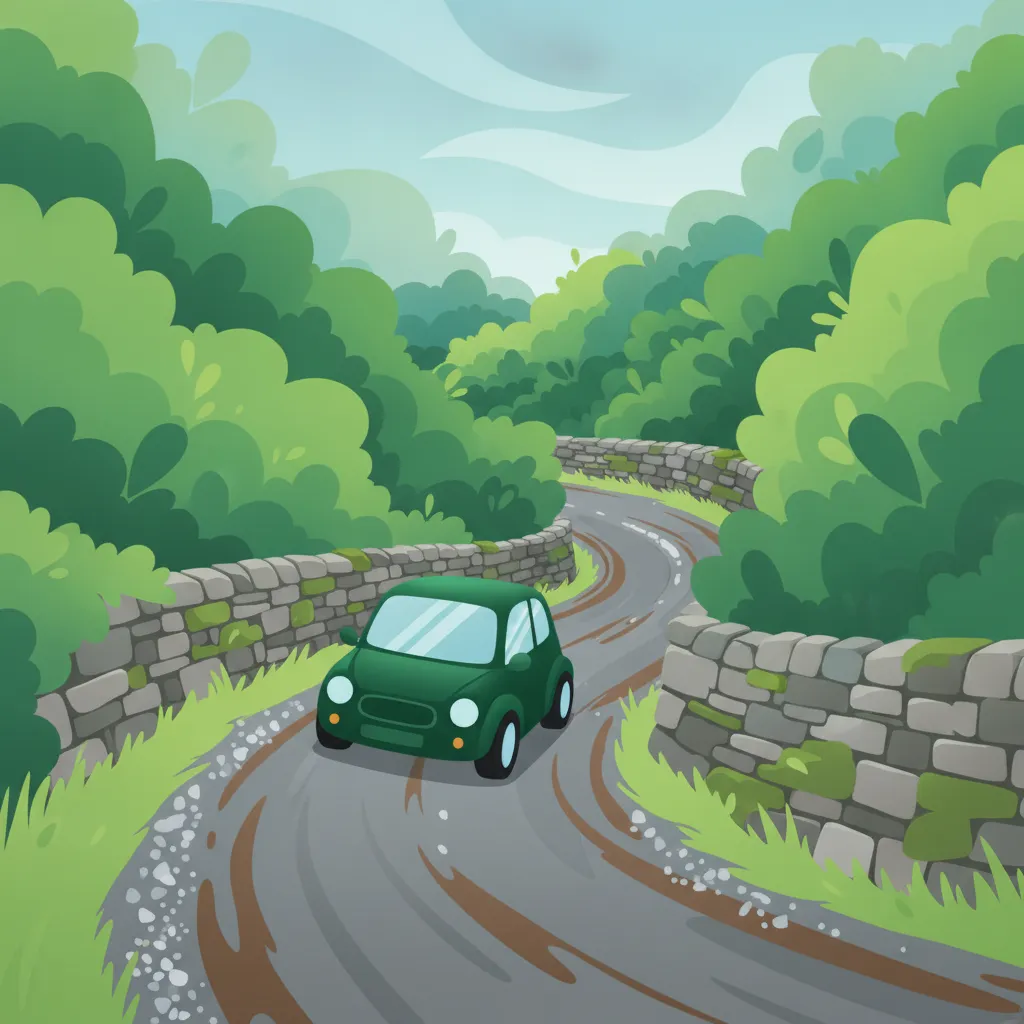
Irish rural routes are often narrow, lacking central markings, and bordered by tall hedges that restrict forward visibility on sharp bends. This lesson teaches drivers how to negotiate blind curves, anticipate slow-moving agricultural machinery, and respond to wandering farm animals. Drivers will learn to regulate vehicle speed proactively, maintaining a safe stopping margin in rural areas.
Variable Message Signs and roadwork indicators communicate temporary safety conditions, such as lane closures, heavy delays, or dynamic speed restrictions. This lesson teaches you how to interpret digital overhead gantries, temporary hazard cones, and specific detour layouts often encountered on Irish motorways and regional routes. Adhering to these real-time instructions protects both you and the vulnerable road crews working ahead.
Understand the difference between legal maximum speed limits and safe driving speeds. This explanation details how to adapt your speed for rural roads, weather, visibility, and traffic density to ensure you can stop safely within the distance you can see to be clear on any road type.
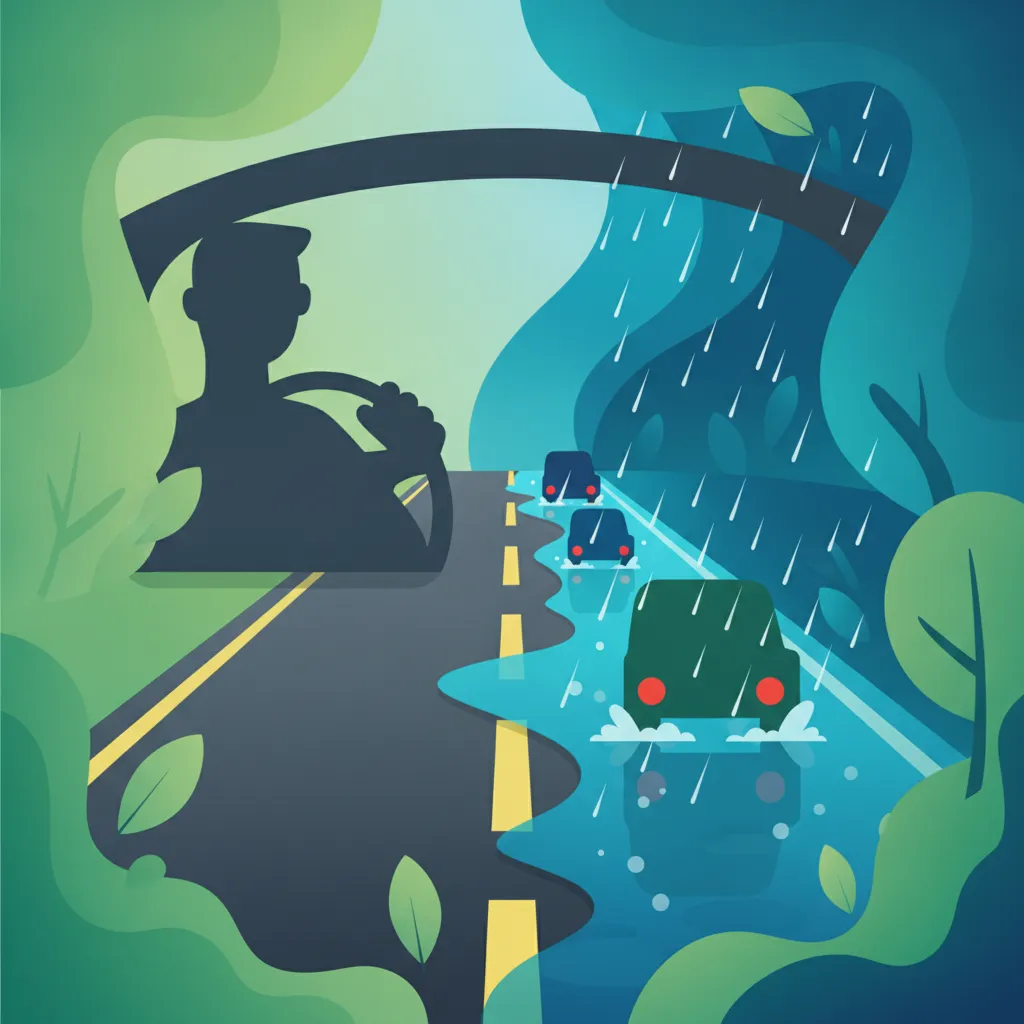
Adhering to legal speed limits is not always sufficient; you must continuously adapt your speed to match real-world hazards. This lesson teaches you how to reduce speed when encountering rain, fog, heavy traffic, or narrow winding rural roads with restricted visibility. You will learn the importance of matching your speed to your range of clear vision, ensuring you can stop safely within the distance you can see ahead.
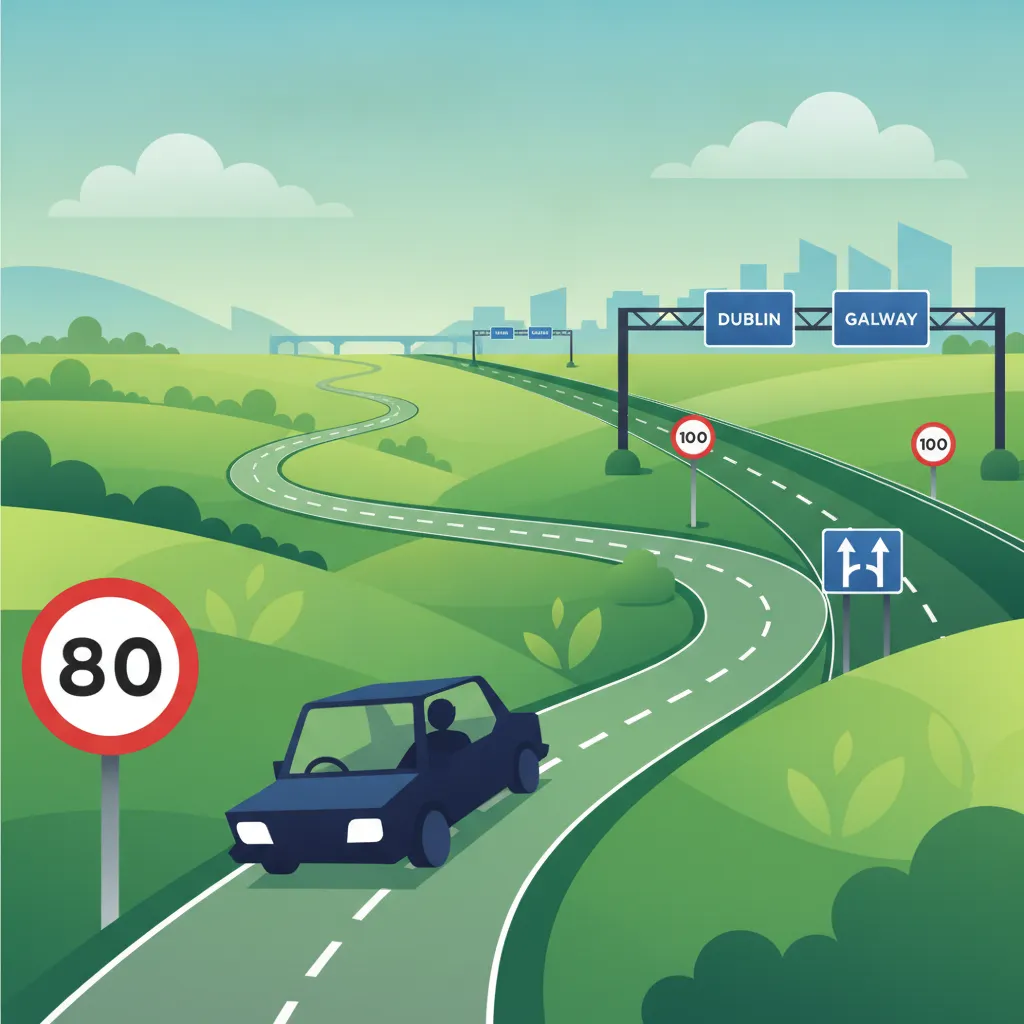
Ireland has designated statutory speed limits ranging from 30 km/h in slow urban zones to 120 km/h on motorways. This lesson details these default limits for Category B passenger cars, the placement of speed signs, and how local authorities apply special temporary limits. You will learn that a speed limit represents the absolute maximum legal speed under ideal conditions, and must always be adjusted downwards for safety.
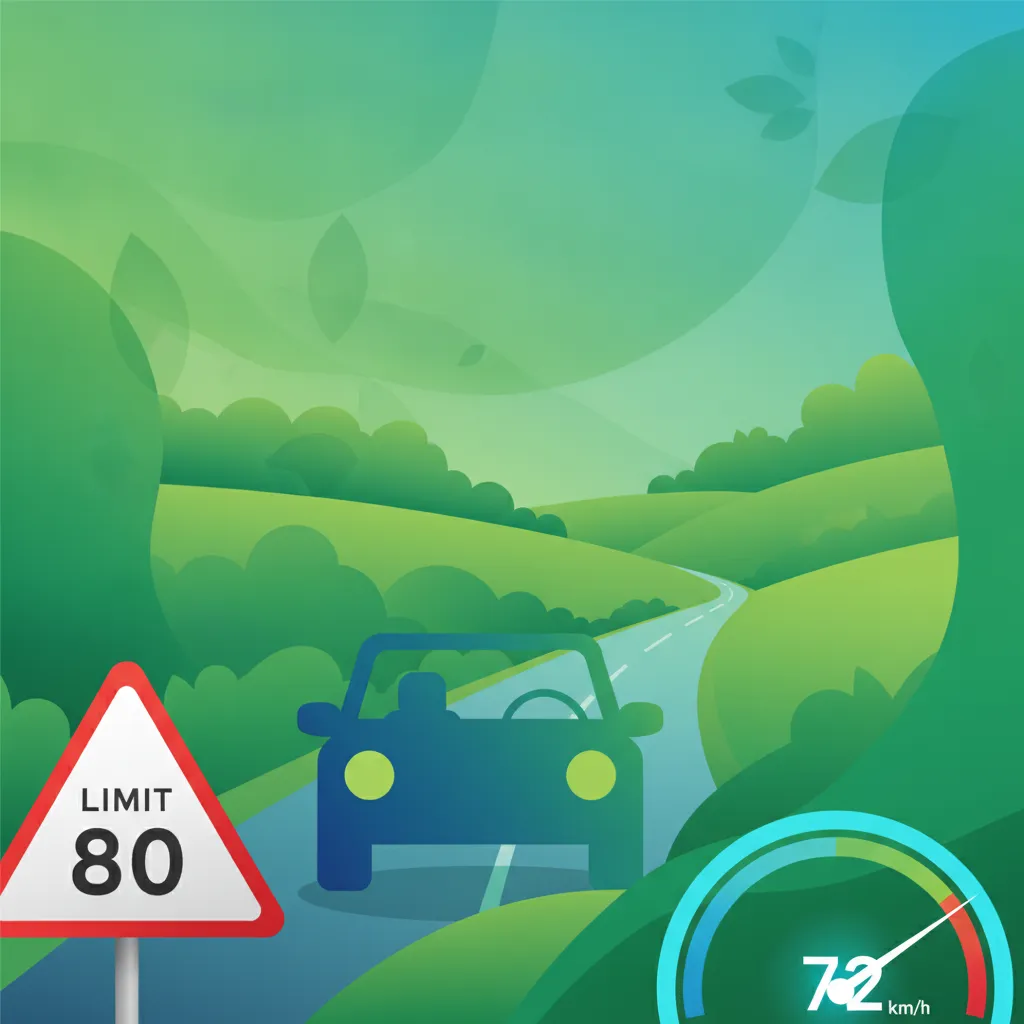
Speed management requires adjusting vehicle velocity to suit current weather, passenger load, and the specific limits of Irish roads. This lesson details speed restrictions for buses and minibuses on motorways, national routes, and built-up areas throughout Ireland. It highlights the driver obligation to prioritize passenger safety over schedule delays by maintaining appropriate speeds.
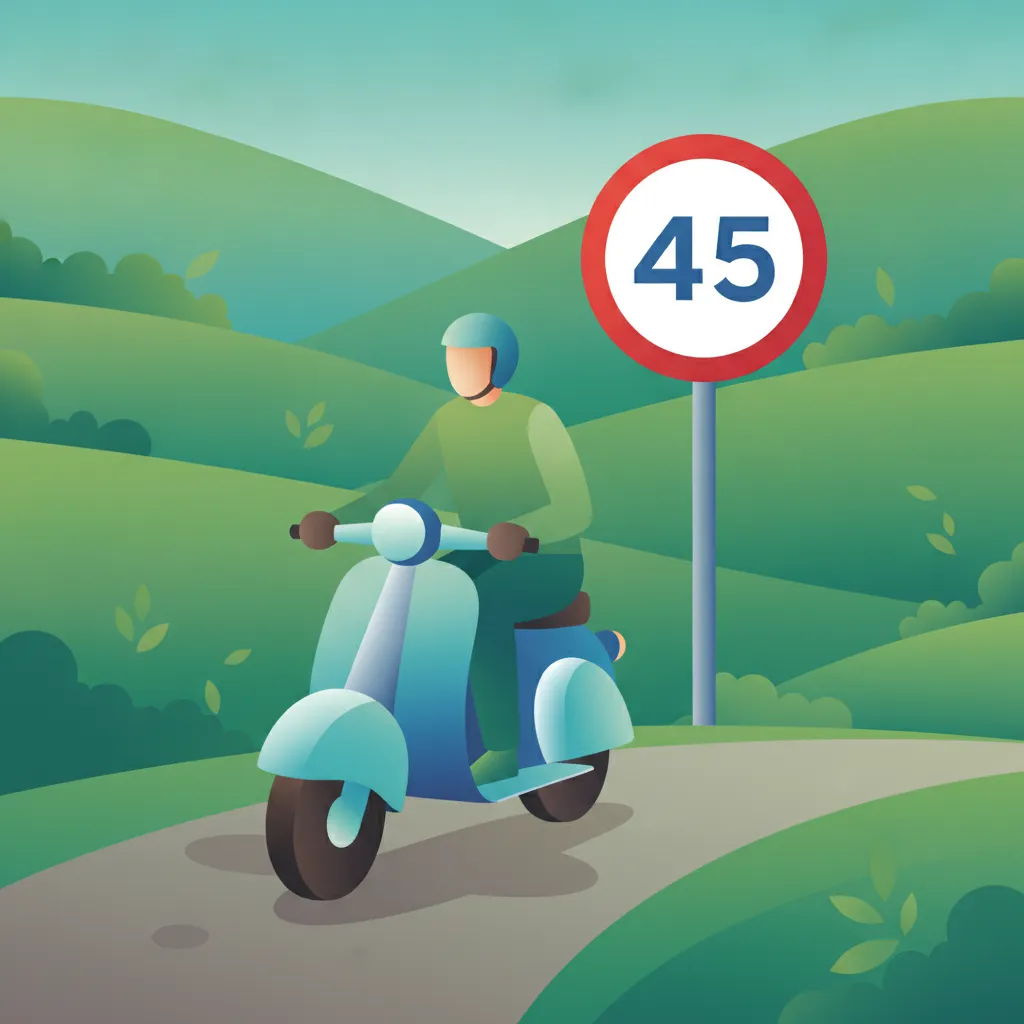
This lesson outlines the legal speed limits governing mopeds and light quadricycles in various Irish environments, including urban centers and school zones. It clarifies why Category AM vehicles are strictly prohibited from driving on motorways due to safety and speed disparities. Riders will also study the legal penalties, including fines and points, for speeding.
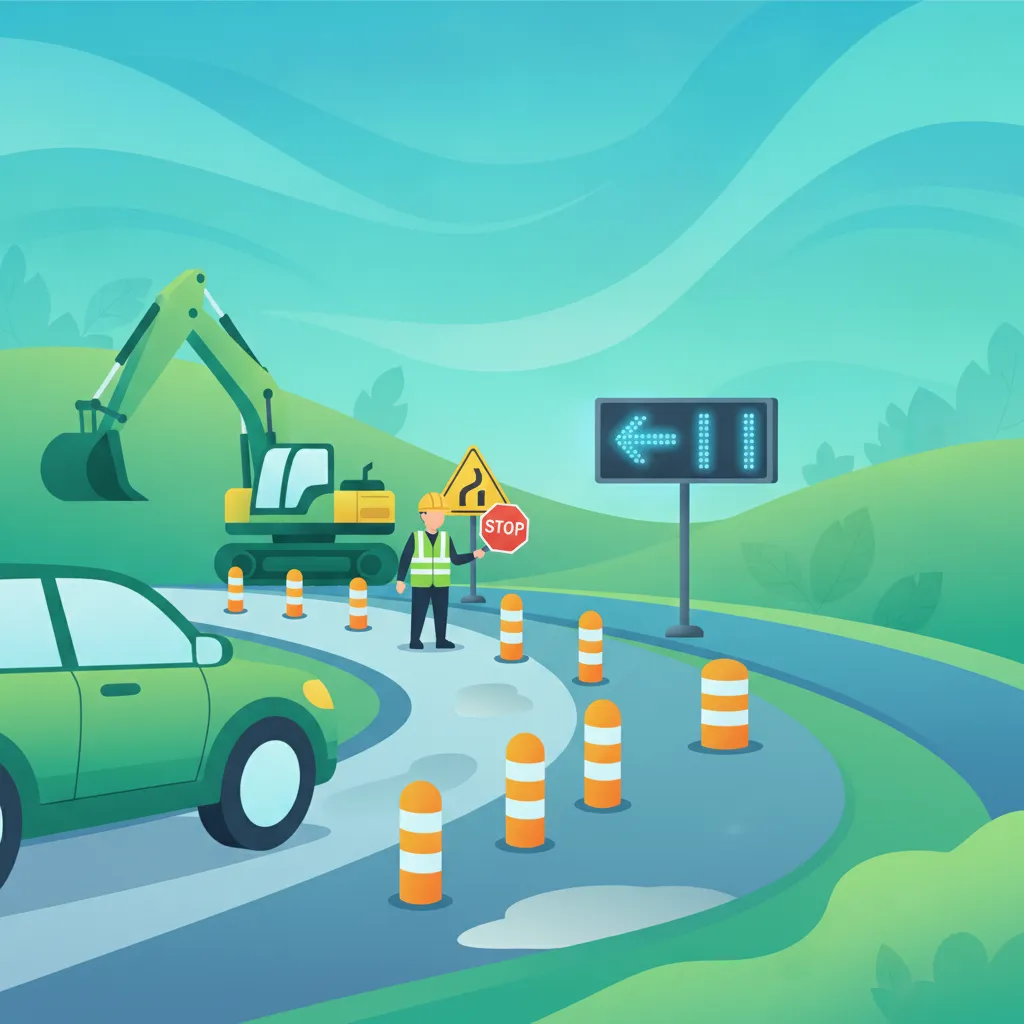
Road construction zones feature dynamic hazards, including changed lane configurations, temporary barriers, and workers near live traffic. This lesson details how to follow temporary signage, navigate narrow chicanes, and obey 'Stop-Go' flag systems or temporary traffic lights. You will understand the legal requirement to obey temporary speed limits, which are strictly enforced to protect both motorists and road crews.
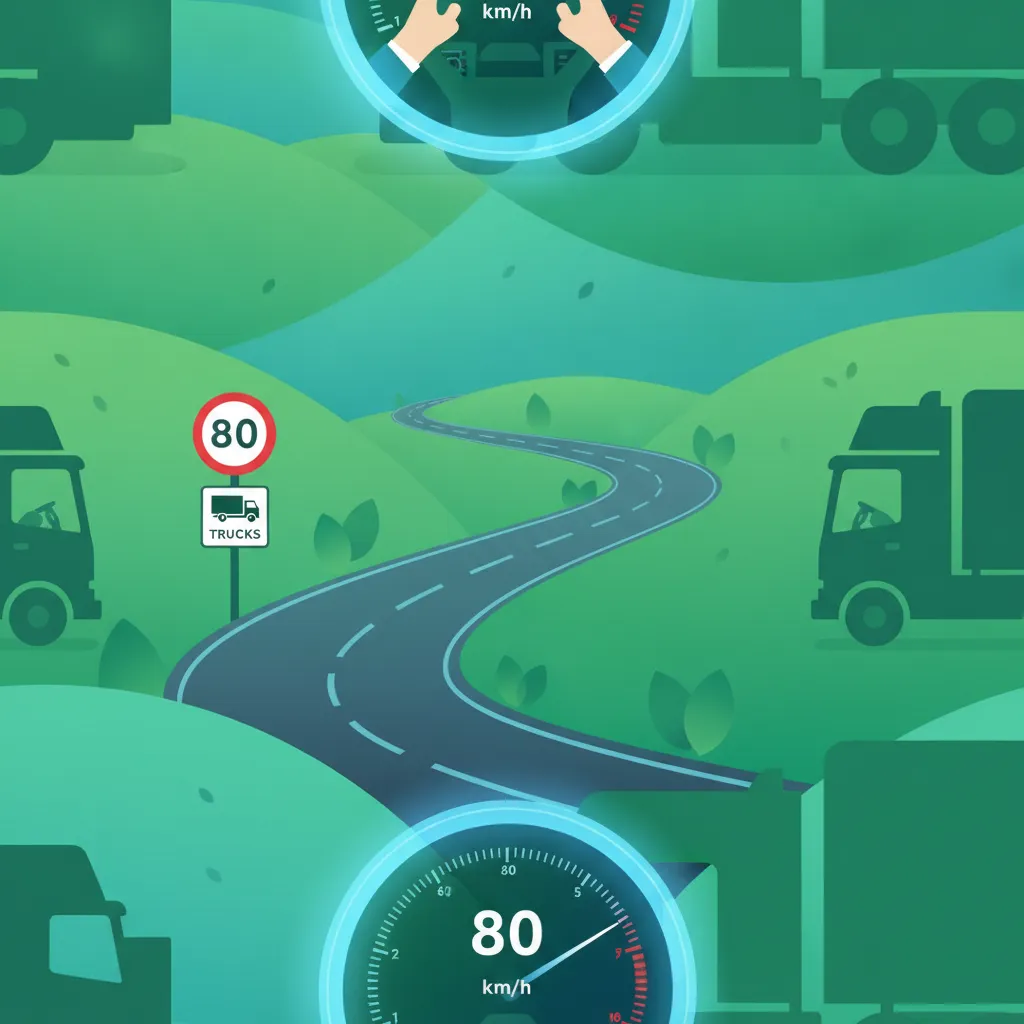
This lesson covers the legal statutory speed limits for goods vehicles on various road classes, including regional corridors and dual carriageways in Ireland. It focuses on how cargo mass and distribution alter the vehicle's safe maximum operational speed under dry, wet, or icy conditions. Drivers will also understand the purpose, function, and legal requirement of vehicle speed limiter systems.
Find clear answers to common questions learners have about Rural Road Risks, Bends, and Farm Vehicle Interactions. Learn how the lesson is structured, which driving theory objectives it supports, and how it fits into the overall learning path of units and curriculum progression in Ireland. These explanations help you understand key concepts, lesson flow, and exam focused study goals.
You should use your horn at blind crests or bends only if you believe it is necessary to warn other road users of your presence. It should not be used unnecessarily, but remains a vital tool for safety in restricted visibility.
Always wait for a safe, wide section of road to overtake. Ensure you have a clear view ahead and only pass when it is legal and safe. If the road is too narrow, remain behind the vehicle until it pulls in or reaches a turning.
The biggest risks are hidden hazards such as loose livestock, mud or debris dropped by farm machinery, and the presence of slow-moving vehicles on tight, winding roads where visibility is frequently restricted.
While national speed limits may apply, you must always drive at a speed that allows you to stop within the distance you can see to be clear. On narrow rural roads, the posted speed limit is often far too high for the actual conditions.
Use the practice question search tool to pinpoint specific topics, road signs, or rules you need to master for your official Driver Theory Test. Refine your study strategy and ensure comprehensive preparation for all aspects of the Irish driving exam. Start your focused revision now and build confidence for your learner permit test.