
This lesson provides critical guidance on how to respond safely and legally if you are involved in a collision while driving a goods vehicle. As a professional driver, understanding these obligations is vital for your Category C theory exam and for managing real-world emergencies responsibly on Irish roads.
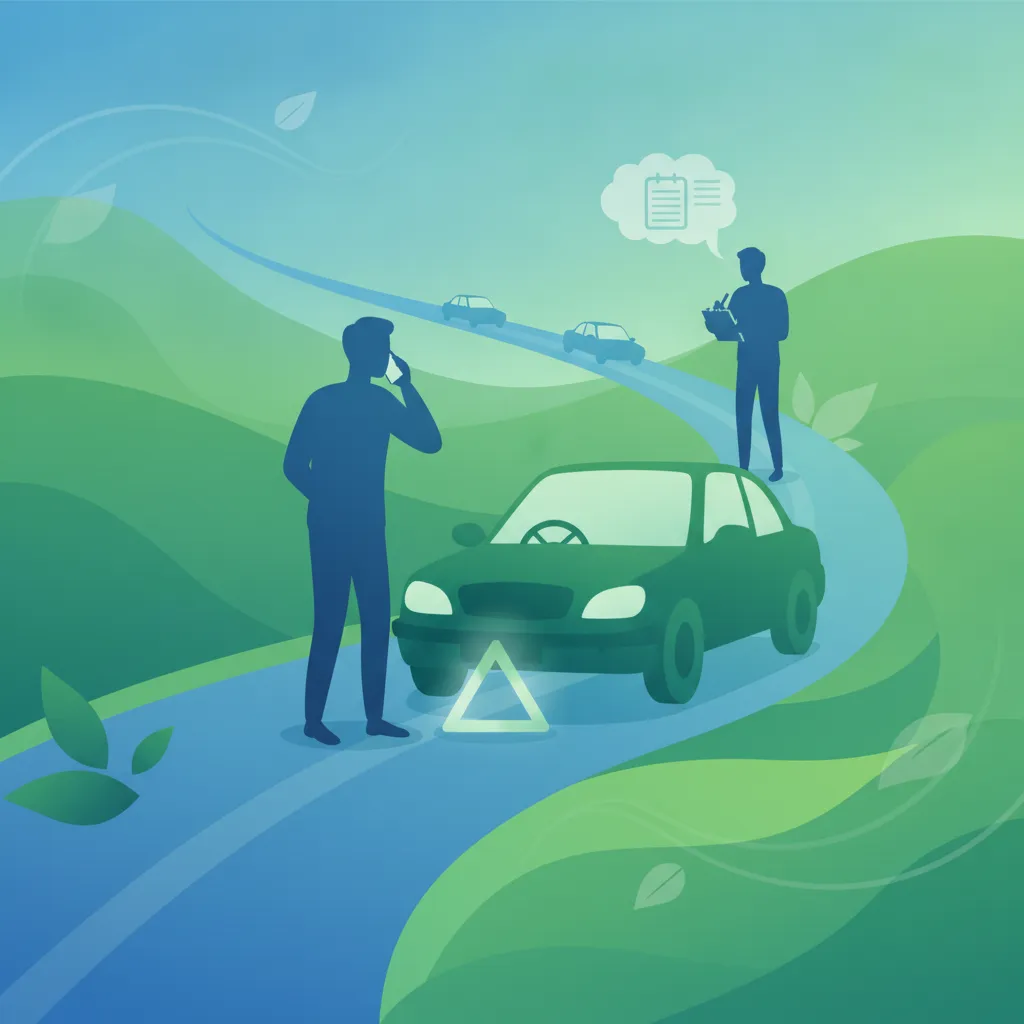
Lesson content overview
Operating a Heavy Goods Vehicle (HGV) on Irish roads carries immense professional responsibility. Because of the sheer size, weight, and potential hazard of Category C vehicles, the consequences of a road traffic collision are often severe. How you conduct yourself in the immediate aftermath of a crash is not just a matter of professional pride—it is governed by strict statutory duties under the Irish Road Traffic Acts.
This lesson details the mandatory protocols, safety measures, and legal reporting frameworks required of professional drivers following a collision in Ireland. Mastering these post-crash procedures ensures you protect human life, secure the scene to prevent secondary incidents, and remain fully compliant with the Road Safety Authority (RSA) and the Garda Síochána (the Irish police).
Under Section 106 of the Road Traffic Act 1961 (as amended), any driver involved in a road traffic collision in Ireland has explicit, non-negotiable legal duties. For drivers of heavy goods vehicles, these obligations are amplified by the operational risks associated with commercial transport, such as carrying hazardous loads, securing heavy cargo, and managing a vehicle that may block multiple lanes of traffic.
The absolute legal requirement under Irish road traffic law for any driver involved in a collision to immediately stop their vehicle at the scene of the incident, regardless of who is at fault or how minor the damage appears.
Failing to stop is a serious criminal offence. If you are involved in a collision, you must halt your vehicle immediately in a position that minimizes further danger to other road users, while ensuring your own safety and that of your passengers or crew.
Leaving the scene of an accident where injury or death has occurred is an indictable offence. It can lead to severe criminal prosecution, heavy court fines, penalty points, and mandatory disqualification from driving. For a professional driver, a conviction under these terms permanently ends their transport career.
The first minute following a collision is highly stressful. Adrenaline can cloud your judgement. As a professional, you must rely on structured, systematic training to manage the situation safely.
Stop the vehicle and apply the parking brake: Turn off the engine immediately to eliminate ignition sources. Switch off the master switch if your goods vehicle is fitted with an ADR (dangerous goods) battery isolator.
Activate hazard warning lights: Switch on your hazard lights immediately to warn approaching traffic. If it is dark or visibility is poor, keep your sidelights (marker lights) on so your vehicle remains visible, but extinguish headlamps to avoid dazzling oncoming drivers.
Assess for injuries and physical danger: Before exiting the cab, check yourself for injuries, then quickly evaluate your immediate surroundings for hazards like downed power lines, fire, or leaking cargo.
Put on high-visibility clothing: Always keep a high-visibility vest or jacket within arm's reach of the driver's seat. You must put this on before stepping out of the cab to ensure you are highly visible to other road users.
A secondary collision occurs when approaching vehicles crash into the initial accident scene. Because of an HGV’s large physical footprint, a disabled goods vehicle can easily block entire lanes, blind bends, or obscure traffic signals, dramatically increasing the risk of a secondary pile-up.
In Ireland, goods vehicles with a Gross Vehicle Weight (GVW) exceeding 3,500 kg must carry emergency warning devices, including at least one warning triangle.
As a Category C driver, your vehicle may be carrying several tonnes of freight. Post-collision, you must assess whether the cargo security has been compromised.
In Ireland, the emergency services can be reached by dialling 999 or 112. Both numbers are free of charge and work on all mobile networks, even if you have no active credit.
You must contact emergency services immediately if:
When speaking to the emergency operator, remain calm and structured. Provide the following details:
Under the Road Traffic Act, drivers have a statutory duty to render reasonable assistance to any person injured in a collision. However, you must never exceed your level of training or act in a way that worsens the situation.
Always prioritize your personal safety. You cannot help an injured person if you become a casualty yourself. Ensure the scene is protected from oncoming traffic before administering first aid.
Irish law requires all drivers involved in a collision to exchange specific personal, vehicle, and insurance details at the scene. This is vital for subsequent insurance claims, civil actions, and Garda investigations.
You must provide the following details to any other person involved in the collision, or to a member of the Gardaí:
| Category | Required Information | Notes |
|---|---|---|
| Driver Details | Full Name, Current Address, Driving Licence Number | You must show your driving licence if requested by a Garda or another party involved. |
| Vehicle Details | Vehicle Registration Number, Make, Model, Colour | Ensure the registration of both the HGV cab and the trailer (if articulated) are noted. |
| Insurance Details | Insurance Company Name, Policy Number, Expiry Date | Usually found on the insurance disc displayed on the HGV windscreen. |
| Owner Details | Fleet Owner/Company Name, Business Address, Contact Number | Crucial for commercial drivers operating corporate-owned assets. |
In addition to exchanging details, a professional driver should thoroughly document the scene to protect themselves and their employer from fraudulent claims or unfair liability.
Depending on the severity of the collision, your reporting obligations vary under Irish law.
                  [ Collision Occurs ]
                           │
             Is any person injured or dead?
              /                         \
            YES                          NO
            /                             \
[ Call Gardaí Immediately ]      [ Exchange details at scene ]
[ Remain at the scene ]                    │
                               Was a Garda present?
                                /                \
                              YES                 NO
                              /                    \
                     [ Law Satisfied ]     [ Report to Garda Station ]
                                            [ Within 24 Hours ]
If a person is injured or killed, you must call the Gardaí immediately and remain at the scene. You are legally required to keep your vehicle stationary until a Garda permits you to move it, unless moving the vehicle is essential to free a trapped person or to clear an extreme, life-threatening hazard.
If the collision causes property damage only and no one is injured, you are not strictly required to call the Gardaí to the scene, provided you successfully exchange all required insurance and personal details with the other parties.
However, if a Garda is not present at the scene, or if the other party is absent (for example, if you struck a parked car, a domestic animal, or public property like a guardrail), you must report the collision in person at the nearest convenient Garda station within 24 hours.
As a professional commercial driver, if the crash was not formally recorded by a responding Garda at the scene, you must complete an official Accident Report Form and submit it to your company’s transport manager, and if required, directly to the Road Safety Authority (RSA) within 28 days of the incident.
Understanding what not to do is just as important as knowing the correct procedures. Professional drivers who panic or neglect their duties face severe penalties.
The standard post-crash procedure must be adapted dynamically based on the driving environment and the state of your Category C vehicle.
Motorways represent the highest-risk environment for post-crash secondary collisions due to high-speed differentials.
If your HGV is involved in a collision with a cyclist, pedestrian, or motorcyclist:
Understanding the direct consequences of your actions can save lives and protect your professional status.
| Action Taken | Positive Consequence (Correct Procedure) | Negative Consequence (Incorrect Procedure) |
|---|---|---|
| Immediate Scene Securing | Prevents secondary collisions, protects responders, manages traffic flow. | Oncoming vehicles strike the collision site, compounding injuries and property damage. |
| Accurate Detail Exchange | Facilitates clean insurance resolution, complies with the Road Traffic Act. | Legal prosecution, denied insurance claims, suspension of commercial operating licence. |
| Rapid 999/112 Call | Emergency paramedics arrive within the "Golden Hour," increasing casualty survival. | Delayed medical treatment, worsening shock, potential criminal charges for neglect of duty. |
| Forensic Evidence Preservation | Clear exoneration if the professional driver was not at fault. | Inability to prove innocence, leading to wrongful civil or criminal liability. |
To maintain compliance and protect road safety on Irish roads, always remember this sequence of actions:
Explore all units and lessons included in this driving theory course.
Lesson content overview
Explore all units and lessons included in this driving theory course.
Explore search topics learners often look for when studying Post-Crash Procedures and Reporting. These topics reflect common questions about road rules, driving situations, safety guidance, and lesson level theory preparation for learners in Ireland.
Browse additional driving theory lessons that cover connected traffic rules, road signs, and common driving situations related to this topic. Improve your understanding of how different rules interact across everyday traffic scenarios.
Understand the legal obligations for Category C licence holders in Ireland and how professional conduct impacts your driving record. This lesson explains how penalty points, endorsement systems, and strict reporting requirements ensure safety and legal compliance for all professional commercial vehicle operators on Irish roads.
This lesson reinforces the moral, ethical, and legal expectations of commercial drivers on the Irish public road network. It highlights the most frequent compliance violations, including weight infractions, speed, and incorrect logging, which result in heavy operator fines. By embracing a positive safety culture, professional drivers preserve their career standing, safeguard their licences, and protect all citizens.
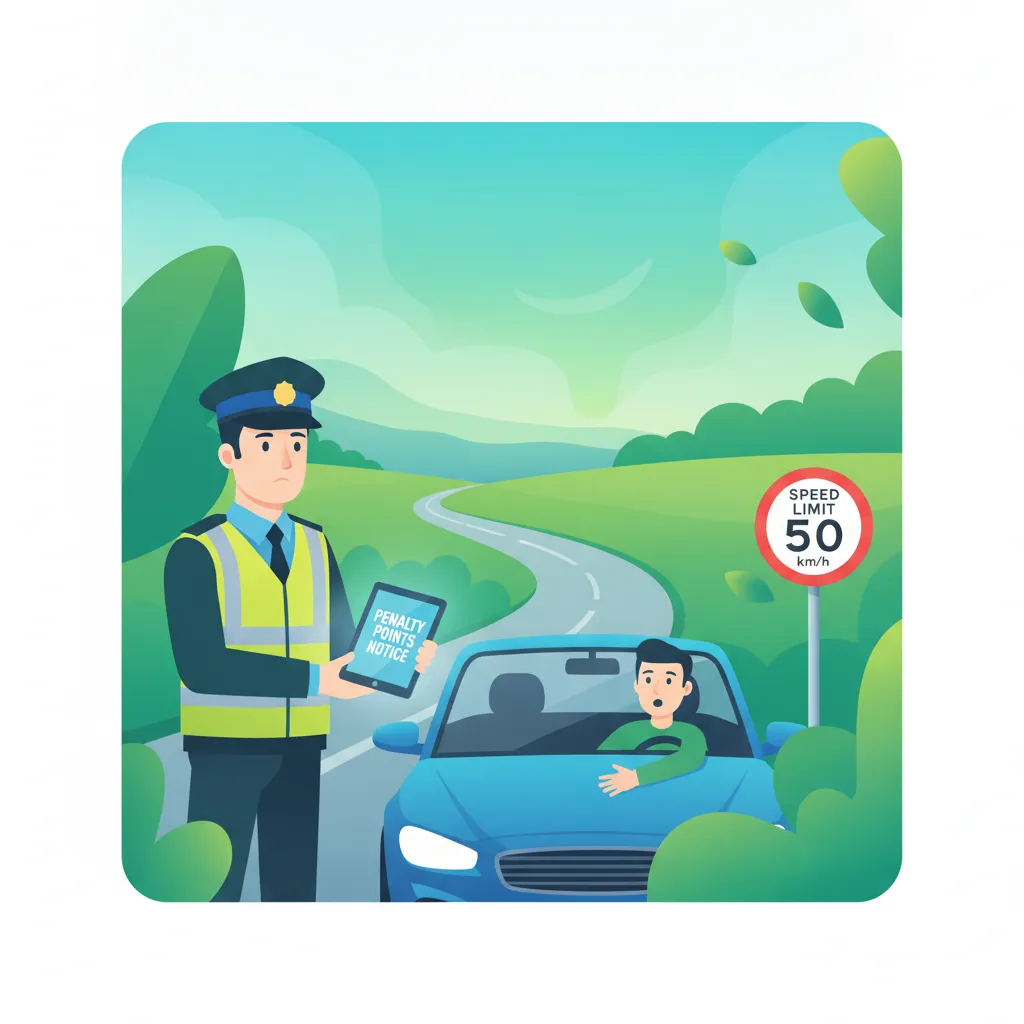
Operating commercial passenger vehicles requires strict adherence to Irish road laws to prevent heavy fines, penalty points, or disqualification. This lesson outlines the primary motoring offences, the mechanics of the Irish penalty points system, and active enforcement by An Garda Síochána. Drivers will learn the serious operational and professional consequences of non-compliance, encouraging long-term safe driving habits.

Violating passenger transport laws can lead to severe operator penalties, heavy fines, and the immediate suspension of driving privileges. This lesson examines common operational infractions, including tachograph violations, overloading offences, and driving with defective tires. Drivers will understand their personal legal liabilities under Irish legislation, supporting long-term safety compliance.
This lesson provides a comprehensive overview of the Irish penalty points system with a specific focus on commercial goods vehicles. It details how enforcement agencies like the Road Safety Authority and Garda Síochána monitor driver compliance and conduct roadside checks. Learners will examine the specific heavy vehicle offences that result in severe fines, penalty points, or immediate licence suspension.
This lesson defines the professional duties and high duty of care that drivers must maintain while operating commercial heavy vehicles. It details the legal responsibilities regarding ongoing vehicle fitness, safe cargo securement, and statutory load limits under Irish legislation. Drivers will learn the consequences of neglecting these safety standards under the Irish Road Traffic Act.
Violating Irish traffic laws triggers a structured enforcement process, starting with fixed charge notices and ending in severe court-ordered bans. This lesson details the roles of the Garda Síochána and the National Car Testing Service in enforcing safety regulations on roads. You will learn how fines are paid, how penalty points are formally added to your NDLS record, and the legal consequences of driving while disqualified.
The Irish penalty points system is designed to deter unsafe driving practices by recording points against a driver's record for specific traffic violations. This lesson explains how points are accumulated, the lower threshold applied to learner and novice drivers, and the consequences of reaching the suspension limit. You will also learn about the role of the Garda Síochána in enforcing these road traffic laws and the financial impact points have on your insurance.
This lesson details the structure of the Irish penalty point system and its implications for novice Category AM riders. It highlights the specific traffic violations that trigger points and the thresholds that result in automatic disqualification. Learners will understand the process of moving from a learner permit to a full driving licence safely.

This lesson details the specific classifications for goods vehicles including Category C, C1, CE, and C1E in Ireland. It explains the core eligibility requirements, necessary medical fitness evaluations, and the sequential steps for theory and practical testing. Professional drivers will also understand when the Driver Certificate of Professional Competence is legally mandatory.
This lesson details the legal consequences of failing to adhere to the Irish Rules of the Road as a Category AM rider. It explains the structure of financial fines, penalty points, and situations that trigger immediate license suspension or disqualification. Understanding these severe penalties emphasizes the importance of consistent compliance and safe road use.
Learn the specific safety protocols for identifying and managing dangerous goods incidents during transit. This lesson covers the identification of ADR hazards, the use of emergency documentation, and the necessary response steps to prevent secondary accidents when transporting heavy or hazardous freight on Irish national roads.
This lesson focuses on the practical mechanics of securing goods to prevent kinetic shift during sudden braking or evasive steering manoeuvres. It teaches the correct use of tensioning straps, chains, blocking bars, and friction-increasing mats according to Irish safety guidelines. Drivers will learn to perform rigorous pre-trip and en-route checks to guarantee that cargo remain secure throughout the transit.
This lesson reviews the legal definitions and safety guidelines for various categories of cargo, ranging from standard palletized goods to hazardous materials. It highlights the specific documentation, labelling, and safety equipment required by Irish and European laws for specialized transport. Drivers will learn their legal liabilities and the mandatory safety protocols corresponding to each load type.

When emergencies strike, a passenger driver must remain perfectly calm and execute structured emergency procedures to protect human life. This lesson outlines safety protocols for roadside breakdowns, engine fire isolation, and handling acute passenger medical emergencies. Drivers will learn how to secure the accident scene and report incidents to emergency services as required by Irish law.
This lesson focuses on the defensive driving skills needed when encountering highway maintenance zones, narrow contraflows, and active roadside workers. It details the precise steps a driver must take when experiencing a major mechanical breakdown, including parking on the hard shoulder and deploying warning triangles. Drivers will learn standard emergency procedures to coordinate with vehicle rescue operations and safety personnel.

This lesson covers the absolute legal requirement for professional drivers to keep, update, and display essential transit and driver paperwork. It details the role of the Driver Certificate of Professional Competence, vehicle registration documents, transport logs, and insurance certs. Drivers will learn how to present clear records to Irish Road Safety Authority officers and Gardai during compliance inspections.

This lesson explores the safe operation of heavy transport vehicles during severe meteorological hazards typical of the Irish climate. It teaches techniques for adjusting speed and doubling following distances to prevent loss of steering traction and control on waterlogged or icy roadways. Drivers will understand how to manage lateral aerodynamic forces from crosswinds on high-sided goods vehicles.
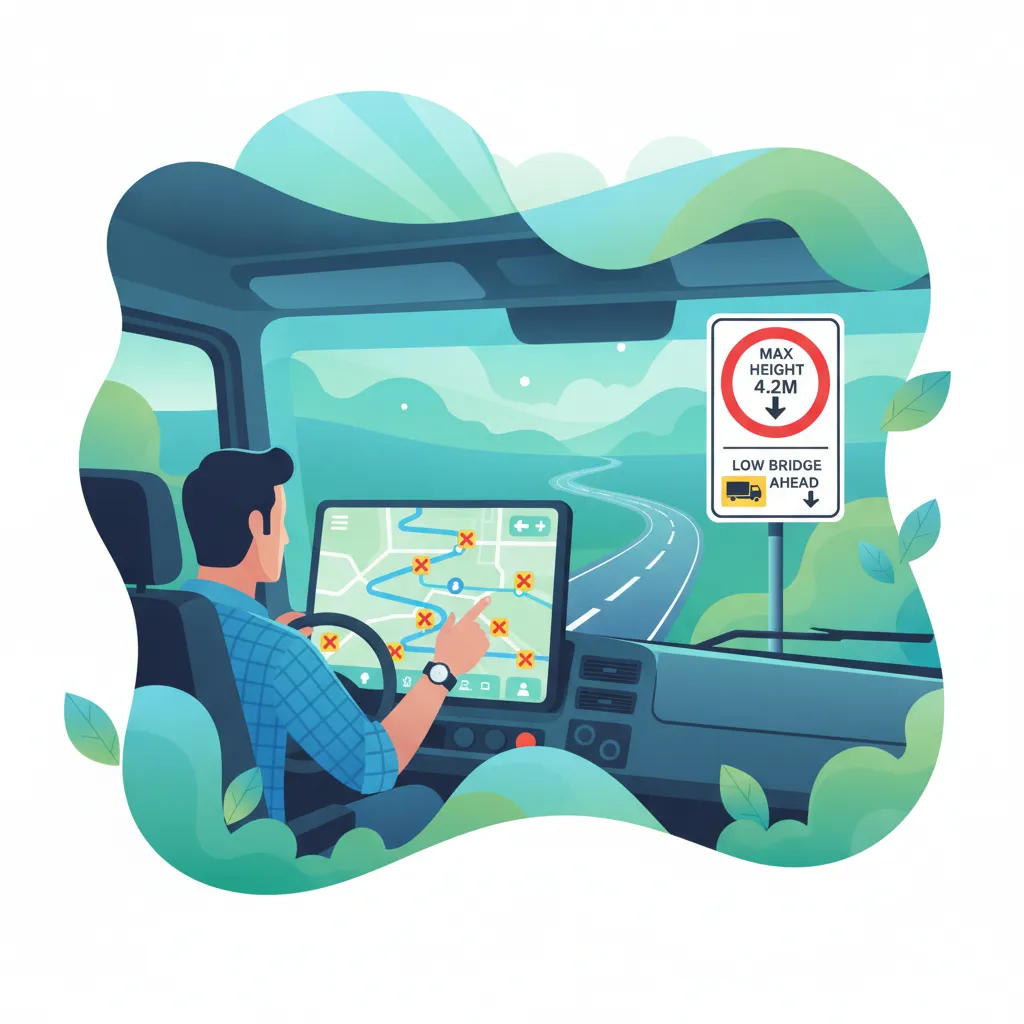
This lesson teaches professional drivers how to systematically map out travel routes that are compatible with heavy vehicle dimensions. It covers the limitations of consumer-grade GPS systems and emphasizes the use of specialized truck navigation systems that account for low bridges and load restrictions. Drivers will also learn to plan for congestion, access timing regulations, and proper entrance paths into commercial zones.

Securing passengers and luggage properly is essential to prevent injury during emergency braking, sudden steering inputs, or traffic collisions. This lesson provides instructions on passenger restraint systems, seatbelt laws in Ireland, and wheelchair ramp deployment processes. Drivers will study weight distribution guidelines for luggage compartments to protect the physical stability of the passenger vehicle.
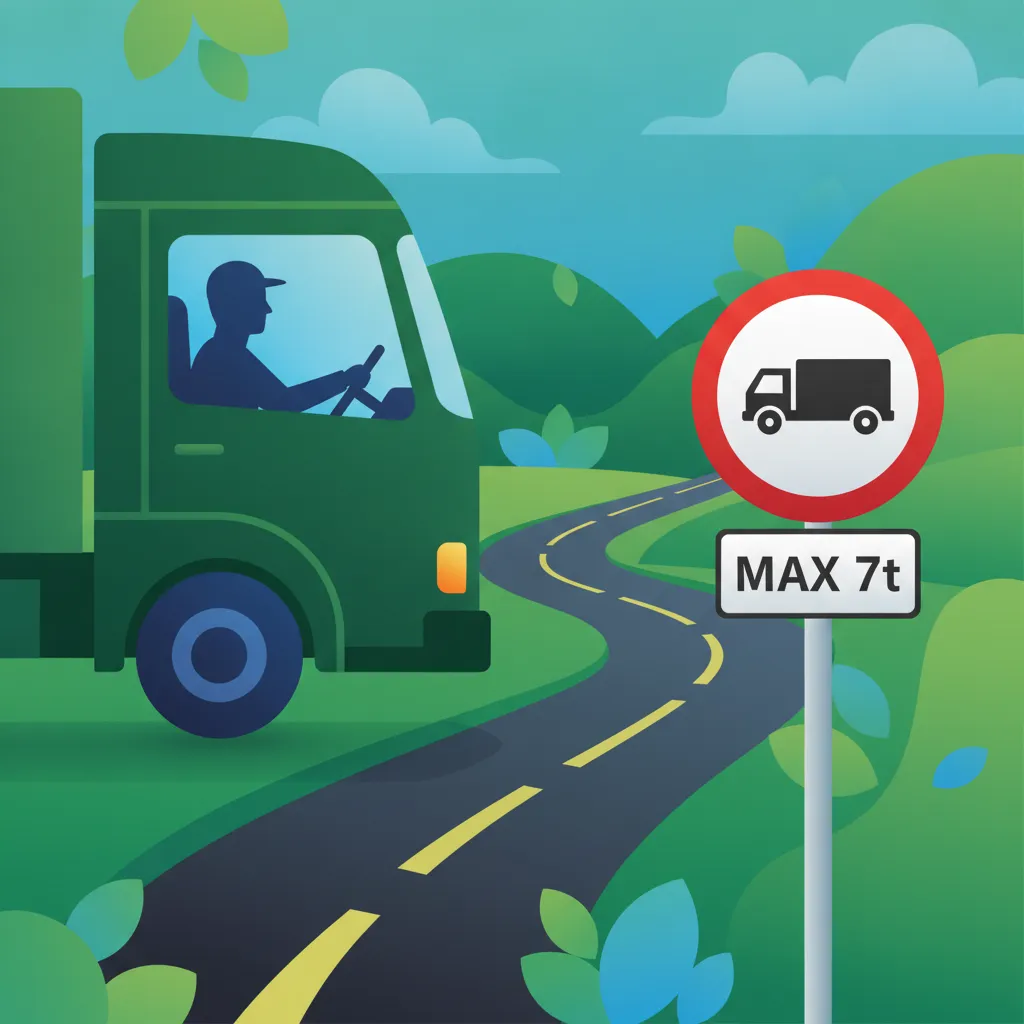
This lesson details the exact visual indicators, symbols, and text used on Irish traffic signs to communicate regulatory restrictions for heavy vehicles. It covers signs denoting height clearances, narrow bridges, and width-limited streets that require immediate driver diversion. By recognizing these specialized warnings early, professional drivers prevent costly structural collisions and traffic offences.
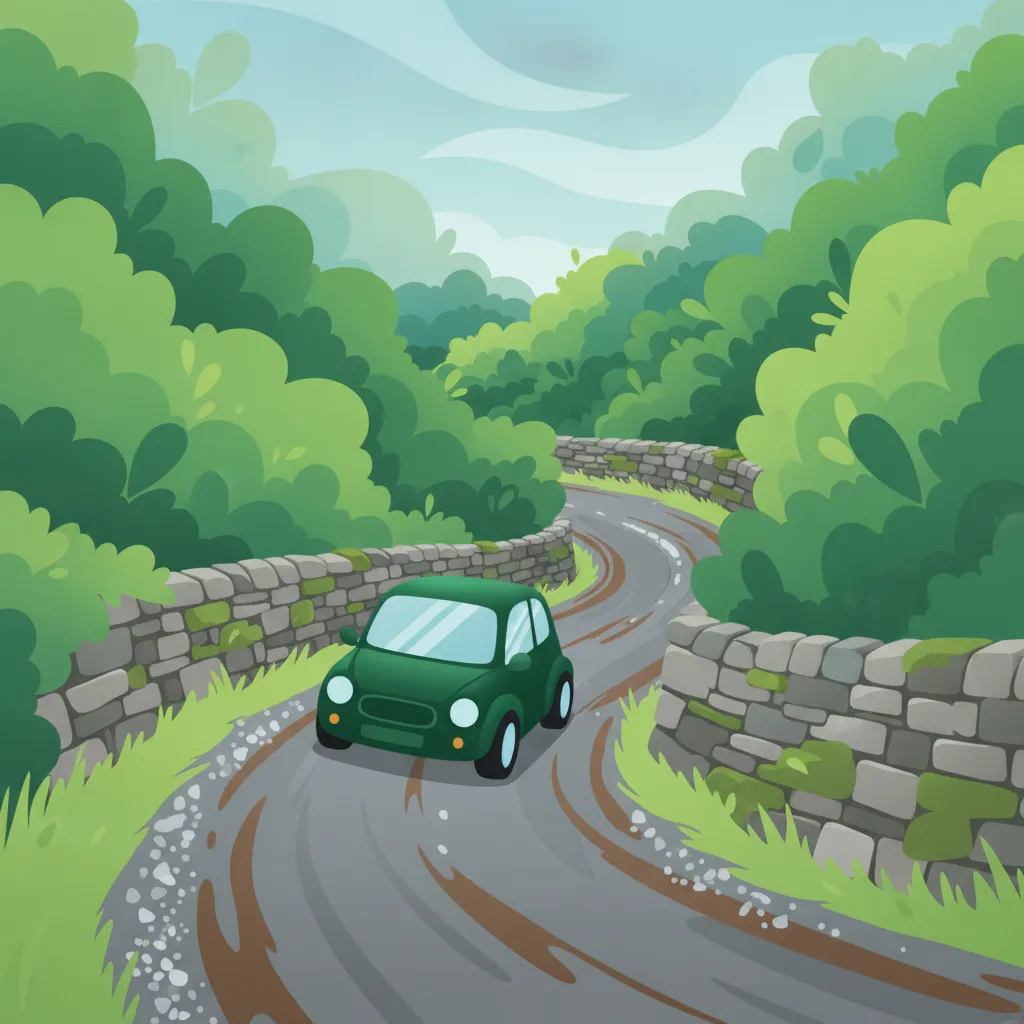
Irish rural routes are often narrow, lacking central markings, and bordered by tall hedges that restrict forward visibility on sharp bends. This lesson teaches drivers how to negotiate blind curves, anticipate slow-moving agricultural machinery, and respond to wandering farm animals. Drivers will learn to regulate vehicle speed proactively, maintaining a safe stopping margin in rural areas.
Find clear answers to common questions learners have about Post-Crash Procedures and Reporting. Learn how the lesson is structured, which driving theory objectives it supports, and how it fits into the overall learning path of units and curriculum progression in Ireland. These explanations help you understand key concepts, lesson flow, and exam focused study goals.
You are legally required to report any collision involving injury or significant damage to the Gardaí immediately. If a collision is minor and involves only property damage, you must still exchange insurance and contact details with the other party, but follow RSA guidelines regarding when police notification is mandatory.
Your first priority is safety: turn off your engine, switch on hazard lights, and ensure your own vehicle does not pose a further danger. Once safe, assess the scene for injuries and prevent secondary collisions by warning approaching traffic if it is safe to do so.
Yes, the theory test often includes situational questions regarding the legal responsibilities of professional drivers, including the duty to stop, assist, and provide information after an incident.
You must provide your name, address, insurance details, and vehicle registration number. You should also record the same details for the other party and take note of the time, location, and conditions of the incident.
Use the practice question search tool to pinpoint specific topics, road signs, or rules you need to master for your official Driver Theory Test. Refine your study strategy and ensure comprehensive preparation for all aspects of the Irish driving exam. Start your focused revision now and build confidence for your learner permit test.