
This lesson details the legal consequences of traffic offences for Category D and D1 drivers in Ireland. You will learn how the penalty points system functions, the role of An Garda Síochána in enforcement, and why strict adherence to these rules is vital for your professional career.
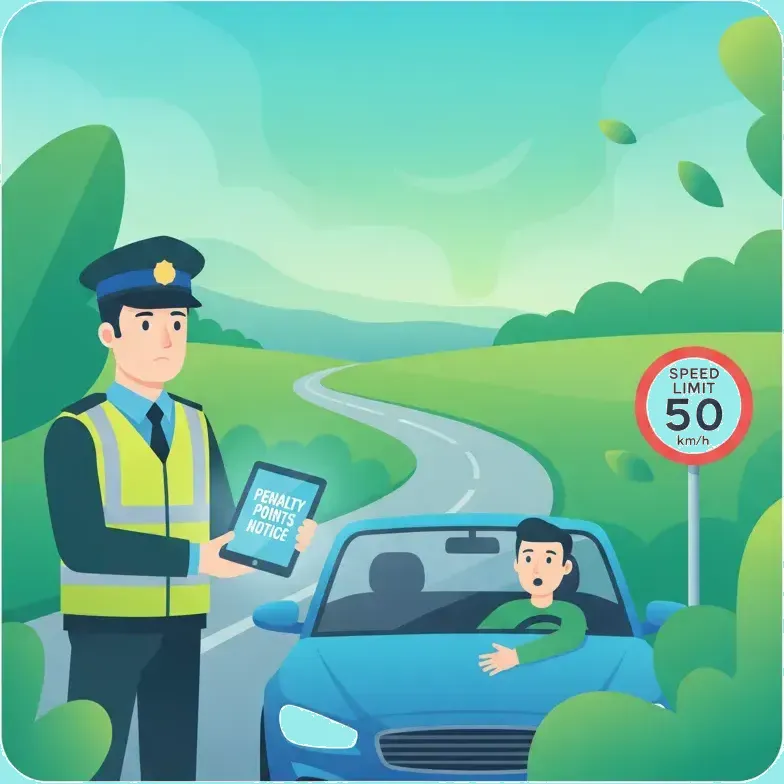
Lesson content overview
Operating a commercial passenger-carrying vehicle (Category D or D1) on public roads in Ireland carries profound legal, professional, and ethical responsibilities. Because buses and coaches transport large numbers of passengers and share the road with vulnerable road users, regulatory compliance is monitored with absolute strictness.
A thorough understanding of Irish road traffic laws, the mechanics of the penalty points system, and the active enforcement powers of An Garda Síochána (the Irish national police) is vital. Non-compliance does not merely result in financial penalties; it can lead to immediate licence disqualification, the loss of your commercial livelihood, and criminal prosecution.
Road safety and traffic laws in Ireland are governed by the Road Traffic Acts (1961 to 2025) and enforced via coordinate efforts between An Garda Síochána, the Road Safety Authority (RSA), and the courts. This comprehensive legal structure is designed to reduce road collisions, protect passengers, and deter high-risk driving behaviours through a system of graduated penalties.
The national police service of Ireland, responsible for all aspects of road traffic law enforcement, roadside safety checks, and the prosecution of motoring offences.
For professional Category D drivers, the legal standard is exceptionally high. Compliance with driving limits, vehicle roadworthiness, speed limits, and traffic signals is non-negotiable. Any violation recorded on the National Driver Licence Database can trigger cumulative administrative actions that directly affect your capacity to work as a commercial driver.
The penalty points system is an administrative mechanism designed to identify, deter, and remove high-risk drivers from Irish roads. When a driver commits specific traffic offences, a predetermined number of penalty points are recorded against their driving licence record.
For a private motorist, penalty points are an expensive nuisance that drives up insurance premiums. For a professional Category D bus or coach driver, the stakes are significantly higher:
Most common, minor-to-moderate road traffic violations in Ireland are processed as Fixed Charge Offences. Instead of an immediate court appearance, the driver is issued a Fixed Penalty Notice (FPN), commonly referred to as a "fine" or "ticket".
The administrative system uses a strict statutory timeline for processing payments. Failure to respect these deadlines escalates the offence to a criminal court summons automatically.
The First 28-Day Window: From the date of issue on the notice, the driver has 28 days to pay the base fine amount. Paying within this window secures the minimum financial penalty and the lowest number of penalty points associated with the offence.
The Second 28-Day Window (Days 29 to 56): If the fine remains unpaid after the first 28 days, an additional grace period of 28 days is granted. However, the fine amount increases by 50%. If paid during this secondary window, the case is settled out of court.
Court Summons Initiation (Day 57 onwards): If the increased fine is not paid by the end of the 56th day, the opportunity to settle administratively is lost. The system automatically generates a court summons, exposing the driver to much larger court-imposed fines and increased penalty points.
The "Payment Erases Points" Myth: A highly dangerous misunderstanding among some drivers is that paying a Fixed Charge Notice prevents penalty points from being added to their licence. This is false. Paying the fine simply prevents you from having to appear in court; the mandatory penalty points will still be automatically applied to your record on the National Driver Licence Database.
The table below details several common motoring infractions, their typical baseline penalties, and their impact.
Not all traffic violations can be settled with a Fixed Penalty Notice. Serious violations bypass the administrative fine system entirely and result in an immediate Court Summons.
An official legal document compelling a driver to appear before a District Court judge to face criminal charges related to severe traffic violations.
If you are summoned to court, you are facing criminal prosecution. If convicted, the penalties are vastly more severe than fixed charges, including massive court fines, immediate and lengthy licence disqualification, and custodial prison sentences.
Enforcement on Irish roads is active, highly visible, and increasingly data-driven. As a professional driver, you must expect to interact regularly with Garda traffic units and safety enforcement officers.
Ireland utilizes a combination of enforcement tools to monitor speed limits:
Gardaí possess extensive statutory powers to perform roadside breath and saliva testing to combat driving under the influence (DUI).
The Road Safety Authority (RSA) collaborates with An Garda Síochána to conduct specialized roadside checks targeted exclusively at heavy commercial passenger vehicles and trucks. During these checks, enforcement officers will inspect:
Professional drivers frequently encounter complex road situations. However, many common justifications used to contest penalties are legally invalid.
Many drivers assume that if their bus is stationary at a red traffic light or stuck in gridlocked traffic, they are permitted to pick up their mobile phone. Legally, the vehicle is still considered to be "in the course of driving."
Using a phone under these circumstances is a strict-liability offence. You will receive an FCN, 3 penalty points, and a fine. The only legal exception is using a handheld phone to call emergency services (999 or 112) while genuinely parked or in an active emergency.
If you change your address and fail to notify the National Driver Licence Service (NDLS) or the vehicle licensing authority, an FCN may be sent to your old address.
Legally, the non-receipt of the notice due to your failure to update your official address does not excuse non-payment. Once the 56-day payment window expires, the system automatically proceeds to a court summons. You cannot retroactively pay the lower fine once the case has been referred to the courts.
Some commercial drivers believe that traveling "only a few kilometres" over the speed limit is safe from prosecution due to an informal "buffer zone".
While speed detection devices have a tiny engineering tolerance, there is no legal buffer. Driving at 52 km/h in a 50 km/h urban zone is a speeding offence. In a heavy Category D vehicle, even minor speed increases drastically escalate stopping distances and passenger injury risks during emergency braking.
If your vehicle's On-Board Diagnostics (OBD) system or digital tachograph malfunctions while on a route, you must record the defect immediately on a manual printout sheet.
Continuing to drive a commercial passenger vehicle with a known, unrecorded tachograph malfunction, or failing to report it, is treated as an active attempt to bypass driving hours regulations, carrying severe penalties for both the driver and the bus company.
To solidify how these laws apply to daily operations, let us examine real-world scenarios that Category D drivers frequently encounter.
This lesson covers the mechanics of Ireland's penalty points system for Category D drivers, including the three-year active duration of points, the 12-point disqualification threshold for full licence holders, and the stricter 7-point threshold for novice and learner drivers. It explains the Fixed Charge Notice payment timeline with its two 28-day windows and the automatic escalation to court summons if unpaid, along with specific penalties for common offences such as speeding, mobile phone use, and seatbelt violations. The lesson also details active enforcement by An Garda Síochána, including speed cameras, Mandatory Alcohol Testing checkpoints, and RSA joint inspections, while highlighting the especially strict 20mg blood-alcohol limit for professional drivers. Understanding these rules is essential for both passing the Driver Theory Test and maintaining a commercial passenger transport career.
A short set of high-value points that capture the most important learning from this lesson.
Penalty points stay on your licence for three years from the offence date, counting toward the disqualification threshold throughout that period.
Accumulating 12 penalty points within any three-year period triggers an automatic six-month disqualification for full licence holders.
Novice and learner drivers face a stricter threshold of 7 points before disqualification applies.
Professional Category D drivers are subject to a near-zero-tolerance alcohol limit of 20mg per 100ml of blood, compared to 50mg for standard drivers.
Fixed Charge Notices can be paid within 28 days at the base rate or 56 days with a 50% penalty increase; after that, the case escalates to court automatically.
Explore all units and lessons included in this driving theory course.
The 12-point disqualification threshold applies to fully licensed drivers; the 7-point threshold applies to novice drivers in their first two years and all learner permit holders.
Paying an FCN does not erase penalty points; the points are applied to your licence regardless of payment status.
Driving at any speed above the posted limit, even marginally, constitutes a prosecutable offence with no informal tolerance buffer.
For commercial drivers, the blood-alcohol limit is 20mg per 100ml of blood, strictly enforced at Mandatory Alcohol Testing checkpoints.
Tachograph or OBD malfunctions must be recorded manually on a printout sheet; continuing to drive with an unrecorded fault is treated as a regulatory breach.
Assuming that being stopped at a red light or in traffic allows handheld phone use; the vehicle is still considered to be in the course of driving.
Believing that non-receipt of an FCN due to an outdated address excuses late payment; once the 56-day window passes, the case goes to court automatically.
Assuming minor speed excess is tolerated; driving even a few km/h over the limit is a prosecutable speeding offence.
Thinking that paying an FCN prevents penalty points from being added; payment only avoids court and the associated higher penalties.
Neglecting to report or manually record a tachograph or OBD malfunction, which can be treated as attempting to bypass driving hours regulations.
Lesson content overview
A short set of high-value points that capture the most important learning from this lesson.
Penalty points stay on your licence for three years from the offence date, counting toward the disqualification threshold throughout that period.
Accumulating 12 penalty points within any three-year period triggers an automatic six-month disqualification for full licence holders.
Novice and learner drivers face a stricter threshold of 7 points before disqualification applies.
Professional Category D drivers are subject to a near-zero-tolerance alcohol limit of 20mg per 100ml of blood, compared to 50mg for standard drivers.
Fixed Charge Notices can be paid within 28 days at the base rate or 56 days with a 50% penalty increase; after that, the case escalates to court automatically.
Explore all units and lessons included in this driving theory course.
The 12-point disqualification threshold applies to fully licensed drivers; the 7-point threshold applies to novice drivers in their first two years and all learner permit holders.
Paying an FCN does not erase penalty points; the points are applied to your licence regardless of payment status.
Driving at any speed above the posted limit, even marginally, constitutes a prosecutable offence with no informal tolerance buffer.
For commercial drivers, the blood-alcohol limit is 20mg per 100ml of blood, strictly enforced at Mandatory Alcohol Testing checkpoints.
Tachograph or OBD malfunctions must be recorded manually on a printout sheet; continuing to drive with an unrecorded fault is treated as a regulatory breach.
Assuming that being stopped at a red light or in traffic allows handheld phone use; the vehicle is still considered to be in the course of driving.
Believing that non-receipt of an FCN due to an outdated address excuses late payment; once the 56-day window passes, the case goes to court automatically.
Assuming minor speed excess is tolerated; driving even a few km/h over the limit is a prosecutable speeding offence.
Thinking that paying an FCN prevents penalty points from being added; payment only avoids court and the associated higher penalties.
Neglecting to report or manually record a tachograph or OBD malfunction, which can be treated as attempting to bypass driving hours regulations.
Explore search topics learners often look for when studying Penalties, Penalty Points and Enforcement. These topics reflect common questions about road rules, driving situations, safety guidance, and lesson level theory preparation for learners in Ireland.
Browse additional driving theory lessons that cover connected traffic rules, road signs, and common driving situations related to this topic. Improve your understanding of how different rules interact across everyday traffic scenarios.
Understand the high legal standards and duty of care expected from commercial passenger vehicle operators in Ireland. This guide covers professional conduct, safety regulations, and the legal implications of maintaining a commercial driving licence while operating public transport services under RSA guidelines.

This lesson defines the professional duties and high duty of care that drivers must maintain while operating commercial heavy vehicles. It details the legal responsibilities regarding ongoing vehicle fitness, safe cargo securement, and statutory load limits under Irish legislation. Drivers will learn the consequences of neglecting these safety standards under the Irish Road Traffic Act.

This lesson explores the essential differences between D1, D, D1E, and DE licence categories under Irish road traffic legislation. It covers the medical fitness standards, age requirements, and national driver licensing service procedures necessary to qualify for passenger vehicle operation. By detailing these regulatory expectations, drivers gain a thorough understanding of their legal limitations and licensing pathways.
This lesson reinforces the moral, ethical, and legal expectations of commercial drivers on the Irish public road network. It highlights the most frequent compliance violations, including weight infractions, speed, and incorrect logging, which result in heavy operator fines. By embracing a positive safety culture, professional drivers preserve their career standing, safeguard their licences, and protect all citizens.
Violating passenger transport laws can lead to severe operator penalties, heavy fines, and the immediate suspension of driving privileges. This lesson examines common operational infractions, including tachograph violations, overloading offences, and driving with defective tires. Drivers will understand their personal legal liabilities under Irish legislation, supporting long-term safety compliance.

This lesson delivers a detailed analysis of the legal and moral duty of care that passenger vehicle operators hold in Ireland. Drivers will learn to manage risk effectively, establishing a proactive safety culture that prioritizes vulnerable occupants and external road users. It covers practical methods for protecting passengers during transit, accelerating smoothly, and maneuvering safely in high-risk zones.

The regulatory framework in Ireland imposes strict standards of operation, dimension limits, and speed boundaries on heavy passenger fleets. This lesson reviews vehicle registration tax context, commercial operator licensing laws, and mandatory annual vehicle roadworthiness testing. By understanding these statutory regulations, drivers avoid severe legal infractions and maintain their professional driving credentials.

This lesson details the specific classifications for goods vehicles including Category C, C1, CE, and C1E in Ireland. It explains the core eligibility requirements, necessary medical fitness evaluations, and the sequential steps for theory and practical testing. Professional drivers will also understand when the Driver Certificate of Professional Competence is legally mandatory.

A driver's daily actions directly impact the safety, customer experience, and overall reputation of the public passenger transport sector. This lesson covers key elements of service quality, including punctuality, polite passenger interactions, and supporting disabled individuals. Drivers will learn to maintain a professional, calm demeanor during challenging shifts, ensuring high service standards.

Professionalism in passenger transport is vital for maintaining public confidence and representing the service industry positively on Irish roads. This lesson addresses the high standard of driver behavior, customer relations, and ethical obligations expected of coach and bus operators. It helps drivers develop a professional mindset, focusing on safe driving practices that preserve passenger comfort and ensure public trust.

Learner drivers in Ireland must adhere to strict operational rules, including the compulsory display of red L-plates and driving under qualified supervision. This lesson outlines your specific duties as a learner, the legal definitions of an accompanying experienced driver, and the elevated safety margins you must maintain on the road. Failing to comply with these learner regulations carries serious legal penalties and delays your progression to a full driving licence.
Learn how An Garda Síochána and the RSA conduct roadside inspections for commercial buses and coaches. This overview explains the mechanics of tachograph checks, roadworthiness requirements, and automated enforcement systems designed to maintain safety standards for all road users in Ireland.

This lesson provides a comprehensive overview of the Irish penalty points system with a specific focus on commercial goods vehicles. It details how enforcement agencies like the Road Safety Authority and Garda Síochána monitor driver compliance and conduct roadside checks. Learners will examine the specific heavy vehicle offences that result in severe fines, penalty points, or immediate licence suspension.

This lesson covers the absolute legal requirement for professional drivers to keep, update, and display essential transit and driver paperwork. It details the role of the Driver Certificate of Professional Competence, vehicle registration documents, transport logs, and insurance certs. Drivers will learn how to present clear records to Irish Road Safety Authority officers and Gardai during compliance inspections.
The regulatory framework in Ireland imposes strict standards of operation, dimension limits, and speed boundaries on heavy passenger fleets. This lesson reviews vehicle registration tax context, commercial operator licensing laws, and mandatory annual vehicle roadworthiness testing. By understanding these statutory regulations, drivers avoid severe legal infractions and maintain their professional driving credentials.
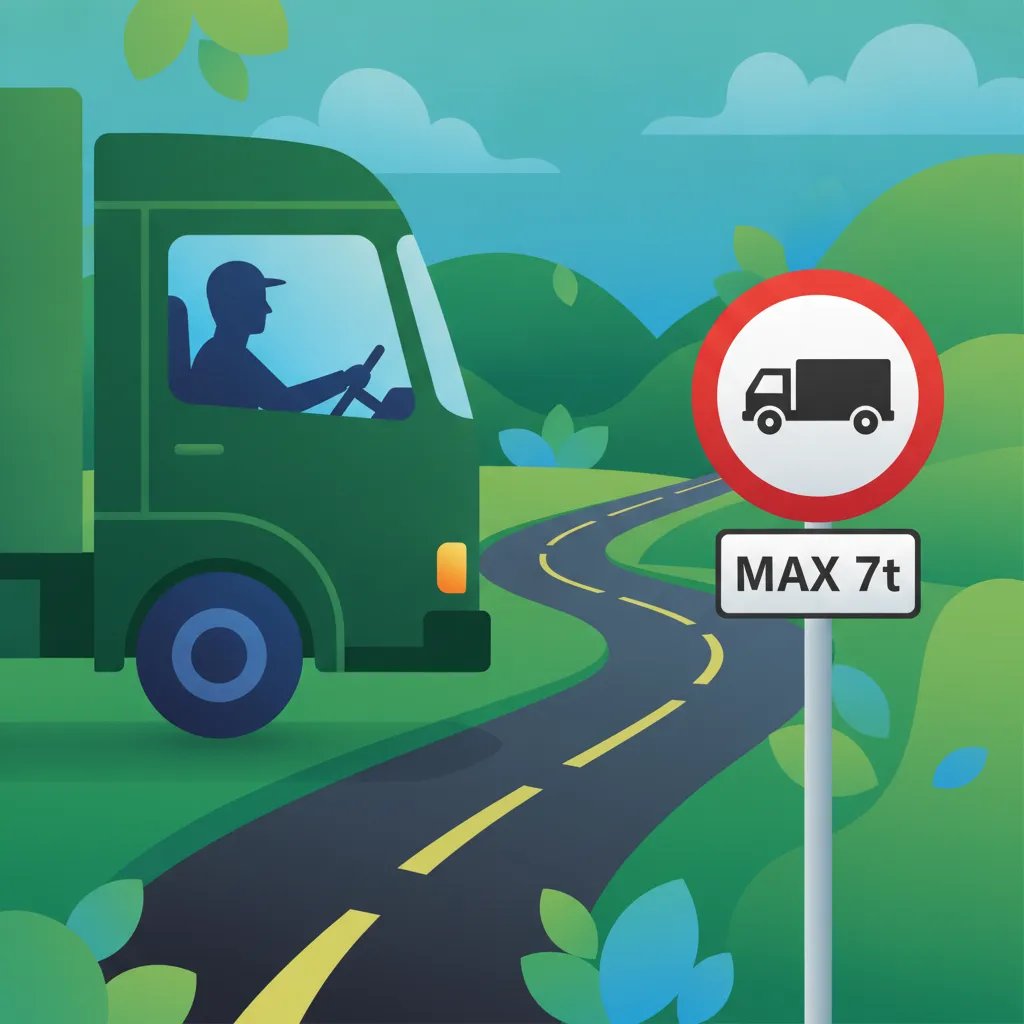
This lesson details the exact visual indicators, symbols, and text used on Irish traffic signs to communicate regulatory restrictions for heavy vehicles. It covers signs denoting height clearances, narrow bridges, and width-limited streets that require immediate driver diversion. By recognizing these specialized warnings early, professional drivers prevent costly structural collisions and traffic offences.

This lesson teaches professional drivers how to systematically map out travel routes that are compatible with heavy vehicle dimensions. It covers the limitations of consumer-grade GPS systems and emphasizes the use of specialized truck navigation systems that account for low bridges and load restrictions. Drivers will also learn to plan for congestion, access timing regulations, and proper entrance paths into commercial zones.
Violating passenger transport laws can lead to severe operator penalties, heavy fines, and the immediate suspension of driving privileges. This lesson examines common operational infractions, including tachograph violations, overloading offences, and driving with defective tires. Drivers will understand their personal legal liabilities under Irish legislation, supporting long-term safety compliance.

Road construction zones feature dynamic hazards, including changed lane configurations, temporary barriers, and workers near live traffic. This lesson details how to follow temporary signage, navigate narrow chicanes, and obey 'Stop-Go' flag systems or temporary traffic lights. You will understand the legal requirement to obey temporary speed limits, which are strictly enforced to protect both motorists and road crews.
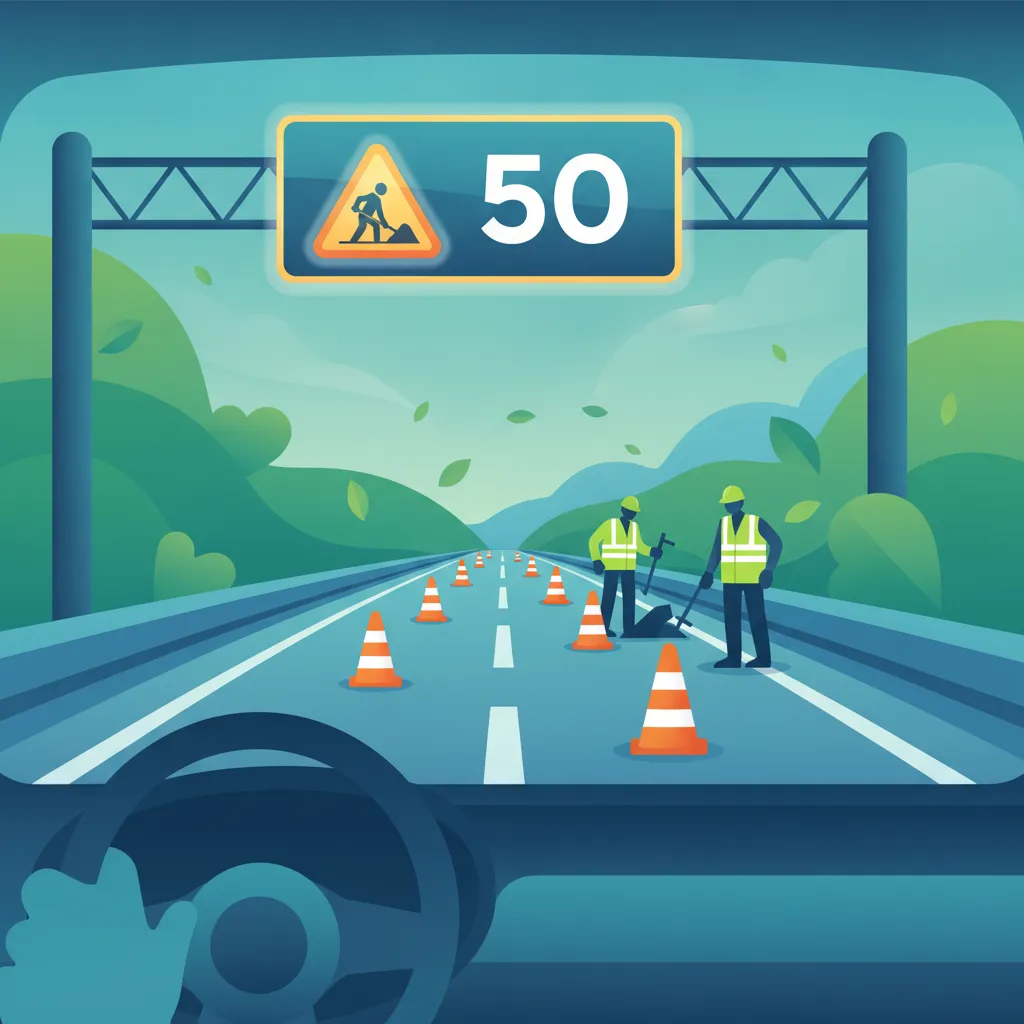
Variable Message Signs and roadwork indicators communicate temporary safety conditions, such as lane closures, heavy delays, or dynamic speed restrictions. This lesson teaches you how to interpret digital overhead gantries, temporary hazard cones, and specific detour layouts often encountered on Irish motorways and regional routes. Adhering to these real-time instructions protects both you and the vulnerable road crews working ahead.

This lesson details the legal consequences of non-compliance with Irish road traffic laws, focusing on fixed charge notices, fines, and court prosecutions. It explains how persistent traffic violations can lead to mandatory licence disqualification, vehicle seizure, and soaring insurance premiums. Motorcyclists will learn about the serious long-term impact that a criminal driving record has on employment.

Operating large passenger vehicles requires instant, accurate interpretation of general and specialized Irish road signage to prevent regulatory violations. This lesson covers the precise meanings of clearway signs, bus corridor indicators, low bridge warnings, and weight restriction zones. Drivers will examine how school zone beacons and specific roundabout indicators apply to large vehicle dimensions.
Find clear answers to common questions learners have about Penalties, Penalty Points and Enforcement. Learn how the lesson is structured, which driving theory objectives it supports, and how it fits into the overall learning path of units and curriculum progression in Ireland. These explanations help you understand key concepts, lesson flow, and exam focused study goals.
No, the penalty points system in Ireland generally applies to all drivers regardless of licence category. However, as a professional passenger vehicle driver, maintaining a clean record is critical for your employment and insurance.
If you reach a total of 12 penalty points within a three-year period, you will be automatically disqualified from driving for six months. For novice drivers, the threshold for disqualification is lower.
An Garda Síochána uses various methods including speed cameras, patrol vehicles, and roadside checks to monitor compliance. As a professional driver, you are expected to uphold the highest standards of the Rules of the Road at all times.
While the general penalty points system applies to all, commercial drivers are held to higher standards regarding professional conduct, hours of service, and vehicle compliance, which are strictly monitored by the RSA.
Use the practice question search tool to pinpoint specific topics, road signs, or rules you need to master for your official Driver Theory Test. Refine your study strategy and ensure comprehensive preparation for all aspects of the Irish driving exam. Start your focused revision now and build confidence for your learner permit test.