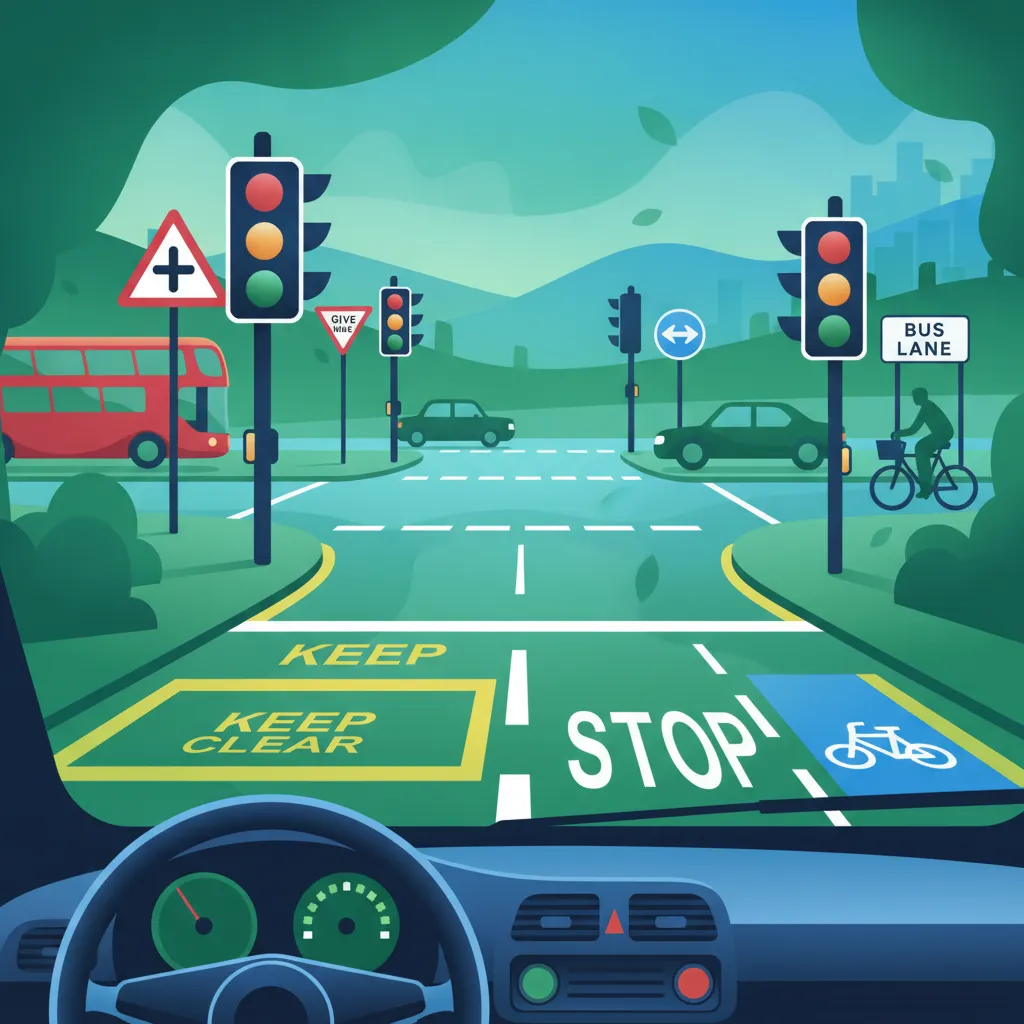
This unit is your essential guide to navigating Great Britain's roads safely. You'll learn to interpret all regulatory, warning, and informational road signs, understand complex road markings, and master the crucial rules of priority at junctions and crossings. Passing your motorcycle theory test and riding confidently depends on this foundational knowledge.
Browse all lessons that make up GB Road Signs, Markings, Signals and Priority Rules. Each lesson focuses on specific topics, learning objectives, and core concepts, helping you build essential knowledge and follow a clear, structured progression toward your study goals in Great Britain.
This lesson focuses on regulatory signs, which are legally enforceable and typically circular in shape. You will learn the meaning of signs with red borders that prohibit actions and blue signs that give a mandatory instruction. Understanding these signs, such as speed limits and 'no entry', is essential for lawful and safe riding.
This lesson explains the function of warning signs, which are mostly triangular and alert road users to potential dangers ahead. You will learn to identify signs for bends, junctions, slippery surfaces, and other hazards particularly relevant to motorcyclists. Acting on these warnings allows a rider to adjust speed and position proactively, enhancing safety.
This lesson decodes the language of road markings painted on the road surface. You will learn the rules associated with solid and broken white lines, double white lines that restrict overtaking, and yellow lines controlling parking. Proper understanding of these markings is crucial for maintaining correct lane discipline and riding legally.
This lesson covers the operation of traffic light signals and the rules for approaching them safely. It also provides a detailed explanation of different pedestrian crossings, such as zebra, pelican, and toucan crossings, clarifying the specific rules and priority for each. You will learn to anticipate the actions of pedestrians and other vulnerable road users at these locations.
This lesson clarifies who has priority at junctions, whether they are marked with signs and lines or are unmarked. It covers the fundamental rule for roundabouts in the UK: give priority to traffic approaching from your right. You will learn the correct procedures for approaching, signalling, and choosing the appropriate lane on roundabouts and at other junctions.
Explore high-intent keywords and long-tail search topics learners use when researching GB Road Signs, Markings, Signals and Priority Rules. These terms reflect how people search for reliable study materials, structured explanations, and unit-level theory preparation support in Great Britain.
Find clear answers to the most common questions learners ask about GB Road Signs, Markings, Signals and Priority Rules. Understand how the unit is organized, what learning goals it supports, and how it contributes to your study progression with structured explanations and practical guidance tailored for learners in Great Britain.
You need to be familiar with three main categories: regulatory signs (telling you what you must or must not do, often with red borders), warning signs (alerting you to potential hazards, usually triangular), and informational signs (providing directions or useful information, often rectangular or blue).
Road markings, like lane lines, box junctions, and crossing markings, provide vital guidance for positioning and behaviour. For instance, understanding box junction rules is crucial to avoid fines, and knowing lane markings helps you position yourself correctly for safety and visibility.
The general rule is to give way to traffic from the right at unmarked crossroads. At junctions with traffic lights, always obey the signals. On roundabouts, you must give way to traffic already on the roundabout. Always be aware of road markings and signs that may indicate specific priority rules.
While most signs and rules apply equally, motorcyclists need to pay extra attention to signs indicating specific hazards like loose surfaces or sharp bends, as these can affect grip and stability more significantly. Also, understanding how to position yourself safely at junctions and when filtering (where legal) is key.
Failing to comply with road signs, signals, or priority rules is a traffic offence. It can lead to penalty points on your licence, fines, or even disqualification, especially if it results in an accident. It also significantly increases your risk of a collision.
The best way to practice is by using the interactive modules in this app, which simulate real road scenarios. Regularly reviewing official Highway Code materials and taking practice theory tests focusing on hazard perception and rules will also greatly improve your understanding and recall.
All included lessons
Lessons in GB Road Signs, Markings, Signals and Priority Rules
See who benefits most from studying GB Road Signs, Markings, Signals and Priority Rules. This overview explains how the unit supports different learning needs, what level of knowledge is helpful before starting, and how it fits into the overall study path in Great Britain.
This unit is crucial for all learner motorcyclists in England, Scotland, and Wales preparing for their theory test. It's particularly beneficial for those who find road signs confusing or struggle with understanding right-of-way situations, ensuring they build a solid foundation for safe riding.

Ready to prepare effectively for your DVSA driving theory test? Explore our structured courses and guided study paths. They cover every topic of the Great Britain Highway Code and official exam requirements, ensuring systematic learning and success.
Explore Driving Theory CoursesExplore all units and lessons included in this driving theory course.
Ready to prepare effectively for your DVSA driving theory test? Explore our structured courses and guided study paths. They cover every topic of the Great Britain Highway Code and official exam requirements, ensuring systematic learning and success.
Explore Driving Theory Courses