
This lesson details the legal requirements and best practices for using lights, reflectors, and visibility aids on your moped or light quadricycle. By mastering these essentials, you will ensure your vehicle remains conspicuous to other road users, keeping you safe and compliant with the Highway Code as you prepare for your Category AM theory test.
Lesson content overview
Riding a moped or light quadricycle on public roads requires a deep understanding of how to make yourself visible to other road users. This isn't just a matter of courtesy; it's a fundamental aspect of road safety and a legal obligation in Great Britain. This lesson for your Great Britain Category AM theory test delves into the specific requirements and best practices for using lights, reflectors, and other visibility aids, ensuring you are conspicuous in all conditions and compliant with the Highway Code and UK vehicle lighting regulations.
Visibility is paramount for moped and light quadricycle riders. Due to their smaller size compared to cars and lorries, these vehicles can be harder to spot, especially in complex traffic environments, adverse weather, or low-light conditions. Enhancing your visibility directly reduces the risk of collisions by giving other drivers more time to detect your presence, recognise your intentions, and react appropriately. This proactive approach to safety is a core principle of responsible riding.
The degree to which a rider or vehicle is easily seen and recognized by other road users. It is central to safety and is influenced by active lighting, passive reflectors, and the rider's clothing.
Conspicuity is the cornerstone of safe riding. It’s about more than just being present; it's about being undeniably noticeable. When you are highly conspicuous, other road users detect you sooner, allowing for earlier reactions and reducing the likelihood of a collision. This principle dictates that riders must leverage every available tool—from active lights to passive reflectors and high-visibility clothing—to maximise their presence on the road. This is particularly vital in situations where natural light is limited, weather conditions are poor, or traffic is dense and complex.
Effective communication is key to preventing accidents, and on the road, your lights are your primary language. Signal intention visibility refers to using specific lighting devices, such as indicators and brake lights, to convey your upcoming manoeuvres to surrounding traffic. This provides crucial predictive information, enabling other drivers to anticipate your actions and interact with you smoothly and safely.
The correct timing and duration of these signals are not merely suggestions; they are legally mandated. Failure to signal clearly or on time can lead to misinterpretation, surprise manoeuvres, and significantly increased risk of collision, as other road users may not have sufficient time to react to your unexpected actions.
Reflectivity is a passive yet powerful safety measure. It describes the property of a surface to bounce incident light back towards its source, making an object visible when illuminated by another vehicle's lights, even if the object itself has no active light source. This is particularly vital for stationary or slow-moving vehicles without their own active illumination.
For mopeds and light quadricycles, correctly placed, clean, and unobstructed reflectors are essential. While active lights draw attention, reflectors provide crucial visibility in situations where your lights might be off, such as when parked at night. Supplementing mandatory reflectors with additional reflective tape can further enhance detection from various angles, especially during low-light conditions.
Adherence to specific rules outlined in the UK Highway Code, Road Vehicles Lighting Regulations, and other relevant UK Statutory Instruments is non-negotiable. These regulations establish uniform standards for vehicle lighting across all road users, which is critical for reducing confusion and enhancing overall road safety.
Non-compliance with these rules can result in significant penalties, including fixed-penalty notices, points on your licence, or even prosecution. Beyond the legal consequences, failing to meet lighting requirements substantially increases your risk of being involved in an accident, as your vehicle may not be adequately visible or your intentions clearly communicated to others.
Your moped or light quadricycle is equipped with various active lighting systems, each serving a specific purpose in ensuring your safety and the safety of others. Understanding when and how to use these lights is fundamental to responsible riding.
Headlamps are the primary front lighting devices on your vehicle, designed to illuminate the road ahead and make you visible to oncoming traffic. They typically comprise two main functions: low-beam (dipped) and high-beam (main).
The low-beam headlamp is your main illumination source for normal road use. It projects a beam that is dipped downwards to illuminate the road immediately in front of your vehicle without dazzling oncoming drivers or those you are following.
Rules for Use:
The high-beam headlamp provides additional, brighter illumination, projecting a longer, wider beam. It is intended for use on unlit roads where maximum forward vision is required.
Rules for Use:
Low-intensity front-mounted lights that are automatically activated during daylight hours to improve a vehicle's forward visibility and detection without causing glare.
Daytime Running Lights (DRL), often referred to as position lamps or simply DRLs, are low-intensity front-mounted lights designed to improve your moped's visibility during daylight hours. They are not intended to illuminate the road for you but rather to make your vehicle more easily seen by others.
Rules for Use:
Brake lights are rear-mounted red lights that illuminate automatically whenever you slow down or stop your vehicle. Their primary purpose is to alert following traffic of your deceleration, thereby reducing the risk of a rear-end collision.
Rules for Use:
Indicators, also known as turn signals, are amber flashing lights positioned on both the front and rear of your moped. They are used to clearly communicate your planned turns, lane changes, or other directional manoeuvres to other road users.
Rules for Use:
While active lights demand attention through their illumination, passive visibility aids use the light from other sources to make you visible. Reflectors and reflective gear are crucial components of your overall safety strategy.
Rear reflectors are red retro-reflectors mounted on the rear sides of your moped or light quadricycle. Their special design means they reflect light directly back towards its source, making your vehicle visible when illuminated by another vehicle's headlights, even if your own lights are off.
Rules for Use:
Side reflectors, typically red or amber, and optional high-visibility reflective tape, are placed on the sides of your vehicle and its accessories. These enhance your visibility from lateral angles, which is critical at junctions, roundabouts, and when traversing traffic lanes.
Rules for Use:
Beyond your vehicle's lighting and reflectors, your clothing plays a significant role in your personal conspicuity. High-visibility clothing includes jackets, vests, gloves, and leg wear that incorporate reflective material, often adhering to standards like BS 9399 for reflective garments.
Recommendations:
Compliance with specific regulations is not just about avoiding penalties; it's about ensuring a consistent standard of safety across all road users. For mopeds and light quadricycles, these rules are primarily found in the Highway Code, the Road Vehicles (Construction and Use) Regulations 1986, and the Road Vehicles Lighting Regulations 2008.
Your low-beam headlights are a critical component for safe riding in certain conditions.
The use of high-beam lights is conditional and requires careful judgment.
For newer mopeds, DRLs are an always-on feature in daylight.
A functional brake light is non-negotiable for warning following traffic.
Clear and timely signalling is crucial for predictable road behaviour.
Even when your lights are off, you must remain visible from the rear.
While not mandatory, these significantly boost your safety profile.
Even experienced riders can sometimes overlook essential visibility practices or fall prey to common misconceptions. Awareness of these pitfalls can help you maintain compliance and, more importantly, stay safe.
A frequent error is assuming that brake lights are only critical at higher speeds. However, even when slowing down for a pedestrian crossing or stopping in slow-moving traffic, your brake light must illuminate. Neglecting this at low speeds can lead to rear-end collisions, as following drivers might not anticipate your deceleration. Always ensure your brake light is functional and illuminates whenever you apply the brakes.
The misuse of high-beam headlights is dangerous. Engaging high-beam when an oncoming vehicle is within 200 metres, or when following another vehicle closely, can temporarily blind other drivers, leading to hazardous situations. High-beam is strictly for unlit roads where no other traffic is present that could be dazzled.
Some riders might manually disable their Daytime Running Lights (DRL) to conserve battery or simply because they don't perceive their necessity in bright daylight. However, if your moped was manufactured after 2006 and thus legally mandated to have DRLs, disabling them during daylight hours is illegal. DRLs are specifically designed to enhance your conspicuity during the day without consuming significant power.
One of the most common causes of miscommunication on the road is inadequate indicator timing. Activating your indicator only a second or two before making a turn or changing lanes provides insufficient warning to other road users. The Highway Code stipulates at least 5 seconds of signalling before a manoeuvre to allow others ample time to react and anticipate your actions safely.
Riders sometimes remove rear reflectors for aesthetic reasons, or they become obscured by dirt, luggage, or accessories. A missing or blocked rear reflector makes your vehicle virtually invisible from behind at night if your lights are off, presenting a significant hazard. Regularly inspect and clean all reflectors to ensure they are fully effective.
Riding conditions are rarely static. Your approach to lighting and visibility must therefore be dynamic, adapting to changes in weather, light levels, and road environments.
Adverse weather dramatically reduces visibility, requiring specific lighting strategies.
The transition periods of dusk and dawn, as well as full night, require careful attention to your lighting.
The type of road you are on also influences your visibility strategy.
Special attention is needed when your vehicle state changes or when vulnerable road users are present.
Understanding the fundamental principles of human vision and the physics of light reinforces why proper lighting and reflectors are not mere rules but life-saving practices.
The average human eye can detect a well-lit object from approximately 200 metres under optimal daylight conditions. However, this detection distance drastically reduces to only about 30–50 metres at night without auxiliary lighting. This dramatic difference highlights the critical role of vehicle lights. By increasing the detection distance of your moped or light quadricycle, you effectively extend the reaction time available to other road users. More reaction time directly correlates with a reduced probability of collision.
While more light might seem safer, incorrect application can be detrimental. For instance, using high-beam headlights in fog, heavy rain, or snow causes light to scatter off the water droplets or snow particles. This scattering effect creates significant glare, effectively forming a wall of light that reduces your own forward visibility and can temporarily blind oncoming drivers. This impaired vision can lead to disorientation and potential loss of control. Proper beam selection is therefore crucial not only for your visibility but also for preventing hazardous glare for yourself and others.
Consistent and timely signalling (through indicators and brake lights) creates predictable patterns of behaviour on the road. From a psychological perspective, this reduces the cognitive load on other drivers, meaning they don't have to guess your intentions. When your actions are predictable, other road users can process information more efficiently, anticipate your movements, and respond smoothly, fostering a safer, more harmonious traffic flow. Conversely, unpredictable actions or absent signals increase uncertainty and reaction times, heightening the risk of accidents.
Mastering the use of lights, reflectors, and other visibility aids is a non-negotiable aspect of safe moped and light quadricycle riding for your Great Britain Category AM licence. Conspicuity is your primary defense against collisions, achieved through a combination of active lighting (DRL, low-beam headlights, brake lights, indicators), passive aids (rear and side reflectors, reflective tape), and personal protective equipment (high-visibility clothing).
Always ensure all your lights are functional, your reflectors are clean and unobstructed, and you use the correct beam settings for the prevailing conditions. Maintain precise indicator timing to communicate your intentions clearly and supplement your vehicle's features with reflective clothing whenever visibility is compromised. By consistently applying these principles and adhering to the relevant UK regulations, you significantly reduce risks, enhance the predictability of your movements, and contribute to a safer road environment for everyone. Your commitment to being seen is a commitment to staying safe.
This lesson covers the essential lighting and visibility requirements for riding mopeds and light quadricycles in Great Britain, focusing on active systems (dipped beam, high-beam, DRLs, brake lights, indicators) and passive aids (rear and side reflectors, reflective tape, high-visibility clothing). Key legal obligations include mandatory low-beam use between sunset and sunrise and in tunnels, DRL requirements for post-2006 vehicles, and indicator activation at least 5 seconds before manoeuvres. Common errors include misusing high-beam, disabling DRLs, inadequate indicator timing, and neglecting reflector maintenance. Environmental adaptation is critical—low-beam is essential in adverse weather while high-beam causes dangerous glare in fog or rain. Understanding these rules and applying them consistently significantly reduces collision risk and ensures Highway Code compliance for the Category AM theory test.
A short set of high-value points that capture the most important learning from this lesson.
Conspicuity combines active lights (headlights, brake lights, indicators) with passive aids (reflectors, reflective tape) and personal high-visibility clothing to maximise detection by other road users.
Low-beam headlights must be used from sunset to sunrise, in tunnels, and during any low-visibility conditions such as heavy rain or fog.
Daytime Running Lights (DRL) are mandatory on mopeds registered after 2006 and must remain on during daylight hours to enhance forward visibility.
Indicators must be activated at least 5 seconds before any turn or lane change to give other road users sufficient warning of your intentions.
Rear reflectors provide essential passive visibility when stationary at night, remaining visible even without active lighting.
Explore all units and lessons included in this driving theory course.
High-beam may only be used on unlit roads with no oncoming traffic within 200 metres and no vehicle ahead within 100 metres.
Brake lights must illuminate whenever you decelerate, regardless of speed—even slight reductions at low speeds require brake light activation.
Disabling mandatory DRLs on mopeds manufactured after 2006 is illegal, regardless of battery concerns.
Rear reflectors are legally mandatory; reflective tape supplements but cannot replace them.
In fog, rain, or snow, always use low-beam; high-beam causes dangerous light scatter that reduces visibility for everyone.
Assuming brake lights are only necessary at higher speeds, neglecting to ensure they function when slowing in slow-moving traffic or stopping for pedestrians.
Using high-beam headlights when approaching vehicles are within 200 metres, causing dangerous glare that temporarily blinds other drivers.
Manually disabling Daytime Running Lights to save battery, which is illegal on mopeds where DRLs are mandatory.
Activating indicators only 1-2 seconds before turning, providing insufficient warning to other road users as legally required (minimum 5 seconds).
Removing or allowing rear reflectors to become obscured by dirt, luggage, or accessories, making the vehicle virtually invisible from behind at night.
Lesson content overview
A short set of high-value points that capture the most important learning from this lesson.
Conspicuity combines active lights (headlights, brake lights, indicators) with passive aids (reflectors, reflective tape) and personal high-visibility clothing to maximise detection by other road users.
Low-beam headlights must be used from sunset to sunrise, in tunnels, and during any low-visibility conditions such as heavy rain or fog.
Daytime Running Lights (DRL) are mandatory on mopeds registered after 2006 and must remain on during daylight hours to enhance forward visibility.
Indicators must be activated at least 5 seconds before any turn or lane change to give other road users sufficient warning of your intentions.
Rear reflectors provide essential passive visibility when stationary at night, remaining visible even without active lighting.
Explore all units and lessons included in this driving theory course.
High-beam may only be used on unlit roads with no oncoming traffic within 200 metres and no vehicle ahead within 100 metres.
Brake lights must illuminate whenever you decelerate, regardless of speed—even slight reductions at low speeds require brake light activation.
Disabling mandatory DRLs on mopeds manufactured after 2006 is illegal, regardless of battery concerns.
Rear reflectors are legally mandatory; reflective tape supplements but cannot replace them.
In fog, rain, or snow, always use low-beam; high-beam causes dangerous light scatter that reduces visibility for everyone.
Assuming brake lights are only necessary at higher speeds, neglecting to ensure they function when slowing in slow-moving traffic or stopping for pedestrians.
Using high-beam headlights when approaching vehicles are within 200 metres, causing dangerous glare that temporarily blinds other drivers.
Manually disabling Daytime Running Lights to save battery, which is illegal on mopeds where DRLs are mandatory.
Activating indicators only 1-2 seconds before turning, providing insufficient warning to other road users as legally required (minimum 5 seconds).
Removing or allowing rear reflectors to become obscured by dirt, luggage, or accessories, making the vehicle virtually invisible from behind at night.
Explore search topics learners often look for when studying Lights, Reflectors, and Daytime Visibility. These topics reflect common questions about road rules, driving situations, safety guidance, and lesson level theory preparation for learners in Great Britain.
Browse additional driving theory lessons that cover connected traffic rules, road signs, and common driving situations related to this topic. Improve your understanding of how different rules interact across everyday traffic scenarios.
Understand the specific UK laws and Highway Code rules for using headlights, brake lights, indicators, and reflectors on mopeds and light quadricycles. Essential knowledge for compliance and safety on British roads.
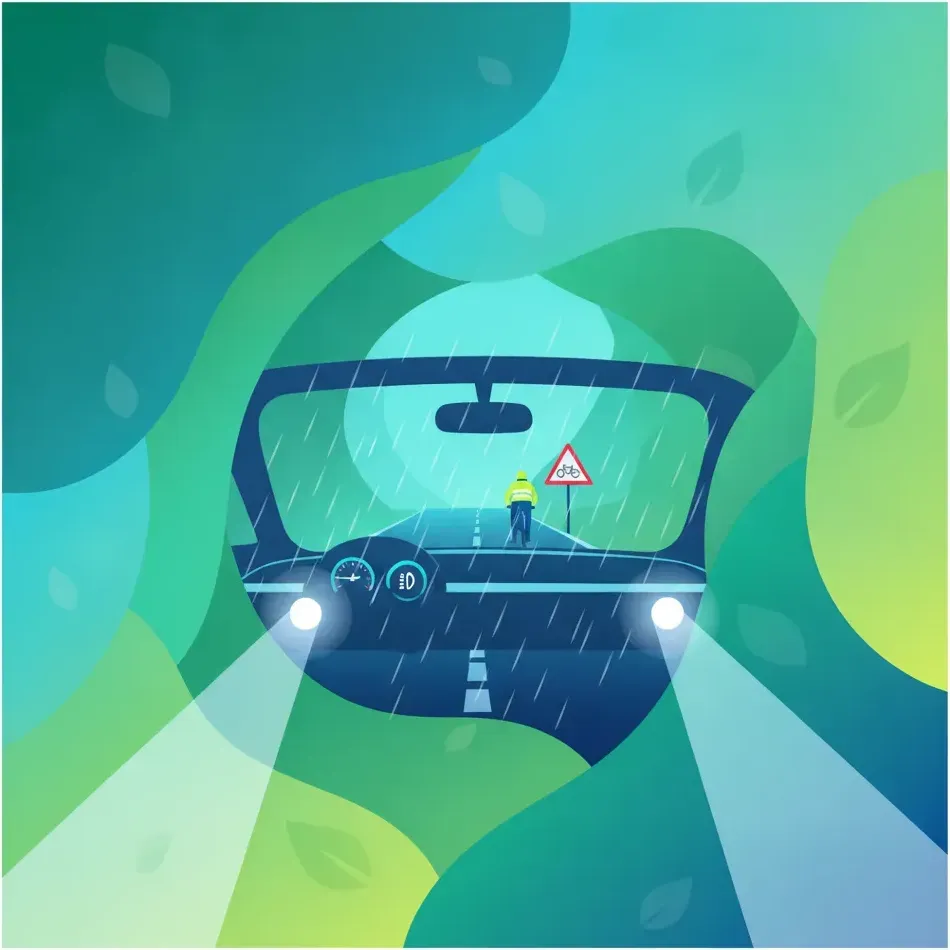
This lesson explains the functions and legal requirements for all exterior vehicle lights. You will learn when it is appropriate to use dipped and main beam headlights, the specific conditions for using fog lights, and the correct application of hazard warning lights. Proper use of lighting is vital for seeing and being seen by other road users.
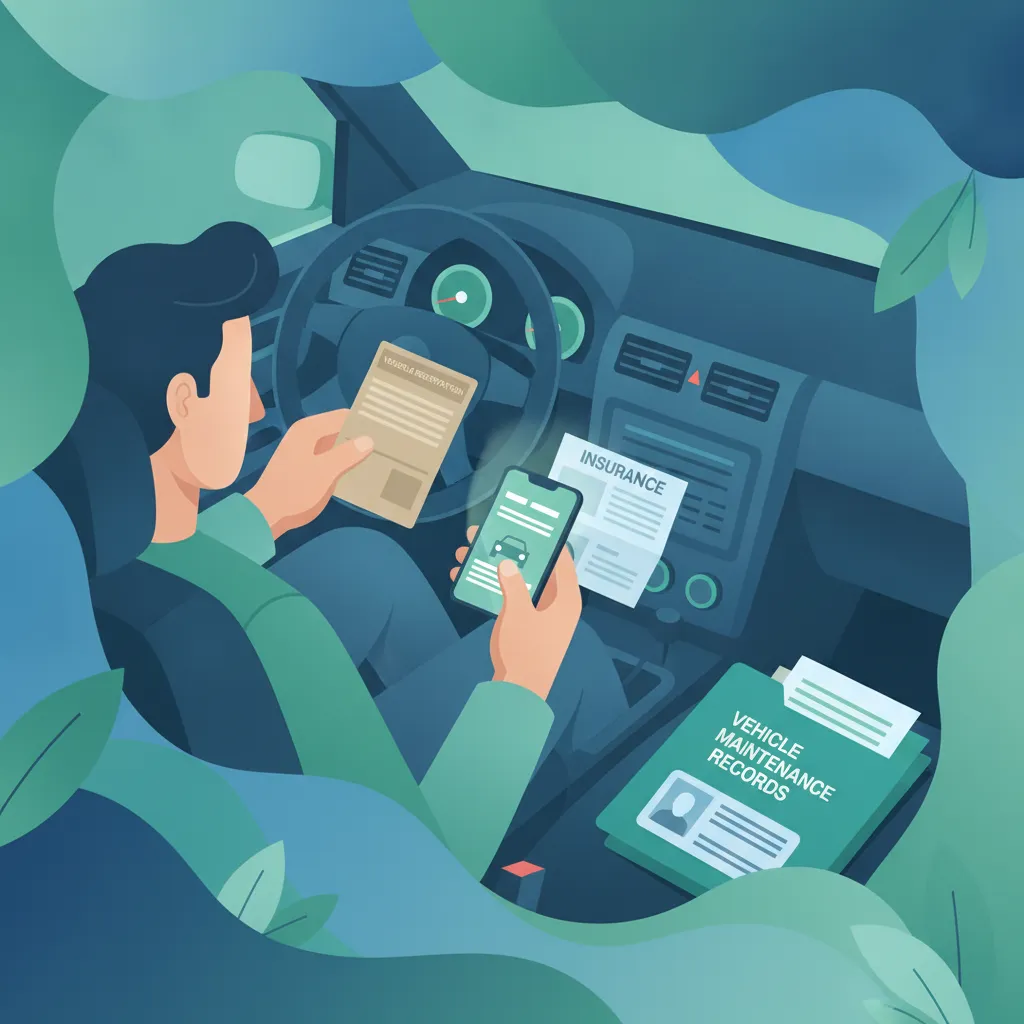
This lesson details the crucial documentation required for legal driving in the UK. It explains the purpose of the V5C registration document, the MOT test certificate, and proof of insurance and road tax (Vehicle Excise Duty). You will learn where to keep these documents and when you might be required to present them to authorities.
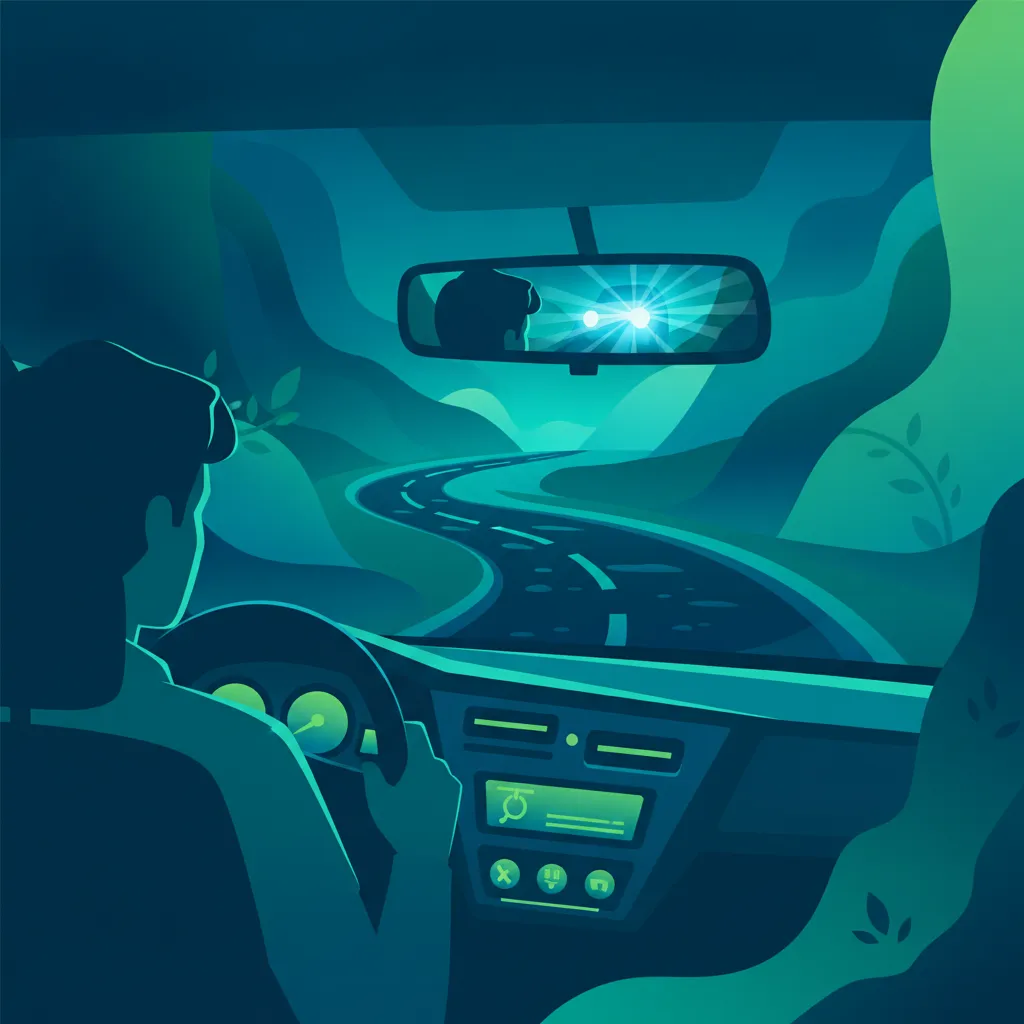
This lesson addresses the increased risks associated with driving after dark. It explains when to switch between dipped and main beam headlights to maximise your own vision without dazzling other drivers. Techniques for reducing glare and spotting hazards like cyclists or pedestrians with poor visibility are also covered.
This lesson details the operation of traffic lights in Great Britain, including the red-and-amber phase before green. It clarifies the rules for proceeding at a green light, stopping for red, and preparing to stop for a steady amber light. You will also learn about green filter arrows and the flashing amber lights used at certain pedestrian crossings.
This lesson details how to safely navigate junctions controlled by traffic signals. It explains the meaning of filter arrows, which allow you to proceed in a specific direction even if the main light is red. You will also learn about respecting advanced stop lines for cyclists and how to approach a junction when the traffic lights are not working.
This lesson provides a clear guide to the legal restrictions placed on drivers with a provisional licence. It covers the mandatory display of L-plates and the specific criteria for a supervising driver, including age and experience. Furthermore, it explains the prohibition on driving on motorways and other rules designed to ensure safety during the learning process.
This lesson focuses on the challenges of riding when you can't see or be seen clearly. It covers the correct use of lights in fog, rain, and at night to maximize both your vision and your visibility to others. You will learn why reducing speed is critical, how to use reflective clothing effectively, and strategies for dealing with the glare from other vehicles' headlights to ensure you can navigate safely in all lighting conditions.
This lesson provides essential techniques for safe riding during nighttime and in poor visibility conditions like dawn or dusk. It covers the correct use of your headlamp's main and dipped beams, strategies for reducing glare from oncoming traffic, and the critical role of reflective clothing. You will also learn how to identify common nighttime hazards and manage fatigue, ensuring you can navigate British roads safely after dark while complying with all relevant road rules.
This lesson details all the necessary documentation required at each stage of the AM licensing process, from applying for a provisional licence to attending your theory and practical tests. You will learn about the required forms of identification, proof of insurance, and vehicle registration documents. The lesson also provides a clear overview of the DVSA test procedures, explaining the format of the multiple-choice theory test, the hazard perception section, and the criteria for the practical assessment.
This lesson covers signals that require an immediate and specific response from drivers. You will learn the meaning of hand signals given by police officers and how to give way safely to emergency vehicles with flashing lights or sirens. It also explains the warning light system at railway level crossings, where you must stop when signalled to do so.
Learn how to adjust your use of lights and reflectors based on UK weather like rain and fog, different light levels such as dusk and night, and various road types. Essential theory for safe riding.
This lesson explains the functions and legal requirements for all exterior vehicle lights. You will learn when it is appropriate to use dipped and main beam headlights, the specific conditions for using fog lights, and the correct application of hazard warning lights. Proper use of lighting is vital for seeing and being seen by other road users.
This lesson provides essential advice for driving when weather conditions are poor. It explains how rain can cause aquaplaning and why you must double your following distance. You will also learn techniques for driving in icy conditions, including gentle use of controls to avoid skidding, and the correct use of lights in fog.
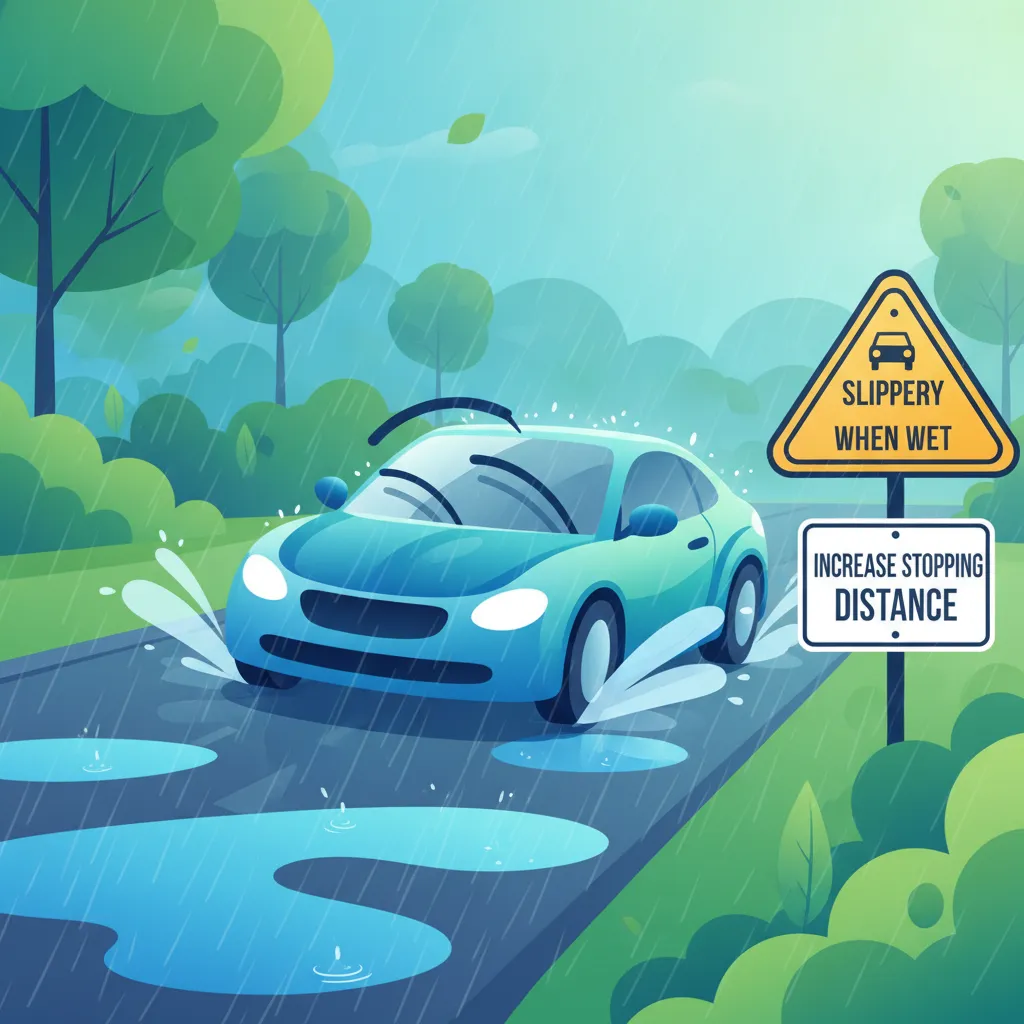
This lesson explains how different weather conditions impact the handling and stability of a large passenger vehicle. It covers the risks of aquaplaning in heavy rain, the effect of high winds on vehicle stability, and the severe reduction in visibility caused by fog. Learners will understand how ice and snow dramatically increase stopping distances and require extremely gentle control inputs to prevent skidding. Strategies for adapting speed and increasing following distances are emphasized.
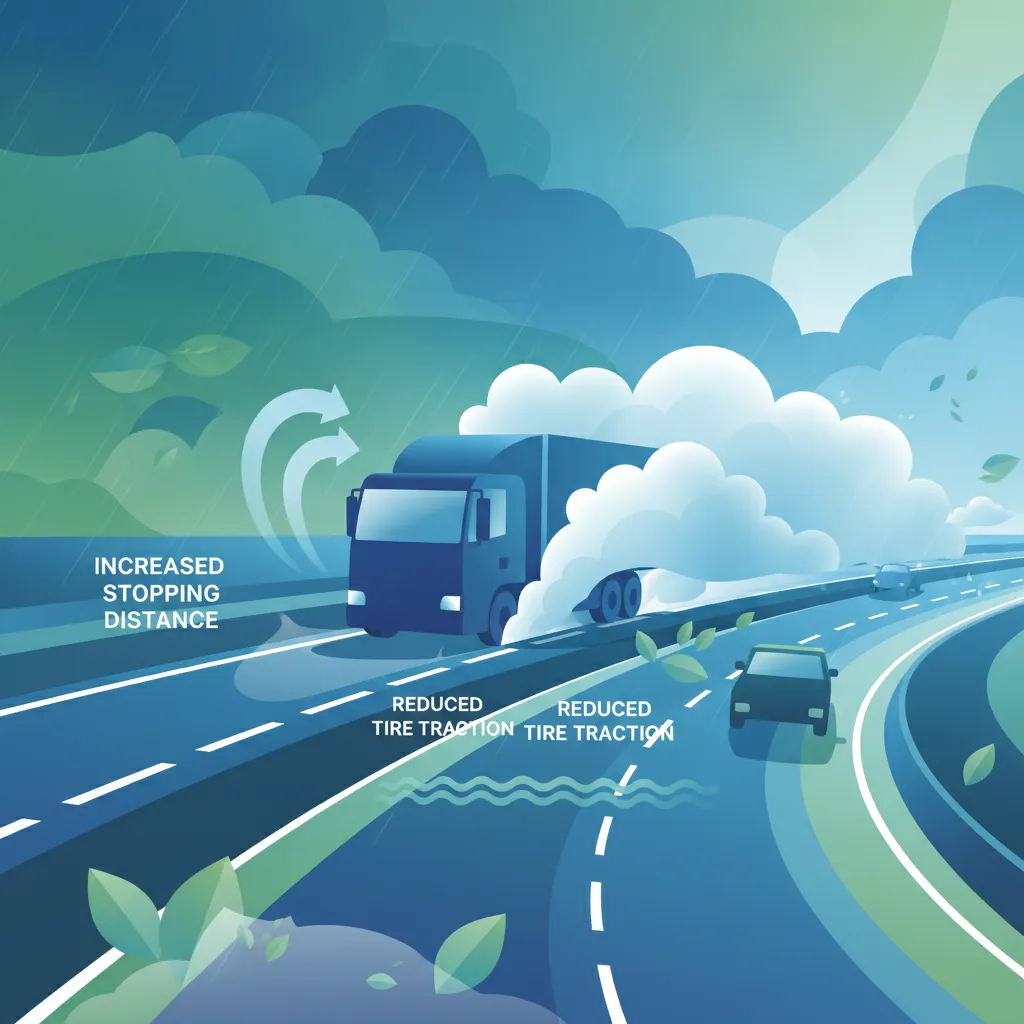
This lesson details how different adverse weather conditions uniquely affect the handling and stability of a heavy goods vehicle. It covers the increased stopping distances in rain, reduced visibility in fog, severe traction loss on ice, and the dangerous effect of strong crosswinds on high-sided vehicles. You will learn specific techniques for adjusting speed, increasing following distances, and using vehicle controls smoothly to maintain safety in challenging weather.
This lesson focuses on the challenges of riding when you can't see or be seen clearly. It covers the correct use of lights in fog, rain, and at night to maximize both your vision and your visibility to others. You will learn why reducing speed is critical, how to use reflective clothing effectively, and strategies for dealing with the glare from other vehicles' headlights to ensure you can navigate safely in all lighting conditions.

This lesson equips drivers with strategies for maintaining control of a heavy vehicle during adverse weather conditions like heavy rain, ice, snow, and strong crosswinds. It covers the physics of traction loss, aquaplaning, and skidding, and explains how to use smooth inputs for steering, acceleration, and braking. The function of electronic stability control systems and other driver aids is also discussed as part of a proactive approach to safety in challenging environments.
This lesson addresses the increased risks associated with driving after dark. It explains when to switch between dipped and main beam headlights to maximise your own vision without dazzling other drivers. Techniques for reducing glare and spotting hazards like cyclists or pedestrians with poor visibility are also covered.
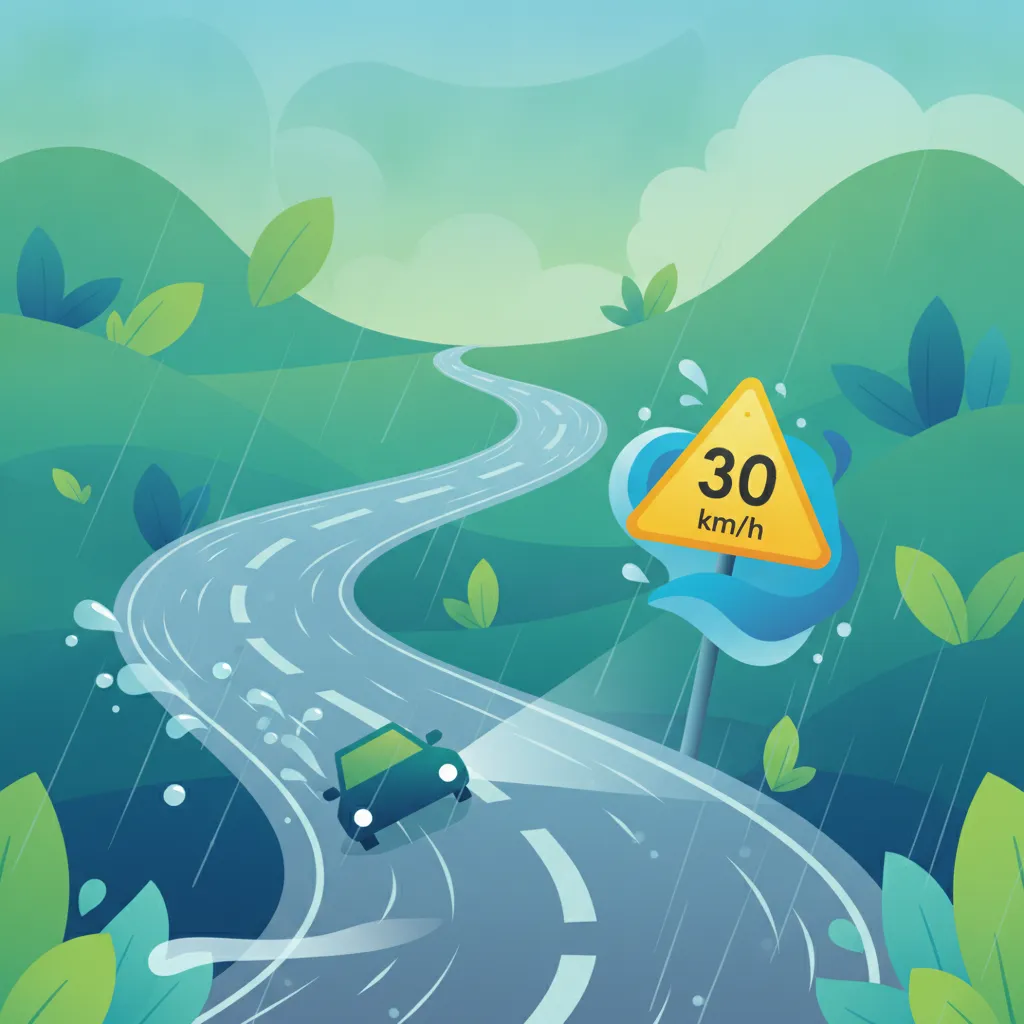
This lesson explains that safe driving often requires travelling at a speed lower than the legal limit. It covers how to adjust your speed for adverse conditions such as rain, which can double your stopping distance, or fog, which severely reduces visibility. The goal is to always be able to stop safely in the distance you can see to be clear.
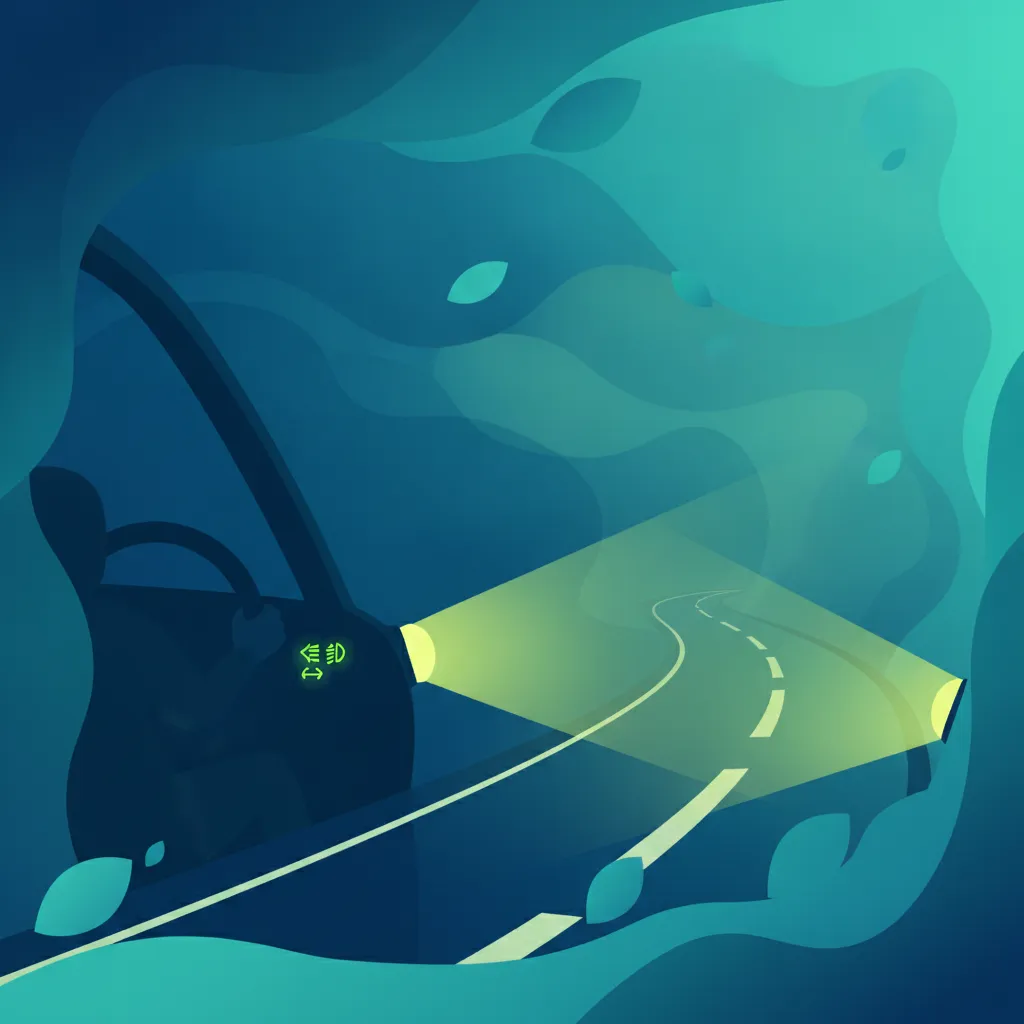
Fog dramatically reduces how far you can see and be seen. This lesson explains why you must reduce your speed and increase your following distance in foggy conditions. It also covers the legal requirements and best practices for using your headlights and fog lights to maximize your visibility to others without dazzling them.
This lesson provides essential advice for riding safely in adverse weather conditions that reduce tyre grip. You will learn how rain, ice, and wet leaves dramatically increase braking distances and affect handling. Key strategies covered include reducing speed, increasing following distances, making smooth control inputs, and anticipating slippery areas to maintain control and avoid skidding on compromised road surfaces.
Find clear answers to common questions learners have about Lights, Reflectors, and Daytime Visibility. Learn how the lesson is structured, which driving theory objectives it supports, and how it fits into the overall learning path of units and curriculum progression in Great Britain. These explanations help you understand key concepts, lesson flow, and exam focused study goals.
While not every older moped has dedicated DRLs, many modern Category AM vehicles do. It is important to know that you must ensure your main headlamp is used appropriately as per the Highway Code, especially in poor visibility, to ensure you are clearly seen.
A failing indicator is a serious safety risk and a legal issue. You must be able to recognize faults early, which is why routine pre-ride checks are a critical part of the AM safety syllabus. If they fail, you should not ride the vehicle until the fault is repaired.
Reflectors are a passive safety feature that helps other road users spot you when your lights might not be enough. The theory test may include questions on ensuring these are clean, undamaged, and correctly positioned to meet legal compliance standards.
In the UK, using dipped headlights during the day can significantly increase your conspicuity to other drivers, especially on rural roads or in overcast weather. The Highway Code recommends keeping your lights on to stand out.
Dive into our comprehensive question bank to find exactly what you need for your Great Britain theory test. Use our advanced filters to pinpoint specific subjects or test your knowledge on challenging areas, ensuring you're fully prepared for success.