
Driving Theory
British Driving Theory Courses

Lesson 1 of the Junctions, Roundabouts, Crossings and Road Positioning unit

GB AM Moped Theory: Approaching and Navigating Junctions Safely

This lesson provides a comprehensive guide to navigating junctions safely as a moped or light quadricycle rider. You will master the systematic approach needed for the GB theory test, ensuring you can manage speed and positioning effectively at all types of road intersections.
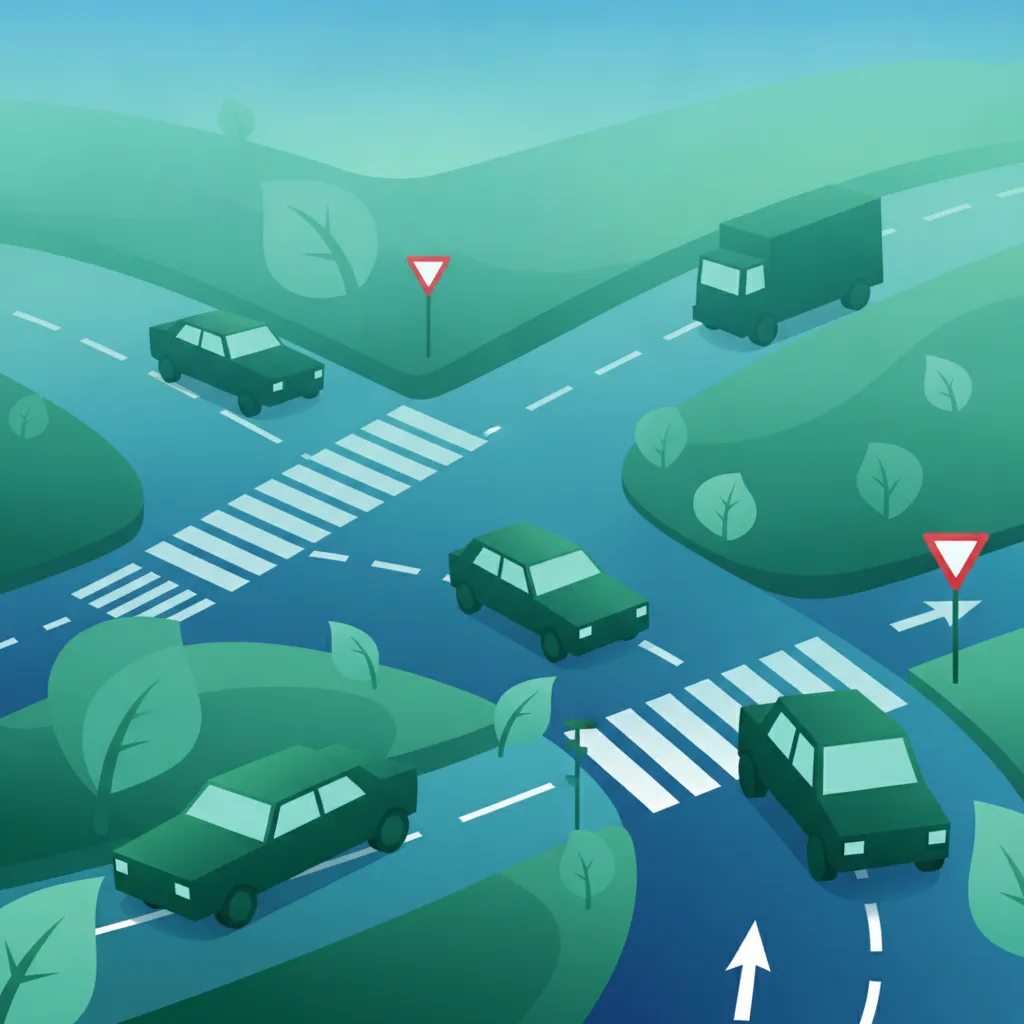
junctionsMSM routinetheory testroad safetypriority rules
GB AM Moped Theory: Approaching and Navigating Junctions Safely

Lesson content overview

GB AM Moped Theory

Approaching and Navigating Junctions Safely on UK Roads

Junctions are among the most complex and potentially hazardous areas on any road network. As a rider of a moped or light quadricycle, understanding how to approach, enter, and exit these intersections safely is paramount for your protection and the smooth flow of traffic. This lesson, part of your Great Britain AM Licence Theory Course, provides a systematic approach to mastering junction navigation, focusing on key safety routines, observing your surroundings, and making informed decisions.

The goal is to minimise your exposure to conflict points where other road users might have priority or behave unpredictably. By applying the principles discussed here, you will enhance your hazard perception, reduce collision risk, and build confidence in complex traffic environments.

Understanding Junction Dynamics: Why Junctions are High-Risk Areas

Junctions represent intersections where multiple traffic streams converge, often at varying speeds and from different directions. This inherent complexity creates a higher potential for collisions compared to straight sections of road. For AM licence holders, who ride smaller, less visible vehicles, this risk is amplified.

Anticipatory planning, accurate perception of surrounding traffic, and timely execution of correct manoeuvres are crucial. Your small size means you must actively ensure other road users are aware of your presence and intentions. Ignoring or misinterpreting priority rules, underestimating gaps in traffic, or failing to observe effectively can lead to severe consequences.

The Core Principles of Safe Junction Navigation

Mastering junctions involves several interconnected principles that, when applied together, form a robust safety strategy. These principles are designed to ensure you are constantly aware of your surroundings, communicate your intentions clearly, and make safe judgments.

Mirror-Signal-Manoeuvre (MSM): Your Essential Safety Routine

The Mirror-Signal-Manoeuvre (MSM) routine is a fundamental sequence of actions you must perform before making any change in speed, direction, or position, especially when approaching or at a junction. It ensures you maintain situational awareness, clearly communicate your planned actions, and execute manoeuvres safely.

Performing the Mirror-Signal-Manoeuvre (MSM) Routine

  1. Mirrors: Before any manoeuvre, check your mirrors (rear-view and side mirrors) to assess the position and speed of traffic behind and to the sides of your moped or light quadricycle. This helps you identify if anyone is trying to overtake you or if there's traffic close behind that might be affected by your actions.

  2. Signal: Once you know it's safe to proceed and your intended manoeuvre will not adversely affect traffic behind, give an appropriate signal. Use your vehicle's indicators (if fitted and working) or clear hand signals to communicate your intention to turn left or right, or to stop. Your signal should be given in good time, allowing other road users to react.

  3. Manoeuvre: After checking your mirrors and signalling, execute the manoeuvre. This includes adjusting your speed (accelerating or decelerating), changing your road position, or steering into a turn. The manoeuvre should be smooth and controlled, maintaining stability throughout.

For AM riders, particularly those on mopeds without built-in indicators, hand signals are mandatory as per Highway Code Rule 262 when vehicle indicators are unavailable or obscured. A single mirror check is often insufficient; always consider your blind spots. Signaling too early or too late can also confuse other road users, so timing is key.

Tip

Timed Signalling: Give your signal early enough to inform other road users of your intentions, but not so early that it could mislead them about which junction you intend to take. For example, if there are two close junctions, wait until you pass the first before signalling for the second.

All-Round Observation (ARO): Scanning for Hidden Hazards

All-Round Observation (ARO) refers to the act of scanning 360 degrees around your vehicle, turning your head to check for hazards that might not be visible in your mirrors alone. This is critical before entering a junction, especially when turning or crossing, to cover blind spots.

Definition

Blind Spot

Areas around a vehicle that cannot be seen using mirrors, requiring a direct head turn (shoulder check) to observe. For mopeds, these zones are relatively small but still exist, particularly for cyclists or pedestrians approaching from the side.

ARO should be performed from a stationary position at a junction before proceeding, or dynamically as you slow down to enter. This involves looking left, right, and behind over your shoulder to identify vehicles, cyclists, pedestrians, and any unexpected hazards. The Highway Code requires drivers to move their heads, not just rely on mirrors, when checking blind spots or before entering a junction. Failing to do a full ARO can lead to serious collisions, especially with cyclists or pedestrians who might be in your blind spot.

Gap Assessment: Judging Safe Entry into Traffic

Gap assessment is the process of estimating whether the speed and distance of approaching vehicles provide a safe opening for you to enter a junction without causing conflict or forcing other drivers to slow down or change direction. This crucial skill prevents collisions and ensures smooth traffic flow.

When stopped at a junction, you need a "static gap" to move off safely. If you are already moving, you judge a "dynamic gap" to decide whether to continue or stop. Factors to consider include:

  • Speed of approaching traffic: Faster traffic requires a larger gap.
  • Distance of approaching traffic: How far away are they?
  • Your vehicle's acceleration: How quickly can your moped or light quadricycle clear the junction?
  • Road and weather conditions: Wet roads or poor visibility increase required gap size.

The Highway Code states you must not move into a junction unless a safe and sufficient gap exists. A common misunderstanding is underestimating the time and distance needed, leading to risky manoeuvres. As a general guide, aim for a gap that gives you at least two seconds of clear distance to complete your manoeuvre without hindering other traffic.

Right-of-Way Priority: Understanding Who Goes First

Definition

Right-of-Way Priority

The legal hierarchy dictating which road users may proceed first at an intersection, governed by signs, road markings, and traffic signals.

Understanding right-of-way priority is fundamental to safe junction navigation and is legally binding. It provides predictability in traffic flow and reduces conflict.

Common Right-of-Way Scenarios:

  1. Priority Road: Vehicles on a main road, often indicated by specific signs, have precedence over those on roads joining it.
    If you are on a non-priority road, you must yield to traffic on the main road.
  2. Give-Way Signs and Markings: If you encounter a Give Way sign or white triangular road markings (give-way lines), you must yield to traffic on the crossing road. This means slowing down or stopping completely if necessary, and only proceeding when it is safe to do so without affecting other vehicles.
  3. Traffic Lights: Right-of-way is governed by the signal phases. A green light means you can proceed if the way is clear, but still be aware of turning traffic or pedestrians.
  4. Pedestrian Crossings: Pedestrians have priority when they have activated a crossing (e.g., Pelican, Toucan) or have stepped onto a Zebra crossing. You must stop and allow them to cross safely. Highway Code Rule 227 specifically covers pedestrian priority at crossings.
  5. Unmarked Junctions: At unmarked junctions where no signs or signals dictate priority, you should generally give way to traffic coming from your right. Always proceed with extreme caution, assuming no one will give way to you.

Misinterpreting markings or signs, such as assuming a solid white line automatically grants priority, is a common error. Always look for the accompanying signs or signals.

Controlled Positioning: Optimising Your Visibility and Safety

Controlled positioning involves deliberately placing your moped or light quadricycle within its lane to maximise your visibility to other road users and minimise your exposure to hazards, especially when approaching or navigating junctions.

Effective Positioning for Turns:

  • Turning Right: When preparing to turn right, position your vehicle towards the left side of your lane (but not on the kerb). This provides a better line of sight for oncoming traffic and pedestrians on the far side of the junction. It also creates a safer angle for the turn itself and makes it clear to traffic behind you that you intend to turn right and aren't simply moving over to the right.
  • Turning Left: For a left turn, position your vehicle slightly to the left side of the lane, close to the kerb (but not too close to clip it). This helps guide you into the correct lane on the new road and discourages other vehicles from trying to squeeze past you on the left.

Early lane position adjustment is key. Constantly monitor your mirrors and perform all-round observations as you adjust your position to ensure you don't inadvertently move into the path of another vehicle, particularly cyclists. Riding too close to the kerb or centre line without purpose can create new hazards or limit your escape routes.

Adhering to the Highway Code is a legal requirement in the UK. Many rules specifically govern how drivers and riders must behave at junctions to ensure safety and maintain orderly traffic flow.

  • Highway Code Rule 170: "Do not cross or enter a junction unless you have a safe gap in the traffic." This is mandatory and prevents collisions with vehicles that have priority.
  • Highway Code Rule 171: "Drivers must not move forward unless they have a clear view of the road." Essential for blind junctions where visibility is limited; ensure you can see what you are moving into.
  • Highway Code Rules 177-179: These rules explicitly state that you must give way at junctions where a Give Way sign or road markings are displayed. Failure to do so is a serious offence.
  • Highway Code Rule 227: Emphasises pedestrian priority at various crossings (zebra, pelican, toucan). You must halt when pedestrians are crossing or waiting to cross.
  • Highway Code Rule 262: Dictates the use of hand signals when vehicle indicators are not available or are obscured, mandatory for clear communication of your intent.
  • Highway Code Rule 304: Requires riders to "adjust speed to allow safe stopping before a junction." Early speed reduction is crucial for maintaining control and preparing for potential stops.
  • Highway Code Rule 311: States the necessity to "check mirrors before any manoeuvre." This reinforces the MSM routine.

Violations of these rules can lead to penalty points on your licence, fines, increased insurance premiums, and, most importantly, severe accidents.

Common Violations and Misunderstandings at Junctions

Even experienced riders can make mistakes at junctions. Being aware of common pitfalls can help you avoid them.

  • Entering a junction without a sufficient gap: This is a leading cause of collisions, often due to misjudging the speed or distance of approaching traffic. Always wait for a clear and safe opening.
  • Failure to perform All-Round Observation: Relying solely on mirrors means blind spots can hide cyclists or pedestrians, especially when turning. A full head turn (shoulder check) is vital.
  • Incorrect lane positioning: For example, turning right from the far right of a lane can reduce your sight line and cause you to drift into the path of oncoming vehicles or pedestrians.
  • Neglecting hand signals: If your moped's indicators are faulty or simply not fitted, failing to use clear hand signals leaves other road users guessing your intentions, which can lead to conflict.
  • Accelerating into a junction on a green light without checking: While a green light indicates you can proceed, you must still ensure the way is clear, especially for cyclists or pedestrians who may still be crossing or in your blind spot.
  • Not yielding to pedestrians: Pedestrians always have priority when they have stepped onto a crossing. Never attempt to "squeeze past" them.
  • Excessive speed in adverse weather: Speeding into a junction when it's raining or icy drastically increases stopping distances and reduces tyre grip, making loss of control highly likely.
  • Misinterpreting a Give Way sign: A Give Way sign (inverted triangle) means you must yield to crossing traffic, not necessarily stop if the way is clear. A Stop sign (octagon) requires a complete stop regardless.

Warning

Blind Spot Danger: Remember that mopeds, despite their small size, still have blind spots. Always perform a physical head check (shoulder check) before changing direction or lane, particularly when turning at junctions, to ensure you don't miss cyclists or other small vehicles.

Adapting Your Approach to Junctions in Varying Conditions

Safe junction navigation is not static; it requires dynamic adaptation based on prevailing conditions.

Weather Conditions

  • Rain, fog, snow: Significantly reduce visibility and increase stopping distances. You will need to start your Mirror-Signal-Manoeuvre routine earlier, reduce your approach speed, and allow for much wider safety gaps. Gentle braking and smoother steering are crucial to maintain grip and stability on wet or icy surfaces.
  • Strong Winds: Can affect the stability of your moped or light quadricycle, especially when entering or exiting junctions where you might be exposed. Be prepared for sudden gusts and maintain a firm grip on the handlebars.

Lighting Conditions

  • Night: Reduced visibility means you must use your dipped beams (low beam) in built-up areas. Be extra cautious for pedestrians crossing and cyclists, many of whom may lack adequate reflective gear. Your own visibility is reduced, so make sure your lights are clean and functioning correctly.
  • Glare (Sun or Headlights): Can temporarily blind you. Reduce speed, squint, or use a sun visor. Take extra time to confirm the way is clear after momentary vision loss.

Road Type and Environment

  • Urban Residential Areas: Characterised by lower speeds, frequent junctions, and higher pedestrian activity. Emphasis should be on constant All-Round Observation, early signalling, and anticipating children or parked vehicles.
  • Main Roads/Trunk Roads: Feature faster-moving traffic. This demands larger gap assessments and earlier, smoother speed reduction. Your signals need to be clear and given in good time due to higher speeds behind you.
  • Blind-Side Junctions: Where your view of oncoming traffic is obstructed by buildings, hedges, or parked vehicles. You must approach extremely slowly, stop before entering, and gradually 'creep and peep' forward to gain a clear view. Listen for audible cues of approaching traffic.
  • Box Junctions: Marked with yellow criss-cross lines. You must not enter a box junction unless your exit road or lane is clear. You may only wait in the box if you are turning right and your exit is clear, but you are prevented from turning by oncoming traffic or other vehicles turning right. Violating this rule can block traffic.

Vehicle State

  • Heavy Load or Trailer (for light quadricycles): If your vehicle is carrying a heavy load or towing a small trailer, your stopping distances will increase significantly. You will also accelerate slower, requiring larger gaps for manoeuvres.
  • Faulty Brakes or Lights: Never operate a moped or light quadricycle with faulty brakes or lights, especially when navigating junctions. This compromises your ability to stop safely and communicate your intentions, increasing accident risk.

Vulnerable Users Interaction

  • Cyclists: Often ride on the road surface and can be easily overlooked. Always perform mirror checks and a shoulder check before turning at a junction, as they may be alongside or attempting to overtake you.
  • Pedestrians: Can appear suddenly from pavements or between parked cars. Always give way, even if they step off the curb unexpectedly. Assume they haven't seen you.

The Consequences of Violating Junction Rules

Disregarding the principles and rules of safe junction navigation carries significant risks and legal consequences.

  • Increased Collision Risk: The most immediate and severe outcome. Collisions at junctions often result in side-impacts, which can cause severe injuries for moped and light quadricycle riders due to their limited protection.
  • Legal Penalties: Fines, penalty points on your AM licence, and potential disqualification, especially for serious offences like failing to give way, driving without due care, or dangerous driving.
  • Insurance Implications: Accidents or traffic violations will likely lead to higher insurance premiums.
  • Physical Outcome: Sudden braking can lead to loss of traction, particularly in wet conditions, resulting in skids or falls. Misjudged turns can lead to loss of control.
  • Psychological Impact: Being involved in an accident, even a minor one, can significantly affect your confidence and enjoyment of riding.

Conversely, consistently following safe junction procedures reduces your risk, ensures legal compliance, contributes to smoother traffic flow, and enhances your overall riding confidence and safety.

Essential Vocabulary for Junction Navigation

Conclusion and Future Learning

Mastering junction navigation is a cornerstone of safe riding for your Great Britain AM Licence. By consistently applying the Mirror-Signal-Manoeuvre, conducting thorough All-Round Observation, making sound Gap Assessments, understanding Right-of-Way Priority, and utilising Controlled Positioning, you will significantly reduce your risk of collisions. Remember to always adapt your technique to changing conditions, giving particular thought to your vulnerability as a moped or light quadricycle rider.

The principles covered in this lesson build upon your foundational knowledge of road signs, priority rules, and vehicle control. They also lay crucial groundwork for more complex scenarios you will encounter, such as navigating mini-roundabouts, multi-lane roundabouts, and further enhancing your blind spot awareness and safe gap creation skills. Continue to practice these techniques and remain vigilant to become a confident and safe rider.

Learn more with these articles

Check out these practice sets


Search topics related to Approaching and Navigating Junctions Safely

Explore search topics learners often look for when studying Approaching and Navigating Junctions Safely. These topics reflect common questions about road rules, driving situations, safety guidance, and lesson level theory preparation for learners in Great Britain.

how to navigate junctions category AM theory testMSM routine driving theory Great Britainapproaching junctions moped rider safetyhow to judge gaps in traffic for theory examcategory AM driving theory junction rulespassing the GB theory test junction questions

Related driving theory lessons for Approaching and Navigating Junctions Safely

Browse additional driving theory lessons that cover connected traffic rules, road signs, and common driving situations related to this topic. Improve your understanding of how different rules interact across everyday traffic scenarios.

Navigating Complex Junctions and Scenarios for GB AM Theory

Explore advanced junction scenarios and real-world traffic challenges for Category AM riders in Great Britain. Understand how to handle complex priority situations and improve hazard perception at difficult intersections for safer theory learning.
junctionscomplex scenariospriority ruleshazard perceptionAM licencedriving theory
Traffic Light Controlled Junctions lesson image

Traffic Light Controlled Junctions

This lesson details how to safely navigate junctions controlled by traffic signals. It explains the meaning of filter arrows, which allow you to proceed in a specific direction even if the main light is red. You will also learn about respecting advanced stop lines for cyclists and how to approach a junction when the traffic lights are not working.
GB Category B TheoryPriority Rules, Junctions and Roundabouts
View lesson
Priority Rules at Intersections and Crossings lesson image

Priority Rules at Intersections and Crossings

This lesson explains the critical rules of priority that govern traffic flow at junctions, roundabouts, and crossings throughout Great Britain. You will learn how to determine who has right-of-way at both marked and unmarked intersections, and the specific rules for giving way to traffic on roundabouts. The lesson also reinforces the hierarchy of road users from the Highway Code, ensuring you understand when to yield to pedestrians and other vulnerable users.
GB AM Moped TheoryGB Road Signs, Markings, Signals and Priority Basics
View lesson
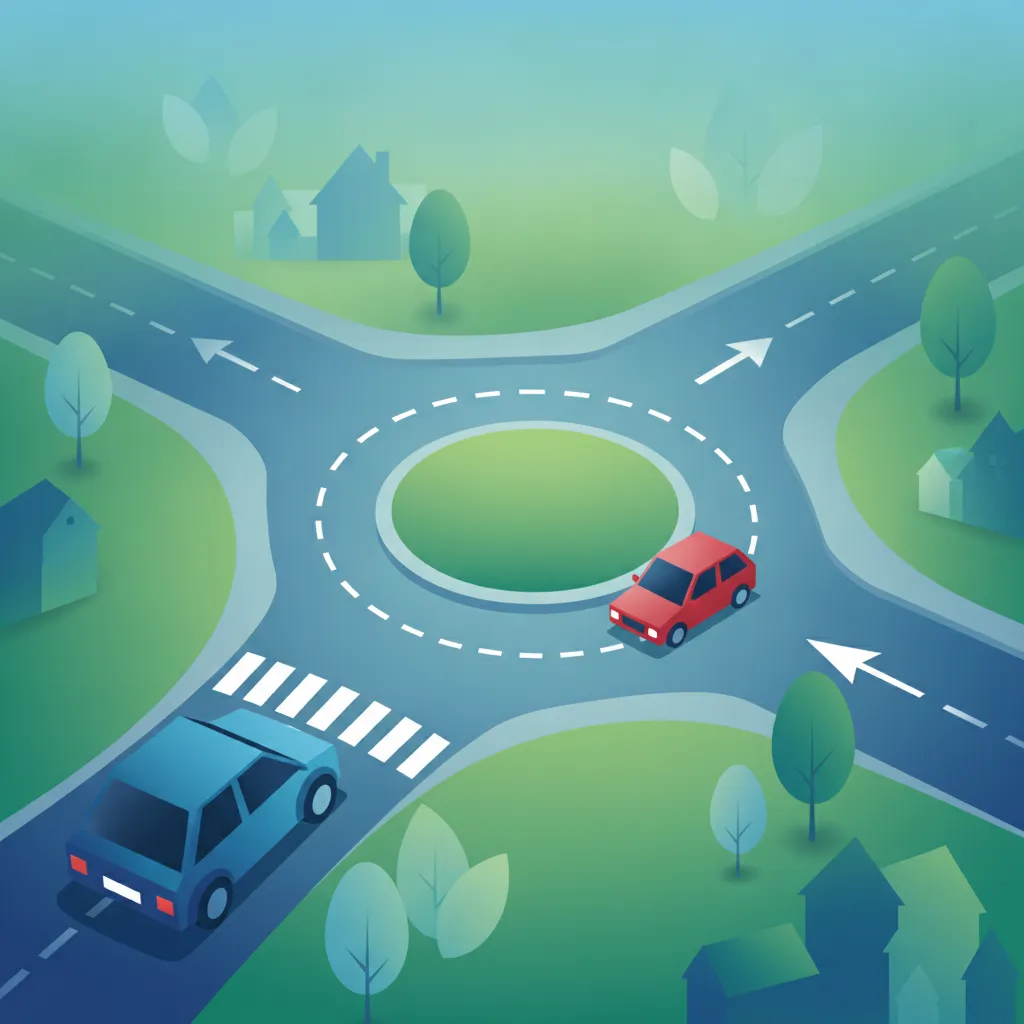
Mini-Roundabouts and Multi-Lane Roundabouts lesson image

Mini-Roundabouts and Multi-Lane Roundabouts

This lesson provides specific techniques for safely navigating the two main types of roundabouts in Great Britain. For multi-lane roundabouts, it covers how to choose the correct lane on approach, maintain your lane while circulating, and signal your exit correctly. It also explains the unique rules for mini-roundabouts, emphasizing the importance of giving way to traffic from the right and navigating them with caution due to their small size.
GB AM Moped TheoryJunctions, Roundabouts, Crossings and Road Positioning
View lesson
Mini‑Roundabouts and Small Junctions lesson image

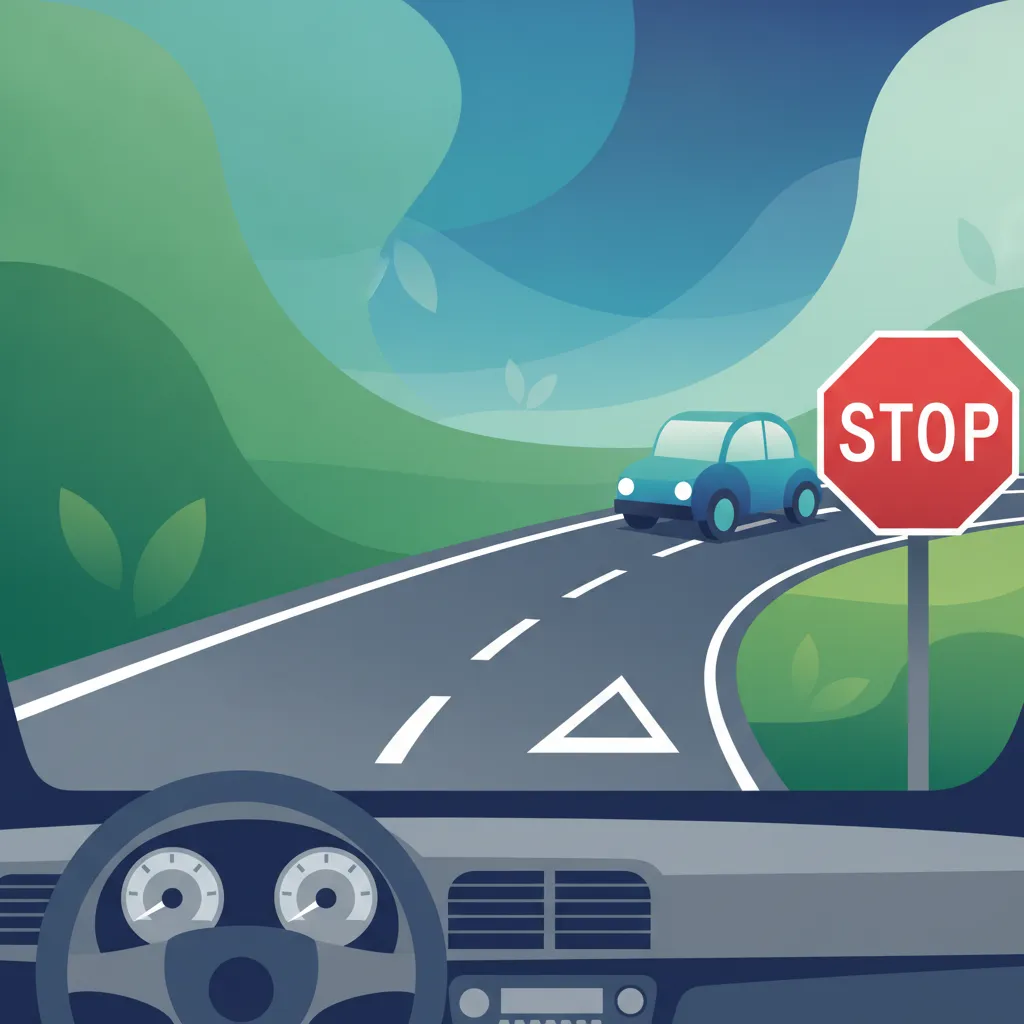
Mini‑Roundabouts and Small Junctions

This lesson explains how to handle mini-roundabouts, which are common in urban and residential areas. The primary rule is to approach with caution and give priority to any traffic approaching from your right. You will also learn about correct signalling and the importance of being aware of cyclists and motorcyclists who may be harder to see.
GB Category B TheoryPriority Rules, Junctions and Roundabouts
View lesson
Approaching and Navigating Simple Junctions lesson image

Approaching and Navigating Simple Junctions

This lesson breaks down the process of navigating basic junctions. It emphasizes the importance of the Mirror-Signal-Manoeuvre (MSM) and Position-Speed-Look (PSL) routines. You will learn how to position your motorcycle correctly for turning, perform effective observation checks for traffic, and judge safe gaps before emerging.

Motorcycle Theory GBJunctions, Roundabouts, Crossings and Urban Riding
View lesson
Rural Roads, Curves, and Uncontrolled Intersections lesson image

Rural Roads, Curves, and Uncontrolled Intersections

This lesson addresses the unique challenges of driving a large vehicle on rural roads. It provides techniques for positioning the vehicle through sharp bends and on narrow lanes, and for safely navigating unmarked or uncontrolled junctions. Learners will be taught to anticipate hidden hazards common in the countryside, such as slow-moving farm vehicles, animals on the road, and concealed entrances. The correct use of passing places and strategies for meeting oncoming traffic are also covered.

GB Passenger Vehicle TheoryWeather, Motorways, Rural Routes, Terminals and Long-Distance Service
View lesson
Priority at Junctions and Roundabouts for Two‑wheelers lesson image

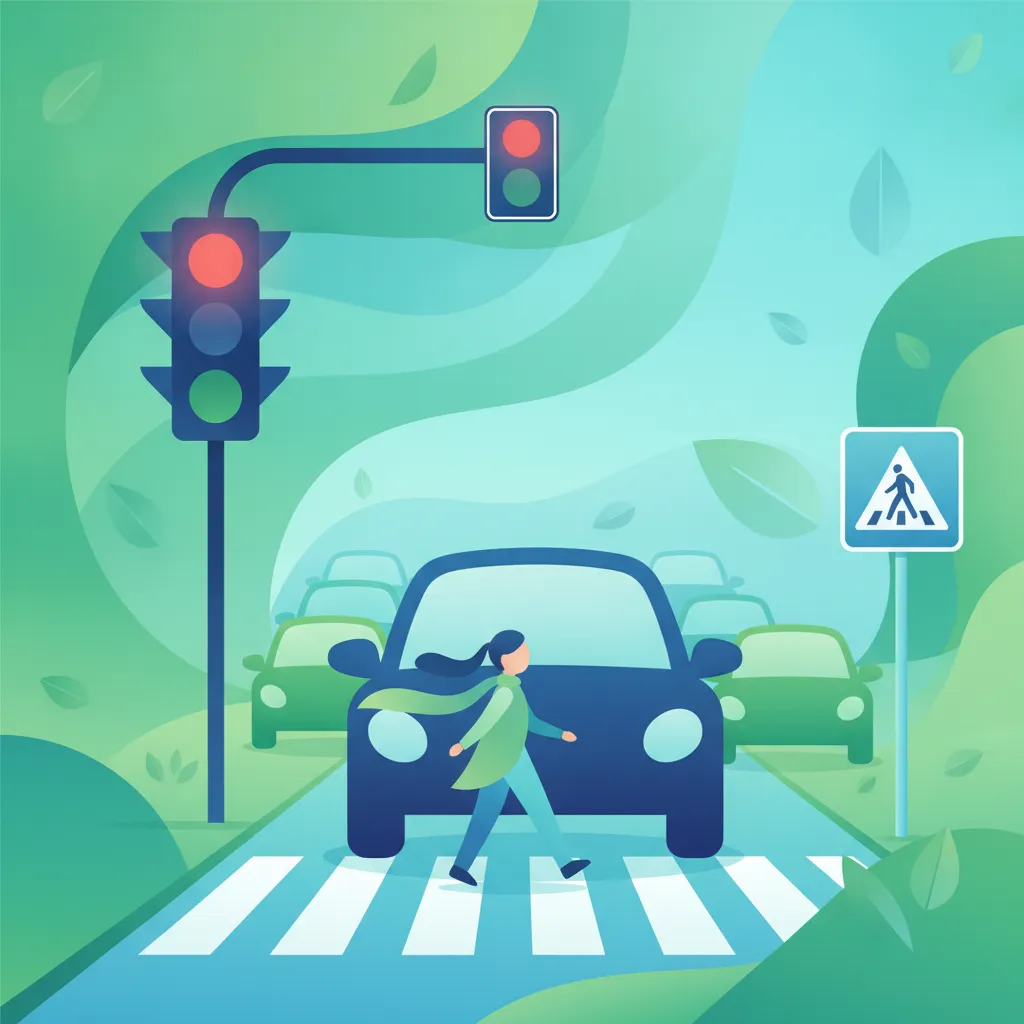
Priority at Junctions and Roundabouts for Two‑wheelers

This lesson clarifies who has priority at junctions, whether they are marked with signs and lines or are unmarked. It covers the fundamental rule for roundabouts in the UK: give priority to traffic approaching from your right. You will learn the correct procedures for approaching, signalling, and choosing the appropriate lane on roundabouts and at other junctions.
Motorcycle Theory GBGB Road Signs, Markings, Signals and Priority Rules
View lesson
Traffic Lights, Pedestrian Crossings and Priority lesson image

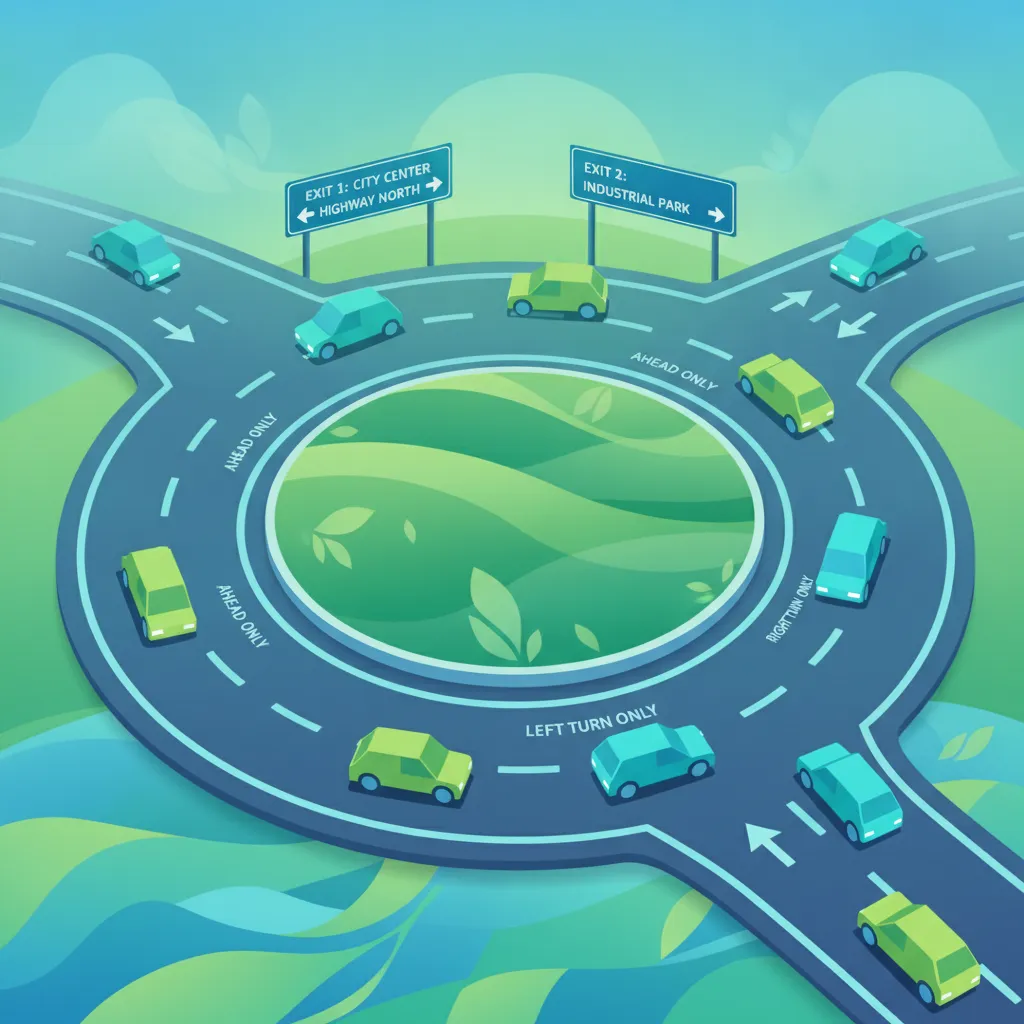
Traffic Lights, Pedestrian Crossings and Priority

This lesson covers the operation of traffic light signals and the rules for approaching them safely. It also provides a detailed explanation of different pedestrian crossings, such as zebra, pelican, and toucan crossings, clarifying the specific rules and priority for each. You will learn to anticipate the actions of pedestrians and other vulnerable road users at these locations.
Motorcycle Theory GBGB Road Signs, Markings, Signals and Priority Rules
View lesson
Mini‑Roundabouts and Multi‑Lane Roundabouts lesson image

Mini‑Roundabouts and Multi‑Lane Roundabouts

This lesson addresses the unique challenges of mini-roundabouts and large, multi-lane or spiral roundabouts. You will learn the subtle differences in rules and approach for mini-roundabouts and the importance of strict lane discipline on larger ones. The lesson stresses the need for advanced planning and awareness when navigating these complex junctions.
Motorcycle Theory GBJunctions, Roundabouts, Crossings and Urban Riding
View lesson
Hazard Perception Principles and Anticipation lesson image

Hazard Perception Principles and Anticipation

This lesson introduces the skill of hazard perception, a critical component of the official theory test and safe driving. It teaches you to actively scan your environment for potential dangers, such as a pedestrian about to cross or a car waiting to emerge from a junction. By identifying these situations early, you can take action to avoid them turning into actual dangers.

GB Category B TheorySpeed, Following Distance, Stopping Distance and Hazard Perception
View lesson

Highway Code Rules and Common Errors at Junctions GB AM

Understand the precise Highway Code rules governing junctions for Great Britain AM licence holders. Learn about common mistakes riders make, including priority misunderstandings and observation failures, to ensure legal compliance and road safety.

junctionsHighway Codelegal rulescommon mistakestheoryAM licence
Priority Rules at Intersections and Crossings lesson image

Priority Rules at Intersections and Crossings

This lesson explains the critical rules of priority that govern traffic flow at junctions, roundabouts, and crossings throughout Great Britain. You will learn how to determine who has right-of-way at both marked and unmarked intersections, and the specific rules for giving way to traffic on roundabouts. The lesson also reinforces the hierarchy of road users from the Highway Code, ensuring you understand when to yield to pedestrians and other vulnerable users.

GB AM Moped TheoryGB Road Signs, Markings, Signals and Priority Basics
View lesson
Priority at Junctions and Roundabouts for Two‑wheelers lesson image

Priority at Junctions and Roundabouts for Two‑wheelers

This lesson clarifies who has priority at junctions, whether they are marked with signs and lines or are unmarked. It covers the fundamental rule for roundabouts in the UK: give priority to traffic approaching from your right. You will learn the correct procedures for approaching, signalling, and choosing the appropriate lane on roundabouts and at other junctions.

Motorcycle Theory GBGB Road Signs, Markings, Signals and Priority Rules
View lesson
Mini‑Roundabouts and Small Junctions lesson image

Mini‑Roundabouts and Small Junctions

This lesson explains how to handle mini-roundabouts, which are common in urban and residential areas. The primary rule is to approach with caution and give priority to any traffic approaching from your right. You will also learn about correct signalling and the importance of being aware of cyclists and motorcyclists who may be harder to see.

GB Category B TheoryPriority Rules, Junctions and Roundabouts
View lesson
Mini-Roundabouts and Multi-Lane Roundabouts lesson image

Mini-Roundabouts and Multi-Lane Roundabouts

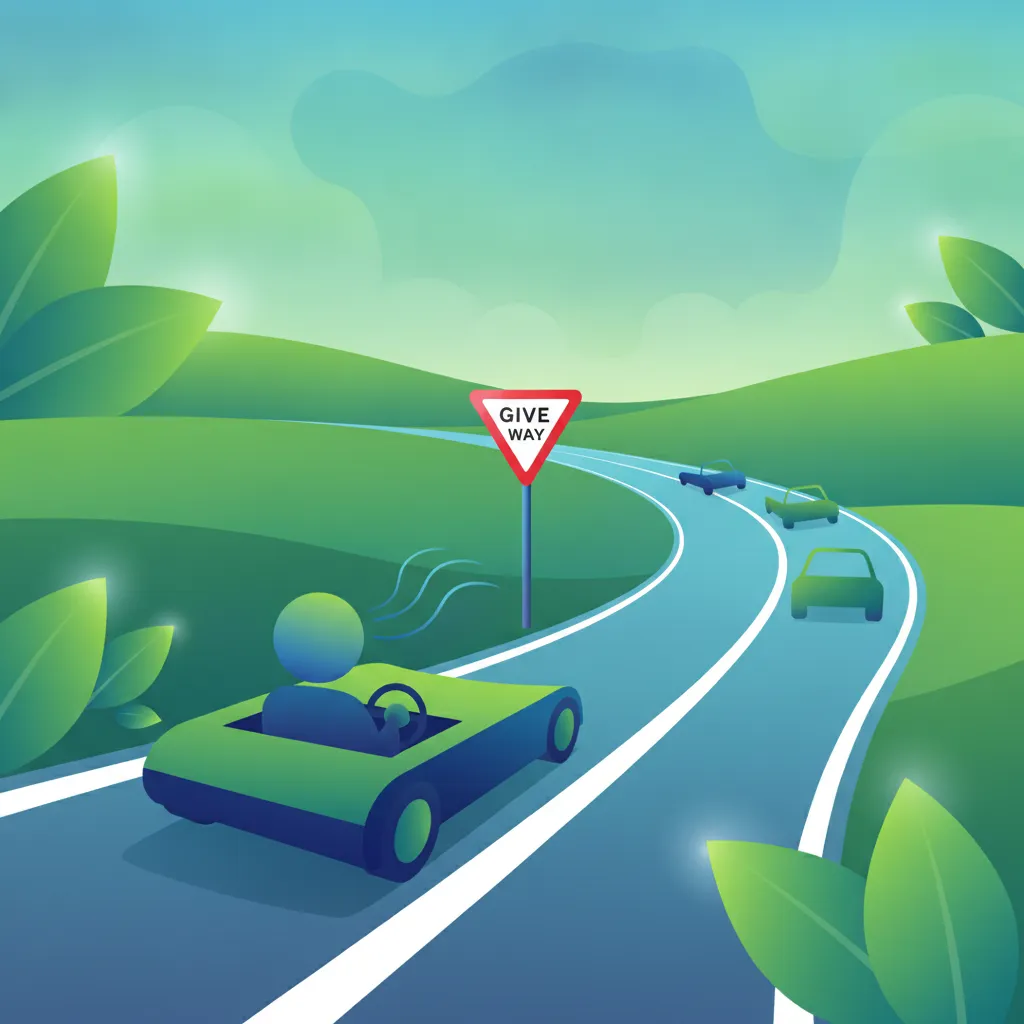
This lesson provides specific techniques for safely navigating the two main types of roundabouts in Great Britain. For multi-lane roundabouts, it covers how to choose the correct lane on approach, maintain your lane while circulating, and signal your exit correctly. It also explains the unique rules for mini-roundabouts, emphasizing the importance of giving way to traffic from the right and navigating them with caution due to their small size.
GB AM Moped TheoryJunctions, Roundabouts, Crossings and Road Positioning
View lesson
Give Way and Stop Rules at Intersections lesson image

Give Way and Stop Rules at Intersections

This lesson covers the explicit priority instructions given by signs and markings at junctions. It explains that at a 'Give Way' line, you must yield to traffic on the major road but can proceed if it is safe. At a 'Stop' sign, you must come to a complete halt before the line, assess the traffic, and only proceed when safe.

GB Category B TheoryPriority Rules, Junctions and Roundabouts
View lesson
Traffic Light Controlled Junctions lesson image

Traffic Light Controlled Junctions

This lesson details how to safely navigate junctions controlled by traffic signals. It explains the meaning of filter arrows, which allow you to proceed in a specific direction even if the main light is red. You will also learn about respecting advanced stop lines for cyclists and how to approach a junction when the traffic lights are not working.

GB Category B TheoryPriority Rules, Junctions and Roundabouts
View lesson
Approaching and Navigating Simple Junctions lesson image

Approaching and Navigating Simple Junctions

This lesson breaks down the process of navigating basic junctions. It emphasizes the importance of the Mirror-Signal-Manoeuvre (MSM) and Position-Speed-Look (PSL) routines. You will learn how to position your motorcycle correctly for turning, perform effective observation checks for traffic, and judge safe gaps before emerging.
Motorcycle Theory GBJunctions, Roundabouts, Crossings and Urban Riding
View lesson
Box Junctions, Stop Lines, and Give Way Markings lesson image

Box Junctions, Stop Lines, and Give Way Markings

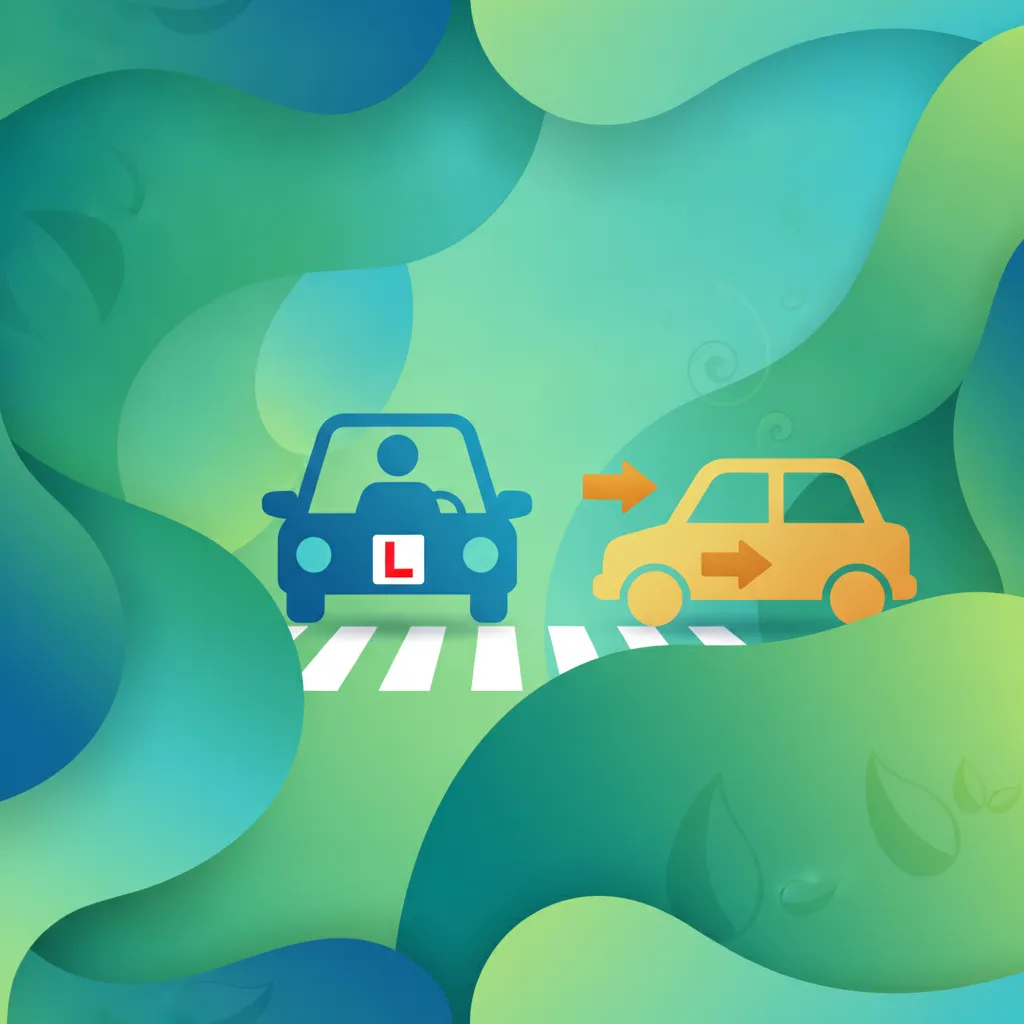
This lesson focuses on the markings that control traffic at intersections. It explains the primary rule of a yellow box junction: do not enter unless your exit is clear. You will also learn the difference between the solid white 'Stop' line and the broken 'Give Way' line, which dictate your priority over other traffic.
GB Category B TheoryRoad Markings, Lane Use and Traffic Directions
View lesson
Right‑Hand Turn and Left‑Hand Turn Priority lesson image

Right‑Hand Turn and Left‑Hand Turn Priority

This lesson details the priority rules for turning manoeuvres. When turning left, you generally have priority over traffic waiting to emerge from the side road. However, when turning right, you must give way to all oncoming traffic, positioning your vehicle safely in the centre of the road while you wait for a safe gap.
GB Category B TheoryPriority Rules, Junctions and Roundabouts
View lesson
Pedestrian Crossings: Zebra, Pelican, Toucan, etc. lesson image

Pedestrian Crossings: Zebra, Pelican, Toucan, etc.

This lesson provides a detailed guide to the various types of pedestrian crossings found on British roads. You will learn the specific rules for each, including the absolute priority of pedestrians at zebra crossings and how to respond to the light signals at pelican, puffin, and toucan crossings. Understanding these rules is essential for protecting vulnerable road users and ensuring you are compliant with the Highway Code.

GB AM Moped TheoryJunctions, Roundabouts, Crossings and Road Positioning
View lesson

Frequently asked questions about Approaching and Navigating Junctions Safely

Find clear answers to common questions learners have about Approaching and Navigating Junctions Safely. Learn how the lesson is structured, which driving theory objectives it supports, and how it fits into the overall learning path of units and curriculum progression in Great Britain. These explanations help you understand key concepts, lesson flow, and exam focused study goals.

What is the MSM routine and why is it important for AM riders?

MSM stands for Mirror, Signal, Manoeuvre. It is a vital safety sequence that ensures you check your mirrors, signal your intentions, and prepare for your turn in good time, which is essential for demonstrating safe riding in both your theory and practical tests.

How do I judge a safe gap when turning right across traffic?

You must observe the speed and distance of oncoming vehicles carefully. If you are uncertain about the gap size, it is always safer to wait for the road to be completely clear before committing to the turn.

Does road positioning matter at small junctions for AM vehicles?

Yes, absolutely. Correct positioning ensures you are clearly visible to other road users and helps prevent larger vehicles from trying to squeeze past you, which is a major safety risk for moped and quadricycle riders.

Are there specific junction rules for moped riders in the UK?

While the fundamental Highway Code rules apply to all road users, AM riders must be extra vigilant due to their smaller profile and lower acceleration capabilities. Always prioritize being seen and keeping a safe distance.

Start Your Targeted Practice Question Search Now

Dive into our comprehensive question bank to find exactly what you need for your Great Britain theory test. Use our advanced filters to pinpoint specific subjects or test your knowledge on challenging areas, ensuring you're fully prepared for success.

Search Practice Questions

Continue your British driving theory learning journey

British road signsBritish article topicsGB AM Moped Theory courseSearch British road signsMotorcycle Theory GB courseGB Category B Theory courseBritish driving theory homeBritish road sign categoriesBritish driving theory topicsGB Goods Vehicle Theory courseSearch British theory articlesBritish driving theory coursesBritish driving theory articlesBritish driving theory practiceBritish practice set categoriesGB Passenger Vehicle Theory courseBritish driving licence proceduresSearch British driving theory practiceBritish driving theory terminology A–ZBritish driving theory terms and glossaryGB Road Signs and Traffic Signals unit in GB Category B TheoryHelmet, Visibility and Protective Behaviour unit in GB AM Moped TheoryAM Licence Basics and Small Vehicle Responsibility unit in GB AM Moped TheoryMotorcycle Licence Basics and Rider Responsibility unit in Motorcycle Theory GBVehicle Size, Weight, Dimensions and Road Space unit in GB Goods Vehicle TheoryCategory B Licence Basics and Driver Responsibility unit in GB Category B TheoryProtective Equipment, Visibility and Rider Condition unit in Motorcycle Theory GBGoods Vehicle Licence Scope and Professional Responsibility unit in GB Goods Vehicle TheoryPassenger Safety, Comfort, Accessibility and Driver Conduct unit in GB Passenger Vehicle TheoryPassenger Vehicle Licence Scope and Professional Responsibility unit in GB Passenger Vehicle TheoryBlind Spot Awareness and Safe Gap Creation lesson in Junctions, Roundabouts, Crossings and Road PositioningApproaching and Navigating Junctions Safely lesson in Junctions, Roundabouts, Crossings and Road PositioningMini-Roundabouts and Multi-Lane Roundabouts lesson in Junctions, Roundabouts, Crossings and Road PositioningPedestrian Crossings: Zebra, Pelican, Toucan, etc. lesson in Junctions, Roundabouts, Crossings and Road PositioningPositioning Around Larger Vehicles and Parked Cars lesson in Junctions, Roundabouts, Crossings and Road Positioning