
This lesson covers the critical legal documentation you must carry or have access to as a driver in Great Britain. Understanding these requirements is a mandatory part of the Category B theory curriculum and ensures you remain compliant with DVLA and DVSA regulations. Proper knowledge of these documents is essential for both your theory exam and your future as a legal road user.
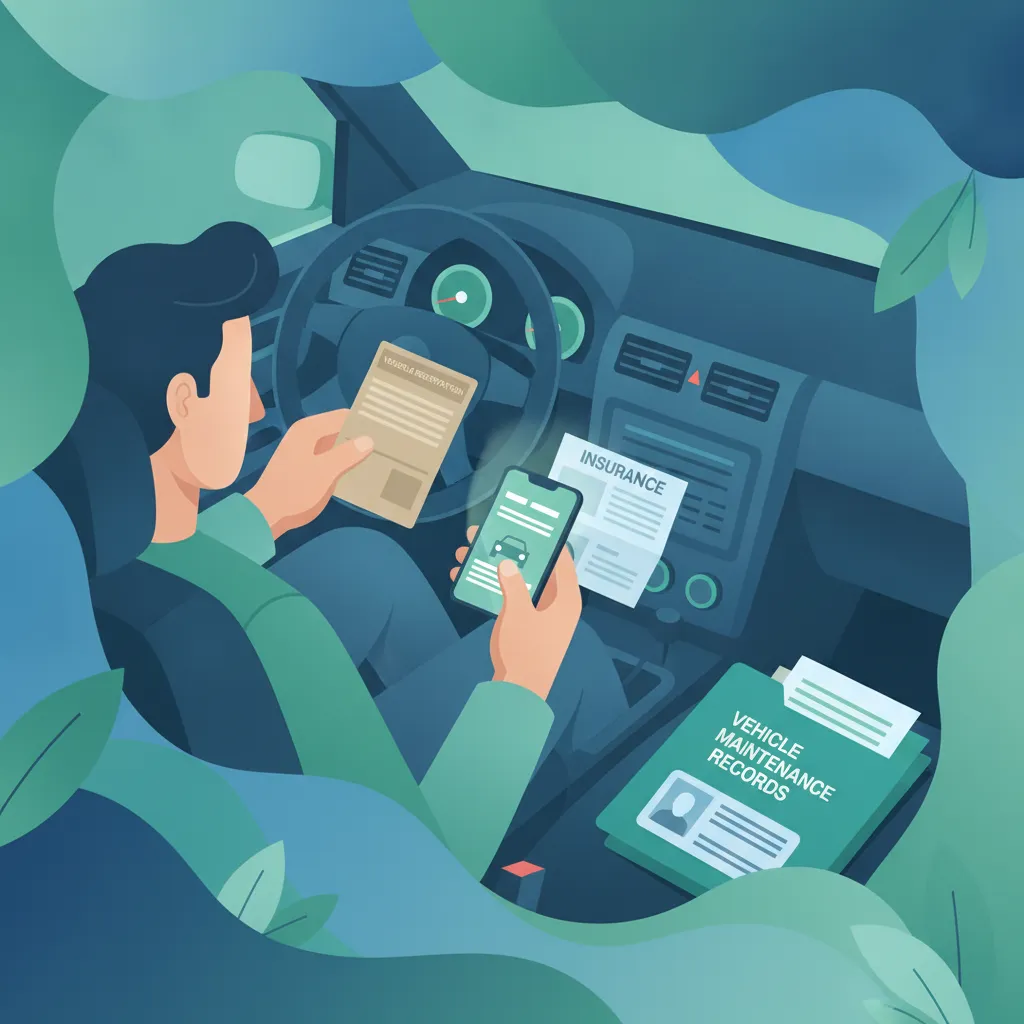
Lesson content overview
Driving a vehicle legally and safely in Great Britain requires more than just a valid driving licence and competent driving skills. It also necessitates the proper maintenance and presentation of essential vehicle documents. These documents act as crucial links between you, your vehicle, and the state, confirming ownership, roadworthiness, insurance coverage, and tax compliance. This comprehensive lesson details the vital documentation required for Category B learner drivers and beyond, explaining their purpose, associated rules, and your obligations as a driver. Understanding and adhering to these requirements is fundamental to avoiding penalties, ensuring road safety, and maintaining your legal standing on public roads.
Operating a motor vehicle in the United Kingdom is governed by specific legal requirements designed to ensure accountability, safety, and financial responsibility. At the heart of these requirements are several key documents that every vehicle and its registered keeper must possess and maintain. These include the V5C vehicle registration certificate, the MOT test certificate, proof of valid motor insurance, and confirmation of Vehicle Excise Duty (VED) payment, commonly known as road tax.
Each document serves a distinct and important purpose, contributing to the overall regulatory framework that keeps our roads safe and well-managed. Possession of these records demonstrates your compliance with the law, enables enforcement agencies to verify your vehicle's status, and protects you from potential liabilities. Failure to carry or present valid documentation when required can lead to significant penalties, including fines, vehicle seizure, or even invalid insurance coverage, which can have devastating financial consequences in the event of an accident.
The V5C, often referred to as the logbook, is the official Vehicle Registration Certificate issued by the Driver and Vehicle Licensing Agency (DVLA). This pivotal document contains comprehensive details about your vehicle, including its make, model, chassis number (VIN), engine size, colour, and most importantly, the name and address of the registered keeper. It's crucial to understand that the registered keeper is the person responsible for taxing the vehicle and ensuring it is insured, but they are not always the legal owner (for example, if the vehicle is on finance).
The V5C certificate provides a unique identity for your vehicle, detailing its specifications and history. It's a multi-page document, typically red, which also serves as a record of previous keepers. The information contained within the V5C is used by the DVLA to manage vehicle registration data, track changes in ownership, and ensure the correct parties are held accountable for taxation and other legal obligations.
A common misconception is that the registered keeper listed on the V5C is automatically the legal owner of the vehicle. While often true, this is not always the case. For instance, if you purchase a car through a finance agreement, the finance company may remain the legal owner until the full amount is paid, even though you are the registered keeper and responsible for the vehicle's day-to-day operation, insurance, and road tax. Understanding this distinction is vital for clarifying responsibilities.
As the registered keeper, it is your legal obligation to inform the DVLA of any changes to your personal details or the vehicle's status. Specifically, any change of address must be reported within 14 days, ensuring that all official correspondence, such as tax reminders or penalty notices, reaches you. Similarly, if you sell or transfer ownership of your vehicle, both the seller and the buyer have responsibilities. The seller must complete the relevant sections of the V5C, provide the new keeper with the green "new keeper" slip (V5C/2), and send the completed V5C to the DVLA. The new keeper must then register the vehicle in their name. Failure to report these changes can lead to fines and legal complications, as the DVLA will continue to hold the outdated registered keeper responsible for the vehicle.
While you generally do not need to carry your V5C document in your vehicle at all times, it must be kept in a safe place, such as at your home, where it can be readily produced if requested by a police officer. When selling a vehicle, the physical V5C document is essential for the lawful transfer of ownership. It is also required for certain administrative tasks, such as changing the vehicle's registration number or proving vehicle specifications.
The MOT (Ministry of Transport) test is an annual inspection designed to ensure that vehicles over a certain age meet minimum safety and environmental standards. It is a critical component of road safety legislation in Great Britain, helping to reduce the risk of accidents caused by mechanical failures and to control vehicle emissions. A valid MOT test certificate confirms that your vehicle was roadworthy at the time of its last inspection.
During an MOT test, an authorised mechanic at an approved MOT test centre checks various components of your vehicle, including brakes, tyres, lights, steering, suspension, seatbelts, exhaust emissions, and general structural integrity. It is not a service and does not cover the general mechanical condition of the engine, clutch, or gearbox. The test focuses purely on the vehicle's compliance with road safety and environmental standards.
Vehicles registered for use on public roads in Great Britain must undergo an MOT test once they are three years old. After this initial test, an MOT is required annually. Driving a vehicle without a valid MOT certificate is illegal and can lead to severe penalties, including fines and penalty points on your licence. The only exceptions are when driving directly to a pre-booked MOT test, or directly to a garage for repairs necessary to pass a pre-booked MOT test.
Operating a vehicle without a current MOT certificate invalidates your insurance and can lead to immediate fines. Police can check the MOT status of any vehicle electronically. If your vehicle fails its MOT, you cannot legally drive it on public roads until the necessary repairs have been made and it passes a retest, unless you are driving it to a place where repairs will be carried out or to a retest appointment. It is your responsibility to ensure your vehicle undergoes its MOT before the existing certificate expires.
When your vehicle passes its MOT, you will receive a certificate (either paper or digital confirmation). This certificate records the date of the test and the date until which the MOT is valid. While the paper certificate is no longer legally required to be displayed or carried, it is advisable to keep a copy for your records. The MOT status of any vehicle can be checked online via the government's website using its registration number. A passed MOT does not guarantee that the vehicle will remain roadworthy for the entire year, as components can degrade over time. Regular maintenance remains essential.
Motor insurance is a legal requirement for any vehicle driven or kept on public roads in Great Britain. Its primary purpose is to provide financial protection against claims for injury or damage to third parties (other people or their property) in the event of an accident. Driving without valid insurance is one of the most serious motoring offences, carrying severe penalties.
The Road Traffic Act 1988 mandates that every driver must have at least third-party motor insurance. This minimum level of cover protects other people and their property if you are involved in an accident, but it does not cover damage to your own vehicle or injuries to yourself. Without this essential protection, victims of an accident caused by an uninsured driver could face significant financial hardship.
While the minimum is third-party, drivers can choose higher levels of cover:
Since 2011, Continuous Insurance Enforcement (CIE) means that it is an offence to own a vehicle that is not insured, unless it has been declared SORN (Statutory Off Road Notification) to the DVLA. This rule applies even if the vehicle is not being driven. Police and the DVLA use electronic databases to identify uninsured vehicles. If your vehicle is found to be uninsured and not SORN, you could face penalties, including fines, points on your licence, and even vehicle seizure, regardless of whether you were driving it.
Although police can typically verify your insurance status electronically through the CIE database, you are still required to produce proof of insurance if requested by a police officer. This usually involves presenting your insurance certificate, which your insurer will provide when you take out or renew a policy. It is advisable to keep a copy of your insurance certificate or policy details accessible, perhaps digitally on your phone or a physical copy in your vehicle's glove compartment, to facilitate checks.
Vehicle Excise Duty (VED), commonly known as road tax, is an annual tax levied on motor vehicles for their use of public roads in Great Britain. This tax contributes to the funding of road maintenance and infrastructure. Since 2014, the traditional paper tax disc is no longer issued or required to be displayed; VED is now administered and recorded electronically.
VED is a mandatory payment that applies to almost all vehicles used or kept on public roads. The amount of VED payable depends on several factors, including the vehicle's CO₂ emissions, fuel type, and its initial registration date. Some vehicles, such as certain electric vehicles or historic vehicles over 40 years old, may be exempt from VED or qualify for a discounted rate.
VED rates are generally higher for vehicles with higher CO₂ emissions, reflecting a policy aimed at encouraging the use of more environmentally friendly vehicles. You can pay VED annually, every six months, or monthly via direct debit. The DVLA sends out reminders when your VED is due, and you can pay online, by phone, or at a Post Office.
Driving an untaxed vehicle on a public road is a serious offence. Enforcement agencies use Automatic Number Plate Recognition (ANPR) cameras and electronic records to identify vehicles without valid VED. If caught, your vehicle could be clamped or seized, and you could face significant fines, potentially leading to prosecution. Even if your vehicle is not being driven but is kept on a public road, it must have valid VED or be declared SORN.
With the abolition of the paper tax disc, all VED records are now digital. When you pay your VED, the information is immediately updated on the DVLA database. This means there's no physical document to lose or display, but it places the onus on the registered keeper to ensure payment is always up-to-date. You can check the VED status of any vehicle online using the government's vehicle information checker service.
As a driver and registered keeper, you have a legal and practical obligation to manage and, when necessary, present your vehicle's documentation. Proper record-keeping is not just about avoiding fines; it's about being a responsible road user and ensuring the smooth operation of vehicle-related services.
Your V5C, MOT certificate, and insurance policy documents should be stored securely at your home, not necessarily in the vehicle. This protects them from theft or damage. However, it's wise to have an insurance certificate or its details readily accessible, for instance, a digital copy on your phone, in case you are stopped by the police. The V5C itself is a valuable document and should be treated as such, as losing it can complicate selling your car or making changes to its registration.
It is critical to keep the DVLA informed of any changes that affect your vehicle or your status as the registered keeper. This includes:
When selling a vehicle, always ensure you send the completed V5C (sections for seller) to the DVLA promptly, and give the new keeper the correct green slip. This protects you from any future liability for the vehicle.
You may be required to present documentation in various situations:
The consequences of failing to meet your documentation obligations can be severe.
The requirements for vehicle documentation are enshrined in specific UK laws and regulations. Understanding these provides the legal context for your obligations.
These regulations collectively ensure a robust system for tracking, taxing, insuring, and ensuring the roadworthiness of vehicles, contributing significantly to overall road safety and legal accountability.
Many drivers, particularly new ones, can inadvertently fall foul of documentation rules due to misunderstandings or oversights. Being aware of these common pitfalls can help you avoid them.
The seemingly bureaucratic requirements for vehicle documentation are far more than just red tape; they form a critical framework that underpins road safety, financial protection, and accountability for all road users.
A valid MOT certificate is direct evidence that your vehicle has met minimum safety standards regarding brakes, tyres, lights, steering, and suspension. Driving a vehicle with a lapsed MOT dramatically increases the risk of mechanical failure, which can lead to serious accidents. Similarly, ensuring your vehicle is properly registered (V5C) and insured reinforces the idea that all vehicles on the road are accounted for and meet basic legal requirements.
Valid motor insurance is a crucial financial safety net. In the event of an accident, particularly one where you are at fault, your insurance policy provides compensation for damages or injuries to third parties. Without it, you could face immense personal financial liability, potentially running into hundreds of thousands of pounds, in addition to criminal charges for uninsured driving. The V5C helps accurately assign responsibility for a vehicle, ensuring that the correct keeper is held liable for tax, insurance, and compliance with traffic laws.
Vehicle Excise Duty (VED) plays a vital role in funding the maintenance and improvement of the UK's road infrastructure. By ensuring all road users contribute their fair share through VED, the system helps to provide safer, better-maintained roads for everyone. The electronic tracking of VED and other documents allows for efficient enforcement, ensuring compliance and preventing a minority from evading their responsibilities.
Ultimately, diligent record keeping and adherence to documentation requirements are fundamental aspects of responsible driving. They protect not only yourself but also other road users, contributing to a safer, more accountable, and financially secure motoring environment for everyone in Great Britain.
To ensure you are driving legally and responsibly in Great Britain, remember these key points about your vehicle's documentation:
By meticulously managing these documents, you demonstrate your commitment to legal compliance, road safety, and financial responsibility, paving the way for a smooth and secure driving experience.
Explore all units and lessons included in this driving theory course.
Lesson content overview
Explore all units and lessons included in this driving theory course.
Explore search topics learners often look for when studying Documentation and Record Keeping. These topics reflect common questions about road rules, driving situations, safety guidance, and lesson level theory preparation for learners in Great Britain.
Browse additional driving theory lessons that cover connected traffic rules, road signs, and common driving situations related to this topic. Improve your understanding of how different rules interact across everyday traffic scenarios.
Understand the legal requirements for vehicle documentation in Great Britain, including the V5C registration certificate, MOT test certificate, and insurance. Learn about driver obligations for keeping these documents and updating DVLA records to ensure compliance and avoid penalties.
This lesson details the documentation a motorcyclist is legally required to produce when stopped by the police or a DVSA officer. It covers the driving licence, valid certificate of insurance, current MOT certificate, and the vehicle registration document (V5C). You will also learn about the legal consequences of failing to provide these documents, such as fines and penalty points.

This lesson covers the critical legal requirement for accurate record-keeping in the transport industry. It provides detailed instruction on the correct use of both analogue and digital tachographs to record driving time, breaks, and other work. You will also learn about other essential documents that must be carried, such as load manifests and delivery notes, and the importance of keeping these records accurate and available for inspection by enforcement authorities.
This lesson details all the necessary documentation required at each stage of the AM licensing process, from applying for a provisional licence to attending your theory and practical tests. You will learn about the required forms of identification, proof of insurance, and vehicle registration documents. The lesson also provides a clear overview of the DVSA test procedures, explaining the format of the multiple-choice theory test, the hazard perception section, and the criteria for the practical assessment.
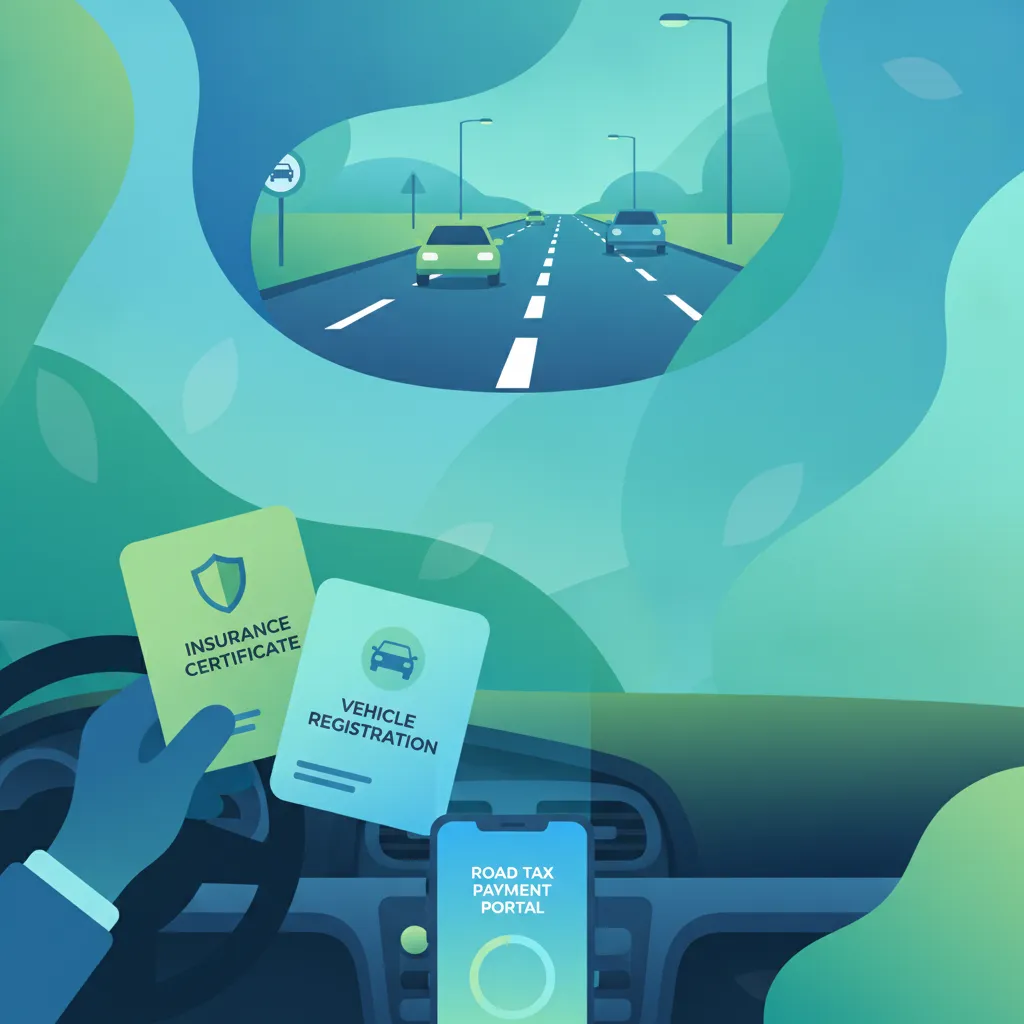
This lesson guides you through the compulsory insurance and tax obligations for Category AM vehicles in Great Britain. It differentiates between third-party and comprehensive insurance policies and explains the legal necessity of each. Furthermore, it details the process for vehicle tax and registration, highlighting the severe consequences of non-compliance, which can include fines, penalty points, and even vehicle seizure, ensuring you understand how to keep your vehicle road-legal.
Explore the critical topics of driver liability, insurance, and legal penalties in Great Britain. This lesson distinguishes between civil and criminal liability in the context of road incidents. It details the compulsory third-party insurance every driver must have and explains the penalty points system for traffic offences, including fines and potential disqualification.
This lesson outlines the statutory framework governing UK driving licences, focusing on Category B. It details the functions of the Driver and Vehicle Licensing Agency (DVLA) and the Driver and Vehicle Standards Agency (DVSA). Key topics include the various licence categories, age and medical fitness requirements, and the legal standing of the Highway Code.

This lesson provides a clear guide to the legal restrictions placed on drivers with a provisional licence. It covers the mandatory display of L-plates and the specific criteria for a supervising driver, including age and experience. Furthermore, it explains the prohibition on driving on motorways and other rules designed to ensure safety during the learning process.
This lesson details the sequential process for acquiring a Category AM licence, starting with the provisional application and moving through the mandatory theory and practical tests. It covers essential criteria like age limits, medical fitness, and the specific rules that apply to learner riders, such as displaying L-plates. You will also learn about the legal duties concerning vehicle registration, insurance, and road tax compliance, which are vital throughout your journey to becoming a qualified rider.
Learn about frequent mistakes drivers make regarding vehicle documentation in the UK, such as expired MOTs, lack of insurance, or incorrect V5C details. Understand the legal penalties and consequences associated with these documentation failures for drivers.
This lesson details the documentation a motorcyclist is legally required to produce when stopped by the police or a DVSA officer. It covers the driving licence, valid certificate of insurance, current MOT certificate, and the vehicle registration document (V5C). You will also learn about the legal consequences of failing to provide these documents, such as fines and penalty points.
This lesson details the consequences of committing traffic offences. It explains how penalty points are added to your licence for infractions like speeding or using a mobile phone. You will learn about the threshold for disqualification (totting-up) and the specific, stricter rules that apply to new drivers within the first two years of passing their test.

This lesson explains the legal consequences of committing traffic offences in Great Britain. It details the penalty points system, explaining how points are issued for various offences like speeding or using a mobile phone, and the thresholds that can lead to a driving ban. Understanding these penalties, fines, and potential licence revocation reinforces the importance of consistent, lawful riding and helps you appreciate the value of a clean driving record.
This lesson outlines the serious legal and professional consequences of committing traffic offences. It covers common issues such as speeding, using a mobile phone, and the strict limits on alcohol, explaining the system of fixed penalty notices and penalty points. The content makes clear how accumulating points can lead to fines, licence suspension or revocation, and the loss of a professional driving career. The importance of understanding and following company policy on incident reporting is also stressed.
Explore the critical topics of driver liability, insurance, and legal penalties in Great Britain. This lesson distinguishes between civil and criminal liability in the context of road incidents. It details the compulsory third-party insurance every driver must have and explains the penalty points system for traffic offences, including fines and potential disqualification.
This lesson covers the critical legal requirement for accurate record-keeping in the transport industry. It provides detailed instruction on the correct use of both analogue and digital tachographs to record driving time, breaks, and other work. You will also learn about other essential documents that must be carried, such as load manifests and delivery notes, and the importance of keeping these records accurate and available for inspection by enforcement authorities.
This lesson explains the legal consequences of committing traffic offences. It covers how the penalty points system works, the number of points for common offences like speeding, and how accumulating 12 points can lead to disqualification under the 'totting-up' procedure. You will also learn about the specific rules for new riders, who can have their licence revoked with just 6 points.
This lesson details all the necessary documentation required at each stage of the AM licensing process, from applying for a provisional licence to attending your theory and practical tests. You will learn about the required forms of identification, proof of insurance, and vehicle registration documents. The lesson also provides a clear overview of the DVSA test procedures, explaining the format of the multiple-choice theory test, the hazard perception section, and the criteria for the practical assessment.
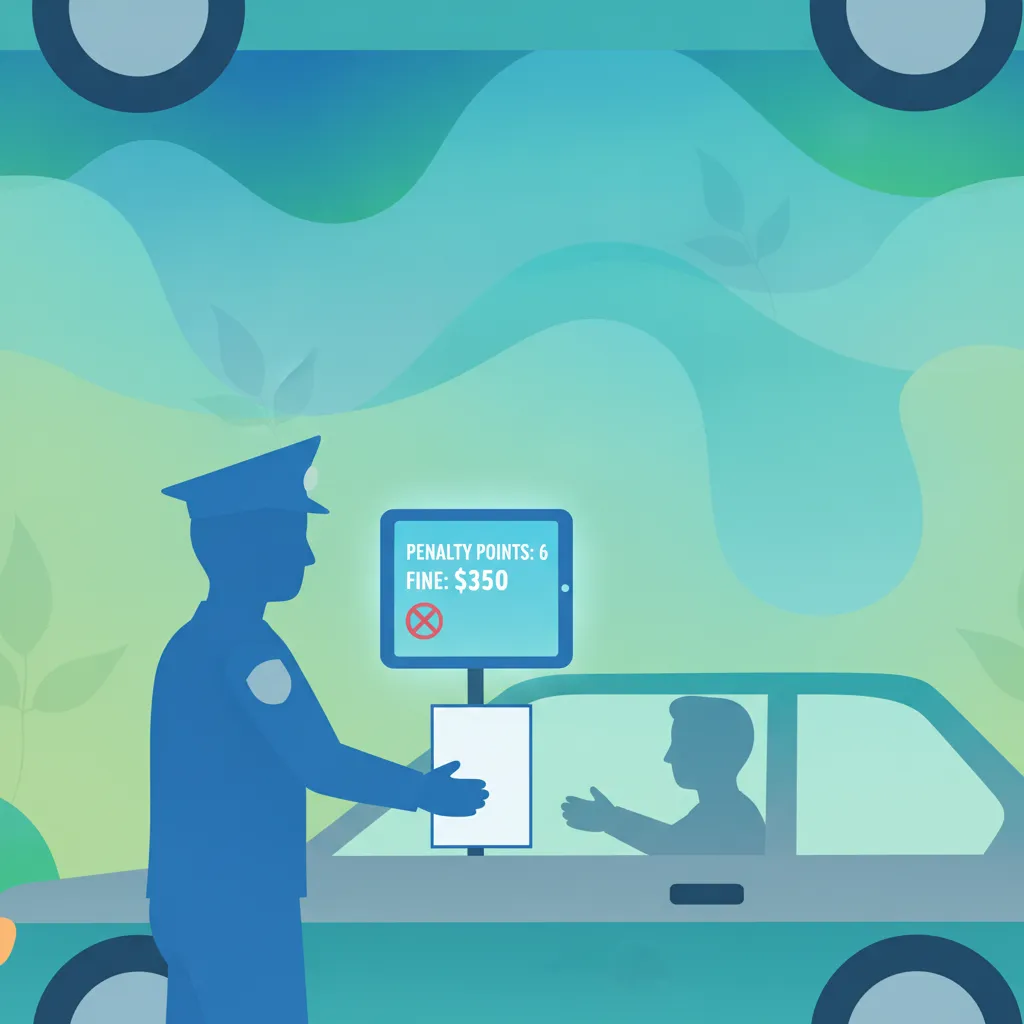
This lesson outlines the serious consequences of failing to comply with road transport law. It details the graduated system of fines and penalties that can be issued by the DVSA and police for offences ranging from drivers' hours violations to vehicle defects. The lesson also explains more severe sanctions, such as vehicle prohibition, licence suspension, and referral to the Traffic Commissioner, which can impact both the driver and their employer.
Gain a comprehensive understanding of the legal repercussions for violating goods vehicle regulations, which can range from civil penalties to criminal prosecution. This lesson details the fines, penalty points, and potential vehicle seizure enforced by authorities like the DVSA and the police. It clarifies how serious offences are handled in court and how repeated infractions can lead to escalating sanctions, impacting both your licence and professional career.
Find clear answers to common questions learners have about Documentation and Record Keeping. Learn how the lesson is structured, which driving theory objectives it supports, and how it fits into the overall learning path of units and curriculum progression in Great Britain. These explanations help you understand key concepts, lesson flow, and exam focused study goals.
The V5C, or logbook, is the vehicle registration document issued by the DVLA. It shows who the registered keeper of the vehicle is, which is crucial for legal, tax, and registration purposes.
While you are not required to keep these in the car at all times in Great Britain, you must be able to produce them for the police if requested. Often, if you cannot provide them at the scene, you have seven days to take them to a police station.
The MOT certificate proves your car has passed a safety and environmental test. Driving without a valid MOT is illegal and can invalidate your insurance, making it a critical aspect of your vehicle's roadworthiness.
Yes, 'road tax' is the common term for Vehicle Excise Duty. Every vehicle kept or used on a public road must be taxed, unless it is specifically exempt, and this is a basic legal requirement you must understand for the theory exam.
Dive into our comprehensive question bank to find exactly what you need for your Great Britain theory test. Use our advanced filters to pinpoint specific subjects or test your knowledge on challenging areas, ensuring you're fully prepared for success.