
This lesson breaks down the legal consequences of traffic offences in Great Britain to help you understand your responsibilities as a new driver. By covering penalty points, the totting-up process, and specific disqualification rules, you will be prepared for both the theory exam and real-world compliance.
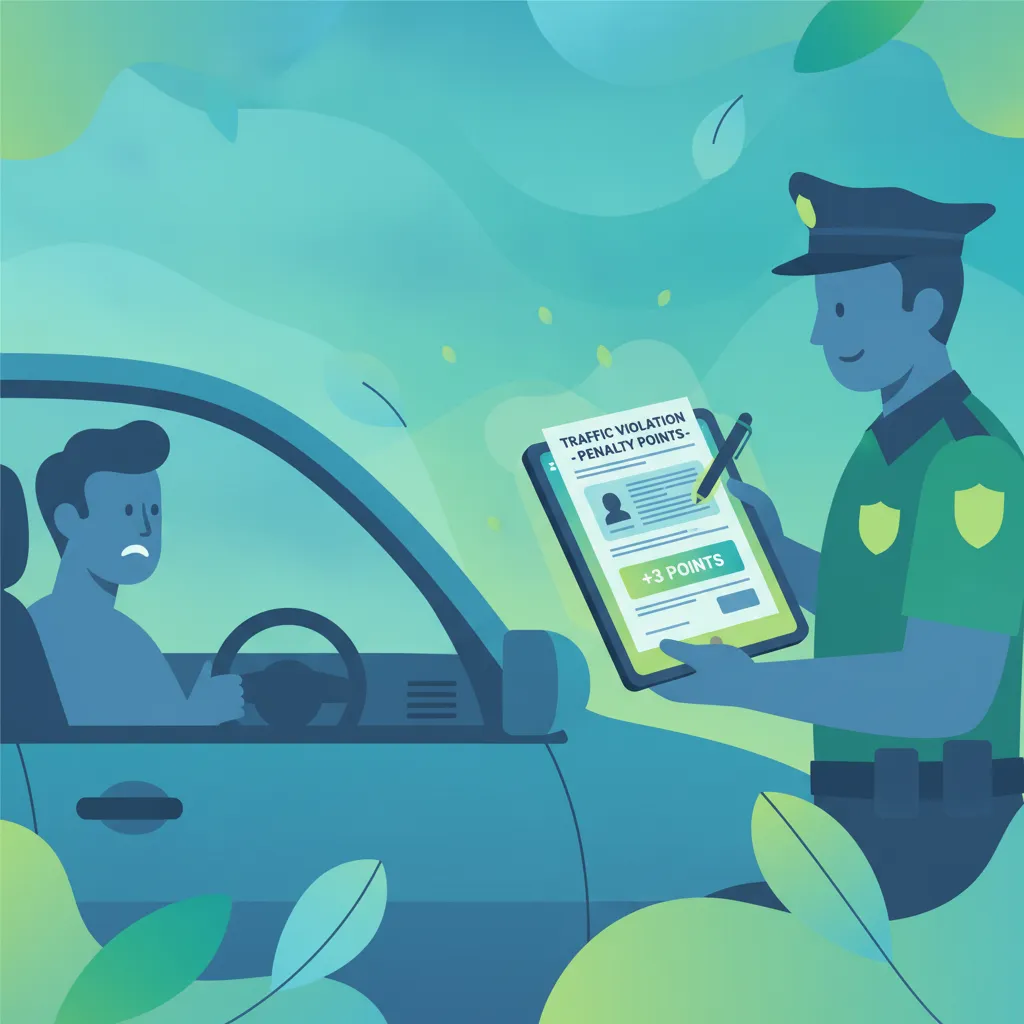
Lesson content overview
Understanding the legal consequences of traffic offences is fundamental for every driver in Great Britain. This lesson provides a detailed guide to the system of penalties, penalty points, and the various processes that can lead to a driving licence disqualification, including the specific rules for new drivers. By grasping these regulations, you can make informed decisions, drive responsibly, and safeguard your driving privileges.
The framework of penalties and points is designed to deter unsafe driving behaviours, encourage corrective action, and ultimately enhance road safety by removing dangerous drivers from the road. Adhering to the Highway Code and the Road Traffic Act is not just good practice; it is legally binding and carries significant implications for your driving future.
When you commit a driving offence in Great Britain, you may face a penalty. A penalty is typically a monetary fine imposed by the courts, the Driver and Vehicle Licensing Agency (DVLA), or a police officer. These fines serve to penalise the behaviour financially, encourage compliance with traffic laws, and contribute to road safety initiatives.
For many minor traffic offences, police officers have the authority to issue a Fixed Penalty Notice (FPN). This is a standardised fine and, where applicable, a specific number of penalty points for offences such as minor speeding infractions or using a handheld mobile phone. An FPN provides a streamlined alternative to immediate prosecution in court, allowing for a quicker resolution of less severe violations.
If you receive a Fixed Penalty Notice, you typically have 28 days to either pay the fine and accept the points, or contest the notice in court. Paying the fine means you accept the penalty and avoids a court appearance, but it does not remove the penalty points from your licence.
Sometimes, particularly for offences detected by cameras (like speed cameras), you might receive a Conditional Offer of Fixed Penalty. This is an offer to pay a reduced fine and accept points, avoiding a court summons, provided you meet specific conditions (e.g., attending a driver awareness course). While attractive, it still results in points on your licence. Failing to respond to an FPN or conditional offer within the specified timeframe can lead to increased fines and a court summons, where the penalties could be more severe.
Penalty points, also known as demerit points, are a crucial part of the driving offence system. These points are recorded on your driving licence for specific traffic offences and are maintained on the DVLA database for a set period. Their primary purpose is to create a cumulative system that escalates the consequences for repeated offences, prompting drivers to reflect on and change their behaviour.
Points are assigned based on the severity of the offence. They are recorded on your licence from the date of conviction and typically remain active for four years, though they are only counted towards a totting-up disqualification for a shorter period (usually three years for most offences). Different offences attract different numbers of points:
| Offence Category | Typical Points Range | Examples |
|---|---|---|
| Minor Offences | 1-3 points | Driving without a valid vehicle excise duty (road tax) |
| Medium Offences | 4-6 points | Using a handheld mobile phone while driving, speeding 10-20% over the limit |
| Serious Offences | 7-11 points | Dangerous driving, driving without insurance |
| Very Serious Offences | 12 points and/or immediate disqualification | Drink driving, driving under the influence of drugs, causing death by dangerous driving |
It's a common misunderstanding to believe that paying a fine somehow erases the penalty points. This is incorrect. Once points are allocated, they remain on your licence for the statutory period, regardless of whether you pay the fine or attend a driver awareness course.
Beyond the immediate fine and the risk of disqualification, accumulating penalty points can have other significant consequences:
The totting-up system is a fundamental mechanism in Great Britain's driving law, designed to remove persistent offenders from the roads. It leads to an automatic licence disqualification if a driver accumulates 12 or more penalty points within any four-year period.
The four-year period is crucial. Points are counted from the date of the offence. If you receive a conviction that takes your total active points to 12 or more within this timeframe, you will face disqualification. The court will impose a mandatory disqualification period:
These periods are minimums; the court can impose longer bans depending on the severity and circumstances of the offences.
The four-year period for points to be 'live' on your licence is distinct from the period used for totting-up. Points for many offences are only active for three years for totting-up purposes, though they stay on the licence record for four years from the conviction date. Always check the specifics of the offence.
Consider this scenario: A driver receives 5 points for speeding, then 3 months later gets another 4 points for a traffic light offence, and six months after that, 3 points for driving without proper vehicle lighting. This totals 12 points within a year, triggering a mandatory 6-month disqualification. Each of these offences individually might seem minor, but their cumulative effect is significant.
New drivers face stricter rules regarding penalty points to reflect their inexperience and statistically higher risk of being involved in collisions. The new driver disqualification, often referred to as the 6-point rule, dictates that a provisional or newly qualified driver will have their licence revoked if they accrue 6 or more penalty points within the first two years of passing their driving test.
This rule applies to:
Unlike the standard totting-up system, where 12 points lead to disqualification, for new drivers, reaching 6 points results in immediate licence revocation. This means your full driving licence will be taken away.
If your licence is revoked under the new driver 6-point rule, you will face severe consequences:
Understanding specific offences and their associated penalties is crucial for safe driving. Here are some common violations for Category B drivers and their typical consequences:
This is a serious offence that significantly impairs your attention and reaction time.
Speeding penalties vary depending on how much you exceed the limit and the road type.
This is a highly illegal and risky offence.
Ignoring traffic signals is dangerous and can lead to serious collisions.
Ensuring children are correctly restrained is a legal requirement and paramount for their safety.
A driving disqualification is a legally defined period during which you are prohibited from driving any motor vehicle on a public road. The length of this period varies significantly depending on the nature and severity of the offence, as well as any previous driving history.
| Offence Category | Minimum Disqualification Period |
|---|---|
| First Totting-Up (12+ points) | 6 months |
| Second Totting-Up (within 3 years) | 12 months |
| Third Totting-Up (within 3 years) | 2 years |
| Drink Driving (BAC ≥ 0.08%) | 12 months |
| Driving Under the Influence of Drugs | 12 months |
| Dangerous Driving | 12 months |
| Failure to Provide Specimen for Analysis | 12 months |
| Driving Without Insurance (severe cases) | 6 months |
During a disqualification period, it is strictly illegal to drive. Doing so can lead to severe penalties, including further disqualification, a substantial fine, or even a prison sentence. Your ban starts from the date it is imposed by the court.
Once you have served your disqualification period, your licence does not automatically reinstate. There is a specific procedure you must follow to regain your driving privileges.
Complete the Disqualification Period: Ensure you have served the full length of your driving ban.
Apply for a New Licence: You must apply to the DVLA to get your driving licence back. This typically involves completing a D1 application form (available from Post Offices or online) or a D2 form for lorry/bus drivers.
Pay the Reinstatement Fee: There is an administrative fee payable to the DVLA for licence reinstatement.
Retake Driving Tests (if required):
Undergo Medical Assessment (if required): For disqualifications related to certain medical conditions or for serious drink/drug driving offences, the DVLA may require you to pass a medical examination to ensure you are fit to drive.
It is important to start the reinstatement process well in advance of your ban ending, as processing times can vary. Driving before your licence is officially reinstated is a serious offence.
The legal system provides mechanisms to ensure fairness and allow for consideration of individual circumstances regarding traffic offences.
Road traffic offences are categorised in several ways, which determine how they are prosecuted and the maximum penalties that can be imposed:
If you are convicted of an offence, you have the opportunity to present mitigation to the court. This involves presenting extenuating circumstances or reasons that might explain your actions or demonstrate genuine remorse. While mitigation can sometimes lead to a reduction in the fine or a more lenient sentence, it is highly unlikely to remove penalty points or a mandatory disqualification period for a serious offence. For example, explaining a medical emergency might reduce a speeding fine but would typically not remove the points.
If you believe there was a legal error in your conviction or sentencing, you have the right to appeal the decision to a higher court. There are strict time limits for lodging an appeal (typically 28 days from the date of conviction or sentence). A successful appeal could result in the conviction being overturned, or the penalty and points being reduced or removed. However, appeals are complex and usually require legal representation.
While the core rules for penalties and points are clear, certain conditions can influence the perceived severity of an offence or even constitute an offence where one might not typically exist.
These contextual variations highlight the need for continuous vigilance and responsible driving practices under all circumstances. Compliance not only avoids penalties but also contributes to a safer road environment for everyone.
The Great Britain penalty points system records demerit points on your licence for traffic offences, with points remaining active for four years from conviction. For most drivers, accumulating 12 or more points within four years triggers automatic disqualification through totting-up, with minimum bans starting at six months. New drivers within their first two years face much stricter rules, as reaching just 6 points results in mandatory licence revocation requiring them to reapply for a provisional licence and retake both theory and practical tests. Common offences include mobile phone use (6 points), speeding (3-6 points depending on severity), and driving without insurance (minimum 6 points), each contributing to potential disqualification. Understanding these consequences is essential for both passing the theory test and maintaining your driving privileges once you begin driving solo.
A short set of high-value points that capture the most important learning from this lesson.
Accumulating 12 or more penalty points within any four-year period triggers automatic disqualification through the totting-up system
New drivers face stricter rules and can have their licence revoked with just 6 points accumulated within the first two years of passing their test
Fixed Penalty Notices offer an alternative to court for minor offences but still result in penalty points being recorded on your licence
Penalty points remain on your driving record for four years from the date of conviction, regardless of whether you pay the fine or attend a driver awareness course
Reaching the totting-up threshold carries a mandatory minimum disqualification period, starting at six months for a first disqualification
Explore all units and lessons included in this driving theory course.
The 6-point threshold applies to new drivers within their first two years; the 12-point threshold applies to experienced drivers under totting-up rules
Points are counted from the date of the offence, not from the date of conviction, for totting-up purposes
Mobile phone use and driving without insurance each carry 6 points, making either offence alone sufficient to revoke a new driver's licence
During a disqualification period, it is illegal to drive; doing so can result in further penalties including imprisonment
After totting-up disqualification, you must apply to DVLA and pay a reinstatement fee; new driver revocations require retaking both theory and practical tests
Believing that paying a fine removes penalty points from your licence, when points remain for the statutory period regardless
Underestimating the risk of the new driver 6-point rule, assuming only serious offences pose a threat to a provisional or newly qualified driver
Assuming points for totting-up are counted from the date you receive them rather than the date of the original offence
Thinking that a driver awareness course removes existing penalty points when it actually only prevents points from being added for a future offence
Confusing the new driver disqualification process with totting-up disqualification, not realising they have different thresholds and consequences
Lesson content overview
A short set of high-value points that capture the most important learning from this lesson.
Accumulating 12 or more penalty points within any four-year period triggers automatic disqualification through the totting-up system
New drivers face stricter rules and can have their licence revoked with just 6 points accumulated within the first two years of passing their test
Fixed Penalty Notices offer an alternative to court for minor offences but still result in penalty points being recorded on your licence
Penalty points remain on your driving record for four years from the date of conviction, regardless of whether you pay the fine or attend a driver awareness course
Reaching the totting-up threshold carries a mandatory minimum disqualification period, starting at six months for a first disqualification
Explore all units and lessons included in this driving theory course.
The 6-point threshold applies to new drivers within their first two years; the 12-point threshold applies to experienced drivers under totting-up rules
Points are counted from the date of the offence, not from the date of conviction, for totting-up purposes
Mobile phone use and driving without insurance each carry 6 points, making either offence alone sufficient to revoke a new driver's licence
During a disqualification period, it is illegal to drive; doing so can result in further penalties including imprisonment
After totting-up disqualification, you must apply to DVLA and pay a reinstatement fee; new driver revocations require retaking both theory and practical tests
Believing that paying a fine removes penalty points from your licence, when points remain for the statutory period regardless
Underestimating the risk of the new driver 6-point rule, assuming only serious offences pose a threat to a provisional or newly qualified driver
Assuming points for totting-up are counted from the date you receive them rather than the date of the original offence
Thinking that a driver awareness course removes existing penalty points when it actually only prevents points from being added for a future offence
Confusing the new driver disqualification process with totting-up disqualification, not realising they have different thresholds and consequences
Explore search topics learners often look for when studying Penalties, Penalty Points, and Disqualification Processes. These topics reflect common questions about road rules, driving situations, safety guidance, and lesson level theory preparation for learners in Great Britain.
Browse additional driving theory lessons that cover connected traffic rules, road signs, and common driving situations related to this topic. Improve your understanding of how different rules interact across everyday traffic scenarios.
Understand the strict 6-point rule for new drivers in Great Britain. Learn how penalty points lead to licence revocation and the process of reapplying for your licence and retaking tests.
This lesson explains the legal consequences of committing traffic offences. It covers how the penalty points system works, the number of points for common offences like speeding, and how accumulating 12 points can lead to disqualification under the 'totting-up' procedure. You will also learn about the specific rules for new riders, who can have their licence revoked with just 6 points.
This lesson explains the legal consequences of committing traffic offences in Great Britain. It details the penalty points system, explaining how points are issued for various offences like speeding or using a mobile phone, and the thresholds that can lead to a driving ban. Understanding these penalties, fines, and potential licence revocation reinforces the importance of consistent, lawful riding and helps you appreciate the value of a clean driving record.
This lesson provides a clear guide to the legal restrictions placed on drivers with a provisional licence. It covers the mandatory display of L-plates and the specific criteria for a supervising driver, including age and experience. Furthermore, it explains the prohibition on driving on motorways and other rules designed to ensure safety during the learning process.
Explore the critical topics of driver liability, insurance, and legal penalties in Great Britain. This lesson distinguishes between civil and criminal liability in the context of road incidents. It details the compulsory third-party insurance every driver must have and explains the penalty points system for traffic offences, including fines and potential disqualification.
This lesson outlines the serious legal and professional consequences of committing traffic offences. It covers common issues such as speeding, using a mobile phone, and the strict limits on alcohol, explaining the system of fixed penalty notices and penalty points. The content makes clear how accumulating points can lead to fines, licence suspension or revocation, and the loss of a professional driving career. The importance of understanding and following company policy on incident reporting is also stressed.
Gain a comprehensive understanding of the legal repercussions for violating goods vehicle regulations, which can range from civil penalties to criminal prosecution. This lesson details the fines, penalty points, and potential vehicle seizure enforced by authorities like the DVSA and the police. It clarifies how serious offences are handled in court and how repeated infractions can lead to escalating sanctions, impacting both your licence and professional career.
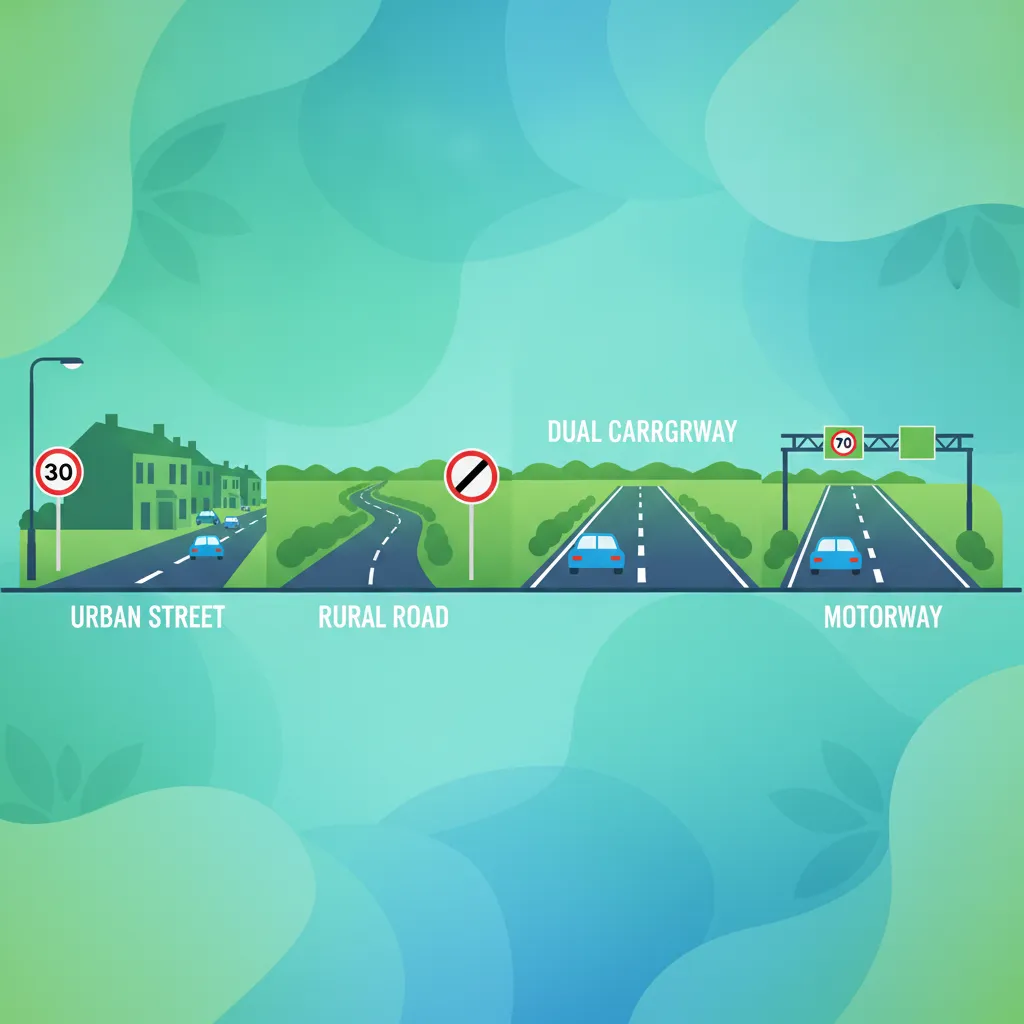
This lesson details the default speed limits for cars in Great Britain. You will learn the 30 mph limit for built-up areas, 60 mph on single carriageways, and 70 mph on dual carriageways and motorways. It also covers how to identify these roads and the importance of looking for signs indicating a different limit is in force.

This lesson addresses the critical safety topics of impairment, distraction, and social pressures. It explains how alcohol and drugs severely affect judgment, coordination, and reaction time, outlining the strict legal limits and harsh penalties in Great Britain. The content also covers modern distractions like mobile phones and the importance of resisting negative peer pressure to maintain focus and make responsible decisions as a rider.
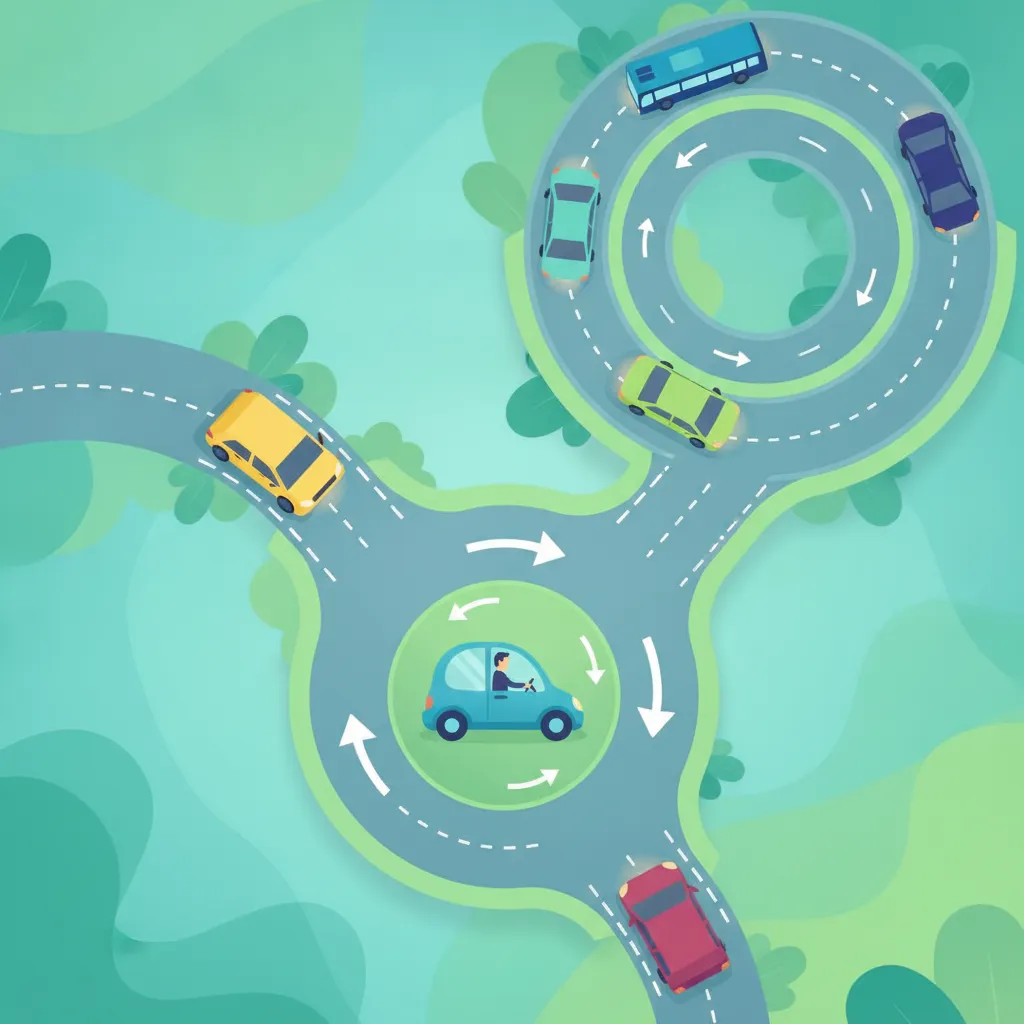
This lesson provides specific techniques for safely navigating the two main types of roundabouts in Great Britain. For multi-lane roundabouts, it covers how to choose the correct lane on approach, maintain your lane while circulating, and signal your exit correctly. It also explains the unique rules for mini-roundabouts, emphasizing the importance of giving way to traffic from the right and navigating them with caution due to their small size.
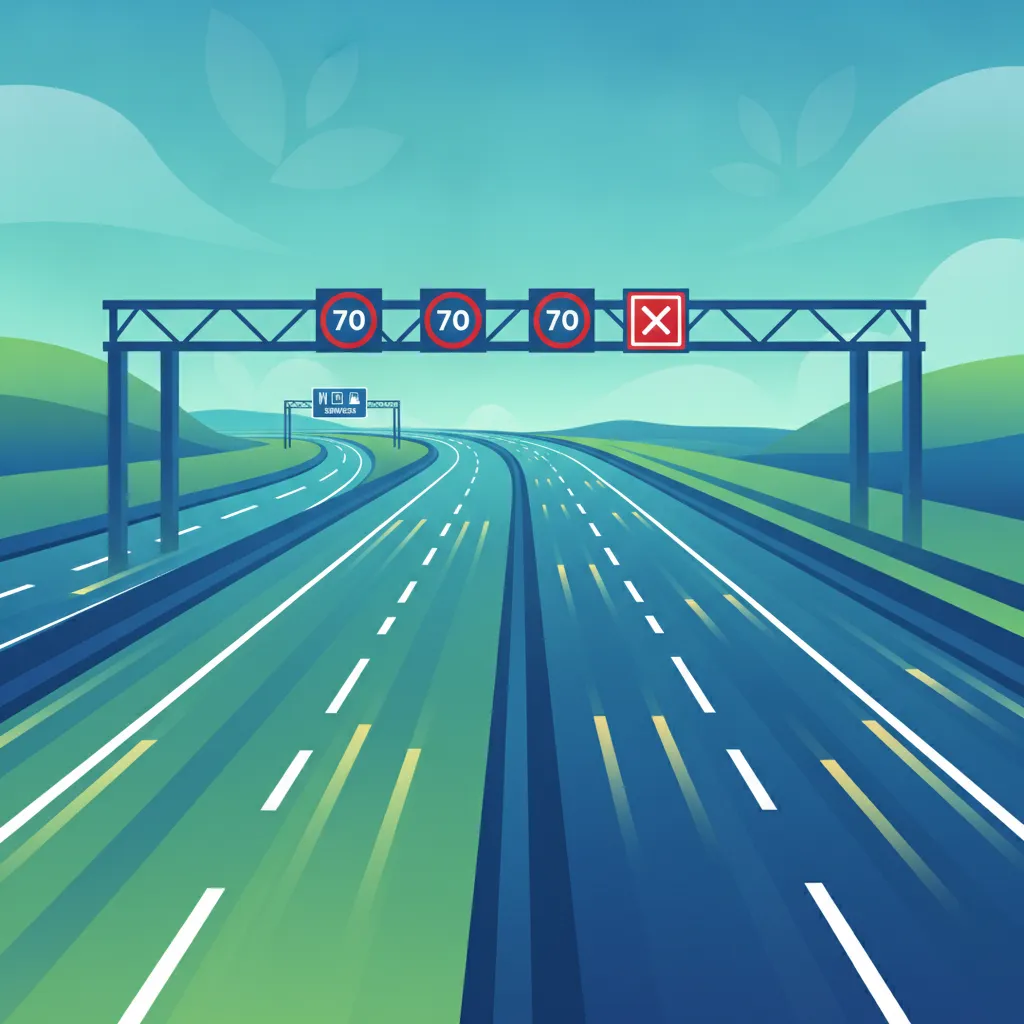
This lesson covers the unique aspects of motorway driving, from joining and leaving the carriageway to the strict lane discipline of keeping to the left unless overtaking. It explains the features of smart motorways, such as variable speed limits and the meaning of a Red X symbol above a lane. The safe procedure for handling a breakdown is also a key topic.
Explore the totting-up system for accumulating penalty points and understand mandatory disqualification periods for various offences. Learn how to reinstate your licence after a ban in Great Britain.
This lesson explains the legal consequences of committing traffic offences. It covers how the penalty points system works, the number of points for common offences like speeding, and how accumulating 12 points can lead to disqualification under the 'totting-up' procedure. You will also learn about the specific rules for new riders, who can have their licence revoked with just 6 points.
This lesson explains the legal consequences of committing traffic offences in Great Britain. It details the penalty points system, explaining how points are issued for various offences like speeding or using a mobile phone, and the thresholds that can lead to a driving ban. Understanding these penalties, fines, and potential licence revocation reinforces the importance of consistent, lawful riding and helps you appreciate the value of a clean driving record.
This lesson provides a clear guide to the legal restrictions placed on drivers with a provisional licence. It covers the mandatory display of L-plates and the specific criteria for a supervising driver, including age and experience. Furthermore, it explains the prohibition on driving on motorways and other rules designed to ensure safety during the learning process.
Explore the critical topics of driver liability, insurance, and legal penalties in Great Britain. This lesson distinguishes between civil and criminal liability in the context of road incidents. It details the compulsory third-party insurance every driver must have and explains the penalty points system for traffic offences, including fines and potential disqualification.
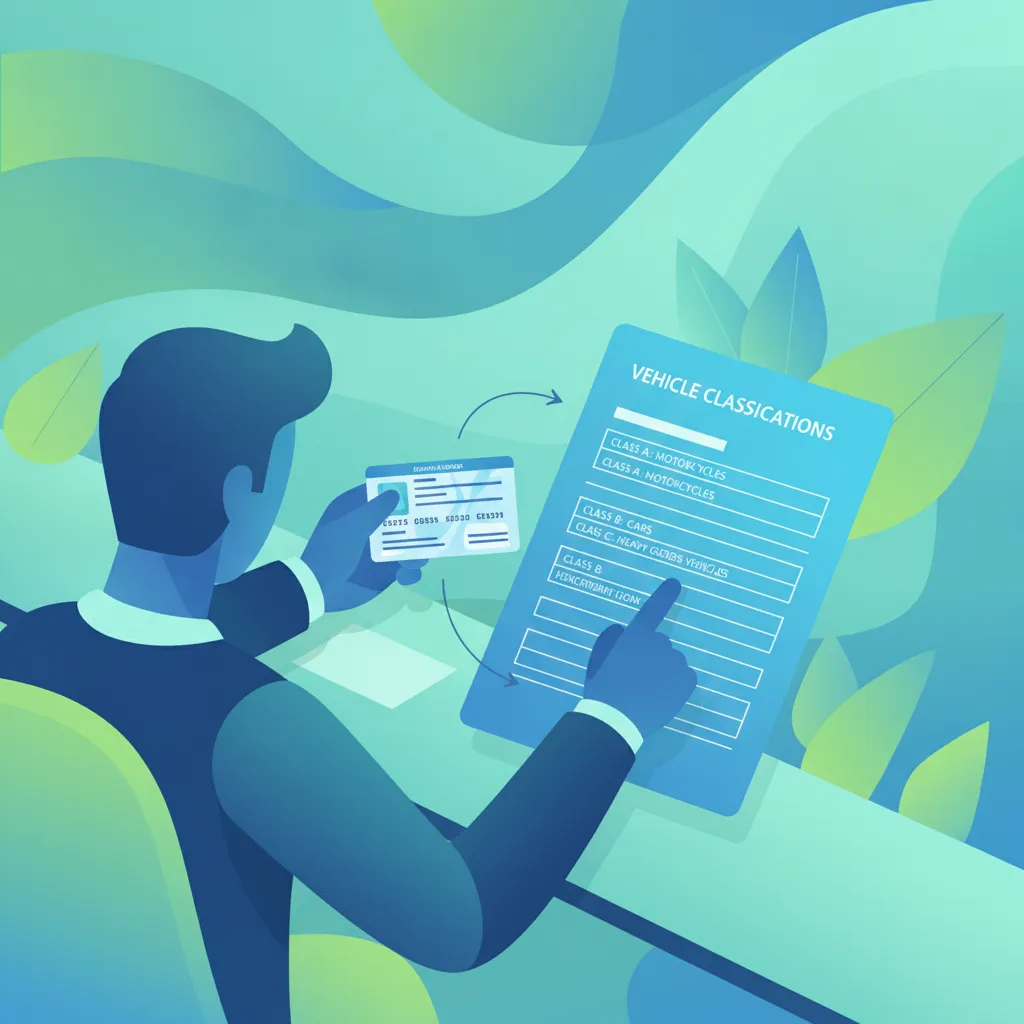
This lesson outlines the statutory framework governing UK driving licences, focusing on Category B. It details the functions of the Driver and Vehicle Licensing Agency (DVLA) and the Driver and Vehicle Standards Agency (DVSA). Key topics include the various licence categories, age and medical fitness requirements, and the legal standing of the Highway Code.
This lesson outlines the serious legal and professional consequences of committing traffic offences. It covers common issues such as speeding, using a mobile phone, and the strict limits on alcohol, explaining the system of fixed penalty notices and penalty points. The content makes clear how accumulating points can lead to fines, licence suspension or revocation, and the loss of a professional driving career. The importance of understanding and following company policy on incident reporting is also stressed.
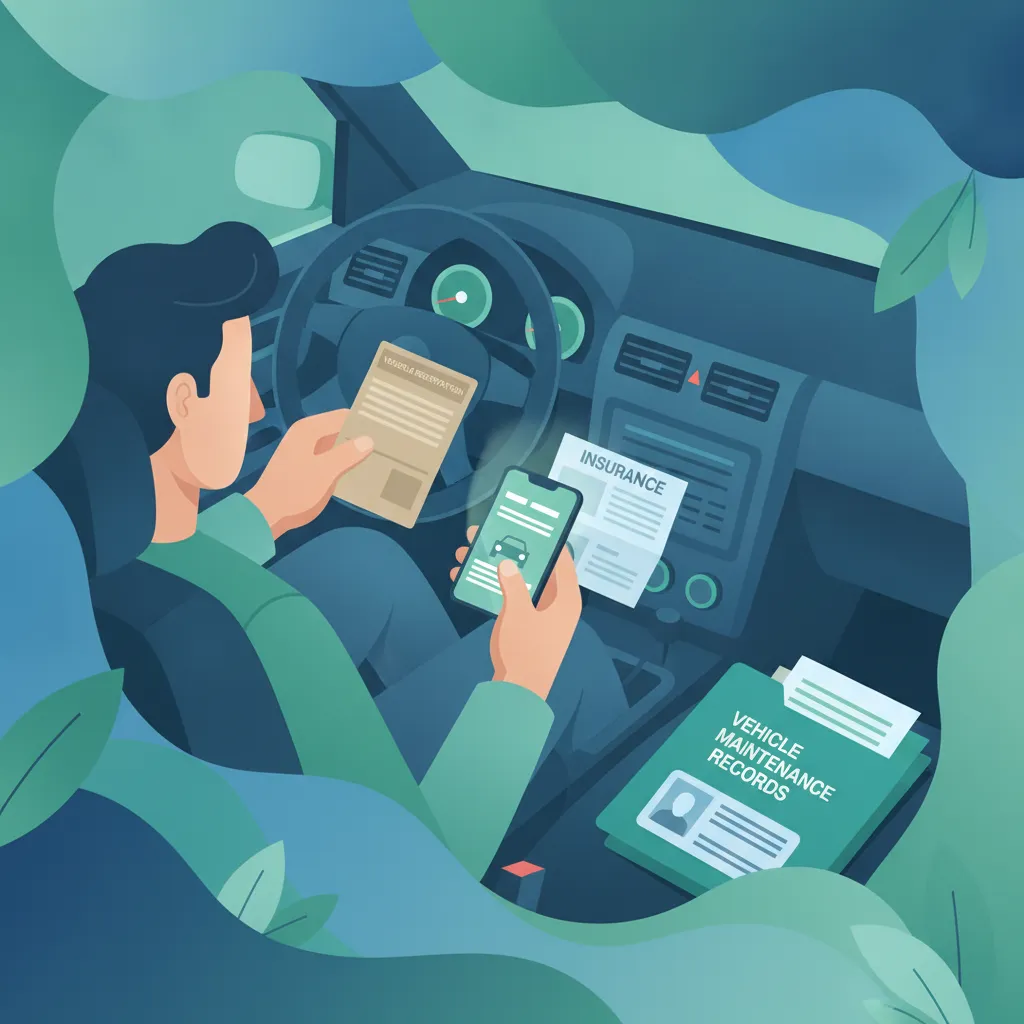
This lesson details the crucial documentation required for legal driving in the UK. It explains the purpose of the V5C registration document, the MOT test certificate, and proof of insurance and road tax (Vehicle Excise Duty). You will learn where to keep these documents and when you might be required to present them to authorities.
This lesson explains the different motorcycle licence categories in Great Britain, including A1, A2, and the unrestricted Category A. It details the specific age requirements, power and engine size restrictions, and the mandatory training progression set by the DVSA. Learners will understand the entitlements and limitations of each licence, ensuring they follow the correct legal path to becoming a qualified rider.

This lesson explains the legal alcohol limits for drivers in England, Wales, and Scotland. It highlights how even a small amount of alcohol can negatively affect your coordination, vision, and judgement, significantly increasing your risk of an accident. The severe penalties for drink driving, including fines, driving bans, and imprisonment, are also detailed.
This lesson outlines the serious consequences of failing to comply with road transport law. It details the graduated system of fines and penalties that can be issued by the DVSA and police for offences ranging from drivers' hours violations to vehicle defects. The lesson also explains more severe sanctions, such as vehicle prohibition, licence suspension, and referral to the Traffic Commissioner, which can impact both the driver and their employer.
Find clear answers to common questions learners have about Penalties, Penalty Points, and Disqualification Processes. Learn how the lesson is structured, which driving theory objectives it supports, and how it fits into the overall learning path of units and curriculum progression in Great Britain. These explanations help you understand key concepts, lesson flow, and exam focused study goals.
Under the Road Traffic (New Drivers) Act, if you accumulate 6 or more penalty points within two years of passing your first driving test, your licence is automatically revoked. You would then need to reapply for a provisional licence and pass both the theory and practical tests again to regain your full entitlement.
Most penalty points remain on your driving record for four years from the date of the offence. For more serious offences, such as causing death by dangerous driving, they can stay on your record for eleven years.
While the principles of penalty points are similar, the administrative processes and some specific enforcement procedures differ because Northern Ireland operates under the DVA and separate legislation. This course focuses specifically on the DVSA and DVLA requirements for Great Britain.
Not all offences carry points. Some minor infringements, such as parking violations or certain administrative lapses, may result in a fine or a fixed penalty notice without points. However, moving traffic offences like speeding or mobile phone use almost always incur points.
Dive into our comprehensive question bank to find exactly what you need for your Great Britain theory test. Use our advanced filters to pinpoint specific subjects or test your knowledge on challenging areas, ensuring you're fully prepared for success.