
This lesson guides you through critical signals that require immediate attention, including police gestures, emergency vehicle priority, and railway level crossing warnings. Mastering these rules is a vital part of your Category B theory preparation, ensuring you can respond safely and legally to non-standard traffic directions.
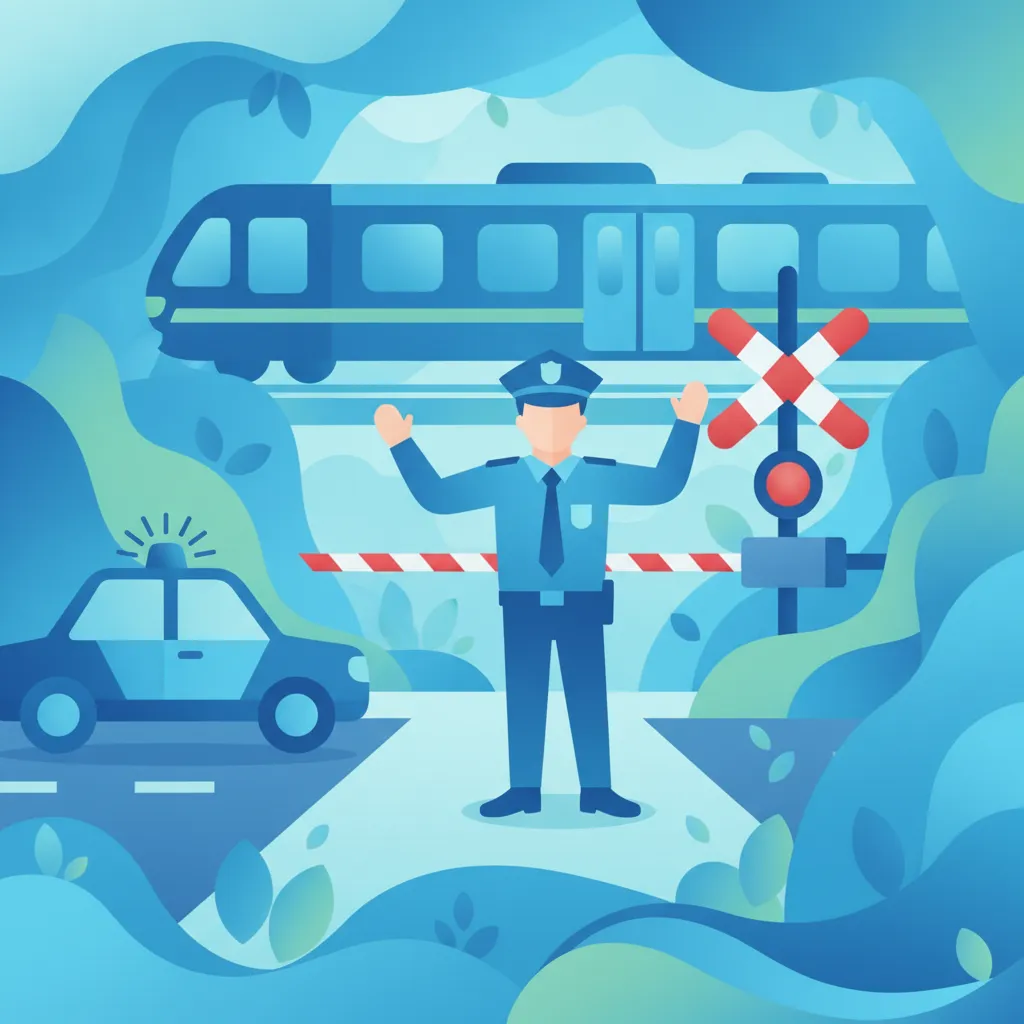
Lesson content overview
As a Category B learner driver in Great Britain, mastering the ability to recognize and correctly respond to special signals is fundamental for road safety and passing your theory test. These signals are distinct from standard road signs and traffic lights because they demand immediate and specific actions, often overriding normal traffic rules to protect public safety and ensure the rapid passage of emergency and railway services. This lesson will equip you with the knowledge to interpret police hand signals, respond safely to emergency vehicles with flashing lights and sirens, and understand the crucial warning system at railway level crossings.
Special signals serve as crucial instructions that, when ignored, can lead to severe consequences, including accidents, legal penalties, and endangerment of other road users. They are designed for situations where the standard system of signs and lights is insufficient or compromised, or where the immediate movement of critical services or trains is paramount. Recognizing these signals quickly and reacting appropriately is a core skill for every responsible driver.
One of the most important principles in Great Britain's driving theory is the hierarchy of priority concerning road signals. Special signals, particularly those given by police officers, emergency vehicle lights and sirens, and railway level crossing warnings, always take precedence over standard traffic rules, signs, and lights. This means you must yield or stop even if a traffic light is green, or a road sign indicates otherwise. This principle is vital for preventing collisions and facilitating emergency response.
The hierarchy of priority ensures safety by giving immediate control to situations of higher risk or urgency. A police officer's direction or an approaching emergency vehicle’s siren overrides all other signals.
Police officers are authorised to direct traffic using specific hand signals. These signals are paramount and must be obeyed immediately, regardless of what traffic lights, road signs, or road markings indicate. Officers use these signals at accident scenes, during roadworks, at temporary diversions, or to manage traffic flow during events where standard controls are inadequate or out of order.
Understanding the precise meaning of each police hand signal is crucial for swift and correct action:
The legal requirement to obey police hand signals is absolute. Failure to comply can result in serious legal penalties, including penalty points on your licence and a fine, in addition to causing dangerous traffic situations. Always be observant for police officers directing traffic, especially at junctions, accident sites, or during periods of heavy congestion.
A manual gesture made by a police officer on or near the road to direct traffic, overriding all other traffic controls.
Emergency vehicles, such as police cars, ambulances, fire engines, and other rescue services, use distinctive visual and audible signals when responding to an incident. Recognizing and responding correctly to these signals is essential for enabling these services to reach their destination without delay, which can be critical in life-or-death situations.
Emergency vehicles in Great Britain typically use:
Always assume an emergency vehicle with active signals is on an urgent call and requires immediate right-of-way.
When you hear a siren or see flashing lights from an emergency vehicle, you must take immediate action to give them clear passage.
Stay calm and check your mirrors: Identify the location and direction of the emergency vehicle.
Signal your intention: Use your indicator to show you are pulling over.
Move to the side of the road: When safe, pull over to the left-hand side of the road. On multi-lane roads, move to the leftmost available lane.
Stop safely: Come to a complete stop, ensuring you do not block junctions, driveways, or other access points. Do not mount pavements unless absolutely necessary and safe for pedestrians.
Wait for the vehicle to pass: Do not move off until the emergency vehicle has passed. Be aware that there might be more than one emergency vehicle.
Do not take unnecessary risks: Do not brake harshly, swerve suddenly, or endanger other road users while trying to yield.
A vehicle such as a police car, ambulance, fire engine, or other rescue service, equipped with flashing lights and sirens, responding to an incident.
The rules for yielding to emergency vehicles apply across all road types, with specific considerations for motorways and dual carriageways:
When yielding on motorways, ensure you only use the hard shoulder if it’s genuinely safe and necessary. Avoid stopping in a live lane if possible.
Railway level crossings are points where a road and a railway line intersect at the same level. These crossings are equipped with specific warning lights and sometimes barriers to alert drivers to approaching trains. Ignoring these signals is extremely dangerous and can have fatal consequences, as trains cannot stop quickly.
Flashing Amber Light: This usually appears first, warning you that a train is approaching and the crossing is about to close. You must reduce your speed and prepare to stop.
Flashing Red Lights: When two alternating red lights begin to flash, it signifies that a train is either approaching or already on the crossing. You must stop immediately before the solid white stop line or barrier. Never proceed when these lights are flashing.
Barriers: Many level crossings also have barriers that lower to block the road. You must stop when the lights flash, even if the barriers have not yet begun to lower or are not fully down. Never drive around lowered or lowering barriers.
A point where a road and a railway line intersect at the same level, often equipped with warning lights and barriers.
It is crucial to re-emphasize that special signals override all other road rules and controls. This means:
Your priority as a driver is to ensure safety by complying with these overriding signals without hesitation.
Failing to obey special signals carries significant legal consequences under Great Britain's Road Traffic Act and Highway Code. These are not merely suggestions; they are mandatory requirements.
Your response to special signals must also account for various environmental and contextual factors.
When responding to special signals, always be aware of vulnerable road users such as pedestrians, cyclists, and motorcyclists.
Your actions in response to special signals have direct and measurable consequences:
Understanding special signals relies on a few fundamental driving concepts:
Let's consider a few practical scenarios to solidify your understanding:
Setting: You are approaching a busy urban junction with working traffic lights showing green, but a police officer is standing in the middle, directing traffic. There's an accident partially blocking one lane. Correct behaviour: You immediately disregard the green traffic light and focus on the officer. The officer extends an arm with a palm facing you, signalling you to stop. You safely bring your vehicle to a halt before the junction and wait for further instructions, such as a beckoning gesture to proceed or a direction to turn. Why correct: The police officer’s signal overrides the traffic lights due to the accident requiring manual traffic management. Your immediate compliance prevents further congestion or potential collision with rescue vehicles.
Setting: You are driving in the right-hand lane of a two-lane dual carriageway. You hear a siren and see flashing blue lights rapidly approaching from behind in your mirrors. Correct behaviour: You check your left mirror, signal left, and, when it is safe to do so, smoothly move into the left-hand lane. You then slow down and pull over to the left-hand side of the road, stopping to create a clear path for the ambulance. You wait for the ambulance (and any subsequent emergency vehicles) to pass completely before safely rejoining traffic. Why correct: This action ensures the emergency vehicle has an unobstructed path, vital for its rapid response, and adheres to the legal requirement to yield.
Setting: It's a dark, rainy night, and you're approaching an unmarked level crossing on a rural road. Suddenly, two alternating red lights begin to flash. Correct behaviour: You immediately reduce speed, activate your hazard warning lights if necessary, and stop your vehicle completely behind the white stop line before the crossing. You keep your headlights dipped to avoid dazzling oncoming drivers or a train driver, and patiently wait for the lights to stop flashing and for any barriers to fully lift before cautiously proceeding. Why correct: The flashing red lights indicate an approaching train. Stopping safely prevents a catastrophic collision, particularly dangerous in poor visibility conditions where judging train speed is difficult.
Setting: You are stuck in heavy traffic on a multi-lane urban road. You hear a siren and see police car lights flashing behind you, but there is no space to pull over. Correct behaviour: You should make every reasonable effort to create space. This might involve slowly edging forward if traffic ahead moves slightly, or moving as far to the left as possible within your lane. If you are unable to create a full lane, you should still attempt to move out of the direct path of the emergency vehicle without endangering others, potentially creating a "corridor" in the middle of two lanes if safe to do so and if other drivers cooperate. Do not block a junction or pedestrian crossing. Why correct: While immediate full yielding might be impossible, making a concerted effort to clear a path is crucial. The Highway Code advises drivers to give way as soon as it is safe to do so.
Mastering special signals is a cornerstone of safe and responsible driving in Great Britain. Remember these key takeaways:
By understanding and correctly applying the rules for special signals, you will contribute to safer roads, facilitate emergency responses, and demonstrate your competence as a Great Britain Category B driver.
Explore all units and lessons included in this driving theory course.
Lesson content overview
Explore all units and lessons included in this driving theory course.
Explore search topics learners often look for when studying Special Signals (Police, Emergency, Railway). These topics reflect common questions about road rules, driving situations, safety guidance, and lesson level theory preparation for learners in Great Britain.
Browse additional driving theory lessons that cover connected traffic rules, road signs, and common driving situations related to this topic. Improve your understanding of how different rules interact across everyday traffic scenarios.
Understand the priority of police hand signals, emergency vehicle lights, and railway crossing warnings over standard traffic controls. Learn the correct response protocols for immediate safety and legal compliance in Great Britain.
This lesson provides a thorough explanation of the UK traffic light system, including the meaning of red, amber, and green signals, as well as the red-and-amber phase. You will learn how to interpret filter arrows for turning and understand your position relative to the stop line. The content also covers signals at pedestrian crossings, ensuring you can navigate all types of signalised intersections safely and in accordance with the Highway Code.
This lesson details how to safely navigate junctions controlled by traffic signals. It explains the meaning of filter arrows, which allow you to proceed in a specific direction even if the main light is red. You will also learn about respecting advanced stop lines for cyclists and how to approach a junction when the traffic lights are not working.
This lesson details the operation of traffic lights in Great Britain, including the red-and-amber phase before green. It clarifies the rules for proceeding at a green light, stopping for red, and preparing to stop for a steady amber light. You will also learn about green filter arrows and the flashing amber lights used at certain pedestrian crossings.
This lesson explains how to drive safely through areas where roadworks are taking place. It stresses the importance of obeying all temporary signs, especially mandatory speed limits, which are in place for your safety and the safety of road workers. You will learn about navigating narrow lanes, contraflow systems, and how to follow official diversion signs.
This lesson teaches you to interpret warning signs, which are typically triangular and designed to alert you to potential hazards ahead. You will learn the meanings of common signs indicating sharp curves, slippery surfaces, roadworks, or areas with frequent pedestrian or animal crossings. Understanding these signs is crucial for anticipating dangers and adjusting your speed and position defensively, which is especially important for vulnerable riders of AM vehicles.
This lesson covers the operation of traffic light signals and the rules for approaching them safely. It also provides a detailed explanation of different pedestrian crossings, such as zebra, pelican, and toucan crossings, clarifying the specific rules and priority for each. You will learn to anticipate the actions of pedestrians and other vulnerable road users at these locations.
This lesson explains the critical rules of priority that govern traffic flow at junctions, roundabouts, and crossings throughout Great Britain. You will learn how to determine who has right-of-way at both marked and unmarked intersections, and the specific rules for giving way to traffic on roundabouts. The lesson also reinforces the hierarchy of road users from the Highway Code, ensuring you understand when to yield to pedestrians and other vulnerable users.
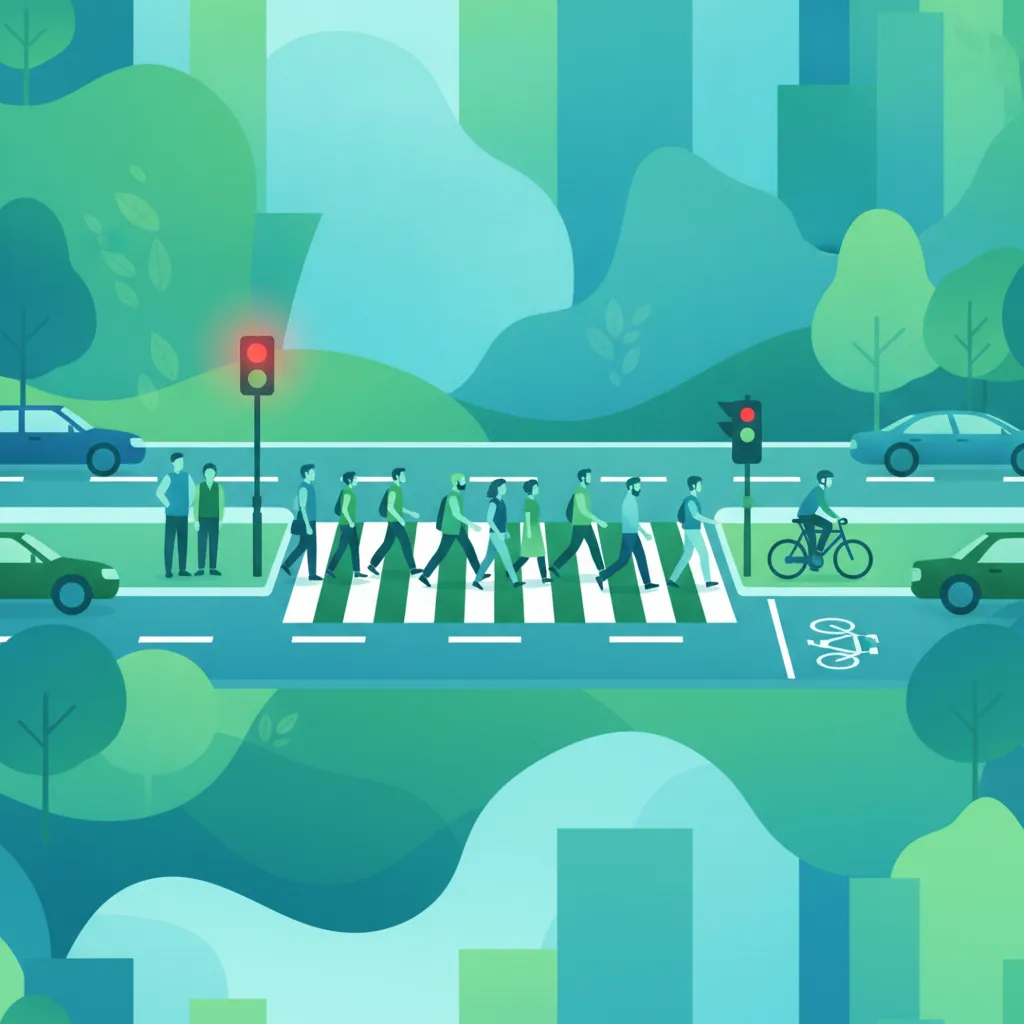
This lesson provides a detailed guide to the various types of pedestrian crossings found on British roads. You will learn the specific rules for each, including the absolute priority of pedestrians at zebra crossings and how to respond to the light signals at pelican, puffin, and toucan crossings. Understanding these rules is essential for protecting vulnerable road users and ensuring you are compliant with the Highway Code.
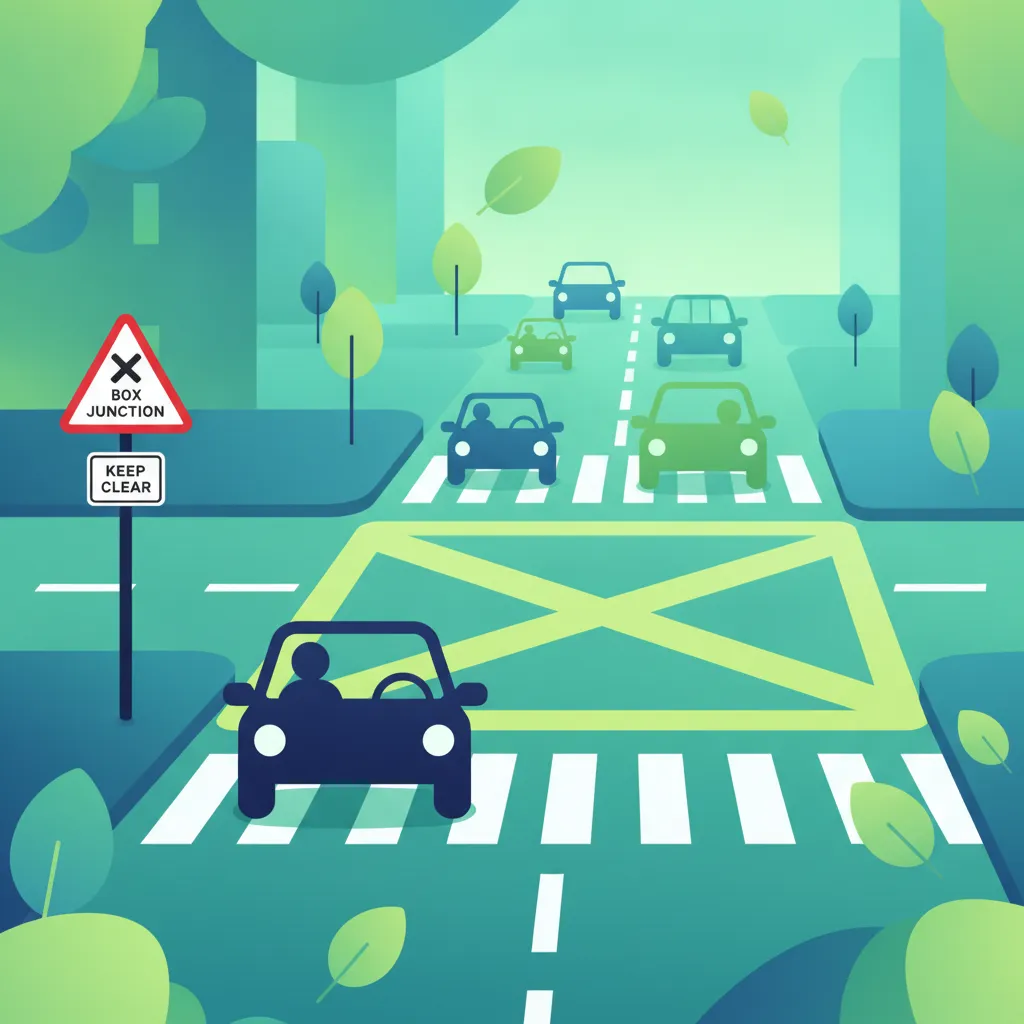
This lesson focuses on the markings that control traffic at intersections. It explains the primary rule of a yellow box junction: do not enter unless your exit is clear. You will also learn the difference between the solid white 'Stop' line and the broken 'Give Way' line, which dictate your priority over other traffic.

This lesson focuses on the markings and rules at designated pedestrian crossing points. It details the legal requirement to give way to pedestrians on a zebra crossing and explains the light sequences at signal-controlled crossings. You will also learn the meaning of the white zig-zag lines on the approach to all crossings.
Explore practical driving situations involving police traffic control, yielding to emergency vehicles with sirens, and navigating railway level crossings. Develop your hazard perception and decision-making skills based on official UK driving theory.
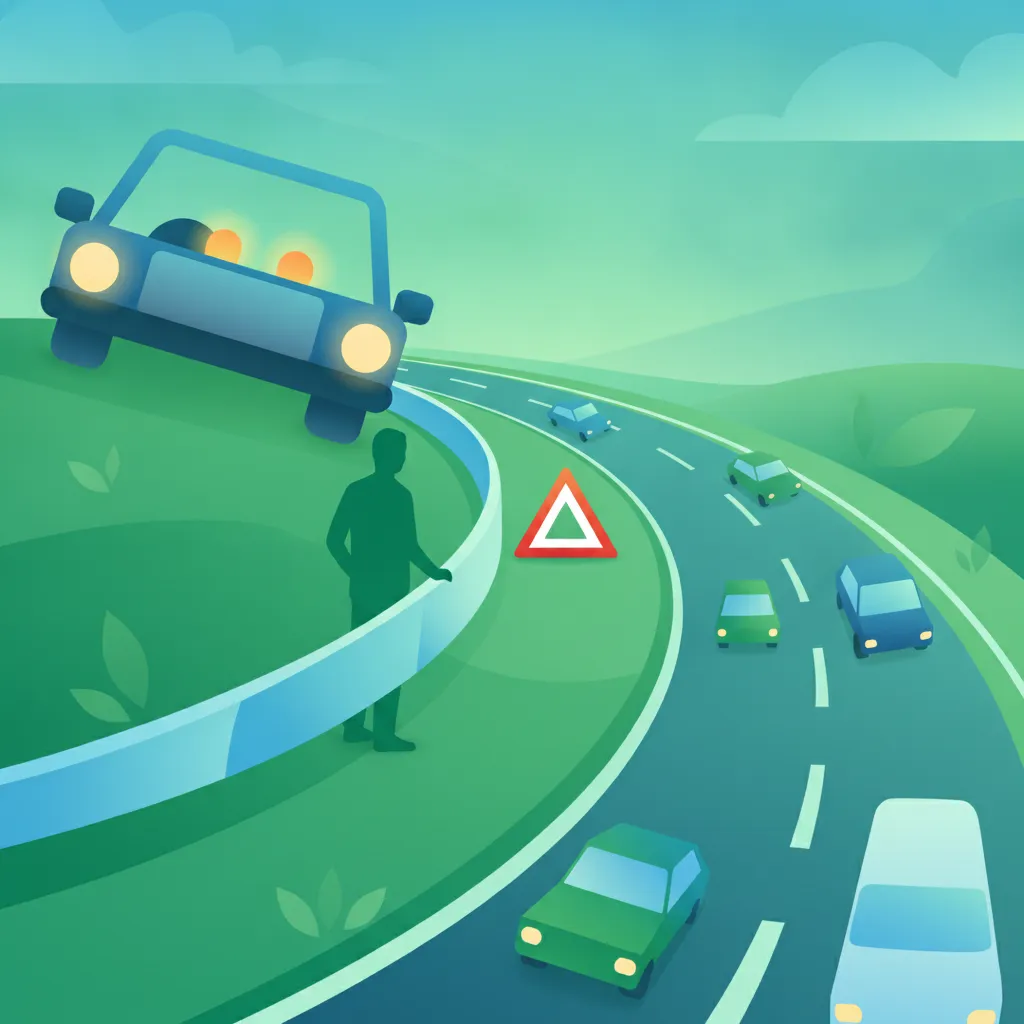
This lesson provides essential guidance for handling on-road emergencies. It outlines the steps to take if your vehicle breaks down, including making yourself visible and getting to a place of safety. You will also learn the basics of what to do at an accident scene, including assessing the situation, calling for help, and providing simple first aid until professional assistance arrives.

This lesson addresses the unique challenges of driving a large vehicle on rural roads. It provides techniques for positioning the vehicle through sharp bends and on narrow lanes, and for safely navigating unmarked or uncontrolled junctions. Learners will be taught to anticipate hidden hazards common in the countryside, such as slow-moving farm vehicles, animals on the road, and concealed entrances. The correct use of passing places and strategies for meeting oncoming traffic are also covered.
This lesson details the operation of traffic lights in Great Britain, including the red-and-amber phase before green. It clarifies the rules for proceeding at a green light, stopping for red, and preparing to stop for a steady amber light. You will also learn about green filter arrows and the flashing amber lights used at certain pedestrian crossings.
This lesson provides a thorough explanation of the UK traffic light system, including the meaning of red, amber, and green signals, as well as the red-and-amber phase. You will learn how to interpret filter arrows for turning and understand your position relative to the stop line. The content also covers signals at pedestrian crossings, ensuring you can navigate all types of signalised intersections safely and in accordance with the Highway Code.
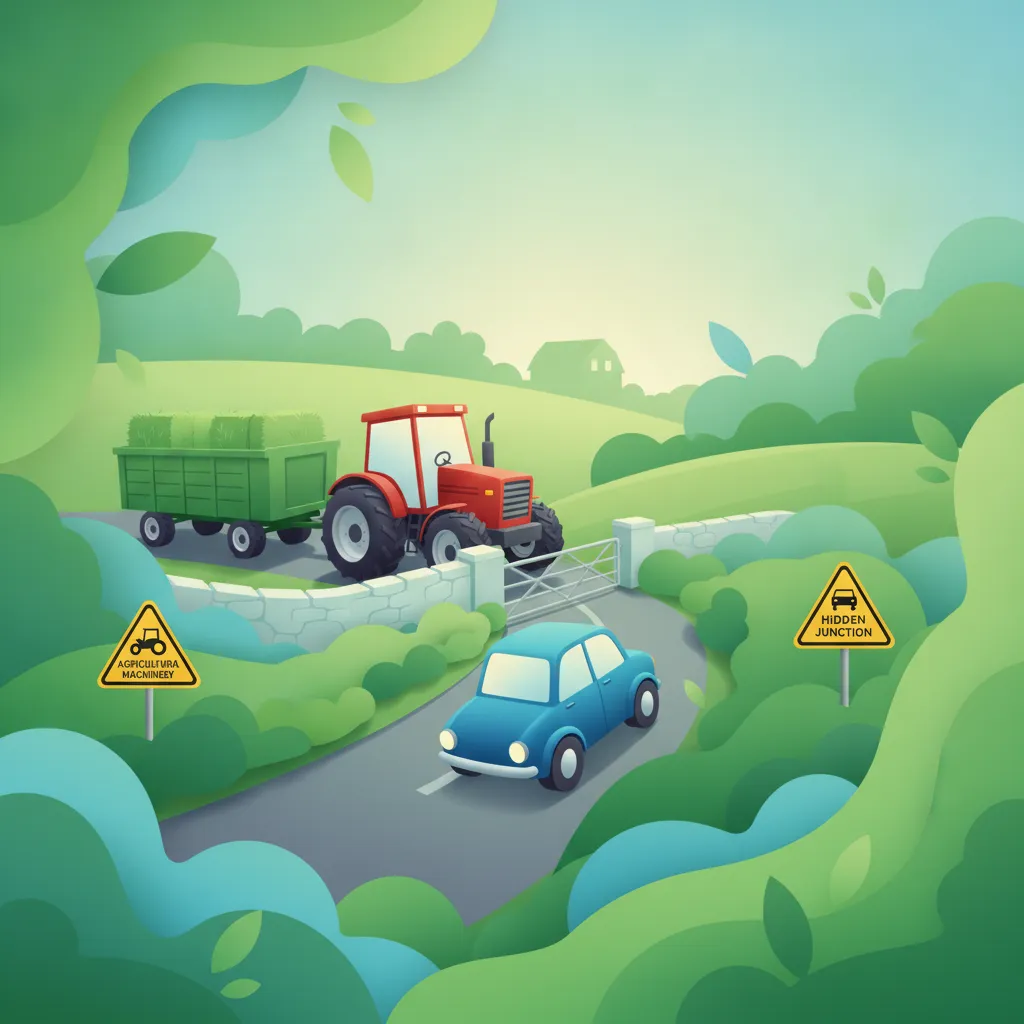
This lesson prepares you for the challenges of countryside driving. It emphasizes that the national speed limit on these roads is often too fast for the conditions. You will learn how to approach sharp bends, use passing places on single-track roads, and anticipate hazards like slow-moving tractors, horse riders, or mud on the road surface.
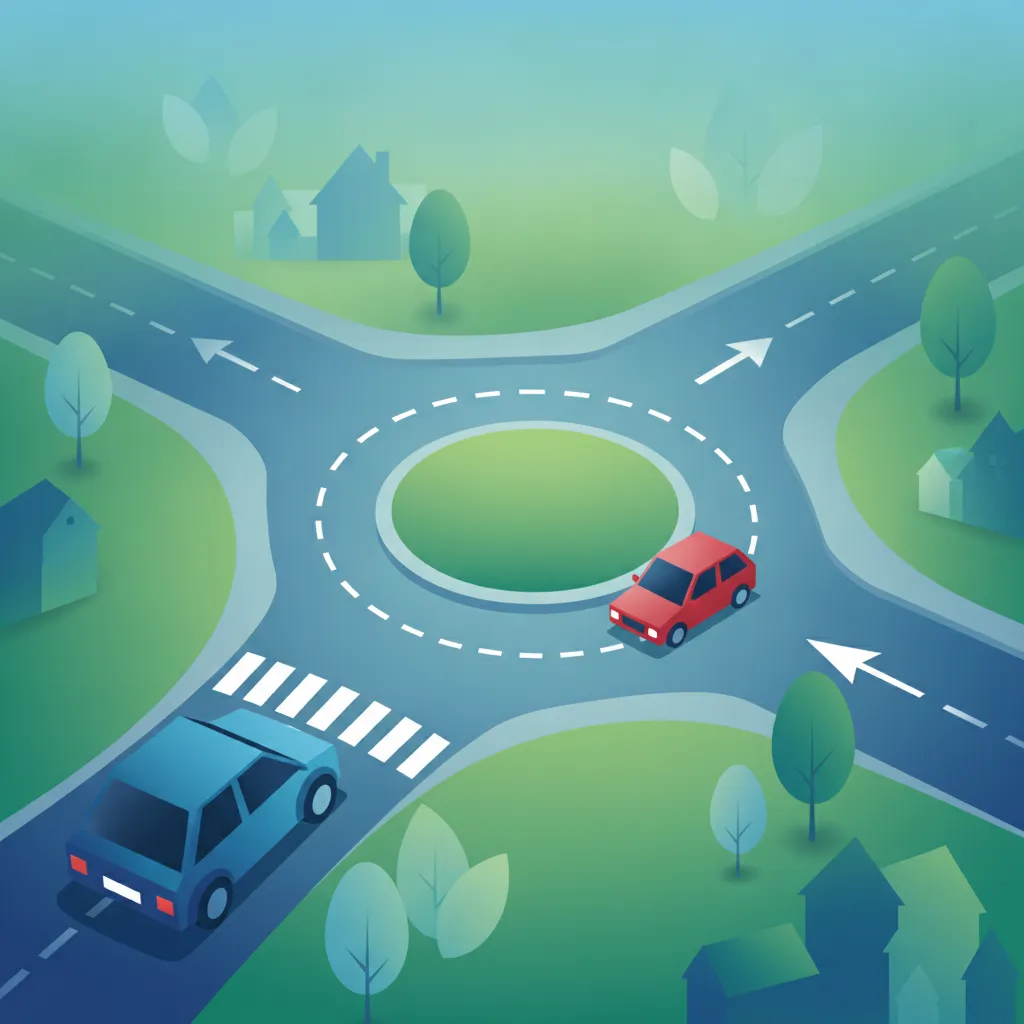
This lesson explains how to handle mini-roundabouts, which are common in urban and residential areas. The primary rule is to approach with caution and give priority to any traffic approaching from your right. You will also learn about correct signalling and the importance of being aware of cyclists and motorcyclists who may be harder to see.
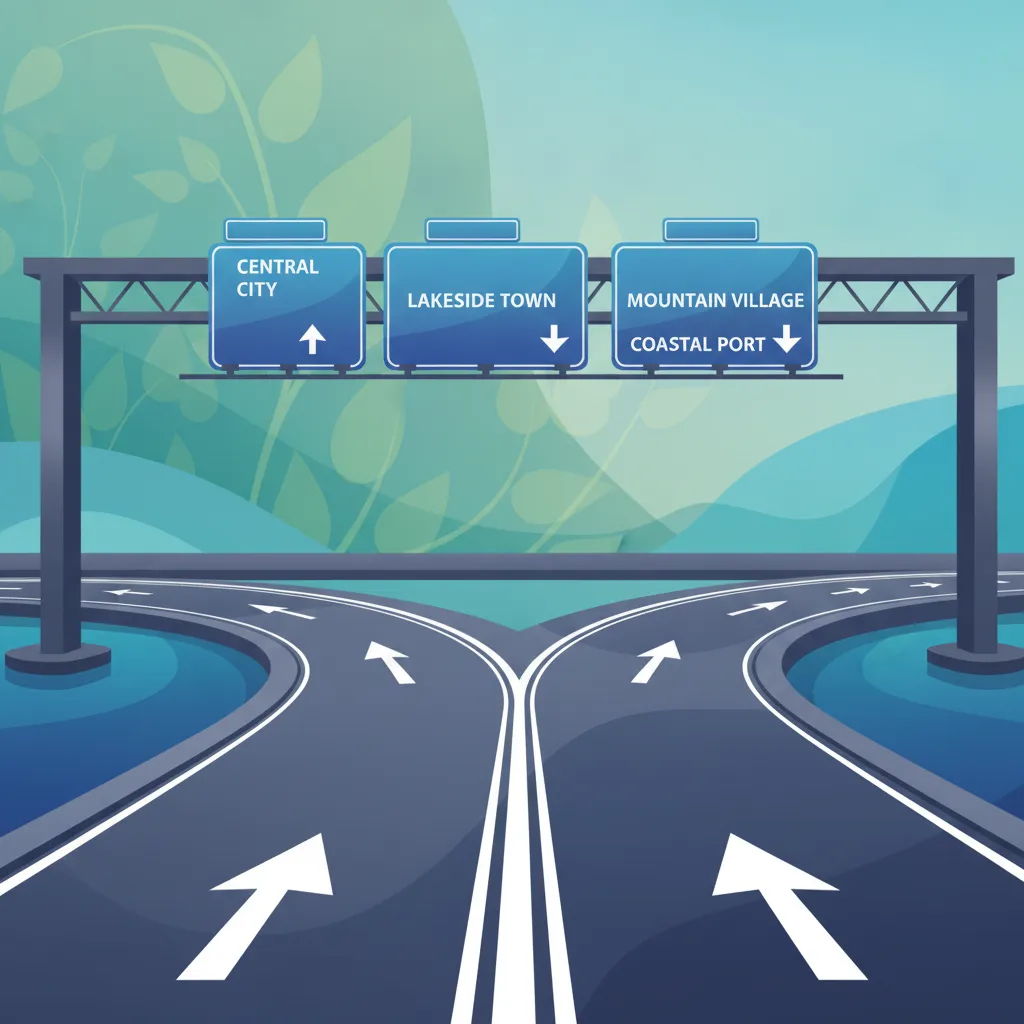
This lesson covers the signs that help you navigate your journey effectively. It explains how sign colours indicate the type of road—blue for motorways, green for primary routes, and white for non-primary routes. You will also learn to interpret signs for tourist attractions, services, and lane information at complex junctions.
This lesson details how to safely navigate junctions controlled by traffic signals. It explains the meaning of filter arrows, which allow you to proceed in a specific direction even if the main light is red. You will also learn about respecting advanced stop lines for cyclists and how to approach a junction when the traffic lights are not working.
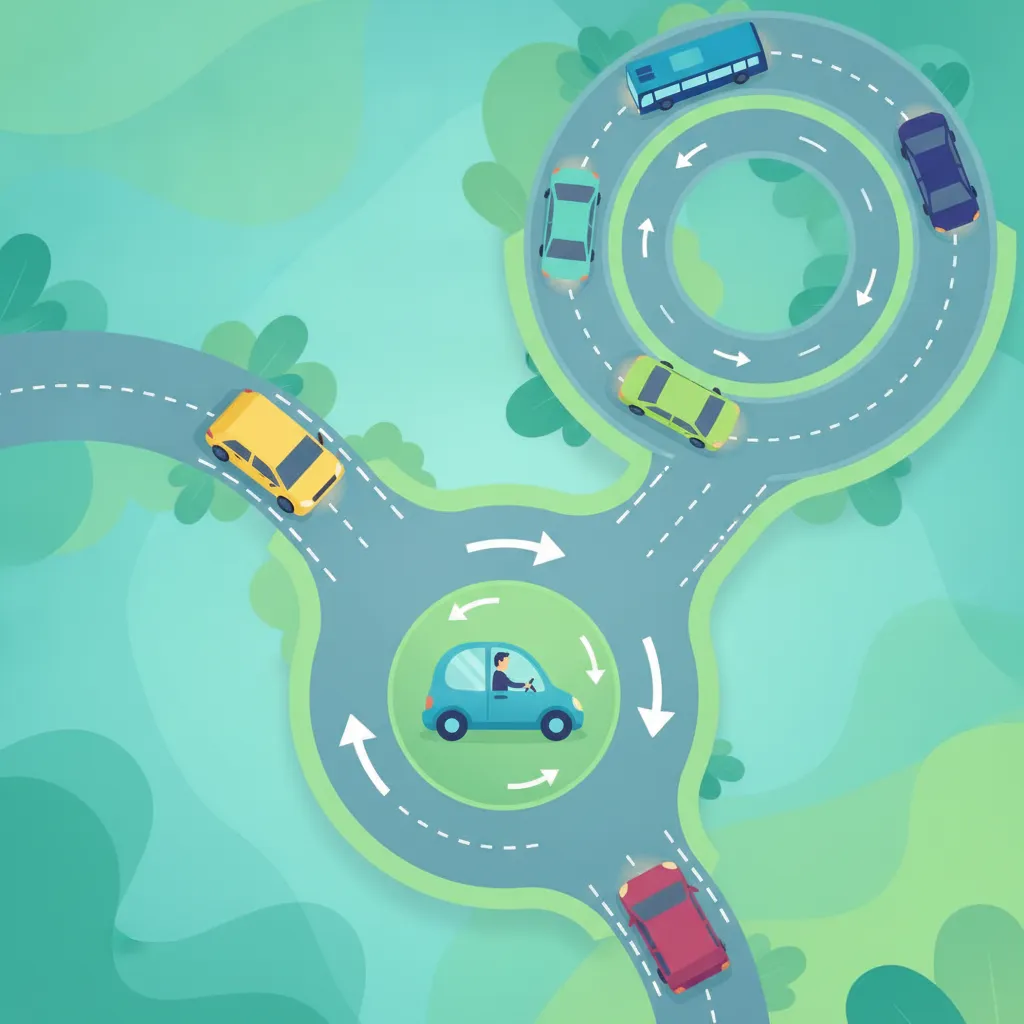
This lesson provides specific techniques for safely navigating the two main types of roundabouts in Great Britain. For multi-lane roundabouts, it covers how to choose the correct lane on approach, maintain your lane while circulating, and signal your exit correctly. It also explains the unique rules for mini-roundabouts, emphasizing the importance of giving way to traffic from the right and navigating them with caution due to their small size.
This lesson explains how to drive safely through areas where roadworks are taking place. It stresses the importance of obeying all temporary signs, especially mandatory speed limits, which are in place for your safety and the safety of road workers. You will learn about navigating narrow lanes, contraflow systems, and how to follow official diversion signs.
Find clear answers to common questions learners have about Special Signals (Police, Emergency, Railway). Learn how the lesson is structured, which driving theory objectives it supports, and how it fits into the overall learning path of units and curriculum progression in Great Britain. These explanations help you understand key concepts, lesson flow, and exam focused study goals.
You must pull over safely and stop as soon as it is legal to do so. If an officer signals you, their instruction overrides all other signs, markings, and traffic light signals.
No. You should never break the law, such as exceeding speed limits or crossing a red light, to let an emergency vehicle pass. Look for a safe place to pull over and allow them to pass safely.
Flashing amber lights indicate that you must stop. You should not proceed past the stop line unless it is unsafe to stop. If the lights continue to flash or the barrier begins to lower, do not move forward.
Emergency vehicles with sirens, blue lights, or beacons are exempt from certain traffic laws, but you should only assist them when it is safe to do so. Do not put yourself or others in danger by performing sudden, erratic manoeuvres.
Dive into our comprehensive question bank to find exactly what you need for your Great Britain theory test. Use our advanced filters to pinpoint specific subjects or test your knowledge on challenging areas, ensuring you're fully prepared for success.