
This lesson details the critical markings that control traffic flow and safety at busy intersections in Great Britain. By mastering these rules, you will understand exactly when to stop and how to navigate junctions without risking fines or collisions.
Lesson content overview
Understanding road markings is fundamental to safe and compliant driving in Great Britain. This lesson for Great Britain Category B learner drivers focuses on three crucial transverse markings found at junctions: yellow box junctions, solid white stop lines, and broken white give way lines. Mastery of these markings is essential for navigating intersections efficiently, preventing congestion, and ensuring the safety of all road users.
Junctions are common points of conflict on the road, where vehicle paths intersect and priority rules become paramount. Road markings act as visual cues and legal commands, providing clear instructions to drivers to minimise confusion and reduce the risk of collisions. Correctly interpreting and obeying these markings directly impacts your ability to drive safely, maintain traffic flow, and avoid potential penalties under the Highway Code (HC) and Road Traffic Act.
This guide will delve into the specific rules, practical implications, and common misunderstandings associated with each type of marking, equipping you with the knowledge to make informed decisions at any intersection.
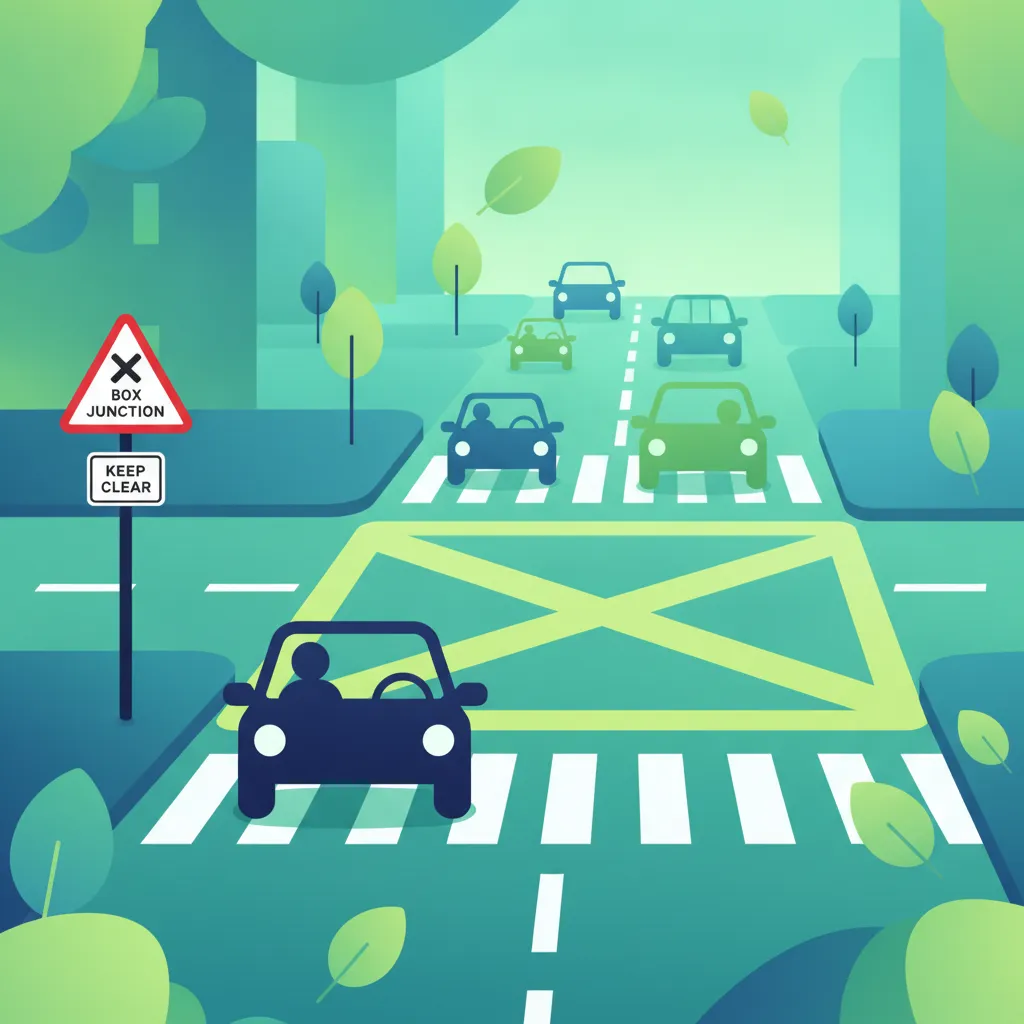
A yellow box junction is a critical road marking designed to prevent gridlock at busy intersections. It features a yellow criss-cross pattern painted on the road surface, typically found at crossroads, T-junctions, or where two streams of traffic merge.
The primary purpose of a box junction is to keep the junction clear for crossing traffic, even if your direction of travel is temporarily blocked. This prevents traffic from becoming completely jammed, allowing different flows of vehicles to continue moving.
The fundamental rule for a yellow box junction is straightforward: You must not enter the box unless your exit road or lane is clear. This means you should only drive into the box if you can immediately proceed out of it without stopping. If traffic ahead of you has stopped, and your exit is blocked, you must wait before the yellow box.
Even if a traffic light for your direction is green, the box junction rule still applies. A green light gives you permission to proceed if safe to do so, but it does not override the requirement to keep the box clear. Assessing the traffic conditions beyond the box is a key part of anticipating potential blocks and making a safe decision.
Always scan well ahead of the box junction to assess the traffic situation on your intended exit route. If the exit is not completely clear, do not enter the box.
While a standard green traffic light does not grant automatic permission to enter a box junction if your exit is blocked, there is one crucial exception: the green arrow.
If there is a dedicated green arrow signal pointing in the direction you intend to travel, and this arrow is illuminated, you may enter the box junction even if your exit appears temporarily blocked. This specific signal indicates that traffic from other directions has been stopped, allowing you to proceed. However, you must still ensure that you can clear the box before the arrow signal changes or your exit becomes blocked again.
A specific traffic light signal in the shape of an arrow, indicating that drivers may proceed in the direction of the arrow. At box junctions, a green arrow can provide an exception to the general rule, allowing entry even if the exit appears obstructed.
Drivers often make predictable errors when encountering box junctions, leading to fines and congestion. Awareness of these common pitfalls can help you avoid them:
A solid white stop line is one of the most unambiguous markings on the road, signalling a mandatory halt point. These transverse lines are continuous and typically stretch across the width of a lane or road.
The presence of a solid white stop line means you must bring your vehicle to a complete stop before any part of your vehicle crosses the line. This rule is enforced by the Highway Code, specifically HC Rule 116.
You will encounter solid white stop lines in conjunction with:
Performing a "rolling stop" (slowing down but not coming to a complete halt) or stopping with any part of your vehicle over the solid white line is a violation. This can lead to a fine, penalty points, and potential danger, as it may encroach on space reserved for crossing traffic or pedestrians.
The stop line ensures that vehicles stop at a consistent, safe distance from the conflict point of the junction, allowing other road users clear passage and providing drivers a designated point to observe and assess the situation before proceeding.
In contrast to the solid white stop line, a broken white give way line indicates that you must be prepared to give way to other traffic, but it does not necessarily require a full stop. These lines are formed by a series of dashed white segments painted across the road.
The key difference between a give way line and a stop line lies in the mandatory nature of the stop. At a stop line, a full halt is required. At a give way line, you must yield priority to any traffic or road users on the main road or priority route. You should slow down, be prepared to stop, and only proceed when it is safe to do so without causing another vehicle to change speed or direction.
Give way lines are commonly found at:
A broken white give way line is frequently accompanied by a triangular "Give Way" sign. This sign reinforces the requirement to yield priority, but the line itself is the physical demarcation point on the road.
Your responsibility to give way extends to all road users, especially vulnerable road users (VRUs) such as pedestrians, cyclists, and motorcyclists. At junctions where give way lines are present, you must be particularly vigilant for VRUs who may be crossing or using shared paths. Even if you perceive a gap in vehicle traffic, you must ensure it is safe and clear of all pedestrians and cyclists before proceeding. The presence of a give way line near a pedestrian crossing further emphasizes the need to prioritise those on foot or bicycle.
The effectiveness and interpretation of road markings can be influenced by various external factors. Drivers must adapt their approach to box junctions, stop lines, and give way lines based on prevailing conditions.
The type of vehicle you are driving can also impact how you interact with these markings:
Always factor in your vehicle's specific characteristics – length, weight, and braking capability – when judging whether you can safely and legally proceed across or stop at any junction marking.
Disobeying box junctions, stop lines, or give way lines is not just bad driving; it carries legal consequences. These rules are enshrined in the Highway Code and are enforceable under the Road Traffic Act 1988.
These penalties underscore the importance of understanding and strictly adhering to these fundamental road markings for your safety and legal compliance as a driver.
Navigating junctions correctly is a cornerstone of safe driving. By mastering the principles of box junctions, stop lines, and give way lines, you contribute to smoother traffic flow and significantly reduce the risk of accidents.
By consistently applying these principles, you will be well-prepared to safely and confidently tackle a wide array of junctions on Great Britain's roads.
Explore all units and lessons included in this driving theory course.
Lesson content overview
Explore all units and lessons included in this driving theory course.
Explore search topics learners often look for when studying Box Junctions, Stop Lines, and Give Way Markings. These topics reflect common questions about road rules, driving situations, safety guidance, and lesson level theory preparation for learners in Great Britain.
Browse additional driving theory lessons that cover connected traffic rules, road signs, and common driving situations related to this topic. Improve your understanding of how different rules interact across everyday traffic scenarios.
Explore advanced scenarios and specific exceptions for yellow box junctions, stop lines, and give way markings. Learn how to navigate complex junction situations and avoid common mistakes in Great Britain driving theory.
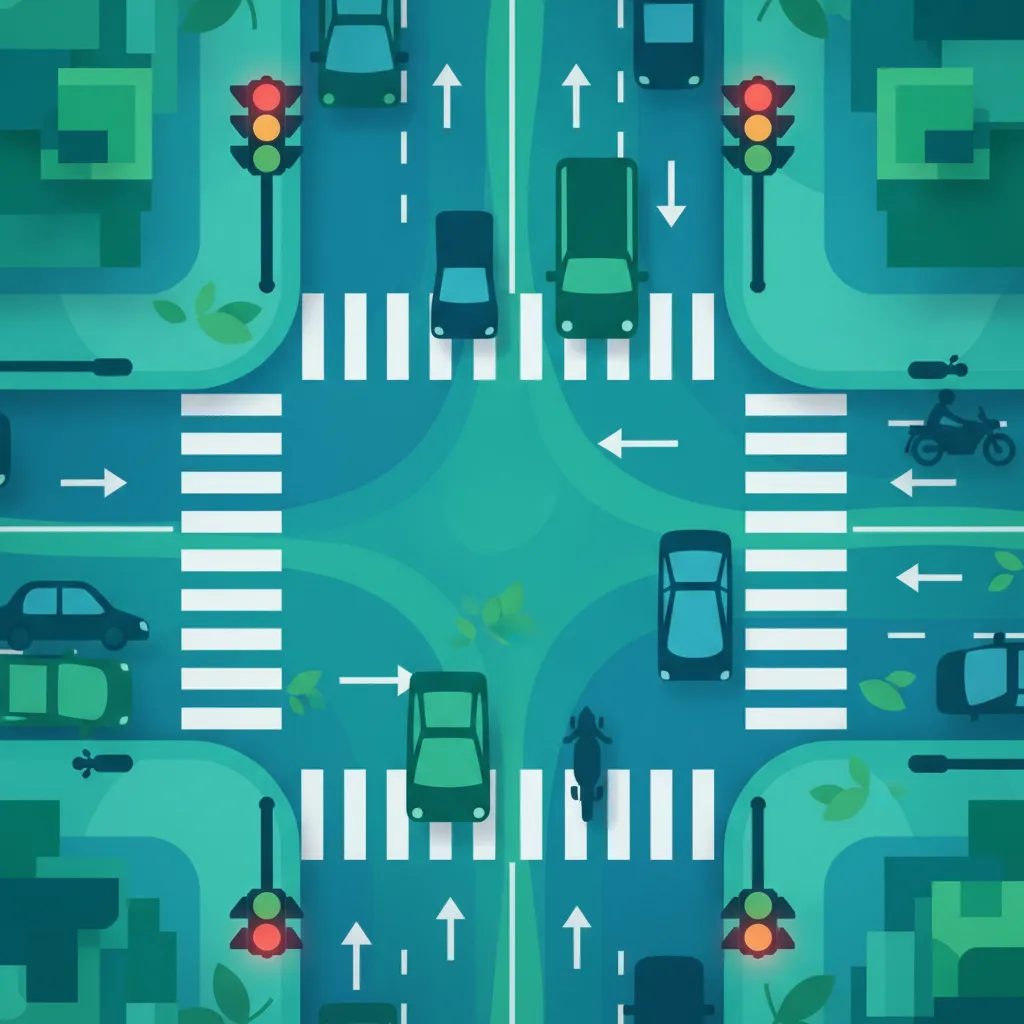
This lesson details how to safely navigate junctions controlled by traffic signals. It explains the meaning of filter arrows, which allow you to proceed in a specific direction even if the main light is red. You will also learn about respecting advanced stop lines for cyclists and how to approach a junction when the traffic lights are not working.
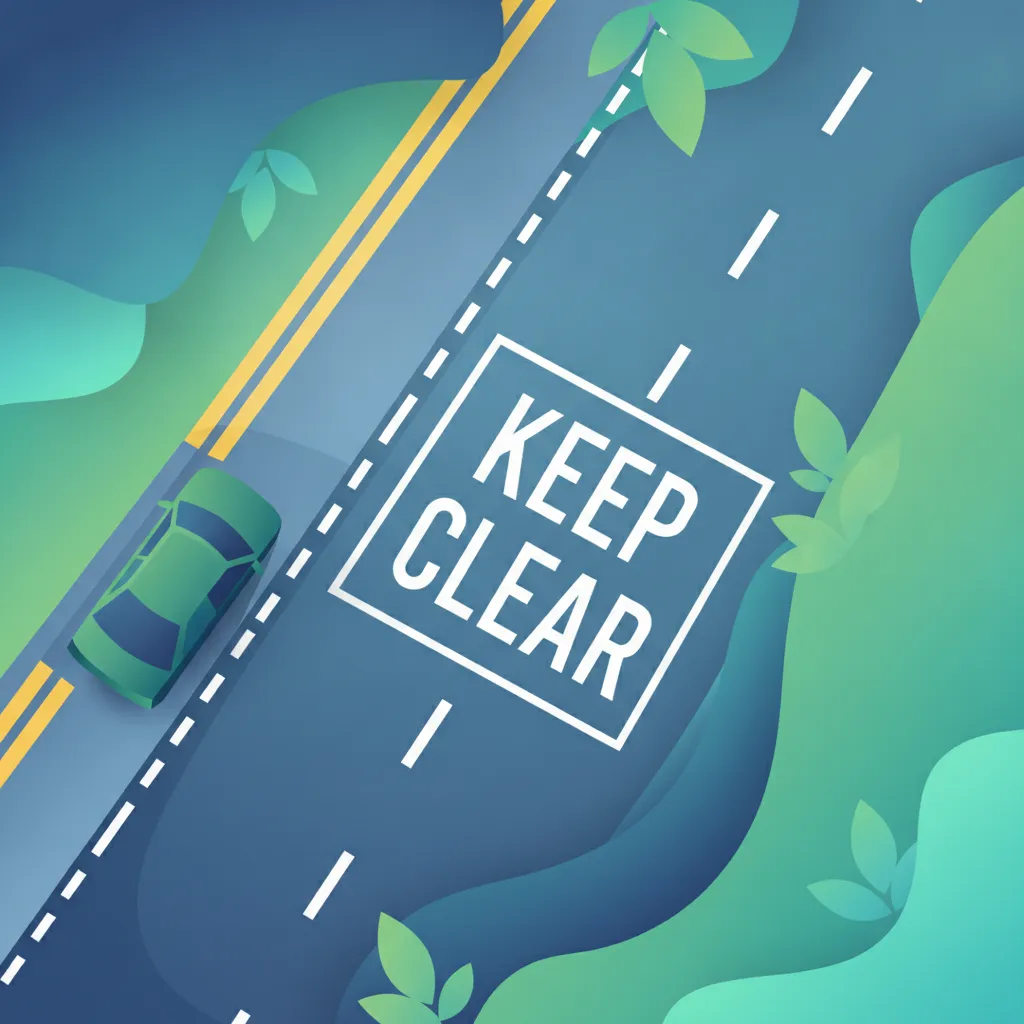
This lesson explains markings found at the side of the road that regulate parking and stopping. You will learn the meaning of single and double yellow lines, and the stricter rules associated with red lines on 'Red Routes'. The lesson also covers markings for parking bays, loading zones, and hatched areas that are designed to separate traffic.
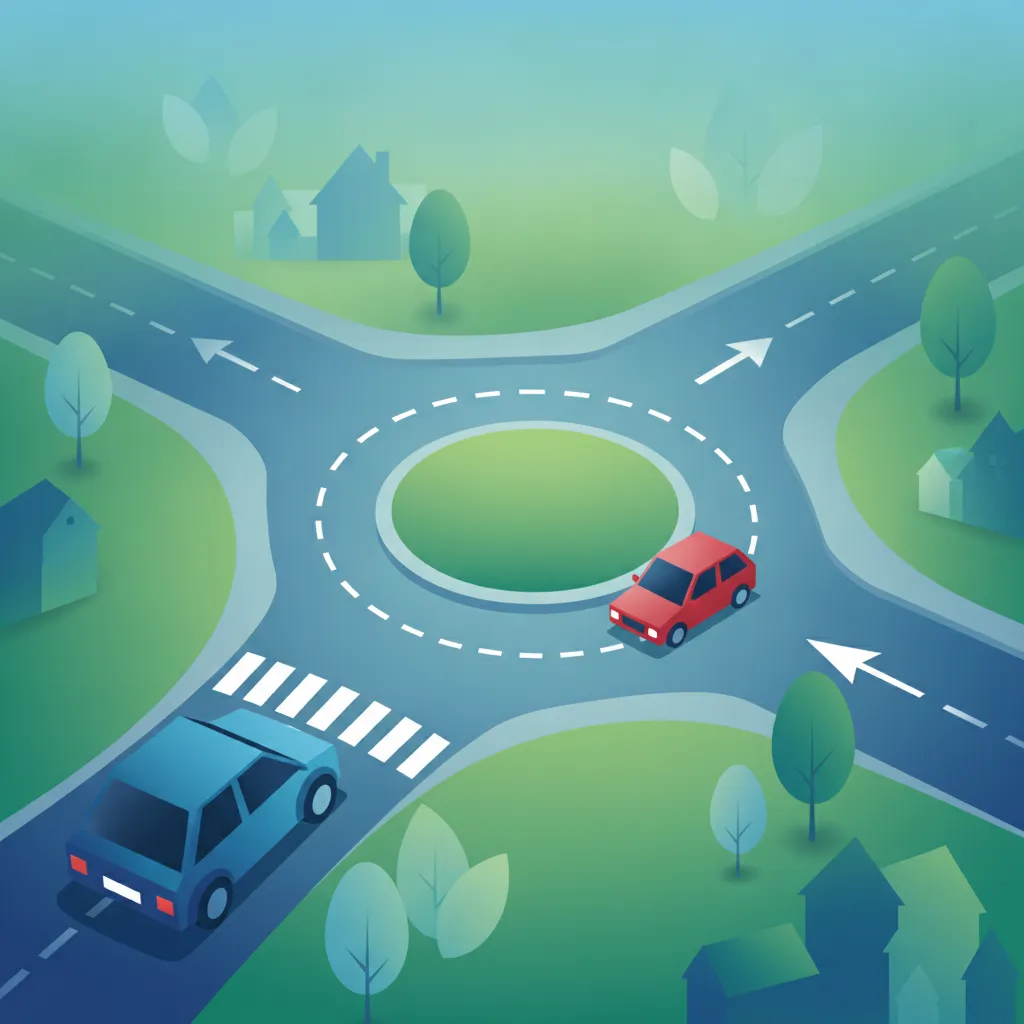
This lesson explains how to handle mini-roundabouts, which are common in urban and residential areas. The primary rule is to approach with caution and give priority to any traffic approaching from your right. You will also learn about correct signalling and the importance of being aware of cyclists and motorcyclists who may be harder to see.
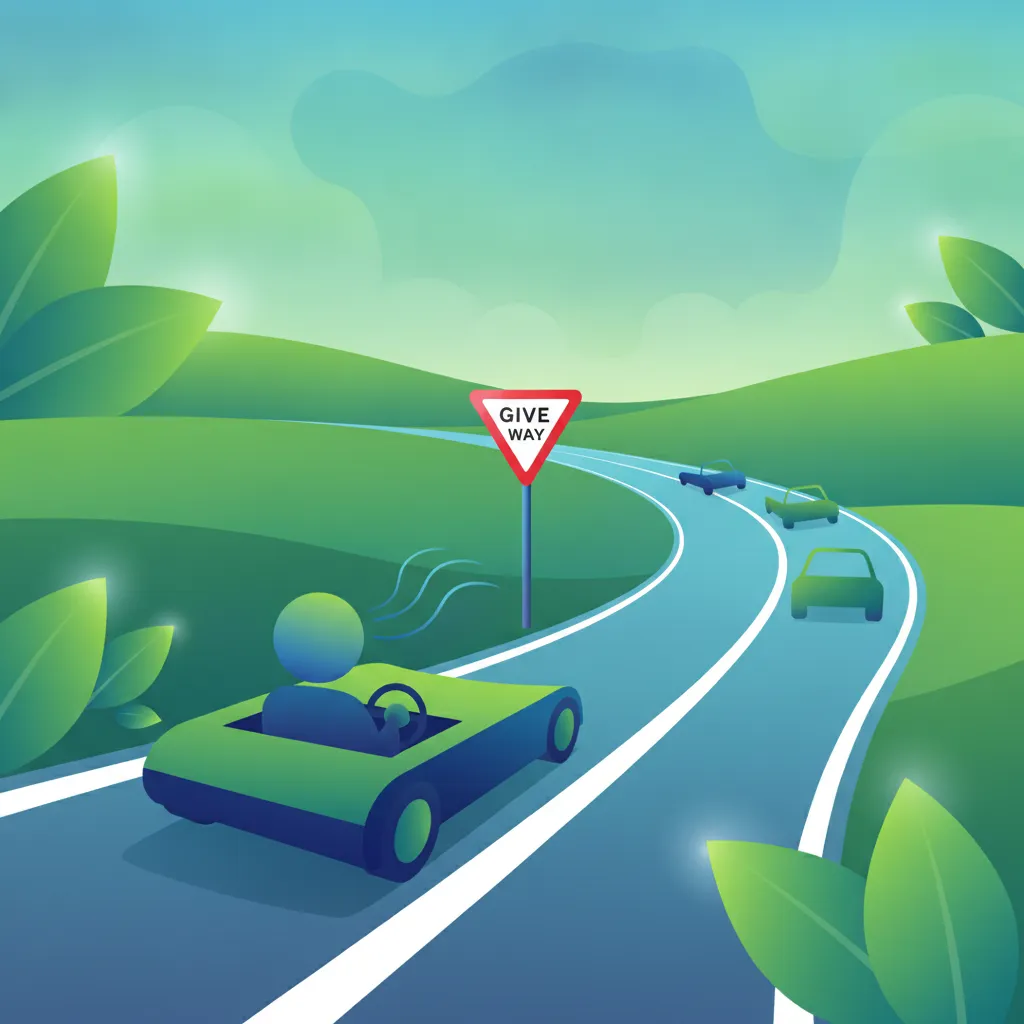
This lesson covers the explicit priority instructions given by signs and markings at junctions. It explains that at a 'Give Way' line, you must yield to traffic on the major road but can proceed if it is safe. At a 'Stop' sign, you must come to a complete halt before the line, assess the traffic, and only proceed when safe.
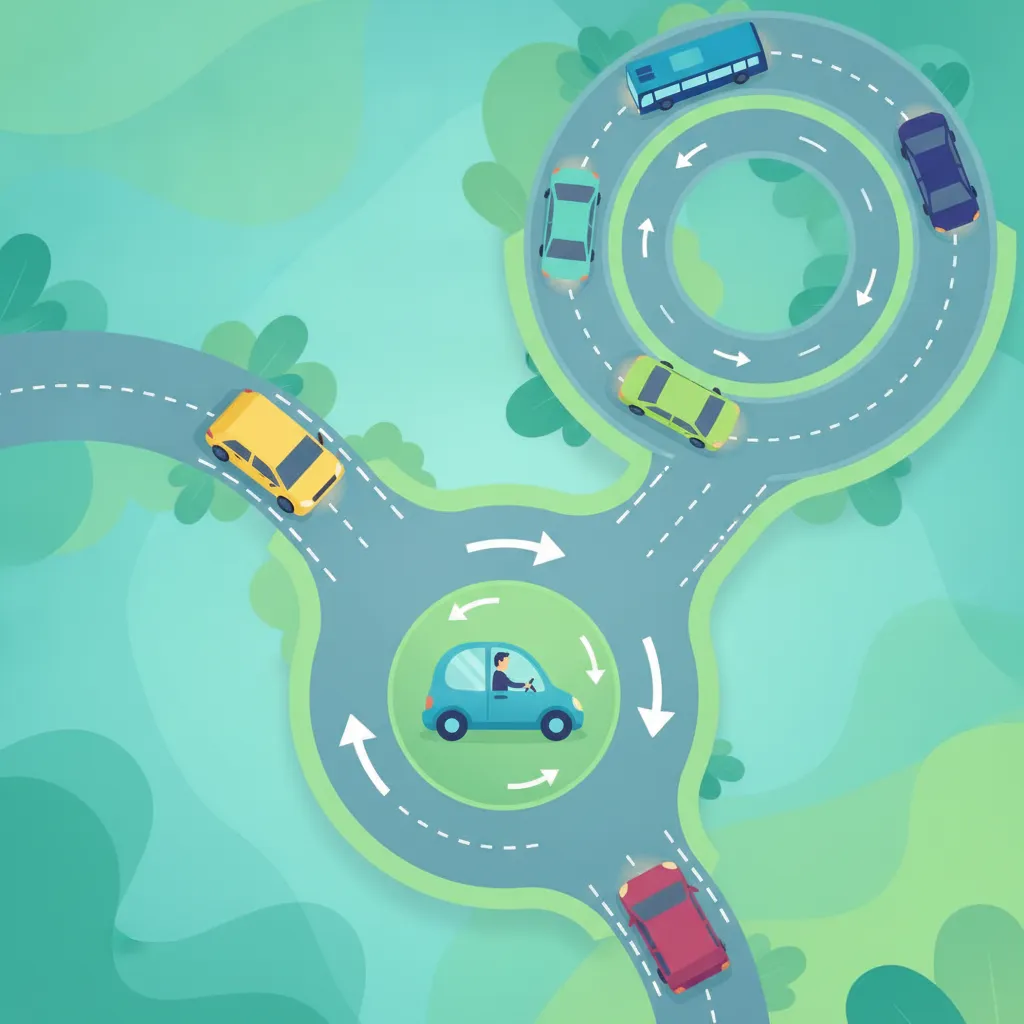
This lesson provides specific techniques for safely navigating the two main types of roundabouts in Great Britain. For multi-lane roundabouts, it covers how to choose the correct lane on approach, maintain your lane while circulating, and signal your exit correctly. It also explains the unique rules for mini-roundabouts, emphasizing the importance of giving way to traffic from the right and navigating them with caution due to their small size.
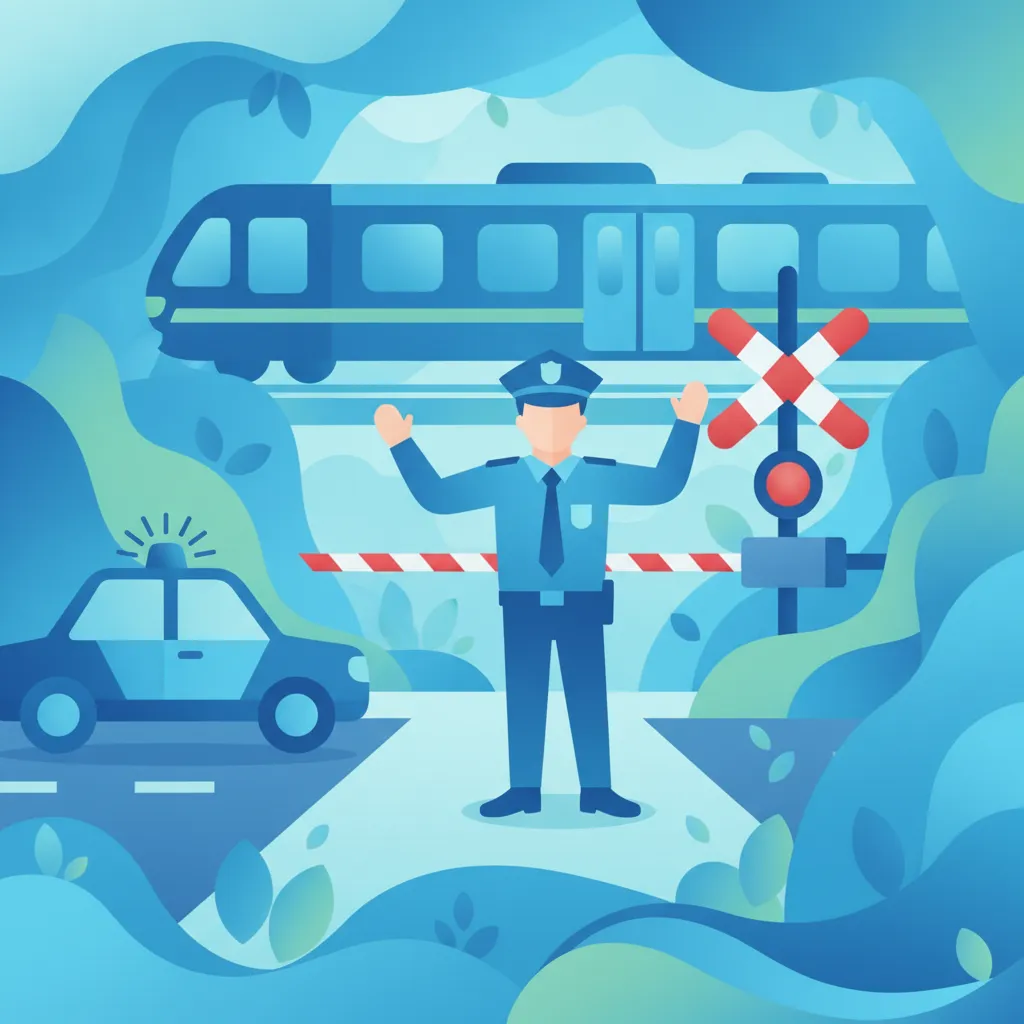
This lesson covers signals that require an immediate and specific response from drivers. You will learn the meaning of hand signals given by police officers and how to give way safely to emergency vehicles with flashing lights or sirens. It also explains the warning light system at railway level crossings, where you must stop when signalled to do so.
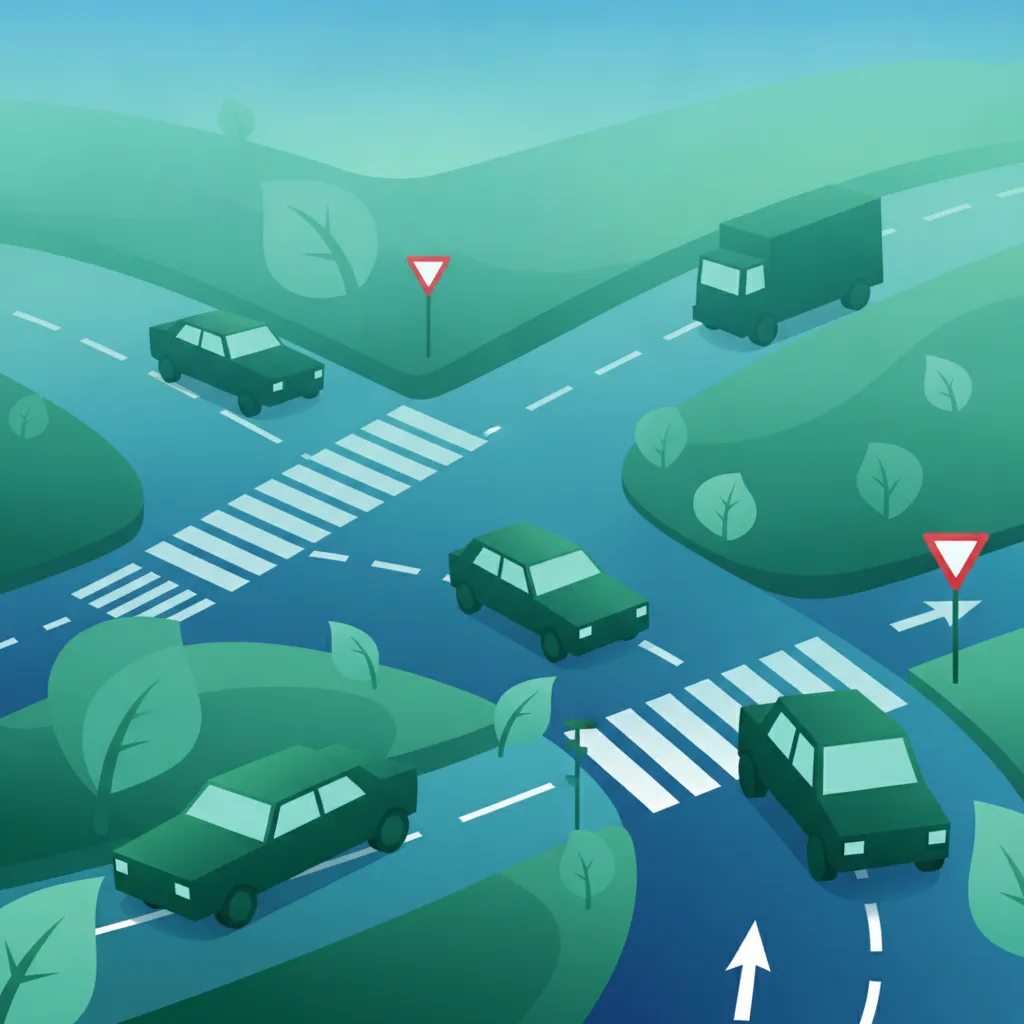
This lesson teaches the systematic approach to safely navigating junctions, emphasizing the importance of adjusting your speed and position well in advance. You will learn the 'Mirror-Signal-Manoeuvre' routine, how to perform effective all-round observation checks, and when to give way to other traffic. The content focuses on making safe judgments about gaps in traffic, a crucial skill for vulnerable AM riders when turning or emerging from a junction.
This lesson focuses on the rules conveyed by road markings, such as solid and broken white lines that dictate overtaking rules and lane boundaries. You will learn to interpret waiting and stopping restrictions indicated by yellow and red lines, and understand markings for specific road users like bus and cycle lanes. Maintaining correct lane discipline based on these markings is a fundamental skill for safe navigation and compliance with the Highway Code.
This lesson details the operation of traffic lights in Great Britain, including the red-and-amber phase before green. It clarifies the rules for proceeding at a green light, stopping for red, and preparing to stop for a steady amber light. You will also learn about green filter arrows and the flashing amber lights used at certain pedestrian crossings.
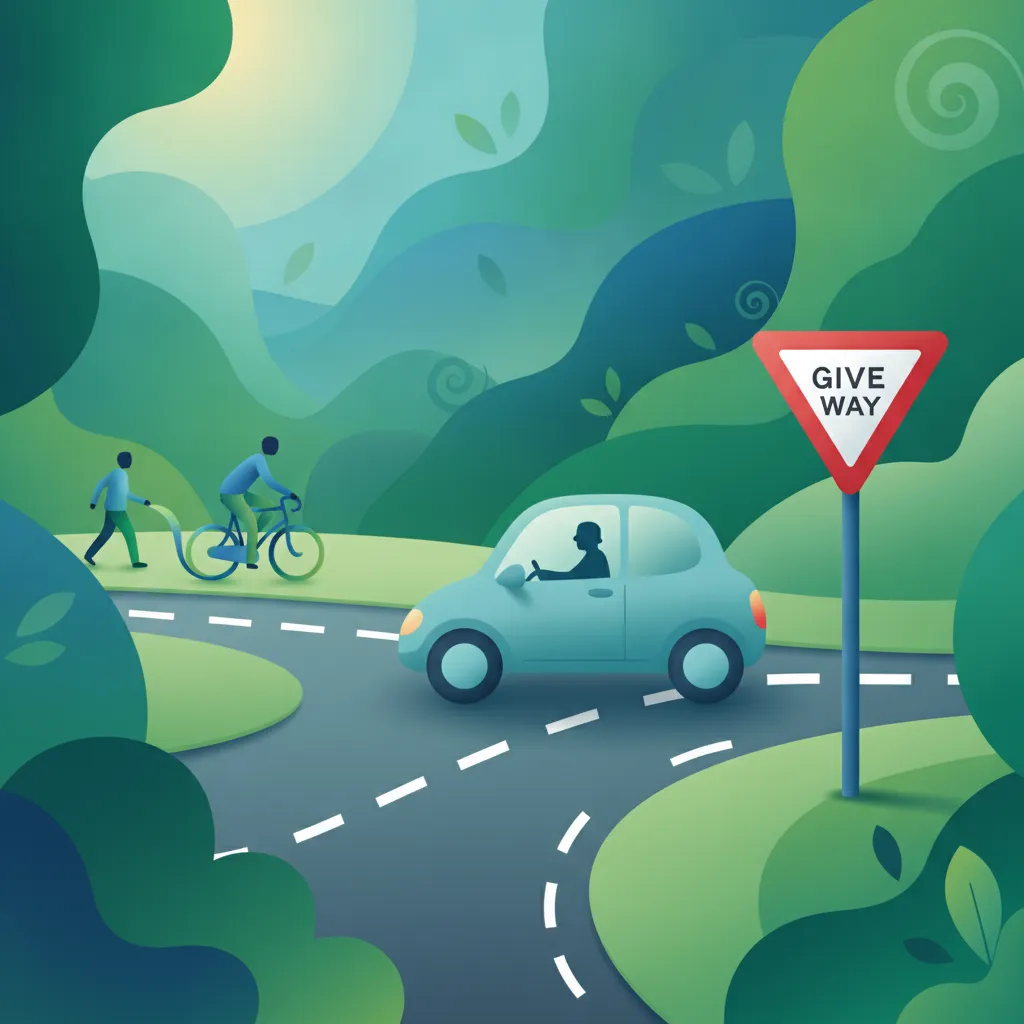
This lesson explains the critical rules of priority that govern traffic flow at junctions, roundabouts, and crossings throughout Great Britain. You will learn how to determine who has right-of-way at both marked and unmarked intersections, and the specific rules for giving way to traffic on roundabouts. The lesson also reinforces the hierarchy of road users from the Highway Code, ensuring you understand when to yield to pedestrians and other vulnerable users.
Understand the critical priority rules at junctions and intersections, including the application of stop lines and give way markings. Learn how to safely yield and proceed in various traffic situations across Great Britain.
This lesson explains the critical rules of priority that govern traffic flow at junctions, roundabouts, and crossings throughout Great Britain. You will learn how to determine who has right-of-way at both marked and unmarked intersections, and the specific rules for giving way to traffic on roundabouts. The lesson also reinforces the hierarchy of road users from the Highway Code, ensuring you understand when to yield to pedestrians and other vulnerable users.
This lesson explains how to handle mini-roundabouts, which are common in urban and residential areas. The primary rule is to approach with caution and give priority to any traffic approaching from your right. You will also learn about correct signalling and the importance of being aware of cyclists and motorcyclists who may be harder to see.
This lesson details the priority rules for turning manoeuvres. When turning left, you generally have priority over traffic waiting to emerge from the side road. However, when turning right, you must give way to all oncoming traffic, positioning your vehicle safely in the centre of the road while you wait for a safe gap.
This lesson covers the explicit priority instructions given by signs and markings at junctions. It explains that at a 'Give Way' line, you must yield to traffic on the major road but can proceed if it is safe. At a 'Stop' sign, you must come to a complete halt before the line, assess the traffic, and only proceed when safe.

This lesson clarifies who has priority at junctions, whether they are marked with signs and lines or are unmarked. It covers the fundamental rule for roundabouts in the UK: give priority to traffic approaching from your right. You will learn the correct procedures for approaching, signalling, and choosing the appropriate lane on roundabouts and at other junctions.
This lesson details how to safely navigate junctions controlled by traffic signals. It explains the meaning of filter arrows, which allow you to proceed in a specific direction even if the main light is red. You will also learn about respecting advanced stop lines for cyclists and how to approach a junction when the traffic lights are not working.
This lesson provides specific techniques for safely navigating the two main types of roundabouts in Great Britain. For multi-lane roundabouts, it covers how to choose the correct lane on approach, maintain your lane while circulating, and signal your exit correctly. It also explains the unique rules for mini-roundabouts, emphasizing the importance of giving way to traffic from the right and navigating them with caution due to their small size.
This lesson teaches the systematic approach to safely navigating junctions, emphasizing the importance of adjusting your speed and position well in advance. You will learn the 'Mirror-Signal-Manoeuvre' routine, how to perform effective all-round observation checks, and when to give way to other traffic. The content focuses on making safe judgments about gaps in traffic, a crucial skill for vulnerable AM riders when turning or emerging from a junction.
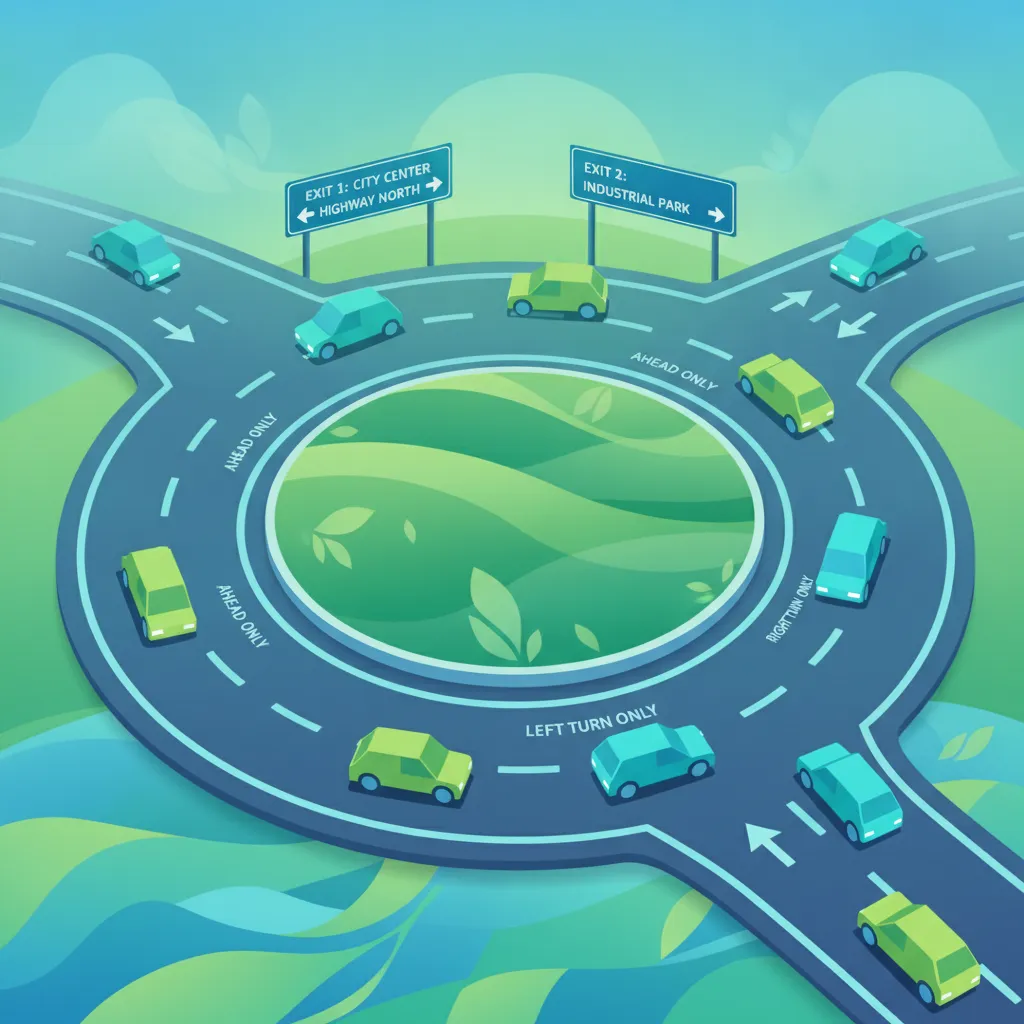
This lesson addresses the unique challenges of mini-roundabouts and large, multi-lane or spiral roundabouts. You will learn the subtle differences in rules and approach for mini-roundabouts and the importance of strict lane discipline on larger ones. The lesson stresses the need for advanced planning and awareness when navigating these complex junctions.
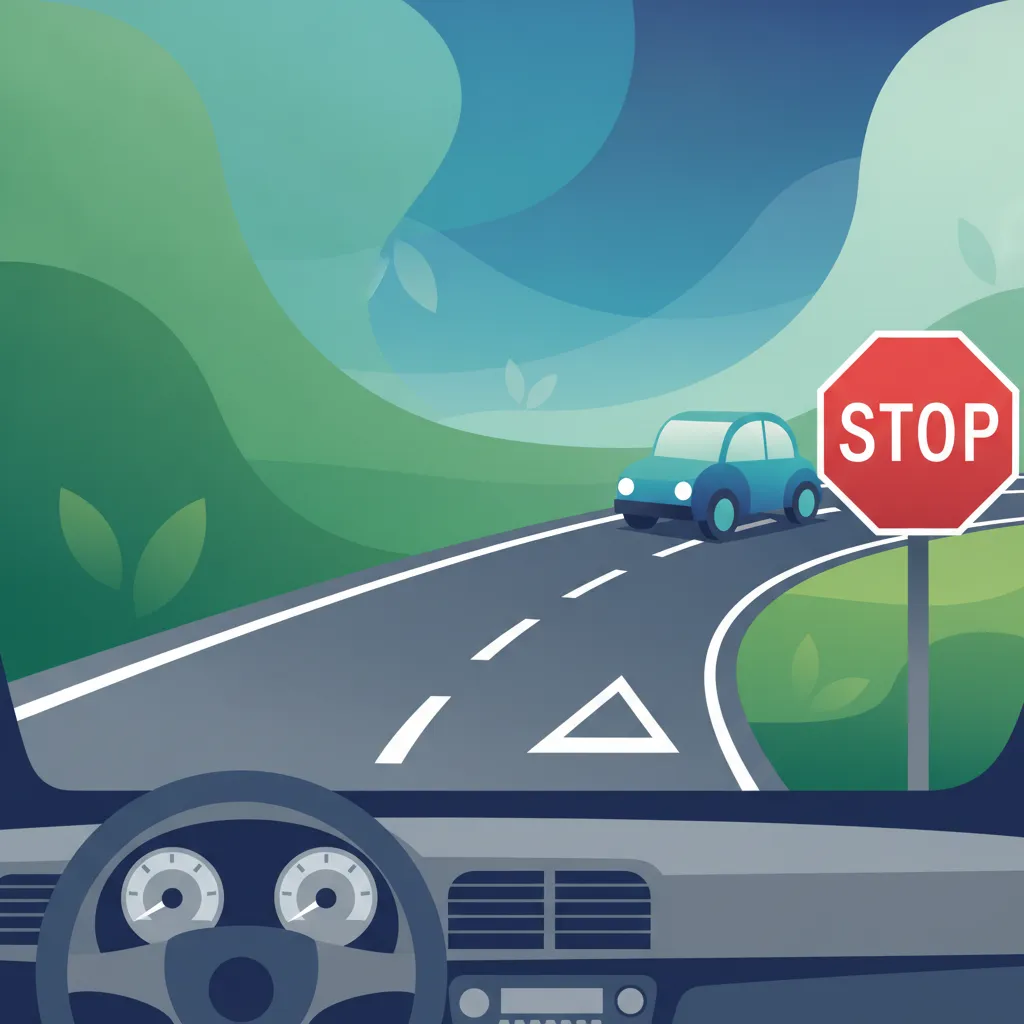
This lesson breaks down the process of navigating basic junctions. It emphasizes the importance of the Mirror-Signal-Manoeuvre (MSM) and Position-Speed-Look (PSL) routines. You will learn how to position your motorcycle correctly for turning, perform effective observation checks for traffic, and judge safe gaps before emerging.
Find clear answers to common questions learners have about Box Junctions, Stop Lines, and Give Way Markings. Learn how the lesson is structured, which driving theory objectives it supports, and how it fits into the overall learning path of units and curriculum progression in Great Britain. These explanations help you understand key concepts, lesson flow, and exam focused study goals.
You may enter a yellow box junction to turn right only if your exit road is clear or if you are prevented from leaving by oncoming traffic or other vehicles waiting to turn right.
No, you do not have to stop at a give way line unless traffic or road conditions require it. You must, however, be prepared to stop and give priority to traffic on the major road.
Stopping in a yellow box junction when your exit is not clear can result in a Fixed Penalty Notice and penalty points on your licence for causing an obstruction.
A solid white stop line requires you to come to a complete halt, ensuring the wheels stop turning, whereas a broken give way line only requires you to slow down and stop if necessary to allow other traffic to pass.
Dive into our comprehensive question bank to find exactly what you need for your Great Britain theory test. Use our advanced filters to pinpoint specific subjects or test your knowledge on challenging areas, ensuring you're fully prepared for success.