
Driving Theory
British Driving Theory Courses

Lesson 5 of the Priority Rules, Junctions and Roundabouts unit

GB Category B Theory: Traffic Light Controlled Junctions

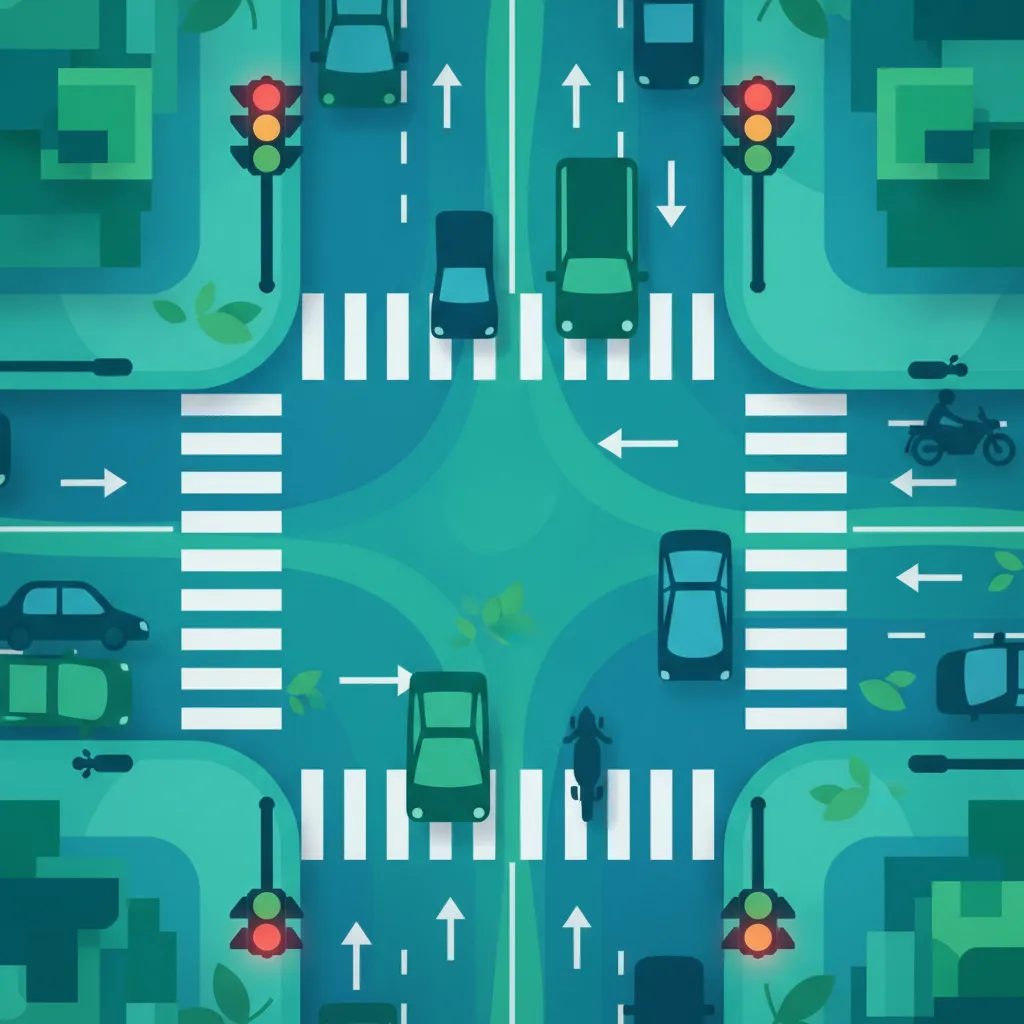
This lesson guides you through the correct procedure for navigating junctions controlled by traffic lights. Understanding these signals is essential for Category B drivers to ensure smooth traffic flow and safety at busy intersections. It builds upon your knowledge of road signs and markings to help you prepare for the practical and theory exam requirements.
traffic lightsjunction rulestheory test prepcategory Badvanced stop lines
GB Category B Theory: Traffic Light Controlled Junctions

Lesson content overview

GB Category B Theory

Navigating Traffic Light Controlled Junctions for Great Britain Category B Drivers

Traffic light controlled junctions are crucial components of urban and many rural road networks, designed to manage the flow of vehicles, cyclists, and pedestrians, thereby preventing conflicts and ensuring safety. As a Great Britain Category B learner driver, understanding how to approach, interpret, and react to these signals is fundamental for safe driving and a successful theory test. This lesson will comprehensively cover the various aspects of traffic light junctions, including signal phases, special filter arrows, advanced stop lines for cyclists, and what to do when signals malfunction.

Understanding Traffic Light Signals: Meanings and Driver Actions

Traffic signals provide explicit instructions, assigning temporary right-of-way to different streams of traffic. Their primary purpose is to coordinate movements, minimise congestion, and significantly reduce the risk of collisions at complex intersections. Adhering strictly to these signals is a legal requirement and a cornerstone of safe driving practice.

Standard Traffic Light Phases

The sequence of traffic light colours dictates when you must stop, prepare to move, or proceed. Each colour and combination carries a precise meaning that every driver must internalise.

  • Red Light: A red light means you must stop behind the solid white stop line. You must not proceed until a green signal or a green filter arrow for your intended direction is displayed. Stopping ensures that conflicting traffic flows or pedestrians are given their turn to proceed safely.
  • Amber Light (Steady): A steady amber light follows green and means you must prepare to stop. You should only proceed through an amber light if you are so close to the stop line when it appears that stopping safely would involve harsh braking or could cause a rear-end collision. In all other circumstances, you must stop.
  • Green Light: A green light means you may go, provided the way is clear and it is safe to do so. You must always check for pedestrians, cyclists, or other vehicles still clearing the junction before proceeding. Even with a green light, you must not enter the junction if your exit is blocked, as this could cause gridlock.
  • Red-Amber Light: This combination typically appears after a red light and signals that the lights are about to change to green. It means prepare to go, but you must not move until the green light appears. Treat this phase as essentially a red light with a warning for the upcoming green.
  • All-Red Lights: In some situations, particularly during signal malfunctions or specific traffic management sequences, all traffic lights at a junction may turn red. An all-red signal means all movements are prohibited, and you must stop and wait for a green signal before proceeding. This is a crucial safety measure to prevent collisions during unpredictable situations.

Filter arrows provide a specific right-of-way for particular movements at a junction, even when the main light for other directions may be red. They are instrumental in improving traffic flow and reducing delays.

Definition

Filter Arrow

A directional arrow (green or amber) displayed alongside a main traffic light that permits movement in a specific direction, sometimes even when the main signal is red.
  • Green Filter Arrow: A green arrow pointing in a specific direction (e.g., straight ahead, left, or right) allows you to proceed in that direction, even if the main traffic light is red for other movements. You must only follow the direction of the arrow. If the main light is red but a green right-turn arrow is illuminated, you may turn right, provided it is safe. It is crucial not to move on a green filter arrow if the main light is amber, as this could lead to conflicts with other traffic preparing to stop.

    Tip

    Always ensure the junction is clear before proceeding on a green filter arrow. Other road users, such as pedestrians or cyclists, might still be clearing the intersection.
  • Amber Filter Arrow: An amber filter arrow, usually accompanying a steady amber main light, indicates that you may proceed in the direction of the arrow only if the main light is also amber. This scenario typically applies to movements that are about to lose their right-of-way. If the main light is red, an amber filter arrow has no meaning, and you must stop. It serves as a brief warning period for a specific turning movement, allowing drivers to clear the junction safely before the main signal turns red.

Understanding the difference between when a green filter arrow and an amber filter arrow are applicable is vital for avoiding dangerous situations and adhering to traffic regulations.

Advanced Stop Lines (ASL) for Cyclists

At many traffic light-controlled junctions, you will encounter Advanced Stop Lines (ASLs). These are designated areas marked on the road surface, typically with a bicycle symbol, that allow cyclists to position themselves ahead of motor vehicles at a red light.

Definition

Advanced Stop Line (ASL)

A road marking that creates a dedicated area for cyclists to wait ahead of motor vehicles at a traffic light, enhancing their visibility and safety.

The purpose of an ASL is to:

  • Improve Cyclist Visibility: Placing cyclists ahead makes them more visible to drivers, especially those turning left or right.
  • Enhance Cyclist Safety: It allows cyclists to get a head start when the lights change to green, reducing the risk of being cut off or involved in collisions with motor vehicles.
  • Reduce Conflict: By separating cyclists and motor vehicles at the initial movement from a stop, potential conflicts are minimised.

As a motorist, when approaching a junction with an ASL, you must stop behind the first solid white stop line (the one closer to you), even if there are no cyclists in the ASL box. You must never cross into or stop within the ASL area if it is occupied by cyclists, or if you can stop behind the first line. Cyclists, when the signal turns green, may proceed from the ASL. Motorists must wait for the cyclists to move off safely before proceeding into the junction.

Approaching and Positioning at Traffic Light Junctions

A safe and efficient approach to any junction, especially those with traffic lights, involves careful observation, correct lane positioning, and appropriate speed management. Your actions well before reaching the stop line can significantly impact safety and traffic flow.

Correct Junction Approach Techniques

  • Observe and Anticipate: As you approach a junction, scan well ahead for traffic lights, road markings, and any signs. Try to anticipate light changes by observing pedestrian signals or the flow of traffic on intersecting roads. Adjust your speed early to avoid sudden braking.
  • Lane Selection: Identify your intended direction (straight ahead, left turn, right turn) and select the correct lane in good time. Follow any arrow markings on the road surface or overhead signs that indicate specific lanes for turning movements.
  • Stopping Position: When the lights are red or amber, you must stop behind the solid white stop line. If there is an ASL, you must stop behind the first stop line, leaving the box clear for cyclists. Never cross or straddle the stop line while waiting, as this can impede cross-traffic or pedestrians and is illegal.

Preparing for Movement

  • Gear Selection: While stopped, select the appropriate gear for moving off (typically first gear) and prepare to accelerate smoothly when the light changes.
  • Checking Surroundings: Before moving off on a green light, always perform a final check of your mirrors and blind spots. Look out for any pedestrians or cyclists who might be crossing, or vehicles running a late red light from another direction.
  • Moving Off: When the green light appears, move off promptly but smoothly, without undue haste, to maintain traffic flow.

What to Do When Traffic Lights Malfunction

Occasionally, traffic lights may stop working due to power failure, technical malfunction, or during planned maintenance. In such situations, specific rules come into play to maintain safety and prevent chaos.

Flashing Amber Signals

If traffic lights are flashing amber, it indicates that they are not functioning normally. In this scenario, you must treat the junction as if it were controlled by 'Give Way' signs.

  • Prioritise Major Road Traffic: If you are on a minor road, you must give way to traffic on the major road.
  • Proceed with Caution: If you are on the major road, you may proceed, but you should still exercise caution, as drivers from the minor road might not correctly interpret the flashing amber light.
  • Stop if Necessary: Always be prepared to stop if there is any danger or doubt about another driver's intentions.

Warning

Do not treat a flashing amber light as an instruction to stop completely if you are on the major road and the way is clear. This can cause unnecessary delays and potential rear-end collisions.

All-Red Signals and Red-Amber Signals

  • All-Red Signals: If all traffic lights at a junction display a continuous red light, it signifies a total signal failure or a temporary traffic management measure. In this instance, all vehicles must stop and remain stopped until a signal changes. You must not attempt to proceed through an all-red signal.
  • Red-Amber Signals (Malfunction): If a traffic light is showing both red and amber lights simultaneously due to a malfunction, you must treat it as a red light and stop. This is a default safety measure to prevent drivers from mistakenly assuming they can proceed.

In all cases of malfunctioning traffic lights, heightened awareness and defensive driving are paramount. Be extra vigilant for other road users, and proceed only when it is absolutely safe to do so.

Pedestrian Crossings at Traffic Light Junctions

Many traffic light junctions incorporate pedestrian crossing facilities, controlled by their own signals, often referred to as "Red Man" and "Green Man" signals. These signals coordinate pedestrian movement with vehicle traffic.

  • Pedestrian Green Man: A green 'walking man' symbol indicates that pedestrians have the right to cross the road. During this phase, any vehicles facing a red light (or even a green vehicle light in some configurations) must stop and allow pedestrians to cross safely.
  • Pedestrian Red Man: A red 'standing man' symbol indicates that pedestrians must not cross and should wait for the green man.

Warning

It is a common misunderstanding that a green vehicle light always gives you priority. If a pedestrian 'Green Man' is displayed, you MUST stop and allow pedestrians to cross, even if your vehicle light is green. Pedestrian safety takes precedence.

Always be prepared for pedestrians, especially children or those with limited mobility, to make unexpected movements. Constant vigilance ensures the safety of all road users.

Key Regulations for Traffic Light Junctions

Compliance with the Highway Code is mandatory for all drivers. Here are the core rules pertaining to traffic light controlled junctions:

  • Stopping at Red Lights: You must stop at a red traffic light and wait behind the stop line.
  • Green Filter Arrow Usage: You may proceed in the direction indicated by a green filter arrow, even if the main light is red for other movements. However, you must not proceed on a green filter arrow if the main light is amber.
  • Amber Filter Arrow Usage: An amber filter arrow only permits movement when the main traffic light is also amber. It is strictly prohibited to proceed on an amber filter arrow when the main light is red.
  • Advanced Stop Lines (ASL): You must stop behind the first stop line at junctions with an ASL, allowing cyclists to position themselves ahead. You must wait for cyclists to move off safely from the ASL before proceeding.
  • Flashing Amber Signals: When traffic lights are flashing amber, you must treat the junction as 'Give Way', yielding to traffic on the major road.
  • All-Red Signals: If all traffic lights show red, you must stop and remain stationary until a green signal or a change in signal sequence occurs.
  • Red-Amber Malfunction: If a traffic light displays both red and amber simultaneously due to a malfunction, you must treat it as a red light and stop.
  • Pedestrian Priority: When a pedestrian green man signal is displayed, vehicles must stop and allow pedestrians to cross, even if the vehicle signal is green.
  • Correct Positioning: You must position your vehicle correctly in the appropriate lane before reaching the stop line and stopping. Changing lanes after the light turns green is illegal and dangerous.

Common Mistakes and Safe Practices

Avoiding common errors at traffic light junctions is essential for road safety and to prevent penalties.

  • Proceeding on a Green Filter Arrow While Main Light is Amber: This is a common and dangerous mistake. A green filter arrow means you can go when the main light is red, not amber. Moving off while the main light is amber can lead to collisions with traffic preparing to stop or those already in the junction.
  • Stopping Beyond the Stop Line: Crossing the solid white stop line while waiting at a red light is illegal. It can obstruct pedestrian crossings, block cyclists in an ASL, or interfere with cross-traffic.
  • Misinterpreting Flashing Amber: Some drivers mistakenly treat flashing amber as a mandatory full stop. While caution is required, the primary rule is to give way to major road traffic, not necessarily to stop completely if the way is clear.
  • Changing Lane After Light Turns Green: Your lane positioning should be decided and executed before you stop at the junction. Swerving into another lane after the light turns green creates hazards and is often illegal.
  • Ignoring Pedestrian Green Man: Believing that your green vehicle light overrides a pedestrian green man is a critical error. Pedestrians have priority; you must stop.
  • Anticipating Green Light (Jumping the lights): Entering the junction before the green light officially appears is a red-light violation, even if you just creep forward. This can lead to conflicts with vehicles still clearing the junction or those running a late amber.

Tip

Always maintain a safe following distance from the vehicle ahead, even at a standstill. This allows for an escape route if needed and prevents collisions if the vehicle ahead stalls.

Conditional Driving: Weather, Time, and Vehicle Type

Driving conditions and vehicle characteristics require adjustments to your approach at traffic light junctions.

  • Weather Conditions (Rain, Fog, Snow): Reduced visibility and slippery road surfaces increase stopping distances. In adverse weather, approach junctions at a slower speed, allow more time for observation, and increase your stopping distance behind other vehicles. Filter arrows might be harder to see.
  • Time of Day (Night Driving): At night, glare from oncoming headlights can make traffic signals less conspicuous. Ensure your headlights are correctly adjusted (dipped beam in traffic) and maintain a slightly increased observation distance.
  • Road Type (Urban vs. Rural): Urban junctions often have more complex signal phasing, multiple filter arrows, and higher pedestrian/cyclist traffic. Rural junctions might be simpler but could have less warning signage or unexpected animal crossings. Always be prepared for varied complexity.
  • Vehicle State (Heavy Vehicles, Trailers): Vehicles towing trailers or heavy goods vehicles have significantly longer braking distances. They also require more space to manoeuvre. Account for this by starting your braking earlier and allowing ample space within the junction.
  • Vulnerable Road Users: The presence of pedestrians and cyclists, especially at ASLs, demands extra caution. Always give them priority when their signal permits, and be prepared for their potentially less predictable movements.
  • Emergency Vehicles: Emergency vehicles (police, ambulance, fire) responding to an incident with flashing lights and sirens may be permitted to proceed through a red light. You must yield to them safely by pulling over to the side if possible, without endangering others or blocking the emergency vehicle's path.

Final Concept Summary for Traffic Light Junctions

Mastering traffic light controlled junctions is crucial for safe and confident driving. To recap the essential points:

  • Signal Phases: Recognise and respond correctly to Red, Amber, Green, Red-Amber, Amber Flashing, and All-Red signals. Each demands a specific, legally mandated action.
  • Filter Arrows: Understand that a green filter arrow allows movement on a red main light, while an amber filter arrow only permits movement when the main light is amber. Never confuse these conditions.
  • Advanced Stop Lines (ASLs): Always stop behind the first stop line, leaving the ASL clear for cyclists. Prioritise cyclists moving from the ASL when the light turns green.
  • Junction Approach: Position your vehicle in the correct lane well before the stop line, observe your surroundings, and prepare to move off smoothly when the signal permits.
  • Non-Functioning Lights: Treat red-amber as red. For flashing amber, give way to major road traffic. An all-red signal means stop for everyone. Always exercise extreme caution during signal malfunctions.
  • Pedestrian Priority: A pedestrian green man signal always takes precedence over a vehicle green light. You must stop to allow pedestrians to cross.
  • Legal Compliance: All rules pertaining to traffic light junctions are mandatory, as outlined in the Highway Code. Violations carry significant penalties and substantially increase collision risk.
  • Conditional Adjustments: Modify your driving behaviour based on weather, visibility, time of day, road type, and the presence of vulnerable road users or emergency vehicles.

By diligently applying these principles and rules, you will be well-equipped to navigate traffic light controlled junctions safely and efficiently, demonstrating a key competency required for your Great Britain Category B driving theory test.

Learn more with these articles

Check out these practice sets


Search topics related to Traffic Light Controlled Junctions

Explore search topics learners often look for when studying Traffic Light Controlled Junctions. These topics reflect common questions about road rules, driving situations, safety guidance, and lesson level theory preparation for learners in Great Britain.

how to navigate traffic lights GB theory testtraffic light filter arrow rules UKmeaning of advanced stop lines for cyclistswhat to do if traffic lights are not working GBCategory B driving theory traffic light questionsUK theory test junction rules and signalsrules for green and amber lights in Great Britain

Related driving theory lessons for Traffic Light Controlled Junctions

Browse additional driving theory lessons that cover connected traffic rules, road signs, and common driving situations related to this topic. Improve your understanding of how different rules interact across everyday traffic scenarios.

Advanced Rules for Traffic Light Controlled Junctions Great Britain

Explore complex scenarios at traffic light junctions including filter arrows, cyclist advanced stop lines (ASLs), and what to do when signals malfunction. Essential knowledge for your GB driving theory.
traffic lightsjunction rulesadvancedfilter arrowsASLtheory explanations
Traffic Light Sequences and Phases lesson image

Traffic Light Sequences and Phases

This lesson details the operation of traffic lights in Great Britain, including the red-and-amber phase before green. It clarifies the rules for proceeding at a green light, stopping for red, and preparing to stop for a steady amber light. You will also learn about green filter arrows and the flashing amber lights used at certain pedestrian crossings.
GB Category B TheoryGB Road Signs and Traffic Signals
View lesson
Traffic Lights and Signal Phases lesson image

Traffic Lights and Signal Phases

This lesson provides a thorough explanation of the UK traffic light system, including the meaning of red, amber, and green signals, as well as the red-and-amber phase. You will learn how to interpret filter arrows for turning and understand your position relative to the stop line. The content also covers signals at pedestrian crossings, ensuring you can navigate all types of signalised intersections safely and in accordance with the Highway Code.
GB AM Moped TheoryGB Road Signs, Markings, Signals and Priority Basics
View lesson
Traffic Lights, Pedestrian Crossings and Priority lesson image

Traffic Lights, Pedestrian Crossings and Priority

This lesson covers the operation of traffic light signals and the rules for approaching them safely. It also provides a detailed explanation of different pedestrian crossings, such as zebra, pelican, and toucan crossings, clarifying the specific rules and priority for each. You will learn to anticipate the actions of pedestrians and other vulnerable road users at these locations.
Motorcycle Theory GBGB Road Signs, Markings, Signals and Priority Rules
View lesson
Approaching and Navigating Junctions Safely lesson image

Approaching and Navigating Junctions Safely

This lesson teaches the systematic approach to safely navigating junctions, emphasizing the importance of adjusting your speed and position well in advance. You will learn the 'Mirror-Signal-Manoeuvre' routine, how to perform effective all-round observation checks, and when to give way to other traffic. The content focuses on making safe judgments about gaps in traffic, a crucial skill for vulnerable AM riders when turning or emerging from a junction.
GB AM Moped TheoryJunctions, Roundabouts, Crossings and Road Positioning
View lesson
Mini-Roundabouts and Multi-Lane Roundabouts lesson image

Mini-Roundabouts and Multi-Lane Roundabouts

This lesson provides specific techniques for safely navigating the two main types of roundabouts in Great Britain. For multi-lane roundabouts, it covers how to choose the correct lane on approach, maintain your lane while circulating, and signal your exit correctly. It also explains the unique rules for mini-roundabouts, emphasizing the importance of giving way to traffic from the right and navigating them with caution due to their small size.
GB AM Moped TheoryJunctions, Roundabouts, Crossings and Road Positioning
View lesson
Box Junctions, Stop Lines, and Give Way Markings lesson image

Box Junctions, Stop Lines, and Give Way Markings

This lesson focuses on the markings that control traffic at intersections. It explains the primary rule of a yellow box junction: do not enter unless your exit is clear. You will also learn the difference between the solid white 'Stop' line and the broken 'Give Way' line, which dictate your priority over other traffic.
GB Category B TheoryRoad Markings, Lane Use and Traffic Directions
View lesson
Priority Rules at Intersections and Crossings lesson image

Priority Rules at Intersections and Crossings

This lesson explains the critical rules of priority that govern traffic flow at junctions, roundabouts, and crossings throughout Great Britain. You will learn how to determine who has right-of-way at both marked and unmarked intersections, and the specific rules for giving way to traffic on roundabouts. The lesson also reinforces the hierarchy of road users from the Highway Code, ensuring you understand when to yield to pedestrians and other vulnerable users.
GB AM Moped TheoryGB Road Signs, Markings, Signals and Priority Basics
View lesson
Special Signals (Police, Emergency, Railway) lesson image

Special Signals (Police, Emergency, Railway)

This lesson covers signals that require an immediate and specific response from drivers. You will learn the meaning of hand signals given by police officers and how to give way safely to emergency vehicles with flashing lights or sirens. It also explains the warning light system at railway level crossings, where you must stop when signalled to do so.
GB Category B TheoryGB Road Signs and Traffic Signals
View lesson
Mini‑Roundabouts and Small Junctions lesson image

Mini‑Roundabouts and Small Junctions

This lesson explains how to handle mini-roundabouts, which are common in urban and residential areas. The primary rule is to approach with caution and give priority to any traffic approaching from your right. You will also learn about correct signalling and the importance of being aware of cyclists and motorcyclists who may be harder to see.
GB Category B TheoryPriority Rules, Junctions and Roundabouts
View lesson
Types of Pedestrian Crossings and Their Use lesson image

Types of Pedestrian Crossings and Their Use

This lesson provides a detailed guide to various pedestrian crossings and their specific rules. You will learn to identify each type by its markings and signals, from the black and white stripes of a zebra crossing to the sensor-controlled lights of a puffin crossing. The focus is on knowing when and how to stop to ensure pedestrian safety.

GB Category B TheoryPedestrians, Crossings, Cyclists and Vulnerable Road Users
View lesson

Driving Theory Guide to Malfunctioning Traffic Lights UK

Understand how to safely navigate junctions when traffic lights malfunction. Covers flashing amber, all-red signals, and treating junctions as 'Give Way' for your UK driving theory.

traffic lightsjunction rulesmalfunctionsgive waytheory test preproad signals
Traffic Light Sequences and Phases lesson image

Traffic Light Sequences and Phases

This lesson details the operation of traffic lights in Great Britain, including the red-and-amber phase before green. It clarifies the rules for proceeding at a green light, stopping for red, and preparing to stop for a steady amber light. You will also learn about green filter arrows and the flashing amber lights used at certain pedestrian crossings.

GB Category B TheoryGB Road Signs and Traffic Signals
View lesson
Traffic Lights and Signal Phases lesson image

Traffic Lights and Signal Phases

This lesson provides a thorough explanation of the UK traffic light system, including the meaning of red, amber, and green signals, as well as the red-and-amber phase. You will learn how to interpret filter arrows for turning and understand your position relative to the stop line. The content also covers signals at pedestrian crossings, ensuring you can navigate all types of signalised intersections safely and in accordance with the Highway Code.

GB AM Moped TheoryGB Road Signs, Markings, Signals and Priority Basics
View lesson
Special Signals (Police, Emergency, Railway) lesson image

Special Signals (Police, Emergency, Railway)

This lesson covers signals that require an immediate and specific response from drivers. You will learn the meaning of hand signals given by police officers and how to give way safely to emergency vehicles with flashing lights or sirens. It also explains the warning light system at railway level crossings, where you must stop when signalled to do so.

GB Category B TheoryGB Road Signs and Traffic Signals
View lesson
Box Junctions, Stop Lines, and Give Way Markings lesson image

Box Junctions, Stop Lines, and Give Way Markings

This lesson focuses on the markings that control traffic at intersections. It explains the primary rule of a yellow box junction: do not enter unless your exit is clear. You will also learn the difference between the solid white 'Stop' line and the broken 'Give Way' line, which dictate your priority over other traffic.

GB Category B TheoryRoad Markings, Lane Use and Traffic Directions
View lesson
Traffic Lights, Pedestrian Crossings and Priority lesson image

Traffic Lights, Pedestrian Crossings and Priority

This lesson covers the operation of traffic light signals and the rules for approaching them safely. It also provides a detailed explanation of different pedestrian crossings, such as zebra, pelican, and toucan crossings, clarifying the specific rules and priority for each. You will learn to anticipate the actions of pedestrians and other vulnerable road users at these locations.

Motorcycle Theory GBGB Road Signs, Markings, Signals and Priority Rules
View lesson
Roadworks, Temporary Signs, and Diversions lesson image

Roadworks, Temporary Signs, and Diversions

This lesson explains how to drive safely through areas where roadworks are taking place. It stresses the importance of obeying all temporary signs, especially mandatory speed limits, which are in place for your safety and the safety of road workers. You will learn about navigating narrow lanes, contraflow systems, and how to follow official diversion signs.

GB Category B TheoryWeather, Night Driving, Motorways, Rural Roads and Roadworks
View lesson
Types of Pedestrian Crossings and Their Use lesson image

Types of Pedestrian Crossings and Their Use

This lesson provides a detailed guide to various pedestrian crossings and their specific rules. You will learn to identify each type by its markings and signals, from the black and white stripes of a zebra crossing to the sensor-controlled lights of a puffin crossing. The focus is on knowing when and how to stop to ensure pedestrian safety.

GB Category B TheoryPedestrians, Crossings, Cyclists and Vulnerable Road Users
View lesson
Mini‑Roundabouts and Small Junctions lesson image

Mini‑Roundabouts and Small Junctions

This lesson explains how to handle mini-roundabouts, which are common in urban and residential areas. The primary rule is to approach with caution and give priority to any traffic approaching from your right. You will also learn about correct signalling and the importance of being aware of cyclists and motorcyclists who may be harder to see.

GB Category B TheoryPriority Rules, Junctions and Roundabouts
View lesson
Approaching and Navigating Junctions Safely lesson image

Approaching and Navigating Junctions Safely

This lesson teaches the systematic approach to safely navigating junctions, emphasizing the importance of adjusting your speed and position well in advance. You will learn the 'Mirror-Signal-Manoeuvre' routine, how to perform effective all-round observation checks, and when to give way to other traffic. The content focuses on making safe judgments about gaps in traffic, a crucial skill for vulnerable AM riders when turning or emerging from a junction.

GB AM Moped TheoryJunctions, Roundabouts, Crossings and Road Positioning
View lesson
Warning Signs Overview lesson image

Warning Signs Overview

This lesson teaches you to interpret warning signs, which are typically triangular with a red border. These signs are crucial for anticipating potential dangers, from changes in road layout to the presence of pedestrians or animals. By understanding these warnings, you can adjust your driving to safely navigate upcoming hazards.

GB Category B TheoryGB Road Signs and Traffic Signals
View lesson

Frequently asked questions about Traffic Light Controlled Junctions

Find clear answers to common questions learners have about Traffic Light Controlled Junctions. Learn how the lesson is structured, which driving theory objectives it supports, and how it fits into the overall learning path of units and curriculum progression in Great Britain. These explanations help you understand key concepts, lesson flow, and exam focused study goals.

What should I do if the traffic lights at a junction are not working?

If the traffic lights are not working, you should treat the junction as an unmarked crossroads. Proceed with extreme caution, show consideration for other road users, and be prepared to stop and give way if necessary.

Can I cross an advanced stop line when the light is red?

No. You must stop at the first white line if the light is red. Advanced stop lines are reserved for cyclists, and you must not enter the cycle storage area unless the light is green and it is safe to do so.

What does a green filter arrow mean?

A green filter arrow means you may proceed in the direction of the arrow, even if the main traffic lights are red. It allows you to move safely into a specific lane or turn without waiting for the full green light.

What is the correct action if a traffic light changes from green to amber?

You must stop behind the white line unless you have already crossed it or are so close that stopping might cause a collision. An amber light means stop unless it is unsafe to do so.

Start Your Targeted Practice Question Search Now

Dive into our comprehensive question bank to find exactly what you need for your Great Britain theory test. Use our advanced filters to pinpoint specific subjects or test your knowledge on challenging areas, ensuring you're fully prepared for success.

Search Practice Questions

Continue your British driving theory learning journey

British road signsBritish article topicsGB AM Moped Theory courseSearch British road signsMotorcycle Theory GB courseGB Category B Theory courseBritish driving theory homeBritish road sign categoriesBritish driving theory topicsGB Goods Vehicle Theory courseSearch British theory articlesBritish driving theory coursesBritish driving theory articlesBritish driving theory practiceBritish practice set categoriesGB Passenger Vehicle Theory courseBritish driving licence proceduresSearch British driving theory practiceBritish driving theory terminology A–ZBritish driving theory terms and glossaryGB Road Signs and Traffic Signals unit in GB Category B TheoryHelmet, Visibility and Protective Behaviour unit in GB AM Moped TheoryAM Licence Basics and Small Vehicle Responsibility unit in GB AM Moped TheoryMotorcycle Licence Basics and Rider Responsibility unit in Motorcycle Theory GBVehicle Size, Weight, Dimensions and Road Space unit in GB Goods Vehicle TheoryCategory B Licence Basics and Driver Responsibility unit in GB Category B TheoryProtective Equipment, Visibility and Rider Condition unit in Motorcycle Theory GBTraffic Light Controlled Junctions lesson in Priority Rules, Junctions and RoundaboutsMini‑Roundabouts and Small Junctions lesson in Priority Rules, Junctions and RoundaboutsGoods Vehicle Licence Scope and Professional Responsibility unit in GB Goods Vehicle TheoryGive Way and Stop Rules at Intersections lesson in Priority Rules, Junctions and RoundaboutsPassenger Safety, Comfort, Accessibility and Driver Conduct unit in GB Passenger Vehicle TheoryRight‑Hand Turn and Left‑Hand Turn Priority lesson in Priority Rules, Junctions and RoundaboutsLarge Roundabouts and Multi‑Lane Roundabouts lesson in Priority Rules, Junctions and RoundaboutsPassenger Vehicle Licence Scope and Professional Responsibility unit in GB Passenger Vehicle Theory