
This lesson provides critical safety rules for navigating Great Britain's roads during adverse weather. You will learn how to adapt your driving style for rain, fog, snow, and ice to ensure safety and satisfy DVSA theory test requirements.
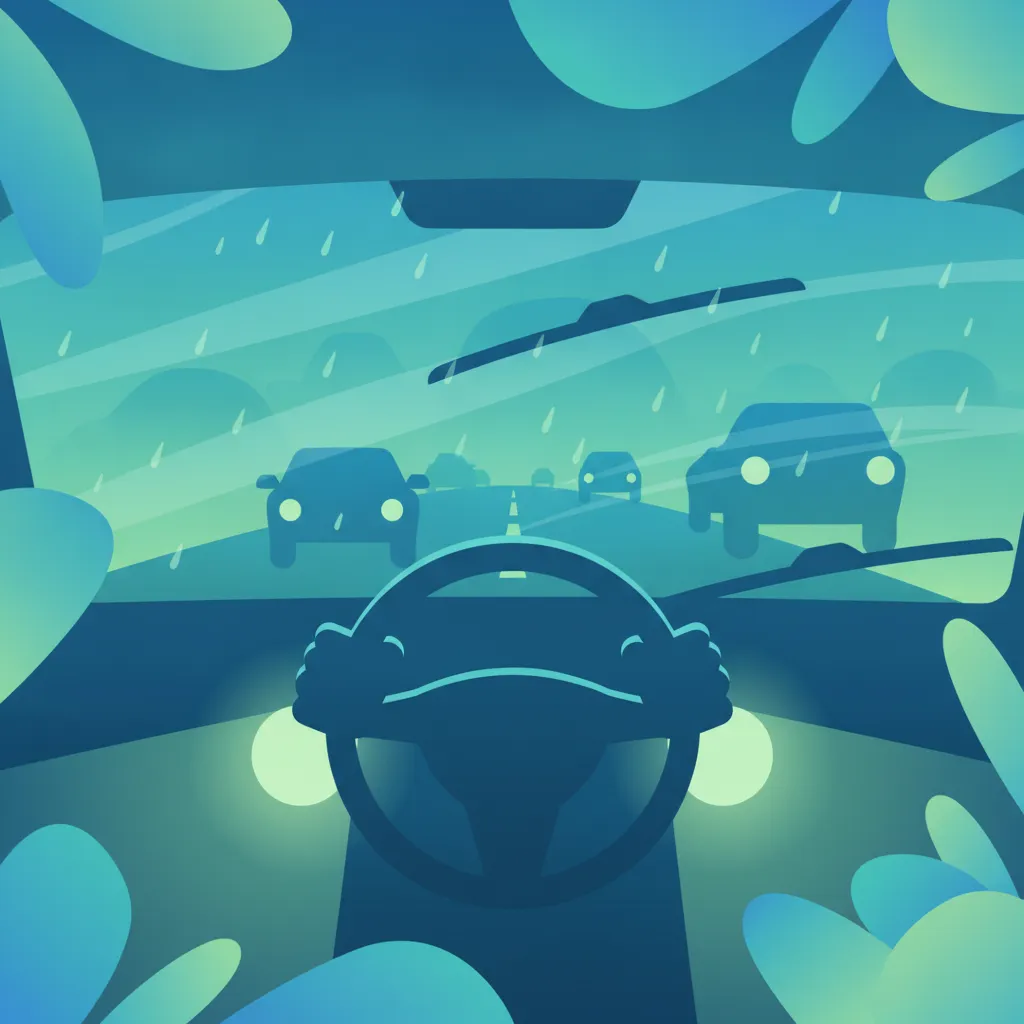
Lesson content overview
Driving safely requires constant attention and adaptation, particularly when weather conditions deteriorate. Adverse weather, such as heavy rain, dense fog, snow, or ice, significantly impacts road surface traction, vehicle handling, stopping distances, and driver visibility. This lesson provides essential advice and techniques for navigating these challenging conditions, helping you to drive safely, reduce accident risks, and comply with British Highway Code regulations.
Mastering these skills builds upon your understanding of basic vehicle control, road markings, signalling, stopping distances, and vehicle lighting systems. By understanding the physics of traction loss and human factors involved, you can make informed decisions that ensure your safety and the safety of other road users.
Rainfall is a common occurrence, and even light rain can significantly change road conditions. Water on the road surface reduces the friction between your tyres and the tarmac, directly impacting your ability to accelerate, brake, and steer effectively. This reduction in grip is a primary cause of accidents in wet weather.
Aquaplaning, also known as hydroplaning, occurs when a layer of water builds up between your vehicle's tyres and the road surface. When this happens, the tyres lose contact with the road, causing a complete loss of steering control and braking effectiveness. This can be an extremely alarming experience, as your vehicle effectively skims across the water like a boat.
Aquaplaning is more likely at higher speeds, especially when driving through standing water or heavy rain. Insufficient tyre tread depth also greatly increases the risk, as the grooves in the tyre are designed to displace water. While Anti-lock Braking Systems (ABS) can assist with braking control, they do not prevent the loss of traction caused by aquaplaning itself.
To maintain grip in wet conditions, the most crucial step is to reduce your speed. Lowering your speed allows your tyre treads more time to displace water, reducing the hydrostatic pressure that causes aquaplaning. The legal minimum tyre tread depth in Great Britain is 1.6 mm across the central three-quarters of the tread and around the entire circumference. However, deeper tread is always safer in wet conditions.
Regularly check your tyre pressure, as correctly inflated tyres maintain better contact with the road. Avoid sudden steering movements, harsh acceleration, or heavy braking, as these actions can easily break the reduced traction available.
When driving in rain, whether light or heavy, your primary goal is to increase your safety margins. Double your normal following distance, allowing at least a four-second gap between your vehicle and the one ahead. This gives you significantly more time to react and stop if the vehicle in front brakes suddenly.
In heavy rain, be particularly aware of the spray from other vehicles, which can severely reduce your visibility. If visibility is significantly reduced, switch on your dipped beam headlights to make your vehicle more visible to others and to better illuminate the road directly in front of you.
Avoid driving through deep puddles if possible, as these can hide potholes or cause your vehicle to aquaplane unexpectedly. If you must drive through standing water, do so slowly and in a low gear. After driving through water, lightly test your brakes to dry them out, as wet brakes can be less effective.
Fog, heavy rain, or snowfall can drastically shorten your sight distance, making it harder to perceive hazards, judge distances, and react in time. Adapting your driving style and using your vehicle's lighting correctly are critical for safety in these conditions.
When driving in fog, the correct use of your vehicle's lights is paramount. The Highway Code mandates the use of dipped beam headlights when visibility is seriously reduced. Seriously reduced visibility is generally defined as being less than 100 metres (approximately the length of a football pitch).
Fog lights, both front and rear, are specifically designed to cut through fog more effectively than standard headlights, illuminating the road closer to the vehicle and making your vehicle more visible from behind. Front fog lights typically have a wide, low beam pattern to reduce glare reflected by the fog. Rear fog lights are brighter than standard tail lights to ensure you are seen from a greater distance.
It is illegal and dangerous to use high beam (main beam) headlights in fog. High beams reflect off the fog droplets, creating glare that significantly worsens your own visibility and can blind oncoming drivers.
Remember to switch off your fog lights as soon as visibility improves beyond 100 metres. Leaving them on when not necessary can dazzle other road users, especially at night or in clear conditions, and may lead to a penalty.
Your speed must always match your sight distance. If you can only see 30 metres ahead in dense fog, you should be travelling at a speed that allows you to stop safely within that distance. This will often mean driving at a much lower speed than the posted limit.
Increase your following distance significantly, often doubling or tripling the normal two-second rule. Listen for traffic you cannot see and be prepared to stop. Avoid overtaking unless absolutely necessary and only when you have a clear view of the road ahead, which is rare in dense fog.
Heavy snowfall presents a combination of reduced visibility and slippery surfaces. The large flakes and accumulated snow can severely limit your forward view, similar to fog. In such conditions, use your dipped beam headlights and, if visibility drops below 100 metres, activate your fog lights.
The key to driving in heavy snow is extreme caution and gentle control. Snow can quickly cover road markings and obscure hazards. Reduce your speed drastically, as stopping distances can be ten times greater than on dry roads.
Snow and ice are perhaps the most challenging conditions for drivers, as they drastically reduce tyre grip, making skids and loss of control much more likely. Understanding how to react to these surfaces is vital for safe driving.
Black ice is a particularly hazardous type of ice. It is a thin, transparent layer of ice that forms on the road surface and is often invisible to the driver, making the road appear simply wet or even dry. It is most common in shaded areas, on bridges, and on stretches of road that are not well-used, especially when temperatures are hovering around freezing (0 °C).
Always assume that seemingly dry stretches of road could be black ice when temperatures are near or below freezing, especially in the early morning or late evening.
When driving on snow or ice, every input you make to the vehicle – steering, acceleration, and braking – must be gentle and smooth. Sudden movements can easily break the already fragile grip between your tyres and the road, leading to a skid.
Braking on ice requires a nuanced approach. If your vehicle is equipped with ABS (Anti-lock Braking System), press the brake pedal firmly and continuously. The ABS system will automatically modulate the brake pressure to prevent the wheels from locking, allowing you to maintain some steering control. Do not pump the brakes if you have ABS.
If your vehicle does not have ABS, use progressive braking. This involves applying gentle pressure to the brake pedal, just short of locking the wheels, then releasing slightly and reapplying. This technique helps to slow the vehicle while maintaining some steering ability. Always plan your stops well in advance, allowing for significantly longer braking distances.
While not legally mandatory in Great Britain, winter tyres are highly recommended if you regularly drive in areas prone to persistent snow and ice. Winter tyres are made from a softer rubber compound that remains more flexible in cold temperatures (below 7 °C) and feature specific tread patterns designed to channel away slush and provide better grip on snowy and icy surfaces. They offer a significant safety advantage over summer tyres in severe winter conditions.
Appropriate use of your vehicle's lighting system is critical for both seeing and being seen by other road users in adverse conditions.
Dipped beam (low beam) headlights are your default setting for night driving and whenever visibility is reduced. This includes heavy rain, snowfall, and fog. They illuminate the road directly in front of your vehicle without dazzling oncoming drivers or the driver in front of you.
Front fog lights are low-mounted and designed to provide a wide, short beam that illuminates the road surface beneath the fog layer. Rear fog lights are significantly brighter than standard tail lights, making your vehicle highly visible from behind in severely reduced visibility (less than 100 metres). Always remember to turn them off once visibility improves to prevent dazzling other road users.
As discussed, high beam (main beam) headlights should never be used in fog, heavy rain, or snow, as they cause glare and reduce visibility. They should only be used on unlit roads where there is no oncoming traffic and you are not following another vehicle within 100 metres.
Hazard warning lights are designed to signal a stationary hazard, such as a broken-down vehicle. The Highway Code strictly states that hazard lights should not be used while driving, except for indicating an emergency stop on a motorway, or if you are temporarily holding up traffic and need to warn others of a sudden obstruction. Using them while driving through fog, for example, is illegal and can confuse other drivers about your intentions.
Safe driving in adverse weather isn't just about controlling your vehicle; it also involves proactive planning and adapting your overall approach to driving.
This is perhaps the most fundamental adjustment. In wet conditions, double your normal two-second following distance to at least four seconds. On icy or snowy roads, this distance should be increased even further, to ten seconds or more, as stopping distances can be ten times greater. Always consider the perception-reaction time required to identify a hazard and initiate braking, combined with the significantly extended braking distance on slippery surfaces.
Cruise control systems are designed for consistent speeds on clear roads. In adverse weather, they can be dangerous. Cruise control might maintain an inappropriate speed for the reduced traction and can react poorly to sudden changes in grip, potentially causing wheel spin or a loss of control. Always disengage cruise control when driving in rain, fog, snow, or ice.
A heavily loaded vehicle will have a longer stopping distance and can handle differently in adverse conditions. The distribution of the load also plays a role in vehicle stability and tyre grip. Always ensure your vehicle is loaded correctly, and adjust your speed and following distance even further if you are carrying a heavy load.
In low-visibility conditions, vulnerable road users such as pedestrians, cyclists, and motorcyclists are much harder to see. Their movements can also be less predictable as they try to navigate slippery surfaces or poor visibility. Exercise extreme caution, reduce your speed, and be prepared for sudden movements, particularly near junctions, crossings, and schools.
Compliance with the Highway Code and relevant regulations is essential for safe and legal driving in Great Britain.
Consider these situations to reinforce your understanding of safe driving in adverse conditions:
Scenario 1: Heavy Rain on a Motorway You are driving on a motorway, and heavy rain begins, significantly reducing visibility to about 70 metres and creating standing water. The temperature is 12°C.
Scenario 2: Dense Fog on a Rural Road You are on an unlit rural road, and dense fog reduces your visibility to just 30 metres. The temperature is 5°C.
Scenario 3: Encountering Black Ice on a Bridge It's early morning, 0°C, and the road surface appears dry. You're approaching a bridge.
Scenario 4: Snowy Urban Road with Pedestrians You are driving on a residential street with several centimetres of snow and children are playing near a school crossing.
Explore all units and lessons included in this driving theory course.
Lesson content overview
Explore all units and lessons included in this driving theory course.
Explore search topics learners often look for when studying Driving in Rain, Fog, Snow, Ice and Low‑Visibility Conditions. These topics reflect common questions about road rules, driving situations, safety guidance, and lesson level theory preparation for learners in Great Britain.
Browse additional driving theory lessons that cover connected traffic rules, road signs, and common driving situations related to this topic. Improve your understanding of how different rules interact across everyday traffic scenarios.
Learn essential techniques for driving in rain, fog, snow, and ice on Great Britain roads. Understand aquaplaning, skidding prevention, correct light usage, and adjusting speed and stopping distances for poor visibility and slippery surfaces.
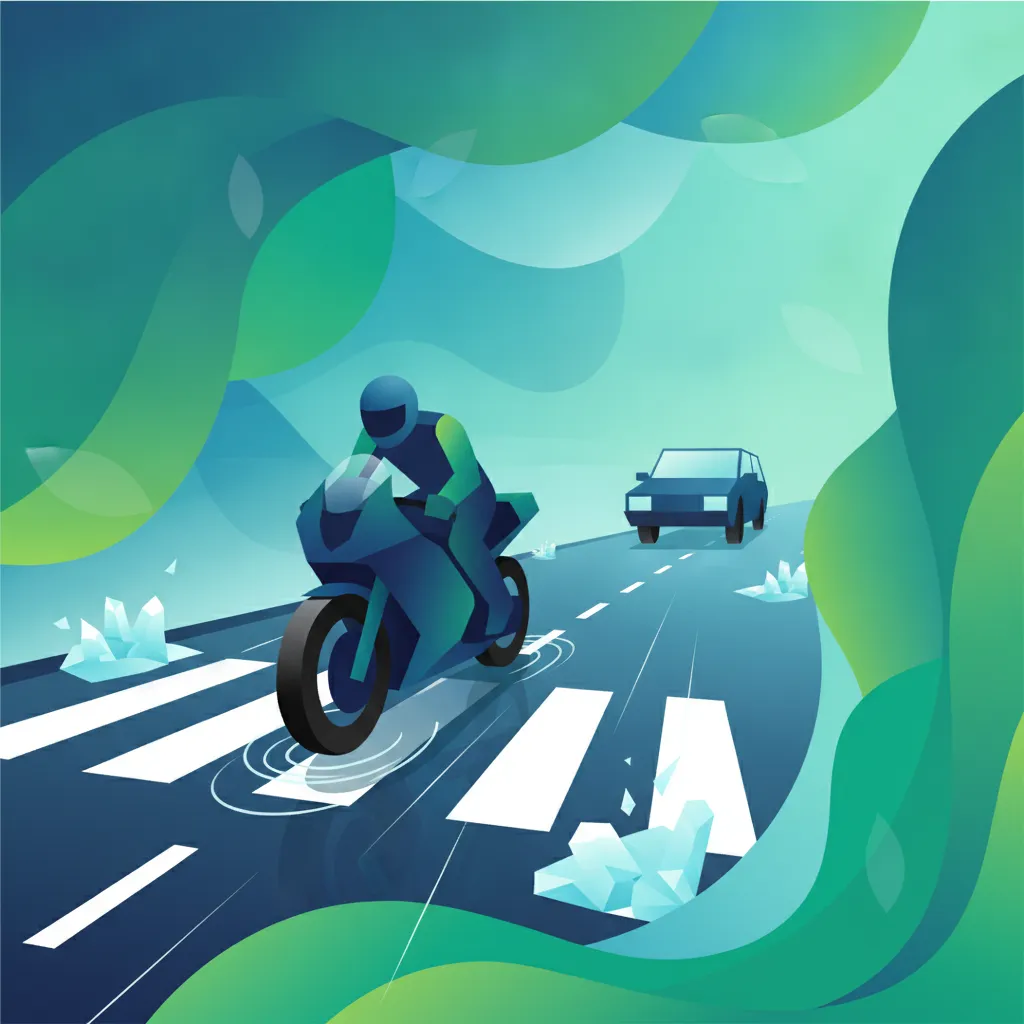
This lesson provides essential advice for riding safely in adverse weather conditions that reduce tyre grip. You will learn how rain, ice, and wet leaves dramatically increase braking distances and affect handling. Key strategies covered include reducing speed, increasing following distances, making smooth control inputs, and anticipating slippery areas to maintain control and avoid skidding on compromised road surfaces.
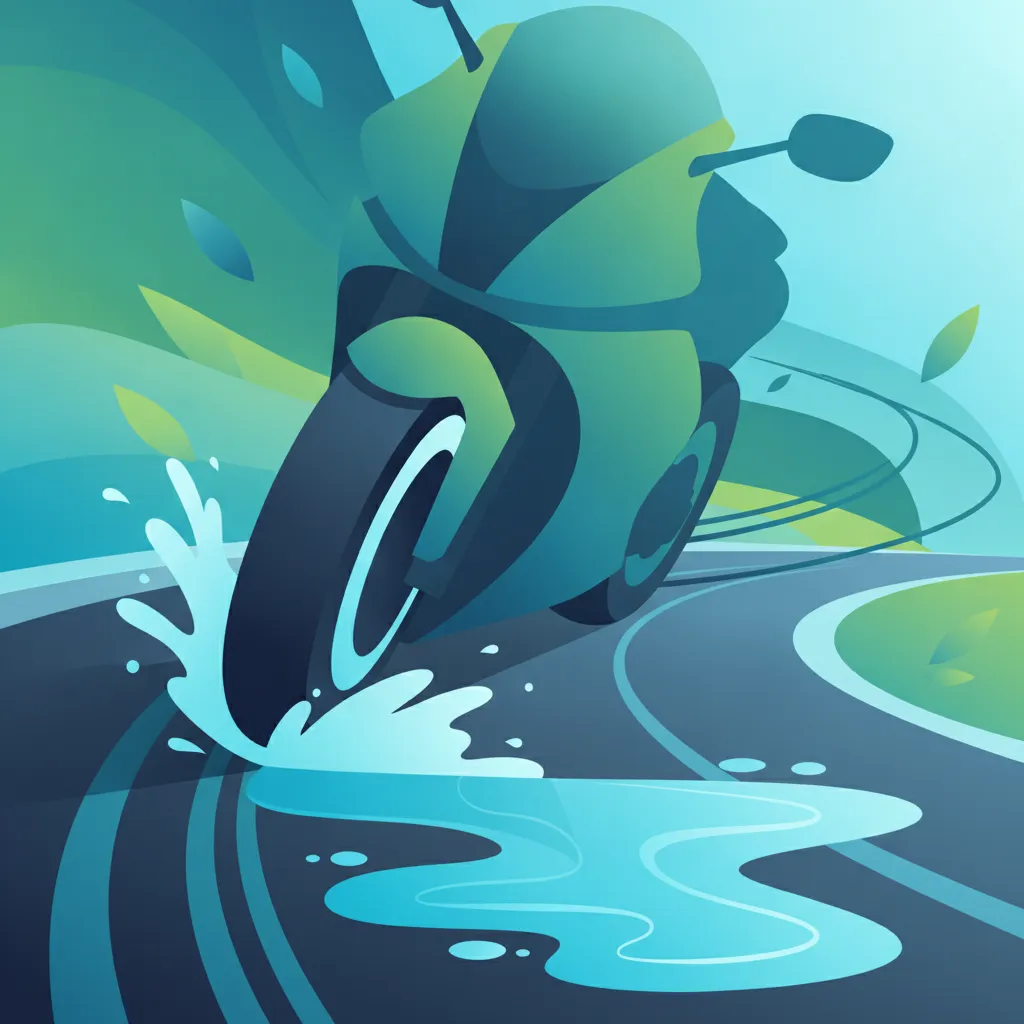
Riding in the rain requires significant adjustments to your technique. This lesson covers how to ride smoothly to maintain traction, the importance of increasing your following distance, and how to deal with reduced visibility from spray and fogged visors. You will also learn what aquaplaning is and how to avoid or manage it.
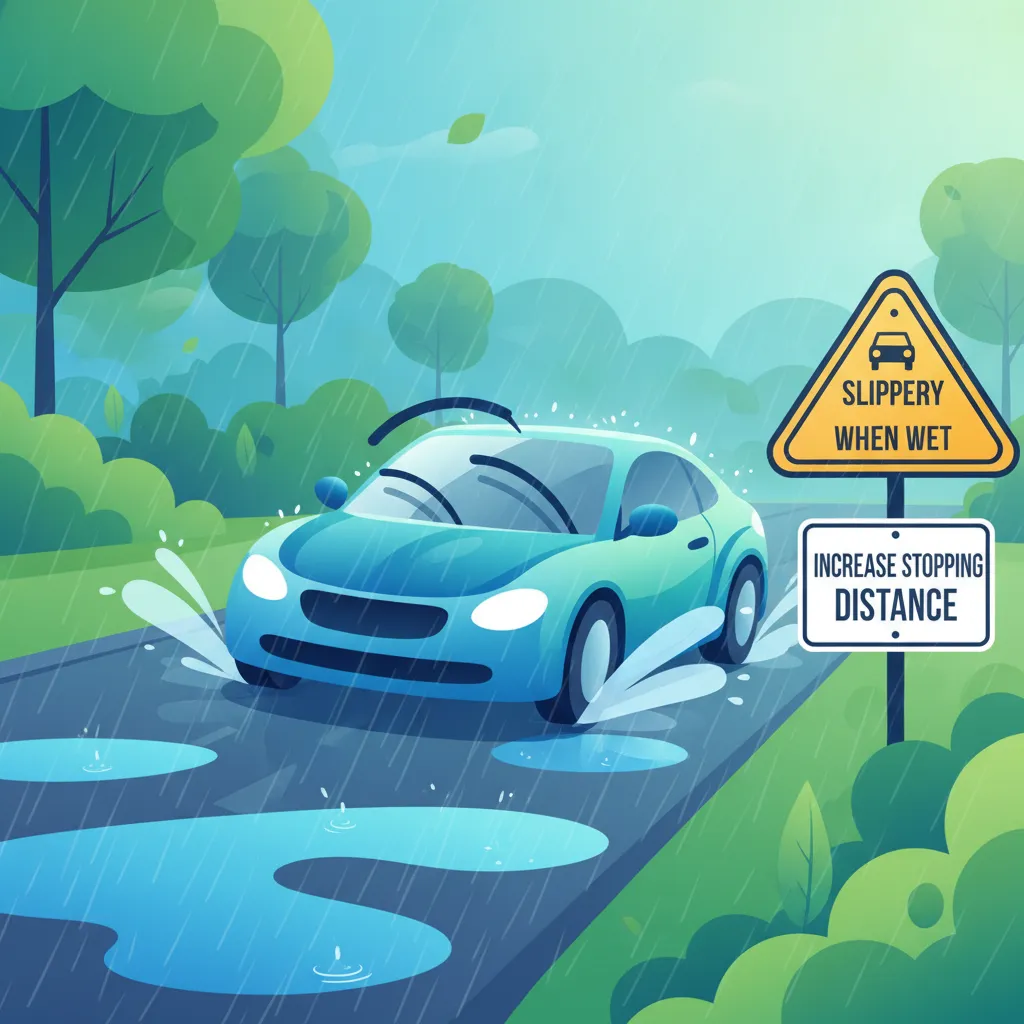
This lesson explains how different weather conditions impact the handling and stability of a large passenger vehicle. It covers the risks of aquaplaning in heavy rain, the effect of high winds on vehicle stability, and the severe reduction in visibility caused by fog. Learners will understand how ice and snow dramatically increase stopping distances and require extremely gentle control inputs to prevent skidding. Strategies for adapting speed and increasing following distances are emphasized.

This lesson equips drivers with strategies for maintaining control of a heavy vehicle during adverse weather conditions like heavy rain, ice, snow, and strong crosswinds. It covers the physics of traction loss, aquaplaning, and skidding, and explains how to use smooth inputs for steering, acceleration, and braking. The function of electronic stability control systems and other driver aids is also discussed as part of a proactive approach to safety in challenging environments.
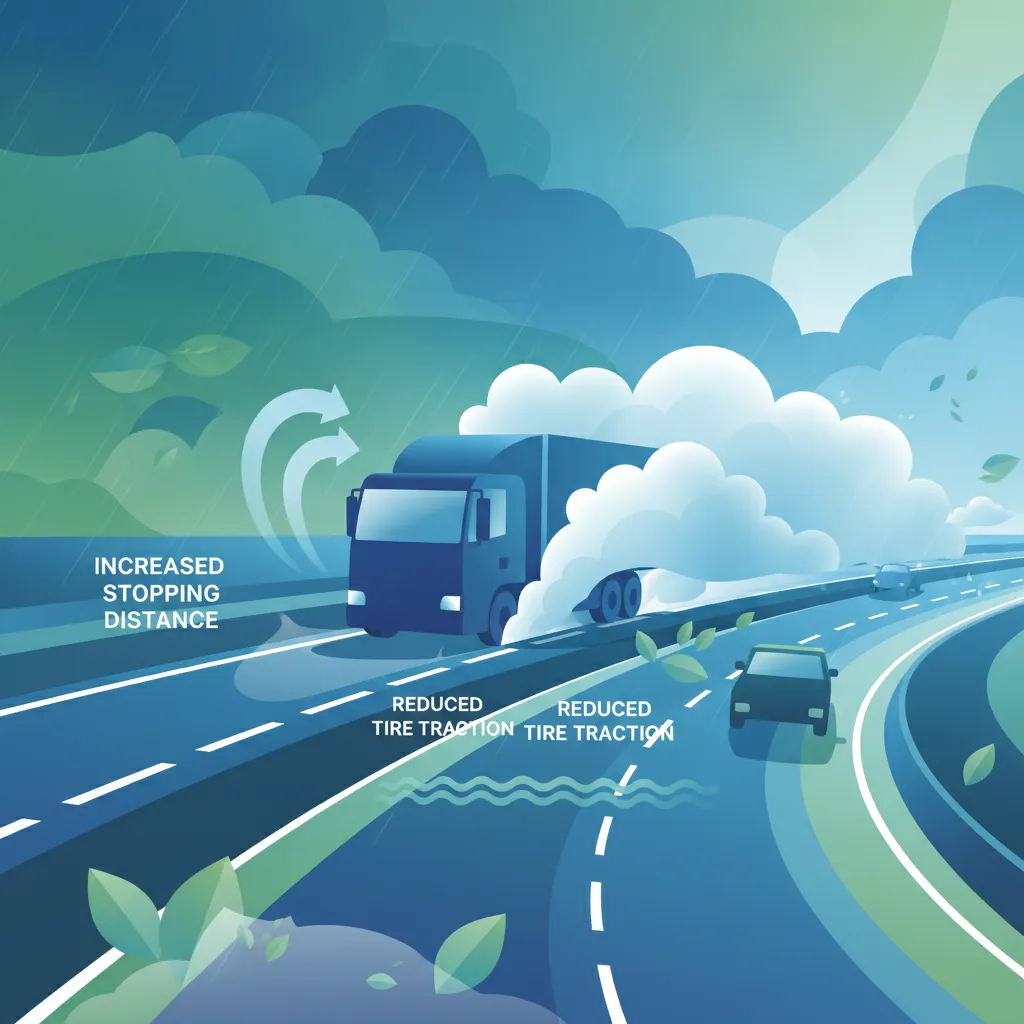
This lesson details how different adverse weather conditions uniquely affect the handling and stability of a heavy goods vehicle. It covers the increased stopping distances in rain, reduced visibility in fog, severe traction loss on ice, and the dangerous effect of strong crosswinds on high-sided vehicles. You will learn specific techniques for adjusting speed, increasing following distances, and using vehicle controls smoothly to maintain safety in challenging weather.
This lesson addresses the increased risks associated with driving after dark. It explains when to switch between dipped and main beam headlights to maximise your own vision without dazzling other drivers. Techniques for reducing glare and spotting hazards like cyclists or pedestrians with poor visibility are also covered.
This lesson focuses on the challenges of riding when you can't see or be seen clearly. It covers the correct use of lights in fog, rain, and at night to maximize both your vision and your visibility to others. You will learn why reducing speed is critical, how to use reflective clothing effectively, and strategies for dealing with the glare from other vehicles' headlights to ensure you can navigate safely in all lighting conditions.
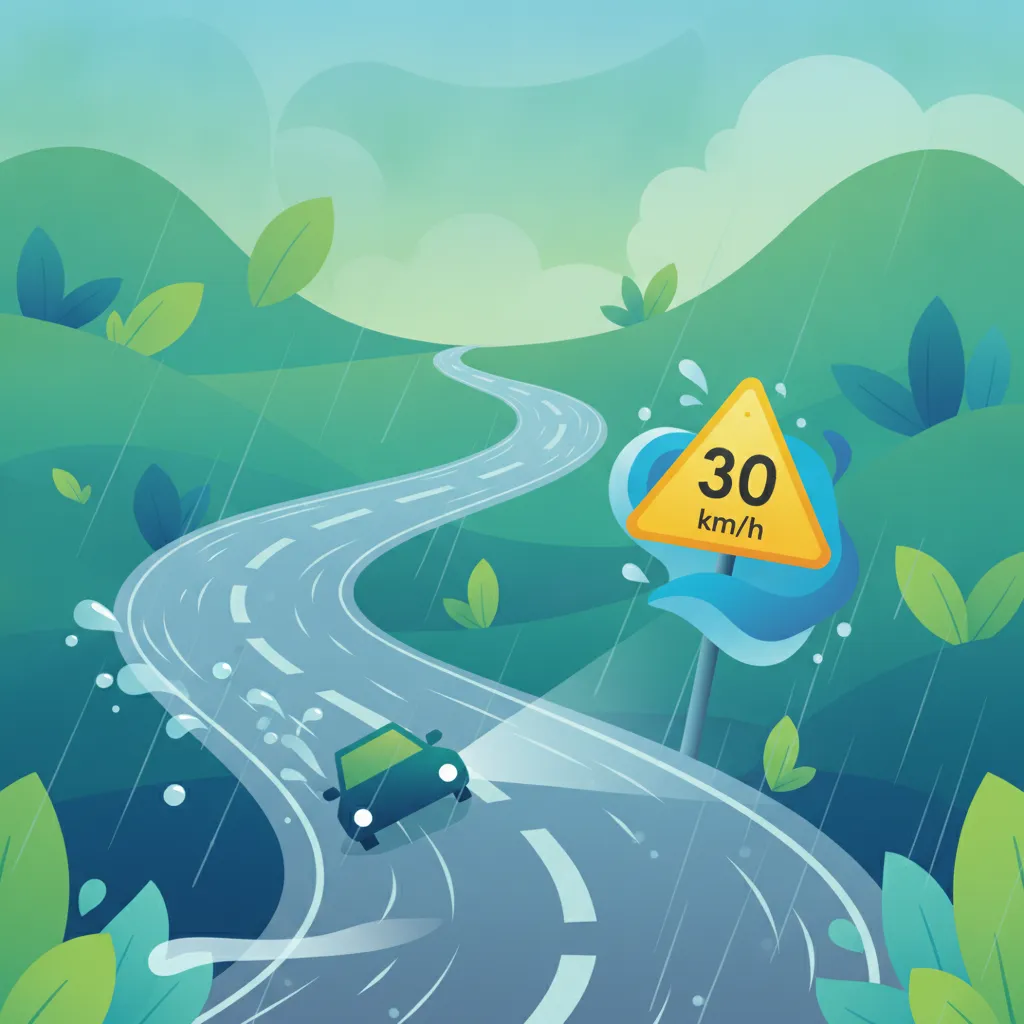
This lesson explains that safe driving often requires travelling at a speed lower than the legal limit. It covers how to adjust your speed for adverse conditions such as rain, which can double your stopping distance, or fog, which severely reduces visibility. The goal is to always be able to stop safely in the distance you can see to be clear.

Fog dramatically reduces how far you can see and be seen. This lesson explains why you must reduce your speed and increase your following distance in foggy conditions. It also covers the legal requirements and best practices for using your headlights and fog lights to maximize your visibility to others without dazzling them.
This lesson explains the functions and legal requirements for all exterior vehicle lights. You will learn when it is appropriate to use dipped and main beam headlights, the specific conditions for using fog lights, and the correct application of hazard warning lights. Proper use of lighting is vital for seeing and being seen by other road users.
Understand the correct usage of vehicle lights, including dipped beam, front and rear fog lights, and hazard lights, as required by the Highway Code for driving in fog, rain, snow, and other low-visibility conditions in Great Britain.
This lesson explains the functions and legal requirements for all exterior vehicle lights. You will learn when it is appropriate to use dipped and main beam headlights, the specific conditions for using fog lights, and the correct application of hazard warning lights. Proper use of lighting is vital for seeing and being seen by other road users.
This lesson focuses on the challenges of riding when you can't see or be seen clearly. It covers the correct use of lights in fog, rain, and at night to maximize both your vision and your visibility to others. You will learn why reducing speed is critical, how to use reflective clothing effectively, and strategies for dealing with the glare from other vehicles' headlights to ensure you can navigate safely in all lighting conditions.
Fog dramatically reduces how far you can see and be seen. This lesson explains why you must reduce your speed and increase your following distance in foggy conditions. It also covers the legal requirements and best practices for using your headlights and fog lights to maximize your visibility to others without dazzling them.
This lesson addresses the increased risks associated with driving after dark. It explains when to switch between dipped and main beam headlights to maximise your own vision without dazzling other drivers. Techniques for reducing glare and spotting hazards like cyclists or pedestrians with poor visibility are also covered.
This lesson provides essential techniques for safe riding during nighttime and in poor visibility conditions like dawn or dusk. It covers the correct use of your headlamp's main and dipped beams, strategies for reducing glare from oncoming traffic, and the critical role of reflective clothing. You will also learn how to identify common nighttime hazards and manage fatigue, ensuring you can navigate British roads safely after dark while complying with all relevant road rules.
This lesson details the legal requirements and best practices for using lights and reflectors on your moped or light quadricycle. It covers the correct operation of headlamps, daytime running lights, brake lights, and indicators to communicate your intentions clearly to other road users. You will also learn how to enhance your visibility further with strategically placed reflectors and reflective tape, ensuring you remain conspicuous in low-light conditions and compliant with British lighting regulations.
Riding at night requires different skills, as visibility is limited to the reach of your headlights. This lesson teaches you how and when to use main beam and dipped beam lights effectively. It also discusses the increased risk from fatigue and nocturnal animals, and emphasizes the importance of a clean visor and reflective gear for safety.
This lesson details how different adverse weather conditions uniquely affect the handling and stability of a heavy goods vehicle. It covers the increased stopping distances in rain, reduced visibility in fog, severe traction loss on ice, and the dangerous effect of strong crosswinds on high-sided vehicles. You will learn specific techniques for adjusting speed, increasing following distances, and using vehicle controls smoothly to maintain safety in challenging weather.
This lesson explains how different weather conditions impact the handling and stability of a large passenger vehicle. It covers the risks of aquaplaning in heavy rain, the effect of high winds on vehicle stability, and the severe reduction in visibility caused by fog. Learners will understand how ice and snow dramatically increase stopping distances and require extremely gentle control inputs to prevent skidding. Strategies for adapting speed and increasing following distances are emphasized.
This lesson provides essential advice for riding safely in adverse weather conditions that reduce tyre grip. You will learn how rain, ice, and wet leaves dramatically increase braking distances and affect handling. Key strategies covered include reducing speed, increasing following distances, making smooth control inputs, and anticipating slippery areas to maintain control and avoid skidding on compromised road surfaces.
Find clear answers to common questions learners have about Driving in Rain, Fog, Snow, Ice and Low‑Visibility Conditions. Learn how the lesson is structured, which driving theory objectives it supports, and how it fits into the overall learning path of units and curriculum progression in Great Britain. These explanations help you understand key concepts, lesson flow, and exam focused study goals.
You must use fog lights only when visibility is seriously reduced, which the Highway Code generally defines as being able to see less than 100 metres ahead. You must switch them off immediately when visibility improves to avoid dazzling other drivers.
If you feel the steering become light, you are likely aquaplaning. Ease off the accelerator, keep your steering wheel straight, and avoid braking hard until your tyres regain grip with the road surface.
In wet weather, you should at least double your following distance. This is because your braking distance will significantly increase due to the reduced grip between your tyres and the road.
No, you should never use cruise control in these conditions. If your wheels lose traction, the system may struggle to react, and you need to be in full manual control of your accelerator and braking at all times.
Dive into our comprehensive question bank to find exactly what you need for your Great Britain theory test. Use our advanced filters to pinpoint specific subjects or test your knowledge on challenging areas, ensuring you're fully prepared for success.