
Navigate the complexities of Great Britain's roads as a professional goods vehicle driver. This unit focuses on interpreting crucial road signs, understanding various access restrictions like Low Emission Zones, and mastering effective route planning strategies essential for Category C licence holders.
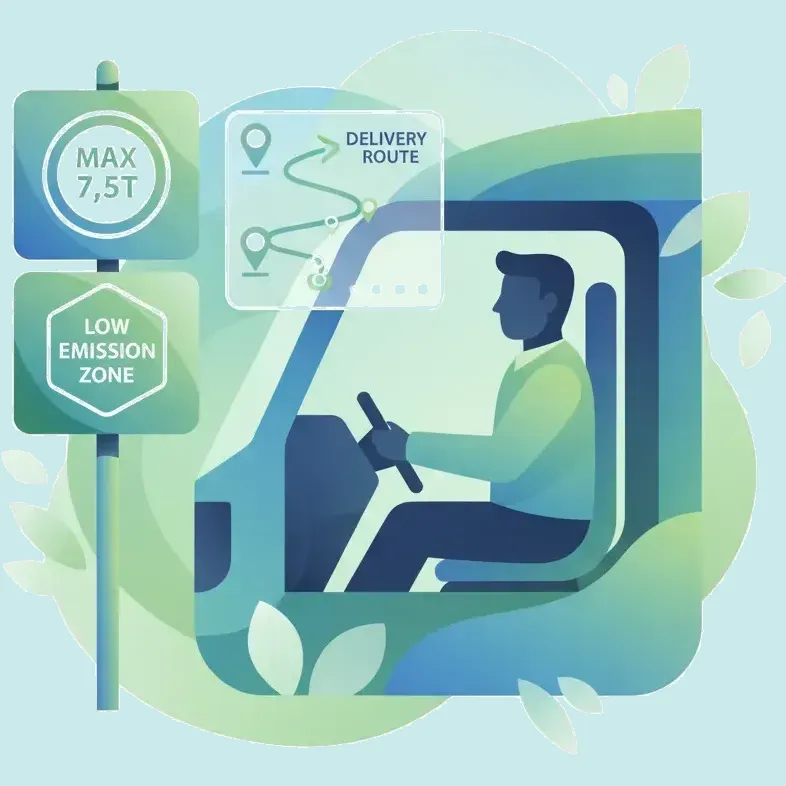
Browse all lessons that make up Signs, Restrictions, Route Planning and Access Limits. Each lesson focuses on specific topics, learning objectives, and core concepts, helping you build essential knowledge and follow a clear, structured progression toward your study goals in Great Britain.
This lesson provides a detailed focus on the specific road signs that directly affect drivers of large goods vehicles. You will learn to accurately interpret mandatory signs for weight, height, and width restrictions, as well as signs indicating lane usage and prohibited routes. Understanding these signs is not optional; it is a legal requirement for avoiding fines, preventing accidents, and ensuring the safe passage of your vehicle through the road network.
This lesson offers a deep dive into the specific regulations concerning weight, width, and axle load restrictions for goods vehicles. It covers how to read and comply with the associated road signs to avoid overloading weak bridges and entering restricted areas. Learners will understand the importance of correct load assessment and the serious penalties for non-compliance, which are enforced through DVSA roadside inspections and weighbridges.
This lesson addresses the growing number of environmental access restrictions in urban areas, such as Low Emission Zones (LEZ), Ultra Low Emission Zones (ULEZ), and congestion charging. Learners will understand the vehicle emission standards (Euro standards) required for entry and how to check their vehicle's compliance. It covers the practicalities of planning routes that account for these zones to avoid significant financial penalties and support cleaner air initiatives.
This lesson teaches a structured approach to effective route planning, a critical skill for any professional driver. It covers the use of specialized HGV navigation software and traditional maps to account for vehicle dimensions, weight limits, low bridges, and delivery time constraints. The goal is to create routes that are not only the most efficient in terms of time and fuel but are also safe, legal, and responsive to potential disruptions like roadworks or traffic.
This lesson explores the effective use of modern digital navigation tools, including GPS systems and mobile apps tailored for HGVs. It explains how to leverage real-time traffic data, congestion alerts, and dynamic re-routing to adapt to changing road conditions. Importantly, it also emphasizes the need to use this technology safely, cross-referencing information with road signs and maintaining situational awareness to avoid distractions while driving.
Explore high-intent keywords and long-tail search topics learners use when researching Signs, Restrictions, Route Planning and Access Limits. These terms reflect how people search for reliable study materials, structured explanations, and unit-level theory preparation support in Great Britain.
Find clear answers to the most common questions learners ask about Signs, Restrictions, Route Planning and Access Limits. Understand how the unit is organized, what learning goals it supports, and how it contributes to your study progression with structured explanations and practical guidance tailored for learners in Great Britain.
For large goods vehicles (LGVs), key restricting signs include those indicating weight limits (e.g., maximum gross weight, axle weight), height restrictions (especially for bridges and tunnels), width restrictions, and 'No Goods Vehicles' signs. Understanding the specific symbols and accompanying text is crucial for compliance and safe route planning.
Low Emission Zones (LEZs) restrict access for vehicles that do not meet specific emission standards, often targeting older, more polluting engines. LGV drivers must ensure their vehicles comply with the LEZ's requirements or face significant fines. Route planning must actively consider if a planned route passes through an LEZ and if the vehicle is compliant.
A Low Emission Zone (LEZ) focuses on vehicle emissions, charging or restricting non-compliant vehicles. A Congestion Charge Zone, like the one in London, charges all vehicles (unless exempt) for driving within a specific area during certain hours, regardless of their emission standards, to reduce traffic volume.
Route planning for an LGV involves more than just finding the shortest path. It requires checking for vehicle-specific restrictions (weight, height, width), road suitability, traffic conditions, delivery/collection points, access limitations (LEZs, residential areas), and driver's hours regulations. Using dedicated LGV navigation systems or apps that account for these factors is highly recommended.
LGV-specific navigation systems or apps allow you to input your vehicle's dimensions and weight, guiding you away from roads with restrictions. They often provide real-time traffic updates and may include information on truck stops or delivery points. Always supplement with manual checks and understanding of local signage, as digital data may not always be perfectly up-to-date.
No, you cannot assume it is safe to drive an LGV under any bridge or through any tunnel. Many have height, width, or weight restrictions clearly indicated by road signs. Always check the signs and your vehicle's dimensions against these limits before proceeding. Incorrectly assuming clearance can lead to serious accidents.
All included lessons
Lessons in Signs, Restrictions, Route Planning and Access Limits
See who benefits most from studying Signs, Restrictions, Route Planning and Access Limits. This overview explains how the unit supports different learning needs, what level of knowledge is helpful before starting, and how it fits into the overall study path in Great Britain.
This unit is essential for all individuals preparing for the Great Britain Category C (LGV) driving theory test, particularly those new to driving large goods vehicles or needing to refresh their knowledge on specific restrictions and planning. It's ideal for those who want to understand how vehicle size and local regulations impact daily routes.

Ready to prepare effectively for your DVSA driving theory test? Explore our structured courses and guided study paths. They cover every topic of the Great Britain Highway Code and official exam requirements, ensuring systematic learning and success.
Explore Driving Theory CoursesExplore all units and lessons included in this driving theory course.
Ready to prepare effectively for your DVSA driving theory test? Explore our structured courses and guided study paths. They cover every topic of the Great Britain Highway Code and official exam requirements, ensuring systematic learning and success.
Explore Driving Theory Courses