
This lesson guides you through the complex world of urban access restrictions, including Low Emission Zones, congestion charging, and vehicle weight limits. Understanding these rules is vital for professional HGV drivers to ensure legal compliance, avoid heavy fines, and contribute to cleaner air in cities across Great Britain.

Lesson content overview
Operating a large goods vehicle (LGV) under a Professional Goods Vehicle Theory for Great Britain - Category C Licence requires a thorough understanding of various road restrictions, especially those designed to improve air quality and manage traffic in urban areas. This lesson provides essential knowledge about Low Emission Zones (LEZ), Ultra Low Emission Zones (ULEZ), and congestion charging schemes. Familiarity with these regulations is crucial for professional drivers to avoid significant financial penalties, plan efficient routes, and contribute to national environmental policies.
Urban environmental access restrictions are regulatory tools implemented by local authorities in Great Britain to address critical issues such as air pollution and traffic congestion. These zones primarily target vehicles that contribute most significantly to harmful emissions.
The underlying logic for these restrictions is rooted in public health and environmental policy. Reducing emissions of nitrogen oxides (NOx), particulate matter (PM), and carbon dioxide (CO₂) directly lowers the incidence of respiratory illnesses and other health problems in densely populated areas. These measures align with national commitments to reduce greenhouse gases and meet stringent air quality directives. Furthermore, congestion charging schemes aim to manage traffic volumes, reduce delays, and often generate funds for public transport infrastructure, thereby improving overall urban mobility.
Professional goods vehicle drivers in Great Britain may encounter several types of access restrictions:
Understanding the specific requirements and operational hours of each zone is vital for compliant and efficient goods vehicle operations.
At the core of all emission-based access restrictions are Euro emission standards. These standards classify vehicles based on the amount of pollutants their engines emit.
Euro emission standards are a series of regulations defining the permissible limits for vehicle exhaust emissions. These standards were introduced by the European Union and are still used in the UK. They classify vehicles from Euro 0 (pre-1992) to the current Euro VI (introduced from 2013 for heavy-duty vehicles). The specific pollutants regulated include nitrogen oxides (NOx), carbon monoxide (CO), hydrocarbons (HC), and particulate matter (PM). Each Euro standard represents a progressively stricter limit on these pollutants.
For professional goods vehicle drivers, knowing your vehicle's Euro standard is paramount. This information determines your eligibility for access to LEZ and ULEZ areas and can significantly impact operational costs.
The Euro standard is usually indicated on your vehicle's V5C registration document (logbook). You can also use official online checkers provided by Transport for London (TfL) or other local authorities to verify your vehicle's compliance status by entering its registration number. Some vehicles may display an emission badge or sticker on the windshield, though relying solely on this without cross-referencing official databases can be risky if the sticker is incorrect or outdated.
Always verify your vehicle's Euro standard using official government or city council websites, as assuming compliance based on age or a sticker can lead to unexpected charges.
Low Emission Zones (LEZs) are areas, often covering large parts of major cities or specific districts, where entry is restricted to vehicles meeting particular emission standards. Their primary goal is to improve urban air quality by deterring the use of older, more polluting vehicles.
In an LEZ, heavy goods vehicles (LGVs) and other vehicles that do not meet the specified Euro emission standard are either prohibited from entering or are required to pay a daily charge. The most well-known LEZ in Great Britain is the London LEZ, which covers most of Greater London and operates 24 hours a day, 7 days a week. It primarily targets heavy vehicles, requiring them to meet Euro VI standards for diesel.
Enforcement of LEZs is typically managed through Automatic Number Plate Recognition (ANPR) cameras positioned at entry and exit points and within the zone. These cameras automatically read vehicle registration plates and check them against a database to determine if the vehicle meets the required emission standard or if a charge has been paid.
If an LGV does not meet the required Euro standard for an LEZ and enters the zone without a valid exemption or permit, a daily charge will be incurred. These charges can be substantial. For example, in the London LEZ, a heavy diesel vehicle (over 3.5 tonnes GVW) that does not meet Euro VI standards could face a daily charge. Failure to pay this charge by a specified deadline will result in a Fixed Penalty Notice (FPN), which carries a significantly higher financial penalty. Repeated non-compliance can lead to escalating fines and legal action.
Several misunderstandings can lead to non-compliance for LGV drivers:
Ultra Low Emission Zones (ULEZs) represent a stricter form of environmental access restriction, building upon the principles of LEZs but demanding higher emission standards and often encompassing a broader range of vehicle types.
ULEZs aim to reduce the most harmful emissions, particularly NOx and PM, by requiring higher emission standards. For heavy diesel vehicles (over 3.5 tonnes GVW), ULEZs typically require compliance with Euro VI standards, similar to LEZs. However, ULEZs also extend these stringent requirements to lighter vehicles, including vans and cars, often demanding Euro VI for diesel vehicles and Euro 4 for petrol vehicles.
The London ULEZ, for instance, initially covered central London but has since been significantly expanded to cover most of Greater London, operating 24 hours a day, every day of the year, except Christmas Day.
Non-compliant vehicles entering a ULEZ face daily charges. These charges are in addition to any LEZ or Congestion Charge fees that may apply concurrently. For LGVs, the ULEZ daily charge is typically higher than for passenger cars. Failure to pay the ULEZ charge by the deadline will result in a Fixed Penalty Notice (FPN), which can be substantially higher than the daily charge itself.
While both LEZ and ULEZ aim to improve air quality through emission standards, there are key distinctions:
Do not confuse LEZ and ULEZ. A vehicle compliant with an LEZ might still be non-compliant with a ULEZ due to higher required emission standards. Always check both if entering a major city.
Separate from emission-based zones, congestion charging is a direct financial levy imposed on vehicles entering designated urban areas during specific times. Its primary purpose is to reduce traffic volume and alleviate congestion.
Congestion charge zones operate by levying a daily fee on most vehicles that enter the defined area during specified operational hours. This charge applies regardless of the vehicle's emission standard. The most prominent example is the London Congestion Charge, which covers a distinct central London zone.
Enforcement, like LEZ and ULEZ, relies heavily on ANPR cameras. Drivers must ensure they pay the charge by the end of the day of travel or by a specific extended deadline to avoid penalties.
The London Congestion Charge currently applies from 07:00 to 18:00 on weekdays and from 12:00 to 18:00 on weekends and bank holidays. It does not operate on Christmas Day or New Year's Day bank holiday. The daily charge is a fixed rate. Certain vehicles, such as emergency vehicles and some public transport, are exempt. Fully electric vehicles may also be exempt or receive discounts depending on local policy.
A common mistake for drivers is confusing congestion charging with LEZ or ULEZ. It is crucial to remember:
For professional goods vehicle drivers, navigating urban areas with access restrictions requires careful planning and continuous vigilance.
Effective route planning is the first line of defence against incurring charges and penalties. Before starting a journey, especially into an unfamiliar urban area:
Modern navigation systems and real-time traffic updates are invaluable tools for professional drivers.
Do not rely solely on consumer-grade navigation systems, as they may not provide warnings for commercial vehicle restrictions or specific emission zones. Invest in a dedicated HGV navigation system.
In certain circumstances, a temporary or conditional access permit may be granted for a non-compliant vehicle to enter a restricted zone.
Access permits are typically reserved for essential services or specific operational needs where avoiding the zone is impractical or impossible. Examples include:
Applying for a permit usually requires advance application, providing detailed justification for entry, and adherence to strict conditions, such as limited time windows or specific routes. There may also be an application fee. Once granted, the permit documents or signage must be clearly displayed on the vehicle.
Research the specific local authority's permit scheme and eligibility criteria.
Gather all required documentation, including vehicle details, journey justification, and company information.
Submit the application well in advance of the planned journey, considering processing times.
If approved, ensure all permit conditions (e.g., time windows, routes, display requirements) are strictly followed.
Enforcement of LEZ, ULEZ, and Congestion Charge zones primarily relies on technology:
Compliance with urban access restrictions is a non-negotiable aspect of professional goods vehicle operation. Failure to comply carries significant financial and reputational risks.
Operators and drivers of LGVs in Great Britain must adhere to a range of regulations governing access restrictions. These are primarily derived from the Road Traffic Act 1988, local authority regulations (such as the London LEZ Regulations, ULEZ Expansion Regulations, and Congestion Charge Regulations), and DVLA vehicle certification requirements.
Key regulations include:
A formal notice issued for non-payment of a zone charge within the stipulated period, carrying a higher financial penalty than the original daily charge.
Many violations stem from oversight or misinformation:
Even if your LGV is Euro VI compliant, poor maintenance can lead to it exceeding emission limits. A faulty Diesel Particulate Filter (DPF) or problems with the Selective Catalytic Reduction (SCR) system (which uses AdBlue) can compromise your vehicle's emission performance. If your vehicle develops a fault that affects its emission control systems, it may temporarily become non-compliant.
If your vehicle's emission control system is faulty, avoid restricted zones until repairs are complete. Operating a vehicle that no longer meets its certified Euro standard could lead to fines.
Regular servicing and prompt attention to dashboard warning lights related to emissions (e.g., DPF warning, AdBlue level low) are crucial for maintaining compliance and avoiding unexpected penalties.
Urban access restrictions significantly influence the operational landscape for goods vehicle drivers and fleet operators.
While compliance with emission zones and congestion charges might involve initial investment in cleaner vehicles or the cost of daily charges, it generally leads to greater operational efficiency in the long term. Avoiding penalties reduces overall operational costs. Furthermore, cleaner, more modern vehicles tend to be more fuel-efficient, further contributing to cost savings. Efficient route planning that accounts for these zones minimises unnecessary mileage, fuel consumption, and delivery delays.
As a professional Category C licence holder, understanding and adhering to these restrictions is part of your professional responsibility. By complying, you actively contribute to:
These measures also often coincide with areas of high pedestrian and cyclist density, meaning that reducing emissions in these zones also directly reduces the exposure of vulnerable road users to harmful pollutants.
This lesson has provided a comprehensive overview of environmental access restrictions for professional goods vehicle drivers in Great Britain.
Adhering to these regulations is not just about avoiding fines; it's about responsible professional conduct and contributing to safer, cleaner urban roads for all.
Urban access restrictions in Great Britain use emission-based zones and congestion charging to improve air quality and manage traffic. LEZs restrict vehicles below specified Euro standards (typically Euro VI for heavy goods vehicles), while ULEZs apply even stricter standards across larger areas; both are enforced by ANPR cameras that automatically bill non-compliant vehicles. Congestion charging operates independently of emission standards, levying a time-based fee to reduce traffic volume, and all three can apply simultaneously to the same journey. Professional HGV drivers must verify their vehicle's Euro standard, check zone maps before each journey, and pay charges before deadlines to avoid Fixed Penalty Notices that far exceed the original daily charge.
A short set of high-value points that capture the most important learning from this lesson.
LEZs and ULEZs restrict vehicle access based on Euro emission standards, with most major UK schemes requiring Euro VI for heavy diesel vehicles to avoid charges
Euro VI is the current most stringent standard for heavy-duty diesel engines, introduced from 2013, and is the minimum requirement for London LEZ and ULEZ
ANPR cameras automatically detect vehicle registration plates at zone entry points and cross-reference them against emission databases to enforce compliance
LEZ, ULEZ, and Congestion Charge zones can overlap geographically, meaning a single journey could incur multiple charges if requirements are not met
Pre-journey planning using official zone maps and compliance checkers is essential to avoid substantial financial penalties that exceed the daily charges themselves
Explore all units and lessons included in this driving theory course.
Euro VI is the baseline standard required for heavy diesel vehicles (over 3.5 tonnes) in both LEZ and ULEZ schemes across Great Britain
ULEZs impose stricter emission standards than LEZs and typically cover wider areas while also applying to a broader range of vehicle types
Congestion Charge is a time-based fee for road use that applies regardless of a vehicle's Euro standard, unlike emission-based zones
Daily charges must be paid by the deadline to avoid a Fixed Penalty Notice, which carries a significantly higher financial penalty
Access permits exist for essential services but require advance application, justification, and strict adherence to permit conditions
Assuming all diesel vehicles are automatically exempt from LEZ/ULEZ charges without verifying the specific Euro standard requirement
Confusing LEZ and ULEZ requirements thinking compliance with one means compliance with both
Relying on consumer-grade GPS navigation without checking official up-to-date zone maps, which may not show recent zone expansions
Entering a restricted zone with an expired or incorrectly displayed emission badge, even if the vehicle technically meets standards
Failing to account for concurrent charges when zones overlap geographically, assuming only one charge applies
Lesson content overview
A short set of high-value points that capture the most important learning from this lesson.
LEZs and ULEZs restrict vehicle access based on Euro emission standards, with most major UK schemes requiring Euro VI for heavy diesel vehicles to avoid charges
Euro VI is the current most stringent standard for heavy-duty diesel engines, introduced from 2013, and is the minimum requirement for London LEZ and ULEZ
ANPR cameras automatically detect vehicle registration plates at zone entry points and cross-reference them against emission databases to enforce compliance
LEZ, ULEZ, and Congestion Charge zones can overlap geographically, meaning a single journey could incur multiple charges if requirements are not met
Pre-journey planning using official zone maps and compliance checkers is essential to avoid substantial financial penalties that exceed the daily charges themselves
Explore all units and lessons included in this driving theory course.
Euro VI is the baseline standard required for heavy diesel vehicles (over 3.5 tonnes) in both LEZ and ULEZ schemes across Great Britain
ULEZs impose stricter emission standards than LEZs and typically cover wider areas while also applying to a broader range of vehicle types
Congestion Charge is a time-based fee for road use that applies regardless of a vehicle's Euro standard, unlike emission-based zones
Daily charges must be paid by the deadline to avoid a Fixed Penalty Notice, which carries a significantly higher financial penalty
Access permits exist for essential services but require advance application, justification, and strict adherence to permit conditions
Assuming all diesel vehicles are automatically exempt from LEZ/ULEZ charges without verifying the specific Euro standard requirement
Confusing LEZ and ULEZ requirements thinking compliance with one means compliance with both
Relying on consumer-grade GPS navigation without checking official up-to-date zone maps, which may not show recent zone expansions
Entering a restricted zone with an expired or incorrectly displayed emission badge, even if the vehicle technically meets standards
Failing to account for concurrent charges when zones overlap geographically, assuming only one charge applies
Explore search topics learners often look for when studying Access Restrictions and Low Emission Zones. These topics reflect common questions about road rules, driving situations, safety guidance, and lesson level theory preparation for learners in Great Britain.
Browse additional driving theory lessons that cover connected traffic rules, road signs, and common driving situations related to this topic. Improve your understanding of how different rules interact across everyday traffic scenarios.
Explore more complex scenarios and specific details of Low Emission Zones (LEZ) and Ultra Low Emission Zones (ULEZ) across Great Britain. Understand how to manage compliance for diverse urban routes and evolving regulations.

This lesson addresses the unique challenges of operating a large goods vehicle in congested urban and city environments. It focuses on techniques for navigating narrow streets, making tight turns, and safely accessing delivery points while being highly aware of vulnerable road users like pedestrians and cyclists. The importance of exceptional observation, low-speed control, and clear communication with other road users is heavily emphasized to minimize risk in these complex settings.

This lesson examines strategies for managing congestion in city centres, focusing on effective bus lane usage, understanding priority signalling, and route optimisation. It covers best practices for avoiding traffic jams while maintaining passenger loading efficiency and service reliability. Additionally, the lesson discusses how bus stop timing and adherence to specific urban traffic regulations directly affect overall congestion and passenger flow, helping drivers make informed decisions in dense traffic.
This lesson addresses the established best practices for making deliveries in busy urban environments. It covers how to use designated loading bays safely, the protocols for kerbside deliveries, and the importance of adhering to local time restrictions. Managing the interaction with the public, using hazard warning lights correctly, and ensuring the safety of pedestrians and other road users during the delivery process are key components of professional conduct.
This lesson teaches a structured approach to effective route planning, a critical skill for any professional driver. It covers the use of specialized HGV navigation software and traditional maps to account for vehicle dimensions, weight limits, low bridges, and delivery time constraints. The goal is to create routes that are not only the most efficient in terms of time and fuel but are also safe, legal, and responsive to potential disruptions like roadworks or traffic.
This lesson details speed management techniques applicable to urban, rural, and motorway environments, focusing on compliance with legal speed limits and developing appropriate speed perception. It covers strategies for monitoring speed and adjusting for road conditions, traffic density, and overall passenger safety. The lesson also reviews enforcement mechanisms and emphasizes the importance of speed compliance for accident avoidance and regulatory adherence, a critical skill for all professional drivers.
This lesson explores the effective use of modern digital navigation tools, including GPS systems and mobile apps tailored for HGVs. It explains how to leverage real-time traffic data, congestion alerts, and dynamic re-routing to adapt to changing road conditions. Importantly, it also emphasizes the need to use this technology safely, cross-referencing information with road signs and maintaining situational awareness to avoid distractions while driving.
This lesson examines the unique rules and restrictions governing buses and coaches, focusing on bus lane priority, time-based restrictions, and loading zone limitations. Learners will explore the criteria for using bus-only routes and understand the legal consequences of non-compliance. The content also reviews signage indicating bus gate operation and areas where passenger vehicles are prohibited from stopping or loading outside of designated zones, ensuring lawful and efficient urban navigation.
This lesson provides guidance on how to safely and compliantly navigate through roadworks, which are a common feature of the road network. It covers the interpretation of temporary signs, strict adherence to reduced speed limits, and how to maneuver through narrow lanes and contraflow systems. The paramount importance of protecting road workers by driving with extra care and attention is a central theme of this lesson.

This lesson focuses on the specific rules and best practices for driving HGVs on motorways in Great Britain. It covers mandatory speed limits for goods vehicles, lane discipline including restrictions on using the outside lane, and procedures for safely joining and leaving the motorway. The lesson also includes up-to-date information on driving on smart motorways, including understanding the signs and using emergency refuge areas correctly.

This lesson focuses on the legal and practical requirements for providing accessible transport for passengers with reduced mobility. It covers wheelchair access, ramp usage, and securement devices, as well as procedures for safely assisting passengers with mobility aids. The discussion highlights relevant disability legislation and the importance of proper loading and unloading protocols to protect both passengers and the driver from injury, ensuring compliance with accessibility standards in Great Britain.
Learn how congestion charges and environmental zones like LEZ and ULEZ work together in UK cities. Understand which charges apply concurrently and how to plan routes to avoid multiple penalties.
This lesson examines strategies for managing congestion in city centres, focusing on effective bus lane usage, understanding priority signalling, and route optimisation. It covers best practices for avoiding traffic jams while maintaining passenger loading efficiency and service reliability. Additionally, the lesson discusses how bus stop timing and adherence to specific urban traffic regulations directly affect overall congestion and passenger flow, helping drivers make informed decisions in dense traffic.
This lesson analyzes the significant impact that large goods vehicles have on overall traffic flow, particularly in congested urban areas and on narrow roads. It discusses how their size can contribute to lane blockages, reduced overtaking opportunities, and bottlenecks at junctions. Learners will study strategies to minimize these effects, such as careful lane selection, maintaining steady speeds, and allowing adequate space, to promote safer and more efficient traffic movement for everyone.

This lesson focuses on the significant environmental responsibilities of goods vehicle operators, including the need to comply with emission standards and navigate Low Emission Zones (LEZs) in urban areas. You will learn about the impact of noise pollution and vehicle idling on local communities. Furthermore, it covers practical strategies for improving fuel efficiency and reducing environmental impact through smart route planning and eco-driving techniques, aligning with modern corporate social responsibility.
This lesson addresses the established best practices for making deliveries in busy urban environments. It covers how to use designated loading bays safely, the protocols for kerbside deliveries, and the importance of adhering to local time restrictions. Managing the interaction with the public, using hazard warning lights correctly, and ensuring the safety of pedestrians and other road users during the delivery process are key components of professional conduct.
This lesson addresses the unique challenges of operating a large goods vehicle in congested urban and city environments. It focuses on techniques for navigating narrow streets, making tight turns, and safely accessing delivery points while being highly aware of vulnerable road users like pedestrians and cyclists. The importance of exceptional observation, low-speed control, and clear communication with other road users is heavily emphasized to minimize risk in these complex settings.
This lesson examines the unique rules and restrictions governing buses and coaches, focusing on bus lane priority, time-based restrictions, and loading zone limitations. Learners will explore the criteria for using bus-only routes and understand the legal consequences of non-compliance. The content also reviews signage indicating bus gate operation and areas where passenger vehicles are prohibited from stopping or loading outside of designated zones, ensuring lawful and efficient urban navigation.
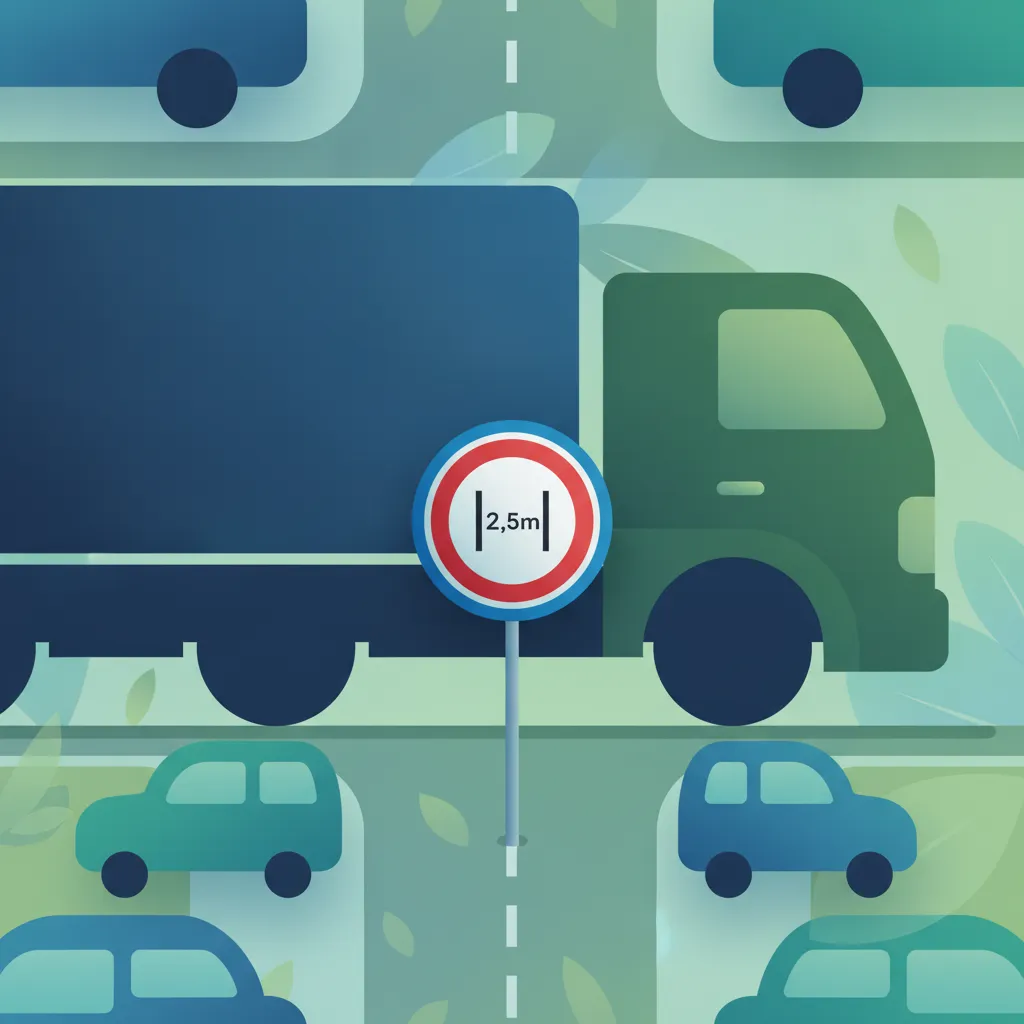
This lesson offers a deep dive into the specific regulations concerning weight, width, and axle load restrictions for goods vehicles. It covers how to read and comply with the associated road signs to avoid overloading weak bridges and entering restricted areas. Learners will understand the importance of correct load assessment and the serious penalties for non-compliance, which are enforced through DVSA roadside inspections and weighbridges.
This lesson focuses on the specific rules and best practices for driving HGVs on motorways in Great Britain. It covers mandatory speed limits for goods vehicles, lane discipline including restrictions on using the outside lane, and procedures for safely joining and leaving the motorway. The lesson also includes up-to-date information on driving on smart motorways, including understanding the signs and using emergency refuge areas correctly.

This lesson addresses the critical importance of child safety in school transport zones and around school buses. It covers the specific regulations, such as 20 mph speed limits and stopping restrictions indicated by zigzag lines. Learners will focus on the unpredictable nature of children and the need for heightened vigilance and readiness to stop unexpectedly. The content also includes procedures for the safe transport of pupils, ensuring their security both inside and outside the vehicle.
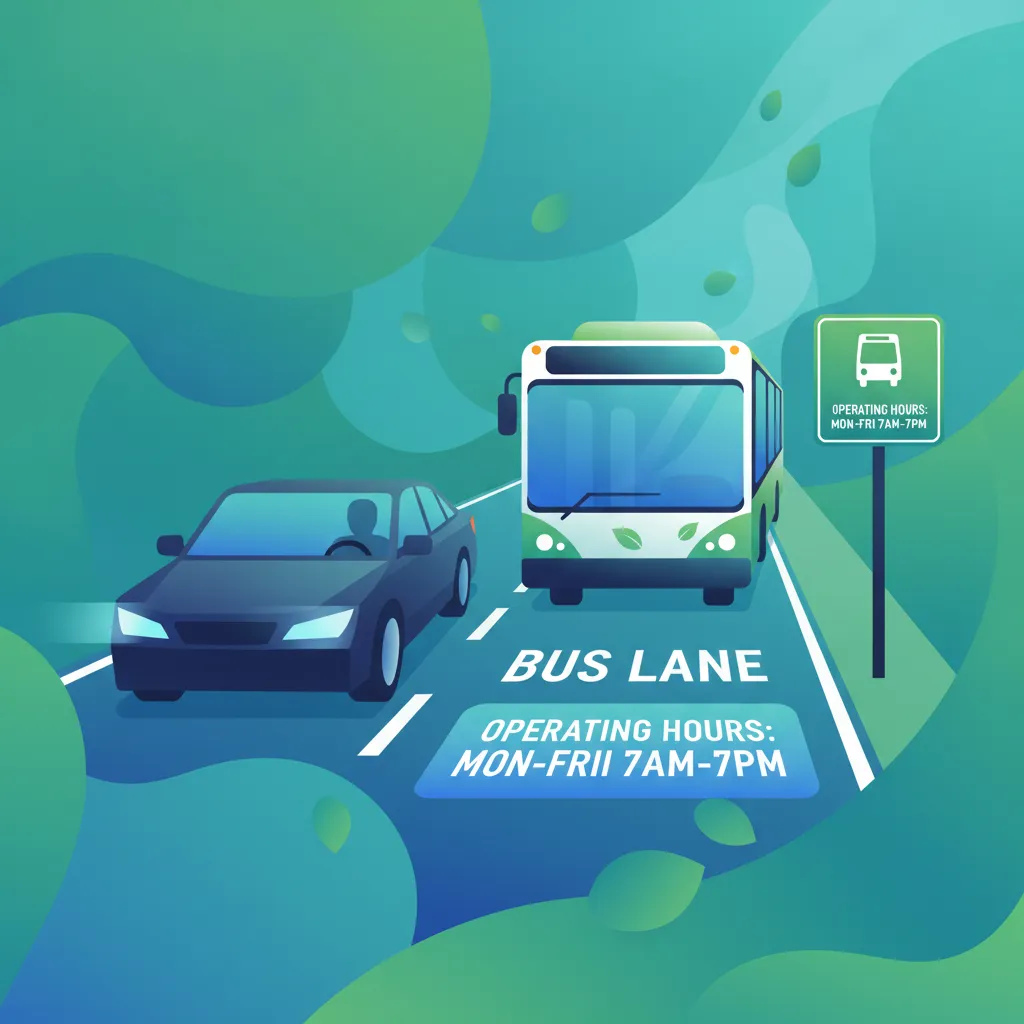
This lesson explores the specifics of bus lane markings, operating times, and priority situations where buses have precedence over other traffic. It emphasizes correct lane discipline, lawful entry and merging practices, and the exemptions granted to designated passenger vehicles. Learners will also understand how bus lane enforcement works and what penalties may be incurred for non-compliance, ensuring safe and efficient movement through urban traffic systems.
Find clear answers to common questions learners have about Access Restrictions and Low Emission Zones. Learn how the lesson is structured, which driving theory objectives it supports, and how it fits into the overall learning path of units and curriculum progression in Great Britain. These explanations help you understand key concepts, lesson flow, and exam focused study goals.
You must check your vehicle's Euro emission standard against the requirements of the specific zone, such as London's ULEZ. Generally, Euro VI is required for heavy goods vehicles to avoid charges; always use the official government registration checker before entering.
Yes, weight and dimension signs are mandatory. If a sign indicates a weight limit, it applies to the maximum authorised mass (MAM) of your vehicle, not the current weight of your cargo. Ignoring these can result in prosecution and licence endorsements.
No. While digital navigation is helpful, you must always cross-reference it with physical road signs. Professional HGV drivers are responsible for their route, and relying solely on a device that is not specifically set to HGV dimensions can lead you into restricted or unsuitable roads.
An LEZ (Low Emission Zone) primarily restricts vehicles based on their exhaust emissions to improve air quality. A Congestion Charge is a toll-based system designed to manage traffic volume in busy urban centers, regardless of your vehicle's emission output.
Dive into our comprehensive question bank to find exactly what you need for your Great Britain theory test. Use our advanced filters to pinpoint specific subjects or test your knowledge on challenging areas, ensuring you're fully prepared for success.