
This lesson provides a comprehensive approach to route planning specifically designed for Category C goods vehicle operators. You will learn how to integrate vehicle-specific constraints into your journeys, ensuring compliance with UK legal requirements while maintaining efficiency. This knowledge is fundamental for both your theory exam and your professional daily driving practice.
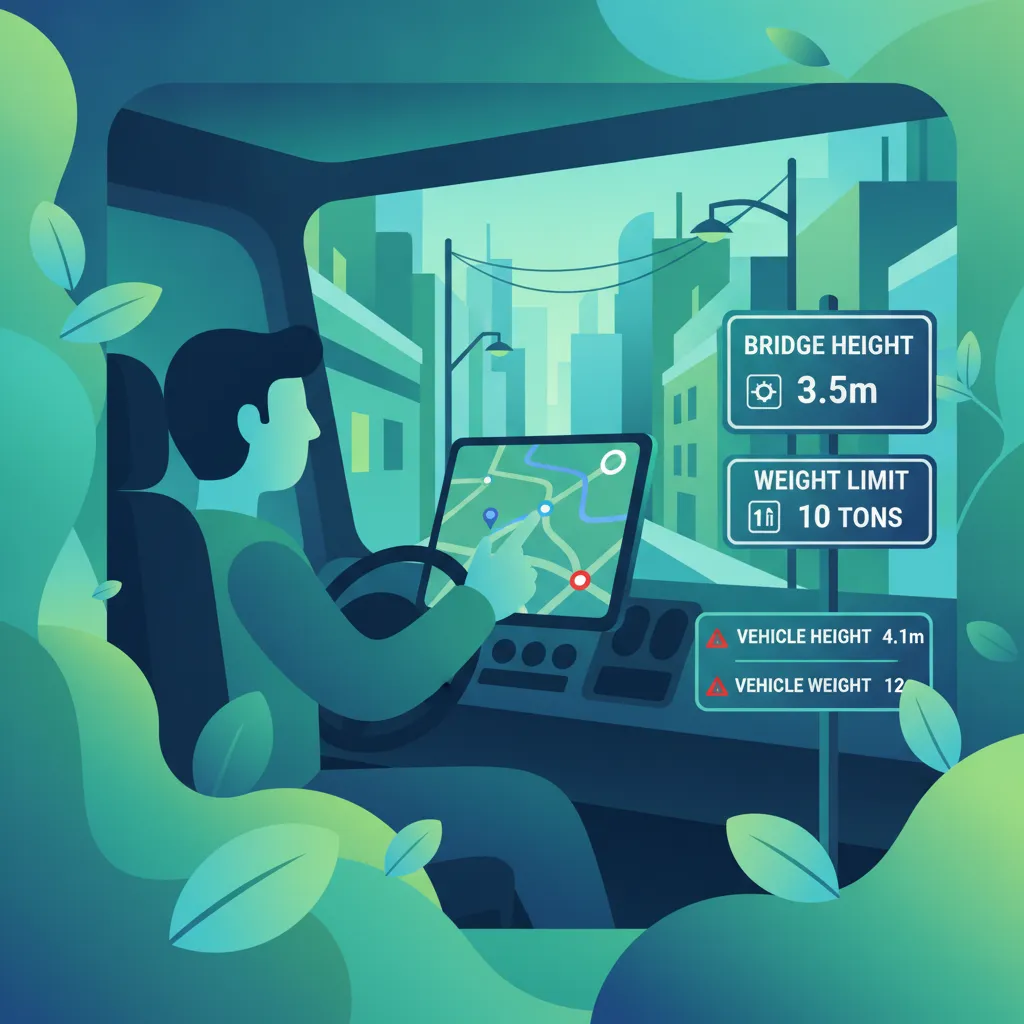
Lesson content overview
Route planning for goods vehicles is a foundational skill for any professional driver aiming for a Category C licence in Great Britain. It involves far more than simply finding the shortest distance between two points; it's a strategic process that integrates legal requirements, vehicle specifications, cargo characteristics, and dynamic road conditions. Mastering this process ensures not only operational efficiency and fuel savings but, critically, driver safety and full compliance with the law.
This lesson provides a comprehensive framework for planning routes that are safe, legal, and efficient, mitigating risks associated with vehicle dimensions, weight limits, low bridges, strict delivery schedules, and unexpected disruptions like roadworks or traffic. By understanding and applying these principles, professional goods vehicle drivers can contribute to safer roads, reduce operational costs, and uphold the high standards of the industry.
For commercial goods vehicle drivers, a meticulously planned route is the backbone of every successful journey. Unlike cars, large goods vehicles (HGVs) face numerous restrictions and challenges that necessitate specialised planning. Ignoring these factors can lead to costly fines, severe vehicle damage, infrastructure damage, and dangerous road incidents.
Effective route planning directly impacts several key areas of professional driving. It is crucial for ensuring on-time deliveries, optimising fuel consumption, and maintaining cargo security by avoiding sudden manoeuvres on unsuitable roads. Moreover, it is a critical component of adhering to the Highway Code and the stringent regulations set by the Driver and Vehicle Standards Agency (DVSA), thereby protecting your licence and career.
Professional route planning for Category C goods vehicles is guided by several core principles. These principles ensure that every journey is conducted safely, legally, and with maximum efficiency, accounting for the unique demands of heavy vehicle operation.
Adhering to all statutory limits and restrictions is paramount. This includes strict regulations concerning vehicle weight, height, width, and axle load, as well as adherence to specific access rules such as those found in low emission zones (LEZ) and ultra low emission zones (ULEZ). Failure to comply can result in significant fines, damage to your vehicle or road infrastructure, and potentially serious accidents. Verifying these limits before departure is non-negotiable and directly influences viable route selection.
Understanding your vehicle’s exact dimensions – its overall length, width, height, and turning circle – is fundamental. This knowledge dictates which bridges, tunnels, and narrow streets can be safely navigated. Neglecting dimensional awareness can lead to collisions with fixed structures, causing extensive damage and traffic disruption. It affects your choice of lanes, the feasibility of certain turns, and overall manoeuvrability on various road types.
The way cargo is loaded and secured has a profound impact on vehicle stability and safety, which in turn affects route planning. Factors such as weight distribution, the vehicle's centre of gravity, and the security of the load must be considered. Proper load management prevents rollovers, reduces tyre and axle wear, and ensures the vehicle remains stable on challenging terrain. This principle influences permissible gradients, speed limits, and the types of roads you can safely use.
Route planning must balance the need for timely deliveries with the imperative to adhere to driver hours regulations. Minimising travel time and fuel consumption while meeting precise delivery windows is crucial for operational reliability and cost efficiency. However, this must never come at the expense of safety or legal compliance. Planning requires careful consideration of speed limits, anticipated traffic flow, and incorporating mandatory breaks to prevent driver fatigue.
Road conditions are rarely static. The ability to integrate real-time data, such as live traffic updates, roadworks notifications, and weather alerts, allows drivers to modify routes on the fly. This dynamic adaptability is vital for mitigating unexpected disruptions, maintaining schedules, and enhancing overall safety. It necessitates reliable navigation systems and continuous driver vigilance.
A systematic evaluation of potential hazards is a critical part of pre-trip planning. Identifying risks such as low bridges, weight-restricted roads, steep gradients, narrow streets, and congested urban zones allows for proactive mitigation strategies. This involves developing contingency plans and identifying alternative routes that remain safe and compliant, ensuring that any unforeseen event does not compromise the journey.
With increasing emphasis on air quality, route planning must also account for environmental considerations. This includes planning routes that minimise emissions and, crucially, avoid low-emission zones (LEZ) and ultra-low emission zones (ULEZ) if your vehicle does not meet the required emission standards. Compliance with these regulations helps avoid fines and supports corporate sustainability objectives.
An effective route planning process is systematic, integrating all the core principles to create a robust and adaptable journey plan.
Pre-Trip Data Gathering: Collect all essential information: precise vehicle dimensions (height, width, length), load details (weight, distribution, centre of gravity), specific delivery constraints (time windows, access points), and any relevant legal limits for the vehicle type.
Map & Software Analysis: Utilise HGV-specific navigation tools or up-to-date physical maps. These specialised resources are designed to identify routes that are suitable for large vehicles, filtering out hazardous or illegal options.
Legal & Dimensional Filtering: Actively remove any potential routes that violate height, width, length, weight, or axle load restrictions. This crucial step prevents collisions, fines, and damage to infrastructure.
Time & Efficiency Optimisation: Once legally compliant routes are identified, use algorithms or practical judgment to select the most time-efficient option. This involves respecting speed limits, anticipating traffic flow, and factoring in driver hours regulations.
Risk Assessment & Contingency Planning: Thoroughly review the chosen route for potential hazards such as low bridges, steep gradients, or narrow streets. For each identified risk, develop one or more alternative routes that are also compliant and safe.
Final Route Confirmation: Before departure, review the final route with the driver. Confirm all legal aspects, ensure the driver understands any specific challenges, and formally document the route plan for reference.
Real-Time Monitoring & Adjustment: Throughout the journey, continuously monitor for real-time updates regarding traffic congestion, roadworks, or adverse weather. Be prepared to dynamically adjust the route as needed, always ensuring that any new path remains compliant with all vehicle and road restrictions.
Professional drivers must have a deep understanding of the physical and legal constraints that govern goods vehicle movement. These include vehicle dimensions, weight limits, and specific road restrictions.
The physical dimensions of your goods vehicle are critical determinants of route viability. Category C vehicles, and especially articulated combinations (C+E), have significantly different requirements from standard passenger cars.
Always know your vehicle's exact dimensions, including any load overhangs. Even slight miscalculations can lead to dangerous and costly collisions with fixed structures.
The total weight of your vehicle and its distribution across axles are critical for road and bridge integrity. Exceeding these limits is illegal and dangerous.
The Department for Transport (DfT) provides detailed weight tables that specify limits for various vehicle configurations and road types. It is crucial to consult these regulations, particularly Schedule 8 of the Great Britain Road Traffic Act 1988, to ensure compliance and protect infrastructure.
Low bridges and other overhead structures represent a significant hazard for goods vehicles. Collisions with these structures can cause catastrophic damage, severe injury, and widespread traffic disruption.
Never assume a bridge clearance. Always check your HGV-specific navigation and road signage. Even a small difference can lead to a serious incident, especially when descending a gradient where the effective height of your vehicle can increase due to trailer articulation.
Certain areas impose restrictions on vehicle access, often based on emissions, weight, or dimensions. These are particularly common in urban centres or environmentally sensitive regions.
The physical characteristics of a road, such as its steepness (gradient) and surface condition, significantly impact goods vehicle operation and route selection.
Modern technology plays a pivotal role in sophisticated route planning for goods vehicles, but traditional methods still hold value.
Always keep your navigation software updated. Outdated maps may not reflect new road layouts, restrictions, or temporary roadworks, potentially leading you into an unsuitable situation.
Dynamic adaptability relies heavily on real-time information.
Even with the best planning, unforeseen events can occur. Having contingency routes is essential for maintaining operational continuity.
Developing these alternatives during the initial planning phase saves critical time and reduces stress when a disruption occurs. It ensures that any deviation remains legally permissible for your specific vehicle.
Professional goods vehicle drivers operate under a strict regulatory framework designed to ensure safety and fairness. Awareness of these regulations is fundamental to route planning.
The Highway Code provides essential guidance for all road users, including specific rules for large vehicles.
The Department for Transport (DfT) and the Road Vehicles (Construction and Use) Regulations 1986 set out the legal maximum weights for goods vehicles and their axles. These are crucial for preventing damage to roads and bridges. Drivers must always ensure their vehicle's gross weight and individual axle loads comply with these statutory limits, particularly when crossing bridges or using roads with specific weight restrictions.
Route planning must always factor in the strict EU Driver Hours Rules (or domestic rules for certain operations in GB). These regulations limit daily and weekly driving times and mandate specific rest periods to prevent driver fatigue.
Planning a route that is too ambitious can force a driver to exceed these limits, leading to fines, licence points, and increased accident risk. Realistic scheduling is vital.
These zones, such as the London LEZ and ULEZ, require goods vehicles to meet specific emission standards to operate without charge. Non-compliant vehicles entering these zones during operational hours incur daily charges or fines. Route planners must check the vehicle's Euro Emission Standard against the zone requirements and plan compliant routes or obtain necessary permits.
Professional drivers frequently encounter specific challenges during route planning. Anticipating and mitigating these can prevent serious incidents and delays.
One of the most frequent and severe issues. This can occur when drivers misread signage, fail to account for the exact height of their vehicle (especially with load overhangs or on gradients), or rely on outdated navigation. Always double-check and, if in doubt, find an alternative.
Driving a vehicle whose GVW or axle load exceeds the rating of a bridge or road section can lead to structural damage. This often happens when a driver isn't fully aware of their laden weight or ignores specific weight restriction signs. Proper load calculation and adherence to DfT weight tables are essential.
Entering a Low Emission Zone (LEZ) or Ultra Low Emission Zone (ULEZ) without a compliant vehicle or valid permit is a common and costly error. This typically results from a lack of pre-trip verification of emission standards or an assumption that the zone only applies to passenger vehicles.
Failing to react to real-time traffic updates, road closures, or adverse weather conditions can lead to significant delays, missed delivery windows, and increased stress. Over-reliance on a static route plan without dynamic adjustments can quickly render the journey inefficient and potentially unsafe.
Neglecting the steepness of gradients during route planning can lead to situations where a heavily laden HGV struggles on ascents or experiences brake fade on descents. This oversight often stems from underestimating the physical demands of gradients on large vehicles, especially those with high centres of gravity.
Understanding route planning concepts comes to life through practical examples. Here are a few common scenarios a Category C driver might face.
Imagine you are driving an articulated HGV, which stands 4.1 metres tall, towards a distribution centre in rural England. Your primary navigation system, specifically designed for HGVs, alerts you to a bridge on your current route, the A124, with a posted clearance of 3.9 metres.
Correct Behaviour: The navigation system immediately suggests a compliant detour via the B215, which adds 10 minutes to your journey but avoids the low bridge. You accept the alternative route, inform your dispatcher of the minor delay, and proceed safely.
Explanation: This scenario highlights the critical importance of dimensional awareness (Rule 197) and the value of HGV-specific navigation. By trusting the system and re-routing, you prevent a potentially catastrophic collision, significant vehicle damage, and widespread traffic disruption.
You are transporting a heavy load of construction materials, bringing your rigid HGV's Gross Vehicle Weight (GVW) to 41 tonnes. Your planned route takes you over an old stone bridge on a minor road that has a clear sign indicating a maximum weight limit of 40 tonnes.
Correct Behaviour: Your pre-trip planning, aided by your HGV navigation software, flagged this bridge. You had already identified and chosen an alternative route that utilises a newly built bypass, rated for 45 tonnes, ensuring compliance and bridge safety.
Explanation: This demonstrates the necessity of consulting DfT weight tables and adhering to posted weight restrictions. Proper load management and route selection protect vital infrastructure and prevent legal penalties.
Your diesel HGV is classified as Euro V. Your delivery destination is within central London, an area covered by the Ultra Low Emission Zone (ULEZ) which requires Euro VI standards for HGVs during operating hours.
Correct Behaviour: During your pre-trip data gathering, you identified the ULEZ restriction. Your dispatcher, based on this information, either secured a temporary exemption permit for your vehicle, or you planned an alternative route that delivers to a logistics hub just outside the ULEZ, where cargo is transferred to a compliant smaller vehicle.
Explanation: Awareness of LEZ/ULEZ regulations is crucial. Failing to plan for emission standards can lead to significant daily charges or fines, impacting operational costs and compliance.
Mid-journey, your HGV is on the M1 motorway, and your real-time traffic updates alert you to a major accident ahead, causing a standstill. Your navigation system immediately suggests an alternative route using an A-road that, while compliant with your vehicle's weight and dimensions, adds 30 minutes to your estimated arrival time.
Correct Behaviour: You quickly assess your driver hours remaining and your delivery window. You decide the delay is manageable within your allowed driving hours and accept the reroute, informing your dispatcher of the change and revised ETA.
Explanation: This illustrates dynamic adaptability and the importance of integrating real-time information. By adjusting your route, you avoid prolonged delays, manage your driver hours effectively, and maintain your schedule as best as possible.
You are heavily laden with a cargo that has a relatively high centre of gravity, and your primary route includes a rural road with a 12% downhill gradient. Your HGV navigation system highlights this steep section.
Correct Behaviour: Recognising the risk of brake fade and reduced stability with a high centre of gravity on such a steep descent, you opt for a slightly longer alternative route that follows a gentler valley road. This ensures safer handling and reduced wear on your braking system.
Explanation: This scenario emphasises how load stability and gradient considerations are integral to route planning. Prioritising safety over marginal time savings prevents potential loss of control and brake failure.
Effective route planning is a critical competency for professional goods vehicle drivers operating under a Category C licence in Great Britain. It moves beyond simply finding the shortest path, embracing a multi-faceted approach that factors in vehicle dimensions, weight limits, environmental zones, driver regulations, and real-time road conditions.
By systematically gathering information, utilising HGV-specific navigation tools, rigorously assessing risks, and remaining dynamically adaptable, drivers can ensure every journey is safe, legal, cost-efficient, and completed on schedule. This proactive approach not only protects your vehicle and your licence but also contributes significantly to road safety and the smooth operation of the logistics industry. Continuous learning and adherence to best practices in route planning are hallmarks of a truly professional driver.
Effective route planning for Category C goods vehicles requires balancing legal compliance, vehicle dimensions, and operational efficiency through a systematic 7-step process. Key constraints include specific dimensional limits (height up to 4.0m, width 2.55m, articulated length 18.75m), gross vehicle weight up to 44 tonnes, and individual axle load restrictions. Drivers must use HGV-specific navigation rather than standard GPS, account for Low Emission Zone requirements, and factor driver hours regulations (9 hours daily, 56 hours weekly) into journey scheduling. Real-time adaptability through traffic updates and pre-planned contingency routes is essential for maintaining safe, legal, and timely deliveries.
A short set of high-value points that capture the most important learning from this lesson.
Route planning for HGVs integrates legal requirements, vehicle dimensions, cargo characteristics, and dynamic road conditions—not just finding the shortest distance.
HGV-specific navigation is essential because standard GPS cannot reliably filter routes for height, weight, and width restrictions.
Always verify vehicle dimensions against posted clearances; even small miscalculations can cause catastrophic low bridge collisions.
Driver hours regulations (9 hours daily, 56 hours weekly) must be factored into route planning to prevent fatigue and legal violations.
Contingency routes should be pre-planned during initial planning so any deviation remains legally compliant with vehicle restrictions.
Explore all units and lessons included in this driving theory course.
Maximum height for most HGVs is 4.0m (4.5m for specialised C+E), width is 2.55m (2.6m for temperature-controlled trailers), and articulated length can reach 18.75m.
Highway Code Rules 197, 198, and 199 specifically address driver responsibility for knowing vehicle height, width, and length.
Gross Vehicle Weight for Category C can reach 44 tonnes, but individual axle limits (e.g., 10 or 13 tonnes) must also be respected independently.
Low Emission Zones (LEZ) and Ultra Low Emission Zones (ULEZ) require Euro VI compliance for diesel HGVs in London; non-compliance incurs daily charges.
Gradient steepness affects braking on descents and engine strain on ascents, particularly for vehicles with high centres of gravity.
Assuming a bridge clearance matches your memory rather than verifying with HGV-specific navigation and current signage.
Relying on standard consumer GPS without HGV-specific filters, which may route you through low bridges or weight-restricted roads.
Entering a LEZ or ULEZ without checking if your vehicle meets the required Euro emission standard for that zone.
Failing to account for load overhang or suspension movement on gradients, which can effectively increase vehicle height.
Planning routes that approach driver hour limits without factoring in mandatory breaks and realistic traffic conditions.
Lesson content overview
A short set of high-value points that capture the most important learning from this lesson.
Route planning for HGVs integrates legal requirements, vehicle dimensions, cargo characteristics, and dynamic road conditions—not just finding the shortest distance.
HGV-specific navigation is essential because standard GPS cannot reliably filter routes for height, weight, and width restrictions.
Always verify vehicle dimensions against posted clearances; even small miscalculations can cause catastrophic low bridge collisions.
Driver hours regulations (9 hours daily, 56 hours weekly) must be factored into route planning to prevent fatigue and legal violations.
Contingency routes should be pre-planned during initial planning so any deviation remains legally compliant with vehicle restrictions.
Explore all units and lessons included in this driving theory course.
Maximum height for most HGVs is 4.0m (4.5m for specialised C+E), width is 2.55m (2.6m for temperature-controlled trailers), and articulated length can reach 18.75m.
Highway Code Rules 197, 198, and 199 specifically address driver responsibility for knowing vehicle height, width, and length.
Gross Vehicle Weight for Category C can reach 44 tonnes, but individual axle limits (e.g., 10 or 13 tonnes) must also be respected independently.
Low Emission Zones (LEZ) and Ultra Low Emission Zones (ULEZ) require Euro VI compliance for diesel HGVs in London; non-compliance incurs daily charges.
Gradient steepness affects braking on descents and engine strain on ascents, particularly for vehicles with high centres of gravity.
Assuming a bridge clearance matches your memory rather than verifying with HGV-specific navigation and current signage.
Relying on standard consumer GPS without HGV-specific filters, which may route you through low bridges or weight-restricted roads.
Entering a LEZ or ULEZ without checking if your vehicle meets the required Euro emission standard for that zone.
Failing to account for load overhang or suspension movement on gradients, which can effectively increase vehicle height.
Planning routes that approach driver hour limits without factoring in mandatory breaks and realistic traffic conditions.
Explore search topics learners often look for when studying Route Planning for Goods Vehicles. These topics reflect common questions about road rules, driving situations, safety guidance, and lesson level theory preparation for learners in Great Britain.
Browse additional driving theory lessons that cover connected traffic rules, road signs, and common driving situations related to this topic. Improve your understanding of how different rules interact across everyday traffic scenarios.
Understand critical road restrictions like height, weight, and width limits affecting goods vehicles. Learn how these apply to route planning and compliance with Great Britain's Highway Code and DVSA regulations for professional drivers.
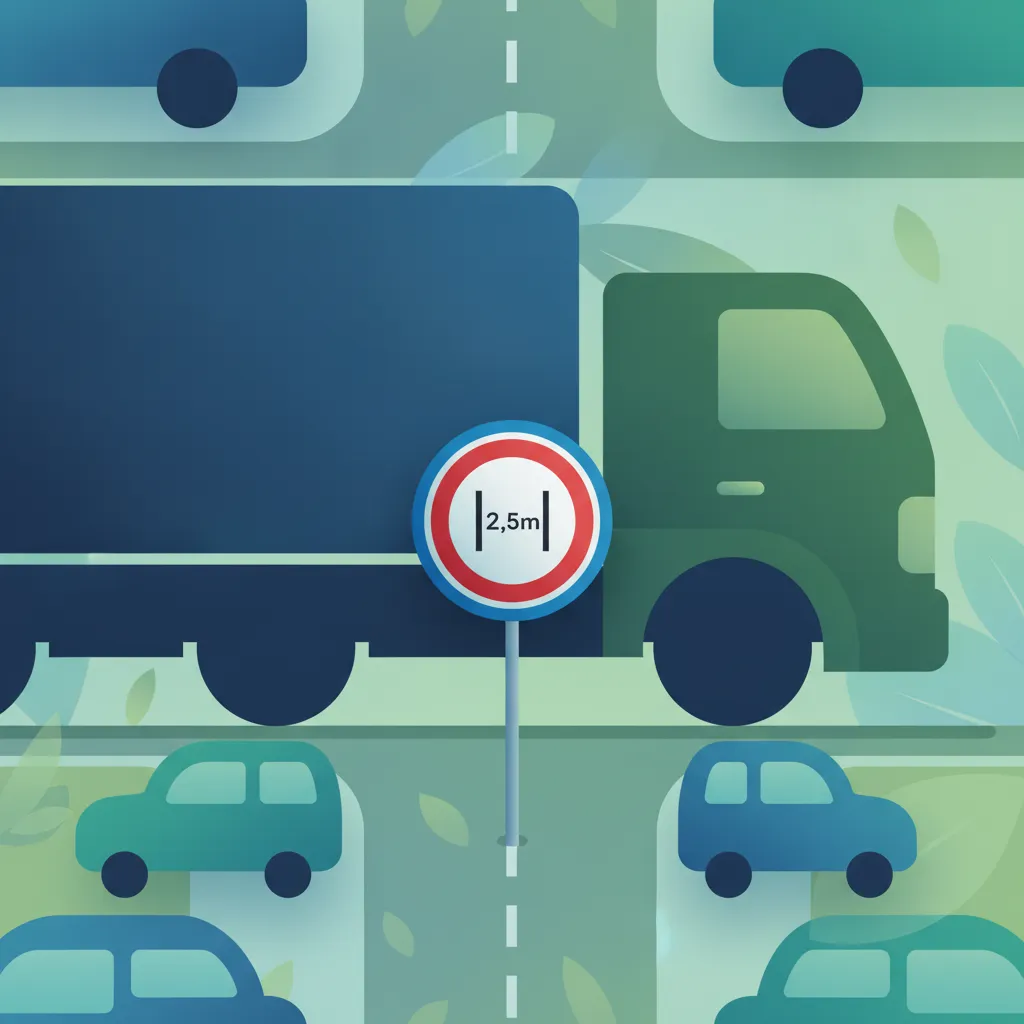
This lesson offers a deep dive into the specific regulations concerning weight, width, and axle load restrictions for goods vehicles. It covers how to read and comply with the associated road signs to avoid overloading weak bridges and entering restricted areas. Learners will understand the importance of correct load assessment and the serious penalties for non-compliance, which are enforced through DVSA roadside inspections and weighbridges.
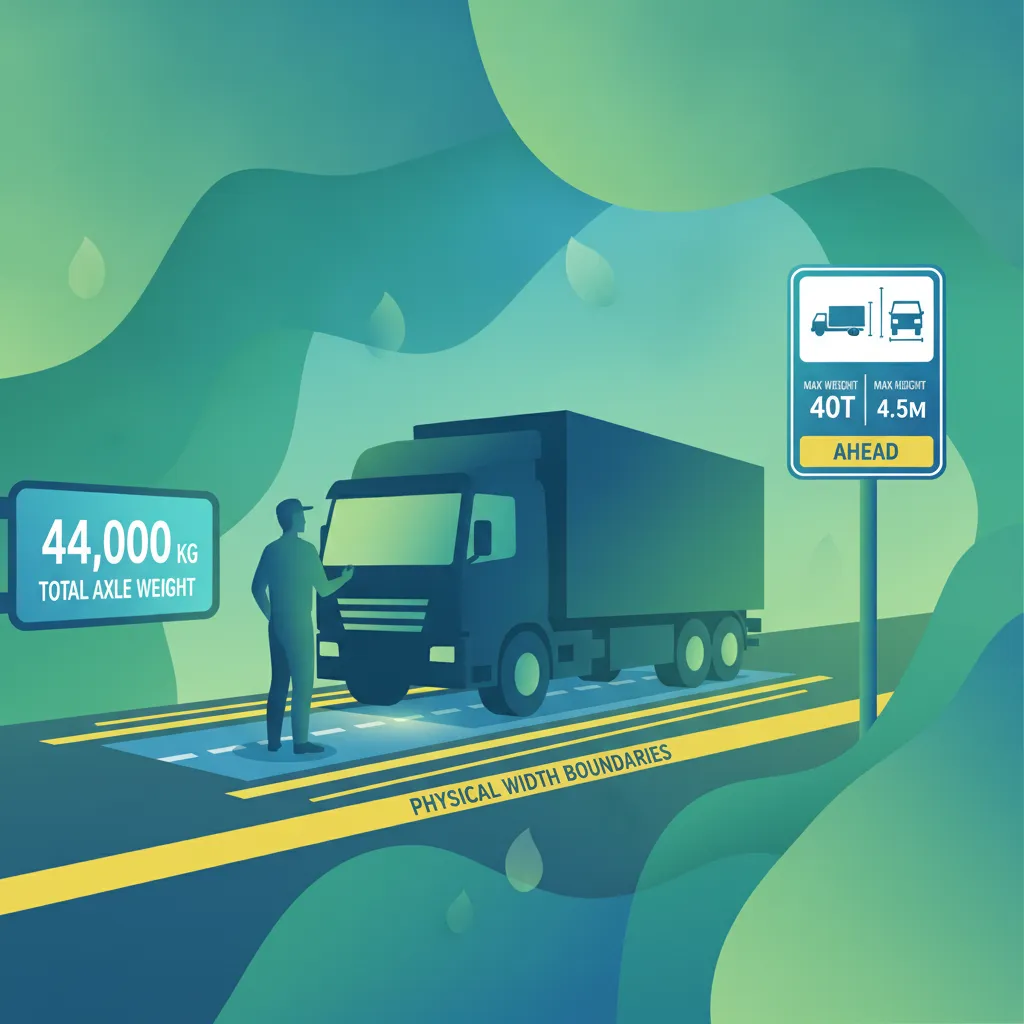
This lesson introduces the statutory limits governing the dimensions and mass of goods vehicles in Great Britain, including gross vehicle weight and individual axle loads. It explains how to calculate a vehicle's loaded weight to ensure it remains within legal parameters, preventing penalties and safety risks. Understanding these regulations is crucial for preventing damage to road infrastructure and ensuring the vehicle's stability and safe operation on every journey.
This lesson provides guidance on how to safely and compliantly navigate through roadworks, which are a common feature of the road network. It covers the interpretation of temporary signs, strict adherence to reduced speed limits, and how to maneuver through narrow lanes and contraflow systems. The paramount importance of protecting road workers by driving with extra care and attention is a central theme of this lesson.

This lesson focuses on the specific rules and best practices for driving HGVs on motorways in Great Britain. It covers mandatory speed limits for goods vehicles, lane discipline including restrictions on using the outside lane, and procedures for safely joining and leaving the motorway. The lesson also includes up-to-date information on driving on smart motorways, including understanding the signs and using emergency refuge areas correctly.
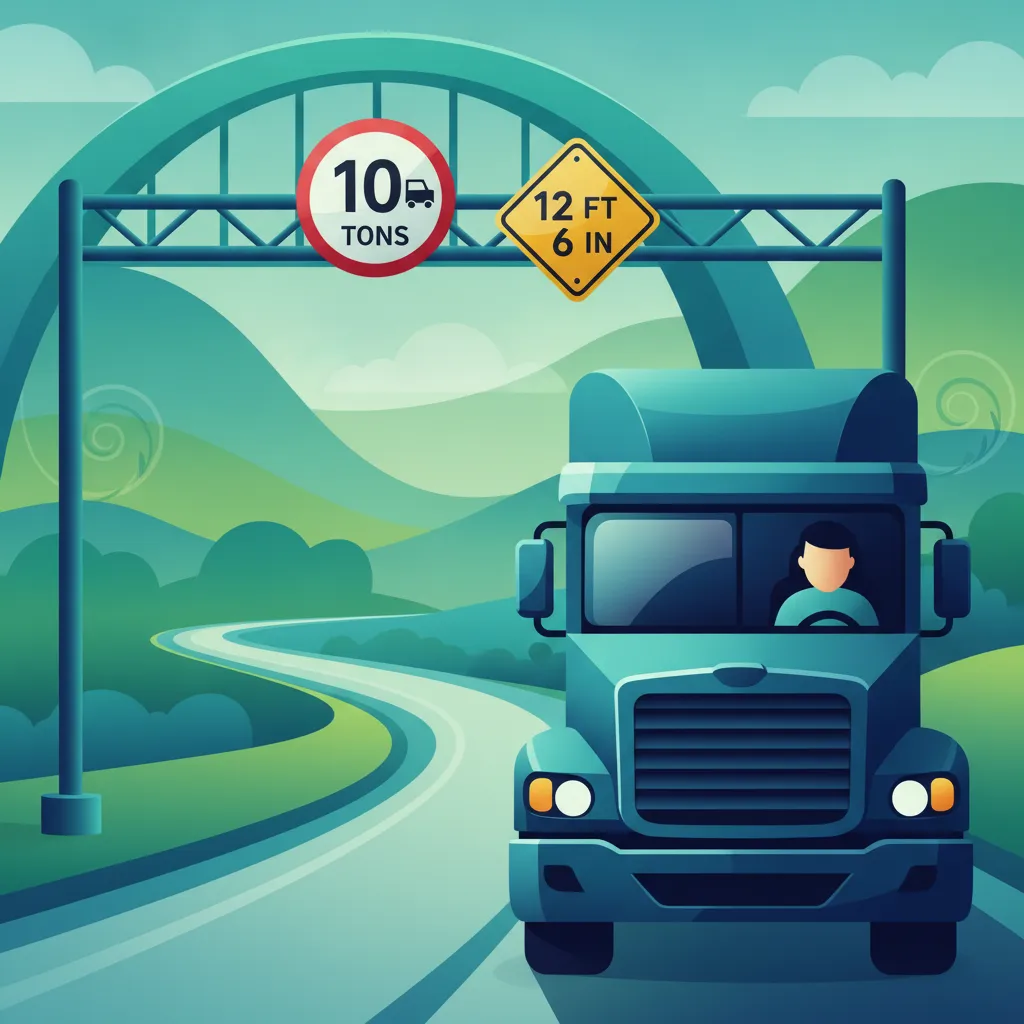
This lesson provides a detailed focus on the specific road signs that directly affect drivers of large goods vehicles. You will learn to accurately interpret mandatory signs for weight, height, and width restrictions, as well as signs indicating lane usage and prohibited routes. Understanding these signs is not optional; it is a legal requirement for avoiding fines, preventing accidents, and ensuring the safe passage of your vehicle through the road network.
This lesson examines the unique rules and restrictions governing buses and coaches, focusing on bus lane priority, time-based restrictions, and loading zone limitations. Learners will explore the criteria for using bus-only routes and understand the legal consequences of non-compliance. The content also reviews signage indicating bus gate operation and areas where passenger vehicles are prohibited from stopping or loading outside of designated zones, ensuring lawful and efficient urban navigation.
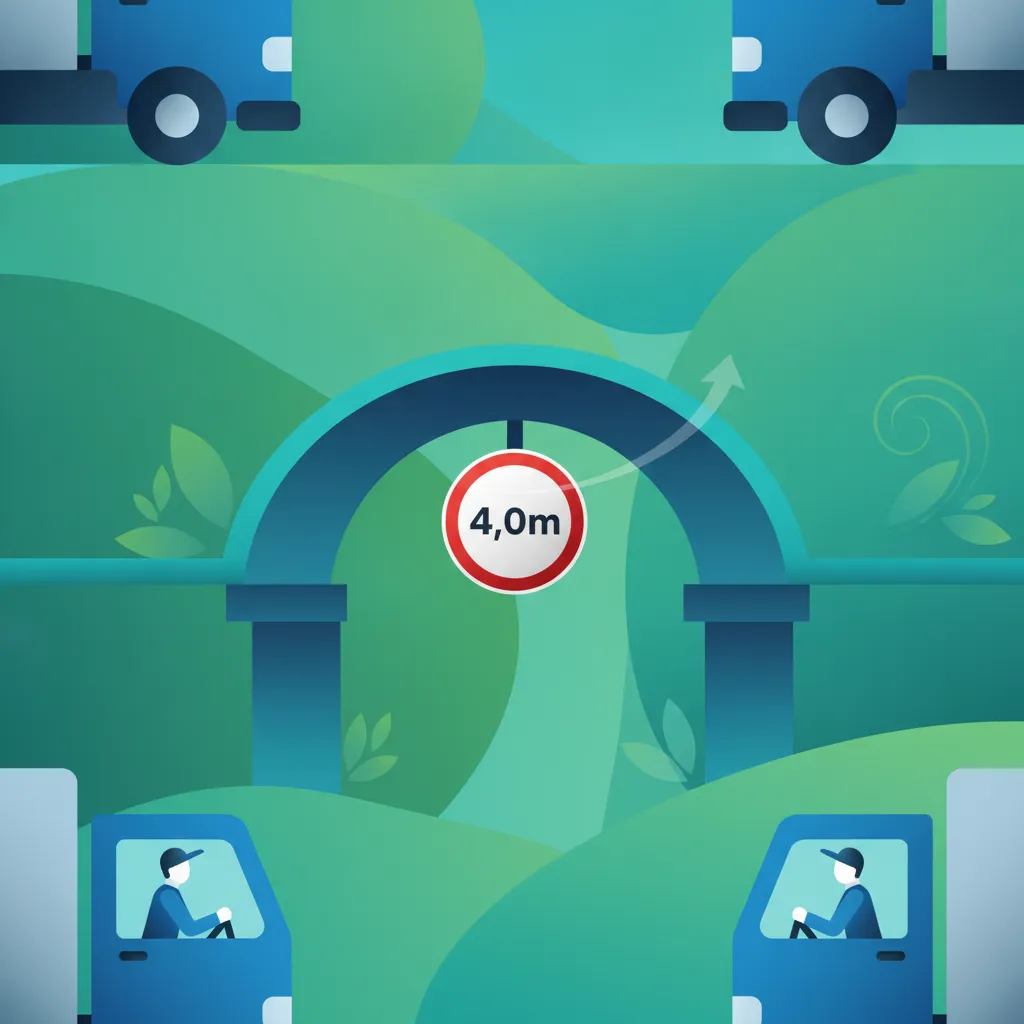
This lesson teaches drivers how to interpret and act on crucial height restriction warnings for bridges, tunnels, and other overhead structures. You will learn the importance of knowing your vehicle's exact height and using this information for effective route planning to avoid bridge strikes. The content stresses the legal and financial ramifications of ignoring these restrictions, reinforcing the necessity of thorough pre-journey checks and awareness while on the road.
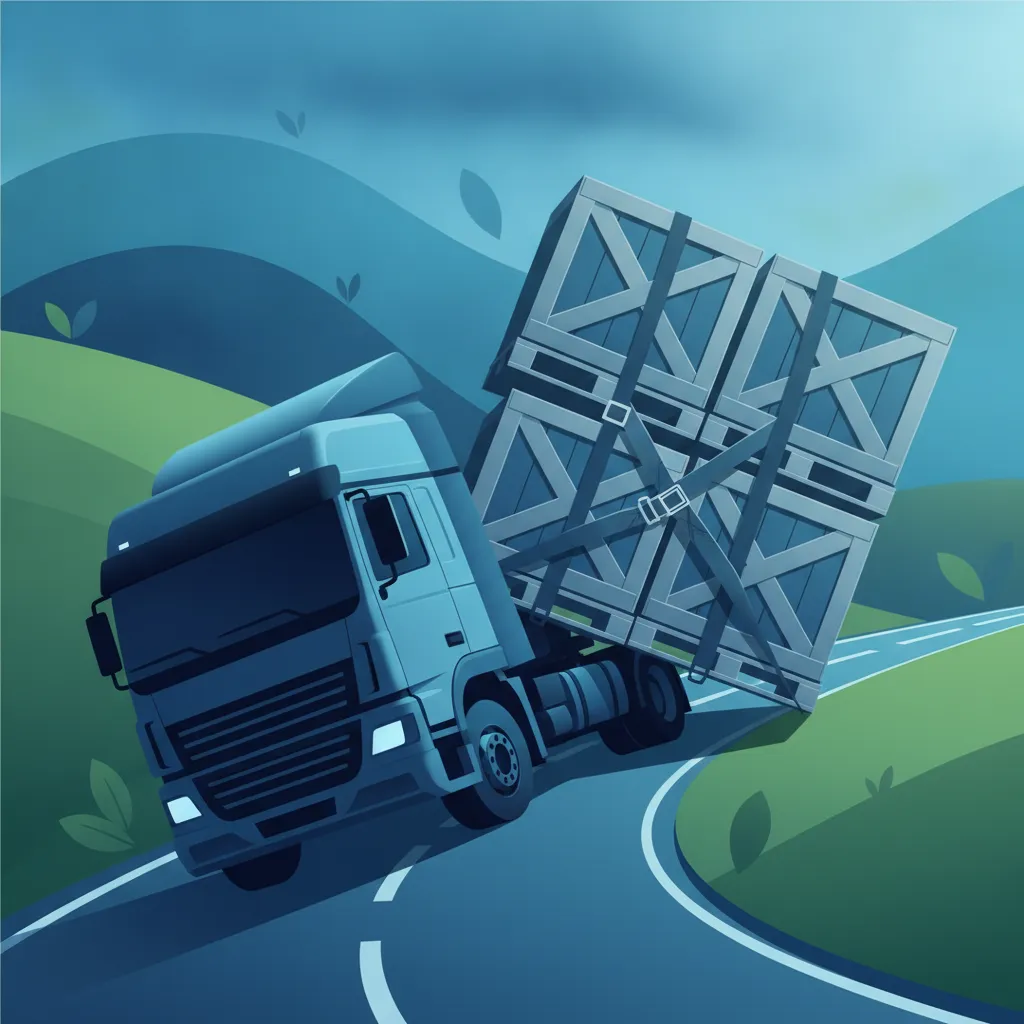
This lesson covers the principles of safe loading to prevent items from shifting or falling and causing a hazard. It explains that any load must be securely fastened and must not obstruct your view. You will also learn how overloading or distributing weight incorrectly can dangerously affect the vehicle's steering, braking, and overall stability.
This lesson analyzes the significant impact that large goods vehicles have on overall traffic flow, particularly in congested urban areas and on narrow roads. It discusses how their size can contribute to lane blockages, reduced overtaking opportunities, and bottlenecks at junctions. Learners will study strategies to minimize these effects, such as careful lane selection, maintaining steady speeds, and allowing adequate space, to promote safer and more efficient traffic movement for everyone.
This lesson addresses the unique set of challenges that rural roads present to HGV drivers. It covers how to safely navigate narrow and winding lanes, the importance of anticipating hazards like slow-moving agricultural machinery, mud on the road, and wildlife. You will learn how the national speed limit applies to your vehicle on these roads and why it is often necessary to travel at a much lower speed to ensure safety.
Explore essential HGV route planning tools, including navigation software and real-time data integration. Learn to handle common challenges and scenarios for efficient and safe route planning on Great Britain's roads.
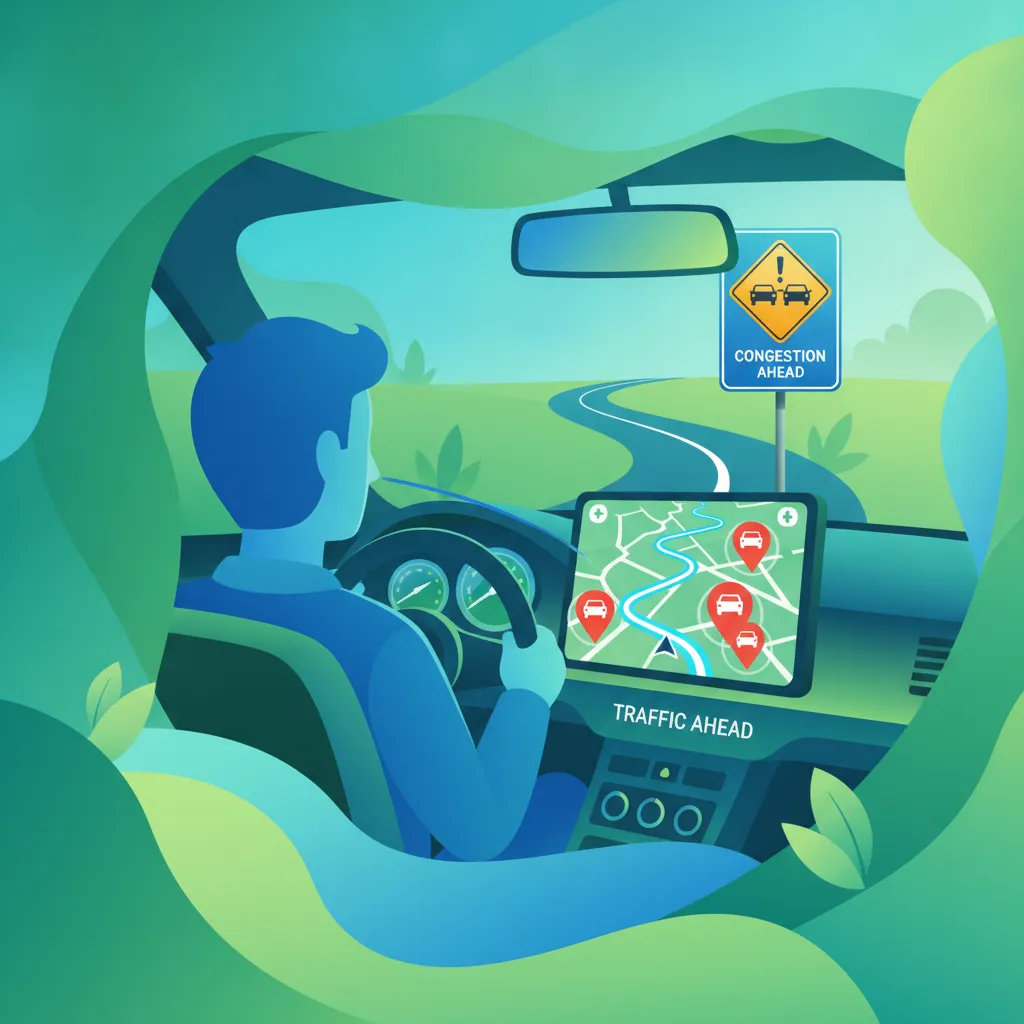
This lesson explores the effective use of modern digital navigation tools, including GPS systems and mobile apps tailored for HGVs. It explains how to leverage real-time traffic data, congestion alerts, and dynamic re-routing to adapt to changing road conditions. Importantly, it also emphasizes the need to use this technology safely, cross-referencing information with road signs and maintaining situational awareness to avoid distractions while driving.
This lesson focuses on the fundamentals of route planning and wayfinding for passenger vehicle drivers. Learners will examine how to use timetables, journey maps, and GPS navigation to identify stops and maintain schedule adherence. The discussion includes best practices for handling route deviations, detours, and unexpected obstructions while keeping passengers informed. Emphasizing service reliability and accurate passenger information, this lesson equips drivers for efficient and safe route execution.
This lesson provides guidance on how to safely and compliantly navigate through roadworks, which are a common feature of the road network. It covers the interpretation of temporary signs, strict adherence to reduced speed limits, and how to maneuver through narrow lanes and contraflow systems. The paramount importance of protecting road workers by driving with extra care and attention is a central theme of this lesson.
This lesson addresses the unique challenges of operating a large goods vehicle in congested urban and city environments. It focuses on techniques for navigating narrow streets, making tight turns, and safely accessing delivery points while being highly aware of vulnerable road users like pedestrians and cyclists. The importance of exceptional observation, low-speed control, and clear communication with other road users is heavily emphasized to minimize risk in these complex settings.
This lesson focuses on the specific rules and best practices for driving HGVs on motorways in Great Britain. It covers mandatory speed limits for goods vehicles, lane discipline including restrictions on using the outside lane, and procedures for safely joining and leaving the motorway. The lesson also includes up-to-date information on driving on smart motorways, including understanding the signs and using emergency refuge areas correctly.

This lesson provides a detailed map of the significant blind spots located to the front, sides, and rear of a typical heavy goods vehicle. It explains the purpose of the different classes of mirrors and how to adjust them correctly for maximum visibility. Learners will be taught effective scanning techniques—'mirror-signal-manoeuvre'—to actively check these zones before changing position, ensuring they are aware of any hidden hazards or other road users.

This lesson examines the physical space a goods vehicle occupies on the road and its impact on maneuvering at junctions, roundabouts, and in tight spaces. Learners will understand the concepts of tail swing and off-tracking, and how to calculate the necessary clearance for safe turns. The content emphasizes maintaining safe distances from other road users and infrastructure, which is a key component of professional spatial awareness and accident prevention.
This lesson addresses the unique set of challenges that rural roads present to HGV drivers. It covers how to safely navigate narrow and winding lanes, the importance of anticipating hazards like slow-moving agricultural machinery, mud on the road, and wildlife. You will learn how the national speed limit applies to your vehicle on these roads and why it is often necessary to travel at a much lower speed to ensure safety.

This lesson addresses the serious danger of driver fatigue, a major cause of incidents involving commercial vehicles. It details the complex EU and GB domestic rules on drivers' hours, including driving limits and required rest periods. Learners will be taught to recognize the physical and mental signs of fatigue and understand the importance of taking quality rest to maintain alertness and ensure their own safety and that of others.
This lesson analyzes the significant impact that large goods vehicles have on overall traffic flow, particularly in congested urban areas and on narrow roads. It discusses how their size can contribute to lane blockages, reduced overtaking opportunities, and bottlenecks at junctions. Learners will study strategies to minimize these effects, such as careful lane selection, maintaining steady speeds, and allowing adequate space, to promote safer and more efficient traffic movement for everyone.
Find clear answers to common questions learners have about Route Planning for Goods Vehicles. Learn how the lesson is structured, which driving theory objectives it supports, and how it fits into the overall learning path of units and curriculum progression in Great Britain. These explanations help you understand key concepts, lesson flow, and exam focused study goals.
Standard GPS often fails to consider HGV-specific constraints like bridge heights, weight limits, and narrow roads. Using an HGV-specific navigation tool is critical to prevent getting stuck or violating road regulations.
You must ensure you have verified your vehicle's height in your cab. If a route is marked with a height restriction lower than your vehicle, you must proactively plan an alternative route before you depart to avoid dangerous situations.
Yes, many cities in Great Britain have Low Emission Zones or weight-restricted zones. Always check local access regulations before planning your route to ensure your vehicle is compliant and permitted to enter.
Efficient route planning avoids steep gradients, heavy congestion, and unnecessary idling. By choosing the most suitable path for your vehicle's size and weight, you significantly reduce fuel consumption and wear on your vehicle.
Dive into our comprehensive question bank to find exactly what you need for your Great Britain theory test. Use our advanced filters to pinpoint specific subjects or test your knowledge on challenging areas, ensuring you're fully prepared for success.