Right of way dictates which road user has priority to proceed first, preventing collisions and ensuring smooth traffic flow. In Great Britain, these rules are governed by the Highway Code, incorporating principles like the Hierarchy of Road Users. It's vital for all drivers to understand how signs, signals, and general rules dictate priority at every junction and interaction.
Theory topic content overview
Read the full theory topic guide for Right of Way Rules with structured, easy-to-scan content built for learners in Great Britain. This detailed section explains the exact rule, meaning, traffic context, comparison points, and exam logic behind this British driving theory topic so you can study faster, understand the concept more clearly, and avoid common interpretation mistakes on the theory test.
Right of way in Great Britain's traffic rules determines which road user has priority to proceed in situations where paths may conflict. This fundamental concept, enshrined in The Highway Code, is designed to ensure safe, orderly, and efficient movement for all road users, from pedestrians to large vehicles. Understanding these priority rules is essential for safe driving and forms a significant part of the DVSA theory test.
Right of way, also known as priority, is the legal and practical entitlement for a road user to proceed before another at a specific point in time or space. It is not an absolute right but a framework for decision-making at conflict points on Great Britain's roads. The core idea is to prevent collisions by clearly defining who should wait and who can go first.
Misinterpreting or ignoring right of way rules is a leading cause of collisions and near misses in Great Britain. For learners, a deep understanding is crucial because:
Determining who has priority involves a hierarchy of indicators and rules. Drivers in Great Britain must assess the situation based on:
A key principle introduced into The Highway Code for Great Britain. This places road users most at risk in the event of a collision at the top of the hierarchy. Drivers, especially of larger vehicles, bear the greatest responsibility to reduce danger to others. This means:
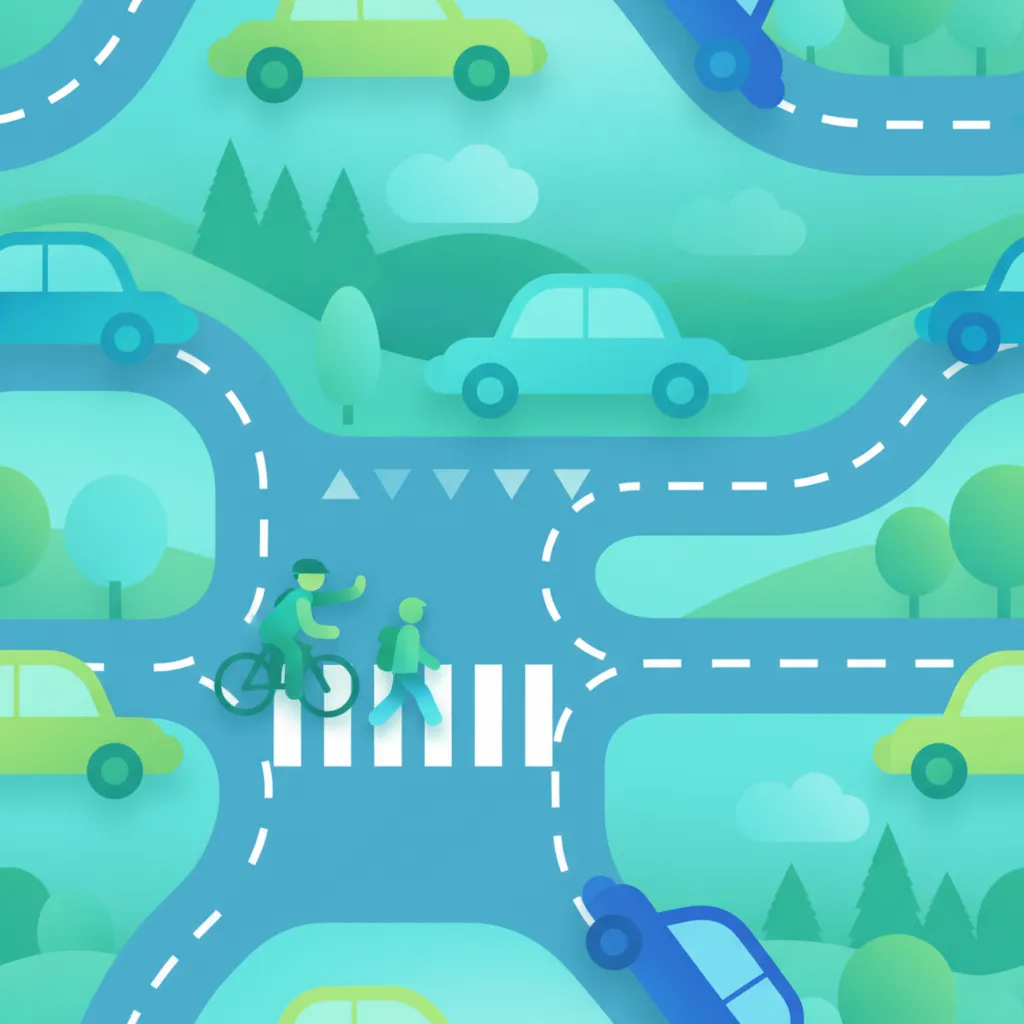
Crucially, drivers should give way to pedestrians crossing or waiting to cross at a junction that you are turning into or out of. This applies even if there's no formal crossing point. Cyclists also have priority when going straight ahead at a junction, over traffic waiting to turn into or out of a side road.
Traffic lights override all other signs and markings when they are operational.
These are paramount indicators of priority.
These reinforce signs or give instructions where signs might be absent.
Where no signs, markings, or signals dictate priority, general rules apply:
The Highway Code is the definitive source for right of way rules in Great Britain. The recent emphasis on the Hierarchy of Road Users (Rules H1, H2, H3) fundamentally shifts the responsibility, placing greater onus on those who can cause the most harm to look out for more vulnerable road users. This is a crucial distinction for learning to drive in England, Scotland, and Wales, reflecting a move towards proactive safety. The DVSA theory test will test your understanding of these specific UK rules, including their application at various junctions and crossings.
Always remember that right of way is about shared responsibility and anticipating others' actions. Even when you believe you have priority, be prepared to react to the unexpected. Prioritise safety over asserting your right, especially when vulnerable road users are involved. By diligently observing signs, road markings, traffic signals, and applying the Hierarchy of Road Users, you can make safe and confident decisions at every conflict point on Great Britain's roads.
Start with a short, direct summary of Right of Way Rules before reading the full explanation below.
Right of way determines which road user has priority to proceed in a given situation, such as at junctions or when encountering other traffic. In Great Britain, this is established by traffic signs, road markings, traffic light signals, and general rules outlined in The Highway Code. Always be prepared to give way, even if you have priority, to prevent an accident, and remember the Hierarchy of Road Users prioritises those most at risk.
Review the most important terms, rule signals, and traffic concepts linked to Right of Way Rules.
Explore related theory topic pages connected to Right of Way Rules and continue with the next useful rule explanation.
See the common search queries learners use when trying to understand Right of Way Rules in Great Britain.

Continue your journey to a successful Great Britain driving theory test by delving deeper into specific topics. Enhance your understanding of complex rules, review detailed explanations, and solidify your knowledge of the Highway Code, preparing you thoroughly for all aspects of the official DVSA exam. Start mastering key concepts today.
Great Britain Driving Theory TopicsTheory topic content overview
Start with a short, direct summary of Right of Way Rules before reading the full explanation below.
Right of way determines which road user has priority to proceed in a given situation, such as at junctions or when encountering other traffic. In Great Britain, this is established by traffic signs, road markings, traffic light signals, and general rules outlined in The Highway Code. Always be prepared to give way, even if you have priority, to prevent an accident, and remember the Hierarchy of Road Users prioritises those most at risk.
Review the most important terms, rule signals, and traffic concepts linked to Right of Way Rules.
Explore related theory topic pages connected to Right of Way Rules and continue with the next useful rule explanation.
See the common search queries learners use when trying to understand Right of Way Rules in Great Britain.
Continue your journey to a successful Great Britain driving theory test by delving deeper into specific topics. Enhance your understanding of complex rules, review detailed explanations, and solidify your knowledge of the Highway Code, preparing you thoroughly for all aspects of the official DVSA exam. Start mastering key concepts today.
Great Britain Driving Theory TopicsUse this exam-focused revision tip to understand how Right of Way Rules is likely to appear in theory questions for learners in Great Britain. This section helps you identify the most testable part of the rule, avoid common traps, and remember the concept more effectively during British driving theory exam preparation.
The DVSA theory test frequently includes questions on right of way, especially at junctions, roundabouts, and involving vulnerable road users. Pay close attention to road signs, markings, and the Hierarchy of Road Users to correctly identify who has priority in different scenarios. Remember, even if you have priority, you still have a responsibility to act safely and avoid collisions.
Read direct answers to the most common learner questions about Right of Way Rules in Great Britain. This FAQ focuses on rule confusion, practical meaning, comparison with similar concepts, and the exact uncertainties that appear most often in British driving theory revision and exam preparation.
Right of way refers to the rules determining which road user has priority to proceed in a particular situation, ensuring traffic flows safely and efficiently without conflict. It is a core concept in The Highway Code.
Priority at junctions is primarily determined by traffic lights, road signs (like 'STOP' or 'GIVE WAY'), and road markings. If none of these are present, general rules from The Highway Code apply, such as giving way to traffic from your right at unmarked crossroads, though this is rare.
Pedestrians have priority at signal-controlled crossings when the 'walk' symbol is lit, at zebra crossings, and generally when crossing a road into which a vehicle is turning. The Highway Code's Hierarchy of Road Users also places pedestrians, particularly children, older adults, and disabled people, at the top, meaning drivers should take extra care and give way to them.
Introduced into The Highway Code, the Hierarchy of Road Users places those most at risk in the event of a collision at the top. This includes pedestrians, cyclists, horse riders, and motorcyclists. It does not remove the need for everyone to behave responsibly but clarifies that those who can cause the greatest harm have the greatest responsibility to reduce danger.
A 'GIVE WAY' sign (inverted red triangle) means you must give way to traffic on the main road and only proceed when it is safe to do so, without stopping if the way is clear. A 'STOP' sign (red octagon) requires you to stop completely before the white line, even if the road is clear, and then give way to traffic on the main road before proceeding.
When turning right, you generally must give way to oncoming traffic that is going straight ahead or turning left. You should wait until there is a safe gap in the oncoming traffic, or until traffic signals indicate otherwise, before completing your turn.
At a roundabout in Great Britain, you must give way to traffic already on the roundabout approaching from your right, unless road markings or signs indicate otherwise. Always look to your right as you approach and join when there's a safe gap.
On narrow roads, especially those indicated by 'Priority over oncoming traffic' or 'Give priority to oncoming traffic' signs, these signs dictate who has priority. Without signs, drivers should show courtesy and be prepared to give way or reverse to a safe passing place, usually deferring to larger vehicles or those with a clear path.
Dive into our comprehensive question bank to find exactly what you need for your Great Britain theory test. Use our advanced filters to pinpoint specific subjects or test your knowledge on challenging areas, ensuring you're fully prepared for success.