
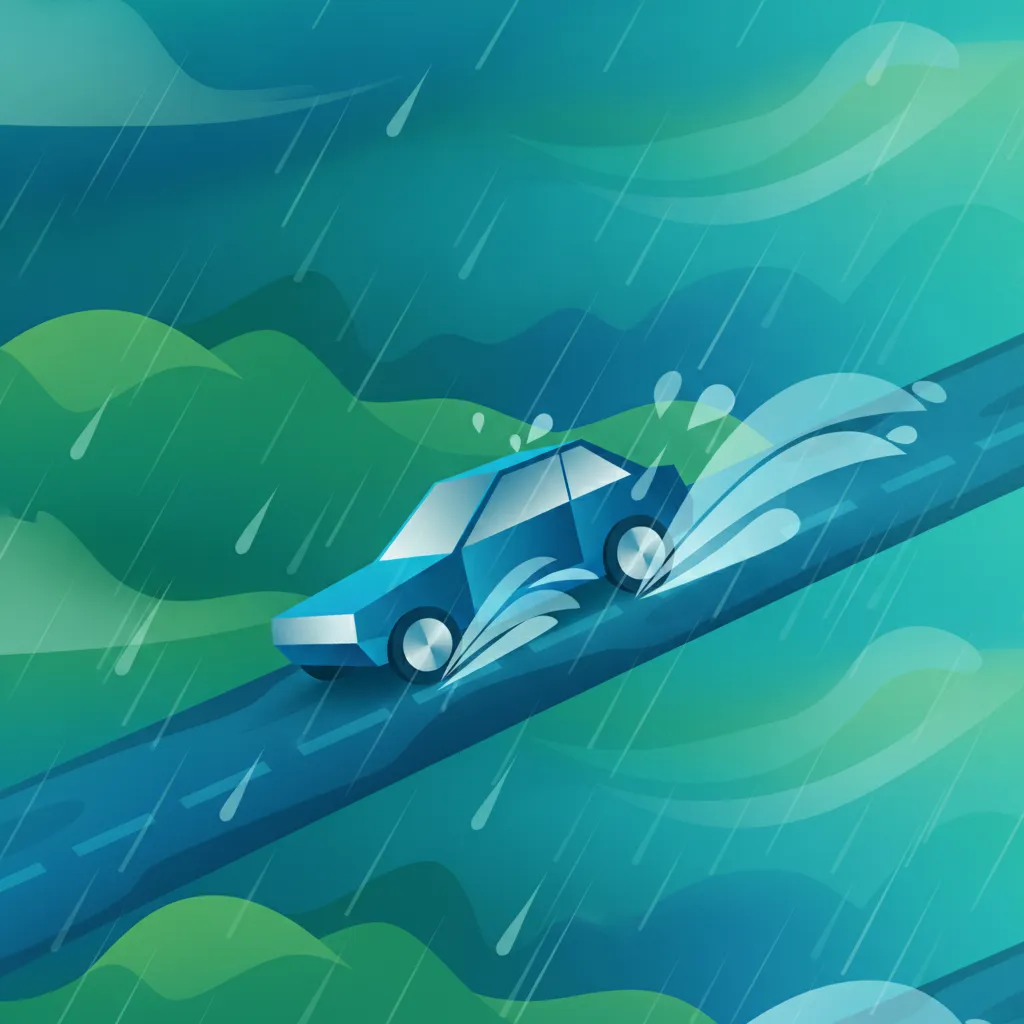
Rainy weather presents unique challenges for drivers, primarily by reducing tire grip and visibility, and increasing braking distances. Mastering safe driving techniques in rain is crucial for road safety in Austria and a key part of your driving theory knowledge. This section explains how to identify and mitigate risks like aquaplaning and how to adapt your driving behavior effectively.
Theory topic content overview
Read the full theory topic guide for Driving in Rain Safety with structured, easy-to-scan content built for learners in Austria. This detailed section explains the exact rule, meaning, traffic context, comparison points, and exam logic behind this Austrian driving theory topic so you can study faster, understand the concept more clearly, and avoid common interpretation mistakes on the theory test.
Driving in rain fundamentally changes how a vehicle behaves and how drivers perceive their surroundings. Rain introduces multiple hazards that collectively reduce a driver's control and safety margin. These conditions require active adaptation to prevent accidents and ensure compliance with Austrian traffic regulations.
At its core, rain compromises the crucial interaction between your tires and the road surface, reduces your ability to see and be seen, and significantly increases the effort required to stop your vehicle. Understanding these impacts is paramount for any driver, especially when preparing for the Austrian driving theory exam.
Austrian roads, from winding alpine passes to high-speed Autobahnen and busy urban areas, can become particularly challenging in wet conditions. The dynamic weather patterns in regions of Austria mean drivers frequently encounter rain, making proficiency in wet-weather driving a critical skill.
Misjudging conditions in rain is a leading cause of accidents. The Austrian driving theory test places significant emphasis on a learner's ability to assess and react to adverse weather. Questions frequently test knowledge of how rain impacts braking distances, the risk of Aquaplaning (hydroplaning), and appropriate speed adjustments. A thorough understanding not only ensures safety but is vital for passing your exam.
Rain creates a cascade of effects that impact every aspect of driving.
The most immediate effect of rain is the reduction of friction between your tires and the road. Water acts as a lubricant, making the road surface slippery. This reduced grip, or traction, means:
This loss of traction is exacerbated on roads with oil residues or recently laid asphalt, which can be particularly slick when wet.
Due to reduced tire grip on wet surfaces, your vehicle needs a considerably longer distance to come to a complete stop compared to dry conditions. This increase is not linear; even a slight reduction in friction can dramatically extend the required braking distance. For example, braking on a wet Bundesstraße (federal highway) will always demand more space than on a dry one, even at the same speed.
Rainfall itself, water splashing onto your windshield, and spray generated by other vehicles significantly reduce visibility. This makes it harder to:
Proper use of wipers, defrosters, and vehicle lighting (including low beam headlights during the day, even if not legally required at all times, it's a strong recommendation in rain) is essential to combat this.
Aquaplaning, known in English as hydroplaning, occurs when a layer of water builds up between your tires and the road surface, causing your vehicle to lose all direct contact with the pavement. In effect, your tires are skimming on water, and you lose steering control, braking ability, and acceleration.
Aquaplaning is more likely to happen:
If you feel the steering lighten or the engine revs increase unexpectedly during rain, you may be Aquaplaning. The correct response is to ease off the accelerator, keep the steering wheel straight, and avoid sudden braking until traction returns.
Several elements interact to determine the level of risk when driving in rain:
A common point of confusion for Austrian theory test candidates revolves around the distinction between braking distance and reaction distance in wet conditions.
Therefore, while rain indirectly affects the overall stopping process by making hazards less visible and increasing the braking component, it's essential to remember that only braking distance is physically prolonged by the wet surface itself.
Let's consider how these principles apply on typical Austrian roads:
Many drivers, including experienced ones, make these errors in the rain:
While the physics of driving in rain are universal, specific Austrian conditions and regulations require particular attention:
To drive safely in rain in Austria and confidently answer theory questions, remember these core principles:
By internalizing these adaptations, you not only prepare for your Austrian driving theory exam but also become a safer, more responsible driver on Austria's roads, regardless of the weather.
Driving in rain fundamentally changes vehicle behavior by reducing tire grip, extending braking distances, and impairing visibility. The critical distinction for the Austrian theory exam is that only braking distance is directly prolonged by wet road conditions, while reaction distance depends on the driver's alertness and remains a function of personal reaction time. Aquaplaning occurs when water separates tires from the road, and the correct response is to ease off the accelerator and steer straight until traction returns. Austrian drivers must adapt speed, following distance, and observation techniques to conditions, especially on challenging roads like Alpine passes and high-speed Autobahnen, where rain combined with speed creates elevated risks.
A short set of high-value points that capture the most important ideas from this theory explanation.
Rain reduces tire grip and extends braking distance significantly, requiring drivers to slow down and increase following distance
Aquaplaning occurs when water separates tires from the road surface, causing complete loss of steering and braking control
Only braking distance is physically prolonged by wet roads; reaction distance depends on driver alertness, not road conditions
In Austria, even on high-speed Autobahnen, drivers must adapt speed and behavior when rain creates hazardous conditions
Proper tire condition (adequate tread depth and correct pressure) is essential for water displacement and grip in wet conditions
If aquaplaning occurs: ease off accelerator, keep steering straight, and avoid sudden braking until traction returns
On wet roads, extend following distance to at least double the normal two-second rule used in dry conditions
Low beam headlights are strongly recommended in rain even during daylight hours for visibility to other road users
Worn tires below the 1.6 mm legal minimum dramatically increase aquaplaning risk and must be replaced
Sudden steering, harsh braking, or rapid acceleration easily causes loss of traction on wet surfaces
Treating the posted speed limit as a target rather than a maximum for ideal conditions, failing to reduce speed in rain
Confusing braking distance (extended by wet roads) with reaction distance (driver-dependent) in exam contexts
Driving through standing water or puddles at speed, which increases aquaplaning risk and creates dangerous spray
Not activating headlights in rain, reducing visibility to other road users especially on Autobahnen and Schnellstraßen
Assuming traction is consistent across all wet road surfaces; smooth asphalt and oil-covered sections are particularly slick
Start with a short, direct summary of Driving in Rain Safety before reading the full explanation below.
When driving in rain, you must reduce your speed, increase your following distance, and ensure proper visibility. Rain severely reduces tire traction, leading to longer braking distances and a higher risk of aquaplaning (hydroplaning). Always adapt your driving behavior to the conditions to prevent accidents and comply with Austrian traffic regulations.
Review the most important terms, rule signals, and traffic concepts linked to Driving in Rain Safety.
Explore related theory topic pages connected to Driving in Rain Safety and continue with the next useful rule explanation.
See the common search queries learners use when trying to understand Driving in Rain Safety in Austria.

Ready to delve deeper into specific theory topics? Continue exploring detailed explanations of Austrian road signs, traffic rules, and critical driving situations. Solidify your knowledge, clarify any doubts, and ensure you're fully prepared for every aspect of your official driving licence theory exam.
Austrian Driving Theory TopicsTheory topic content overview
A short set of high-value points that capture the most important ideas from this theory explanation.
Rain reduces tire grip and extends braking distance significantly, requiring drivers to slow down and increase following distance
Aquaplaning occurs when water separates tires from the road surface, causing complete loss of steering and braking control
Only braking distance is physically prolonged by wet roads; reaction distance depends on driver alertness, not road conditions
In Austria, even on high-speed Autobahnen, drivers must adapt speed and behavior when rain creates hazardous conditions
Proper tire condition (adequate tread depth and correct pressure) is essential for water displacement and grip in wet conditions
If aquaplaning occurs: ease off accelerator, keep steering straight, and avoid sudden braking until traction returns
On wet roads, extend following distance to at least double the normal two-second rule used in dry conditions
Low beam headlights are strongly recommended in rain even during daylight hours for visibility to other road users
Worn tires below the 1.6 mm legal minimum dramatically increase aquaplaning risk and must be replaced
Sudden steering, harsh braking, or rapid acceleration easily causes loss of traction on wet surfaces
Treating the posted speed limit as a target rather than a maximum for ideal conditions, failing to reduce speed in rain
Confusing braking distance (extended by wet roads) with reaction distance (driver-dependent) in exam contexts
Driving through standing water or puddles at speed, which increases aquaplaning risk and creates dangerous spray
Not activating headlights in rain, reducing visibility to other road users especially on Autobahnen and Schnellstraßen
Assuming traction is consistent across all wet road surfaces; smooth asphalt and oil-covered sections are particularly slick
Start with a short, direct summary of Driving in Rain Safety before reading the full explanation below.
When driving in rain, you must reduce your speed, increase your following distance, and ensure proper visibility. Rain severely reduces tire traction, leading to longer braking distances and a higher risk of aquaplaning (hydroplaning). Always adapt your driving behavior to the conditions to prevent accidents and comply with Austrian traffic regulations.
Review the most important terms, rule signals, and traffic concepts linked to Driving in Rain Safety.
Explore related theory topic pages connected to Driving in Rain Safety and continue with the next useful rule explanation.
See the common search queries learners use when trying to understand Driving in Rain Safety in Austria.
Ready to delve deeper into specific theory topics? Continue exploring detailed explanations of Austrian road signs, traffic rules, and critical driving situations. Solidify your knowledge, clarify any doubts, and ensure you're fully prepared for every aspect of your official driving licence theory exam.
Austrian Driving Theory TopicsUse this exam-focused revision tip to understand how Driving in Rain Safety is likely to appear in theory questions for learners in Austria. This section helps you identify the most testable part of the rule, avoid common traps, and remember the concept more effectively during Austrian driving theory exam preparation.
Austrian theory questions often test your understanding of how adverse weather, especially rain, impacts braking distance and reaction time. Remember that only braking distance is directly extended by wet roads; reaction time depends on the driver. Be mindful of terms like 'Aquaplaning' (hydroplaning) and the need to reduce speed significantly in wet conditions, as failing to do so is a common mistake.
Read direct answers to the most common learner questions about Driving in Rain Safety in Austria. This FAQ focuses on rule confusion, practical meaning, comparison with similar concepts, and the exact uncertainties that appear most often in Austrian driving theory revision and exam preparation.
Aquaplaning occurs when a layer of water builds up between your tires and the road surface, causing your tires to lose contact with the road. This leads to a loss of traction, making steering and braking ineffective.
Rain significantly increases braking distance because the wet road surface reduces tire grip. You must slow down and increase your following distance to compensate for this reduced traction, as required by Austrian traffic rules.
In heavy rain or when visibility is poor, you should use your dipped headlights (Abblendlicht). Fog lights (Nebelscheinwerfer) may also be used if visibility is severely restricted, but always ensure they are switched off once conditions improve.
Yes, always reduce your speed in rainy conditions. This reduces the risk of aquaplaning and gives you more time to react to hazards. A lower speed is crucial for maintaining control on wet roads, particularly on Austrian motorways (Autobahn) and Schnellstraßen.
To avoid aquaplaning, reduce your speed, ensure your tires have adequate tread depth, and avoid sudden braking or steering movements, especially when driving through standing water. Try to drive in the tracks of vehicles ahead if safe to do so.
No, rain directly affects braking distance, not your physiological reaction time. However, reduced visibility and the added stress of driving in bad weather might indirectly delay your perception and processing of hazards, effectively making your overall stopping process longer.
In rain, the general rule of thumb for following distance (Halteabstand) should be at least doubled compared to dry conditions. Maintain a distance that allows you to stop safely if the vehicle in front brakes suddenly, considering the increased braking distance on wet roads.
Refine your study plan by searching for specific Austrian driving theory practice sets. Pinpoint questions related to particular road rules, signs, or challenge levels, and begin practicing immediately to reinforce your knowledge and excel in your official exam with confidence. Get started with focused revision today.