
When roads are wet due to rain or standing water, the friction between your tires and the road surface significantly decreases. This reduction in grip profoundly impacts your vehicle's braking performance and overall stability, requiring drivers in Austria to adjust their behavior to prevent accidents and maintain control.
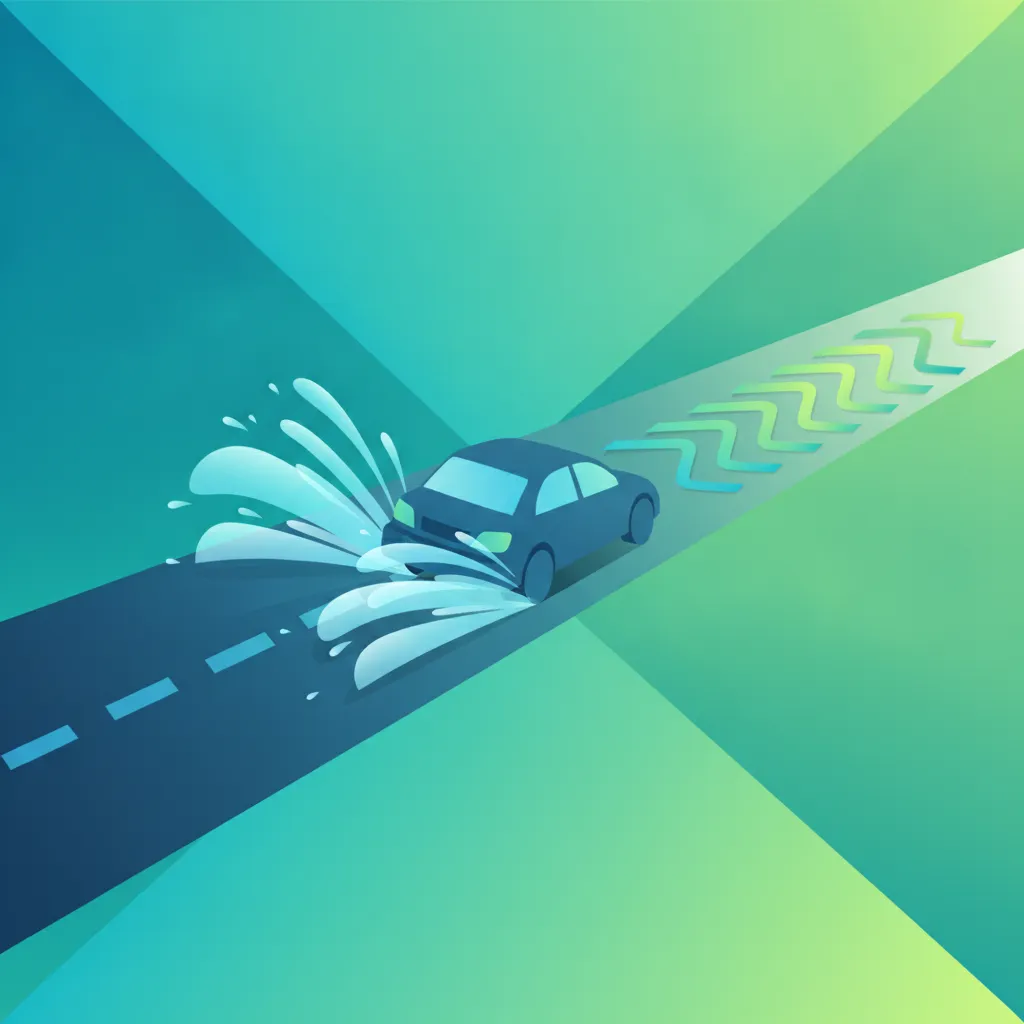
Theory topic content overview
Read the full theory topic guide for Wet Road Braking with structured, easy-to-scan content built for learners in Austria. This detailed section explains the exact rule, meaning, traffic context, comparison points, and exam logic behind this Austrian driving theory topic so you can study faster, understand the concept more clearly, and avoid common interpretation mistakes on the theory test.
When rain falls on Austrian roads, a critical change occurs: the road surface becomes wet. This seemingly simple change profoundly impacts your vehicle's ability to slow down or stop, a phenomenon known as wet road braking. Understanding this concept is vital for every driver in Austria, as it directly relates to vehicle control, accident prevention, and is a frequently tested area in the Austrian driving theory exam.
Wet road braking refers to the compromised efficiency of a vehicle's braking system when the road surface is covered with water, whether from light rain, a downpour, or standing puddles. The core issue is a significant reduction in friction between your tires and the road. This reduced grip means your vehicle needs a considerably longer distance to come to a complete stop compared to dry conditions, and it makes maintaining control much harder.
The impact of wet roads is a fundamental aspect of safe driving, particularly in a country like Austria with its diverse topography, from urban centres to alpine passes and high-speed Autobahnen.
The fundamental reason for increased braking distance on wet roads is the introduction of water between your tire tread and the asphalt.
Several elements influence how severely wet roads affect your braking performance:
It's essential for Austrian learners to understand the nuances of these concepts:
Consider these common situations in Austria where wet road braking is critical:
Austrian driving learners frequently make these errors:
In Austria, understanding wet road braking is not just about physics; it's about practical application within the local driving environment:
The most important takeaway for wet road braking is to adapt your driving behavior to the prevailing conditions, not just the posted speed limit. Always assume significantly reduced grip when roads are wet. This means:
By applying these principles, you will significantly enhance your safety and control when braking on wet roads in Austria.
Wet road braking refers to the compromised ability to slow or stop when road surfaces are wet, caused by water acting as a lubricant between tires and asphalt. This reduces friction significantly, requiring longer distances to stop and increasing the risk of skidding or complete loss of control through aquaplaning. Key factors affecting wet road braking include speed, tire condition, road surface type, and water depth, with speed being the most critical variable. Austrian drivers must remember to reduce speed, increase following distance, use smooth control inputs, and ensure proper tire condition when driving in rain, particularly on high-speed Autobahnen or alpine roads where conditions can change rapidly.
A short set of high-value points that capture the most important ideas from this theory explanation.
Wet road braking significantly reduces tire-road friction, leading to considerably longer stopping distances and reduced vehicle control
Speed is the single most critical factor on wet roads, with braking distance increasing exponentially rather than linearly
Aquaplaning occurs when water lifts the tire completely off the road surface, eliminating all steering and braking ability
Drivers must adapt their behavior to actual road conditions, not simply follow the posted speed limit
Proper tire tread depth is essential for channeling water away and maintaining grip on wet surfaces
Stopping distance equals reaction distance plus braking distance; wet roads extend both components
Skidding means partial loss of traction; aquaplaning means complete loss of tire contact with the road
Wet roads offer less grip than dry roads but typically more grip than ice
On wet Austrian Autobahnen, reducing speed to 100 km/h or less is often necessary for safety
Worn tires below legal tread minimum cannot effectively displace water, dramatically increasing aquaplaning risk
Continuing at the posted speed limit on wet roads, assuming it is automatically safe
Failing to increase following distance to allow adequate reaction and braking space
Using sudden or abrupt braking and steering inputs that cause wheel lockup or skidding
Neglecting to check tire condition and tread depth regularly before driving in wet weather
Underestimating puddles by driving through standing water at speed without considering aquaplaning risk
Start with a short, direct summary of Wet Road Braking before reading the full explanation below.
Wet road braking refers to the compromised ability of a vehicle to slow down or stop when the road surface is wet. Reduced friction from water between tires and the road leads to considerably longer braking distances and a higher risk of skidding or aquaplaning. Drivers must reduce speed, increase following distance, and use smooth control inputs to compensate for these hazards.
Review the most important terms, rule signals, and traffic concepts linked to Wet Road Braking.
Explore related theory topic pages connected to Wet Road Braking and continue with the next useful rule explanation.
See the common search queries learners use when trying to understand Wet Road Braking in Austria.

Ready to delve deeper into specific theory topics? Continue exploring detailed explanations of Austrian road signs, traffic rules, and critical driving situations. Solidify your knowledge, clarify any doubts, and ensure you're fully prepared for every aspect of your official driving licence theory exam.
Austrian Driving Theory TopicsTheory topic content overview
A short set of high-value points that capture the most important ideas from this theory explanation.
Wet road braking significantly reduces tire-road friction, leading to considerably longer stopping distances and reduced vehicle control
Speed is the single most critical factor on wet roads, with braking distance increasing exponentially rather than linearly
Aquaplaning occurs when water lifts the tire completely off the road surface, eliminating all steering and braking ability
Drivers must adapt their behavior to actual road conditions, not simply follow the posted speed limit
Proper tire tread depth is essential for channeling water away and maintaining grip on wet surfaces
Stopping distance equals reaction distance plus braking distance; wet roads extend both components
Skidding means partial loss of traction; aquaplaning means complete loss of tire contact with the road
Wet roads offer less grip than dry roads but typically more grip than ice
On wet Austrian Autobahnen, reducing speed to 100 km/h or less is often necessary for safety
Worn tires below legal tread minimum cannot effectively displace water, dramatically increasing aquaplaning risk
Continuing at the posted speed limit on wet roads, assuming it is automatically safe
Failing to increase following distance to allow adequate reaction and braking space
Using sudden or abrupt braking and steering inputs that cause wheel lockup or skidding
Neglecting to check tire condition and tread depth regularly before driving in wet weather
Underestimating puddles by driving through standing water at speed without considering aquaplaning risk
Start with a short, direct summary of Wet Road Braking before reading the full explanation below.
Wet road braking refers to the compromised ability of a vehicle to slow down or stop when the road surface is wet. Reduced friction from water between tires and the road leads to considerably longer braking distances and a higher risk of skidding or aquaplaning. Drivers must reduce speed, increase following distance, and use smooth control inputs to compensate for these hazards.
Review the most important terms, rule signals, and traffic concepts linked to Wet Road Braking.
Explore related theory topic pages connected to Wet Road Braking and continue with the next useful rule explanation.
See the common search queries learners use when trying to understand Wet Road Braking in Austria.
Ready to delve deeper into specific theory topics? Continue exploring detailed explanations of Austrian road signs, traffic rules, and critical driving situations. Solidify your knowledge, clarify any doubts, and ensure you're fully prepared for every aspect of your official driving licence theory exam.
Austrian Driving Theory TopicsUse this exam-focused revision tip to understand how Wet Road Braking is likely to appear in theory questions for learners in Austria. This section helps you identify the most testable part of the rule, avoid common traps, and remember the concept more effectively during Austrian driving theory exam preparation.
In the Austrian theory test, questions often focus on how weather conditions like rain impact braking distance and the appropriate driver reactions. Remember that reduced grip on wet roads means you must anticipate hazards earlier, reduce speed significantly, and increase your following distance to ensure safety and pass critical situation questions.
Read direct answers to the most common learner questions about Wet Road Braking in Austria. This FAQ focuses on rule confusion, practical meaning, comparison with similar concepts, and the exact uncertainties that appear most often in Austrian driving theory revision and exam preparation.
Rain creates a layer of water between your tires and the road, significantly reducing friction. This reduced friction means your tires have less grip, requiring a much longer distance for your vehicle to slow down and stop compared to dry conditions.
Aquaplaning occurs when a layer of water builds up under your tires, causing them to lose contact with the road. You can prevent it by reducing your speed, ensuring your tires have sufficient tread depth, avoiding sudden steering or braking, and driving carefully through standing water.
No, they are distinct. Aquaplaning is when tires lose contact with the road due to water, leading to a complete loss of steering and braking. Skidding, however, is a loss of tire traction on the road surface, which can happen due to excessive braking, acceleration, or steering force when grip is reduced, such as on wet roads.
When driving on wet roads in Austria, you should reduce your speed, significantly increase your following distance to the vehicle ahead, ensure your tires are properly inflated and have adequate tread, and make all steering and braking inputs smoothly and gently to avoid losing traction.
On wet roads, braking distances can be significantly longer—often double or even triple—compared to dry conditions, depending on the amount of water, road surface, tire condition, and vehicle speed. There isn't a fixed rule, but it's always substantially greater.
Anti-lock Braking Systems (ABS) help prevent wheels from locking up during hard braking, which allows you to maintain steering control. While ABS can help manage skidding during braking, it does not prevent aquaplaning, as aquaplaning is caused by a complete loss of road contact due to water, not wheel lock-up.
Refine your study plan by searching for specific Austrian driving theory practice sets. Pinpoint questions related to particular road rules, signs, or challenge levels, and begin practicing immediately to reinforce your knowledge and excel in your official exam with confidence. Get started with focused revision today.