
Understanding the definition of a developing hazard is the key to achieving a high score in the hazard perception section of the Great Britain theory test. We break down the difference between static road features and genuine hazards, explaining how to spot the early signs that require a change in your vehicle's speed or direction. This guide ensures you are prepared to react correctly to the scenarios presented in your exam.
Article content overview
The hazard perception section of your DVSA theory test in Great Britain is designed to assess your ability to scan the road, anticipate danger, and react in real-time. Many learners focus heavily on identifying potential hazards, but the true test of your readiness lies in distinguishing a "potential" hazard from a "developing" one. Scoring well on these clips requires a calm, systematic approach to evaluating road scenes as they unfold on your screen.
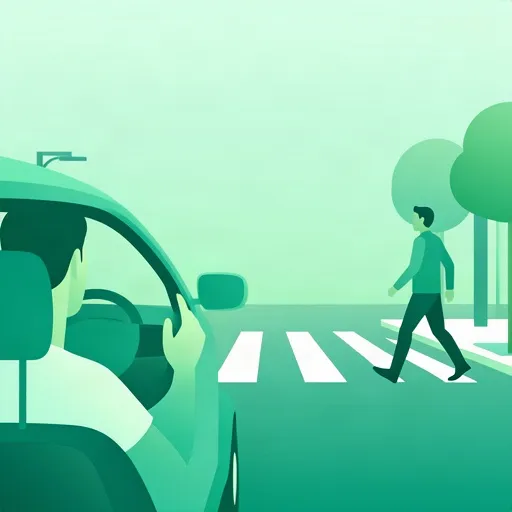
A developing hazard is defined as any situation that would cause you to take action, such as changing your speed or altering the direction of your vehicle. If you see a situation where you would need to adjust your driving to maintain safety, that is the moment a developing hazard has occurred. This distinction is vital; simply observing an object is not enough to gain points. You must identify the specific moment that object transitions from being a passive part of the environment into a threat that requires a defensive driving response.
A situation on the road that would force you to make a physical adjustment to your driving, such as braking to reduce your speed, changing your steering angle to move away from an obstacle, or accelerating to clear a lane safely.
The DVSA uses the example of a parked car to illustrate this concept. If a car is stationary at the side of the road with no signs of movement, it is merely a potential hazard. You should be aware of it, but it does not yet require you to change your speed or path. However, the moment that car’s right-hand indicator begins to flash and the vehicle starts to move into your path, the situation changes immediately. This transition is the start of the developing hazard, and this is the precise moment you should click your mouse to score the maximum number of points.
Your score is determined by how early you identify the hazard. Each of the 14 clips contains at least one developing hazard, and one clip will contain two. You are rewarded for spotting the hazard at the earliest possible moment of its development. If you wait until the danger is obvious—such as when the vehicle is already directly in your path—you will score zero or a very low mark. Conversely, clicking excessively (often called "spam clicking") will result in a score of zero for that clip, as the system will assume you are guessing rather than observing.
One of the most frequent errors learners make is confusing "potential" hazards with "developing" ones. A child playing on a park bench near the road is a potential hazard because they might run into the street, but they are not a developing hazard until they actually stand up and move toward the curb. Another trap is failing to account for road conditions; a cyclist on a wet road is a much more significant hazard than a cyclist on a clear, dry day, as your stopping distance is impacted by the environment.
Never click rhythmically or try to "guess" when the hazard will appear. The test software is designed to detect pattern clicking. If you click too frequently, the system will mark the clip as a failure, regardless of whether you spotted the actual hazard correctly.
Mastering the vocabulary used in the Highway Code and the DVSA guidelines will help you interpret practice clips more effectively.
The hazard perception test requires you to identify developing hazards—the specific moments when a road situation demands you change speed or direction—not just observe static features. Your score depends on clicking at the earliest point of hazard development within the scoring window, with spam clicking resulting in zero points. Practice scanning the full road scene including pavements and junctions, and learn to distinguish between potential hazards that might become dangerous and developing hazards that require immediate action. The DVSA uses examples like a parked car's indicator flashing to illustrate this transition point, which is precisely when you should record your response.
A short set of high-value points that capture the most important ideas from this article.
A developing hazard is any situation that forces you to physically change your speed or direction, not just something you observe.
The scoring window rewards you for clicking at the earliest moment a potential hazard becomes a developing one requiring action.
A parked car with its indicator flashing is the start of a developing hazard; a stationary car with no movement is only a potential hazard.
Click once at the initial sign of the hazard developing, and potentially once more as it peaks, but never spam click.
The test contains 14 clips with at least one developing hazard each; one clip has two developing hazards.
A potential hazard could become a risk but requires no current action; a developing hazard requires you to change speed or direction.
Spam clicking (rhythmic or excessive clicking) results in a zero score for that clip regardless of whether you spotted the hazard.
Scan the entire road width including pavements and junctions to spot hazard development early.
Environmental conditions like wet roads increase the significance of hazards and your stopping distance.
The scoring window is the specific timeframe during which early clicks earn maximum points before the hazard becomes obvious.
Clicking when a hazard is merely a static feature rather than waiting until it begins to develop and require action.
Waiting too long to click until the hazard is obvious and the vehicle is already in your path.
Spam clicking out of panic or attempting to guess when the hazard will appear, triggering the pattern-detection system.
Confusing a potential hazard (a child sitting on a park bench) with a developing hazard (the same child standing and moving toward the curb).
Failing to account for road conditions; a cyclist on a wet road is a greater hazard than on a dry road due to increased stopping distance.
Article content overview
A short set of high-value points that capture the most important ideas from this article.
A developing hazard is any situation that forces you to physically change your speed or direction, not just something you observe.
The scoring window rewards you for clicking at the earliest moment a potential hazard becomes a developing one requiring action.
A parked car with its indicator flashing is the start of a developing hazard; a stationary car with no movement is only a potential hazard.
Click once at the initial sign of the hazard developing, and potentially once more as it peaks, but never spam click.
The test contains 14 clips with at least one developing hazard each; one clip has two developing hazards.
A potential hazard could become a risk but requires no current action; a developing hazard requires you to change speed or direction.
Spam clicking (rhythmic or excessive clicking) results in a zero score for that clip regardless of whether you spotted the hazard.
Scan the entire road width including pavements and junctions to spot hazard development early.
Environmental conditions like wet roads increase the significance of hazards and your stopping distance.
The scoring window is the specific timeframe during which early clicks earn maximum points before the hazard becomes obvious.
Clicking when a hazard is merely a static feature rather than waiting until it begins to develop and require action.
Waiting too long to click until the hazard is obvious and the vehicle is already in your path.
Spam clicking out of panic or attempting to guess when the hazard will appear, triggering the pattern-detection system.
Confusing a potential hazard (a child sitting on a park bench) with a developing hazard (the same child standing and moving toward the curb).
Failing to account for road conditions; a cyclist on a wet road is a greater hazard than on a dry road due to increased stopping distance.
Explore related topics, search based questions, and concepts that learners often look up when studying Identifying Developing Hazards. These themes reflect real search intent and help you understand how this topic connects to wider driving theory knowledge in Great Britain.
Find clear and practical answers to common questions learners often have about Identifying Developing Hazards. This section helps explain difficult points, remove confusion, and reinforce the key driving theory concepts that matter for learners in Great Britain.
A potential hazard is something that might become dangerous, like a car parked by the road. A developing hazard is one that actually requires you to take action, such as slowing down or changing direction, because the car starts to move or indicates to pull out.
You only get points for identifying a 'developing hazard' as soon as it begins to unfold. If you click on every potential hazard that does not develop into a real danger, your score for that clip may be reduced.
In the context of the test, you must click your mouse as soon as you see the hazard begin to develop. In real-world driving, this translates to taking appropriate safety measures, such as adjusting your speed, changing lanes, or preparing to stop.
Explore our extensive library of Great Britain driving theory articles to clarify any topic, review specific road rules, or gain deeper insights into vehicle safety and the Highway Code. Use the search to find exactly what you need for comprehensive DVSA theory test preparation.