
Fatigue significantly impairs your reaction times and hazard perception skills, making it a major factor in many road traffic collisions. This guide clarifies your legal responsibility to ensure you are fit to drive before starting any journey and explains why common habits like loud music fail to address physical exhaustion. You will learn the importance of regular breaks and how to identify the early warning signs of sleep deprivation to ensure your safety and that of others on the road.
Article content overview
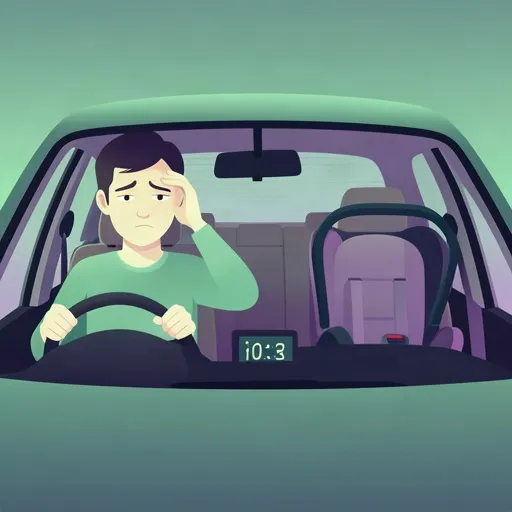
For many new parents, the demands of a growing family often lead to sleep deprivation. While you may be accustomed to operating on limited rest at home, the consequences of doing so while driving are significantly more severe. Driver fatigue is a major factor in a significant percentage of road traffic collisions, often because it impairs your reaction times, hazard perception, and decision-making capabilities—all of which are essential skills for passing your DVSA theory test and staying safe on Great Britain's roads.
Understanding that you must be "fit to drive" is a foundational principle of the Highway Code. This legal requirement means that before you even turn the key in the ignition, you are responsible for assessing your physical and mental state. If you are struggling to keep your eyes open or finding it difficult to focus on the road ahead, you are not in a condition to drive safely.
The Highway Code provides specific guidance regarding driver health and safety. Under Rule 91, the law is clear: driving when you are tired greatly increases your risk of a collision. The responsibility rests entirely with the driver to ensure they are fully alert before starting a journey.
Many learners mistakenly believe that they can "power through" fatigue using common habits like turning up the radio, opening a window, or consuming caffeine. While these might provide a very temporary and unreliable boost, they do not address the physical reality of sleep deprivation. Your brain’s need for sleep will eventually override these minor distractions, potentially leading to dangerous consequences.
A legal and moral obligation for all motorists to ensure they are physically and mentally prepared for the task of driving. This includes avoiding driving when tired, ill, or under the influence of substances, as per the Road Traffic Act 1988.
A "microsleep" is a brief, involuntary moment of unconsciousness that can last anywhere from a fraction of a second to several seconds. For a driver moving at motorway speeds, even a two-second microsleep can mean travelling blindly for dozens of meters. Because these episodes are often so short, many drivers do not even realize they have experienced one until they find themselves drifting out of their lane or realizing they have no memory of the last few miles of their journey.
Fatigue rarely strikes without warning. To remain a safe driver, you must learn to recognize the subtle, early indicators that your concentration is failing. Common symptoms include:
If you are planning a long journey, you must prioritize rest. The Highway Code recommends a minimum break of at least 15 minutes after every two hours of driving. If you begin to feel sleepy, you should stop at the first safe opportunity—such as a designated service station or a legal parking area—to take a proper rest.
It is vital to note that you must never stop on the hard shoulder of a motorway or in an emergency area to take a break. These spaces are strictly for genuine vehicle breakdowns or medical emergencies. Plan your route to include stops at official motorway service areas where you can safely leave the vehicle, stretch your legs, and re-energize.
Driving between midnight and 6 am is a high-risk period, as this is when the body’s natural alertness is at its absolute lowest. Avoid starting long journeys during these hours whenever possible to minimize your exposure to this increased risk.
In the context of the DVSA theory test, understanding driver fatigue is not just about common sense; it is a key component of hazard perception. Questions on the exam often test your ability to predict when a driver might be a risk to others. A driver who is tired is a hazard to themselves and every other road user. Recognizing that a tired driver is likely to have delayed reactions—meaning they will be slower to brake or steer in response to developing hazards—is critical to answering these questions correctly.
Article content overview
Explore related topics, search based questions, and concepts that learners often look up when studying Driving When Tired and Fatigue Safety. These themes reflect real search intent and help you understand how this topic connects to wider driving theory knowledge in Great Britain.
Find clear and practical answers to common questions learners often have about Driving When Tired and Fatigue Safety. This section helps explain difficult points, remove confusion, and reinforce the key driving theory concepts that matter for learners in Great Britain.
Under Rule 91, you must ensure you are fit to drive before embarking on a journey. You should avoid starting a journey if you are tired and plan to take sufficient breaks, including a minimum of 15 minutes every two hours.
Yes, your natural alertness is at a minimum between midnight and 6 am, so it is highly recommended to avoid long journeys during these hours.
No, these are ineffective methods. They do not mitigate the physical impairment of fatigue; the only safe way to manage sleepiness is to stop in a safe place and rest.
You should stop at the next service area or a safe location to take a break. You must not stop on a motorway hard shoulder or emergency area for a rest break.
Explore our extensive library of Great Britain driving theory articles to clarify any topic, review specific road rules, or gain deeper insights into vehicle safety and the Highway Code. Use the search to find exactly what you need for comprehensive DVSA theory test preparation.