
Driving to high-traffic infrastructure hubs requires more than just navigation skills; it demands a keen awareness of specific private land rules enforced by airport operators. This article explains why careful observation of road signage is critical and how 'park now, pay later' systems can lead to financial penalties if ignored. You will learn how to identify restricted zones and fulfill your duty of care as a driver to avoid unnecessary fines.
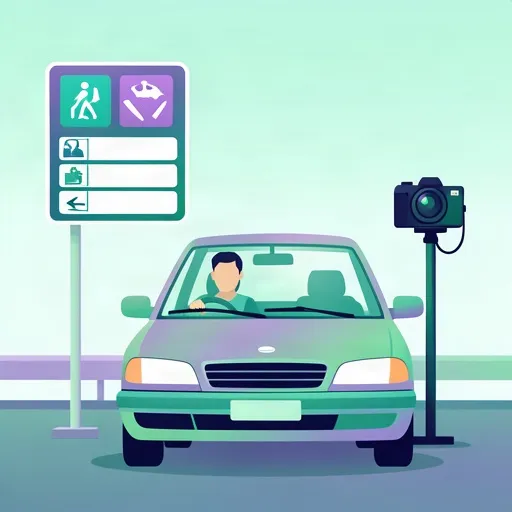
Article content overview
Driving to major airports in Great Britain, such as Gatwick or Stansted, is a common task for many motorists, but it presents unique challenges that differ significantly from standard road driving. While your theory test focuses heavily on the Highway Code, public highways, and junctions, airport grounds often function as private land. This shift in legal status means that airport operators have the authority to set their own regulations, including specific drop-off fees and strict time limits, which are enforced using sophisticated technology.
Failing to follow instructions in private land settings does not excuse a driver from financial liability. Airport operators frequently use Automatic Number Plate Recognition (ANPR) cameras to track entry and exit times, meaning that even a short stay beyond the allowed "grace period" can trigger a Parking Charge Notice (PCN).
When you enter an airport terminal approach, you are effectively leaving the public highway and entering private property. On the public highway, standard road signs and markings are governed by the Traffic Signs Regulations and General Directions (TSRGD). However, on airport land, you are entering into a contract with the airport operator. By driving past the entry signage, you are agreeing to the terms and conditions displayed, which often include a requirement to pay a drop-off fee or to vacate the zone within a specific time frame.
Many new drivers mistakenly assume that because a zone is designed for dropping off passengers, it is a free public facility. In reality, "kiss and fly" zones are now heavily regulated to manage congestion and safety. If you miss the signage or fail to pay the required fee online within the stipulated timeframe, you risk receiving a formal notice by post. Unlike a Penalty Charge Notice issued by a local council, which relates to a traffic offence, a Parking Charge Notice from an airport is a civil matter governed by contract law.
Modern airports utilize ANPR cameras to monitor traffic flow, which removes the need for traditional paper tickets or manual barriers in many "drop-off" areas. For a new driver, this makes diligent observation of signage more critical than ever. Before you even set off on your journey, it is best practice to consult the airport’s official website to understand their specific drop-off procedures, as these vary widely across the country.
When driving through these zones, keep an eye out for signs detailing the "park now, pay later" requirements. If you linger in an unauthorized area while trying to help a passenger with luggage, you might inadvertently violate the rules of the zone. Always aim to arrive prepared and be ready to move on immediately to avoid congestion and potential fines.
Beyond financial concerns, these drop-off zones are designed with safety and accessibility in mind. The Equality Act 2010 places a duty on airport operators to ensure that infrastructure is accessible for passengers with reduced mobility. Understanding these design features is essential for any responsible driver.
| Feature | Purpose |
|---|---|
| Designated Blue Badge Bays | Ensures accessibility for disabled passengers near terminals. |
| Drop-off Time Limits | Prevents congestion and keeps traffic flowing efficiently. |
| ANPR Monitoring | Automates compliance and reduces the need for manual enforcement. |
| Clear Way Signage | Directs drivers to prevent accidental entry into restricted zones. |
A notice issued by private landowners (such as airport operators) when a driver fails to adhere to the terms and conditions of a private parking contract. This is distinct from a penalty notice issued by local authorities on public roads.
While the theory test primarily covers the Highway Code, the principles of planning your journey, observing road signs, and maintaining awareness of your surroundings are universal. If you are asked about stopping on restricted routes or understanding complex road environments, remember that the "driver's duty of care" extends to following the specific rules of the land you are currently on.
Airport drop-off zones operate on private land, meaning airport operators set their own rules through contractual terms rather than standard traffic law. When you drive past entry signage, you enter into a binding agreement to follow those rules, including time limits and potential drop-off fees. ANPR cameras monitor vehicle movements automatically, so overstaying even by minutes can result in a Parking Charge Notice issued under contract law, which is fundamentally different from a Penalty Charge Notice issued by local authorities on public roads. Understanding this distinction, planning your journey in advance, and observing all signage carefully will help you avoid fines and stay compliant as a responsible driver.
A short set of high-value points that capture the most important ideas from this article.
Airport grounds are private land where standard Highway Code rules are supplemented by the airport operator's own terms and conditions
Entering an airport drop-off zone creates a binding contract with the operator; ignoring signage means you still agreed to the rules
ANPR cameras automatically record entry and exit times, so even brief overstays can trigger a Parking Charge Notice
A Parking Charge Notice (PCN) is a civil contract matter, not a traffic offence like a Penalty Charge Notice from a council
Driver duty of care extends to understanding and following the specific rules of whatever land you are driving on
Drop-off zones at major UK airports like Gatwick or Stansted often require payment or have strict time limits enforced by ANPR technology
PCNs from private airport land are governed by contract law, not traffic law, so the enforcement mechanisms differ from public road penalties
The Equality Act 2010 requires airport operators to provide accessible facilities including Blue Badge bays
Airport drop-off rules change frequently; do not assume past experience applies to future visits
Reading signage at the entry point of private land formally establishes the parking contract you are agreeing to
Assuming drop-off zones are free public facilities because they serve passengers rather than understanding they operate as private regulated areas
Believing that a PCN is the same as a Penalty Charge Notice, when PCNs are civil contract disputes rather than traffic offences
Relying on previous visits to an airport for drop-off procedures instead of checking current rules, which change regularly
Lingering in restricted areas to help with luggage without realizing the time limits are strictly enforced by automated cameras
Confusing TSRGD traffic sign regulations (which apply on public highways) with the private signage requirements on airport land
Article content overview
A short set of high-value points that capture the most important ideas from this article.
Airport grounds are private land where standard Highway Code rules are supplemented by the airport operator's own terms and conditions
Entering an airport drop-off zone creates a binding contract with the operator; ignoring signage means you still agreed to the rules
ANPR cameras automatically record entry and exit times, so even brief overstays can trigger a Parking Charge Notice
A Parking Charge Notice (PCN) is a civil contract matter, not a traffic offence like a Penalty Charge Notice from a council
Driver duty of care extends to understanding and following the specific rules of whatever land you are driving on
Drop-off zones at major UK airports like Gatwick or Stansted often require payment or have strict time limits enforced by ANPR technology
PCNs from private airport land are governed by contract law, not traffic law, so the enforcement mechanisms differ from public road penalties
The Equality Act 2010 requires airport operators to provide accessible facilities including Blue Badge bays
Airport drop-off rules change frequently; do not assume past experience applies to future visits
Reading signage at the entry point of private land formally establishes the parking contract you are agreeing to
Assuming drop-off zones are free public facilities because they serve passengers rather than understanding they operate as private regulated areas
Believing that a PCN is the same as a Penalty Charge Notice, when PCNs are civil contract disputes rather than traffic offences
Relying on previous visits to an airport for drop-off procedures instead of checking current rules, which change regularly
Lingering in restricted areas to help with luggage without realizing the time limits are strictly enforced by automated cameras
Confusing TSRGD traffic sign regulations (which apply on public highways) with the private signage requirements on airport land
Explore related topics, search based questions, and concepts that learners often look up when studying Airport Driving and Drop-Off Rules. These themes reflect real search intent and help you understand how this topic connects to wider driving theory knowledge in Great Britain.
Find clear and practical answers to common questions learners often have about Airport Driving and Drop-Off Rules. This section helps explain difficult points, remove confusion, and reinforce the key driving theory concepts that matter for learners in Great Britain.
Most airport drop-off zones are located on private land managed by the airport operator. This means standard highway rules may differ, and strict contract law often applies to how you enter, stop, and pay.
A council-issued Penalty Charge Notice is a legal fine for traffic contraventions. An airport Parking Charge Notice is usually a bill issued under contract law for failing to comply with private terms and conditions, often enforced via ANPR cameras.
Signage provides the legal contract terms for your visit. Failing to read or follow these instructions—such as maximum stay times or mandatory payment requirements—often results in automated financial penalties.
The Equality Act requires airport operators to provide accessible facilities. If you are a driver with specific accessibility needs or are transporting a passenger who requires them, you should check the airport's specific policy on permit-free or designated assistance zones.
Explore our extensive library of Great Britain driving theory articles to clarify any topic, review specific road rules, or gain deeper insights into vehicle safety and the Highway Code. Use the search to find exactly what you need for comprehensive DVSA theory test preparation.