
This lesson guides you through the complex rules of navigating roundabouts on a motorcycle. You will learn how to select the correct lane, signal effectively, and safely execute your exit to handle junctions with precision in your upcoming theory test.

Lesson content overview
Roundabouts are common features on Great Britain's road network, designed to keep traffic flowing efficiently while reducing the risk of serious collisions often associated with traditional crossroads. For motorcycle riders, successfully navigating roundabouts requires precise control, keen observation, and a thorough understanding of positioning and signalling protocols. This lesson will equip you with the knowledge needed to approach, enter, circulate, and exit roundabouts safely and confidently, adhering to all relevant rules of the road.
A roundabout is a circular junction where traffic flows in one direction around a central island. In the UK, this flow is always counter-clockwise. Unlike traditional intersections that rely on traffic lights or stop signs, roundabouts use a simple priority rule: traffic already on the roundabout has priority over traffic wishing to enter. This design minimizes points of conflict and generally allows for continuous movement, reducing delays and congestion.
Roundabouts come in various sizes and complexities, from small mini-roundabouts to large multi-lane junctions. Each type presents unique challenges and requires specific strategies for safe navigation. For motorcyclists, the smaller footprint and increased maneuverability of a bike make proper lane discipline and early signalling even more critical to ensure other road users understand your intentions.
Motorcycles, being smaller and less visible than cars, can sometimes be overlooked by other drivers, especially at complex junctions like roundabouts. This reduced visibility, combined with the need for precise balance and control at low speeds, makes roundabout navigation a key skill for motorcycle riders. The physics of cornering, maintaining traction, and reacting quickly to unexpected movements from other vehicles all come into play.
Navigating a roundabout on a motorcycle means not only understanding the rules but also anticipating the actions of other drivers, who might not always see you or correctly interpret your signals. Factors like blind spots of larger vehicles, the presence of cyclists and pedestrians, and varying road conditions further add to the complexity. Mastery of roundabout techniques significantly reduces collision risk and is a fundamental component of the Great Britain Motorcycle Theory Course.
A safe approach to a roundabout is the foundation of successful navigation. It involves a systematic process of reducing speed, thorough observation, and selecting the correct lane.
As you approach a roundabout, begin to moderate your speed well in advance. This provides ample time to assess the situation, react to unexpected changes, and prepare for entry. Lowering your speed allows for smoother gear changes and ensures you can stop safely if necessary. For most roundabouts, a speed of approximately 24-32 km/h (15-20 mph) is appropriate for motorcycles, but this should be adjusted based on traffic, visibility, and road conditions.
When approaching, use engine braking or gentle primary braking to slow down smoothly. This keeps your motorcycle stable and prepared for the turn. Avoid sudden, harsh braking at the entry point unless absolutely necessary.
Effective observation is paramount. Before and during your approach, continuously scan the entire roundabout, including all entry points, the circulating lanes, and potential exit paths. Look for vehicles already on the roundabout, those waiting to enter, cyclists, and pedestrians. This technique, often referred to as "saccadic scanning," involves quick, systematic glances left, right, and ahead, making full use of your peripheral vision to detect potential hazards early.
Pay particular attention to vehicles approaching from your right, as they will have priority once on the roundabout. Also, check for traffic on the left that might be entering or exiting. Don't fixate on a single vehicle; keep your vision moving to build a complete picture of the traffic flow. Early detection of potential conflicts allows you more time to adjust your speed or position.
Choosing the correct lane before you enter a roundabout is crucial for a smooth and safe journey through it. Your lane choice should be based on your intended exit, as indicated by road markings, arrows, and signage.
Left Turn (First Exit): Typically, use the left-hand lane on approach. Signal left as you approach the roundabout.
Straight Ahead (Second Exit or Middle Exits): If unindicated, use the left-hand lane (unless road markings direct otherwise). You generally do not need to signal on approach, but be prepared to signal left as you pass the exit before yours.
Right Turn (Last Exit or Past Halfway): Generally, use the right-hand lane on approach. Signal right as you approach the roundabout.
Multi-Lane Approaches: Always follow the specific lane arrows painted on the road surface and the information on overhead signs. These override general rules and indicate which exits each lane serves.
Incorrect lane selection can lead to dangerous last-minute lane changes inside the roundabout, causing confusion and increasing the risk of collision. If you find yourself in the wrong lane, it is safer to go around the roundabout again or take an unintended exit and find a safe place to redirect, rather than swerving or cutting across lanes.
Clear and timely signalling is essential to communicate your intentions to other road users, helping them anticipate your movements and react safely. The timing of your signals varies depending on your intended exit.
Your initial signal indicates your intention to either turn left or right on entry.
For exits that are directly opposite your entry point (straight ahead), you typically do not signal until you have passed the exit before your intended one. This prevents confusion for other drivers who might think you are taking an earlier exit.
Once on the roundabout, your signalling might need to change, especially if you are going straight or turning right.
The timing of your exit signal is critical. You should signal left to exit after you have passed the exit immediately preceding your intended one, but at least 30 meters (100 feet) before your actual exit point. This gives other drivers sufficient warning. Early signalling for an exit (e.g., signalling left too soon for an exit straight ahead) can be misleading and cause traffic to enter prematurely.
Always ensure your signals are clearly visible to other road users, especially in low light or adverse weather conditions. Check that your indicators are functioning correctly before riding.
Once you have selected your lane and signalled your intentions, the next crucial step is safely entering the roundabout. This involves understanding priority rules and making a sound decision about when to enter.
The fundamental rule at almost all roundabouts in the UK is that traffic already on the roundabout has priority. This means you must yield to any vehicle approaching from your right that is already circulating or is about to enter from the right. You must only enter the roundabout when there is a safe gap in the traffic flow.
The right to proceed before others. At roundabouts, circulating traffic holds priority over vehicles waiting to enter.
Do not assume that other drivers will yield to you, even if you have priority in certain situations. Always be prepared to stop if necessary. This priority rule is critical for maintaining the smooth, continuous flow of traffic and preventing collisions at entry points.
Evaluating the space and speed of circulating vehicles to determine a safe opportunity to merge onto the roundabout without causing other vehicles to slow down or swerve.
Choosing an appropriate gap requires judgment. Consider the speed of the circulating vehicles, the distance to the entry point, and your motorcycle's acceleration capability.
Be especially vigilant for long vehicles, such as lorries or buses, which may need to use more than one lane to negotiate a roundabout. Do not attempt to pass them on the inside if they are indicating a turn.
Once you have safely entered the roundabout, maintaining good lane discipline and consistent speed are key to a smooth and safe passage.
As you circulate, stay in the lane you selected on approach. Do not change lanes within the roundabout unless it is absolutely necessary and safe to do so, and only after clearly signalling and checking your mirrors and blind spots. Unnecessary lane changes inside a roundabout are a major cause of collisions, especially for motorcyclists who can be difficult to spot.
Follow any lane arrows or markings within the roundabout itself. Some larger roundabouts may have specific lanes dedicated to certain exits even within the circulating area. If you miss your intended exit due to incorrect lane positioning, it is safer to go around the roundabout again or take the next available exit and re-plan your route.
Maintain a steady, controlled speed throughout your journey around the roundabout. Erratic acceleration or deceleration can destabilize your motorcycle and reduce your ability to react to sudden changes in traffic.
Generally, overtaking within a roundabout is prohibited unless specific lane markings or signs explicitly permit it. Roundabouts are high-density environments where space and time for safe overtaking are extremely limited. The risks of colliding with another vehicle changing lanes, or with one unexpectedly exiting, are significantly increased.
If you find yourself behind a slower vehicle, maintain a safe following distance and be patient. Wait until you have safely exited the roundabout and are on a straight section of road before considering an overtaking manoeuvre, and only if it is legal and safe.
Preparing for and executing your exit from a roundabout correctly is just as important as your approach and entry. This final stage requires careful positioning and timely signalling.
Well before your intended exit, begin to assess the traffic conditions on the exit road. Look for pedestrians, cyclists, or other vehicles that might be waiting to cross or merge. Ensure you have a clear path and sufficient space to transition smoothly from the roundabout to the new road.
If you are changing from an inner lane to an outer lane to prepare for your exit (e.g., from the right lane to the left lane for a left exit that required you to be in the right lane on approach), ensure you signal your lane change well in advance, check your mirrors and blind spots thoroughly, and only move when it is safe and clear to do so. This is typically done as you pass the exit immediately before yours.
As you approach your exit, adjust your motorcycle's position to align with the centre of the exit lane. This helps guide you into the new road and provides a clear signal of your path to other drivers.
Pass the previous exit: Once you pass the exit immediately before your intended one, activate your left indicator.
Check mirrors: Glance in your mirrors to confirm no vehicle is too close or attempting to pass you on the left.
Look over shoulder: Perform a quick glance over your left shoulder to check for any cyclists or other road users in your blind spot who might be alongside you or about to enter the exit lane.
Adjust speed: Maintain a safe speed for the exit, which may mean a slight acceleration to merge with traffic on the new road.
Straighten up: As you leave the roundabout, straighten your motorcycle and cancel your indicator once you are clear of the junction and safely on the new road.
Exiting too close to other users or signalling too late can cause uncertainty and increase the risk of a sideswipe or rear-end collision. Always aim for a controlled, predictable departure.
While the basic principles apply to all roundabouts, certain types require specific attention and understanding.
Multi-lane roundabouts, which feature two or more lanes for circulating traffic, demand extra vigilance and a strict adherence to lane discipline.
If you are unsure which lane to use on a multi-lane roundabout, it is often safest to take the left-hand lane or a lane indicated for "straight ahead" (if available) and go around the roundabout again if you miss your exit. This avoids dangerous last-minute lane changes.
Mini-roundabouts are much smaller circular junctions, often found in residential areas or as replacements for T-junctions. While they function similarly to larger roundabouts, their compact size means there are some specific points for motorcyclists:
When approaching roundabouts from dual carriageways or other high-speed roads, motorcyclists need to make several adjustments:
Adherence to the Highway Code is not just about passing your theory test; it's fundamental to safe riding. Several key rules apply specifically to roundabouts.
Rule: Vehicles already circulating on the roundabout have priority over those entering.
Rule: Use the lane aligned with your intended exit as indicated by lane arrows and road markings.
Rule: Signal left when preparing to enter for a left turn; signal right before the exit point for any exit that is not the first on your left.
Rule: Ride at a speed that enables you to remain in control and safely negotiate the roundabout, typically 24-32 km/h (15-20 mph) for motorcycles.
Rule: Overtaking within a roundabout is generally prohibited unless road markings or signs specifically permit it.
Motorcyclists face specific risks at roundabouts, often due to their vulnerability and smaller profile. Awareness of common errors can help you avoid them.
Safe riding involves continuously adapting your strategy to various conditions. Roundabouts are no exception, and several factors can significantly alter how you should approach and navigate them.
This lesson covers the essential skills for navigating roundabouts safely on a motorcycle in Great Britain. It emphasises that traffic on the roundabout has priority and that correct lane selection must be made before entry based on your intended exit. Signalling protocols vary by turn direction: signal left on approach for left turns, right for right turns, and delay signalling until after the previous exit for straight-ahead movements. Maintain controlled speeds appropriate to the roundabout type, keep lane discipline while circulating, and always use observation techniques including shoulder checks before exiting. These procedures align with Highway Code rules and prepare riders for both the DVSA theory test and real-world junction navigation.
A short set of high-value points that capture the most important learning from this lesson.
Traffic already on the roundabout has priority over vehicles waiting to enter—always yield to traffic from your right
Select your lane before approaching based on your intended exit: left lane for first exit, right lane for exits past halfway, or as directed by road markings
Signal left on approach for left turns, signal right on approach for right turns, and signal left after passing the exit before yours for straight ahead
Maintain appropriate speed (24–32 km/h for standard roundabouts, below 24 km/h for mini-roundabouts) to ensure control and reaction time
Avoid changing lanes inside the roundabout—incorrect lane positioning should be corrected by going around again or taking an alternate exit
Explore all units and lessons included in this driving theory course.
UK roundabouts always flow counter-clockwise
Signal left to exit after passing the exit immediately before your intended one
Lane arrow markings on the road surface override general lane selection rules
Long vehicles may need to use more than one lane within the roundabout
Use saccadic scanning—quick, systematic glances left, right, and ahead—to build a complete picture of traffic flow before and during entry
Selecting the wrong lane on approach and attempting last-minute unindicated lane changes inside the roundabout
Signalling too early (signalling left too soon for a straight-ahead exit can mislead other drivers)
Entering or circulating at excessive speed, reducing traction and reaction time
Tunnel vision—fixating on one vehicle or entry point and missing other hazards like cyclists or pedestrians
Failing to perform a shoulder check before exiting, missing vulnerable road users in blind spots
Lesson content overview
A short set of high-value points that capture the most important learning from this lesson.
Traffic already on the roundabout has priority over vehicles waiting to enter—always yield to traffic from your right
Select your lane before approaching based on your intended exit: left lane for first exit, right lane for exits past halfway, or as directed by road markings
Signal left on approach for left turns, signal right on approach for right turns, and signal left after passing the exit before yours for straight ahead
Maintain appropriate speed (24–32 km/h for standard roundabouts, below 24 km/h for mini-roundabouts) to ensure control and reaction time
Avoid changing lanes inside the roundabout—incorrect lane positioning should be corrected by going around again or taking an alternate exit
Explore all units and lessons included in this driving theory course.
UK roundabouts always flow counter-clockwise
Signal left to exit after passing the exit immediately before your intended one
Lane arrow markings on the road surface override general lane selection rules
Long vehicles may need to use more than one lane within the roundabout
Use saccadic scanning—quick, systematic glances left, right, and ahead—to build a complete picture of traffic flow before and during entry
Selecting the wrong lane on approach and attempting last-minute unindicated lane changes inside the roundabout
Signalling too early (signalling left too soon for a straight-ahead exit can mislead other drivers)
Entering or circulating at excessive speed, reducing traction and reaction time
Tunnel vision—fixating on one vehicle or entry point and missing other hazards like cyclists or pedestrians
Failing to perform a shoulder check before exiting, missing vulnerable road users in blind spots
Explore search topics learners often look for when studying Roundabouts: Positioning and Exit Strategies. These topics reflect common questions about road rules, driving situations, safety guidance, and lesson level theory preparation for learners in Great Britain.
Browse additional driving theory lessons that cover connected traffic rules, road signs, and common driving situations related to this topic. Improve your understanding of how different rules interact across everyday traffic scenarios.
Deepen your understanding of multi-lane roundabouts and complex junctions on Great Britain's roads. Learn advanced lane selection, signalling, and safe exit strategies for motorcyclists, building on core roundabout principles.

This lesson addresses the unique challenges of mini-roundabouts and large, multi-lane or spiral roundabouts. You will learn the subtle differences in rules and approach for mini-roundabouts and the importance of strict lane discipline on larger ones. The lesson stresses the need for advanced planning and awareness when navigating these complex junctions.
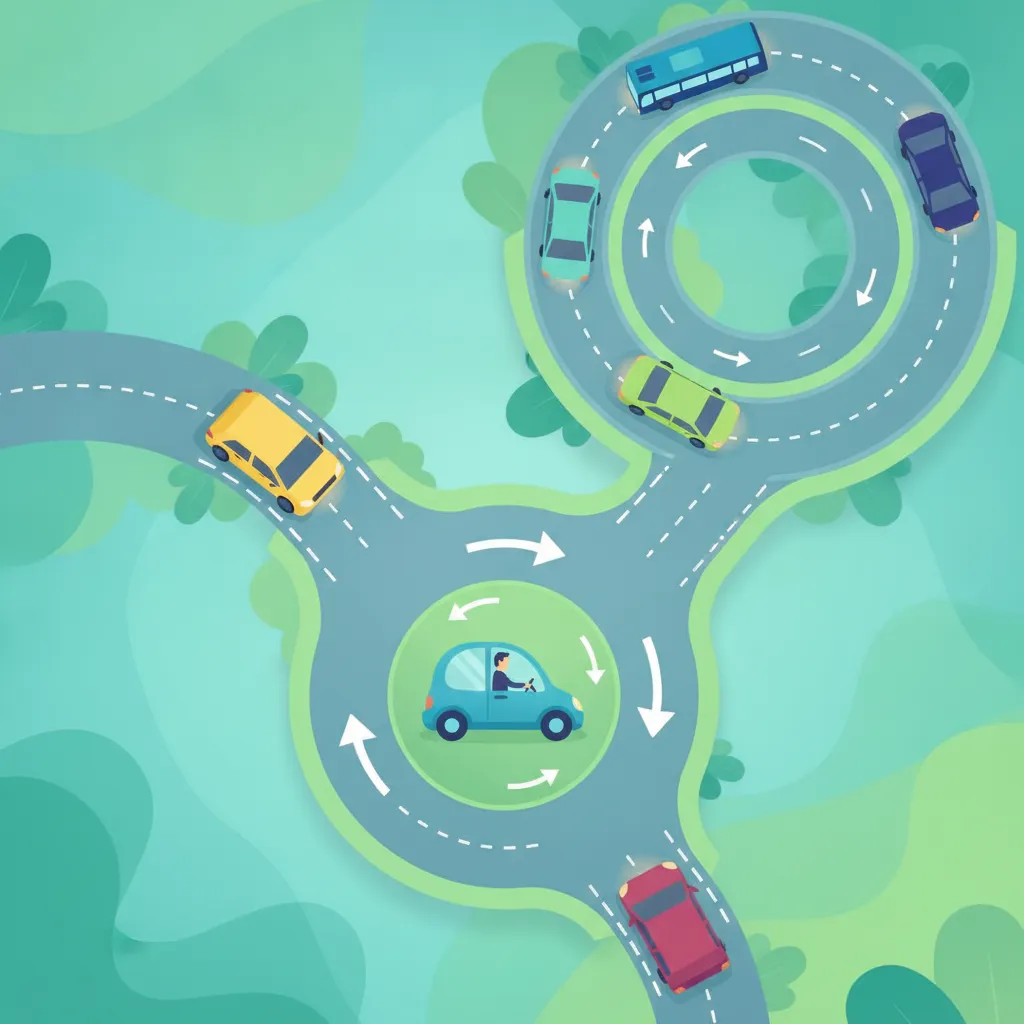
This lesson provides specific techniques for safely navigating the two main types of roundabouts in Great Britain. For multi-lane roundabouts, it covers how to choose the correct lane on approach, maintain your lane while circulating, and signal your exit correctly. It also explains the unique rules for mini-roundabouts, emphasizing the importance of giving way to traffic from the right and navigating them with caution due to their small size.

This lesson tackles the complexities of large roundabouts, which often have multiple lanes and exits. It stresses the importance of reading signs on the approach to select the correct lane for your destination. You will learn about maintaining lane discipline while on the roundabout and signalling correctly as you pass exits and prepare to leave.

This lesson clarifies who has priority at junctions, whether they are marked with signs and lines or are unmarked. It covers the fundamental rule for roundabouts in the UK: give priority to traffic approaching from your right. You will learn the correct procedures for approaching, signalling, and choosing the appropriate lane on roundabouts and at other junctions.
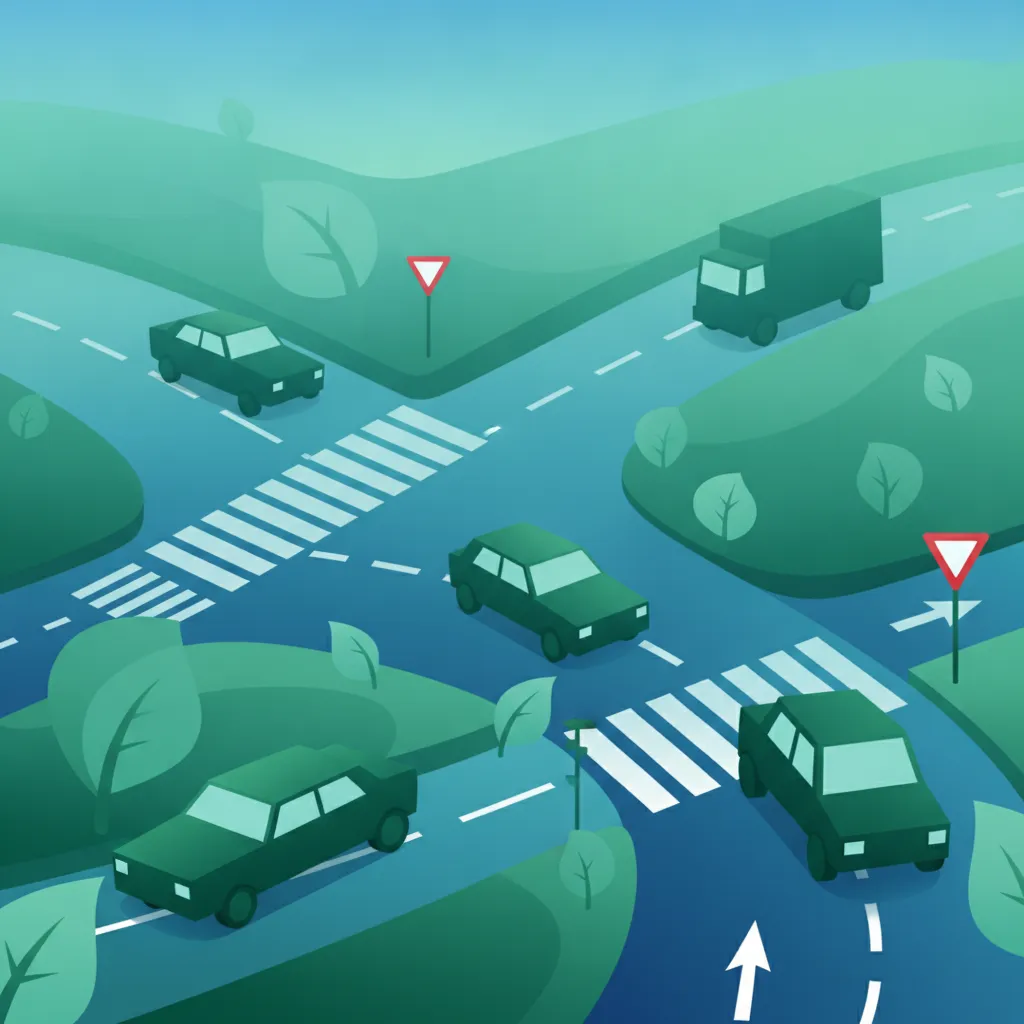
This lesson teaches the systematic approach to safely navigating junctions, emphasizing the importance of adjusting your speed and position well in advance. You will learn the 'Mirror-Signal-Manoeuvre' routine, how to perform effective all-round observation checks, and when to give way to other traffic. The content focuses on making safe judgments about gaps in traffic, a crucial skill for vulnerable AM riders when turning or emerging from a junction.

This lesson contrasts the challenges of different road types. It covers how to handle the hidden bends, poor surfaces, and unexpected hazards of rural roads. It then details the specific procedures for using dual carriageways and motorways, including using slip roads, adhering to strict lane discipline, and safely overtaking at high speeds.
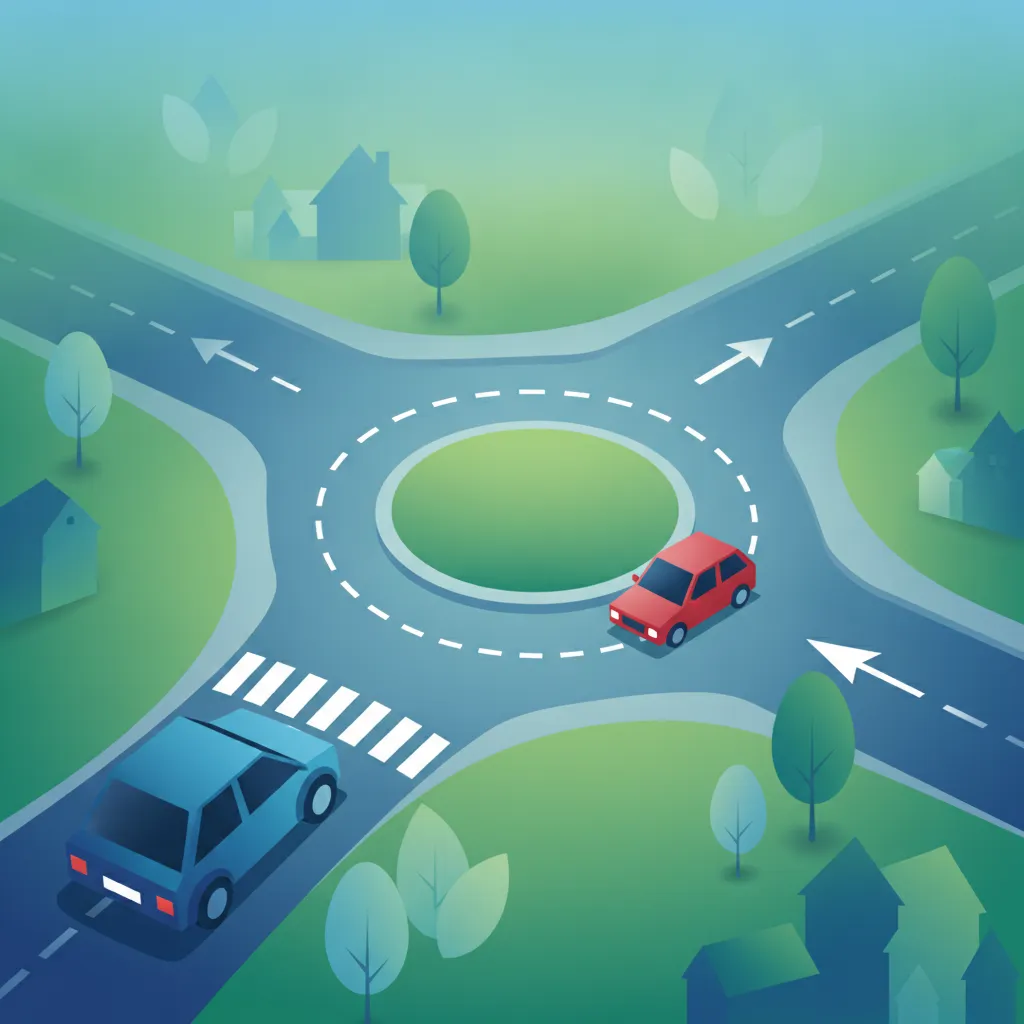
This lesson explains how to handle mini-roundabouts, which are common in urban and residential areas. The primary rule is to approach with caution and give priority to any traffic approaching from your right. You will also learn about correct signalling and the importance of being aware of cyclists and motorcyclists who may be harder to see.

This lesson breaks down the process of navigating basic junctions. It emphasizes the importance of the Mirror-Signal-Manoeuvre (MSM) and Position-Speed-Look (PSL) routines. You will learn how to position your motorcycle correctly for turning, perform effective observation checks for traffic, and judge safe gaps before emerging.

This lesson details how to safely navigate junctions controlled by traffic signals. It explains the meaning of filter arrows, which allow you to proceed in a specific direction even if the main light is red. You will also learn about respecting advanced stop lines for cyclists and how to approach a junction when the traffic lights are not working.

This lesson demystifies the process of turning a motorcycle at speed. It explains the essential principle of counter-steering (pushing the handlebar in the direction you want to turn) and its relationship with lean angle. You will also learn about selecting a safe line through a corner, managing your speed, and using your vision effectively to look where you want to go.
Understand typical mistakes and critical hazards motorcyclists face at roundabouts in Great Britain. Learn how to identify and avoid dangerous situations, improve observation, and maintain control for safer theory and practice.
This lesson addresses the unique challenges of mini-roundabouts and large, multi-lane or spiral roundabouts. You will learn the subtle differences in rules and approach for mini-roundabouts and the importance of strict lane discipline on larger ones. The lesson stresses the need for advanced planning and awareness when navigating these complex junctions.
This lesson provides specific techniques for safely navigating the two main types of roundabouts in Great Britain. For multi-lane roundabouts, it covers how to choose the correct lane on approach, maintain your lane while circulating, and signal your exit correctly. It also explains the unique rules for mini-roundabouts, emphasizing the importance of giving way to traffic from the right and navigating them with caution due to their small size.
This lesson explains how to handle mini-roundabouts, which are common in urban and residential areas. The primary rule is to approach with caution and give priority to any traffic approaching from your right. You will also learn about correct signalling and the importance of being aware of cyclists and motorcyclists who may be harder to see.
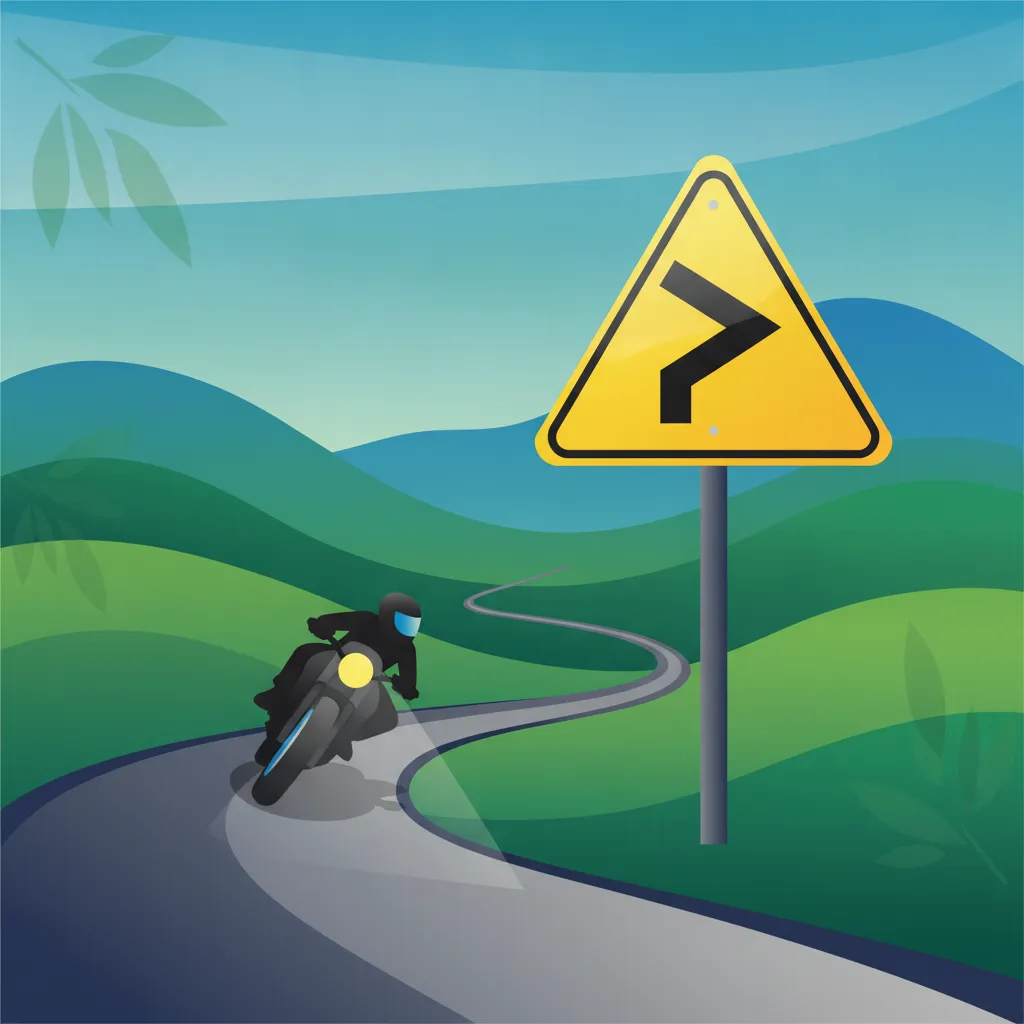
This lesson explains the function of warning signs, which are mostly triangular and alert road users to potential dangers ahead. You will learn to identify signs for bends, junctions, slippery surfaces, and other hazards particularly relevant to motorcyclists. Acting on these warnings allows a rider to adjust speed and position proactively, enhancing safety.
This lesson clarifies who has priority at junctions, whether they are marked with signs and lines or are unmarked. It covers the fundamental rule for roundabouts in the UK: give priority to traffic approaching from your right. You will learn the correct procedures for approaching, signalling, and choosing the appropriate lane on roundabouts and at other junctions.

A motorcyclist is particularly vulnerable to imperfections in the road surface. This lesson teaches you how to actively scan the road ahead to spot hazards like potholes, patches of gravel, or slippery diesel spills. You will learn safe techniques for either avoiding these hazards or crossing them with minimal risk if avoidance is not possible.

This lesson focuses on the dynamic and often unpredictable nature of urban traffic. It covers how to safely negotiate various pedestrian crossings, anticipate the movement of cyclists and pedestrians, and be aware of hazards like bus stops and car doors opening. You will also learn about the considerations for safe and legal filtering in slow-moving traffic.
This lesson teaches the systematic approach to safely navigating junctions, emphasizing the importance of adjusting your speed and position well in advance. You will learn the 'Mirror-Signal-Manoeuvre' routine, how to perform effective all-round observation checks, and when to give way to other traffic. The content focuses on making safe judgments about gaps in traffic, a crucial skill for vulnerable AM riders when turning or emerging from a junction.
This lesson tackles the complexities of large roundabouts, which often have multiple lanes and exits. It stresses the importance of reading signs on the approach to select the correct lane for your destination. You will learn about maintaining lane discipline while on the roundabout and signalling correctly as you pass exits and prepare to leave.
This lesson breaks down the process of navigating basic junctions. It emphasizes the importance of the Mirror-Signal-Manoeuvre (MSM) and Position-Speed-Look (PSL) routines. You will learn how to position your motorcycle correctly for turning, perform effective observation checks for traffic, and judge safe gaps before emerging.
Find clear answers to common questions learners have about Roundabouts: Positioning and Exit Strategies. Learn how the lesson is structured, which driving theory objectives it supports, and how it fits into the overall learning path of units and curriculum progression in Great Britain. These explanations help you understand key concepts, lesson flow, and exam focused study goals.
Generally, follow the lane markings. If there are no markings, use the left lane for the first exit (unless signs say otherwise) and the right lane for exits beyond the halfway point.
Yes, always signal left after you have passed the exit before the one you intend to take. This alerts other road users to your movement and is essential for safety.
Unless road signs or markings indicate otherwise, use the left lane, approach in that lane, and keep in that lane until you reach your exit. Do not signal on approach but signal left after passing the exit before the one you need.
No, the rules remain the same as for other vehicles. However, because you are more vulnerable, ensure your signals are clear and cancelled once your maneuver is complete to avoid confusing other motorists.
Dive into our comprehensive question bank to find exactly what you need for your Great Britain theory test. Use our advanced filters to pinpoint specific subjects or test your knowledge on challenging areas, ensuring you're fully prepared for success.