
This lesson breaks down the national speed limits for cars in Great Britain, helping you understand the legal requirements for different road types. Mastering these limits is essential for both passing your theory test and developing safe, responsible driving habits on the road. You will build upon this foundation as you progress toward learning about stopping distances and hazard perception in later modules.
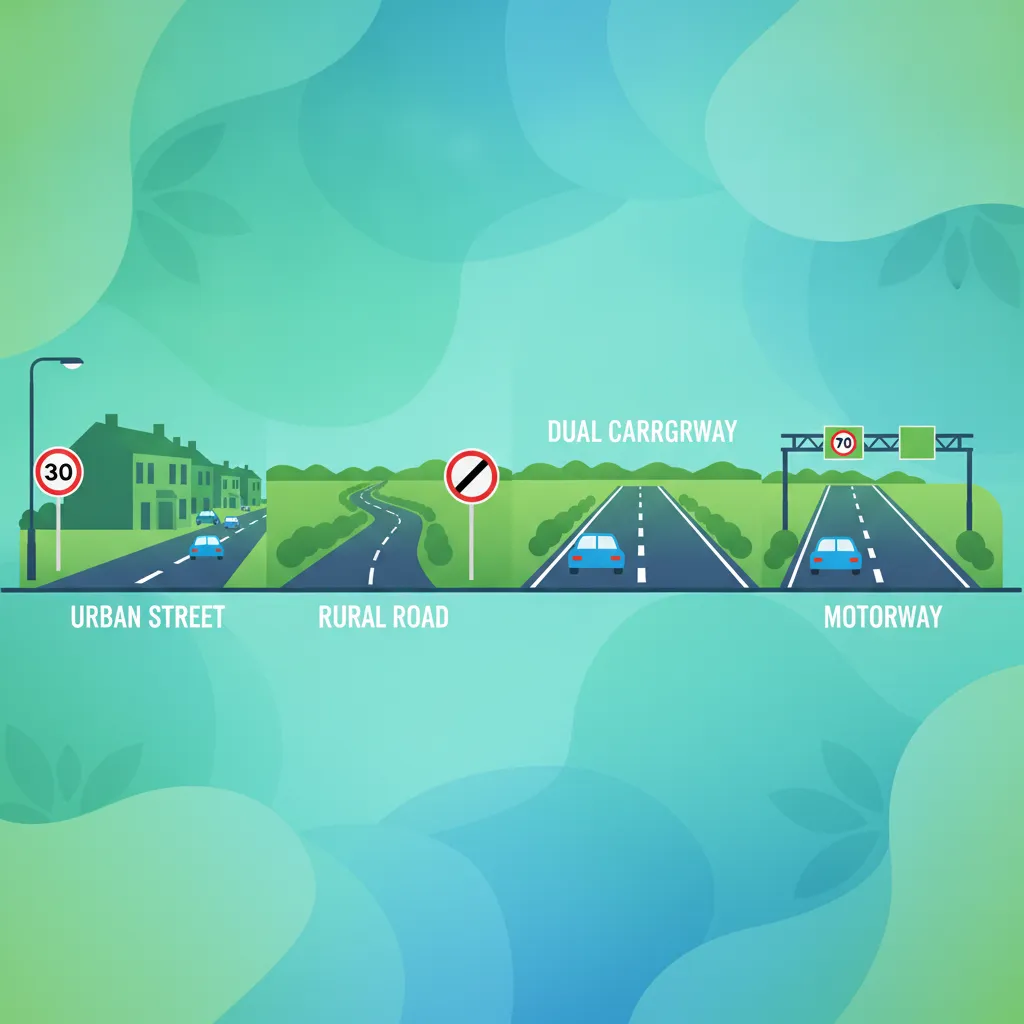
Lesson content overview
Understanding and adhering to speed limits is a fundamental aspect of safe driving and a critical component of the Great Britain Category B driving theory test. Speed limits are not arbitrary figures; they are carefully determined to ensure road safety, manage traffic flow, and protect all road users, especially in areas with higher risks. This lesson will provide a detailed overview of the default speed limits for cars (Category B vehicles) across different road types in Great Britain, explain how to identify these limits, and highlight the importance of adjusting your speed to prevailing conditions.
Speed limits are essential for maintaining safety on the roads. They directly influence the time a driver has to react to hazards, the distance a vehicle needs to stop, and the severity of injuries in the event of a collision. Driving at an appropriate speed—which can often be below the legal limit—is crucial for hazard perception, vehicle control, and sharing the road responsibly with others.
Mastery of these rules is a legal requirement and forms the bedrock of safe driving practices. Ignoring speed limits not only carries severe legal penalties but significantly increases the risk of accidents and harm to yourself and others.
In Great Britain, default speed limits for cars vary depending on the type of road. It is the driver's responsibility to identify the road type and apply the correct limit, even in the absence of explicit signage.
Built-up areas are typically residential, urban, or commercial zones where there is a higher density of pedestrians, cyclists, parked vehicles, and junctions. Due to these increased risks, a lower default speed limit is enforced.
Unless a different speed limit is clearly signed, you must not exceed 30 mph when driving in a built-up area. This rule applies regardless of the number of lanes or the appearance of the road. Street lighting is the primary visual cue. If you see streetlights spaced no more than 200 metres apart, you should assume a 30 mph limit is in force, even if no explicit 30 mph sign is present. This is codified in Rule 84 of The Highway Code.
Example: Driving through a village or suburb where houses line the road and streetlights are visible every 100-150 metres means the speed limit is 30 mph.
Rural single carriageways are common outside urban areas, often winding through the countryside. These roads are characterised by having a single road surface shared by traffic travelling in opposite directions, without a central reservation to separate them. This classification applies whether the road has one lane in each direction or multiple lanes, as long as there is no physical barrier down the middle.
On these roads, the default speed limit for cars is 60 mph, unless specific signs indicate a different limit. This is part of the National Speed Limit (NSL) for single carriageways (Rule 85 of The Highway Code). Even if a single carriageway has two or more lanes for traffic in one direction, if there is no central reservation, it remains a single carriageway for speed limit purposes.
Example: Driving on a two-lane A-road through open countryside with no streetlights or speed limit signs means the 60 mph limit applies.
Dual carriageways are designed for higher speeds and traffic volumes. They are distinct from single carriageways because they have a physical central reservation separating the two directions of traffic. This reservation can be a grass verge, a barrier, or a wide strip of land. A dual carriageway will typically have at least two lanes for traffic travelling in each direction.
The default speed limit for cars on dual carriageways in Great Britain is 70 mph, unless signs indicate otherwise. This also forms part of the National Speed Limit (NSL) for dual carriageways (Rule 86 of The Highway Code).
Example: Travelling on a busy A-road with a central reservation and two lanes for your direction of travel, outside of a built-up area and without explicit signs, means the speed limit is 70 mph.
Motorways are the highest class of road in Great Britain, designed for fast, high-volume traffic with controlled access. They are identified by their 'M' prefix (e.g., M1, M25). Key characteristics include:
The default speed limit for cars on motorways is 70 mph, unless a lower temporary speed limit is displayed on electronic gantry signs (common on "smart motorways") or by temporary road works signage. This is covered in Rule 87 of The Highway Code.
Example: Driving on the M6 at night, with no electronic signs showing a different limit, means the maximum speed you can legally travel is 70 mph.
Understanding the default speed limits is vital, but equally important is the ability to recognise when these defaults are overridden by specific signage or road characteristics.
Speed limit signs are circular with a red border and a numerical value in the centre, indicating the maximum speed in miles per hour (mph). These signs override any default speed limit that would otherwise apply to that road section.
When you see a standard speed limit sign, you must adhere to the speed shown until you pass another speed limit sign, an NSL sign, or exit the restricted zone.
The National Speed Limit sign is a circular blue sign with a single white diagonal stripe running from the top right to the bottom left. This sign indicates that the default NSL applies for the type of road you are on.
When you pass an NSL sign:
This sign is often placed at the end of a specific speed restriction (e.g., after a 40 mph zone) to signal that the default NSL now applies. You must still correctly identify the road type (single carriageway, dual carriageway, or motorway) to know whether it's 60 mph or 70 mph.
As mentioned earlier, street lighting spaced at intervals of 200 metres or less implicitly indicates a 30 mph speed limit, even without a specific 30 mph sign. This is a crucial visual cue that drivers must learn to recognise immediately. It's especially common when entering smaller villages or residential areas where specific speed limit signs might be less frequent.
"Smart motorways" use technology to actively manage traffic flow, often including variable speed limits displayed on electronic overhead gantry signs. These limits can change dynamically based on traffic congestion, incidents, or weather conditions.
When a variable speed limit is displayed, it is mandatory to obey it, even if it is lower than the standard 70 mph motorway limit. These zones are often monitored by cameras, and failing to comply will result in a speeding offence.
Temporary speed limits are often implemented around road works, accident sites, or other temporary hazards. These are typically displayed on signs that may look slightly different from permanent signs, sometimes on yellow backgrounds or with additional warnings about road workers.
These temporary limits, regardless of the default limit for the road type, must be strictly obeyed. They are put in place for the safety of road workers and drivers navigating potentially hazardous conditions.
While speed limits define the maximum legal speed, it is often necessary and safer to drive below these limits. The Highway Code (Rule 117) stresses the importance of adapting your speed to the prevailing conditions.
Weather conditions significantly impact visibility, road surface grip, and ultimately, stopping distances.
The state of your vehicle and what you are carrying also influences safe speed:
In areas where pedestrians, cyclists, horse riders, or motorcyclists are present, driving at a reduced speed is paramount. Lower speeds provide more time to react to their unpredictable movements and significantly reduce the severity of impact if a collision occurs. This is why 30 mph limits are default in built-up areas, and why a 20 mph limit is increasingly common around schools and residential zones.
It is common to transition between different road types, for example, from a rural single carriageway (60 mph) into a built-up area (30 mph), or from a dual carriageway onto a motorway (both 70 mph but with different rules). Always be actively looking for speed limit signs or changes in road characteristics (like the presence of streetlights) to ensure you adjust your speed promptly and safely. Anticipate these changes and be ready to slow down or accelerate as appropriate.
Adhering to speed limits is not just good practice; it's a legal obligation. The Highway Code outlines specific rules, and violations can lead to severe penalties.
The Highway Code provides clear guidance on speed limits:
These rules form the basis of the legal framework surrounding speed limits in Great Britain.
Exceeding the speed limit is a serious offence with significant consequences:
The rules surrounding speed limits are rooted in the physics of vehicle dynamics and human capabilities.
Kinetic energy, the energy of motion, is directly proportional to the square of a vehicle's speed. This means a small increase in speed results in a much larger increase in kinetic energy.
Drivers need time to perceive a hazard, process the information, decide on a course of action, and physically react (e.g., apply brakes). This 'perception-reaction time' can vary but averages around 1.5 to 2 seconds. At higher speeds, a vehicle covers much more distance during this crucial reaction time.
Stopping distance increases exponentially with speed because both reaction distance and braking distance increase. For example, the estimated stopping distance at 30 mph is approximately 23 metres (75 feet), while at 70 mph, it dramatically increases to approximately 96 metres (315 feet).
Data from road safety organisations consistently show that speeding is a significant contributing factor in fatal and serious road collisions. Compliance with speed limits, and especially adjusting speed below the limit when conditions demand it, demonstrably reduces the frequency and severity of accidents.
Let's consider some real-world examples to solidify your understanding of speed limits in Great Britain.
Scenario 1: Driving in a Residential Street with Streetlights You are driving on a street with houses and streetlights every 150 metres, but you haven't seen any speed limit signs since leaving a 50 mph main road.
Scenario 2: Moving from a Restricted Road to a Rural Single Carriageway You've just left a 40 mph restricted zone on a country lane and merged onto an unlit A-road that has one lane each way, with no central reservation and no speed limit signs.
Scenario 3: Smart Motorway with Variable Speed Limit You are driving on a smart motorway where the electronic gantries display a temporary speed limit of 50 mph due to congestion, even though the permanent NSL signs indicate 70 mph.
To recap the essential points for Category B drivers regarding speed limits in Great Britain:
By consistently applying these principles, you will contribute to safer roads for everyone and ensure you are well-prepared for your driving theory test and safe driving throughout your career.
This lesson covers the default national speed limits that apply to Category B vehicles in Great Britain: 30 mph in built-up areas (identified by street lighting or signs), 60 mph on rural single carriageways, and 70 mph on dual carriageways and motorways. It explains how to identify each road type, interpret speed limit signs including the National Speed Limit sign, and recognise when local or variable speed limits override the defaults. The content also covers adjusting speed for adverse weather, vehicle condition, and vulnerable road users, and outlines the legal consequences of speeding under Highway Code Rules 84-88 and 117. Practical scenarios demonstrate applying this knowledge to real driving situations.
A short set of high-value points that capture the most important learning from this lesson.
Built-up areas are identified by street lighting spaced 200 metres or less apart, making the 30 mph limit apply even without an explicit sign.
The National Speed Limit sign requires you to know the road type: 60 mph on single carriageways, 70 mph on dual carriageways and motorways.
Variable speed limits displayed on smart motorway gantries are legally enforceable and override the default 70 mph limit.
Dual carriageways are defined by a physical central reservation separating traffic, not by the number of lanes.
You must always adjust your speed below the legal limit when conditions such as weather, visibility, or traffic make it unsafe to travel at the maximum.
Explore all units and lessons included in this driving theory course.
Built-up area: streetlights ≤200 m apart = 30 mph default (Rule 84)
Rural single carriageway (no central reservation) = 60 mph NSL (Rule 85)
Dual carriageway (central reservation present) = 70 mph NSL (Rule 86)
Motorway (M-prefix, controlled access) = 70 mph NSL, may have variable limits (Rule 87)
Smart motorway variable limits override default NSL and are enforced by cameras (Rule 117)
Assuming a road is a dual carriageway because it has two lanes in one direction, when the defining feature is the central reservation separating traffic flows.
Overlooking street lighting as the key indicator of a 30 mph built-up area and only looking for explicit 30 mph signs.
Seeing the NSL sign and automatically assuming 60 mph, without checking whether the road is a single carriageway, dual carriageway, or motorway.
Failing to notice electronic variable speed limit signs on smart motorways and continuing at 70 mph.
Believing that a 30 mph limit only applies when a 30 mph sign is visible, rather than understanding that street lighting alone indicates the limit.
Lesson content overview
A short set of high-value points that capture the most important learning from this lesson.
Built-up areas are identified by street lighting spaced 200 metres or less apart, making the 30 mph limit apply even without an explicit sign.
The National Speed Limit sign requires you to know the road type: 60 mph on single carriageways, 70 mph on dual carriageways and motorways.
Variable speed limits displayed on smart motorway gantries are legally enforceable and override the default 70 mph limit.
Dual carriageways are defined by a physical central reservation separating traffic, not by the number of lanes.
You must always adjust your speed below the legal limit when conditions such as weather, visibility, or traffic make it unsafe to travel at the maximum.
Explore all units and lessons included in this driving theory course.
Built-up area: streetlights ≤200 m apart = 30 mph default (Rule 84)
Rural single carriageway (no central reservation) = 60 mph NSL (Rule 85)
Dual carriageway (central reservation present) = 70 mph NSL (Rule 86)
Motorway (M-prefix, controlled access) = 70 mph NSL, may have variable limits (Rule 87)
Smart motorway variable limits override default NSL and are enforced by cameras (Rule 117)
Assuming a road is a dual carriageway because it has two lanes in one direction, when the defining feature is the central reservation separating traffic flows.
Overlooking street lighting as the key indicator of a 30 mph built-up area and only looking for explicit 30 mph signs.
Seeing the NSL sign and automatically assuming 60 mph, without checking whether the road is a single carriageway, dual carriageway, or motorway.
Failing to notice electronic variable speed limit signs on smart motorways and continuing at 70 mph.
Believing that a 30 mph limit only applies when a 30 mph sign is visible, rather than understanding that street lighting alone indicates the limit.
Explore search topics learners often look for when studying Speed Limits for Urban, Rural, Dual Carriageway, and Motorway Roads. These topics reflect common questions about road rules, driving situations, safety guidance, and lesson level theory preparation for learners in Great Britain.
Browse additional driving theory lessons that cover connected traffic rules, road signs, and common driving situations related to this topic. Improve your understanding of how different rules interact across everyday traffic scenarios.
Explore beyond default speed limits. Learn how variable limits on smart motorways, temporary restrictions, and adverse weather conditions affect safe driving speeds on Great Britain roads. Essential for theory test preparation.
This lesson explains that safe driving often requires travelling at a speed lower than the legal limit. It covers how to adjust your speed for adverse conditions such as rain, which can double your stopping distance, or fog, which severely reduces visibility. The goal is to always be able to stop safely in the distance you can see to be clear.
This lesson clarifies the specific speed limits that apply to Category AM vehicles on various British roads, from 30 mph zones in built-up areas to national speed limits on single and dual carriageways. It emphasizes that the posted limit is a maximum, not a target, and teaches you how to choose an appropriate speed based on factors like weather, traffic, and road layout. Understanding these rules is vital for both legal compliance and personal safety.
This lesson details speed management techniques applicable to urban, rural, and motorway environments, focusing on compliance with legal speed limits and developing appropriate speed perception. It covers strategies for monitoring speed and adjusting for road conditions, traffic density, and overall passenger safety. The lesson also reviews enforcement mechanisms and emphasizes the importance of speed compliance for accident avoidance and regulatory adherence, a critical skill for all professional drivers.

This lesson explains how to drive safely through areas where roadworks are taking place. It stresses the importance of obeying all temporary signs, especially mandatory speed limits, which are in place for your safety and the safety of road workers. You will learn about navigating narrow lanes, contraflow systems, and how to follow official diversion signs.

This lesson provides essential advice for driving when weather conditions are poor. It explains how rain can cause aquaplaning and why you must double your following distance. You will also learn techniques for driving in icy conditions, including gentle use of controls to avoid skidding, and the correct use of lights in fog.

This lesson focuses on the regulations and best practices for driving a bus or coach on motorways. It details the specific speed limits applicable to PCVs and reinforces strict lane discipline. The content covers the correct procedures for safely joining from a slip road, overtaking other vehicles, and exiting the motorway. It also explains the features of smart motorways and the correct safety procedures to follow in the event of a breakdown, including the use of the hard shoulder.
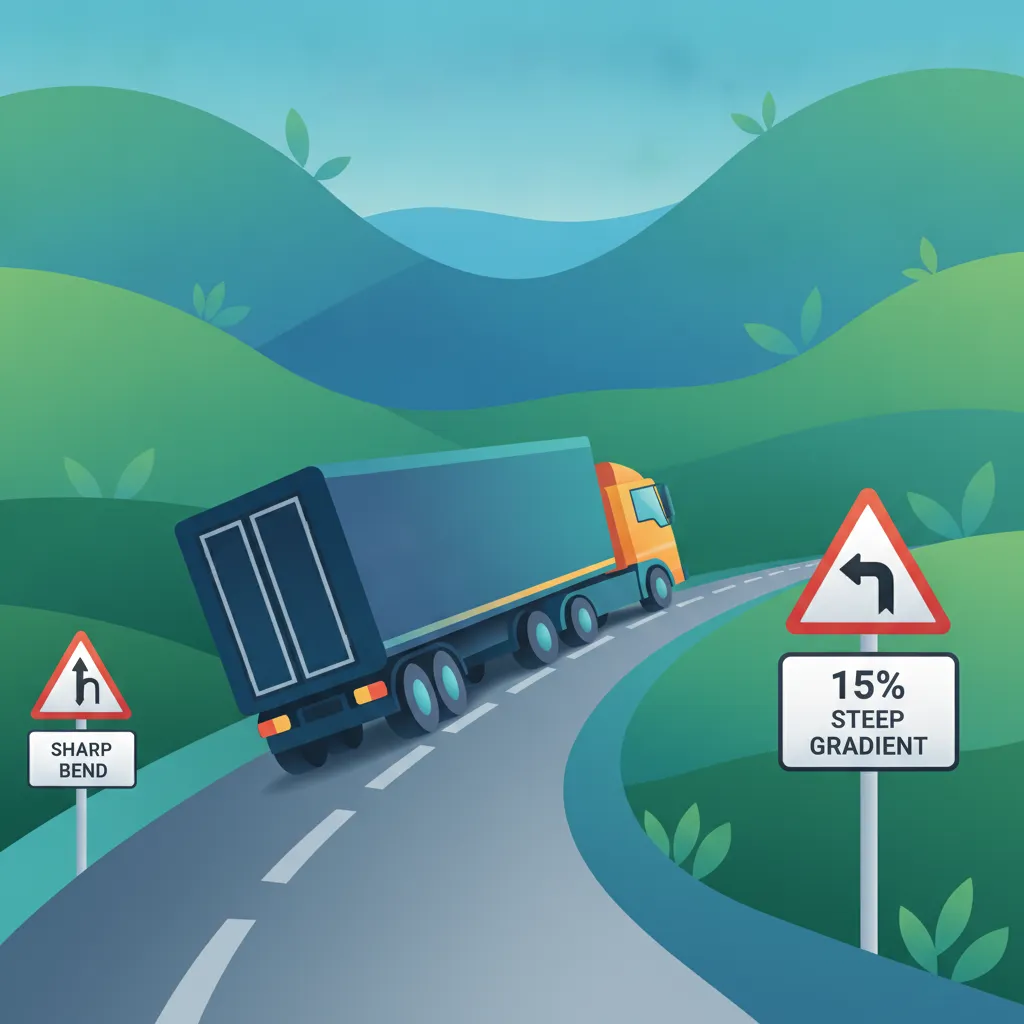
This lesson focuses on the principles of effective speed management for heavy goods vehicles, which extends beyond simply obeying the statutory speed limits. It covers how to adapt speed based on vehicle weight, load stability, road gradients, and prevailing traffic and weather conditions. You will also learn about the function of mandatory speed limiters and how intelligent use of speed and cruise control can significantly improve fuel efficiency and safety.
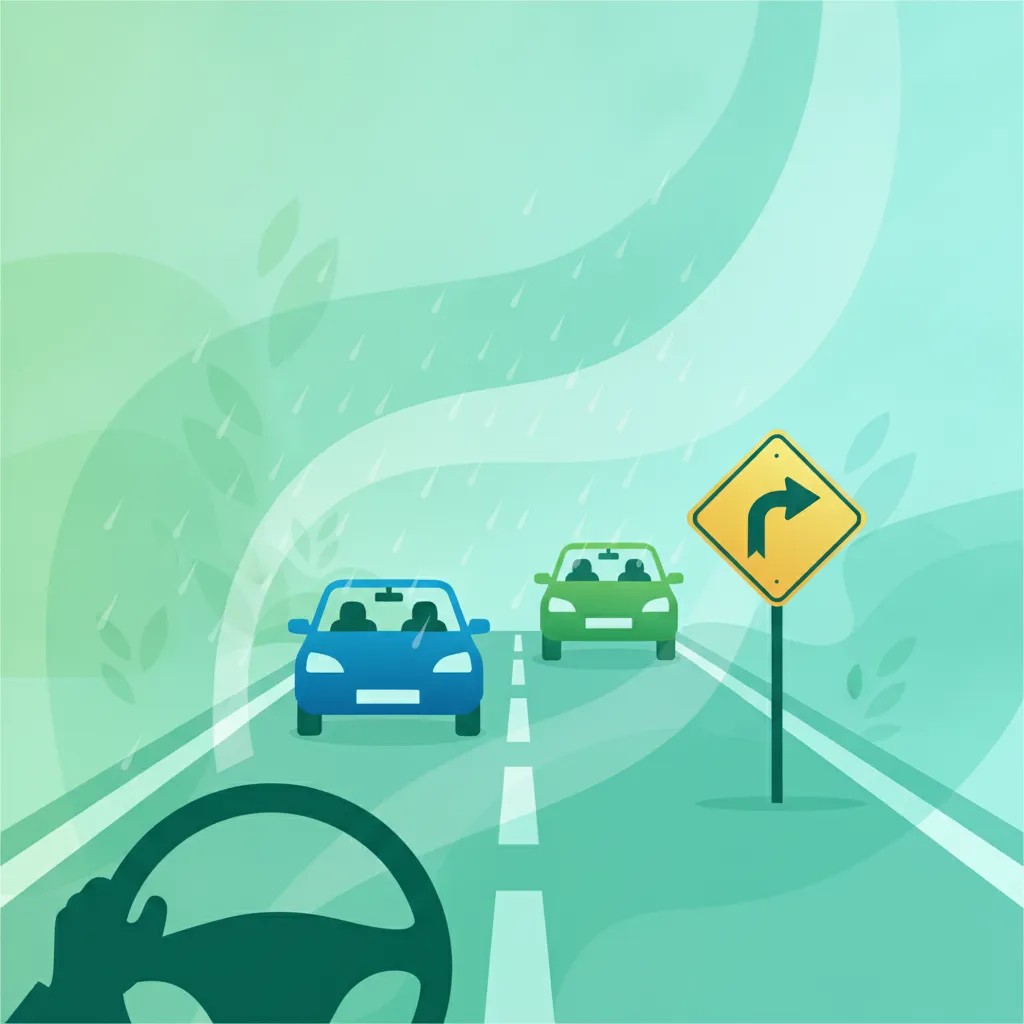
This lesson teaches a practical method for maintaining a safe distance from the vehicle in front. The 'two-second rule' provides a minimum time gap in dry conditions, which should be doubled to four seconds in the wet. Adhering to this rule gives you sufficient time to react and brake safely if the vehicle ahead stops suddenly.
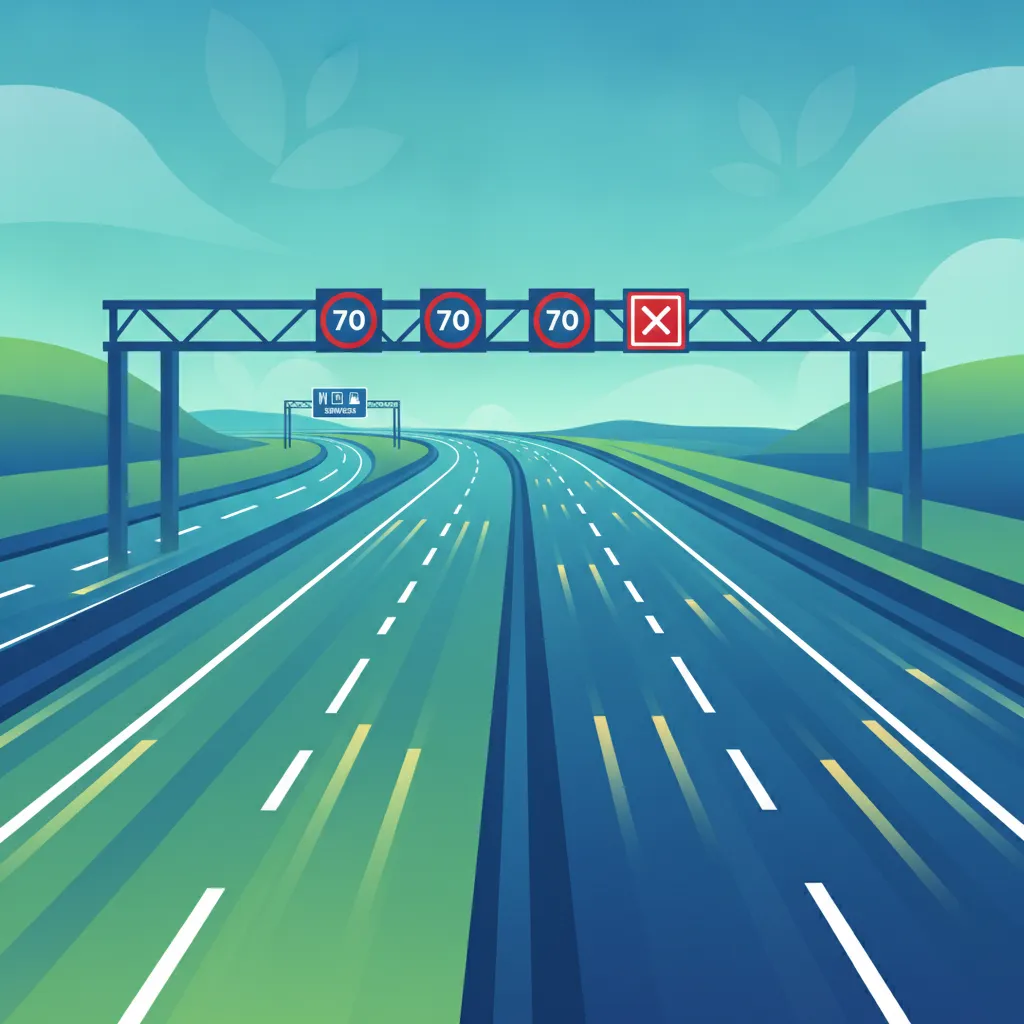
This lesson covers the unique aspects of motorway driving, from joining and leaving the carriageway to the strict lane discipline of keeping to the left unless overtaking. It explains the features of smart motorways, such as variable speed limits and the meaning of a Red X symbol above a lane. The safe procedure for handling a breakdown is also a key topic.

This lesson prepares you for the challenges of countryside driving. It emphasizes that the national speed limit on these roads is often too fast for the conditions. You will learn how to approach sharp bends, use passing places on single-track roads, and anticipate hazards like slow-moving tractors, horse riders, or mud on the road surface.
Master the specific speed limits for cars on urban roads, rural single carriageways, dual carriageways, and motorways in Great Britain. Understand how to identify road types and apply the correct Highway Code speed rules.
This lesson focuses on the regulations and best practices for driving a bus or coach on motorways. It details the specific speed limits applicable to PCVs and reinforces strict lane discipline. The content covers the correct procedures for safely joining from a slip road, overtaking other vehicles, and exiting the motorway. It also explains the features of smart motorways and the correct safety procedures to follow in the event of a breakdown, including the use of the hard shoulder.
This lesson details speed management techniques applicable to urban, rural, and motorway environments, focusing on compliance with legal speed limits and developing appropriate speed perception. It covers strategies for monitoring speed and adjusting for road conditions, traffic density, and overall passenger safety. The lesson also reviews enforcement mechanisms and emphasizes the importance of speed compliance for accident avoidance and regulatory adherence, a critical skill for all professional drivers.
This lesson clarifies the specific speed limits that apply to Category AM vehicles on various British roads, from 30 mph zones in built-up areas to national speed limits on single and dual carriageways. It emphasizes that the posted limit is a maximum, not a target, and teaches you how to choose an appropriate speed based on factors like weather, traffic, and road layout. Understanding these rules is vital for both legal compliance and personal safety.
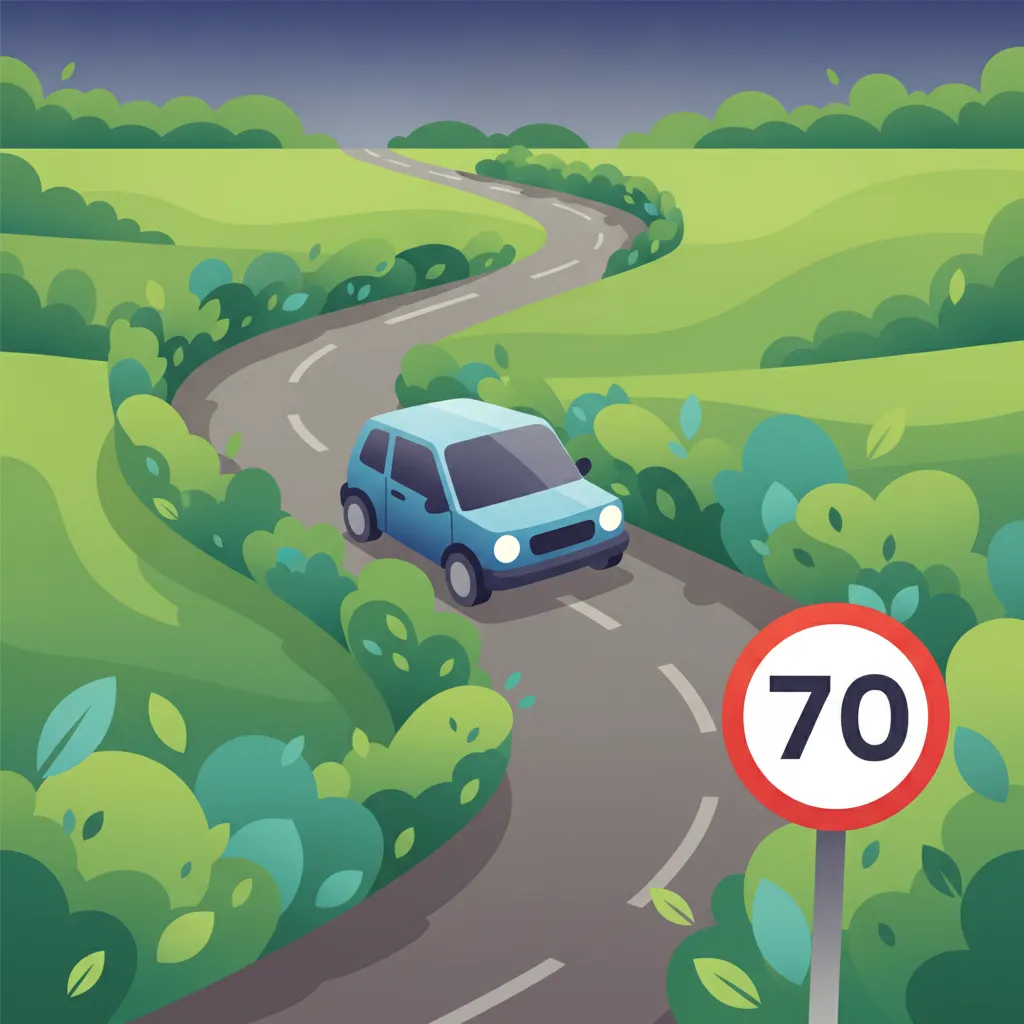
This lesson addresses the unique set of challenges that rural roads present to HGV drivers. It covers how to safely navigate narrow and winding lanes, the importance of anticipating hazards like slow-moving agricultural machinery, mud on the road, and wildlife. You will learn how the national speed limit applies to your vehicle on these roads and why it is often necessary to travel at a much lower speed to ensure safety.
This lesson covers the unique aspects of motorway driving, from joining and leaving the carriageway to the strict lane discipline of keeping to the left unless overtaking. It explains the features of smart motorways, such as variable speed limits and the meaning of a Red X symbol above a lane. The safe procedure for handling a breakdown is also a key topic.

This lesson contrasts the challenges of different road types. It covers how to handle the hidden bends, poor surfaces, and unexpected hazards of rural roads. It then details the specific procedures for using dual carriageways and motorways, including using slip roads, adhering to strict lane discipline, and safely overtaking at high speeds.
This lesson prepares you for the challenges of countryside driving. It emphasizes that the national speed limit on these roads is often too fast for the conditions. You will learn how to approach sharp bends, use passing places on single-track roads, and anticipate hazards like slow-moving tractors, horse riders, or mud on the road surface.
This lesson explains that safe driving often requires travelling at a speed lower than the legal limit. It covers how to adjust your speed for adverse conditions such as rain, which can double your stopping distance, or fog, which severely reduces visibility. The goal is to always be able to stop safely in the distance you can see to be clear.

This lesson focuses on the specific rules and best practices for driving HGVs on motorways in Great Britain. It covers mandatory speed limits for goods vehicles, lane discipline including restrictions on using the outside lane, and procedures for safely joining and leaving the motorway. The lesson also includes up-to-date information on driving on smart motorways, including understanding the signs and using emergency refuge areas correctly.

This lesson addresses the unique challenges of driving a large vehicle on rural roads. It provides techniques for positioning the vehicle through sharp bends and on narrow lanes, and for safely navigating unmarked or uncontrolled junctions. Learners will be taught to anticipate hidden hazards common in the countryside, such as slow-moving farm vehicles, animals on the road, and concealed entrances. The correct use of passing places and strategies for meeting oncoming traffic are also covered.
Find clear answers to common questions learners have about Speed Limits for Urban, Rural, Dual Carriageway, and Motorway Roads. Learn how the lesson is structured, which driving theory objectives it supports, and how it fits into the overall learning path of units and curriculum progression in Great Britain. These explanations help you understand key concepts, lesson flow, and exam focused study goals.
No, in Great Britain, there is no separate lower speed limit for learner drivers. You must adhere to the same national speed limits and local sign-posted limits as all other drivers on the road.
The national speed limit for a car on a single carriageway is 60 mph, unless traffic signs indicate a lower limit is in force for that specific stretch of road.
Generally, if there is a system of street lighting, the limit is 30 mph unless signs indicate otherwise. However, always look for terminal signs or repeater signs to be certain, as some roads with lights may have different limits.
Yes, while the national speed limit for cars on motorways is 70 mph, smart motorways or roadworks areas often use variable speed limits displayed on overhead gantries, which are legally enforceable.
Dive into our comprehensive question bank to find exactly what you need for your Great Britain theory test. Use our advanced filters to pinpoint specific subjects or test your knowledge on challenging areas, ensuring you're fully prepared for success.