
This lesson guides you through the complex dynamics of controlling a heavy goods vehicle safely, going beyond statutory limits. You will learn how mass, cargo, and road geometry dictate speed choices to ensure you are prepared for both the DVSA theory exam and your professional career.
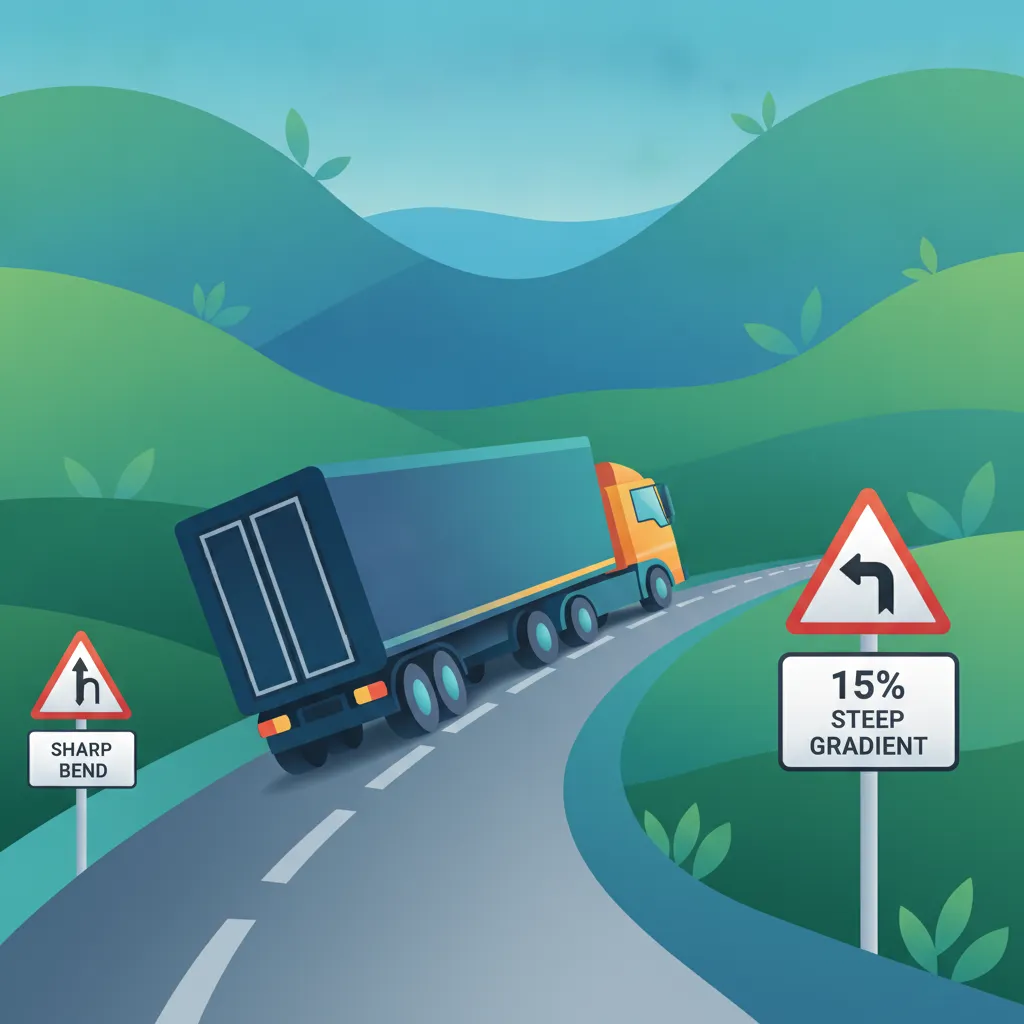
Lesson content overview
Driving a heavy goods vehicle (HGV) requires a profound understanding of speed management that extends far beyond simply adhering to posted speed limits. For professional drivers pursuing a Category C licence in Great Britain, effective speed control is a critical skill for ensuring safety, maintaining vehicle stability, and optimising operational efficiency. This lesson delves into the principles of selecting and continuously adjusting your vehicle's speed based on a dynamic interplay of factors: the vehicle's mass and load, prevailing road and weather conditions, traffic density, and the intelligent use of integrated vehicle technologies like speed limiters and cruise control.
Strategic speed management is the continuous process of evaluating and adjusting your vehicle's velocity to match the ever-changing driving environment. This goes beyond mere compliance; it's about anticipating hazards, mitigating risks, and operating your vehicle with maximum safety and economic benefit. Given the considerable size, weight, and inertia of HGVs, even minor misjudgements in speed can have severe consequences, impacting stopping distances, vehicle stability, and the integrity of the cargo. Mastering this skill is essential for meeting the high standards set by the DVSA and for a successful professional driving career.
At the heart of speed management for heavy vehicles lies the fundamental principle of physics: inertia and kinetic energy. Inertia is the natural resistance of any object, including your HGV, to changes in its state of motion. A heavier vehicle possesses significantly more inertia, meaning it requires far greater force and distance to accelerate, decelerate, or change direction.
The energy an object possesses due to its motion. For vehicles, it is calculated by the formula ½ mv², where 'm' is mass and 'v' is velocity (speed).
Kinetic energy is particularly crucial because it increases quadratically with speed. This means that if you double your speed, your kinetic energy doesn't just double; it quadruples. For instance, a 12-tonne HGV travelling at 40 mph (approximately 64 km/h or 18 m/s) has a kinetic energy of around 19 Megajoules (MJ). Increase that speed to 50 mph (approximately 80 km/h or 22 m/s), and its kinetic energy jumps to about 29 MJ – a 50% increase from just a 10 mph speed rise. This exponential relationship highlights why small speed increments in heavy vehicles dramatically increase the braking effort required and, consequently, the stopping distance. Understanding this concept is vital for selecting appropriate speeds, especially on slopes or in dense traffic, where earlier and smoother speed reduction is paramount.
The overall weight of your heavy goods vehicle, combined with how that weight is distributed, fundamentally affects its handling and stability. Load distribution refers to the arrangement of cargo weight across the vehicle's axles and length, while the centre of gravity (CoG) is the imaginary point where the total weight of the vehicle and its load is concentrated.
The point at which the entire weight of the vehicle and its load is considered to act vertically downwards. A higher CoG reduces stability.
A high CoG, often caused by tall loads, or an uneven load distribution (front-biased, rear-biased, or lateral bias) can severely compromise a vehicle's stability, particularly when cornering, braking, or driving on gradients. An improperly secured or distributed load can shift during transit, especially under braking or cornering forces, potentially leading to a loss of control or even a rollover incident. For example, a trailer with a rear-biased load might experience significant sway or tend to swing outwards on a sharp curve, demanding a much slower speed to maintain control.
Regulation R3.3 mandates that all cargo must be secured so that no load shift occurs that could affect vehicle stability at any speed. Drivers must verify that their load is properly secured and distributed before commencing a journey and remain aware that even a secured load does not eliminate all stability concerns if the CoG is too high or uneven.
Beyond the inherent characteristics of the HGV and its load, external factors such as road type, gradients, traffic flow, and weather conditions necessitate constant speed adaptation. A professional driver must continuously assess these variables and modify their speed to ensure safety and control.
Road gradients, or slopes, have a profound influence on a heavy vehicle's speed and handling. On an ascending gradient (uphill), gravity acts against the vehicle's motion, demanding more engine power to maintain speed and potentially limiting acceleration. Conversely, a descending gradient (downhill) means gravity assists the vehicle, causing its speed to increase unless actively managed.
Using the resistance of the engine, typically by selecting a lower gear, to slow down the vehicle without relying heavily on the service brakes.
On long descents, in particular, proper speed management is critical. Rule R5.3 specifies that speed must be reduced before the descent begins. This allows the driver to select an appropriate lower gear and engage engine braking, which uses the engine's compression to decelerate the vehicle. This practice reduces reliance on the service brakes, preventing them from overheating, a condition known as brake fade. Overheated brakes lose efficiency and can fail entirely, leading to a catastrophic loss of control. Always downshift to a gear that allows the engine to hold the vehicle at a safe speed without excessive use of the footbrake. Modern HGVs may also be fitted with a retarder, a supplementary braking system that provides additional non-friction braking force, further aiding descent control.
The speed of your HGV must always be set in relation to the surrounding traffic flow, the type of road, and the level of congestion. Heavy vehicles require significantly greater headway and longer distances to react and stop compared to smaller vehicles. This necessitates earlier speed reduction when approaching traffic, merging, or changing lanes.
In free-flowing traffic on motorways, maintaining a steady, appropriate speed is often possible. However, in synchronized flow, where traffic moves at a consistent but lower speed, or in stop-and-go congestion, constant adjustments are needed. Rule R5.4 dictates that heavy vehicles must maintain a minimum safe following distance of at least three seconds under normal conditions. This gap should be increased to four seconds or more in adverse weather or heavy traffic. Failing to adapt your speed to congestion can lead to dangerous situations, such as rear-end collisions or difficulty merging safely.
Adverse weather conditions critically impact tyre grip, vehicle stability, and visibility, making it imperative to reduce speed.
The posted speed limit is the absolute maximum under ideal conditions. In adverse weather, the safe speed is almost always lower than the legal limit.
Modern heavy vehicles are equipped with systems designed to assist drivers with speed management and ensure compliance with regulations. Understanding and correctly using these technologies, while never surrendering driver responsibility, is a hallmark of professional HGV operation.
All Category C vehicles operating on public roads in Great Britain are legally required to be fitted with a speed limiter. This device automatically restricts the vehicle's top speed to a preset maximum. For most goods vehicles over 3.5 tonnes, this limit is typically set to 90 km/h (approximately 56 mph) in the UK.
An electronic device fitted to certain vehicles that prevents them from exceeding a pre-set maximum speed, typically 90 km/h (56 mph) for most HGVs in the UK.
Rule R5.2 states that all Category C vehicles must have a speed limiter set according to the maximum speed allowed for their class. While a speed limiter prevents you from exceeding a statutory maximum, it does not absolve the driver of the responsibility to adapt their speed to prevailing conditions. The limiter ensures compliance with the absolute top speed, but safety and efficiency still require the driver to choose a speed below this maximum when conditions demand it. Misunderstanding this is a common error; the limiter is a safety net, not a target speed.
Cruise control is an electronic system that maintains a preset vehicle speed without continuous driver input on the accelerator pedal. More advanced systems, known as Adaptive Cruise Control (ACC), can also adjust the vehicle's speed automatically to maintain a set following distance from the vehicle ahead.
A sophisticated cruise control system that automatically adjusts vehicle speed to maintain a pre-set following distance from the vehicle in front, using sensors.
While cruise control can enhance fuel efficiency and reduce driver fatigue on long, straight, and uncongested stretches of road, its use must be carefully managed. Rule R5.6 explicitly states that cruise control (including adaptive) must be disengaged when road conditions require dynamic speed modifications. This includes:
Misusing cruise control, especially ACC, by assuming it replaces driver judgment, is a dangerous misunderstanding. The driver remains fully responsible for the safe operation of the vehicle at all times.
Beyond safety and legal compliance, intelligent speed management plays a significant role in fuel efficiency and reducing environmental impact. Every heavy vehicle has an optimal speed range where fuel consumption is minimised relative to the distance covered.
Generally, for diesel heavy vehicles, this optimal speed range often lies between 80-110 km/h (approximately 50-70 mph) on motorways, depending on the vehicle's engine, load, and aerodynamics. Speeds much higher than this sweet spot drastically increase fuel consumption due to the exponential rise in aerodynamic drag (which increases with the cube of speed). Similarly, excessively low speeds or aggressive acceleration and braking in heavy traffic also reduce efficiency.
By maintaining a steady, optimal speed when conditions allow, using cruise control judiciously, anticipating traffic flow, and employing smooth acceleration and deceleration, drivers can significantly reduce running costs and emissions. Economic driving is not just an environmental imperative; it's a financial one too.
Adhering to specific regulations and adopting best practices is fundamental for safe and compliant HGV operation in Great Britain.
Professional drivers must internalise these mandatory regulations for heavy vehicle speed management:
Many road incidents involving heavy vehicles stem from inadequate speed management. Here are common violations and their potential repercussions:
Effective speed management involves dynamic adaptation across various scenarios:
Mastering speed management for heavy goods vehicles is a cornerstone of professional driving for the Category C licence. It combines an understanding of physics, adherence to regulations, and a proactive approach to dynamic driving conditions.
Core Idea: Your speed must be continuously evaluated and adjusted based on your vehicle's characteristics (mass, load), environmental factors (road, weather, traffic), and legal obligations.
Key Relationships: Higher speeds inherently lead to higher kinetic energy, which in turn demands longer stopping distances, increases brake wear, and elevates fuel consumption. Conversely, managing speed effectively reduces these risks and costs.
Legislative Obligations: Always obey statutory speed limits and mandatory speed limiter settings. Crucially, recognise that conditions often necessitate a speed lower than the legal maximum. Disengage cruise control when conditions require constant driver input, and always reduce speed in adverse weather.
Operational Best Practices:
Safety Logic: By adopting these principles, you ensure the ability to stop your HGV safely within your visible range, maintain vehicle stability, prevent dangerous cargo shifts, protect other road users, and contribute to environmental sustainability.
Verify Speed Limiter Setting: Ensure your vehicle's speed limiter is correctly set and fully operational according to legal requirements.
Assess Load Distribution & CoG: Understand how your load affects stability and adjust your speed accordingly, especially before curves and gradients.
Check Weather & Road Conditions: Continuously monitor for rain, ice, snow, fog, or high winds, and proactively reduce speed.
Observe Posted Limits & Variable Signs: Adhere to all static and dynamic speed limit signs, remembering they are maximums for ideal conditions.
Choose Appropriate Gear for Gradients: Select a lower gear before beginning descents to enable effective engine braking and conserve service brakes.
Apply Engine Braking: Actively use engine braking or a retarder on descents to control speed and prevent brake fade.
Judicious Cruise Control Use: Engage cruise control only on straight, dry, low-traffic stretches; disengage it immediately in heavy traffic, on gradients, curves, or in adverse weather.
Adjust Following Distance: Maintain a minimum three-second following distance in normal conditions, increasing to four seconds or more in wet/icy conditions.
Reduce Speed for Heavy Loads & Trailers: Account for increased mass and dynamics by reducing speed, particularly on bends, descents, and when experiencing trailer sway.
Vigilance for Vulnerable Users: Adapt your speed proactively and significantly around pedestrians, cyclists, and in urban or school zones.
HGV speed management extends beyond obeying posted limits to encompass continuous evaluation of vehicle mass, load characteristics, road gradients, and environmental conditions. The exponential relationship between kinetic energy and speed explains why small speed increases dramatically extend stopping distances, making proactive speed reduction essential on descents and in traffic. Speed limiters cap maximum speed at 90 km/h but do not absolve drivers of responsibility to travel slower when conditions demand it. Engine braking and retarders must be used on descents to preserve service brakes, while following distances must account for the significantly longer stopping requirements of heavy vehicles, increasing further in wet, icy, or foggy conditions.
A short set of high-value points that capture the most important learning from this lesson.
Kinetic energy increases quadratically with speed (½mv²), meaning a 10 mph speed rise can increase braking energy demand by 50% for a 12-tonne HGV
Speed limiters are mandatory at 90 km/h (56 mph) but represent the maximum under ideal conditions, not a target speed
Engine braking and retarders must be engaged before descents to prevent brake fade and maintain control
Minimum following distance is 3 seconds in normal conditions, increasing to 4+ seconds in adverse weather due to extended HGV stopping distances
Load distribution and centre of gravity directly affect stability; improper distribution increases rollover risk on curves and during braking
Explore all units and lessons included in this driving theory course.
The posted speed limit is always the absolute maximum under ideal conditions—adverse weather requires lower speeds
Reduce speed and select a lower gear BEFORE beginning any long descent to enable effective engine braking
Cruise control must be disengaged on steep gradients, in heavy traffic, and during adverse weather
Heavy vehicles require significantly longer stopping distances than cars due to their mass and inertia
A high or uneven load centre of gravity compromises stability especially when cornering or braking
Relying solely on service brakes on long descents, leading to brake fade and potential failure
Using cruise control in fog, heavy traffic, or on steep gradients where dynamic speed adjustments are required
Maintaining only a 2-second following distance, which is insufficient for HGV stopping requirements
Failing to reduce speed for heavy loads versus empty vehicles, expecting similar braking performance
Not adjusting speed for trailer sway or high centre of gravity loads when approaching curves
Lesson content overview
A short set of high-value points that capture the most important learning from this lesson.
Kinetic energy increases quadratically with speed (½mv²), meaning a 10 mph speed rise can increase braking energy demand by 50% for a 12-tonne HGV
Speed limiters are mandatory at 90 km/h (56 mph) but represent the maximum under ideal conditions, not a target speed
Engine braking and retarders must be engaged before descents to prevent brake fade and maintain control
Minimum following distance is 3 seconds in normal conditions, increasing to 4+ seconds in adverse weather due to extended HGV stopping distances
Load distribution and centre of gravity directly affect stability; improper distribution increases rollover risk on curves and during braking
Explore all units and lessons included in this driving theory course.
The posted speed limit is always the absolute maximum under ideal conditions—adverse weather requires lower speeds
Reduce speed and select a lower gear BEFORE beginning any long descent to enable effective engine braking
Cruise control must be disengaged on steep gradients, in heavy traffic, and during adverse weather
Heavy vehicles require significantly longer stopping distances than cars due to their mass and inertia
A high or uneven load centre of gravity compromises stability especially when cornering or braking
Relying solely on service brakes on long descents, leading to brake fade and potential failure
Using cruise control in fog, heavy traffic, or on steep gradients where dynamic speed adjustments are required
Maintaining only a 2-second following distance, which is insufficient for HGV stopping requirements
Failing to reduce speed for heavy loads versus empty vehicles, expecting similar braking performance
Not adjusting speed for trailer sway or high centre of gravity loads when approaching curves
Explore search topics learners often look for when studying Speed Management for Heavy Vehicles. These topics reflect common questions about road rules, driving situations, safety guidance, and lesson level theory preparation for learners in Great Britain.
Browse additional driving theory lessons that cover connected traffic rules, road signs, and common driving situations related to this topic. Improve your understanding of how different rules interact across everyday traffic scenarios.
Learn the crucial techniques for controlling heavy vehicle speed on uphill and downhill gradients. This lesson covers effective engine braking, retarder use, and avoiding brake fade, essential for Category C drivers in Great Britain.
This lesson teaches essential techniques for safely navigating steep inclines and descents in a heavy vehicle. It focuses on the correct use of auxiliary braking systems, such as engine brakes and retarders, to control speed without overheating the service brakes. Proper gear selection for both ascending and descending gradients is explained in detail to ensure the driver maintains full control of the vehicle's momentum at all times, preventing dangerous situations.

This lesson details speed management techniques applicable to urban, rural, and motorway environments, focusing on compliance with legal speed limits and developing appropriate speed perception. It covers strategies for monitoring speed and adjusting for road conditions, traffic density, and overall passenger safety. The lesson also reviews enforcement mechanisms and emphasizes the importance of speed compliance for accident avoidance and regulatory adherence, a critical skill for all professional drivers.

This lesson focuses on the specific rules and best practices for driving HGVs on motorways in Great Britain. It covers mandatory speed limits for goods vehicles, lane discipline including restrictions on using the outside lane, and procedures for safely joining and leaving the motorway. The lesson also includes up-to-date information on driving on smart motorways, including understanding the signs and using emergency refuge areas correctly.

This lesson addresses the unique challenges of driving a large vehicle on rural roads. It provides techniques for positioning the vehicle through sharp bends and on narrow lanes, and for safely navigating unmarked or uncontrolled junctions. Learners will be taught to anticipate hidden hazards common in the countryside, such as slow-moving farm vehicles, animals on the road, and concealed entrances. The correct use of passing places and strategies for meeting oncoming traffic are also covered.
This lesson addresses the unique set of challenges that rural roads present to HGV drivers. It covers how to safely navigate narrow and winding lanes, the importance of anticipating hazards like slow-moving agricultural machinery, mud on the road, and wildlife. You will learn how the national speed limit applies to your vehicle on these roads and why it is often necessary to travel at a much lower speed to ensure safety.

This lesson focuses on the regulations and best practices for driving a bus or coach on motorways. It details the specific speed limits applicable to PCVs and reinforces strict lane discipline. The content covers the correct procedures for safely joining from a slip road, overtaking other vehicles, and exiting the motorway. It also explains the features of smart motorways and the correct safety procedures to follow in the event of a breakdown, including the use of the hard shoulder.

This lesson equips drivers with strategies for maintaining control of a heavy vehicle during adverse weather conditions like heavy rain, ice, snow, and strong crosswinds. It covers the physics of traction loss, aquaplaning, and skidding, and explains how to use smooth inputs for steering, acceleration, and braking. The function of electronic stability control systems and other driver aids is also discussed as part of a proactive approach to safety in challenging environments.

This lesson focuses on techniques for achieving smooth acceleration and deceleration, which is essential for passenger comfort and safety. Learners will study progressive throttle application, appropriate gear selection, and the use of engine braking and retarders to minimize harsh braking. The discussion includes managing momentum on inclines and declines while balancing fuel efficiency with passenger ride quality. Mastering these skills reduces passenger jolts and maintains vehicle stability.
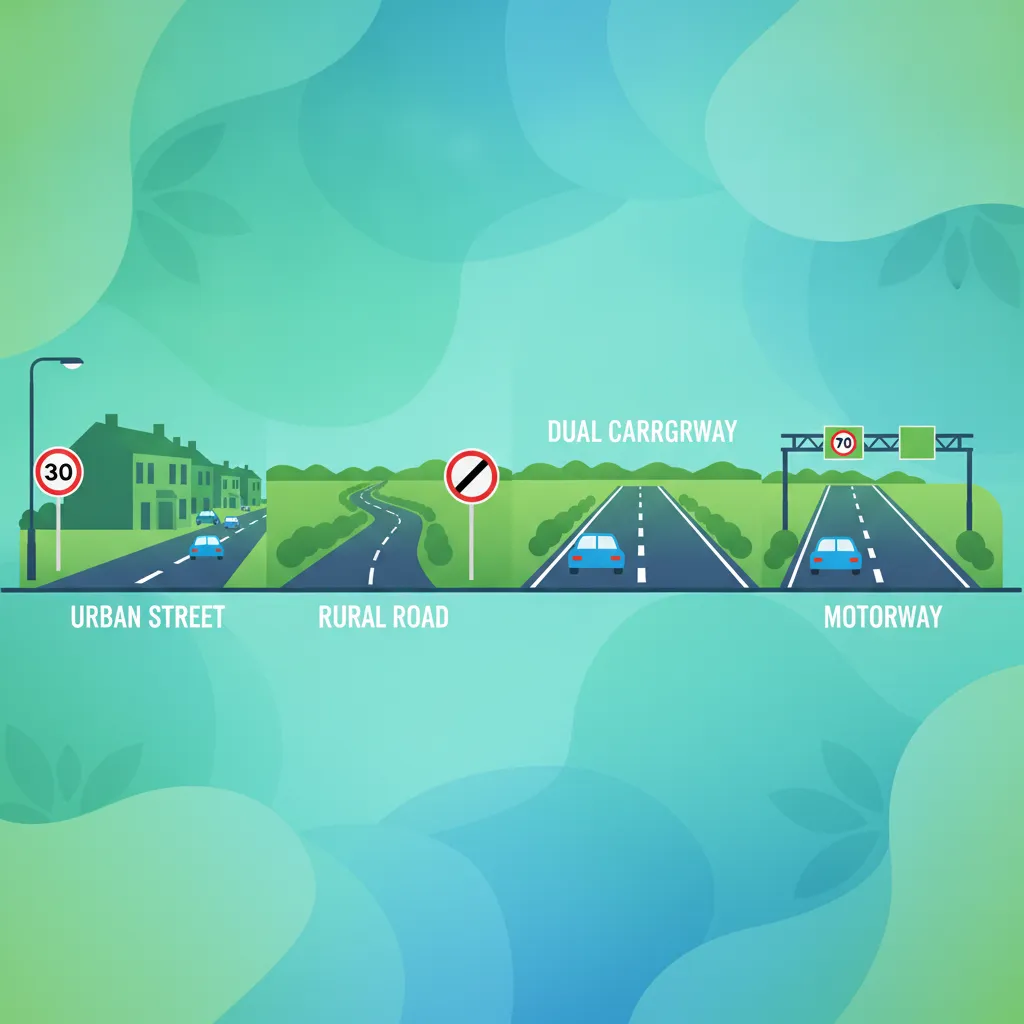
This lesson details the default speed limits for cars in Great Britain. You will learn the 30 mph limit for built-up areas, 60 mph on single carriageways, and 70 mph on dual carriageways and motorways. It also covers how to identify these roads and the importance of looking for signs indicating a different limit is in force.

This lesson reinforces the vital safety rule of maintaining an adequate following distance from the vehicle ahead. It explains why the standard 'two-second rule' must be extended for heavy vehicles, especially in poor weather or when heavily laden, to account for longer stopping distances. You will learn practical methods for judging a safe gap in various traffic situations, creating a crucial safety buffer to react to unforeseen hazards.
Understand the function and legal requirements of mandatory speed limiters and the correct usage of cruise control systems for heavy goods vehicles. This lesson clarifies their role in safety, compliance, and fuel efficiency for Category C drivers.
This lesson focuses on the specific rules and best practices for driving HGVs on motorways in Great Britain. It covers mandatory speed limits for goods vehicles, lane discipline including restrictions on using the outside lane, and procedures for safely joining and leaving the motorway. The lesson also includes up-to-date information on driving on smart motorways, including understanding the signs and using emergency refuge areas correctly.
This lesson details speed management techniques applicable to urban, rural, and motorway environments, focusing on compliance with legal speed limits and developing appropriate speed perception. It covers strategies for monitoring speed and adjusting for road conditions, traffic density, and overall passenger safety. The lesson also reviews enforcement mechanisms and emphasizes the importance of speed compliance for accident avoidance and regulatory adherence, a critical skill for all professional drivers.
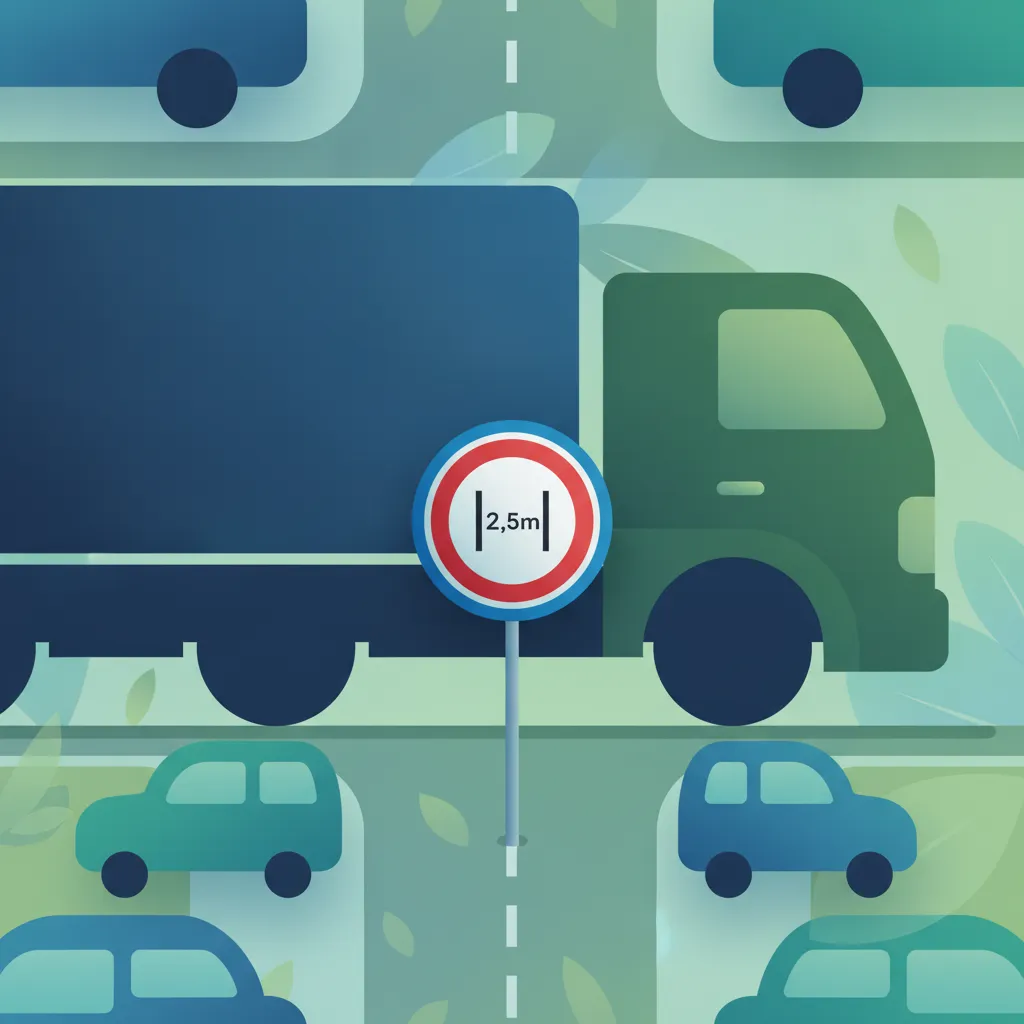
This lesson offers a deep dive into the specific regulations concerning weight, width, and axle load restrictions for goods vehicles. It covers how to read and comply with the associated road signs to avoid overloading weak bridges and entering restricted areas. Learners will understand the importance of correct load assessment and the serious penalties for non-compliance, which are enforced through DVSA roadside inspections and weighbridges.
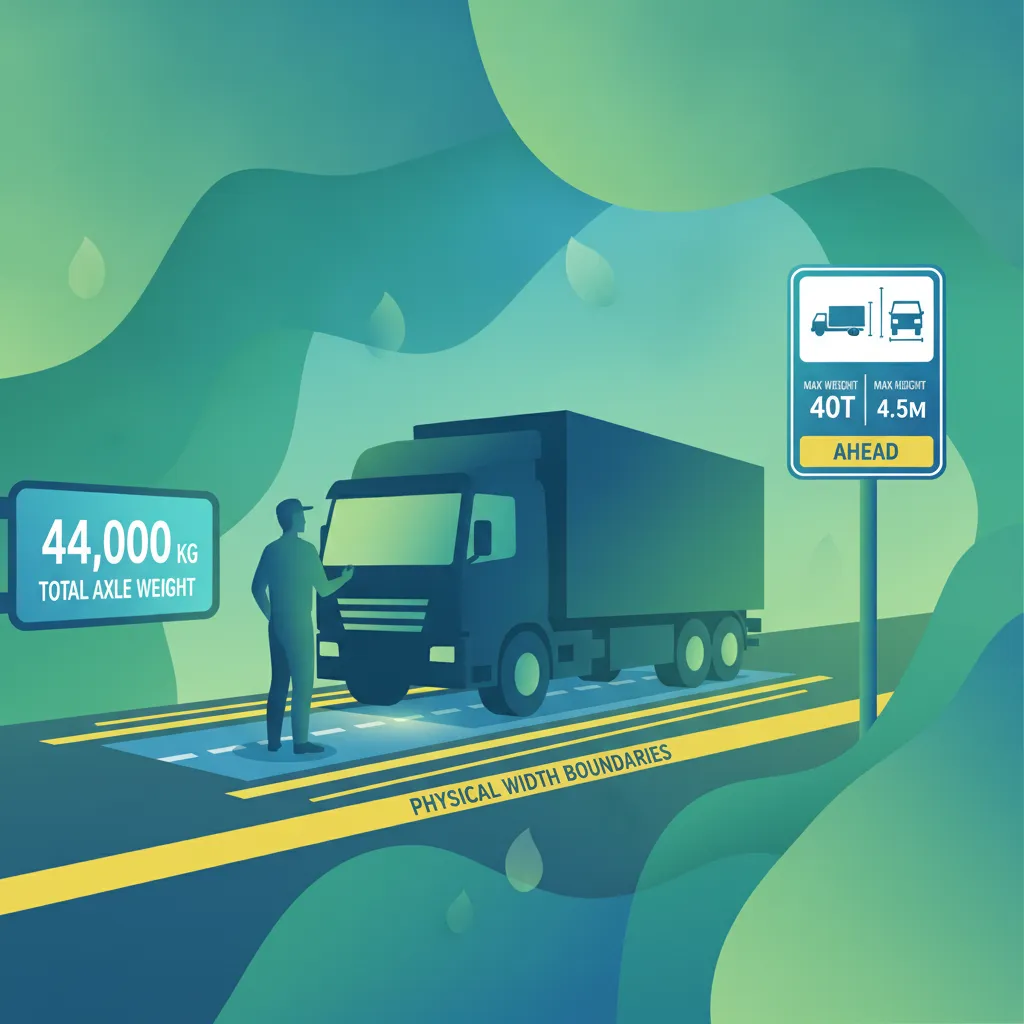
This lesson introduces the statutory limits governing the dimensions and mass of goods vehicles in Great Britain, including gross vehicle weight and individual axle loads. It explains how to calculate a vehicle's loaded weight to ensure it remains within legal parameters, preventing penalties and safety risks. Understanding these regulations is crucial for preventing damage to road infrastructure and ensuring the vehicle's stability and safe operation on every journey.
This lesson details the default speed limits for cars in Great Britain. You will learn the 30 mph limit for built-up areas, 60 mph on single carriageways, and 70 mph on dual carriageways and motorways. It also covers how to identify these roads and the importance of looking for signs indicating a different limit is in force.
This lesson focuses on the regulations and best practices for driving a bus or coach on motorways. It details the specific speed limits applicable to PCVs and reinforces strict lane discipline. The content covers the correct procedures for safely joining from a slip road, overtaking other vehicles, and exiting the motorway. It also explains the features of smart motorways and the correct safety procedures to follow in the event of a breakdown, including the use of the hard shoulder.

This lesson addresses the serious danger of driver fatigue, a major cause of incidents involving commercial vehicles. It details the complex EU and GB domestic rules on drivers' hours, including driving limits and required rest periods. Learners will be taught to recognize the physical and mental signs of fatigue and understand the importance of taking quality rest to maintain alertness and ensure their own safety and that of others.
This lesson addresses the unique set of challenges that rural roads present to HGV drivers. It covers how to safely navigate narrow and winding lanes, the importance of anticipating hazards like slow-moving agricultural machinery, mud on the road, and wildlife. You will learn how the national speed limit applies to your vehicle on these roads and why it is often necessary to travel at a much lower speed to ensure safety.

This lesson clarifies the specific speed limits that apply to Category AM vehicles on various British roads, from 30 mph zones in built-up areas to national speed limits on single and dual carriageways. It emphasizes that the posted limit is a maximum, not a target, and teaches you how to choose an appropriate speed based on factors like weather, traffic, and road layout. Understanding these rules is vital for both legal compliance and personal safety.
This lesson reinforces the vital safety rule of maintaining an adequate following distance from the vehicle ahead. It explains why the standard 'two-second rule' must be extended for heavy vehicles, especially in poor weather or when heavily laden, to account for longer stopping distances. You will learn practical methods for judging a safe gap in various traffic situations, creating a crucial safety buffer to react to unforeseen hazards.
Find clear answers to common questions learners have about Speed Management for Heavy Vehicles. Learn how the lesson is structured, which driving theory objectives it supports, and how it fits into the overall learning path of units and curriculum progression in Great Britain. These explanations help you understand key concepts, lesson flow, and exam focused study goals.
HGV speed limits are set lower than car limits on many roads in Great Britain to account for the increased mass, longer stopping distances, and reduced maneuverability of large goods vehicles compared to lighter cars.
A mandatory speed limiter is designed to prevent the vehicle from exceeding a set maximum speed, usually 56 mph for heavy vehicles. It improves road safety by preventing excessive speed and helps in standardizing traffic flow.
On the theory test, you must recognize that as a vehicle's mass increases due to its load, its momentum also increases. This means the braking system requires more time and distance to bring the vehicle to a complete stop, necessitating a significantly longer following distance.
You should use a low gear and make effective use of engine braking or retarders to maintain a safe, controlled speed. Avoiding excessive use of the service brakes prevents brake fade and ensures you maintain full control of the vehicle.
Dive into our comprehensive question bank to find exactly what you need for your Great Britain theory test. Use our advanced filters to pinpoint specific subjects or test your knowledge on challenging areas, ensuring you're fully prepared for success.