
Turning safely requires precise coordination and awareness of your surroundings. This guide breaks down the essential steps for navigating turns at intersections or when changing lanes, focusing on the French Code de la route. Pay close attention to observation, signalling, and priority rules to execute maneuvers without risk.
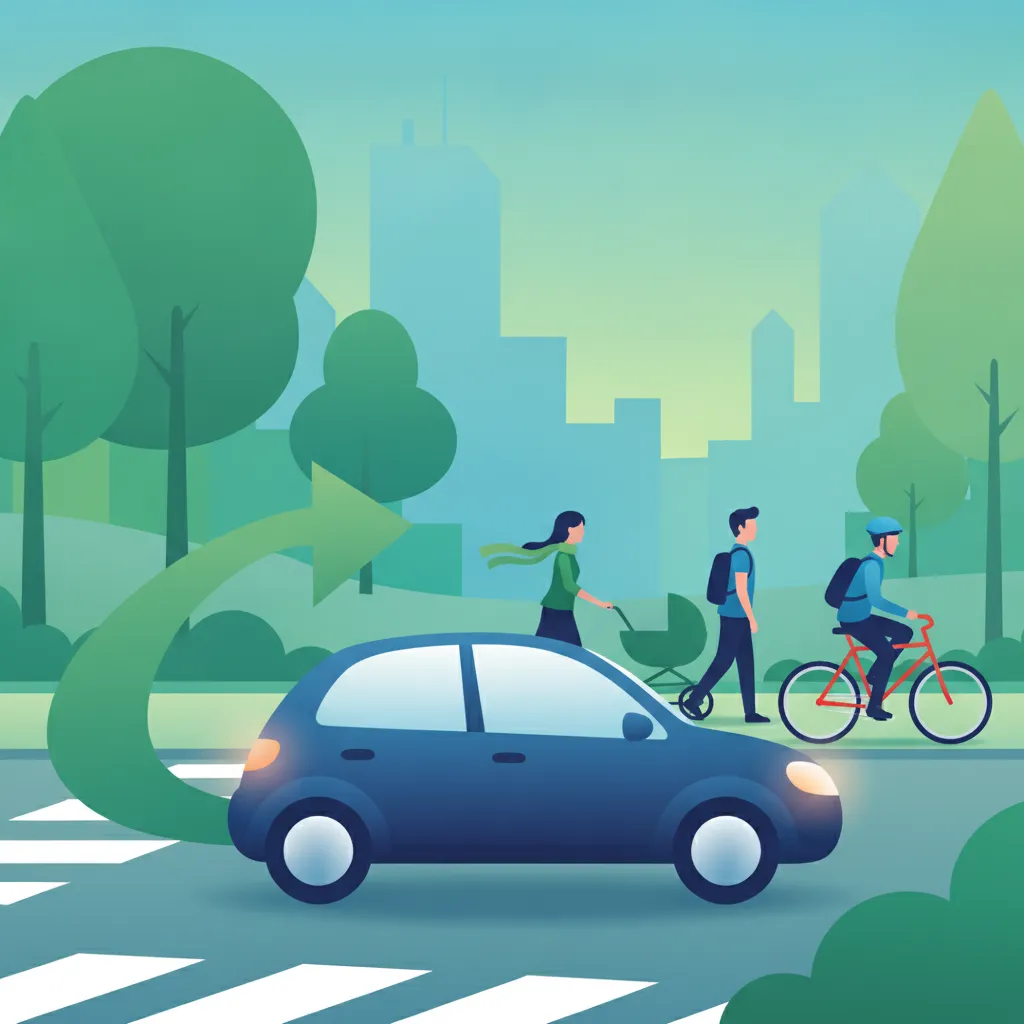
Theory topic content overview
Read the full theory topic guide for Safe Turning with structured, easy-to-scan content built for learners in France. This detailed section explains the exact rule, meaning, traffic context, comparison points, and exam logic behind this French driving theory topic so you can study faster, understand the concept more clearly, and avoid common interpretation mistakes on the theory test.
Turning a vehicle is one of the most frequent maneuvers drivers perform, yet it's also a common source of collisions if not executed with precision and caution. In French driving theory, safe turning maneuvers are not just about changing direction; they are about navigating dynamic conflict points while interacting safely and predictably with all other road users. Mastering safe turning involves a systematic process of observation, clear communication, correct positioning, and critical judgment, all in accordance with the Code de la route.
A safe turning maneuver is the act of changing your vehicle's direction at an intersection, into a driveway, or into another road, ensuring that the entire process is completed without creating a hazard or requiring another road user to take evasive action. It means:
Essentially, it's about making your movement predictable and safeguarding against the inherent risks involved when vehicles change their path across shared road space.
Understanding and practicing safe turning is fundamental for several reasons, especially within the context of French driving:
Code de la route Compliance: The French Code de la route has strict rules regarding priority, observation, and signalling during turns. Failing to follow these rules can lead to serious legal consequences and is a common pitfall in the French driving theory exam (ETG).To perform a safe turn, particularly at an intersection, drivers should follow a logical sequence of actions. We can summarize this as P.O.S.E. (Position, Observation, Signal, Execution, Yielding):
Before you even think about turning, ensure your vehicle is in the correct lane and position.
Tourner à droite): Position your vehicle close to the right-hand edge of the road (or curb) within your lane. This discourages other vehicles from trying to squeeze past on your right and makes your intention clear.Tourner à gauche): In France, on a two-way road without a dedicated turning lane, position your vehicle towards the center line, but do not cross it into the path of oncoming traffic. If there's a dedicated left-turn lane, use it. This prepares you for the turn and warns oncoming drivers.This is perhaps the most crucial step and must be continuous.
Rétroviseurs): Check your interior and exterior mirrors to assess traffic behind and to your sides.Angle Mort): Critically, perform a head check over your shoulder to verify your angle mort. This is paramount for detecting cyclists or motorcyclists who may be riding alongside you and are invisible in your mirrors. The angle mort check is frequently emphasized in the ETG.Communicate your intentions early and clearly using your indicators (clignotants).
Once observation is complete and your intention is clear, execute the turn smoothly, always being prepared to yield.
Céder le passage): This is a non-negotiable aspect of safe turning in France.
Several elements impact the safety of a turning maneuver:
ronds-points) in France require you to yield to traffic already in the roundabout (unless signs indicate otherwise).angles morts and require more space, making turns inherently more challenging.angle mort) and signalling, but turning involves navigating a full intersection or entry point.passage piéton) on the road you are entering. Pedestrians often start crossing as soon as they get their signal, and you must yield to them even if your light is green. Also, scan for cyclists using bike lanes on either side of the road.Piste Cyclable): You want to turn right. Before and during your turn, you must perform a thorough angle mort check to your right. A cyclist using a dedicated bike lane or even riding alongside you on the road surface may be in this blind spot. Failing to see them can lead to a serious collision. Signal early and ease into the turn, prepared to stop.Rond-point): When approaching a roundabout, you typically encounter a Cédez le passage (Yield) sign. You must slow down, check for traffic already circulating within the roundabout, and yield to them. Before exiting, signal your intention (right indicator for the exit) and check your right angle mort for cyclists who might be going straight or exiting at your exit.Learners frequently make mistakes during turning maneuvers that can be costly in the driving exam and dangerous on the road:
angle mort, especially for cyclists before a right turn, or for pedestrians when entering a new road.permis de conduire practical test.In France, every turn is a test of your awareness, judgment, and adherence to the Code de la route. Approach each turn with the mindset that you are entering a potential conflict zone. Prioritize Observation, especially for the vulnerable road users (piétons and cyclistes) who share our roads. Signal your intentions clearly and early. Position your vehicle correctly. Execute the turn smoothly and at a safe speed, always being prepared to yield. Remember: a responsible driver anticipates dangers, communicates clearly, and protects all road users during every safe turning maneuver.
Safe turning in French driving theory follows the P.O.S.E. framework: correctly position your vehicle in the appropriate lane, perform thorough observation using mirrors and blind spot checks, signal your intentions early with clignotants, and execute the turn while always being prepared to yield to pedestrians (piétons) and cyclists (cyclistes) who have priority. The Code de la route places strong emphasis on protecting vulnerable road users during turning maneuvers, making blind spot checks and yielding essential skills for both the ETG exam and real-world driving in France.
A short set of high-value points that capture the most important ideas from this theory explanation.
Safe turning is a systematic process of observation, signalling, positioning, and yielding that prevents conflicts at dynamic intersection points
The P.O.S.E. framework (Position, Observation, Signal, Execution and Yielding) provides a reliable sequence for executing any turn safely
Blind spot checks (angle mort) are mandatory before any turn, especially to detect cyclists and motorcyclists alongside your vehicle
Pedestrians and cyclists have priority when you are turning into their path, and you must yield to them even if you have a green light
Correct lane positioning before a turn (near the curb for right turns, toward the center line for left turns) makes your intentions clear to other road users
Always perform a head check over your shoulder to check the angle mort, as mirrors alone cannot detect vehicles or cyclists in your blind spot
Activate your indicator (clignotant) well before braking or changing position, never at the last second
When turning left in France, position toward the center line but do not cross into oncoming traffic until it is safe
Pedestrians have absolute priority when crossing at designated crossings, and you must yield even if your signal allows you to proceed
At roundabouts (ronds-points), yield to traffic already circulating within the roundabout unless signs indicate otherwise
Insufficient observation, particularly failing to check the right blind spot before a right turn where cyclists may be hidden
Late or absent signalling, giving other road users no advance warning of the intended turning direction
Incorrect lane positioning, such as positioning too wide on a right turn or crossing the center line prematurely on a left turn
Entering turns at excessive speed, which reduces control and reaction time especially on wet French roads
Failing to yield to pedestrians crossing the road you are entering, or to cyclists proceeding straight through an intersection
Start with a short, direct summary of Safe Turning before reading the full explanation below.
Safe turning involves a sequence of actions: observing your environment thoroughly, signalling your intentions well in advance, positioning your vehicle correctly, and always yielding to priority traffic, especially pedestrians and cyclists. This systematic approach ensures that you complete the maneuver without endangering yourself or other road users, a key requirement in French driving practice.
Review the most important terms, rule signals, and traffic concepts linked to Safe Turning.
Explore related theory topic pages connected to Safe Turning and continue with the next useful rule explanation.
See the common search queries learners use when trying to understand Safe Turning in France.

Continue your journey by exploring specific French driving theory topics, from road signs and priority rules to vehicle safety and administrative procedures. Deepen your understanding of the Code de la route and prepare effectively for your permis de conduire ETG exam to ensure success and safe driving practices.
French Driving Theory Topics & RulesTheory topic content overview
A short set of high-value points that capture the most important ideas from this theory explanation.
Safe turning is a systematic process of observation, signalling, positioning, and yielding that prevents conflicts at dynamic intersection points
The P.O.S.E. framework (Position, Observation, Signal, Execution and Yielding) provides a reliable sequence for executing any turn safely
Blind spot checks (angle mort) are mandatory before any turn, especially to detect cyclists and motorcyclists alongside your vehicle
Pedestrians and cyclists have priority when you are turning into their path, and you must yield to them even if you have a green light
Correct lane positioning before a turn (near the curb for right turns, toward the center line for left turns) makes your intentions clear to other road users
Always perform a head check over your shoulder to check the angle mort, as mirrors alone cannot detect vehicles or cyclists in your blind spot
Activate your indicator (clignotant) well before braking or changing position, never at the last second
When turning left in France, position toward the center line but do not cross into oncoming traffic until it is safe
Pedestrians have absolute priority when crossing at designated crossings, and you must yield even if your signal allows you to proceed
At roundabouts (ronds-points), yield to traffic already circulating within the roundabout unless signs indicate otherwise
Insufficient observation, particularly failing to check the right blind spot before a right turn where cyclists may be hidden
Late or absent signalling, giving other road users no advance warning of the intended turning direction
Incorrect lane positioning, such as positioning too wide on a right turn or crossing the center line prematurely on a left turn
Entering turns at excessive speed, which reduces control and reaction time especially on wet French roads
Failing to yield to pedestrians crossing the road you are entering, or to cyclists proceeding straight through an intersection
Start with a short, direct summary of Safe Turning before reading the full explanation below.
Safe turning involves a sequence of actions: observing your environment thoroughly, signalling your intentions well in advance, positioning your vehicle correctly, and always yielding to priority traffic, especially pedestrians and cyclists. This systematic approach ensures that you complete the maneuver without endangering yourself or other road users, a key requirement in French driving practice.
Review the most important terms, rule signals, and traffic concepts linked to Safe Turning.
Explore related theory topic pages connected to Safe Turning and continue with the next useful rule explanation.
See the common search queries learners use when trying to understand Safe Turning in France.
Continue your journey by exploring specific French driving theory topics, from road signs and priority rules to vehicle safety and administrative procedures. Deepen your understanding of the Code de la route and prepare effectively for your permis de conduire ETG exam to ensure success and safe driving practices.
French Driving Theory Topics & RulesUse this exam-focused revision tip to understand how Safe Turning is likely to appear in theory questions for learners in France. This section helps you identify the most testable part of the rule, avoid common traps, and remember the concept more effectively during French driving theory exam preparation.
In the French driving theory exam (ETG), questions about turning often focus on identifying potential hazards, correct observation sequences (mirrors, blind spot), and priority rules for vulnerable road users. Remember, pedestrians and cyclists frequently have priority during your turning maneuver, especially when entering a new road.
Read direct answers to the most common learner questions about Safe Turning in France. This FAQ focuses on rule confusion, practical meaning, comparison with similar concepts, and the exact uncertainties that appear most often in French driving theory revision and exam preparation.
A safe turning maneuver is the process of changing your vehicle's direction at an intersection or when entering another road, performed with careful observation, appropriate signalling, correct lane positioning, and yielding to other road users to avoid hazards.
Thorough observation is critical to identify potential hazards, including oncoming traffic, vehicles in your blind spots, and especially pedestrians or cyclists who may be crossing your path. It allows you to assess the situation and react safely.
You should signal your intention to turn well in advance, giving other road users ample time to understand your planned maneuver and adjust their speed or position. This is a fundamental principle of anticipation in the Code de la route.
Generally, you must yield to oncoming traffic when turning left. When turning right, you must always yield to pedestrians and cyclists crossing the road you intend to enter, even if they are not on a designated crossing. Priority rules can also be indicated by signs or traffic lights.
Correct lane positioning is crucial for making your intentions clear and executing the turn smoothly. For example, when turning left from a two-way road, you should position your vehicle close to the center line (without crossing it) to prepare for the turn.
Common mistakes include failing to check blind spots, not signalling early enough, turning too wide or too sharply, misjudging the speed of oncoming traffic, and failing to yield to pedestrians or cyclists, particularly when turning right.
Yes, at roundabouts in France, you generally yield to traffic already in the roundabout. When exiting, you must signal your intention and yield to pedestrians and cyclists crossing your exit path.
Ready to focus your study? Use the practice search to find exactly the French driving theory questions you need for the Code de la route and permis de conduire ETG. Refine your knowledge on specific topics or challenging rules to boost your confidence and exam readiness.