
Germany's BF17 program, or accompanied driving from age 17, offers a unique opportunity for young drivers to gain valuable road experience before turning 18. This guide covers everything from initial registration and training to the requirements for your companion driver and the crucial driving log, ensuring you understand this essential step towards independent driving.
Article content overview
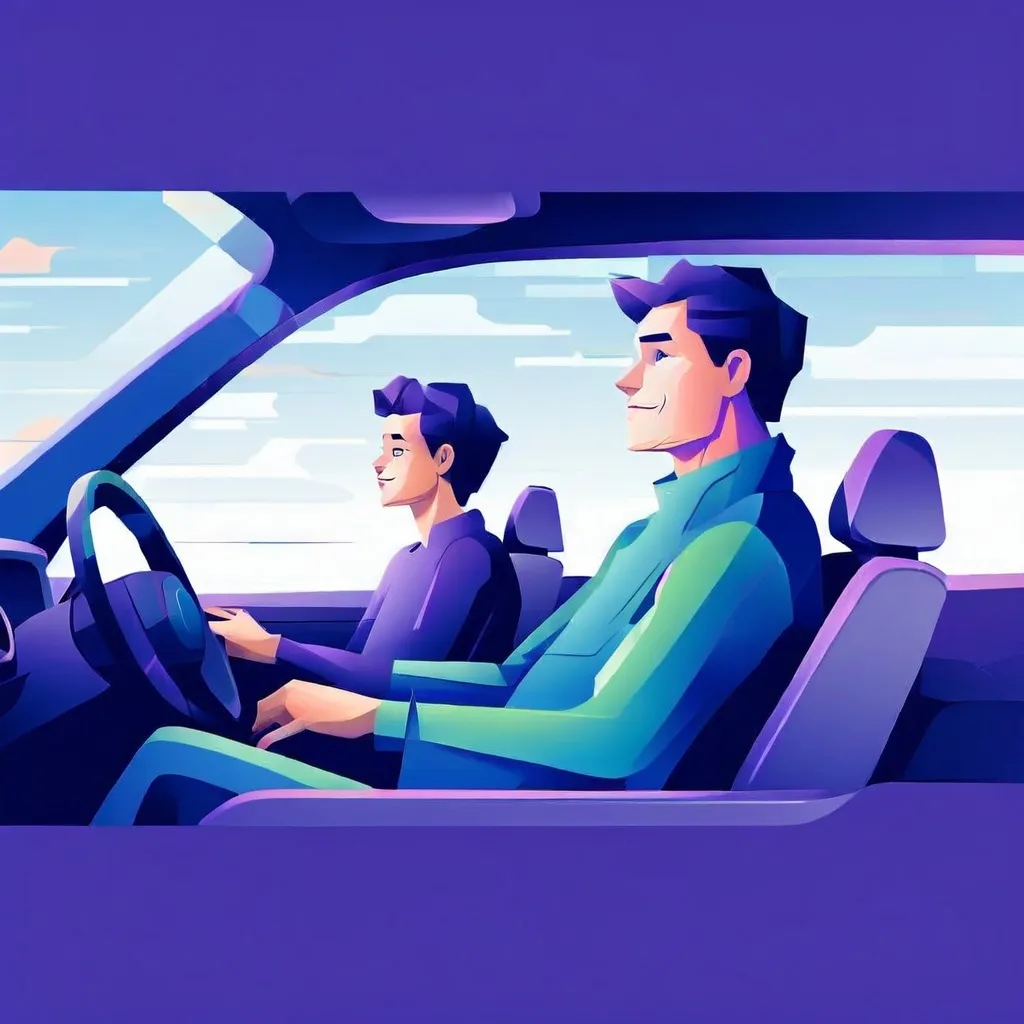
Germany's "Begleitetes Fahren ab 17" (BF17), or accompanied driving from age 17, represents a progressive approach to novice driver training. This structured program allows aspiring drivers to gain invaluable practical experience on public roads under the supervision of a qualified adult, significantly bridging the gap between theoretical knowledge and independent driving. Understanding the intricacies of BF17 is crucial for young individuals seeking to obtain their German driving license, offering a safer and more experienced transition into the world of driving. This comprehensive guide will explore all facets of the BF17 program, from eligibility and training to the vital role of the accompanying person and the driving log, preparing you thoroughly for your journey towards obtaining your full driving license.
The BF17 program, often referred to as "Führerschein mit 17" (driving license at 17), is a special provision within the German driving license regulations that permits individuals to begin driving supervised before reaching the standard age of 18. It is specifically designed for the acquisition of driving licenses for passenger cars (Class B) and car combinations (Class BE). The core principle behind BF17 is to mitigate the statistically higher accident risk associated with young and inexperienced drivers. By accumulating supervised driving experience for a period of at least one year before turning 18, young drivers can develop better judgment, hazard perception, and overall driving competence in a controlled environment. This program is a testament to Germany's commitment to road safety and the continuous improvement of driver education.
The program effectively lowers the minimum age for obtaining a driving license by allowing participants to take their theory and practical driving examinations at the standard age, but receive their official license documentation only after turning 17. This allows them to commence supervised driving immediately, provided they meet all the program's requirements. The BF17 framework seamlessly integrates with the established driving school curriculum, ensuring that participants receive the same high-quality theoretical and practical training as those pursuing a license at 18. This comprehensive approach ensures that even at 17, drivers are well-prepared for the responsibilities of the road.
To enroll in the Begleitetes Fahren ab 17 program, aspiring drivers must meet specific age and application criteria. The application process can commence as early as 16 and a half years old, allowing ample time for the necessary administrative steps to be completed before the applicant's 17th birthday. This early start is crucial for coordinating with driving schools and ensuring all documentation is in order for timely examination. Young individuals must first register with an authorized driving school and clearly state their intention to participate in the BF17 program.
Within the driving school, the participant will undergo the standard comprehensive driving education, which includes both theoretical instruction covering traffic rules, road signs, and hazard awareness, as well as practical driving lessons. Successful completion of both the theory test (Theorieprüfung) and the practical driving test (Praktische Prüfung) is a prerequisite for obtaining the BF17 authorization. Upon passing these examinations, and once the applicant reaches the age of 17, they will be issued a special "Prüfungsbescheinigung" (examination certificate). This document, when presented alongside a valid form of identification, serves as their provisional driving permit for the BF17 period.
A cornerstone of the BF17 program is the mandatory presence of a qualified accompanying person, known as a "Begleitperson," whenever the 17-year-old is driving. This companion is not merely a passenger but plays a crucial role in guiding and supporting the novice driver. Germany has established strict criteria for individuals to qualify as a Begleitperson, ensuring that they possess the necessary experience and a responsible driving record. These requirements are designed to maximize safety and provide effective guidance to the young driver.
To be eligible as a Begleitperson, an individual must:
It is important to note that the Begleitperson's role is advisory, not instructional. They are not expected to replicate the formal training provided by a driving instructor. Instead, their presence is intended to offer a supportive and guiding presence, providing advice and constructive feedback as the young driver gains confidence and skill. The accompanying person must always have their driver's license and the BF17 driver's examination certificate readily available while driving.
A critical component of the Begleitetes Fahren ab 17 program is the mandatory maintenance of a driving log, often referred to as a "Fahrtenbuch." This logbook serves as an official record of all the driving hours accumulated by the 17-year-old driver during the BF17 period. It is essential for tracking progress, demonstrating supervised driving experience, and fulfilling the program's requirements. Each entry in the logbook must be accurate and detailed, providing a transparent overview of the driver's journey.
The driving log typically requires the following information for each driving session:
This detailed record-keeping ensures that the young driver gains a diverse range of experiences across different driving conditions and at various times of the day. It also provides a verifiable account of the supervised practice undertaken. While the logbook itself is not typically a formal part of the theory exam questions, understanding its importance and the need for diligent record-keeping is vital for successfully completing the BF17 program. The data collected in the Fahrtenbuch highlights the practical application of the theoretical knowledge acquired in driving school.
The Begleitetes Fahren ab 17 program offers substantial benefits, primarily centered around enhanced road safety and improved driver competence. Statistical data consistently indicates that young drivers who participate in BF17 tend to have a significantly lower accident rate in their first year of independent driving compared to their peers who wait until 18 to drive alone. This reduction in accidents is attributed to the extended period of supervised practice, allowing novice drivers to develop a more nuanced understanding of traffic dynamics, hazard anticipation, and responsible decision-making in a less pressured environment.
Furthermore, the BF17 program fosters a greater sense of responsibility and maturity in young drivers. The obligation to drive with a companion encourages a more cautious approach and provides a consistent opportunity for learning and reflection. This structured pathway to driving also helps to alleviate the common anxieties associated with gaining independence on the road. By the time a BF17 participant turns 18 and receives their unrestricted driving license, they have already accumulated valuable practical experience, making them more confident and safer drivers. The program essentially provides a "pre-license" period of practical skill development.
Upon reaching the age of 18, and having successfully completed the BF17 program, including passing all required examinations and fulfilling the driving log requirements, the participant is eligible to receive their full, unrestricted driving license for Class B or BE. The "Prüfungsbescheinigung" issued at age 17 will be exchanged for the standard EU-compliant driving license card. This marks the culmination of the BF17 journey and the beginning of independent driving.
The experience gained during the BF17 period is invaluable and directly contributes to the driver's overall competence. Unlike a situation where a driver begins driving alone at 18 with minimal practical experience, BF17 drivers are already accustomed to the responsibilities and challenges of the road. This accumulated experience often translates into smoother transitions into more complex driving situations, such as navigating busy urban environments or driving on the Autobahn, which are key areas covered in the German driving theory. The structured nature of BF17 ensures that drivers are well-prepared for the demands of unrestricted driving.
While the BF17 program itself is a specific pathway, the underlying principles and rules it reinforces are central to the German driving theory exam. Understanding the nuances of priority rules, speed limits, safe distances, and hazard perception is paramount, as these are the skills honed during BF17. Questions on the theory test will often assess a candidate's ability to apply these rules in various scenarios, mirroring the situations a BF17 driver would encounter with their companion.
Key areas that directly relate to the BF17 experience and are frequently tested include:
The BF17 program indirectly prepares candidates for these exam questions by providing a practical context for learning these rules. The accompanying person can reinforce these concepts, and the driving log serves as a tangible reminder of the practical application of theory. Therefore, mastering the BF17 requirements also strengthens a candidate's overall preparation for the official driving theory test.
Begleitetes Fahren ab 17 (BF17) is Germany's supervised driving program allowing 17-year-olds to gain practical driving experience before obtaining their full Class B license at 18. Participants must complete standard driving school training, pass both theory and practical exams, and drive exclusively with a qualified Begleitperson who meets strict criteria including age 30+, five years of valid license, and maximum three Flensburg points. A mandatory Fahrtenbuch must record every supervised drive with accurate details and signatures. The BF17 examination certificate is valid only within Germany, and the companion's role is supportive rather than instructional, ensuring the young driver continues professional training through diverse real-world driving situations.
A short set of high-value points that capture the most important ideas from this article.
BF17 allows supervised driving from age 17 in Germany, with full unrestricted license issued at 18 after passing all required theory and practical exams
The companion driver (Begleitperson) must be at least 30 years old, hold a valid license for 5+ years, and have no more than 3 penalty points in Flensburg
The Prüfungsbescheinigung examination certificate serves as the provisional driving permit for BF17 participants
The mandatory Fahrtenbuch driving log must record date, time, mileage, route, and signatures of both driver and companion for each session
BF17 drivers can only drive within Germany; international travel requires the full EU driving license obtained at age 18
Application can begin at 16 and a half, but supervised driving starts only at age 17
The Begleitperson's role is advisory and supportive, not instructional—the young driver continues learning from professional driving instructors
The companion must be officially named and registered on the BF17 examination certificate before driving together
A diverse range of driving conditions (urban, rural, motorway) should be logged to fulfill program requirements
The program specifically applies to Class B and Class BE driving licenses only
Assuming the companion driver can provide formal driving instruction—they are only permitted to offer guidance and feedback
Believing the Prüfungsbescheinigung allows driving abroad—it is valid only within Germany
Forgetting that the companion must have their driving license and the examination certificate readily available during every drive
Not maintaining the driving log consistently, which is mandatory for program completion
Assuming BF17 participants can skip the standard driving school curriculum—they must still complete full theory and practical training
Article content overview
A short set of high-value points that capture the most important ideas from this article.
BF17 allows supervised driving from age 17 in Germany, with full unrestricted license issued at 18 after passing all required theory and practical exams
The companion driver (Begleitperson) must be at least 30 years old, hold a valid license for 5+ years, and have no more than 3 penalty points in Flensburg
The Prüfungsbescheinigung examination certificate serves as the provisional driving permit for BF17 participants
The mandatory Fahrtenbuch driving log must record date, time, mileage, route, and signatures of both driver and companion for each session
BF17 drivers can only drive within Germany; international travel requires the full EU driving license obtained at age 18
Application can begin at 16 and a half, but supervised driving starts only at age 17
The Begleitperson's role is advisory and supportive, not instructional—the young driver continues learning from professional driving instructors
The companion must be officially named and registered on the BF17 examination certificate before driving together
A diverse range of driving conditions (urban, rural, motorway) should be logged to fulfill program requirements
The program specifically applies to Class B and Class BE driving licenses only
Assuming the companion driver can provide formal driving instruction—they are only permitted to offer guidance and feedback
Believing the Prüfungsbescheinigung allows driving abroad—it is valid only within Germany
Forgetting that the companion must have their driving license and the examination certificate readily available during every drive
Not maintaining the driving log consistently, which is mandatory for program completion
Assuming BF17 participants can skip the standard driving school curriculum—they must still complete full theory and practical training
Explore related topics, search based questions, and concepts that learners often look up when studying Accompanied Driving Germany (BF17). These themes reflect real search intent and help you understand how this topic connects to wider driving theory knowledge in Germany.
Find clear and practical answers to common questions learners often have about Accompanied Driving Germany (BF17). This section helps explain difficult points, remove confusion, and reinforce the key driving theory concepts that matter for learners in Germany.
BF17 is a German program allowing individuals aged 17 to drive a car with a qualified companion after passing their theory and practical driving exams.
A companion must be at least 30 years old, have held a Class B driving license for at least five years, and have no more than 3 penalty points in their Flensburg driving record.
The driving log is mandatory for BF17 participants to record all accompanied driving trips, ensuring they gain sufficient supervised practical experience before turning 18.
After turning 18 and passing the practical exam, BF17 drivers receive their standard EU driving license, which allows them to drive independently without a companion.
Yes, statistical studies indicate that drivers who participated in the BF17 program have a significantly lower accident rate in their first year of independent driving compared to those who started driving at 18.
Didn't find what you were looking for? Continue your German driving theory preparation by exploring related articles, specific road sign categories, or in-depth guides on complex traffic situations. Deepen your understanding before the official test.