
In Germany, speed limits are regulations established by the Straßenverkehrs-Ordnung (StVO) that define the absolute maximum speed allowed for vehicles on specific roads or within certain areas. While these limits set the legal ceiling, drivers are always expected to adjust their speed to ensure safety, considering factors like road conditions, traffic density, and visibility. Mastering these rules is fundamental for passing your theory exam and driving safely on German roads, including the famous Autobahn.
Theory topic content overview
Read the full theory topic guide for German Speed Limits with structured, easy-to-scan content built for learners in Germany. This detailed section explains the exact rule, meaning, traffic context, comparison points, and exam logic behind this German driving theory topic so you can study faster, understand the concept more clearly, and avoid common interpretation mistakes on the theory test.
Speed limits in Germany, known as Geschwindigkeitsbegrenzungen, are fundamental traffic regulations set out by the Straßenverkehrs-Ordnung (StVO). These limits define the absolute maximum speed a vehicle is legally permitted to travel on a given road. However, understanding speed limits in Germany goes beyond simply knowing the maximum figures; it critically involves the principle of adapting your speed to ensure safety, regardless of the posted limit.
A speed limit is a legal ceiling, indicated by a round sign with a red border and a black number, specifying the fastest speed (in kilometres per hour, km/h) you are allowed to drive. These limits are put in place to manage traffic flow, reduce the risk of accidents, and protect all road users, including pedestrians and cyclists.
In Germany, general speed limits apply unless otherwise specified by signs. These are:
For your German driving licence and safe driving, comprehending speed limits is crucial for several reasons:
The most important concept regarding speed in Germany, often emphasized in the StVO, is the requirement to always adapt your speed to the prevailing conditions. StVO § 3 states that drivers "must only drive as fast as they can control their vehicle." This means the posted speed limit is never an obligation to drive at that speed if conditions dictate otherwise.
Factors you must consider when adapting your speed include:
The Sichtfahrgebot (Visibility Principle):
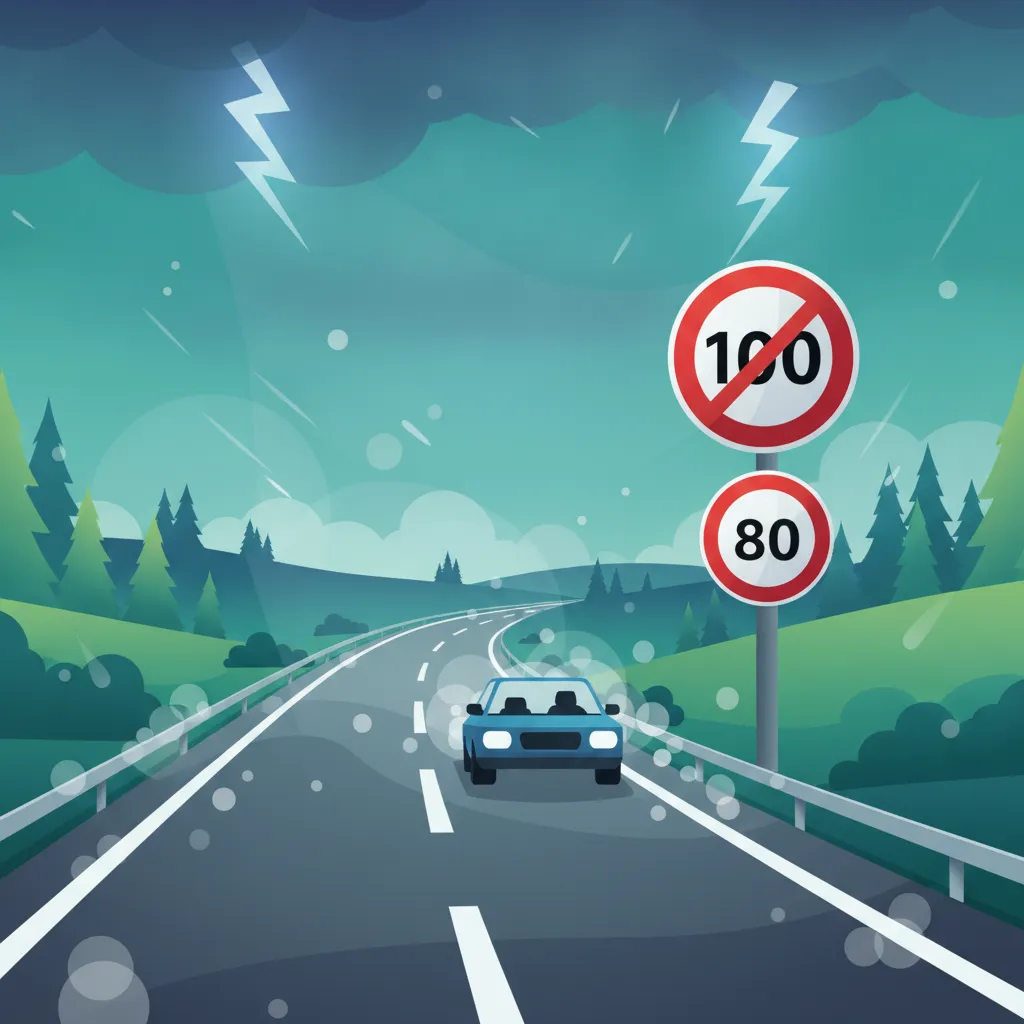
A critical rule in German traffic law is the Sichtfahrgebot. It dictates that you must only drive as fast as you can stop your vehicle within the distance you can clearly see. If visibility is less than 50 metres due to fog, heavy snowfall, or rain, you must not drive faster than 50 km/h, even if the posted speed limit is higher. This rule is a frequent exam topic.
Ortstafel, yellow sign with town name) and exit signs of a town or village.Richtgeschwindigkeit) for Passenger Cars (up to 3.5t): 130 km/h. This is a recommendation, not a mandatory limit, where no specific limit is posted. Drivers exceeding this speed can be held more liable in an accident.It's vital for your German driving theory and practical driving to distinguish between:
A common learner misconception is to equate the speed limit with the recommended or safe speed. The legal limit is merely the upper boundary; your true "safe speed" is dynamic and often lower.
Sichtfahrgebot mandates a maximum speed of 50 km/h, even though there might be no specific speed limit sign. Disregarding this dramatically increases accident risk.Learners often struggle with speed limits in the German driving theory exam and on the road due to:
Sichtfahrgebot: Failing to reduce speed adequately in poor visibility conditions (fog, heavy rain) is a common error.Ortstafel) or exiting one automatically applies the general innerorts/außerorts limits.Germany's approach to speed limits, particularly on the Autobahn, is somewhat unique. While the Richtgeschwindigkeit (advisory speed limit) is often highlighted, the absolute priority given to adapted speed under StVO § 3 is paramount. German driving instruction heavily emphasizes:
The German theory test will often present scenarios where you must decide the safest speed, not just the legally permitted maximum.
Mastering speed limits in Germany is about more than memorizing numbers. It's about developing the judgment to choose a speed that is not only legal but, more importantly, safe for the current driving conditions. Always start by observing the posted signs, then critically evaluate the road, weather, visibility, and traffic. Your ultimate responsibility as a driver is to maintain control of your vehicle and prevent accidents, which often means driving below the legal maximum speed. Prioritize safety, and you'll navigate German roads and your driving theory exam successfully.
German speed limits set legal maximums under the StVO, with 50 km/h generally applying innerorts and 100 km/h außerorts, while the Autobahn has no general mandatory limit but a 130 km/h advisory speed for vehicles up to 3.5t. Critically, StVO § 3 requires drivers to always adapt their speed to conditions, meaning the posted limit is merely a ceiling rather than a target. The Sichtfahrgebot specifically mandates that when visibility drops below 50 metres, drivers must not exceed 50 km/h regardless of any higher posted limit. Different vehicle types— trailers, motorhomes over 3.5t, buses, and vehicles over 7.5t— have their own reduced maximum speeds that supersede general limits. Variable speed limits displayed on the Autobahn via digital signs are mandatory and change dynamically based on traffic and weather conditions.
A short set of high-value points that capture the most important ideas from this theory explanation.
Speed limits are absolute maximums, not recommended speeds; your safe speed depends on actual conditions regardless of posted limits
StVO § 3 requires you to drive only as fast as you can control your vehicle, meaning the limit never obligates you to drive at that speed
The Sichtfahrgebot mandates that when visibility falls below 50 metres, you must not exceed 50 km/h, even on the Autobahn with no posted limit
Different vehicle types have specific maximum speeds: trailers, vehicles over 3.5t, and buses each have their own limits that override general rules
The 130 km/h Richtgeschwindigkeit on the Autobahn is an advisory limit; exceeding it increases your legal liability in accidents
Innerorts general limit is 50 km/h; außerorts is 100 km/h for vehicles up to 3.5t; Autobahn has no general mandatory limit but 130 km/h advisory
Variable speed limits on the Autobahn (shown on digital signs) are always mandatory and must be obeyed immediately
Speed limit signs are cancelled by Zeichen 278 (white circle with grey diagonal lines), Zeichen 280 (end of all restrictions), or entering/exiting a built-up area
Vehicles with trailers or over 3.5t have reduced limits: typically 80 km/h außerorts and Autobahn, or 100 km/h with a Tempo 100-Plakette
Driving in Verkehrsberuhigter Bereich zones requires Schrittgeschwindigkeit (walking pace, 5-10 km/h) where pedestrians have priority
Treating the speed limit as a target speed and driving at the maximum regardless of rain, fog, or heavy traffic
Ignoring the Sichtfahrgebot by not reducing speed when visibility drops below 50 metres in fog or snowfall
Failing to recognise that Zone 30 areas and Verkehrsberuhigte Bereiche override the general 50 km/h innerorts limit
Not adjusting speed for specific vehicle limitations such as trailers, heavy loads, or vehicles with snow chains (limited to 50 km/h)
Driving unnecessarily slowly without valid reason, which can obstruct traffic and create hazards under StVO § 3 Abs. 2
Start with a short, direct summary of German Speed Limits before reading the full explanation below.
Speed limits in Germany define the maximum legal speed a vehicle may travel on a given road, as regulated by the StVO. These limits vary by location (urban, rural, Autobahn) and vehicle type, but drivers must always adapt their speed to prevailing conditions, such as weather, visibility, and traffic. Driving at a safe speed, even if it's below the posted limit, is a primary responsibility to prevent accidents and maintain control.
Review the most important terms, rule signals, and traffic concepts linked to German Speed Limits.
Explore related theory topic pages connected to German Speed Limits and continue with the next useful rule explanation.
See the common search queries learners use when trying to understand German Speed Limits in Germany.

Solidify your understanding of German road rules. Explore specific theory topics in detail, from priority rules to complex Autobahn situations. Review key concepts and prepare thoroughly for every aspect of your official driving license theory examination.
German Driving Theory TopicsTheory topic content overview
A short set of high-value points that capture the most important ideas from this theory explanation.
Speed limits are absolute maximums, not recommended speeds; your safe speed depends on actual conditions regardless of posted limits
StVO § 3 requires you to drive only as fast as you can control your vehicle, meaning the limit never obligates you to drive at that speed
The Sichtfahrgebot mandates that when visibility falls below 50 metres, you must not exceed 50 km/h, even on the Autobahn with no posted limit
Different vehicle types have specific maximum speeds: trailers, vehicles over 3.5t, and buses each have their own limits that override general rules
The 130 km/h Richtgeschwindigkeit on the Autobahn is an advisory limit; exceeding it increases your legal liability in accidents
Innerorts general limit is 50 km/h; außerorts is 100 km/h for vehicles up to 3.5t; Autobahn has no general mandatory limit but 130 km/h advisory
Variable speed limits on the Autobahn (shown on digital signs) are always mandatory and must be obeyed immediately
Speed limit signs are cancelled by Zeichen 278 (white circle with grey diagonal lines), Zeichen 280 (end of all restrictions), or entering/exiting a built-up area
Vehicles with trailers or over 3.5t have reduced limits: typically 80 km/h außerorts and Autobahn, or 100 km/h with a Tempo 100-Plakette
Driving in Verkehrsberuhigter Bereich zones requires Schrittgeschwindigkeit (walking pace, 5-10 km/h) where pedestrians have priority
Treating the speed limit as a target speed and driving at the maximum regardless of rain, fog, or heavy traffic
Ignoring the Sichtfahrgebot by not reducing speed when visibility drops below 50 metres in fog or snowfall
Failing to recognise that Zone 30 areas and Verkehrsberuhigte Bereiche override the general 50 km/h innerorts limit
Not adjusting speed for specific vehicle limitations such as trailers, heavy loads, or vehicles with snow chains (limited to 50 km/h)
Driving unnecessarily slowly without valid reason, which can obstruct traffic and create hazards under StVO § 3 Abs. 2
Start with a short, direct summary of German Speed Limits before reading the full explanation below.
Speed limits in Germany define the maximum legal speed a vehicle may travel on a given road, as regulated by the StVO. These limits vary by location (urban, rural, Autobahn) and vehicle type, but drivers must always adapt their speed to prevailing conditions, such as weather, visibility, and traffic. Driving at a safe speed, even if it's below the posted limit, is a primary responsibility to prevent accidents and maintain control.
Review the most important terms, rule signals, and traffic concepts linked to German Speed Limits.
Explore related theory topic pages connected to German Speed Limits and continue with the next useful rule explanation.
See the common search queries learners use when trying to understand German Speed Limits in Germany.
Solidify your understanding of German road rules. Explore specific theory topics in detail, from priority rules to complex Autobahn situations. Review key concepts and prepare thoroughly for every aspect of your official driving license theory examination.
German Driving Theory TopicsUse this exam-focused revision tip to understand how German Speed Limits is likely to appear in theory questions for learners in Germany. This section helps you identify the most testable part of the rule, avoid common traps, and remember the concept more effectively during German driving theory exam preparation.
A common exam trap involves questions that test your ability to adapt speed. Remember that posted speed limits are maximums; your actual safe speed depends on road conditions, weather, visibility, traffic, and your vehicle. Always prioritize safety over reaching the legal maximum, especially when visibility is poor (e.g., 50 km/h limit at 50m visibility in fog).
Read direct answers to the most common learner questions about German Speed Limits in Germany. This FAQ focuses on rule confusion, practical meaning, comparison with similar concepts, and the exact uncertainties that appear most often in German driving theory revision and exam preparation.
Within built-up areas (innerorts) in Germany, the general speed limit for all vehicles is 50 km/h, unless otherwise indicated by signage. This limit applies to all roads unless specific areas, like 'Spielstraßen' (play streets) or 30 km/h zones, have lower limits.
Outside built-up areas (außerorts) in Germany, the general speed limit is 100 km/h for passenger cars and other vehicles up to 3.5 tons. However, specific vehicle types, such as those with trailers or vehicles over 3.5 tons, have lower limits (e.g., 80 km/h) and these limits may be further reduced by road signs or special conditions.
While many sections of the German Autobahn have no official general speed limit, there is a recommended speed (Richtgeschwindigkeit) of 130 km/h for passenger cars. Many sections do have posted speed limits, especially near cities, construction zones, or in areas prone to accidents. Drivers must always adapt their speed to conditions, even where no limit is posted.
According to the StVO, if visibility due to fog, snowfall, or heavy rain is less than 50 meters, you must not drive faster than 50 km/h. Furthermore, you must always drive at a speed that allows you to stop within the distance you can see, regardless of the posted limit.
Yes, Section 3 of the StVO states that without a valid reason, drivers must not drive so slowly as to impede the flow of traffic. Driving too slowly can be as dangerous as driving too fast in certain situations, especially on high-speed roads like the Autobahn.
When driving with snow chains in Germany, the maximum permissible speed for all vehicles is 50 km/h, even under favorable conditions. This is a strict safety regulation regardless of the road type or usual speed limit.
Begin your targeted revision now. Use our practice search to quickly find specific German driving theory questions. Filter by StVO rules, road signs, or hazard perception to create your focused study plan. Master challenging areas and prepare confidently for your theoretical driving test.