
This sign, officially 'Nur Lkw (Z 1010-51), Kraftomnibus (Z 1010-57) und Pkw mit Anhänger (Z 1010-59)', is a supplementary sign that modifies the meaning of the primary traffic sign it's attached to. It specifically indicates that the rule above applies only to trucks, buses, and cars towing trailers. Always read this sign in conjunction with the main sign and any other supplementary plates to grasp the full context, such as time, distance, or direction restrictions.
This German road sign "Nur truck, Kraftomnibus, Pkw mit Anhänger" is a supplementary plate that modifies the main traffic sign it's attached to, specifying conditions for trucks, buses, and cars with trailers. Mastering its meaning is crucial for passing your German driving theory test, as it directly impacts your driving decisions and compliance with traffic rules. Effective interpretation of these signs is key for safe navigation and understanding German road sign explanations.
German road sign 1049-13, officially designated "Nur Lkw (Z 1010-51), Kraftomnibus (Z 1010-57) und Pkw mit Anhänger (Z 1010-59)", belongs to the supplementary signs group. It changes how the sign above is applied by adding a distance, direction, time period, vehicle class, exception, condition, or parking detail. You may see it in below a main traffic sign, where it limits, extends, explains, or creates an exception to the rule shown above it, depending on how the road authority has arranged the location. The practical meaning is not just the symbol itself, but the driving decision it triggers: adjust speed, position, priority, route choice, stopping behaviour, or attention before the situation becomes urgent. For learners, the key skill is reading the entire sign stack from top to bottom before deciding whether the rule applies to your vehicle. Always combine the sign with road markings, traffic lights, police instructions, and any supplementary plates at the same location.
German road sign 1049-13 means "Nur truck (Z 1010-51), Kraftomnibus (Z 1010-57) Pkw with Anhänger (Z 1010-59)" and is officially listed as "Nur Lkw (Z 1010-51), Kraftomnibus (Z 1010-57) und Pkw mit Anhänger (Z 1010-59)". In practice, it tells drivers to recognise the situation early, adapt before reaching the controlled area, and check whether markings or supplementary plates change how the rule applies.
Get clear, practical answers to the most common questions about the 1049-13 - Nur truck (Z 1010-51), Kraftomnibus (Z 1010-57) Pkw with Anhänger (Z 1010-59) road sign. Learn how the sign works, what rules it represents, and how it affects real driving situations. This FAQ strengthens your understanding and supports accurate decision making for the German driving theory exam in Germany.
Sign 1049-13 means the regulation shown on the main sign above it applies specifically to trucks (Lkw), buses (Kraftomnibus), and cars with trailers (Pkw mit Anhänger). If you are driving a different type of vehicle, the main sign's rule might not apply to you. Always check the full sign stack to understand your specific situation.
This is a supplementary sign, so its meaning is tied to the sign directly above it. You must read the main sign first, then this supplementary plate to determine which vehicles are affected. Look for other supplementary plates below this one, as they might add further conditions like time limits, directions, or distances.
A common error is assuming the main sign's rule applies to all vehicles. Learners might forget to check if their vehicle type (truck, bus, car with trailer) matches what sign 1049-13 specifies. Another mistake is not considering the entire sign stack, potentially missing other important restrictions or exceptions.
Sign 1049-13 itself doesn't prohibit anything; it specifies *which* vehicles the rule above it applies to. It's essentially a filter. For example, if the sign above means 'no stopping', sign 1049-13 clarifies that this 'no stopping' rule only affects trucks, buses, and cars with trailers, while other vehicles might be allowed to stop.
If you are driving a vehicle not listed on sign 1049-13 (like a standard passenger car without a trailer or a motorcycle), the restriction or instruction on the main sign above it generally does not apply to you. However, always confirm this by reading the entire sign combination and checking for any other related signs or road markings.
A clear reference image of the 1049-13 - Nur truck (Z 1010-51), Kraftomnibus (Z 1010-57) Pkw with Anhänger (Z 1010-59) road sign used in Germany.
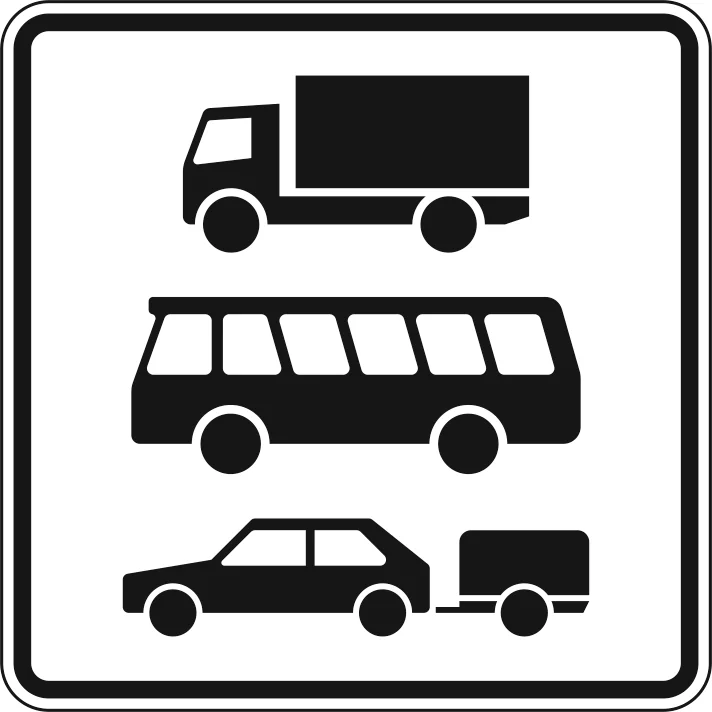
The 1049-13 - Nur truck (Z 1010-51), Kraftomnibus (Z 1010-57) Pkw with Anhänger (Z 1010-59) road sign may also be known by these alternative names or terms.
The 1049-13 - Nur truck (Z 1010-51), Kraftomnibus (Z 1010-57) Pkw with Anhänger (Z 1010-59) road sign is part of the German Supplementary Signs category, which groups together signs with similar rules and functions.
Understanding the nuances between similar road signs is crucial for accurate recognition and fewer mistakes on your German theory test. Comparing these related traffic signs aids your revision and strengthens your grasp of official road markings and rules, essential for passing.

Understand German Sign 1000-10: Direction, Pointing Left Supplementary Sign

German Road Sign 1000-11: Advance Notice, Pointing Left

Understand German Supplementary Sign 1000-12: Pedestrians Use Sidewalk Opposite, Pointing Left

Understand the 'Umleitungsbeschilderung Dreiviertelkreis' Supplementary Sign (1000-13)
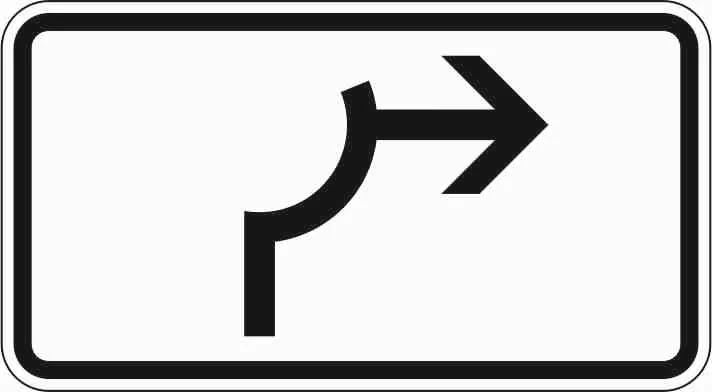
Understand the 'Umleitungsbeschilderung Viertelkreis' Supplementary Sign
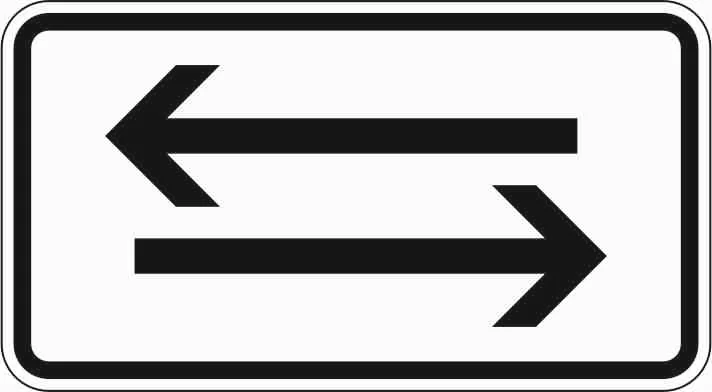
Understand German Supplementary Sign 1000-30: Opposing Directional Arrows
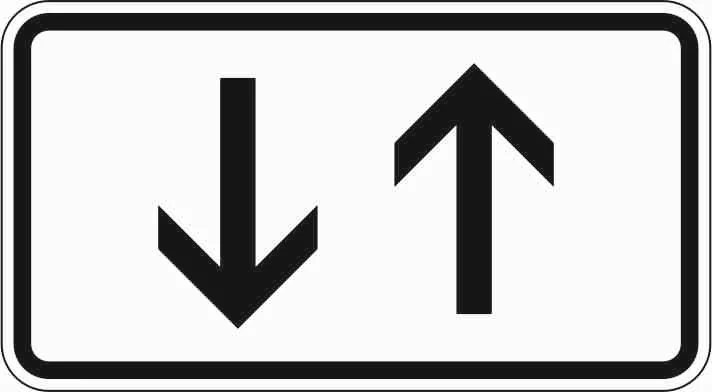
This Supplementary Sign Explains How to Apply the Main Sign Above it.
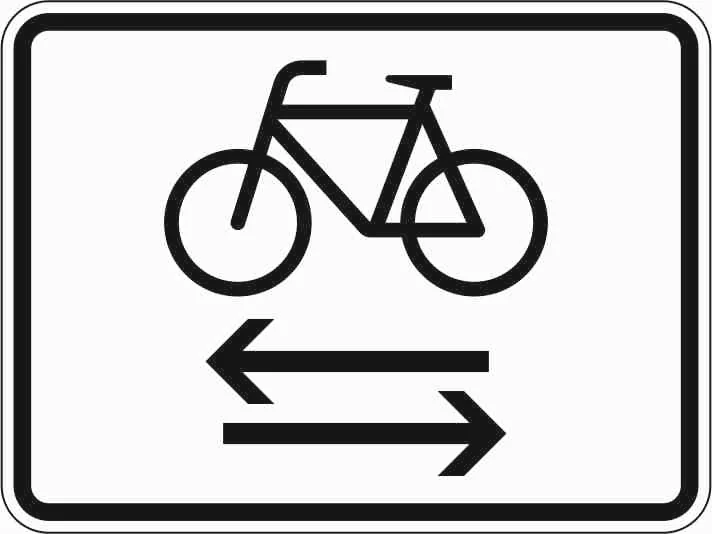
Understand When Cycle Traffic Crosses or Travels Opposite with Sign 1000-32
Deepen your understanding of these specific road markings by exploring related traffic rules and situational hazard perception exercises. Applying the official StVO regulations ensures you recognize critical signage accurately during your theory test.
Master German Merging Rules for a Smooth and Safe Drive
Obtaining a German driving licence is a milestone that requires careful coordination between your driving school, the local licensing authority, and technical examination bodies. This article explains how to manage your training milestones, understand the importance of Prüfungsreife, and choose the right learning path for your goals. You will learn how to avoid common planning pitfalls that lead to delays and extra costs on your way to becoming a licensed driver.
Encountering a wrong-way driver, known as a 'Geisterfahrer' in Germany, on the Autobahn is a terrifying but potentially survivable situation. This article provides essential, text-based guidance on how to react if you hear an official radio warning or, more critically, spot headlights approaching you on the wrong side of the road. Mastering these life-saving procedures is paramount for safe Autobahn driving and understanding high-risk scenarios tested in the German driving theory exam.
Master German Car Park Rules for a Smooth Drive and a Theory Pass!
German road sign 1010-10, officially designated "Erlaubt Kindern auch auf der Fahrbahn und dem Seitenstreifen zu spielen", belongs to the supplementary signs group. It changes how the sign above is applied by adding a distance, direction, time period, vehicle class, exception, condition, or parking detail. You may see it in below a main traffic sign, where it limits, extends, explains, or creates an exception to the rule shown above it, depending on how the road authority has arranged the location. The practical meaning is not just the symbol itself, but the driving decision it triggers: adjust speed, position, priority, route choice, stopping behaviour, or attention before the situation becomes urgent. For learners, the key skill is reading the entire sign stack from top to bottom before deciding whether the rule applies to your vehicle. Always combine the sign with road markings, traffic lights, police instructions, and any supplementary plates at the same location.
German road sign 1010-11, officially designated "Wintersport erlaubt", belongs to the supplementary signs group. It changes how the sign above is applied by adding a distance, direction, time period, vehicle class, exception, condition, or parking detail. You may see it in below a main traffic sign, where it limits, extends, explains, or creates an exception to the rule shown above it, depending on how the road authority has arranged the location. The practical meaning is not just the symbol itself, but the driving decision it triggers: adjust speed, position, priority, route choice, stopping behaviour, or attention before the situation becomes urgent. For learners, the key skill is reading the entire sign stack from top to bottom before deciding whether the rule applies to your vehicle. Always combine the sign with road markings, traffic lights, police instructions, and any supplementary plates at the same location.
Deepen your understanding of specific road sign categories or test your knowledge with practice questions. Explore our themed sign groups for targeted study or jump into quizzes to reinforce your recognition skills for the official German theory exam.
All German Road Signs List