Understanding your responsibilities at the scene of a road traffic collision is a critical component of the Irish Driver Theory Test. This guide explores the RSA guidelines for emergency response, helping you distinguish between effective safety actions and common exam pitfalls. You will learn how to approach incident management by prioritizing traffic laws and situational awareness, ensuring you are fully prepared for the safety-focused questions on your exam.
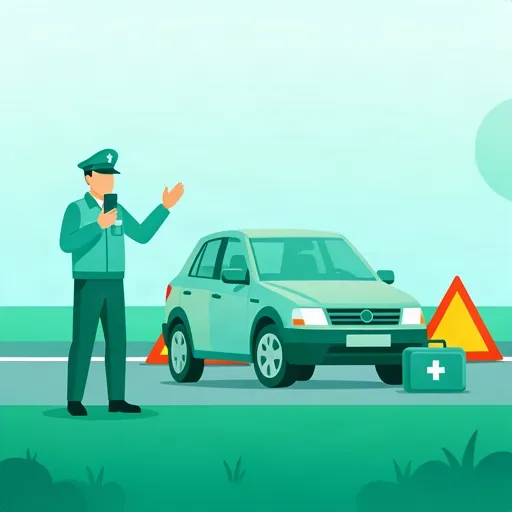
Article content overview
Preparing for the Irish Driver Theory Test requires more than just memorizing road signs; it demands a deep understanding of how to conduct yourself safely and legally at the scene of a road traffic collision. The Road Safety Authority (RSA) emphasizes that a driver’s primary duty at an incident is to ensure their own safety and the safety of others while preventing further accidents. By focusing on situational awareness and legal compliance, you can navigate these challenging exam questions with confidence.
When you encounter an accident or are involved in one, the Rules of the Road dictate a specific hierarchy of actions. Many learners fall into the trap of thinking they should immediately attempt advanced medical procedures or rush into traffic to assist. However, the RSA theory test highlights that your first priority is to secure the scene, warn other road users, and call emergency services if required.
Never attempt to move an injured person unless there is an immediate and life-threatening danger, such as a vehicle fire. Moving a casualty unnecessarily can cause permanent spinal or internal damage.
In the theory exam, you may encounter questions about "first aid limits." The correct approach is never to guess or rely on rote memorization of medical facts. Instead, always apply the RSA safety rule: slow down early, observe your surroundings, ensure your own vehicle is parked safely, and only proceed to assist when the maneuver is lawful and safe.
The Irish Driver Theory Test often tests your ability to react to "live" hazards. When approaching a collision, you must be prepared to adjust your speed and behavior based on the specific circumstances of the road. If the incident is on a busy road, your primary contribution to safety is warning oncoming traffic to prevent a secondary collision.
A frequent mistake in the theory test is choosing an option that assumes other drivers will instinctively yield or that assumes you have "right of way" in an emergency. The Rules of the Road are clear: you must always prioritize safety over urgency. If you see an emergency vehicle approaching, you must pull over safely, but never break traffic laws or create a dangerous situation to "help" them pass.
The theory exam is designed to test your "safe driving behavior." Questions regarding first aid are not looking for medical expertise; they are testing your judgment. When you see a question about what to do at a collision, avoid answers that suggest rushing, assuming responsibility for complex medical tasks, or ignoring traffic flow. Always choose the option that involves early observation, controlled speed reduction, and compliance with the law.
By grounding your preparation in these principles, you move beyond simple fact-recall and develop the mindset required to be a safe, responsible driver on Irish roads.
This content teaches the RSA approach to emergency response at road traffic collisions, emphasizing that drivers must prioritize their own safety, secure the scene, and prevent secondary collisions before providing assistance. The key procedural steps are stopping safely, activating hazard lights, assessing hazards, calling 999 or 112, and providing only basic first aid within your competence. Exam questions test your judgment and situational awareness rather than medical knowledge, so focus on early observation, controlled speed reduction, and strict legal compliance over urgency or assumption of responsibility for complex medical tasks.
A short set of high-value points that capture the most important ideas from this article.
Your first priority at a collision is ensuring your own safety and preventing further accidents before assisting others
Never move an injured person unless there is immediate life-threatening danger such as a vehicle fire
Secure the scene by parking safely, switching on hazard lights, and warning oncoming traffic to prevent secondary collisions
Always call emergency services (999 or 112) providing your exact location and nature of the incident
Only provide first aid within your qualified limits - focus on basic life support like keeping the casualty warm and calm
Use hazard warning lights immediately to alert other road users of danger ahead
Call 999 or 112 for emergency services and give precise location details
Assess for hazards like spilled fuel, broken glass, or downed power lines before approaching
The RSA prioritizes safety and legal compliance over rushing to provide medical assistance
Only perform first aid you are qualified to give - basic life support only
Assuming you should immediately attempt advanced medical procedures rather than securing the scene first
Moving an injured person when there is no immediate life-threatening danger, risking spinal or internal damage
Choosing answers that assume other drivers will instinctively yield or that you have automatic right of way
Blocking the path of emergency services by parking in an unsafe position
Breaking traffic laws to assist emergency vehicles rather than pulling over safely
Article content overview
A short set of high-value points that capture the most important ideas from this article.
Your first priority at a collision is ensuring your own safety and preventing further accidents before assisting others
Never move an injured person unless there is immediate life-threatening danger such as a vehicle fire
Secure the scene by parking safely, switching on hazard lights, and warning oncoming traffic to prevent secondary collisions
Always call emergency services (999 or 112) providing your exact location and nature of the incident
Only provide first aid within your qualified limits - focus on basic life support like keeping the casualty warm and calm
Use hazard warning lights immediately to alert other road users of danger ahead
Call 999 or 112 for emergency services and give precise location details
Assess for hazards like spilled fuel, broken glass, or downed power lines before approaching
The RSA prioritizes safety and legal compliance over rushing to provide medical assistance
Only perform first aid you are qualified to give - basic life support only
Assuming you should immediately attempt advanced medical procedures rather than securing the scene first
Moving an injured person when there is no immediate life-threatening danger, risking spinal or internal damage
Choosing answers that assume other drivers will instinctively yield or that you have automatic right of way
Blocking the path of emergency services by parking in an unsafe position
Breaking traffic laws to assist emergency vehicles rather than pulling over safely
Explore related topics, search based questions, and concepts that learners often look up when studying First Aid and Emergency Procedures. These themes reflect real search intent and help you understand how this topic connects to wider driving theory knowledge in Ireland.
Find clear and practical answers to common questions learners often have about First Aid and Emergency Procedures. This section helps explain difficult points, remove confusion, and reinforce the key driving theory concepts that matter for learners in Ireland.
Your first priority is to ensure the safety of yourself and others, then warn other traffic, and only then assess if emergency services are required, following the RSA guidelines for managing road incidents.
Generally, you should not move an injured person unless there is an immediate threat of further danger, such as fire, as moving them can worsen spinal or internal injuries.
The test focuses on your ability to make safe, lawful decisions rather than medical expertise, emphasizing awareness of road hazards and compliance with the Rules of the Road.
Yes, if you are involved in a collision, the Rules of the Road state you must stop your vehicle immediately and remain at the scene to provide necessary assistance and information.
After searching, continue your DTT preparation by exploring related articles, practicing questions, or reviewing specific road sign categories. Deepen your understanding of Irish road rules and ensure you're fully prepared for your Driver Theory Test.