
This lesson details the specific legal requirements and safety procedures for riding on high-speed dual carriageways and motorways in Ireland. You will learn how to navigate slip roads, manage your lane positioning, and handle the unique challenges posed by high-speed traffic and heavy vehicles. Understanding these rules is essential for your Category A theory exam and for your safety as a new rider on faster roads.

Lesson content overview
Riding a motorcycle on high-speed roads requires a high level of concentration, rapid decision-making, and precise vehicle control. Whether you are preparing for your Category A, A1, or A2 Irish motorcycle theory exam, understanding the specific rules, signage, and physical dynamics of dual carriageways and motorways is essential for your safety and legal compliance.
These environments feature multiple lanes, higher speed limits, and complex joining and exiting sequences. Because motorcyclists are more vulnerable to aerodynamic forces and have a smaller visual profile than other road users, mastering these routes is a critical milestone in your development as a defensive rider.
Correct lane discipline on multi-lane roads ensures a predictable traffic flow and reduces the risk of high-speed collisions. Under the Irish Rules of the Road, the fundamental principle is simple: always keep to the leftmost lane (Lane 1) unless you are overtaking.
On a dual carriageway or motorway, the leftmost lane is your default cruising lane. You should only move into the middle (Lane 2) or rightmost (Lane 3) lanes to overtake slower vehicles or when instructed to do so by road signs or overhead signals. Returning to the left lane as soon as it is safe to do so is both a legal requirement and a safety practice that prevents traffic bottlenecks.
Middle-Lane Hogging: Remaining in the middle or outer lanes when the left lane is clear is a common driving error and a traffic offence in Ireland. It disrupts traffic flow, forces other vehicles to make unnecessary lane changes, and increases collision risks.
Unlike cars, which occupy most of a lane's width, a motorcycle can be positioned in different parts of a single lane.
Entering and exiting high-speed roads are high-risk maneuvers. Slip roads are designed to allow you to match the speed of the main traffic flow before joining, or to decelerate safely after leaving.
When joining a dual carriageway or motorway, use the slip road to build up your speed so that you match the speed of the vehicles already on the main road.
Accelerate and Assess: Use the acceleration lane to match the speed of the traffic in Lane 1. Do not travel too slowly, as this forces oncoming traffic to brake sharply.
Observe and Signal: Check your mirrors early and perform a quick physical shoulder check (the "lifesaver" look) into your blind spot. Activate your right indicator at least 150 metres before you plan to merge.
Find a Gap: Identify a safe gap in the traffic flow. Adjust your speed slightly if necessary to align with this gap.
Merge Smoothly: Guide your motorcycle smoothly into the lane. Avoid sharp steering inputs. Once merged, cancel your indicator immediately.
Exiting a high-speed road requires early planning to avoid sudden braking or erratic lane changes.
Overtaking at 100 km/h or 120 km/h requires extreme precision, rapid hazard perception, and clear communication with other road users.
One of the most unique and challenging aspects of riding a motorcycle on high-speed routes is managing the air currents created by large commercial trucks, buses, and coaches.
The chaotic, swirling airflow created behind and around large, fast-moving vehicles. This disturbed air can cause a motorcycle to buffet, shake, or feel unstable.
As a large vehicle cuts through the air, it pushes a massive block of air forward and outward (the "bow wave"). Behind the vehicle, a low-pressure vacuum is created, which pulls air and nearby objects inward (the "suction" or "slipstream" effect).
When approaching a large truck from behind:
To minimize the impact of turbulence:
Motorways and dual carriageways in Ireland feature distinct speed limits and specialized signage designed to manage traffic flow and alert road users to upcoming hazards.
Some major routes, such as sections of the M50 motorway around Dublin, utilize Variable Speed Limits. These are displayed on digital overhead gantry signs (Variable Message Signs, or VMS).
When a speed limit is displayed inside a red circle on an overhead digital sign, it is legally binding. You must adjust your speed immediately to match the displayed limit, which is adjusted dynamically to manage congestion, accidents, or adverse weather.
To ensure maximum safety on Irish high-speed routes, several legal mandates are enforced by the Road Safety Authority (RSA) and An Garda Síochána.
In Ireland, motorcyclists are highly encouraged and, under specific conditions, required to ride with dipped headlights on at all times, even during bright daylight. This significantly improves your visual profile, making it easier for drivers ahead to spot you in their rear-view mirrors before changing lanes. Do not use full-beam headlights, as these can dazzle other road users and obscure your indicators.
At 120 km/h, your motorcycle travels approximately 33 metres per second. Maintaining a safe gap is crucial:
The hard shoulder (marked by a solid yellow line on the left side of the road) is strictly reserved for emergencies.
Illegal Hard Shoulder Use: You must never ride on the hard shoulder to bypass traffic queues, nor should you pull over there to make phone calls, adjust gear, or check maps. Stopping on a high-speed hard shoulder is highly dangerous due to the risk of being struck by drifting vehicles.
A mechanical breakdown or flat tire at high speeds can quickly escalate into a life-threatening situation. Knowing how to react calmly and safely is essential.
High-speed roads offer very little protection from the elements.
At night, the absence of natural light means you must rely entirely on road studs (reflectors), vehicle lights, and retroreflective signage.
To ensure success in your Irish Motorcycle Theory Test and safe real-world riding, memorize these core high-speed rules:
This lesson covers the essential rules for riding motorcycles on Irish dual carriageways and motorways, including the fundamental keep-left lane discipline rule, step-by-step procedures for safely merging from slip roads and exiting at motorway junctions, and the specific speed limits that apply (120 km/h on motorways, 100 km/h on dual carriageways). Learners are taught the 2-second following distance rule that doubles to 4 seconds in wet weather, the importance of dipped headlights for visibility, and the unique aerodynamic challenges posed by large commercial vehicles including the bow wave, buffet zone, and suction effects. The lesson also covers critical safety procedures for breakdowns, variable speed limit compliance, and the legal restrictions on hard shoulder use, all framed within RSA standards for Category A, A1, and A2 theory test preparation.
A short set of high-value points that capture the most important learning from this lesson.
Always keep to the leftmost lane (Lane 1) as your default cruising position; only move right to overtake slower vehicles and return left when safe
Match the speed of motorway traffic on the slip road before merging, and always perform a lifesaver shoulder check before changing lanes
Maintain at least a 2-second following distance in dry conditions and 4 seconds in wet or icy weather
Keep a wide lateral margin when overtaking high-sided vehicles to counteract the bow wave push and slipstream suction effects
Use dipped headlights at all times on high-speed roads to maximize your visual profile to other road users
Explore all units and lessons included in this driving theory course.
Standard motorway limit is 120 km/h; national dual carriageway limit is 100 km/h, though posted limits always take priority
Variable speed limits shown on overhead gantry signs are legally binding and must be obeyed immediately
Road stud colors: white (lane dividers), red (left edge), amber (right edge/central reservation), green (slip road entries/exits)
When passing large vehicles, be aware of the buffet zone, bow wave push, and suction pull that can destabilize your motorcycle
In an emergency, use an Emergency Refuge Area or pull far left on the hard shoulder, activate hazard lights, and get behind the safety barrier
Middle-lane hogging: staying in Lanes 2 or 3 when the left lane is clear is a traffic offence that disrupts traffic flow
Insufficient following distance: at 120 km/h your bike travels 33 metres per second, leaving little reaction time if you follow too closely
Skipping the lifesaver check: motorcycles have small mirrors with blind spots where fast-approaching vehicles can hide
Riding in the centre of the lane ('grease strip') where oil and debris accumulate, reducing tire grip especially in wet conditions
Attempting to slow down on the main carriageway when approaching an exit instead of maintaining speed until on the slip road
Lesson content overview
A short set of high-value points that capture the most important learning from this lesson.
Always keep to the leftmost lane (Lane 1) as your default cruising position; only move right to overtake slower vehicles and return left when safe
Match the speed of motorway traffic on the slip road before merging, and always perform a lifesaver shoulder check before changing lanes
Maintain at least a 2-second following distance in dry conditions and 4 seconds in wet or icy weather
Keep a wide lateral margin when overtaking high-sided vehicles to counteract the bow wave push and slipstream suction effects
Use dipped headlights at all times on high-speed roads to maximize your visual profile to other road users
Explore all units and lessons included in this driving theory course.
Standard motorway limit is 120 km/h; national dual carriageway limit is 100 km/h, though posted limits always take priority
Variable speed limits shown on overhead gantry signs are legally binding and must be obeyed immediately
Road stud colors: white (lane dividers), red (left edge), amber (right edge/central reservation), green (slip road entries/exits)
When passing large vehicles, be aware of the buffet zone, bow wave push, and suction pull that can destabilize your motorcycle
In an emergency, use an Emergency Refuge Area or pull far left on the hard shoulder, activate hazard lights, and get behind the safety barrier
Middle-lane hogging: staying in Lanes 2 or 3 when the left lane is clear is a traffic offence that disrupts traffic flow
Insufficient following distance: at 120 km/h your bike travels 33 metres per second, leaving little reaction time if you follow too closely
Skipping the lifesaver check: motorcycles have small mirrors with blind spots where fast-approaching vehicles can hide
Riding in the centre of the lane ('grease strip') where oil and debris accumulate, reducing tire grip especially in wet conditions
Attempting to slow down on the main carriageway when approaching an exit instead of maintaining speed until on the slip road
Explore search topics learners often look for when studying Riding on Dual Carriageways and Motorways. These topics reflect common questions about road rules, driving situations, safety guidance, and lesson level theory preparation for learners in Ireland.
Browse additional driving theory lessons that cover connected traffic rules, road signs, and common driving situations related to this topic. Improve your understanding of how different rules interact across everyday traffic scenarios.
Understand how to select the correct lane position to maximize visibility and maintain safety margins. This guide explains how to identify and avoid hazards like the grease strip and how to effectively manage your position relative to other traffic in various Irish road conditions.

This lesson explains how to choose the safest riding position within a traffic lane, considering the standard left-side driving rule in Ireland. It details the concept of dominant positioning to prevent other vehicles from crowding your space, while remaining visible to oncoming traffic. Riders will learn to adjust their track constantly to avoid road surface hazards, oil deposits, and wind currents.

This lesson focuses on practical strategies for maximizing a motorcyclist's visibility to other road users in day and night scenarios. It details the effective placement of retro-reflective materials, high-visibility jackets, and the constant use of dipped headlights. Riders will examine how road positioning within their lane dramatically reduces the likelihood of being obscured by other vehicles.

This lesson provides actionable strategies for Category AM riders to remain visible, focusing on lane positioning and eye contact. It teaches how to avoid riding in the blind spots of larger vehicles and how to signal early and clearly. Cultivating a proactive attitude toward road visibility helps prevent collisions and builds mutual respect on Irish roads.

This lesson outlines the defensive techniques and legal principles of filtering or lane-splitting through stationary or slow-moving traffic queues. It emphasizes the absolute necessity of keeping speed low, monitoring for turning vehicles, and anticipating sudden lane changes by frustrated drivers. Riders will learn to evaluate road width, vehicle gaps, and pedestrian hazards before choosing to filter.
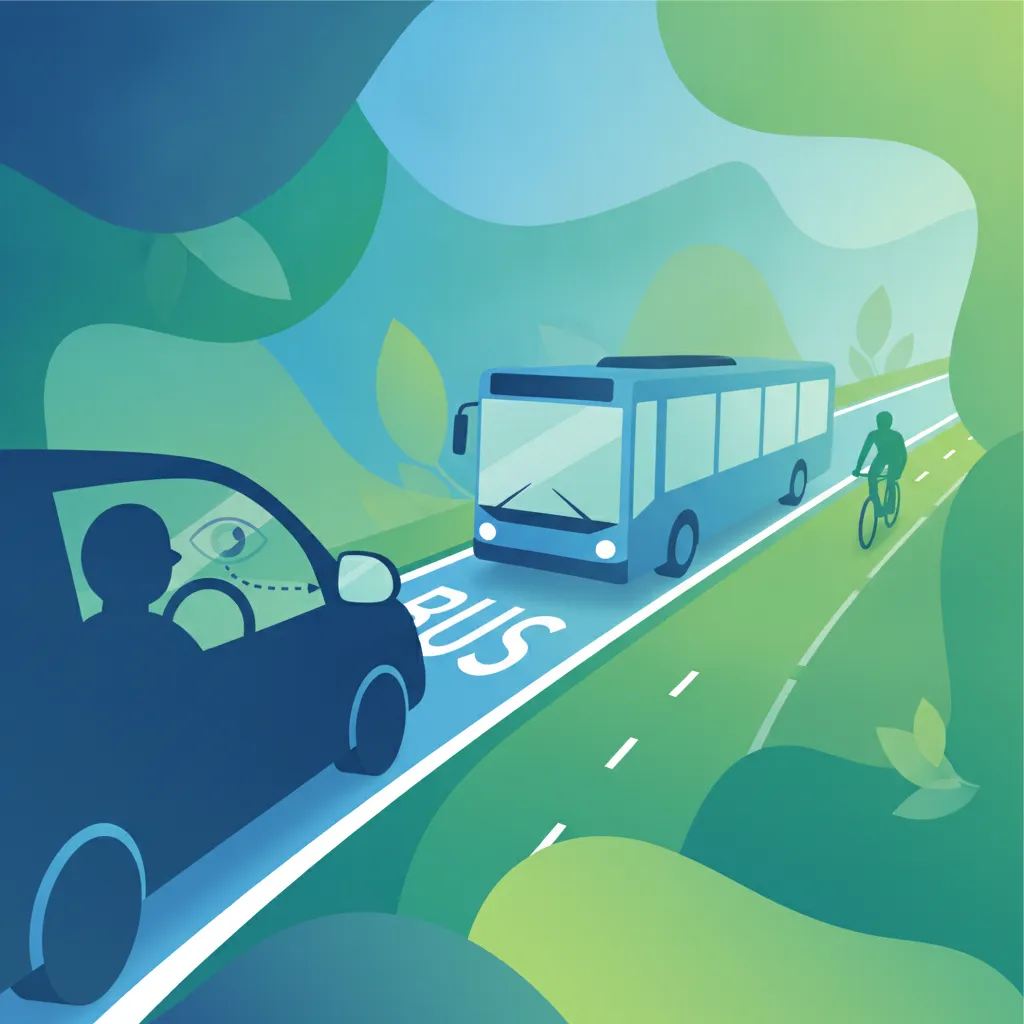
This lesson clarifies the legal regulations surrounding bus lanes and cycle lanes in Ireland, highlighting when motorcycles are permitted to enter them. It outlines how to cross these lanes safely when turning left, and how to scan for cyclists approaching from behind. Riders will learn to respect lane markings, observe signposted operational hours, and avoid blocking designated public transit lanes.

This lesson details the location of blind spots on passenger cars, commercial trucks, and buses, explaining how to avoid staying in these danger zones. It teaches the vital importance of the lifesaver glance or physical shoulder check before executing any lateral lane change or turn. Motorcyclists will learn how to monitor other drivers' mirrors to verify if their motorcycle is visible.

This lesson outlines how motorcyclists should respond when permanent road signs are dirty, damaged, or hidden by overgrown trees and hedges. It introduces the temporary signage, warning cones, and detour markers commonly deployed at active roadwork zones in Ireland. Riders will learn to read the road ahead defensively, reducing speed when visual information is incomplete or compromised.

This lesson focuses on the safe approach and execution of turns at T-junctions, staggered intersections, and blind crossroads. It explains the critical mirror-signal-manoeuvre routine and how to select the best position for maximum visibility to cross-traffic. Motorcyclists will learn to identify potential hazards like vehicles pulling out suddenly or turning across their direct path.

This lesson explains the sequential steps for executing safe overtaking manoeuvres on single and dual-carriageway roads in Ireland. It focuses on assessing speed differentials, establishing clear lines of sight, and evaluating oncoming traffic before committing. Riders will learn the correct signaling routine, safe abort procedures, and how to return smoothly to their lane without cutting in.

This lesson explains the extensive blind spots of heavy goods vehicles, buses, and other large trucks on Irish roads. It teaches Category AM riders how to maintain safe following distances and position themselves where truck drivers can see them. Proper space cushion management is emphasized to protect riders from the wind turbulence of passing trucks.
Develop a defensive riding mindset by learning to anticipate risks such as turbulence from large vehicles, blind spot limitations, and poor visibility. Explore professional techniques for managing space, reacting to road conditions, and navigating complex traffic environments according to official Irish road safety standards.

This lesson covers the strategic aspects of journey management, emphasizing the safety benefits of proactive route planning and weather checks. It teaches riders how to select safer roads, avoid high-congestion zones during rush hour, and schedule regular rest intervals. Motorcyclists will learn to pack essential tools, emergency contacts, and spare safety gear to remain prepared for any roadside situation.

This lesson teaches how to cultivate a proactive defensive riding mindset, focusing on situational awareness and constant hazard scanning. It describes the system of motorcycle control, encouraging riders to anticipate potential mistakes from other drivers, pedestrians, and cyclists. Motorcyclists will learn to position themselves defensively, leaving clear escape routes in all driving environments.

This lesson analyzes traffic flow characteristics in dense municipal areas and teaches safe riding methods for congested gridlock situations. It covers the maintenance of adequate safety cushions, scanning for opening car doors, and monitoring pedestrians stepping from between parked cars. Riders will learn to manage frequent stopping, constant clutch wear, and the stress of urban commuting.

This lesson highlights the importance of smooth throttle adjustments for maintaining traction and stability on a moped. It teaches riders how to anticipate potential road hazards early, reducing the need for sudden emergency braking. Developing strong observation habits allows riders to adjust their speed smoothly and respond safely to traffic changes.
This lesson outlines how motorcyclists should respond when permanent road signs are dirty, damaged, or hidden by overgrown trees and hedges. It introduces the temporary signage, warning cones, and detour markers commonly deployed at active roadwork zones in Ireland. Riders will learn to read the road ahead defensively, reducing speed when visual information is incomplete or compromised.

This lesson explains how to modify riding techniques when navigating wet tarmac, focusing on the heightened risk of hydroplaning and reduced tire grip. It details the necessity of increasing following distances, avoiding painted road markings, and executing smoother control inputs. Riders will understand how surface water accumulates in ruts, presenting severe hazards during heavy rainstorms.
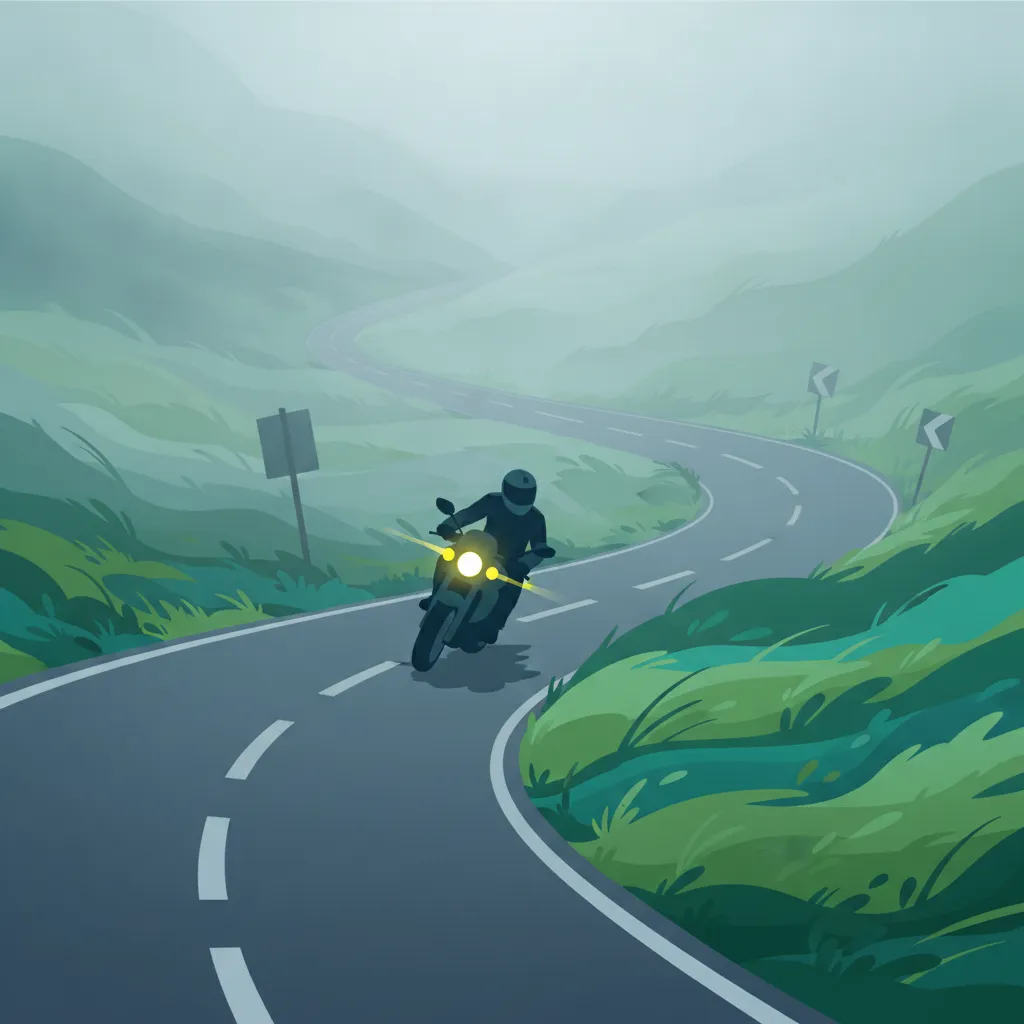
This lesson teaches riders how to manage extreme weather conditions such as high crosswinds, thick fog, and low sun glare. It details how wind forces can push a motorcycle off course and how to use minor body adjustments and lane placement to maintain stability. Riders will learn how to manage visibility limits in dense fog, utilizing specialized riding gear and reducing speeds safely.

This lesson teaches riders how to actively identify and eliminate blind spots through proper mirror adjustment and physical shoulder checks. It explains the concept of a safety cushion, which represents the defensive space maintained around the moped at all times. Managing these zones ensures adequate reaction time and mitigates the impact of sudden braking.
Find clear answers to common questions learners have about Riding on Dual Carriageways and Motorways. Learn how the lesson is structured, which driving theory objectives it supports, and how it fits into the overall learning path of units and curriculum progression in Ireland. These explanations help you understand key concepts, lesson flow, and exam focused study goals.
No. Under Irish law, holders of a learner permit for any motorcycle category are prohibited from riding on motorways. This lesson covers the theory behind motorway rules to ensure you are prepared for when you hold a full licence.
The key difference lies in access restrictions and design features. While learners may use some dual carriageways depending on their specific licence status and road signage, motorways are strictly prohibited for learners and feature specific blue-background signage and different emergency rules.
When overtaking or being passed by large vehicles, you should maintain a firm grip on the handlebars, avoid sudden movements, and maximize your lateral distance from the vehicle. Anticipate the air buffeting effect as you approach and pass, especially in windy conditions.
You must use the acceleration lane to match the speed of the traffic on the main carriageway. Always check your mirrors and blind spot before merging, and ensure you merge into a safe gap without forcing other drivers to change speed or direction.
Use the practice question search tool to pinpoint specific topics, road signs, or rules you need to master for your official Driver Theory Test. Refine your study strategy and ensure comprehensive preparation for all aspects of the Irish driving exam. Start your focused revision now and build confidence for your learner permit test.