This lesson details the essential legal foundations for obtaining a Category B driving licence in Ireland. You will explore the specific eligibility criteria, including age requirements and medical fitness, as mandated by the Road Safety Authority. Understanding these administrative procedures is your first step toward legally operating a vehicle on Irish roads.

Lesson content overview
Before operating any motor vehicle on public roads in Ireland, you must understand the legal and administrative framework governing driver licensing. Under Irish law, vehicle operation is not a universal right but a graded privilege. This system ensures that drivers only operate vehicles they are physically capable of handling and have been specifically trained and tested to control.
This lesson explores the categorisation of motor vehicles under Irish law, with a dedicated focus on Category B for passenger cars. You will learn about minimum age requirements, the role of medical fitness certificates, the process of applying through the National Driver Licence Service (NDLS), and the legal boundaries of learner permits.
The Road Safety Authority (RSA) categorises motor vehicles based on their design, purpose, mass, and power output. This system ensures that licensing standards match the technical complexity and potential risk associated with each vehicle class. Operating a vehicle outside the scope of your specific licence category is a serious legal offence.
The hierarchy of licensing means that having a licence for one category does not automatically entitle you to drive another. Below is a detailed overview of the primary vehicle categories in Ireland:
The maximum weight of a vehicle or trailer including its maximum load, fuel, and occupants as specified by the manufacturer. This is also commonly referred to as the Gross Vehicle Weight (GVW).
A common misunderstanding among novice drivers is assuming that a Category B licence allows them to tow any size of caravan or trailer. If you intend to tow a trailer with a MAM exceeding 750 kg, and the combined weight of your car and trailer exceeds standard Category B limits, you must obtain a Category BE endorsement by passing a separate practical driving test.
To safeguard road users, Irish law establishes minimum age thresholds for obtaining a learner permit. These limits are designed to align with the physiological and cognitive maturity required to manage different classes of vehicles safely.
| Vehicle Category | Minimum Legal Age for Learner Permit | Primary Vehicle Type |
|---|---|---|
| Category AM | 16 Years | Mopeds and light quadricycles |
| Category A1 | 17 Years | Motorcycles up to 125cc |
| Category A2 | 17½ Years | Motorcycles up to 35 kW |
| Category B | 17½ Years | Passenger cars up to 3,500 kg |
| Category BE | 17½ Years | Cars towing heavy trailers |
| Higher Categories (C, D) | 18+ Years (Varies by category/CPC) | Trucks, buses, and coaches |
These age thresholds are absolute. For example, a 16-year-old may lawfully apply for a Category AM permit to ride a moped but cannot apply for a Category B learner permit until they reach exactly 17½ years of age. Attempting to apply before reaching the statutory age will result in immediate rejection of the application by the licensing authority.
Operating a motor vehicle requires rapid reflexes, excellent visual acuity, and cognitive stability. To ensure that medical conditions do not compromise road safety, the Road Safety Authority guidelines mandate a formal medical fitness assessment for specific categories of applicants.
You must declare any medical condition that may affect your ability to drive when applying for a learner permit or driving licence. Failure to disclose a known medical condition is an offence and may invalidate your motor insurance.
A Medical Fitness Certificate (Form D501) is a certified document signed by a registered medical practitioner confirming that your health status meets the national regulatory standards.
The medical practitioner will assess your physical and mental suitability, paying close attention to your vision, cardiovascular health, and the risk of sudden episodes of cognitive impairment or physical seizures. If you wear corrective lenses, this will be noted as a restrictive code on your physical licence, meaning you are legally required to wear glasses or contact lenses whenever you operate a vehicle.
The National Driver Licence Service (NDLS) is the government-appointed body responsible for issuing learner permits and full driving licences in Ireland. The application process is standardised to ensure accurate identity verification, residency confirmation, and processing security.
To obtain your first Category B learner permit, you must navigate a structured, multi-step process.
Pass the Driver Theory Test: You must successfully complete the computer-based Irish Driver Theory Test for Category B. Once passed, you will receive a Theory Test Pass Certificate, which is valid for up to two years.
Gather Identity Documentation: You must provide a valid Public Services Card (PSC) as proof of identity. If you do not have a PSC, you must book an appointment with the Department of Social Protection to obtain one.
Verify Your Medical Fitness: If you are over 70, have a specified medical condition, or are applying for a category that requires it, you must have a registered doctor complete the NDLS Medical Report Form (D501).
Submit Your Application: You can apply online via the NDLS portal (using a verified MyGovID account linked to your PSC) or by booking an in-person appointment at an NDLS centre. You must present your proof of address, your theory test certificate, your medical form (if applicable), and pay the standard application fee.
Once processed, your learner permit will be posted to you. This permit is a physical card that carries your photograph, personal details, and the specific vehicle categories you are permitted to drive under supervision.
A learner permit is not a full driving licence. It is a provisional authorization that carries strict legal conditions designed to keep both you and other road users safe during your training.
The learner permit must be carried on your person at all times when driving. You must be able to present it immediately if stopped by a member of An Garda Síochána.
In Ireland, the laws regarding unaccompanied learner drivers are exceptionally strict. Under the Clancy Amendment (named after victims of an accident caused by an unaccompanied learner), the owner of a vehicle who knowingly allows an unaccompanied learner driver to operate their car can have their vehicle seized by An Garda Síochána. The learner driver faces significant fines, penalty points, and their vehicle being impounded on the spot.
The ultimate goal of a learner driver is to transition to a full, unrestricted driving licence. This transition is governed by strict competency-based milestones.
[Theory Test Passed] ➔ [Apply for Learner Permit] ➔ [Complete 12 EDT Lessons] ➔ [6-Month Waiting Period] ➔ [Pass Practical Driving Test] ➔ [Apply for Full Licence]
To progress from a Category B learner permit to a full licence, you must fulfill the following statutory requirements:
If you fail to apply for your full licence within two years of passing your practical test, your Certificate of Competency expires, and you will be required to retake both your theory and practical examinations.
Understanding the legal aspects of driving theory prevents costly fines, court appearances, and delays in your licensing journey.
To ensure a smooth path to becoming a fully licensed driver in Ireland, keep these foundational rules in mind:
This lesson establishes the legal framework for obtaining an Irish Category B learner permit through the NDLS. Key requirements include being at least 17½ years old, passing the Driver Theory Test, and submitting identity documentation via the Public Services Card system. Medical fitness certificates are mandatory for specific age groups and those with relevant health conditions. Learner permit holders operate under strict restrictions: displaying L-plates, constant qualified supervision, and an absolute ban on motorway driving. Progression to a full licence requires completing 12 Essential Driver Training lessons, maintaining the permit for six months, passing the RSA practical driving test, and applying to NDLS within two years.
A short set of high-value points that capture the most important learning from this lesson.
Category B covers passenger cars up to 3,500 kg MAM designed for no more than 8 passengers, with a minimum learner permit age of 17½ years.
A Medical Fitness Certificate (Form D501) is mandatory for applicants under 17½, over 70, applying for higher categories, or those with conditions such as epilepsy, diabetes, or visual impairment.
The NDLS manages all learner permit applications requiring a valid Public Services Card, Theory Test Pass Certificate (valid 2 years), and proof of address.
Learner permit holders must display L-plates, never drive unaccompanied by a driver with 2+ years of full licence in the same category, and are prohibited from motorways.
You must complete 12 EDT lessons, hold your permit for 6 months minimum, pass the practical test, and apply to NDLS within 2 years to receive a full licence.
Explore all units and lessons included in this driving theory course.
The Minimum Age table: AM (16), A1/A2/B/BE (17½), higher categories (18+). These are absolute statutory thresholds.
Category B alone does NOT permit towing trailers over 750 kg MAM—Category BE endorsement requires a separate practical test.
Supervision requires the accompanying driver to hold a full licence in the same category for at least two consecutive years.
Learner permit holders are banned from motorways regardless of supervision—this is a common test question trap.
The Certificate of Competency expires after 2 years if you do not exchange it for a full licence via NDLS.
Assuming a Category B licence allows towing any trailer or caravan—Category BE is required when trailer MAM exceeds 750 kg and combined weight exceeds limits.
Using a supervisor who has held their full licence for less than two years, which is a legal violation even if they are experienced.
Believing they can drive on motorways with a learner permit if supervised—motorway driving is completely prohibited for learner permit holders.
Failing to disclose medical conditions on the application, which is an offence and may invalidate insurance coverage.
Allowing the Certificate of Competency to expire by not applying to NDLS within two years of passing the practical test.
Lesson content overview
A short set of high-value points that capture the most important learning from this lesson.
Category B covers passenger cars up to 3,500 kg MAM designed for no more than 8 passengers, with a minimum learner permit age of 17½ years.
A Medical Fitness Certificate (Form D501) is mandatory for applicants under 17½, over 70, applying for higher categories, or those with conditions such as epilepsy, diabetes, or visual impairment.
The NDLS manages all learner permit applications requiring a valid Public Services Card, Theory Test Pass Certificate (valid 2 years), and proof of address.
Learner permit holders must display L-plates, never drive unaccompanied by a driver with 2+ years of full licence in the same category, and are prohibited from motorways.
You must complete 12 EDT lessons, hold your permit for 6 months minimum, pass the practical test, and apply to NDLS within 2 years to receive a full licence.
Explore all units and lessons included in this driving theory course.
The Minimum Age table: AM (16), A1/A2/B/BE (17½), higher categories (18+). These are absolute statutory thresholds.
Category B alone does NOT permit towing trailers over 750 kg MAM—Category BE endorsement requires a separate practical test.
Supervision requires the accompanying driver to hold a full licence in the same category for at least two consecutive years.
Learner permit holders are banned from motorways regardless of supervision—this is a common test question trap.
The Certificate of Competency expires after 2 years if you do not exchange it for a full licence via NDLS.
Assuming a Category B licence allows towing any trailer or caravan—Category BE is required when trailer MAM exceeds 750 kg and combined weight exceeds limits.
Using a supervisor who has held their full licence for less than two years, which is a legal violation even if they are experienced.
Believing they can drive on motorways with a learner permit if supervised—motorway driving is completely prohibited for learner permit holders.
Failing to disclose medical conditions on the application, which is an offence and may invalidate insurance coverage.
Allowing the Certificate of Competency to expire by not applying to NDLS within two years of passing the practical test.
Explore search topics learners often look for when studying Licence Categories and Legal Requirements. These topics reflect common questions about road rules, driving situations, safety guidance, and lesson level theory preparation for learners in Ireland.
Browse additional driving theory lessons that cover connected traffic rules, road signs, and common driving situations related to this topic. Improve your understanding of how different rules interact across everyday traffic scenarios.
Learn the mandatory structure of the 12 lesson Essential Driver Training course required for your learner permit. This guide explains how to progress through your training, manage your official logbook, and prepare for the practical driving test requirements set by the Road Safety Authority.
Learner drivers in Ireland must adhere to strict operational rules, including the compulsory display of red L-plates and driving under qualified supervision. This lesson outlines your specific duties as a learner, the legal definitions of an accompanying experienced driver, and the elevated safety margins you must maintain on the road. Failing to comply with these learner regulations carries serious legal penalties and delays your progression to a full driving licence.

Ireland uses a structured training program called Essential Driver Training to ensure all learners acquire fundamental driving habits before booking their practical test. This lesson explains the twelve mandatory EDT lessons, the role of an Approved Driving Instructor, and how your progress is documented in an official logbook. Mastering these practical modules alongside your theory test preparation creates a highly effective pathway to becoming a safe driver.
This lesson details the statutory rules governing learner permit holders, including compulsory safety gear and vehicle roadworthiness standards. Riders must understand the requirement for high-visibility clothing, functioning warning devices, and compliance with the official Rules of the Road. Safe riding habits are established by strictly adhering to these RSA standards.
This lesson details the structure of the Irish penalty point system and its implications for novice Category AM riders. It highlights the specific traffic violations that trigger points and the thresholds that result in automatic disqualification. Learners will understand the process of moving from a learner permit to a full driving licence safely.
This lesson details the legal requirements for motorcycle insurance under Irish law, emphasizing the absolute necessity of holding valid third-party cover. It outlines the rider's responsibility to maintain their motorcycle in a completely roadworthy condition, focusing on critical safety components like tyres, brakes, and lights. Learners will examine how mechanical failures and non-compliance with maintenance standards compromise legal eligibility and safety.

Drivers bear the legal responsibility of ensuring that all passengers under seventeen years of age are properly secured in the vehicle. This lesson covers Ireland's strict seatbelt laws and the requirement to use an EU-approved child restraint system appropriate for the child's height and weight. You will learn how to locate ISOFIX anchorage points, fit child seats correctly, and deactivate passenger airbags when using rear-facing seats.
To legally drive in Ireland, your car must be insured, taxed, and certified as roadworthy through the National Car Test. This lesson details the types of motor insurance cover available, how to display your tax and insurance discs, and the schedule for mandatory NCT inspections. Keeping these documents up to date ensures your vehicle meets national safety and environmental standards, preventing heavy fines or vehicle seizure.
Understand how the Irish penalty points system operates for both learner permit holders and full licence holders. This theory lesson details how specific traffic offences result in points, the legal consequences of accumulating them, and how this enforcement system contributes to road safety across Ireland.
This lesson details the structure of the Irish penalty point system and its implications for novice Category AM riders. It highlights the specific traffic violations that trigger points and the thresholds that result in automatic disqualification. Learners will understand the process of moving from a learner permit to a full driving licence safely.
The Irish penalty points system is designed to deter unsafe driving practices by recording points against a driver's record for specific traffic violations. This lesson explains how points are accumulated, the lower threshold applied to learner and novice drivers, and the consequences of reaching the suspension limit. You will also learn about the role of the Garda Síochána in enforcing these road traffic laws and the financial impact points have on your insurance.
This lesson provides a comprehensive overview of the Irish penalty point system and how traffic offences are monitored by An Garda Síochána. It details the accumulation limits that trigger automatic licence suspension, with a focus on special lower thresholds for learner drivers. Learners will explore common traffic violations, such as speeding and reckless riding, which carry statutory point penalties.
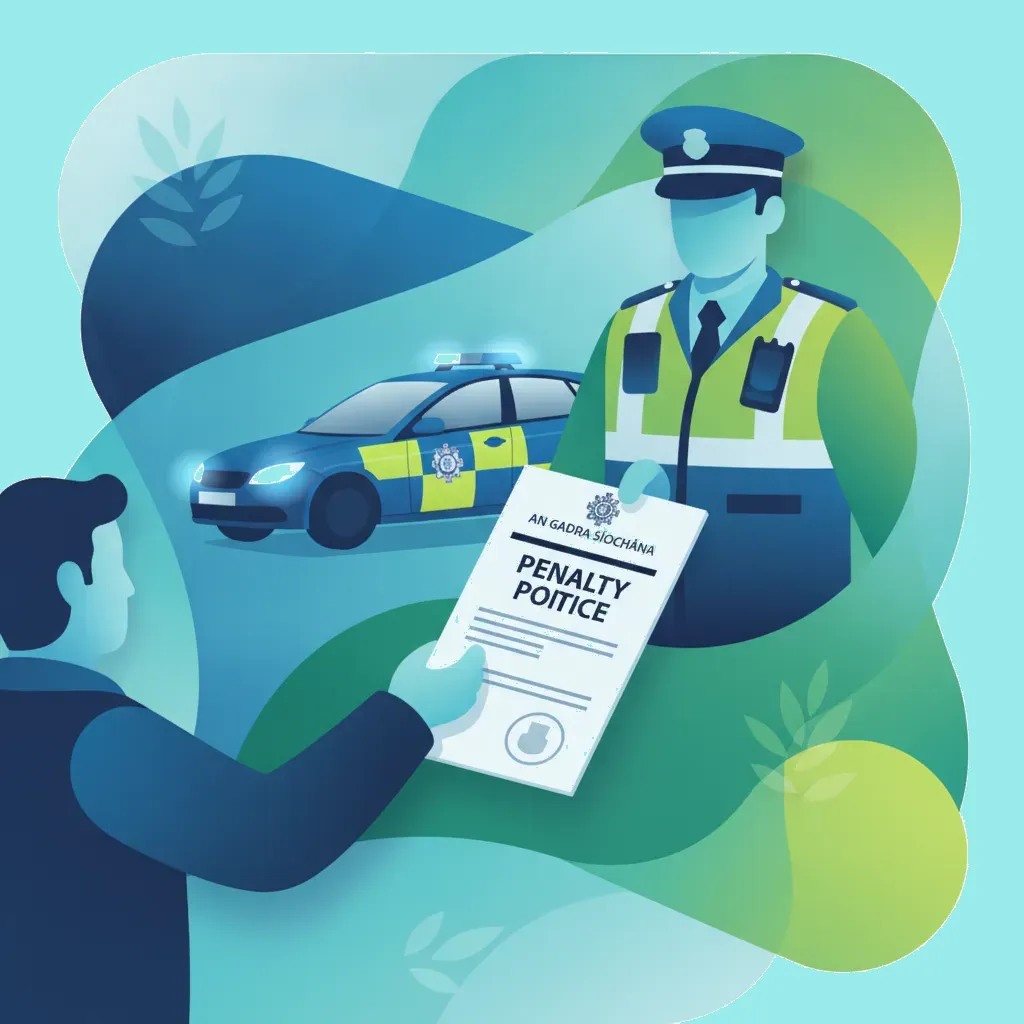
Violating Irish traffic laws triggers a structured enforcement process, starting with fixed charge notices and ending in severe court-ordered bans. This lesson details the roles of the Garda Síochána and the National Car Testing Service in enforcing safety regulations on roads. You will learn how fines are paid, how penalty points are formally added to your NDLS record, and the legal consequences of driving while disqualified.
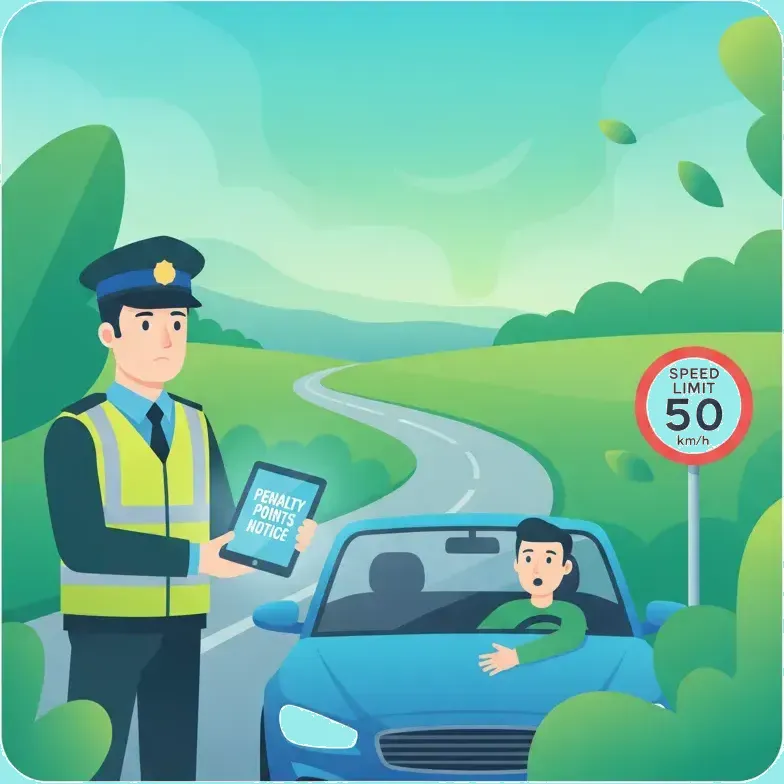
Operating commercial passenger vehicles requires strict adherence to Irish road laws to prevent heavy fines, penalty points, or disqualification. This lesson outlines the primary motoring offences, the mechanics of the Irish penalty points system, and active enforcement by An Garda Síochána. Drivers will learn the serious operational and professional consequences of non-compliance, encouraging long-term safe driving habits.
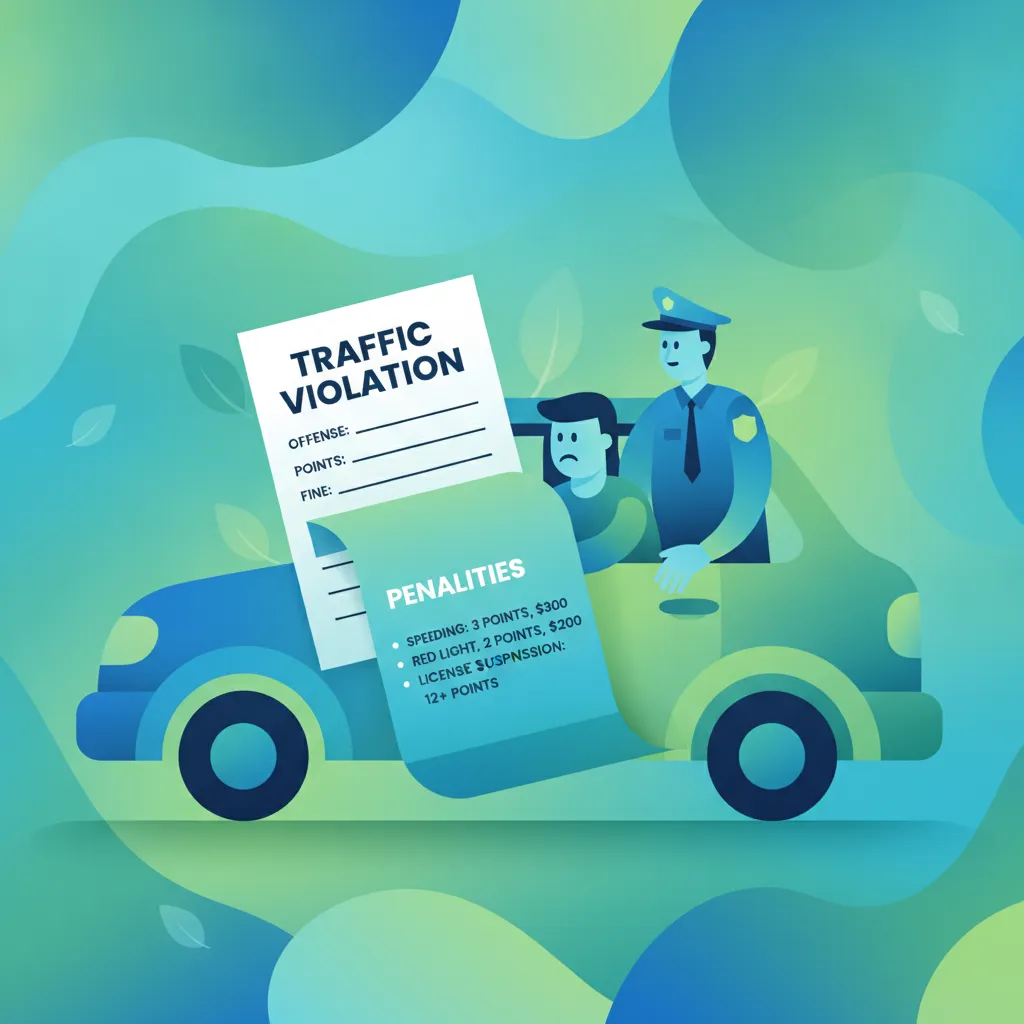
This lesson details the legal consequences of failing to adhere to the Irish Rules of the Road as a Category AM rider. It explains the structure of financial fines, penalty points, and situations that trigger immediate license suspension or disqualification. Understanding these severe penalties emphasizes the importance of consistent compliance and safe road use.
This lesson provides a comprehensive overview of the Irish penalty points system with a specific focus on commercial goods vehicles. It details how enforcement agencies like the Road Safety Authority and Garda Síochána monitor driver compliance and conduct roadside checks. Learners will examine the specific heavy vehicle offences that result in severe fines, penalty points, or immediate licence suspension.
Find clear answers to common questions learners have about Licence Categories and Legal Requirements. Learn how the lesson is structured, which driving theory objectives it supports, and how it fits into the overall learning path of units and curriculum progression in Ireland. These explanations help you understand key concepts, lesson flow, and exam focused study goals.
The minimum age to apply for a learner permit for a car (Category B) in Ireland is 17 years old.
A medical report is required if you are applying for a first-time licence or permit and have a specified medical condition, if you are aged 70 or over, or for certain licence categories. For a standard first-time Category B learner permit, you generally complete a self-declaration of fitness unless specific medical circumstances apply.
No. As a learner permit holder in Ireland, you must be accompanied at all times by a person who has held a full driving licence for that vehicle category for at least two years.
The National Driver Licence Service (NDLS) manages the administration of your learner permit application. You must pass your official Driver Theory Test before you can apply for your permit through the NDLS.
Use the practice question search tool to pinpoint specific topics, road signs, or rules you need to master for your official Driver Theory Test. Refine your study strategy and ensure comprehensive preparation for all aspects of the Irish driving exam. Start your focused revision now and build confidence for your learner permit test.