
This lesson details the mandatory legal documentation required to operate a Category B vehicle on Irish roads. You will learn the essential rules regarding motor insurance, motor tax, and the National Car Test (NCT), ensuring you understand your statutory responsibilities as a driver. This foundational knowledge is critical for both the theory exam and maintaining a roadworthy vehicle in Ireland.
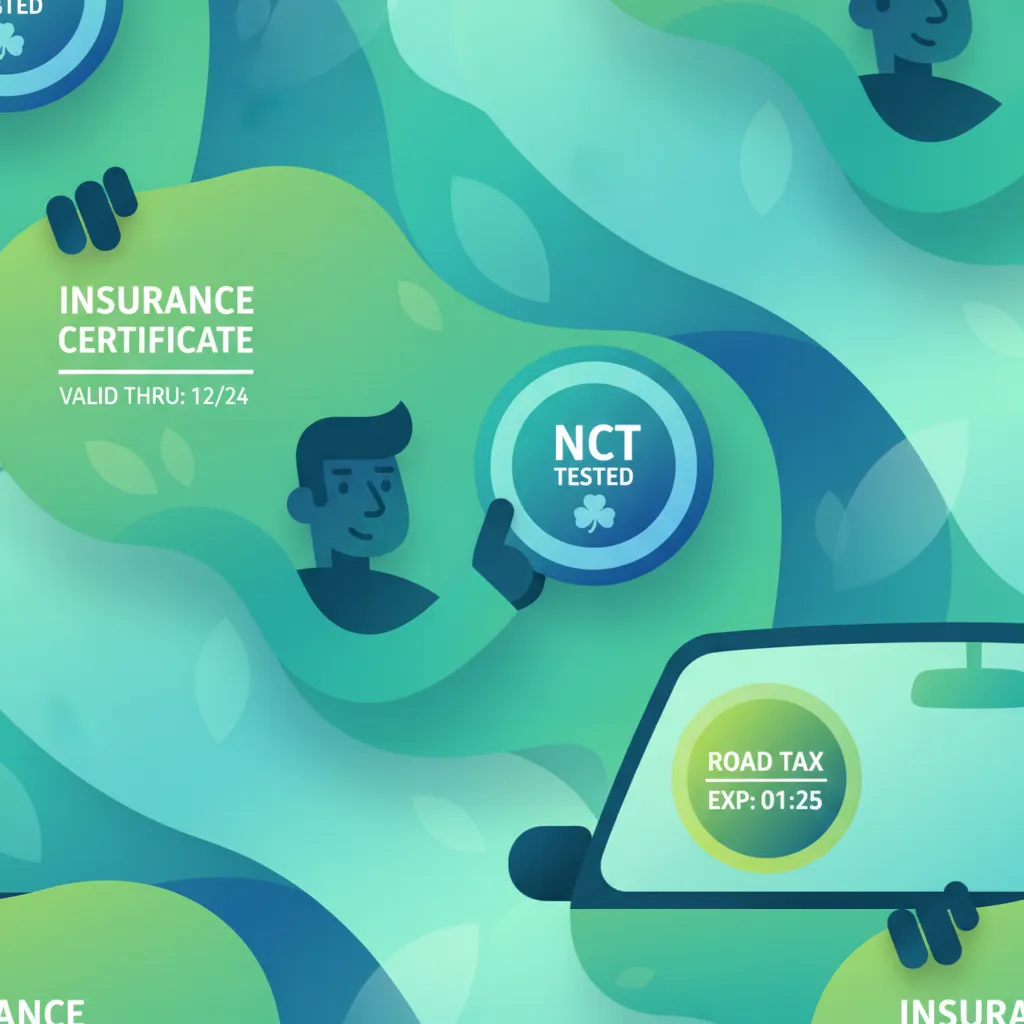
Lesson content overview
To legally drive a passenger car (Category B) on public roads in Ireland, holding a valid driver's licence is only the first step. You must also ensure that the vehicle itself meets all statutory legal requirements.
Every motor vehicle driven in a public place must be covered by valid motor insurance, have its motor tax paid, and—if it is over a certain age—possess a valid National Car Test (NCT) certificate of roadworthiness.
Failing to maintain or display these documents is a serious offence that can lead to heavy financial penalties, penalty points, vehicle seizure, or even prosecution in the District Court.
To keep Ireland’s roads safe, fair, and well-funded, the State enforces a strict system of vehicle documentation. This system rests on three distinct but interconnected pillars:
┌────────────────────────────────────────────────────────┐
│               LEGAL VEHICLE COMPLIANCE                 │
├──────────────────────┬──────────────────┬──────────────┤
│  1. MOTOR INSURANCE  │   2. MOTOR TAX   │  3. THE NCT  │
│  Financial indemnity │ Infrastructure   │ Mechanical   │
│  and victim support  │ funding          │ safety &     │
│  for collisions.     │ and emissions.   │ emissions.   │
└──────────────────────┴──────────────────┴──────────────┘
Driving without any one of these elements is a direct violation of Irish road traffic laws. Below, we examine each of these requirements in detail, outlining your legal responsibilities as a vehicle owner and driver.
Motor insurance is a legally binding contract between a vehicle owner (or driver) and an authorized insurance company. Under the Road Traffic Acts, you must have a valid insurance policy in place before you can drive a vehicle in any public place. This law ensures that if you cause an accident resulting in injury or property damage, the victims will be financially compensated.
In Ireland, motor insurance is tied to both the vehicle and the driver. Simply because a car is insured does not mean any individual is legally permitted to drive it. You must ensure your name is explicitly listed on the policy (as the policyholder, a named driver, or through an "open driving" clause) and that your licence matches the policy requirements.
When selecting an insurance policy, you will encounter three primary tiers of coverage. While they offer different levels of personal protection, they all satisfy the minimum legal requirement to drive on public roads.
Third-Party Only is the absolute minimum legal requirement allowed by Irish law.
This is a mid-tier policy option that builds directly upon the mandatory third-party foundation.
Comprehensive insurance offers the highest level of financial protection and is highly recommended, particularly for newer or more valuable vehicles.
When choosing an insurance policy, do not assume that "Third-Party Only" is always the cheapest option. Insurance companies assess risk using complex algorithms; sometimes, a comprehensive policy may carry a similar or even lower premium due to the demographic profiles of drivers who typically choose it.
Motor tax is a statutory duty payable on all motor vehicles used or parked in a public place. It is administered by local authorities on behalf of the Department of Transport.
The method used to calculate your motor tax rate depends primarily on the date your vehicle was first registered:
If you do not intend to use your vehicle on public roads for a period of time (for example, if you are storing it in a private garage or travelling abroad), you must declare it "off the road" in advance.
This must be done using the official RF150 form within the final month of your existing tax disc's validity. You cannot declare a vehicle off the road retroactively to avoid paying outstanding tax.
The National Car Test (NCT) is a compulsory roadworthiness test designed to improve road safety and protect the environment. It ensures that older passenger cars are maintained to a safe mechanical standard. The test is conducted by National Car Testing Service (NCTS) technicians at dedicated test centres across the country.
The frequency of mandatory NCT inspections is based strictly on the age of your vehicle, calculated from the date of its first registration:
| Vehicle Age | Testing Frequency | Validity Period of Certificate |
|---|---|---|
| Under 4 Years Old | No test required | Exempt |
| Between 4 and 10 Years Old | Every 2 years | Valid for 24 months |
| Over 10 Years Old | Every year | Valid for 12 months |
| Vintage Vehicles (Over 30 Years Old) | Exempt (if used for non-commercial purposes) | Perpetual Exemption |
The NCT is a highly systematic, objective safety check. The inspectors look at components that directly impact your vehicle's safety, structural integrity, and environmental footprint:
An NCT pass certificate confirms that your car met the minimum safety standards on the day of the test. It is not a warranty or a substitute for regular, professional maintenance. You must monitor your tyres, brakes, and fluid levels continuously throughout the year.
Under Irish law, when your car is parked or driven in a public place, you must display proof of your compliance with insurance, tax, and roadworthiness laws. This is accomplished by displaying three distinct paper discs on your front windscreen.
All three discs must be clearly displayed on the inside of the front windscreen on the left-hand side (passenger side). This position ensures they can be easily read by a Garda (police officer) or traffic warden standing on the footpath, without obstructing the driver's forward field of vision.
Driving without valid documentation is a major offense under Irish traffic law. The state utilizes a combination of roadside checkpoints, automated licence plate recognition (ANPR) systems, and regular patrols to enforce compliance.
This is one of the most serious traffic offenses you can commit. If caught driving an uninsured vehicle, you face:
Driving a car that does not have a valid NCT certificate is a road traffic offense. If detected, you face:
Even if you have paid your tax and insurance, failing to display the physical discs on your windscreen is an independent offense. You can be issued an on-the-spot fine for failing to display a valid tax, insurance, or NCT disc.
Ensuring your vehicle is legally documented has structural safety benefits that extend far beyond simply avoiding fines:
To legally drive in Ireland, you must maintain three separate mandatory documents: motor insurance (with Third-Party Only as the minimum), motor tax, and a valid NCT certificate where applicable. Insurance policies range from Third-Party Only through to Comprehensive, with higher tiers providing additional personal protection. The NCT tests vehicle safety and emissions at intervals determined by age, while motor tax rates depend on the vehicle's registration date and either CO2 output or engine capacity. All three compliance discs must be clearly displayed on the front windscreen, and driving without valid insurance or documentation carries severe consequences including substantial fines, penalty points, and vehicle seizure.
A short set of high-value points that capture the most important learning from this lesson.
Motor insurance, motor tax, and NCT form the three mandatory pillars of legal vehicle compliance in Ireland.
Third-Party Only insurance is the minimum legal requirement and covers damage to others but NOT your own vehicle.
NCT testing intervals are based on vehicle age: under 4 years exempt, 4-10 years biennial, over 10 years annual.
All three discs (insurance, tax, and NCT) must be displayed on the inside of the front windscreen on the passenger side.
Driving without valid motor insurance is one of the most serious traffic offences, carrying up to €5,000 in fines, 5 penalty points, and possible vehicle seizure.
Explore all units and lessons included in this driving theory course.
Insurance must cover YOU specifically as a driver - being a passenger on an insured vehicle does not authorise you to drive it.
Vehicles registered after 1 July 2008 are taxed based on CO2 emissions; older vehicles are taxed by engine capacity.
NCT minimum tyre tread depth is 1.6 mm - below this is a failure.
An NCT pass certificate confirms roadworthiness only on the test day - it is not a warranty for the validity period.
Failing to display discs is a separate offence from not having them - even valid documents can result in fines if not visibly placed.
Assuming Third-Party insurance covers damage to your own vehicle - it does not.
Confusing motor tax discs with NCT discs - they are separate documents with different issuing authorities.
Believing a valid NCT certificate alone permits driving - you still need insurance and motor tax.
Forgetting that insurance coverage must explicitly include the driver, not just the vehicle.
Misunderstanding NCT exemptions - vintage vehicles over 30 years are exempt only for non-commercial use.
Lesson content overview
A short set of high-value points that capture the most important learning from this lesson.
Motor insurance, motor tax, and NCT form the three mandatory pillars of legal vehicle compliance in Ireland.
Third-Party Only insurance is the minimum legal requirement and covers damage to others but NOT your own vehicle.
NCT testing intervals are based on vehicle age: under 4 years exempt, 4-10 years biennial, over 10 years annual.
All three discs (insurance, tax, and NCT) must be displayed on the inside of the front windscreen on the passenger side.
Driving without valid motor insurance is one of the most serious traffic offences, carrying up to €5,000 in fines, 5 penalty points, and possible vehicle seizure.
Explore all units and lessons included in this driving theory course.
Insurance must cover YOU specifically as a driver - being a passenger on an insured vehicle does not authorise you to drive it.
Vehicles registered after 1 July 2008 are taxed based on CO2 emissions; older vehicles are taxed by engine capacity.
NCT minimum tyre tread depth is 1.6 mm - below this is a failure.
An NCT pass certificate confirms roadworthiness only on the test day - it is not a warranty for the validity period.
Failing to display discs is a separate offence from not having them - even valid documents can result in fines if not visibly placed.
Assuming Third-Party insurance covers damage to your own vehicle - it does not.
Confusing motor tax discs with NCT discs - they are separate documents with different issuing authorities.
Believing a valid NCT certificate alone permits driving - you still need insurance and motor tax.
Forgetting that insurance coverage must explicitly include the driver, not just the vehicle.
Misunderstanding NCT exemptions - vintage vehicles over 30 years are exempt only for non-commercial use.
Explore search topics learners often look for when studying Insurance, NCT, and Vehicle Documentation. These topics reflect common questions about road rules, driving situations, safety guidance, and lesson level theory preparation for learners in Ireland.
Browse additional driving theory lessons that cover connected traffic rules, road signs, and common driving situations related to this topic. Improve your understanding of how different rules interact across everyday traffic scenarios.
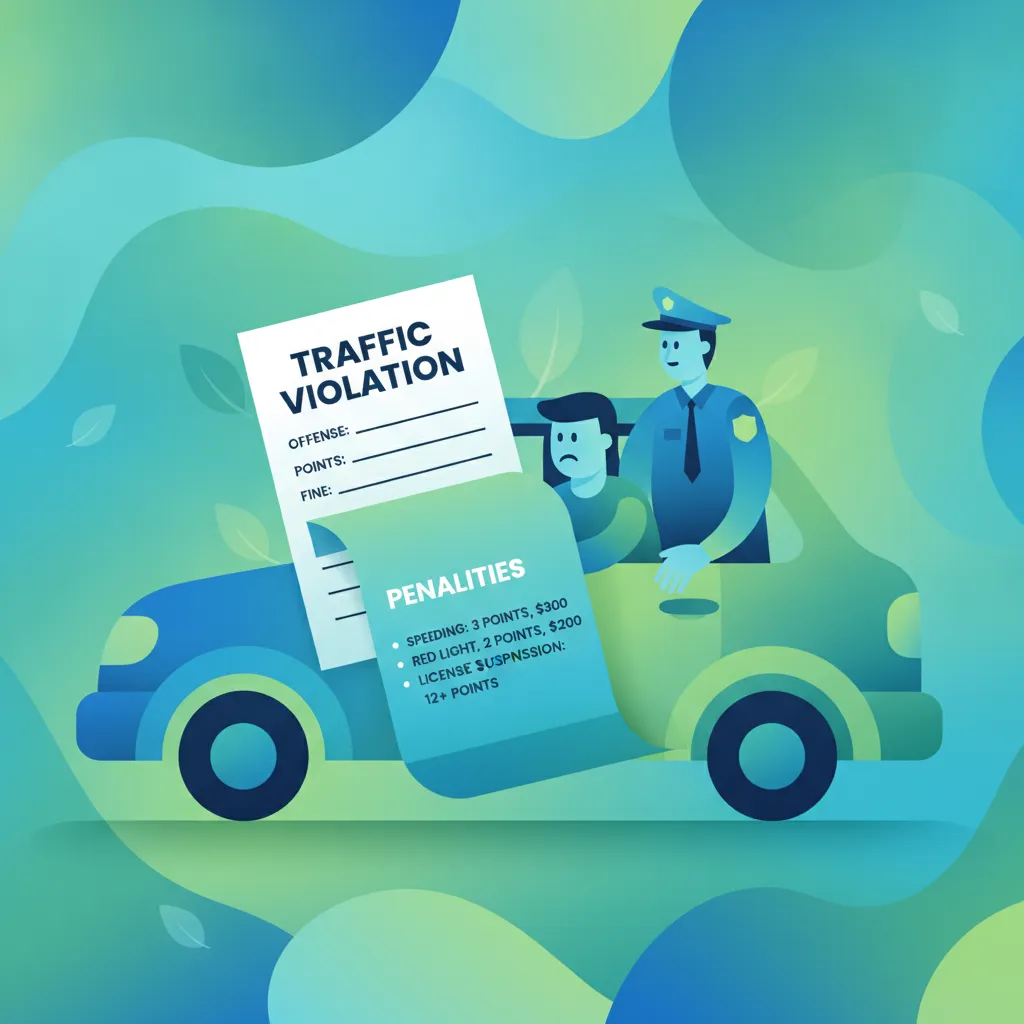
Understand how the Irish penalty points system impacts learner and full licence holders. This lesson explains the legal enforcement of traffic laws, the consequences of accumulating points, and the role of An Garda Síochána in maintaining road safety standards across the national road network.

The Irish penalty points system is designed to deter unsafe driving practices by recording points against a driver's record for specific traffic violations. This lesson explains how points are accumulated, the lower threshold applied to learner and novice drivers, and the consequences of reaching the suspension limit. You will also learn about the role of the Garda Síochána in enforcing these road traffic laws and the financial impact points have on your insurance.

This lesson provides a comprehensive overview of the Irish penalty point system and how traffic offences are monitored by An Garda Síochána. It details the accumulation limits that trigger automatic licence suspension, with a focus on special lower thresholds for learner drivers. Learners will explore common traffic violations, such as speeding and reckless riding, which carry statutory point penalties.
Violating Irish traffic laws triggers a structured enforcement process, starting with fixed charge notices and ending in severe court-ordered bans. This lesson details the roles of the Garda Síochána and the National Car Testing Service in enforcing safety regulations on roads. You will learn how fines are paid, how penalty points are formally added to your NDLS record, and the legal consequences of driving while disqualified.
This lesson details the structure of the Irish penalty point system and its implications for novice Category AM riders. It highlights the specific traffic violations that trigger points and the thresholds that result in automatic disqualification. Learners will understand the process of moving from a learner permit to a full driving licence safely.
Operating commercial passenger vehicles requires strict adherence to Irish road laws to prevent heavy fines, penalty points, or disqualification. This lesson outlines the primary motoring offences, the mechanics of the Irish penalty points system, and active enforcement by An Garda Síochána. Drivers will learn the serious operational and professional consequences of non-compliance, encouraging long-term safe driving habits.
This lesson details the legal consequences of failing to adhere to the Irish Rules of the Road as a Category AM rider. It explains the structure of financial fines, penalty points, and situations that trigger immediate license suspension or disqualification. Understanding these severe penalties emphasizes the importance of consistent compliance and safe road use.
This lesson details the legal consequences of non-compliance with Irish road traffic laws, focusing on fixed charge notices, fines, and court prosecutions. It explains how persistent traffic violations can lead to mandatory licence disqualification, vehicle seizure, and soaring insurance premiums. Motorcyclists will learn about the serious long-term impact that a criminal driving record has on employment.
This lesson provides a comprehensive overview of the Irish penalty points system with a specific focus on commercial goods vehicles. It details how enforcement agencies like the Road Safety Authority and Garda Síochána monitor driver compliance and conduct roadside checks. Learners will examine the specific heavy vehicle offences that result in severe fines, penalty points, or immediate licence suspension.
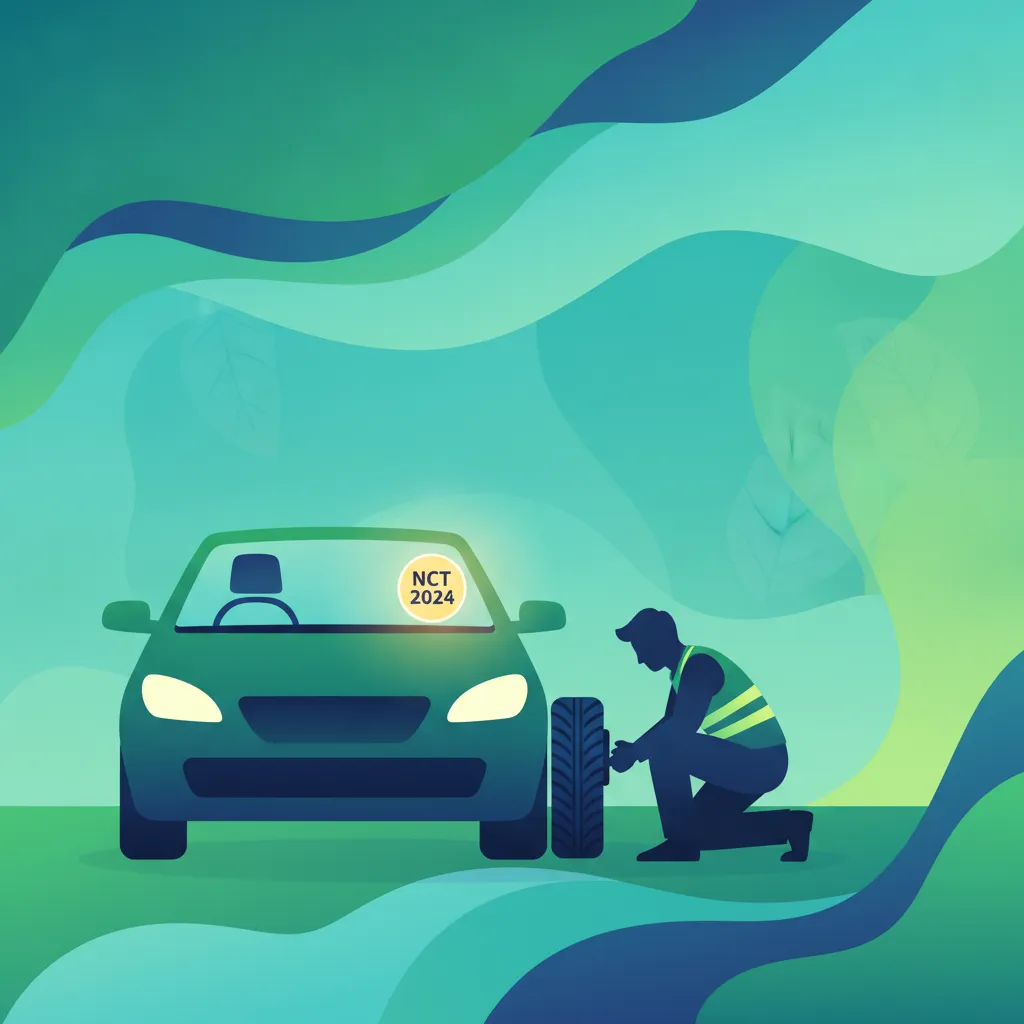
Learn the importance of regular vehicle maintenance and self-checks beyond the mandatory NCT. This guide details how to monitor tyre condition, fluid levels, lighting, and mechanical integrity to ensure your car remains roadworthy and meets the safety requirements for driving on public roads in Ireland.
This lesson guides learners through the essential pre-ride safety checklist for mopeds and light quadricycles. It explains how to check tyre tread, brake responsiveness, functional lighting, and mirror alignment before starting any journey. Maintaining these components ensures vehicle compliance and minimizes the risk of mechanical failure on Irish roads.
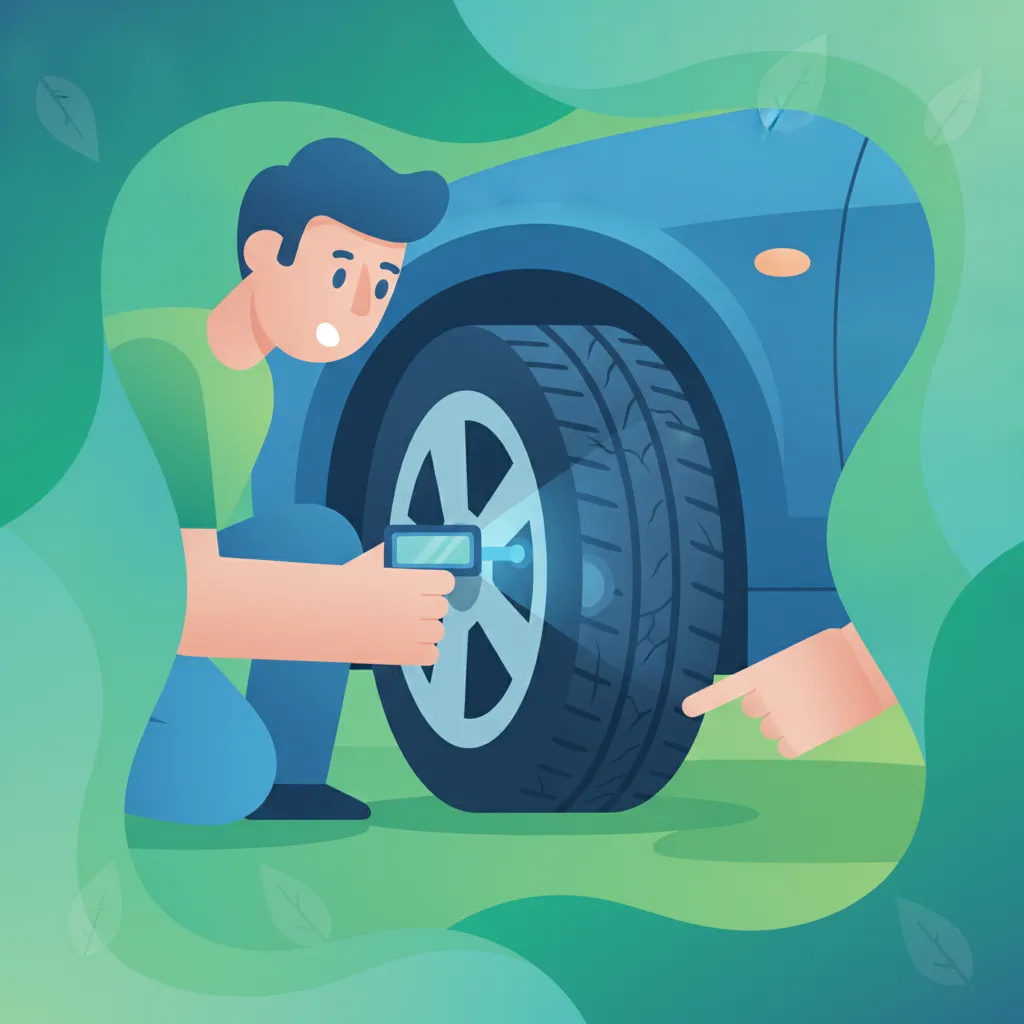
Tyres are the only contact points between your vehicle and the road, making their maintenance absolutely critical for steering and braking. This lesson teaches you how to measure tyre tread depth to comply with the legal limit of 1.6 millimetres, and how to check tyre pressure when cold. You will also learn to inspect sidewalls for bulges and cracks, recognize uneven wear patterns, and prep for the National Car Test.
The Road Safety Authority establishes clear operational frameworks to ensure maximum safety in the Irish commercial passenger transport sector. This lesson covers critical guidelines regarding daily vehicle walkaround checks, scheduled maintenance records, and ongoing driver CPC compliance. By studying these official recommendations, drivers will understand how to maintain total legal compliance while elevating transport safety.
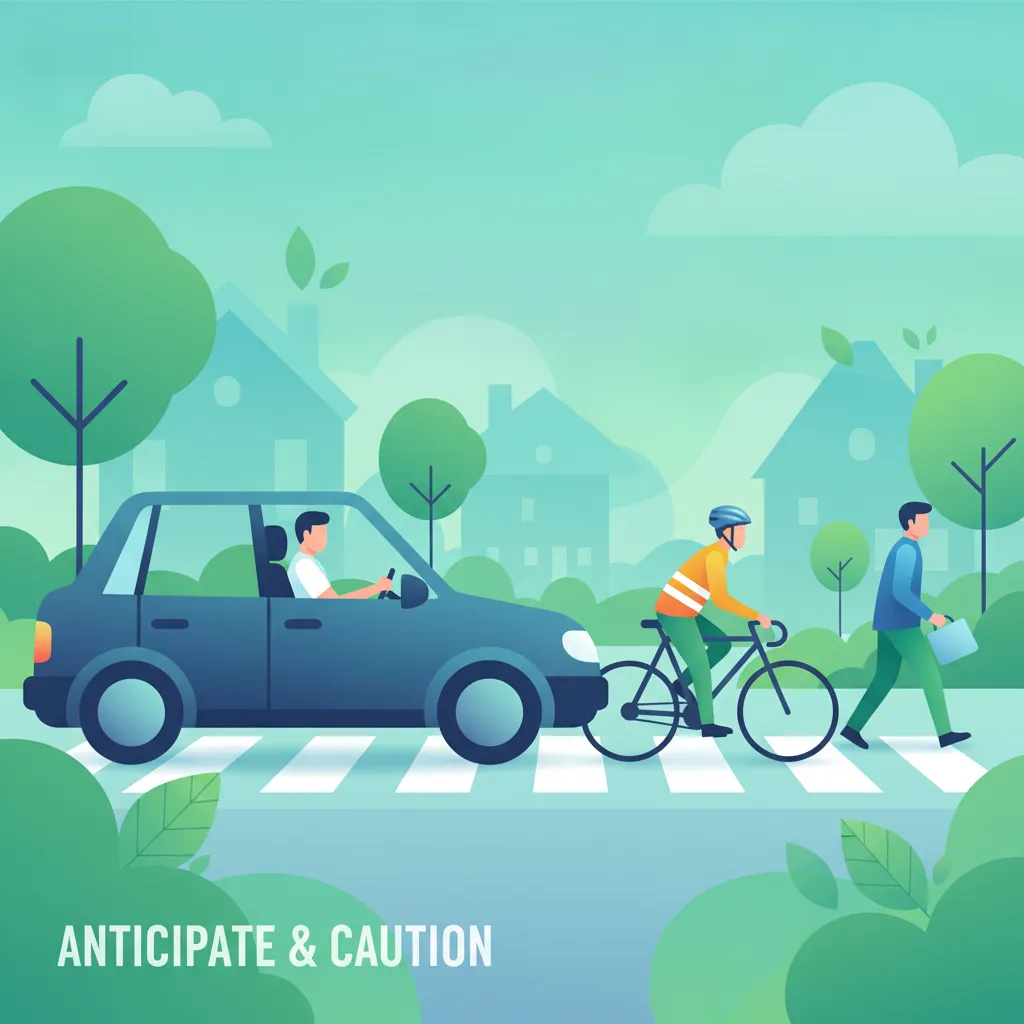
Safeguarding vulnerable road users requires more than simple obedience to traffic signs; it demands a defensive driving mindset. This lesson summarizes safe practices, including scanning far ahead in urban areas, keeping massive safety margins in wet weather, and executing thorough blind spot checks before reversing. By anticipating the unpredictable movements of others, you can prevent accidents and support a safe road culture.

This lesson details the critical role of tyres in maintaining grip and vehicle stability on diverse road surfaces. It provides guidance on measuring tread depth, checking inflation levels, and identifying signs of tyre wear and damage. Additionally, it presents techniques for maintaining balance and executing tight, low-speed turns safely.
Find clear answers to common questions learners have about Insurance, NCT, and Vehicle Documentation. Learn how the lesson is structured, which driving theory objectives it supports, and how it fits into the overall learning path of units and curriculum progression in Ireland. These explanations help you understand key concepts, lesson flow, and exam focused study goals.
In Ireland, both your motor tax disc and insurance disc must be displayed on the windscreen of your vehicle, usually in a holder on the passenger side, so they are clearly visible to a Garda from the outside.
The National Car Test (NCT) is mandatory for private passenger vehicles once they reach a certain age. You must ensure your car has a valid certificate, as driving without one is an offence and can invalidate your insurance.
Driving without insurance is a serious offence in Ireland. It carries severe penalties, including a mandatory court appearance, significant fines, potential disqualification from driving, and the seizure of your vehicle.
While you must keep your vehicle insured, taxed, and NCT-compliant, you are legally required to produce these documents to a member of An Garda Síochána upon request. Keeping them in good order is a core responsibility for all drivers.
Use the practice question search tool to pinpoint specific topics, road signs, or rules you need to master for your official Driver Theory Test. Refine your study strategy and ensure comprehensive preparation for all aspects of the Irish driving exam. Start your focused revision now and build confidence for your learner permit test.