
Learn the specific regulations in Italy regarding overtaking when another vehicle ahead has already begun an overtaking maneuver. This set covers the reasons for the prohibition, your duty to fall back, and the significant penalties associated with unsafe double overtaking, preparing you for complex exam scenarios.

Engage in an interactive practice session for Rules for Overtaking an Overtaking Vehicle in Italy with real exam style questions tailored for learners in Italy. Track your progress, learn from instant feedback, and strengthen your understanding of essential driving theory concepts. This focused Italian session supports efficient study and builds long term exam confidence.

Learn the specific regulations in Italy regarding overtaking when another vehicle ahead has already begun an overtaking maneuver. This set covers the reasons for the prohibition, your duty to fall back, and the significant penalties associated with unsafe double overtaking, preparing you for complex exam scenarios.
Difficulty
Questions
12
When you start, questions will appear one by one.
Explore additional Italian driving theory practice sets designed to help learners in Italy improve exam readiness. Each set offers targeted questions on key topics, real traffic situations, and essential road rules to support effective study and confident test performance.
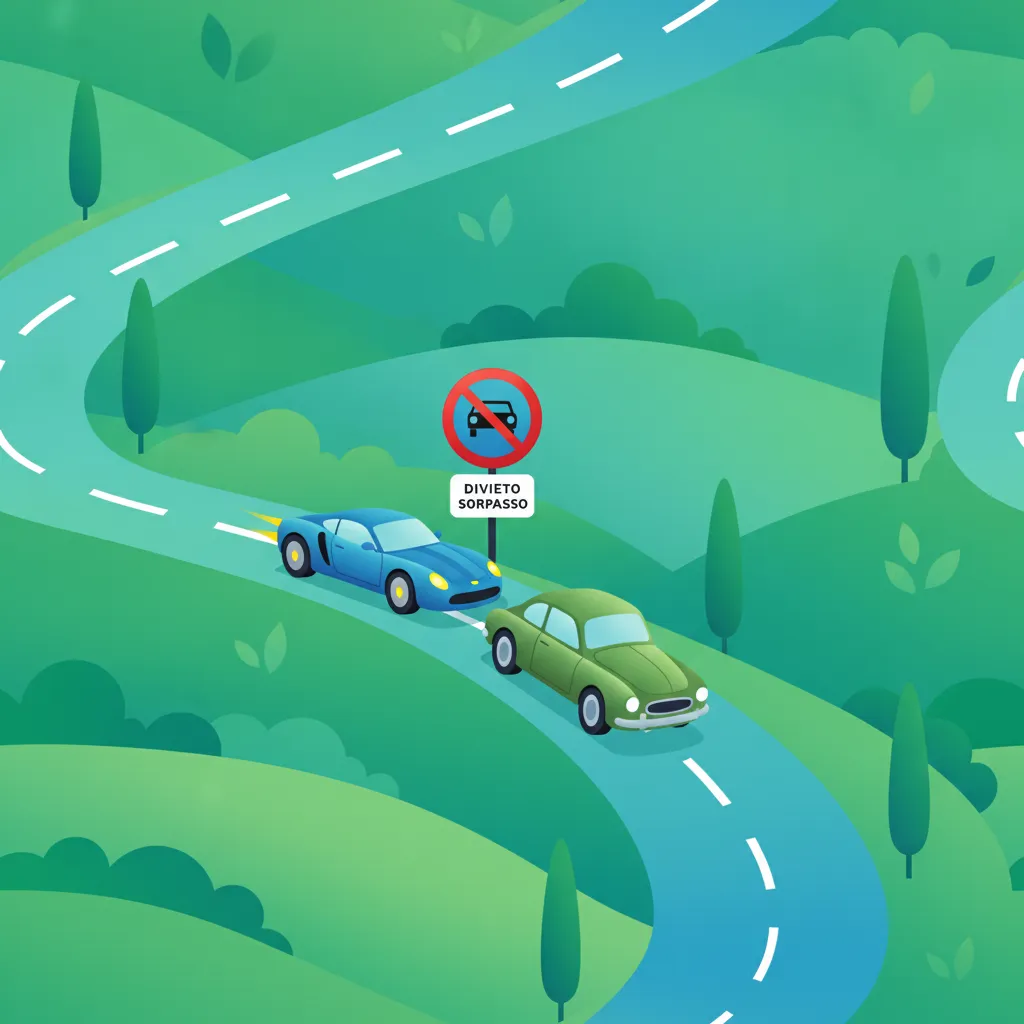
Navigate 'Sorpasso' with Confidence: Avoid Common Overtaking Mistakes on Italian Roads!

Master complex overtaking maneuvers safely and pass your Italian driving theory exam.

Master the vital rules for overtaking at pedestrian crossings to drive safely and pass your Italian theory exam.

Master the Nuances of Right-Side Overtaking in Italian Traffic Law

Navigate Italian Motorways with Confidence: Master Overtaking & Lane Rules.

Master Italian Reversing: Essential Rules for Safe Driving and Your Exam Success.
Explore interactive calculators to practice Italian driving theory formulas. Master stopping distances, reaction times, and safe following gaps. These tools enhance exam preparation and real-world hazard perception.