
Seat belts are a fundamental component of vehicle safety, designed to protect drivers and passengers in the event of a sudden stop or collision. In Italy, their use is not just a recommendation but a strict legal obligation for every person in a moving vehicle. This page explains the mechanism by which seat belts provide protection, the specific rules of the Italian Highway Code (Codice della Strada) regarding their use, and the critical importance of ensuring all occupants, especially children, are correctly restrained.
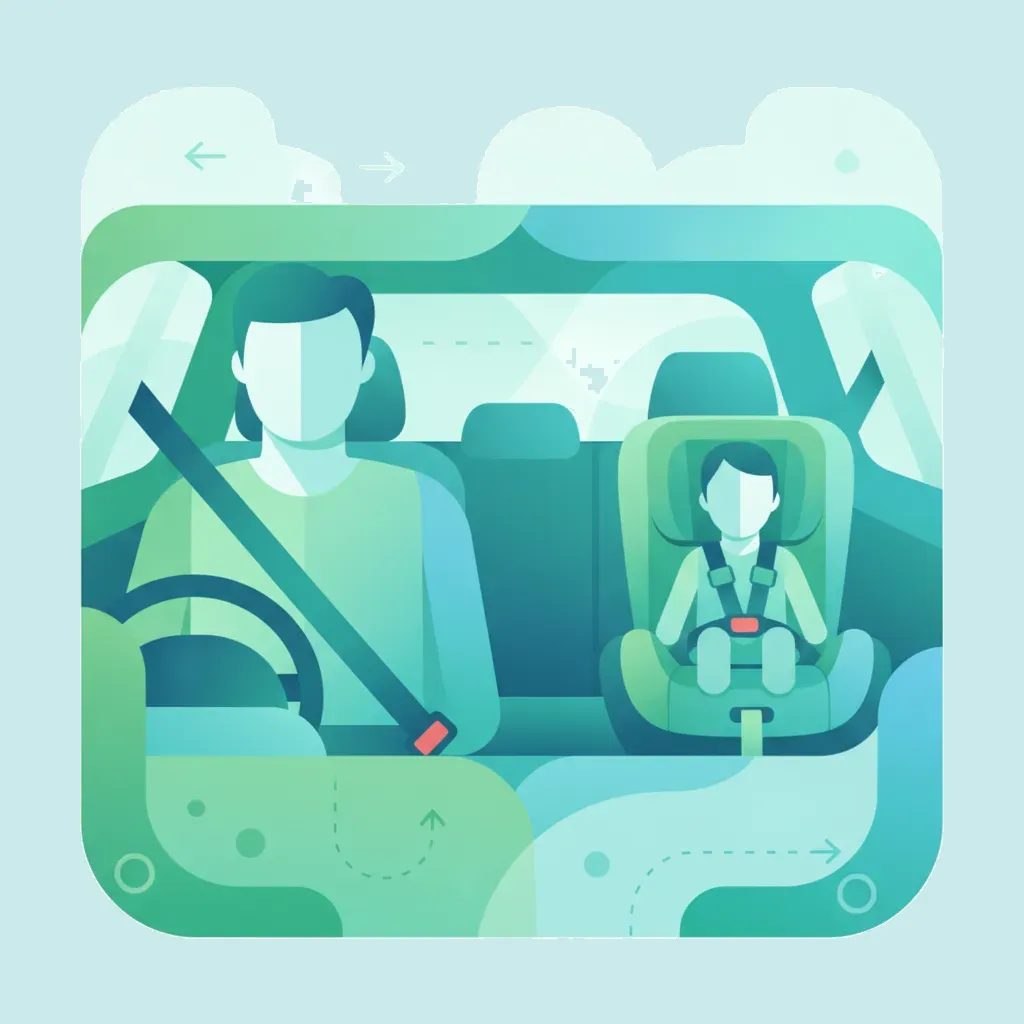
Theory topic content overview
Read the full theory topic guide for Seat Belt Laws & Safety with structured, easy-to-scan content built for learners in Italy. This detailed section explains the exact rule, meaning, traffic context, comparison points, and exam logic behind this Italian driving theory topic so you can study faster, understand the concept more clearly, and avoid common interpretation mistakes on the theory test.
Seat belts are fundamental safety devices within any vehicle, designed to keep occupants securely restrained in their seats during sudden stops, sharp manoeuvres, or, most critically, during a collision. Their primary purpose is to manage the immense forces experienced by the human body in an impact, preventing severe injury or even ejection from the vehicle.
At the moment of a crash, your body continues to move forward due to inertia at the vehicle's speed before impact. A seat belt counters this by applying a stopping force that distributes the energy of the collision across the strongest parts of your body: your pelvis and your rib cage. This controlled deceleration significantly reduces the likelihood of you striking hard interior surfaces like the dashboard, steering wheel, or windshield, which can cause catastrophic head and internal injuries.
Modern seat belt systems in Italy, as in other countries, often include sophisticated features like:
Together, these features ensure that the seat belt provides optimal protection, adapting to the severity of the impact.
In Italy, the use of seat belts (known as cinture di sicurezza) is not merely a recommendation; it is a strict legal obligation under the Codice della Strada (Italian Highway Code). Specifically, Article 172 mandates that all vehicle occupants, regardless of whether they are in the front or rear seats, must wear an approved seat belt while the vehicle is in motion.
This universal requirement reflects the overwhelming evidence that seat belts are the single most effective safety device in reducing fatalities and serious injuries in road accidents. Ignoring this obligation puts lives at risk and carries significant legal consequences, including fines and points deduction from your driving licence.
Misunderstanding the importance of seat belts is a common mistake among some drivers and passengers. Statistics in Italy show that a concerning number of occupants, especially in rear seats, do not consistently use their seat belts. This oversight drastically increases injury risk, as unrestrained rear passengers can be propelled forward, causing severe harm to themselves and to front-seat occupants.
The Italian Codice della Strada is unequivocal: seat belts are mandatory for all occupants of vehicles equipped with them. This includes:
It's a critical distinction that all passengers, including those in the back, are legally obliged to buckle up. The idea that rear seats are safer without a belt is a dangerous myth. In a frontal collision, an unrestrained rear passenger becomes a projectile, endangering everyone in the vehicle.
For children traveling in Italy, the rules are even more specific and are designed to provide tailored protection. The Italian Highway Code states that children whose height is less than 1.50 meters must be secured in an approved child restraint system (seggiolino auto) appropriate for their weight category.
Key points for child restraints:
These rules underscore the heightened vulnerability of children in traffic and are frequently tested in the Italian driving theory exam.
Wearing a seat belt is not enough; it must be worn correctly to be effective. Incorrect use can actually increase the risk of injury in a crash.
Ensure your seat belt is positioned as follows:
Common mistakes include:
Consider these common Italian driving scenarios:
The Italian theory exam will often present scenarios testing your understanding of these obligations, particularly the requirement for all passengers and the specific rules for children under 1.50 meters.
For safe driving in Italy and to comply with the Codice della Strada, remember the "Always and Correctly" rule for seat belts:
Adhering to these rules is a fundamental responsibility for every driver and passenger, significantly contributing to road safety and protecting lives.
Italian law under Codice della Strada Article 172 makes seat belts mandatory for all occupants—driver, front passenger, and rear passengers—every journey regardless of distance. Seat belts protect by managing crash forces through the pelvis and rib cage, supplemented by pretensioners and load limiters in modern systems. Children under 1.50 meters must use approved, weight-appropriate child restraint systems (seggiolino auto), never held on an adult's lap, and cannot sit in front with an active airbag if in a rear-facing seat. Correct use requires the shoulder strap across the middle of the chest (not neck or arm) and the lap strap across the hips (not stomach), with no slack or twists. Failure to comply carries fines and licence penalty points, and renders occupants vulnerable to severe injury or ejection.
A short set of high-value points that capture the most important ideas from this theory explanation.
Seat belts are legally mandatory for ALL vehicle occupants in Italy, including rear passengers, under Codice della Strada Article 172
In a collision, seat belts manage crash forces by distributing energy across the pelvis and rib cage, preventing ejection and interior impacts
Children under 1.50 meters must use an approved, weight-appropriate child restraint system (seggiolino auto) rather than an adult seat belt
Children in rear-facing restraints cannot be placed in front seats with active airbags unless the airbag is deactivated
Seat belt protection relies on correct positioning: shoulder strap across the chest, lap strap across hips, with no slack
Codice della Strada Article 172 mandates seat belt use for every occupant while the vehicle is in motion
The 1.50 meter height threshold determines when children can legally switch from a seggiolino to an adult seat belt
Modern seat belts include pretensioners (remove slack) and load limiters (control chest force) for optimal protection
Never place the shoulder belt under your arm or behind your back; this concentrates force on the abdomen causing severe internal injuries
Children must never be held on an adult's lap; in a crash, the adult cannot retain the child, leading to likely fatal injuries
Assuming rear seat passengers don't need to wear seat belts; unrestrained rear passengers become projectiles endangering everyone
Placing the shoulder belt under the arm or behind the back, which shifts crash force to the abdomen and can cause fatal internal injuries
Not securing children in appropriate seggiolino based on weight category, or incorrectly installing the child restraint system
Believing short trips don't require seat belts; most accidents occur close to home at low speeds
Leaving seat belt slack or wearing it twisted, which reduces effectiveness and can concentrate force on smaller body areas
Start with a short, direct summary of Seat Belt Laws & Safety before reading the full explanation below.
In Italy, seat belts are mandatory for all vehicle occupants, both in front and rear seats. They function by restraining the body during sudden deceleration or impact, preventing occupants from hitting interior surfaces or being ejected, thereby greatly reducing the risk of serious injury. Children under 1.50 meters must use approved child restraint systems suitable for their weight, as mandated by Italian traffic law.
Review the most important terms, rule signals, and traffic concepts linked to Seat Belt Laws & Safety.
Explore related theory topic pages connected to Seat Belt Laws & Safety and continue with the next useful rule explanation.
See the common search queries learners use when trying to understand Seat Belt Laws & Safety in Italy.

Ready to deepen your knowledge? Explore specific Italian driving theory topics in detail, review challenging concepts, or test your understanding with practice questions. Build confidence for your official Italian driving licence exam by continuously learning and applying these essential road rules.
Explore Italian Driving TheoryTheory topic content overview
A short set of high-value points that capture the most important ideas from this theory explanation.
Seat belts are legally mandatory for ALL vehicle occupants in Italy, including rear passengers, under Codice della Strada Article 172
In a collision, seat belts manage crash forces by distributing energy across the pelvis and rib cage, preventing ejection and interior impacts
Children under 1.50 meters must use an approved, weight-appropriate child restraint system (seggiolino auto) rather than an adult seat belt
Children in rear-facing restraints cannot be placed in front seats with active airbags unless the airbag is deactivated
Seat belt protection relies on correct positioning: shoulder strap across the chest, lap strap across hips, with no slack
Codice della Strada Article 172 mandates seat belt use for every occupant while the vehicle is in motion
The 1.50 meter height threshold determines when children can legally switch from a seggiolino to an adult seat belt
Modern seat belts include pretensioners (remove slack) and load limiters (control chest force) for optimal protection
Never place the shoulder belt under your arm or behind your back; this concentrates force on the abdomen causing severe internal injuries
Children must never be held on an adult's lap; in a crash, the adult cannot retain the child, leading to likely fatal injuries
Assuming rear seat passengers don't need to wear seat belts; unrestrained rear passengers become projectiles endangering everyone
Placing the shoulder belt under the arm or behind the back, which shifts crash force to the abdomen and can cause fatal internal injuries
Not securing children in appropriate seggiolino based on weight category, or incorrectly installing the child restraint system
Believing short trips don't require seat belts; most accidents occur close to home at low speeds
Leaving seat belt slack or wearing it twisted, which reduces effectiveness and can concentrate force on smaller body areas
Start with a short, direct summary of Seat Belt Laws & Safety before reading the full explanation below.
In Italy, seat belts are mandatory for all vehicle occupants, both in front and rear seats. They function by restraining the body during sudden deceleration or impact, preventing occupants from hitting interior surfaces or being ejected, thereby greatly reducing the risk of serious injury. Children under 1.50 meters must use approved child restraint systems suitable for their weight, as mandated by Italian traffic law.
Review the most important terms, rule signals, and traffic concepts linked to Seat Belt Laws & Safety.
Explore related theory topic pages connected to Seat Belt Laws & Safety and continue with the next useful rule explanation.
See the common search queries learners use when trying to understand Seat Belt Laws & Safety in Italy.
Ready to deepen your knowledge? Explore specific Italian driving theory topics in detail, review challenging concepts, or test your understanding with practice questions. Build confidence for your official Italian driving licence exam by continuously learning and applying these essential road rules.
Explore Italian Driving TheoryUse this exam-focused revision tip to understand how Seat Belt Laws & Safety is likely to appear in theory questions for learners in Italy. This section helps you identify the most testable part of the rule, avoid common traps, and remember the concept more effectively during Italian driving theory exam preparation.
The Italian driving theory exam often tests your knowledge of mandatory seat belt use for all occupants and the specific requirements for child restraints. Remember that seat belts prevent ejection and impacts, and incorrect use (like placing the belt under the arm) renders them ineffective and illegal.
Read direct answers to the most common learner questions about Seat Belt Laws & Safety in Italy. This FAQ focuses on rule confusion, practical meaning, comparison with similar concepts, and the exact uncertainties that appear most often in Italian driving theory revision and exam preparation.
Yes, Italian law requires all drivers and passengers, including those in the rear seats, to wear a seat belt while the vehicle is in motion.
Seat belts restrain your body, preventing you from being thrown against the interior of the vehicle (e.g., dashboard, windshield) or ejected. They distribute the impact forces across stronger parts of your body, reducing the severity of injuries.
In Italy, children under 1.50 meters tall must be secured in an approved child restraint system (seggiolino) appropriate for their weight. This is specified in Article 172 of the Italian Highway Code.
No, it is a legal obligation for rear seat passengers to wear seat belts. Studies show that rear passengers are at a significant risk of injury if unrestrained, both to themselves and to front occupants.
Failure to wear a seat belt in Italy can result in a fine and a deduction of points from your driving license. Repeated violations can lead to the suspension of your license.
Seat belts should be replaced after any significant collision, even if they appear undamaged. They should also be replaced if they show signs of wear, fraying, damage, or if the locking mechanism does not function correctly. Always use approved replacement models.
Start searching now to pinpoint exactly which Italian driving theory topics, road signs, or traffic rules you need to master. Use our advanced filters to build a custom practice session and ensure you're fully prepared for every aspect of your official driving licence exam.