
This unit delves into the critical interactions between various road users on Italian roads. You'll learn the fundamental rules for safe communication and cooperation, with a special focus on protecting vulnerable road users. Understanding these principles is key to navigating Italy's traffic safely and passing your theory exam.
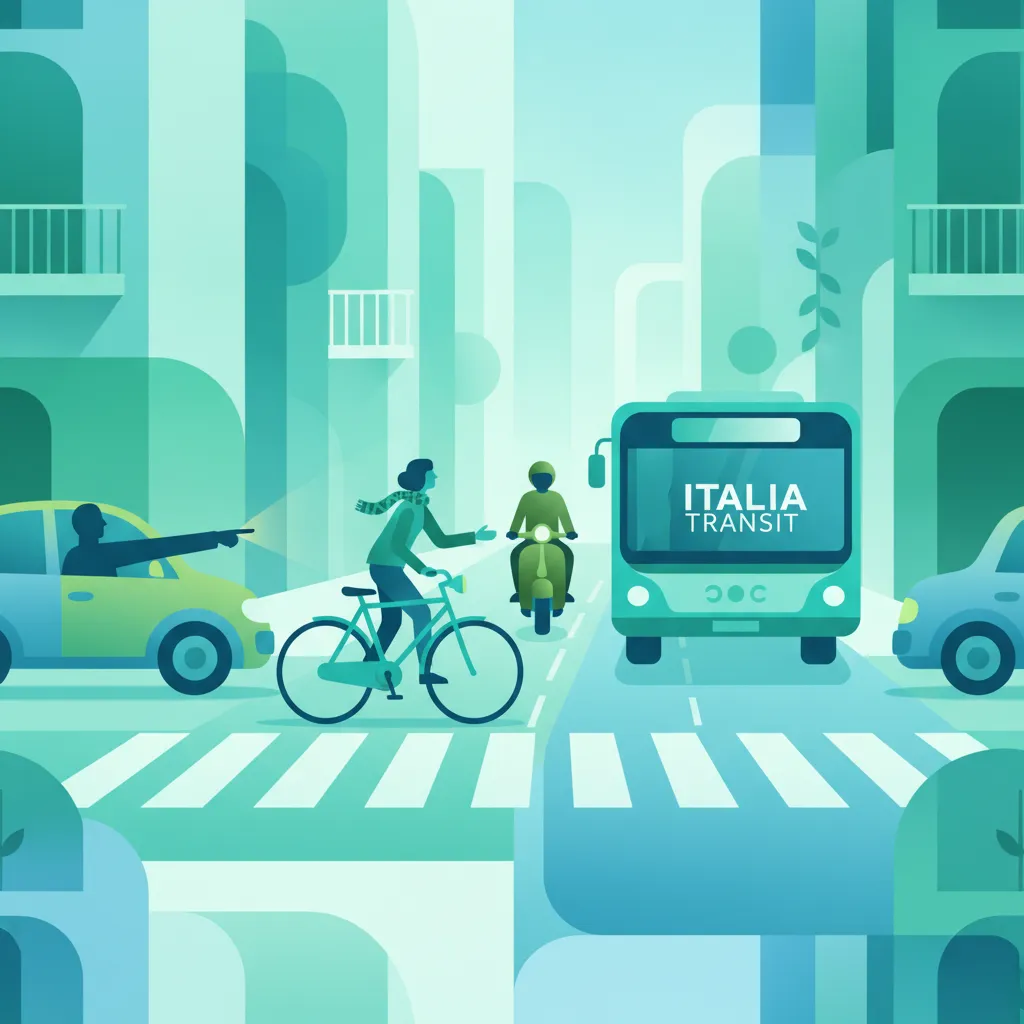
Browse all lessons that make up Road Users, Core Behaviour Rules and Safe Communication. Each lesson focuses on specific topics, learning objectives, and core concepts, helping you build essential knowledge and follow a clear, structured progression toward your study goals in Italy.
This lesson introduces the official classification of road users as defined by the Italian Codice della Strada. It distinguishes between various categories, including pedestrians, two-wheeled vehicles, passenger cars, public transport, and heavy goods vehicles. Understanding these classifications is crucial for anticipating behavior and applying the correct traffic rules and safety precautions for each group, especially for vulnerable road users.
This lesson emphasizes the importance of clear communication and cooperative behavior among all road users to prevent conflicts and enhance safety. It details the proper and legal use of vehicle signals, such as turn indicators and hazard lights, as well as the appropriate use of the horn. The content also explores the role of non-verbal cues like eye contact and courtesy gestures in creating a predictable and safe driving environment.
This lesson explains the fundamental principles of right of way that govern interactions between different types of road users in Italy. It clarifies the legal precedence at intersections, pedestrian crossings, and when interacting with public transport like buses and trams. The content also details the absolute priority given to emergency vehicles and how to safely yield in accordance with the Codice della Strada.
This lesson provides critical guidance on how to safely share the road with vulnerable users, including pedestrians, cyclists, motorcyclists, and children. It highlights the importance of increased awareness in specific areas like school zones and crosswalks. The content teaches techniques for maintaining a safe lateral distance when overtaking, checking blind spots thoroughly, and anticipating the often unpredictable movements of these users.
This lesson details the proper and legal application of a vehicle's horn, lights, and signals as primary communication tools. It explains the specific circumstances for using high beams, low beams, and fog lights to maximize visibility without dazzling other drivers. The content also clarifies the rules for using the horn, turn indicators, and hazard lights to signal intentions, warn of danger, or indicate an emergency situation.
Explore high-intent keywords and long-tail search topics learners use when researching Road Users, Core Behaviour Rules and Safe Communication. These terms reflect how people search for reliable study materials, structured explanations, and unit-level theory preparation support in Italy.
Find clear answers to the most common questions learners ask about Road Users, Core Behaviour Rules and Safe Communication. Understand how the unit is organized, what learning goals it supports, and how it contributes to your study progression with structured explanations and practical guidance tailored for learners in Italy.
In Italy, the most common vulnerable road users include pedestrians, cyclists, motorcyclists, scooter riders, and children. They are considered vulnerable because they lack the physical protection of a vehicle and are more susceptible to injury in collisions. Italian traffic law places a significant emphasis on drivers exercising extra caution and yielding to these road users whenever necessary, especially at crossings and in shared spaces.
Road communication is vital for safety and predictability in Italian traffic. Using your indicators correctly for turns and lane changes, employing headlights to signal intentions or visibility needs, and using the horn sparingly for emergencies or warnings are essential practices. Clear communication helps prevent misunderstandings and reduces the risk of accidents, particularly in complex urban environments.
Cooperative driving means actively anticipating the actions of other road users and behaving in a predictable manner to facilitate smooth traffic flow. It involves yielding when appropriate, maintaining safe distances, and signaling intentions clearly. In essence, it’s about driving defensively and considerately, assuming that others might make mistakes and acting to mitigate potential hazards.
Yes, trams in Italy often have priority, especially when they are in motion or about to enter an intersection. Drivers must be aware of tram tracks and yield to trams when necessary, particularly when the tram is proceeding on its designated path. Specific intersection rules and signalling from tram drivers or road markings will indicate priority. Always exercise caution around trams and their passengers.
If a pedestrian is at a marked or unmarked crossing and shows an intention to cross, or is already crossing, you must stop your vehicle and allow them to pass safely. You should not overtake any vehicle that is stopped to allow pedestrians to cross. Maintain a safe distance and be prepared for pedestrians to enter the roadway unexpectedly.
All included lessons
Lessons in Road Users, Core Behaviour Rules and Safe Communication
See who benefits most from studying Road Users, Core Behaviour Rules and Safe Communication. This overview explains how the unit supports different learning needs, what level of knowledge is helpful before starting, and how it fits into the overall study path in Italy.
This unit is essential for all learners preparing for the Italian Patente B theory test, especially those new to the complexities of shared road spaces. It's particularly beneficial for drivers who want to build a strong foundation in safe and considerate driving habits from the start, ensuring they are well-prepared for diverse traffic situations in Italy.

Begin your structured study today by exploring our Italian driving license theory curriculum. Browse comprehensive courses designed to cover all official exam topics, build your knowledge of road rules, and prepare effectively for your test.
Explore Italian Theory CurriculumExplore all units and lessons included in this driving theory course.
Begin your structured study today by exploring our Italian driving license theory curriculum. Browse comprehensive courses designed to cover all official exam topics, build your knowledge of road rules, and prepare effectively for your test.
Explore Italian Theory Curriculum