
Overtaking, known as 'sorpasso' in Italy, is a common but high-risk maneuver that requires careful judgment and strict adherence to traffic laws. This guide covers the essential steps for safely passing other vehicles, identifying the conditions under which overtaking is allowed, and recognizing the critical situations where it is prohibited by the Italian Highway Code (Codice della Strada).
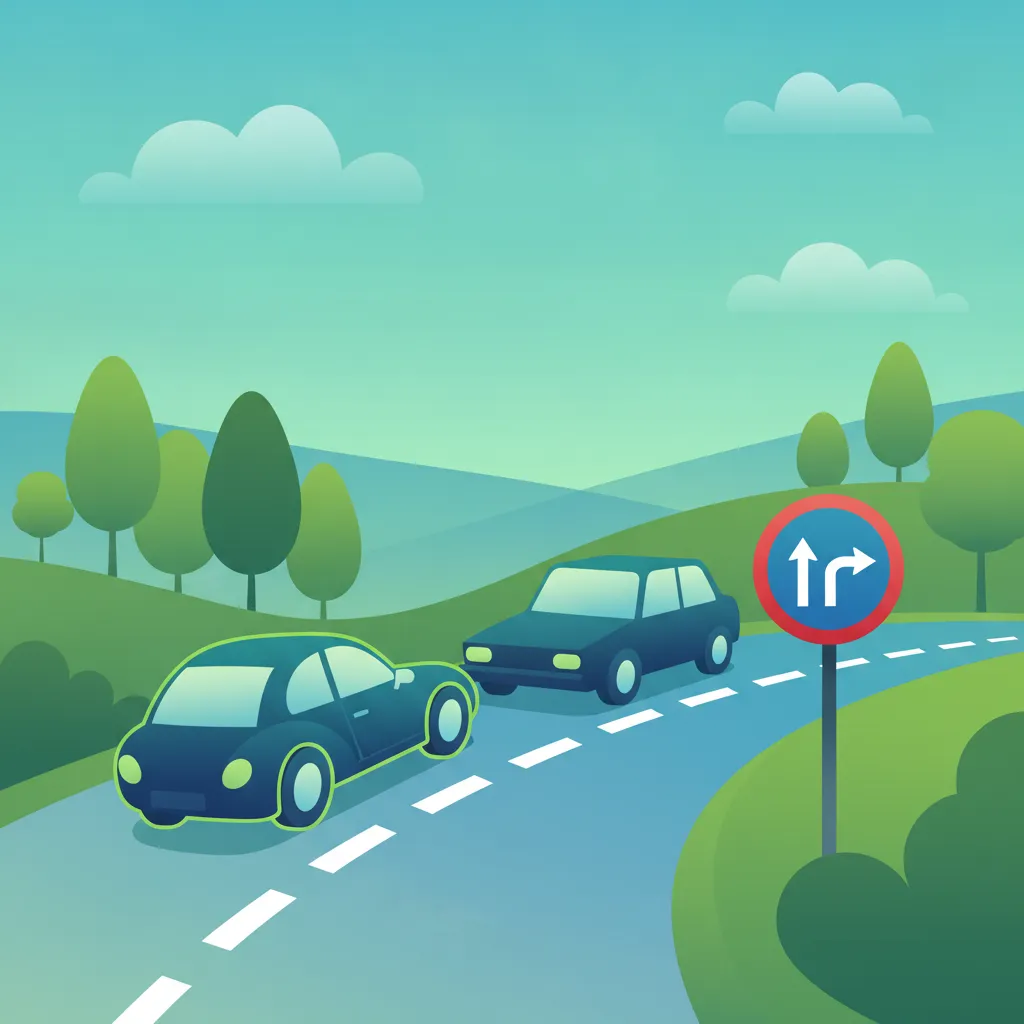
Theory topic content overview
Read the full theory topic guide for Safe Overtaking with structured, easy-to-scan content built for learners in Italy. This detailed section explains the exact rule, meaning, traffic context, comparison points, and exam logic behind this Italian driving theory topic so you can study faster, understand the concept more clearly, and avoid common interpretation mistakes on the theory test.
Sorpasso)?In Italian driving theory, overtaking, known as sorpasso (plural sorpassi), refers to the maneuver of passing another vehicle or road user (such as a cyclist or pedestrian) travelling in the same direction. It is a fundamental but high-risk driving maneuver that requires precise judgment, careful planning, and strict adherence to the rules outlined in the Italian Highway Code (Codice della Strada).
The core principle of sorpasso is to execute the maneuver swiftly and safely, ensuring that you do not create danger or obstruction for other road users, whether they are the vehicle being overtaken, oncoming traffic, or vehicles behind you.
Mastering sorpasso is crucial for both your driving safety and success in the Italian driving theory exam (esame di teoria). Misjudging an overtaking situation is a common cause of serious accidents, especially on single-carriageway roads.
sorpasso is permitted, prohibited, or requires special precautions, especially concerning intersections, curves, and vulnerable road users like cyclists. Questions often focus on the precise conditions under Article 148 of the Codice della Strada.strade extraurbane (extra-urban roads) where slower vehicles might otherwise hold up traffic.sorpasso rules can lead to significant fines, license points deductions, and even license suspension.Sorpasso Works: The Maneuver SequenceA safe sorpasso involves a methodical sequence of observation, decision, and execution.
Before initiating any sorpasso, the Italian Highway Code (Art. 148, comma 2) mandates that you must first ensure:
sorpasso entirely without danger or obstruction. This includes checking for oncoming traffic.sorpasso.carreggiata) and the space available must be sufficient for the maneuver.segnali verticali) or horizontal road markings (segnaletica orizzontale), such as a solid white line (striscia continua), prohibiting sorpasso.Once you have thoroughly assessed the conditions and determined that sorpasso is safe and permitted:
indicatore di direzione) well in advance to signal your intention to move left.adeguata distanza laterale) from the vehicle you are passing.sorpasso unnecessarily.After passing the vehicle:
appena possibile) without "cutting off" or forcing the overtaken vehicle to brake or swerve (senza creare pericolo o intralcio).Under Art. 148, comma 4 of the Codice della Strada, the driver being overtaken also has responsibilities:
margine destro).Sorpasso in ItalyUnderstanding the conditions that affect sorpasso is paramount.
Generally, sorpasso must be carried out on the left side (di regola a sinistra). However, there are specific exceptions in Italy where overtaking on the right is permitted (Art. 148, comma 8):
Velocipedi)For cyclists (velocipedi), the Codice della Strada (Art. 148, comma 9-bis) specifies that sorpasso by motor vehicles must be carried out with adequate lateral distancing, taking into account the cyclist's reduced stability. Where road conditions allow, a minimum safety distance of at least 1.5 meters (almeno 1,5 metri) must be maintained.
Carreggiate con più corsie)On roads or carriageways divided into multiple lanes for the same direction of travel (e.g., autostrada), sorpasso is performed in the lane immediately to the left of the vehicle you intend to pass. You can overtake multiple vehicles without returning to the right lane between each sorpasso, provided it can be done safely and without obstructing traffic.
Sorpasso is Strictly Prohibited in ItalyThe Italian Highway Code (Art. 148, comma 10-13) outlines critical situations where sorpasso is forbidden due to extreme danger. These are common points of confusion and heavily tested in the theory exam:
curve) and Hills (dossi): In proximity to or at the actual location of curves or hills, and generally in any situation with poor visibility.
intersezioni): In proximity to or at intersections.
strada a precedenza) with at least two separate carriageways, or one-way, or at least two lanes for the same direction with specific horizontal markings; or if passing a non-motorized two-wheeled vehicle (veicolo a due ruote non a motore) and you do not need to enter the opposing lane.attraversamento pedonale): You must never overtake a vehicle that has stopped or slowed down to allow pedestrians to cross, whether at a marked crossing or elsewhere.passaggi a livello): Prohibited in proximity to or at level crossings without barriers, unless traffic is regulated by traffic lights.divieto di sorpasso) or horizontal markings (solid white line) prohibit it.sorpasso would require forcing your way back into the lane or causing obstruction.Consider these practical examples on Italian roads:
Strada extraurbana secondaria): You are driving on a narrow, two-way strada extraurbana secondaria behind a slow tractor. Ahead, there's a winding section with limited visibility. Even if the solid line changes to broken, attempting sorpasso would be illegal and highly dangerous due to the curve and lack of clear view of oncoming traffic. You must wait for a straight, clear section of road.Autostrada (Motorway): On a three-lane autostrada, you are in the middle lane behind a car. You check your mirrors, signal left, move to the leftmost lane, and accelerate to pass. You see another car in front of the car you are passing, also moving slowly. You can continue to sorpasso both vehicles without returning to the middle lane, provided the maneuver is safe and doesn't impede faster traffic.Codice della Strada, you can overtake this vehicle on its right, provided you have sufficient space and visibility, and the intersection itself is not otherwise regulated by a prohibitory sign or red light.ciclista) on a strada provinciale with a broken white line. Before overtaking, you must slow down, ensure no oncoming traffic, and maintain a generous distanziamento laterale of at least 1.5 meters when passing.SorpassoItalian learner drivers often make these mistakes related to sorpasso:
sorpasso safely, especially regarding oncoming traffic or hazards.sorpasso in forbidden zones like curves, hills, or intersections (without qualifying exceptions).velocipedi.sorpasso swiftly, leading to prolonged exposure in the opposing lane.For safe sorpasso in Italy, remember these key elements:
Codice della Strada (especially prohibitions).Always prioritize safety and patience over speed. When in doubt about whether sorpasso is safe or permitted, the safest decision is to wait.
The sorpasso is a high-risk but fundamental driving maneuver governed by Article 148 of the Italian Highway Code, requiring meticulous observation, clear signaling, and swift execution. Before overtaking, drivers must assess visibility, ensure sufficient road space, and verify that no prohibitory signs or markings are present. The maneuver must be completed without forcing the overtaken vehicle or oncoming traffic to react, with the overtaken driver also having legal obligations to facilitate safe passage. Understanding the specific prohibited zones and exceptions, particularly regarding vulnerable road users like cyclists, is essential for both road safety and exam success.
A short set of high-value points that capture the most important ideas from this theory explanation.
Overtaking (sorpasso) must always be executed swiftly and safely without creating danger or obstruction for other road users, including the vehicle being overtaken and oncoming traffic.
The pre-maneuver assessment requires checking sufficient visibility, ensuring no vehicle ahead is already overtaking, and verifying no prohibitory signs or markings are present.
Overtaking is generally performed on the left, but is permitted on the right only in specific situations such as when a vehicle has already signaled and begun a left turn.
When overtaking cyclists, drivers must maintain a minimum lateral distance of at least 1.5 meters and account for the cyclist's reduced stability.
The overtaken driver has legal obligations: they must facilitate the maneuver, not accelerate, and keep as close as possible to the right edge of the carriageway.
Sorpasso is strictly prohibited near curves, hills, intersections, pedestrian crossings, and level crossings unless specific exceptions under Art. 148 apply.
On multi-lane roads, you may overtake multiple vehicles without returning to the right lane between each maneuver if it can be done safely.
When returning to the right lane after overtaking, you must be able to see the entire front of the overtaken vehicle in your rearview mirror.
You must have a significant speed advantage over the vehicle you are overtaking to complete the maneuver quickly without exceeding speed limits.
Sorpasso is prohibited when traffic is dense, when emergency vehicles are present with lights and sirens, or when road signs explicitly forbid it.
Failing to check mirrors and blind spots before overtaking, not confirming that no vehicle behind is already overtaking or that there is adequate space to return.
Attempting to overtake in prohibited zones like curves, hills, or intersections without remembering the specific exceptions that might allow it.
Returning to the right lane too soon after overtaking, cutting off the overtaken vehicle and forcing them to brake or swerve.
Not maintaining adequate lateral distance when passing cyclists, which is required by law to be at least 1.5 meters.
Underestimating the required speed difference, causing the overtaking maneuver to be prolonged and unnecessarily exposing the driver to oncoming traffic.
Start with a short, direct summary of Safe Overtaking before reading the full explanation below.
Overtaking (sorpasso) in Italy involves safely passing another vehicle travelling in the same direction, typically on the left, after checking visibility, signaling, and ensuring ample space. It is prohibited in many high-risk areas like intersections, curves, and hills, or when visibility is poor. The maneuver must be completed swiftly and safely, without forcing the overtaken vehicle or oncoming traffic to react.
Review the most important terms, rule signals, and traffic concepts linked to Safe Overtaking.
Explore related theory topic pages connected to Safe Overtaking and continue with the next useful rule explanation.
See the common search queries learners use when trying to understand Safe Overtaking in Italy.

Ready to deepen your knowledge? Explore specific Italian driving theory topics in detail, review challenging concepts, or test your understanding with practice questions. Build confidence for your official Italian driving licence exam by continuously learning and applying these essential road rules.
Explore Italian Driving TheoryTheory topic content overview
A short set of high-value points that capture the most important ideas from this theory explanation.
Overtaking (sorpasso) must always be executed swiftly and safely without creating danger or obstruction for other road users, including the vehicle being overtaken and oncoming traffic.
The pre-maneuver assessment requires checking sufficient visibility, ensuring no vehicle ahead is already overtaking, and verifying no prohibitory signs or markings are present.
Overtaking is generally performed on the left, but is permitted on the right only in specific situations such as when a vehicle has already signaled and begun a left turn.
When overtaking cyclists, drivers must maintain a minimum lateral distance of at least 1.5 meters and account for the cyclist's reduced stability.
The overtaken driver has legal obligations: they must facilitate the maneuver, not accelerate, and keep as close as possible to the right edge of the carriageway.
Sorpasso is strictly prohibited near curves, hills, intersections, pedestrian crossings, and level crossings unless specific exceptions under Art. 148 apply.
On multi-lane roads, you may overtake multiple vehicles without returning to the right lane between each maneuver if it can be done safely.
When returning to the right lane after overtaking, you must be able to see the entire front of the overtaken vehicle in your rearview mirror.
You must have a significant speed advantage over the vehicle you are overtaking to complete the maneuver quickly without exceeding speed limits.
Sorpasso is prohibited when traffic is dense, when emergency vehicles are present with lights and sirens, or when road signs explicitly forbid it.
Failing to check mirrors and blind spots before overtaking, not confirming that no vehicle behind is already overtaking or that there is adequate space to return.
Attempting to overtake in prohibited zones like curves, hills, or intersections without remembering the specific exceptions that might allow it.
Returning to the right lane too soon after overtaking, cutting off the overtaken vehicle and forcing them to brake or swerve.
Not maintaining adequate lateral distance when passing cyclists, which is required by law to be at least 1.5 meters.
Underestimating the required speed difference, causing the overtaking maneuver to be prolonged and unnecessarily exposing the driver to oncoming traffic.
Start with a short, direct summary of Safe Overtaking before reading the full explanation below.
Overtaking (sorpasso) in Italy involves safely passing another vehicle travelling in the same direction, typically on the left, after checking visibility, signaling, and ensuring ample space. It is prohibited in many high-risk areas like intersections, curves, and hills, or when visibility is poor. The maneuver must be completed swiftly and safely, without forcing the overtaken vehicle or oncoming traffic to react.
Review the most important terms, rule signals, and traffic concepts linked to Safe Overtaking.
Explore related theory topic pages connected to Safe Overtaking and continue with the next useful rule explanation.
See the common search queries learners use when trying to understand Safe Overtaking in Italy.
Ready to deepen your knowledge? Explore specific Italian driving theory topics in detail, review challenging concepts, or test your understanding with practice questions. Build confidence for your official Italian driving licence exam by continuously learning and applying these essential road rules.
Explore Italian Driving TheoryUse this exam-focused revision tip to understand how Safe Overtaking is likely to appear in theory questions for learners in Italy. This section helps you identify the most testable part of the rule, avoid common traps, and remember the concept more effectively during Italian driving theory exam preparation.
Pay close attention to scenarios involving prohibited overtaking zones in the Italian theory exam. Questions often test your knowledge of intersections, curves, hills, and pedestrian crossings where 'sorpasso' is forbidden. Remember the responsibility of both the overtaking and the overtaken driver.
Read direct answers to the most common learner questions about Safe Overtaking in Italy. This FAQ focuses on rule confusion, practical meaning, comparison with similar concepts, and the exact uncertainties that appear most often in Italian driving theory revision and exam preparation.
'Sorpasso' is the Italian term for overtaking, which means to pass another vehicle, animal, or pedestrian moving or stopped in the same lane or part of the roadway normally used for traffic.
Before overtaking, you must ensure clear visibility, sufficient road space, no oncoming traffic, and that no other driver ahead or behind has already initiated a similar maneuver. You must also signal your intention with the turn indicator.
Overtaking is generally prohibited in proximity to or at intersections, on curves, on hills ('dossi') where visibility is limited, at pedestrian crossings, and at level crossings without barriers. It is also forbidden if it requires exceeding the speed limit.
The driver being overtaken must facilitate the maneuver and must not accelerate. On single-lane roads for each direction, they should keep as close as possible to the right edge of the roadway.
Yes, when overtaking bicycles, motor vehicles must maintain an adequate lateral distance, considering the respective speeds and the size of the motor vehicle. Where road conditions permit, a minimum safety distance of at least 1.5 meters must be maintained.
On roads with at least two lanes for each direction, you may overtake more than one vehicle without returning to the right after each one, provided the maneuver does not create danger or obstruction.
Overtaking on the right is generally forbidden but allowed if the vehicle you intend to overtake has signaled its intention to turn left and has begun the maneuver, or if traffic is regulated by traffic lights or agents on a multi-lane road.
Start searching now to pinpoint exactly which Italian driving theory topics, road signs, or traffic rules you need to master. Use our advanced filters to build a custom practice session and ensure you're fully prepared for every aspect of your official driving licence exam.