
This page explains when and how to properly use your vehicle's turn signals (indicatori di direzione) according to Italian traffic laws. Mastering signalling is essential for safe driving, allowing other road users to anticipate your movements, whether turning, changing lanes, or exiting a roundabout. Incorrect or omitted signalling is a common cause of accidents and can lead to penalties and exam errors.
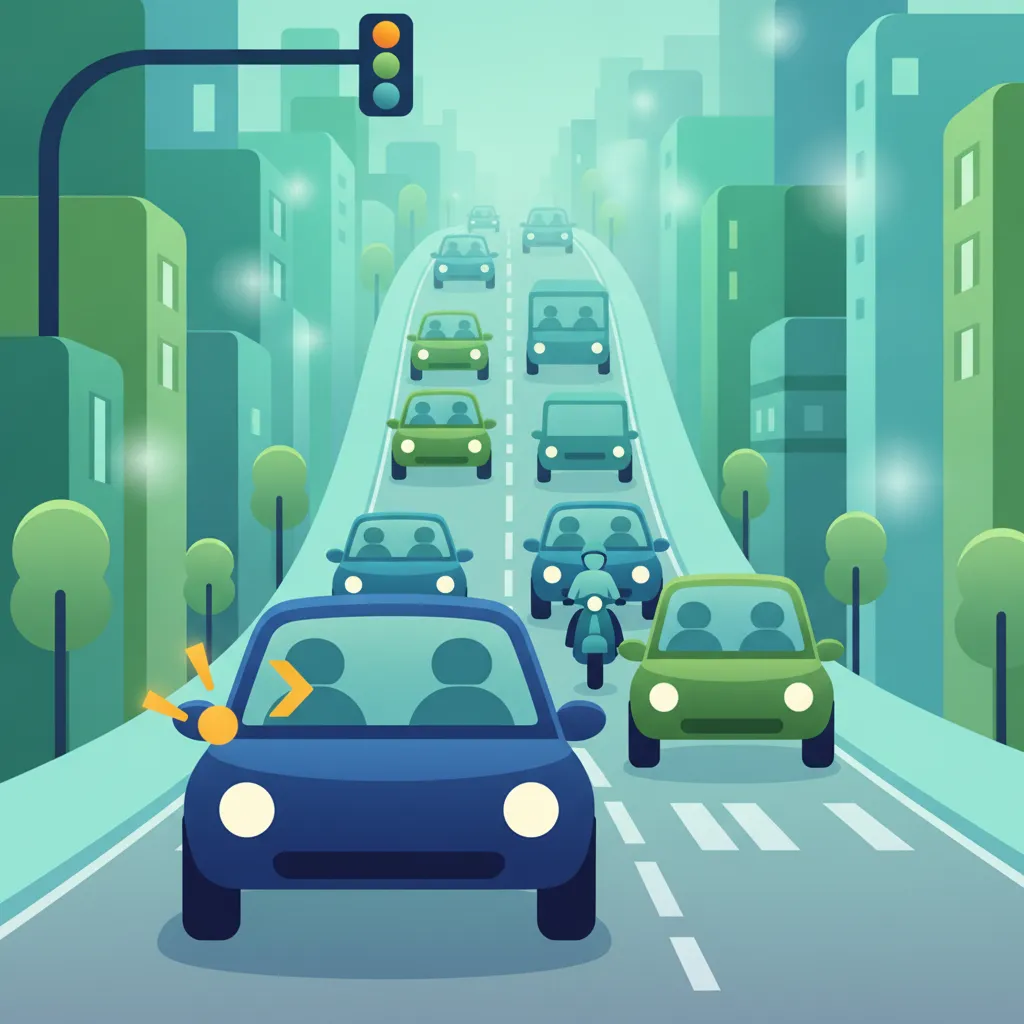
Theory topic content overview
Read the full theory topic guide for Turn Signal Rules with structured, easy-to-scan content built for learners in Italy. This detailed section explains the exact rule, meaning, traffic context, comparison points, and exam logic behind this Italian driving theory topic so you can study faster, understand the concept more clearly, and avoid common interpretation mistakes on the theory test.
Turn signals, or indicatori di direzione as they are known in Italian, are your primary tools for communicating intentions to other road users. Their correct and timely use is not merely a courtesy; it's a mandatory requirement under the Codice della Strada (Italian Highway Code) and a cornerstone of safe driving, especially given the dynamic nature of Italian traffic. Mastering signalling rules makes your actions predictable, significantly reducing the risk of accidents and ensuring a smoother flow of traffic.
At its heart, signalling is about transparency. When you activate your turn signal, you are announcing your next move – whether it's a turn, a lane change, an overtake, or pulling over. This advanced notice gives other drivers, motorcyclists, cyclists, and pedestrians the precious time needed to anticipate your actions and adjust their own speed or position accordingly. It builds trust and predictability on the road, essential for preventing confusion and collisions.
In busy Italian cities, on complex multi-lane rotonde (roundabouts), or during high-speed travel on autostrade (motorways), clear communication is paramount. Misinterpreting a driver's intentions due to absent or incorrect signalling is a frequent cause of road incidents.
For your Italian driving theory exam, understanding the precise rules for using indicatori di direzione is critical. Questions often test not just when to signal, but also how (e.g., in anticipo – in advance) and for how long (e.g., per tutta la durata della manovra – for the entire duration of the maneuver). Incorrect signalling is not only hazardous but can lead to fines and penalty points.
The Codice della Strada mandates the use of turn signals for virtually any change in your vehicle's direction or position on the roadway.
Before making a turn, whether left or right, you must activate your turn signal in anticipo (well in advance).
Anytime you intend to move from one lane to another, you must signal your intention.
When initiating a manovra di sorpasso (overtaking maneuver), you must signal left before moving into the overtaking lane. After safely completing the overtake and returning to your original lane, signal right to indicate your return. The left signal should remain on for the duration of the actual overtaking movement, from changing lanes to moving alongside the overtaken vehicle.
Whether joining a main road from a slip road or entering an autostrada, signalling your intention to merge is essential. Activate the turn signal for the direction you are merging into (typically left) well before entering the flow of traffic. Adjust your speed to match the traffic and merge smoothly and safely.
Signalling at roundabouts in Italy is a common area of confusion for new drivers. The rule is simple: communicate your exit.
If you intend to pull over to the side of the road or enter a parking space, use your turn signal to indicate your intention to slow down and move laterally. This warns following traffic and allows them to adjust their speed or move around you safely.
Even when reversing, using your turn signals (typically one side, depending on the direction of your manoeuvre) can help communicate your intentions, especially if you are reversing into a space or around a corner where your movement might affect other road users.
It's crucial to distinguish between indicatori di direzione (turn signals) and luci di emergenza or quattro frecce (hazard lights).
Misusing hazard lights instead of turn signals, or vice-versa, is dangerous and can lead to misunderstandings on the road.
Italian driving theory students often stumble on these points:
Think of your turn signals as your voice on the road. In Italy's vibrant and sometimes challenging traffic environments, clear communication is paramount. By consistently using your indicatori di direzione in anticipo and per tutta la durata della manovra, you contribute significantly to road safety, demonstrate respect for other road users, and show competence that will impress examiners. Always aim to be predictable; it's the safest way to navigate Italian roads.
This topic covers the mandatory use of turn signals (indicatori di direzione) under the Codice della Strada for all maneuvers involving a change in direction or position on the road. Key principles include activating signals in advance (in anticipo) and maintaining them for the entire maneuver (per tutta la durata della manovra). Specific rules apply to turning, lane changes, overtaking, merging, roundabouts, parking, and reversing, with particular attention to roundabout signalling conventions that vary by exit. A critical distinction is made between turn signals, which communicate intended movements, and hazard lights (quattro frecce), which signal emergencies. Common mistakes include insufficient early signalling, premature cancellation, and confusion between signal types.
A short set of high-value points that capture the most important ideas from this theory explanation.
Turn signals (indicatori di direzione) are legally mandatory for any change in direction or position, including turning, lane changes, overtaking, merging, and parking.
Always activate your signal in advance (in anticipo) and keep it flashing for the entire maneuver (per tutta la durata della manovra).
Roundabout signalling depends on your exit: signal right upon entering only if taking the first exit; for other exits, signal right only after passing the exit before yours.
Never confuse turn signals with hazard lights—turn signals indicate a planned maneuver, while hazard lights (quattro frecce) signal an emergency or hazard.
Signalling is a legal requirement regardless of whether other traffic is visible; rules apply universally on Italian roads.
In anticipo = activate signal well before the maneuver; per tutta la durata della manovra = keep it on until the maneuver is complete.
Roundabout rule: signal right on entry only for the first exit; otherwise signal right after passing your preceding exit.
Turn signals (indicatori di direzione) = intended change; hazard lights (quattro frecce/luci di emergenza) = emergency situation.
Always check mirrors and blind spots and ensure the path is clear senza creare intralcio o pericolo (without obstruction or danger) before executing any maneuver.
Timely cancellation: switch off the signal once the maneuver is complete to avoid creating false information.
Not signalling early enough—activating the signal only as the maneuver begins instead of in advance.
Cancelling the signal too soon—switching it off before the maneuver is fully completed, especially at complex intersections or after overtaking.
Forgetting to signal when exiting a roundabout—failing to indicate which exit you plan to take.
Confusing turn signals with hazard lights—using hazard lights when simply changing lanes or turning.
Assuming no signal is needed when no other traffic is visible—signalling is legally required regardless of perceived traffic.
Start with a short, direct summary of Turn Signal Rules before reading the full explanation below.
In Italy, drivers must use turn signals to clearly communicate any change in direction or position on the road, such as turning, changing lanes, overtaking, or merging. Signals must be activated well in advance of the maneuver and kept on until the maneuver is complete. This practice is legally required by the Codice della Strada and is vital for road safety, ensuring other drivers understand your intentions and can react accordingly.
Review the most important terms, rule signals, and traffic concepts linked to Turn Signal Rules.
Explore related theory topic pages connected to Turn Signal Rules and continue with the next useful rule explanation.
See the common search queries learners use when trying to understand Turn Signal Rules in Italy.

Ready to deepen your knowledge? Explore specific Italian driving theory topics in detail, review challenging concepts, or test your understanding with practice questions. Build confidence for your official Italian driving licence exam by continuously learning and applying these essential road rules.
Explore Italian Driving TheoryTheory topic content overview
A short set of high-value points that capture the most important ideas from this theory explanation.
Turn signals (indicatori di direzione) are legally mandatory for any change in direction or position, including turning, lane changes, overtaking, merging, and parking.
Always activate your signal in advance (in anticipo) and keep it flashing for the entire maneuver (per tutta la durata della manovra).
Roundabout signalling depends on your exit: signal right upon entering only if taking the first exit; for other exits, signal right only after passing the exit before yours.
Never confuse turn signals with hazard lights—turn signals indicate a planned maneuver, while hazard lights (quattro frecce) signal an emergency or hazard.
Signalling is a legal requirement regardless of whether other traffic is visible; rules apply universally on Italian roads.
In anticipo = activate signal well before the maneuver; per tutta la durata della manovra = keep it on until the maneuver is complete.
Roundabout rule: signal right on entry only for the first exit; otherwise signal right after passing your preceding exit.
Turn signals (indicatori di direzione) = intended change; hazard lights (quattro frecce/luci di emergenza) = emergency situation.
Always check mirrors and blind spots and ensure the path is clear senza creare intralcio o pericolo (without obstruction or danger) before executing any maneuver.
Timely cancellation: switch off the signal once the maneuver is complete to avoid creating false information.
Not signalling early enough—activating the signal only as the maneuver begins instead of in advance.
Cancelling the signal too soon—switching it off before the maneuver is fully completed, especially at complex intersections or after overtaking.
Forgetting to signal when exiting a roundabout—failing to indicate which exit you plan to take.
Confusing turn signals with hazard lights—using hazard lights when simply changing lanes or turning.
Assuming no signal is needed when no other traffic is visible—signalling is legally required regardless of perceived traffic.
Start with a short, direct summary of Turn Signal Rules before reading the full explanation below.
In Italy, drivers must use turn signals to clearly communicate any change in direction or position on the road, such as turning, changing lanes, overtaking, or merging. Signals must be activated well in advance of the maneuver and kept on until the maneuver is complete. This practice is legally required by the Codice della Strada and is vital for road safety, ensuring other drivers understand your intentions and can react accordingly.
Review the most important terms, rule signals, and traffic concepts linked to Turn Signal Rules.
Explore related theory topic pages connected to Turn Signal Rules and continue with the next useful rule explanation.
See the common search queries learners use when trying to understand Turn Signal Rules in Italy.
Ready to deepen your knowledge? Explore specific Italian driving theory topics in detail, review challenging concepts, or test your understanding with practice questions. Build confidence for your official Italian driving licence exam by continuously learning and applying these essential road rules.
Explore Italian Driving TheoryUse this exam-focused revision tip to understand how Turn Signal Rules is likely to appear in theory questions for learners in Italy. This section helps you identify the most testable part of the rule, avoid common traps, and remember the concept more effectively during Italian driving theory exam preparation.
In the Italian driving theory exam, pay close attention to questions about *when* signalling is mandatory and *how long* to keep the signal on. A common trap is forgetting to signal *before* starting a maneuver or cancelling it too early. Remember: signal *in anticipo* (in advance) and maintain it *per tutta la durata della manovra* (for the entire duration of the maneuver).
Read direct answers to the most common learner questions about Turn Signal Rules in Italy. This FAQ focuses on rule confusion, practical meaning, comparison with similar concepts, and the exact uncertainties that appear most often in Italian driving theory revision and exam preparation.
They are mandatory for all changes of direction or position on the road, including turning, changing lanes, overtaking, merging, or exiting a roundabout, as per the Codice della Strada.
You should activate your turn signal well in advance of the maneuver to give other road users sufficient time to notice and react safely.
Yes, you must signal your intention to move away from the curb or parking space to inform other drivers of your re-entry into traffic flow.
Yes, even if there are no other vehicles immediately visible, signalling is still required by law as conditions can change rapidly and your signal helps maintain overall road predictability.
The official Italian term for turn signals is "indicatore di direzione".
Yes, failing to use turn signals when required is a violation of the Codice della Strada and can result in administrative penalties, including fines.
No, if you are proceeding straight through a roundabout, you typically do not signal upon entering. You only signal to exit, indicating your intended departure point.
Proper signalling significantly enhances road safety by making your intentions clear to others, reducing uncertainty, and minimizing the risk of collisions.
Start searching now to pinpoint exactly which Italian driving theory topics, road signs, or traffic rules you need to master. Use our advanced filters to build a custom practice session and ensure you're fully prepared for every aspect of your official driving licence exam.