
When rain falls, road surfaces become slippery, significantly altering how your vehicle brakes and handles. This reduced friction means your tires have less grip, leading to longer braking distances and a higher risk of losing control. Understanding these effects is vital for safe driving in Italy, where varied weather conditions and diverse road types, from city streets to autostrade, can frequently present wet surfaces.
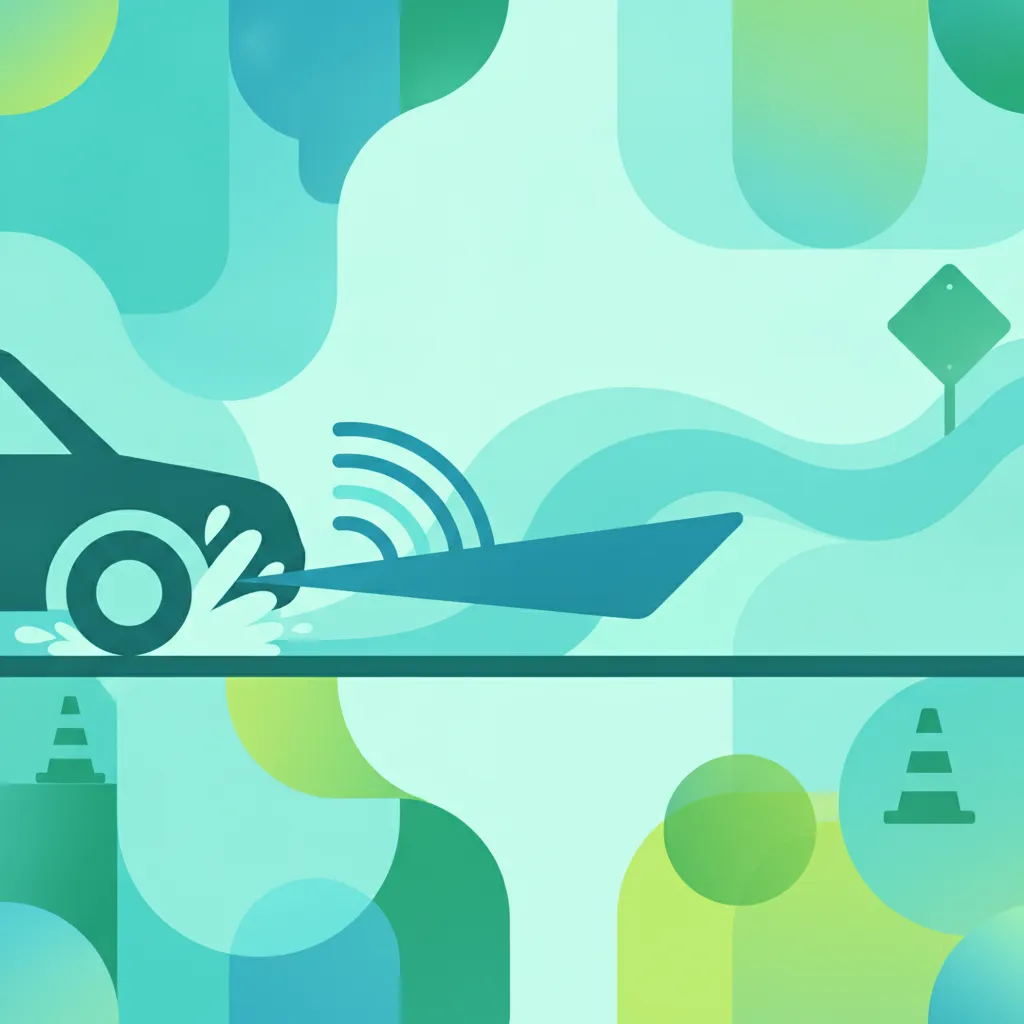
Theory topic content overview
Read the full theory topic guide for Wet Road Braking with structured, easy-to-scan content built for learners in Italy. This detailed section explains the exact rule, meaning, traffic context, comparison points, and exam logic behind this Italian driving theory topic so you can study faster, understand the concept more clearly, and avoid common interpretation mistakes on the theory test.
When rain falls on Italian roads, the driving experience changes dramatically. Wet road braking refers to the altered performance of your vehicle's braking system and overall control when water covers the road surface. This critical topic for safe driving in Italy focuses on understanding how moisture reduces the friction between your tires and the asphalt, leading to longer stopping distances and an increased risk of losing control, particularly through skidding or the dangerous phenomenon of aquaplaning. Mastering this concept is fundamental for passing your Italian driving theory exam and ensuring safety on diverse Italian road types.
At its heart, wet road braking is about reduced grip (or aderenza in Italian). On a dry road, tires can firmly grip the surface, allowing for efficient acceleration, steering, and braking. When water is present, it acts as a lubricant, creating a thin film between the tire tread and the road. This film drastically reduces the available friction, making it harder for your tires to maintain effective contact.
This reduction in aderenza directly translates into:
Understanding the dynamics of wet road braking is not just theoretical; it's a vital safety skill for navigating Italy's varied climate and road network, from urban streets to mountain passes and the fast-paced autostrade.
autostrade to older, potentially uneven urban roads or cobblestone streets, all of which can react differently to rain and standing water.Let's break down the specific ways water on the road affects your drive:
This is the most direct and crucial impact. Due to the reduced friction, your vehicle requires considerably more time and distance to come to a complete stop. As a general rule for the Italian driving theory test, assume braking distances can double or even triple on wet surfaces compared to dry roads, depending on the severity of the rain, the road surface, and tire condition. This means your distanza di sicurezza (safety distance) must be dramatically increased.
A skid occurs when your tires lose traction and slide uncontrollably. On wet roads, skidding can be easily provoked by:
Aquaplaning (often referred to as aquaplaning or hydroplaning in Italian theory) is an especially dangerous phenomenon where a layer of water completely separates your tires from the road surface. Essentially, your tires 'float' on the water.
This happens when:
When aquaplaning, your vehicle loses all contact with the road. This means you have no steering, no braking, and no acceleration control until the tires regain contact. It typically occurs at higher speeds, in heavy rain, or when driving through standing water (puddles). Worn tires with shallow tread are much more susceptible to aquaplaning, as they cannot displace water efficiently.
Several elements combine to determine how severely wet conditions affect your driving:
To safely navigate wet roads in Italy and pass your theory exam, specific adaptations are required:
autostrade or busy urban streets. Lowering your speed gives tires more time to displace water and reduces the force required for braking and steering.distanza di sicurezza – up to 4-5 seconds can be advisable in heavy rain. This provides a crucial buffer for increased braking distances.anabbaglianti) even in daylight during rain to make your vehicle more visible to others. In very heavy rain, you may need to use fog lights if visibility drops below a certain threshold, following Italian regulations.The Italian driving theory exam often highlights misconceptions related to wet road driving. Be clear on these points:
non si deve passare velocemente sulle pozzanghere). This significantly increases the risk of aquaplaning and loss of control.pneumatico è molto consumato).aderenza (grip) and contact between tires and the road, it does not increase it. It also increases (aumenta) the skidding of the vehicle, it does not reduce it.con il pedale della frizione abbassato) in rain, as this removes engine braking and reduces control.coprire il radiatore con un telo di plastica) in rain.Remember, the goal is to maximize aderenza and control, not to fight the conditions.
Autostrada in Heavy Rain: You've just paid the toll and are merging onto the autostrada. The rain is coming down hard. Instead of accelerating aggressively to match traffic speed, you should smoothly accelerate to a lower, safer speed than usual, significantly increasing your distanza di sicurezza from other vehicles, and be prepared for strong spray from trucks.When driving on wet roads in Italy, remember the two core principles: adapt your driving behavior and anticipate potential hazards. Reduced speed, increased following distance, and gentle vehicle controls are your most effective tools for maintaining safety and avoiding the dangers of skidding and aquaplaning. Prioritize smooth, controlled driving over speed, and always ensure your tires are in optimal condition. This proactive approach will help you drive safely and confidently in rainy conditions across Italy.
Wet road braking in Italy involves understanding how water reduces tire-road friction (aderenza), leading to dramatically longer stopping distances and increased risk of skidding and aquaplaning. Aquaplaning occurs when tires float on water at higher speeds, eliminating all driver control. Key safety adaptations include significantly reducing speed, maintaining at least double the normal following distance, applying smooth and gentle inputs for braking and steering, and ensuring tires have adequate tread depth (minimum 1.6mm). The Italian theory exam commonly tests understanding of these adaptations and distinguishes between correct gentle braking versus incorrect harsh braking in wet conditions.
A short set of high-value points that capture the most important ideas from this theory explanation.
Wet roads drastically reduce tire grip (aderenza), requiring longer braking distances and increasing the risk of skidding or aquaplaning.
Braking distance on wet surfaces can double or even triple compared to dry conditions, depending on rain severity and tire condition.
Aquaplaning occurs when a water layer lifts tires from the road, causing complete loss of steering, braking, and acceleration control until tires regain contact.
Reducing speed is the most critical adaptation in rain, as higher speeds dramatically increase both braking distance and aquaplaning risk.
Tire tread depth is your primary defense against aquaplaning; Italian law requires minimum 1.6mm depth, but more provides significantly better wet grip.
Always brake gently and progressively on wet roads; harsh braking easily provokes skidding and wheel lock-up.
Increase your distanza di sicurezza to at least double the normal distance in wet conditions, sometimes 4-5 seconds of following time.
Aquaplaning risk is highest at higher speeds, with worn tires, on smooth asphalt, and in heavy rain or deep puddles.
Use dipped headlights (anabbaglianti) in rain during daylight hours to improve visibility to other road users.
Approach bends and curves on wet mountain roads by reducing speed before entering, braking gently in a straight line only.
Believing stronger braking force is needed in rain; in fact, gentle progressive braking is essential to avoid skidding.
Passing quickly through puddles instead of slowing down, which significantly increases aquaplaning and loss of control risk.
Confusing aquaplaning effects; it reduces grip and contact with the road and increases skidding, not the opposite.
Using hazard warning lights while driving in rain; these are only for stationary vehicles posing a hazard, not for general wet weather driving.
Driving with the clutch pedal depressed in rain, which removes engine braking and reduces overall vehicle control.
Start with a short, direct summary of Wet Road Braking before reading the full explanation below.
Wet road braking refers to the reduced effectiveness of a vehicle's brakes due to water on the road surface. Water acts as a lubricant, decreasing tire friction and increasing the distance required to stop. This also raises the risk of skidding and aquaplaning (also known as 'aquaplaning' in Italian theory), where tires lose contact with the road. Drivers must reduce speed, increase following distance, and brake gently to compensate for these hazards.
Review the most important terms, rule signals, and traffic concepts linked to Wet Road Braking.
Explore related theory topic pages connected to Wet Road Braking and continue with the next useful rule explanation.
See the common search queries learners use when trying to understand Wet Road Braking in Italy.

Ready to deepen your knowledge? Explore specific Italian driving theory topics in detail, review challenging concepts, or test your understanding with practice questions. Build confidence for your official Italian driving licence exam by continuously learning and applying these essential road rules.
Explore Italian Driving TheoryTheory topic content overview
A short set of high-value points that capture the most important ideas from this theory explanation.
Wet roads drastically reduce tire grip (aderenza), requiring longer braking distances and increasing the risk of skidding or aquaplaning.
Braking distance on wet surfaces can double or even triple compared to dry conditions, depending on rain severity and tire condition.
Aquaplaning occurs when a water layer lifts tires from the road, causing complete loss of steering, braking, and acceleration control until tires regain contact.
Reducing speed is the most critical adaptation in rain, as higher speeds dramatically increase both braking distance and aquaplaning risk.
Tire tread depth is your primary defense against aquaplaning; Italian law requires minimum 1.6mm depth, but more provides significantly better wet grip.
Always brake gently and progressively on wet roads; harsh braking easily provokes skidding and wheel lock-up.
Increase your distanza di sicurezza to at least double the normal distance in wet conditions, sometimes 4-5 seconds of following time.
Aquaplaning risk is highest at higher speeds, with worn tires, on smooth asphalt, and in heavy rain or deep puddles.
Use dipped headlights (anabbaglianti) in rain during daylight hours to improve visibility to other road users.
Approach bends and curves on wet mountain roads by reducing speed before entering, braking gently in a straight line only.
Believing stronger braking force is needed in rain; in fact, gentle progressive braking is essential to avoid skidding.
Passing quickly through puddles instead of slowing down, which significantly increases aquaplaning and loss of control risk.
Confusing aquaplaning effects; it reduces grip and contact with the road and increases skidding, not the opposite.
Using hazard warning lights while driving in rain; these are only for stationary vehicles posing a hazard, not for general wet weather driving.
Driving with the clutch pedal depressed in rain, which removes engine braking and reduces overall vehicle control.
Start with a short, direct summary of Wet Road Braking before reading the full explanation below.
Wet road braking refers to the reduced effectiveness of a vehicle's brakes due to water on the road surface. Water acts as a lubricant, decreasing tire friction and increasing the distance required to stop. This also raises the risk of skidding and aquaplaning (also known as 'aquaplaning' in Italian theory), where tires lose contact with the road. Drivers must reduce speed, increase following distance, and brake gently to compensate for these hazards.
Review the most important terms, rule signals, and traffic concepts linked to Wet Road Braking.
Explore related theory topic pages connected to Wet Road Braking and continue with the next useful rule explanation.
See the common search queries learners use when trying to understand Wet Road Braking in Italy.
Ready to deepen your knowledge? Explore specific Italian driving theory topics in detail, review challenging concepts, or test your understanding with practice questions. Build confidence for your official Italian driving licence exam by continuously learning and applying these essential road rules.
Explore Italian Driving TheoryUse this exam-focused revision tip to understand how Wet Road Braking is likely to appear in theory questions for learners in Italy. This section helps you identify the most testable part of the rule, avoid common traps, and remember the concept more effectively during Italian driving theory exam preparation.
In the Italian driving theory exam, pay close attention to questions about how speed and following distance change in wet conditions. Remember that you must always reduce your speed significantly and increase the safety distance to the vehicle in front, especially when passing through areas with standing water or on curved roads, to account for reduced grip and the risk of aquaplaning.
Read direct answers to the most common learner questions about Wet Road Braking in Italy. This FAQ focuses on rule confusion, practical meaning, comparison with similar concepts, and the exact uncertainties that appear most often in Italian driving theory revision and exam preparation.
The primary effect is a significant reduction in tire grip due to the water layer between the tires and the road, which increases braking distance and reduces vehicle control. This is a crucial concept for Italian driving theory.
Aquaplaning (or 'aquaplaning' as it's known in Italy) occurs when a layer of water builds up under the tires, causing them to lose contact with the road. This means you lose steering and braking control, a highly dangerous situation, especially on high-speed Italian autostrade or roads with standing water.
While exact distances vary, braking distances on wet roads can be at least double those on dry roads, and even longer if tires are worn or water is deep. This requires Italian drivers to significantly increase their following distance.
If your vehicle starts to aquaplane, you should ease off the accelerator and avoid sudden braking or steering. Keep the steering wheel straight until the tires regain contact with the road. This helps maintain control in a critical situation.
Worn tires with insufficient tread depth are much more prone to aquaplaning and reduced grip on wet surfaces. Adequate tread helps disperse water, maintaining contact with the road. Maintaining good tire condition is mandatory for vehicle safety in Italy.
Yes, questions related to driving in adverse weather conditions, including wet road braking, increased stopping distances, and the phenomenon of aquaplaning, are frequently featured in the Italian driving theory exam. It's a key safety topic.
Start searching now to pinpoint exactly which Italian driving theory topics, road signs, or traffic rules you need to master. Use our advanced filters to build a custom practice session and ensure you're fully prepared for every aspect of your official driving licence exam.