
Driving in Poland requires specific vehicle equipment for safety and legal compliance. This article clarifies which items, like a fire extinguisher and warning triangle, are mandatory and outlines penalties for their absence. We also cover items that are prohibited when transported unsafely, helping you prepare thoroughly for your driving theory exam and avoid potential fines.
Article content overview
Navigating Poland's roads safely and legally requires drivers to be aware of specific vehicle equipment requirements. As a learner driver, understanding these regulations is not only crucial for your safety but also a fundamental part of passing your driving theory exam. Polish law is quite specific about what must be present in every registered vehicle, focusing on items that directly contribute to emergency situations and road safety. This guide will walk you through the mandatory items, clarify common misconceptions, and detail what kind of items are prohibited under certain circumstances, ensuring you are well-prepared for any police check and, more importantly, for responsible driving in Poland.
Polish legislation clearly outlines a concise yet vital list of equipment that every registered passenger car must carry. These items are not optional suggestions; they are legal requirements designed to assist in emergencies and ensure compliance with road traffic law. Familiarity with these components and their proper placement within the vehicle is a key expectation during traffic stops.
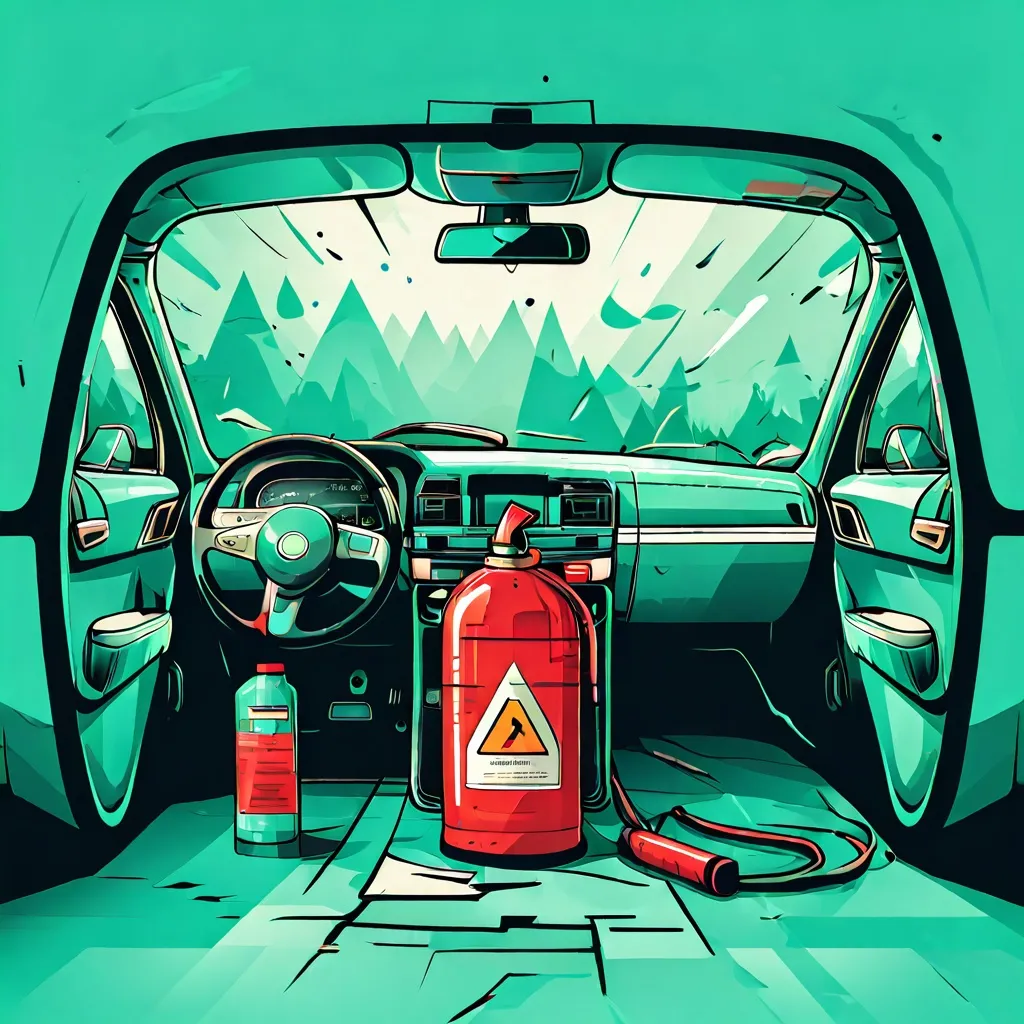
Every passenger car registered in Poland must be equipped with a functional fire extinguisher. This is a non-negotiable requirement, irrespective of the vehicle's age or type. The extinguisher should be of a type suitable for vehicle fires, such as BC or ABC, and have a minimum capacity of 1 kilogram. Crucially, the extinguisher must have a valid inspection date, meaning it should be regularly maintained and checked to ensure it is operational in the event of an emergency.
The fire extinguisher should be permanently secured in a readily accessible location within the vehicle, such as a designated mounting bracket. It should not be loose in the boot or under a seat, as this could pose a hazard during sudden braking or a collision, and it must be easy to reach quickly when needed.
Another indispensable piece of mandatory equipment is the warning triangle. This device serves a critical purpose in making your vehicle visible to other road users in the event of a breakdown or accident, thereby preventing further incidents. The warning triangle must meet European Union standards, typically indicated by a homologation mark or certification, and should be designed to be stable and easily deployable.
When using the warning triangle after an incident on the road, it must be placed at a legally prescribed distance behind your vehicle. This distance varies depending on the road type, but it is generally intended to provide adequate warning to approaching traffic. Failing to deploy it correctly or not deploying it at all can result in a significant fine.
In contrast to some other European countries, Poland's list of mandatory vehicle equipment is notably brief. This has led to widespread misconceptions about other safety items. It is important for learner drivers to understand what is currently not legally required, as this knowledge can prevent unnecessary worry and save money.
Despite common belief and recommendations, a first-aid kit and a reflective safety vest are not mandatory items for passenger cars in Poland. While carrying a first-aid kit is highly recommended for personal safety and is often included in vehicle starter packs, it is not a legal obligation for drivers. Similarly, while reflective vests are crucial for visibility when a driver exits a vehicle in a hazardous situation, especially at night or in poor visibility, Polish law does not mandate their presence inside every car. However, it is strongly advised to keep at least one vest easily accessible within the passenger cabin for quick deployment.
There have been discussions and proposals to make first-aid kits mandatory in Polish vehicles, possibly from 2026. While this change is not yet in effect, it is wise to stay informed about potential future regulations as part of your ongoing learning process.
While Poland’s laws are relatively lenient regarding mandatory equipment, they are strict about items that could pose a safety hazard. The focus here is not on a specific list of banned items in the same way as, for example, certain weapons, but rather on the manner in which items are transported. The overarching principle is that nothing within the vehicle should create a danger to its occupants or other road users.
The Polish Road Traffic Law prohibits the carriage of objects that could become dangerous projectiles during sudden braking or in the event of an accident. This is primarily covered under Article 66(4)(1) of the law, which forbids placing within or on the exterior of a vehicle any sharp or pointed parts or objects that could cause injury. This means that while items like axes, machetes, or baseball bats might be legal to own, transporting them loosely in the passenger cabin or boot, where they can move freely and potentially cause harm, is prohibited.
The key consideration for police during a check is not necessarily the item itself, but how it is secured. If potentially dangerous items are properly stowed, fastened, and do not pose a risk of movement during driving, their presence is generally not an issue. However, if they are unsecured and could cause injury upon abrupt deceleration, an officer has the right to issue a fine and even potentially detain your vehicle's registration documents.
It is important to understand that while there isn't an official, exhaustive list of banned items, police officers have the authority to assess whether transported items create a risk. If an officer deems an item to be a potential danger, they can issue a fine. While theoretically, the absence of mandatory equipment or the presence of dangerous items could lead to substantial penalties, in practice, fines for such infringements are typically within a more manageable range, often from 50 PLN up to 500 PLN, depending on the specific violation and circumstances. However, the risk of having your registration documents temporarily seized exists if the hazard is deemed significant.
Understanding the requirements for vehicle equipment in Poland is a vital component of your driving theory test preparation. The exam will likely include questions on mandatory items, their correct usage, and the consequences of non-compliance. Moreover, this knowledge directly contributes to your safety and the safety of others on the road.
To ensure you are fully prepared for these aspects of Polish driving law, consider reinforcing your knowledge with targeted practice.
To deepen your understanding of Polish traffic regulations and prepare effectively for your driving theory exam, explore these related topics:
Polish law requires every registered passenger car to carry a functional fire extinguisher (BC or ABC type, minimum 1kg with valid inspection) and a warning triangle meeting EU homologation standards, both properly secured and accessible. A first-aid kit and reflective vest are recommended but not legally mandatory, despite widespread misconceptions. The law prohibits transporting unsecured objects that could cause injury during transit, focusing on how items are secured rather than which items are banned. During police checks, officers assess whether transported items pose safety risks, and violations can result in fines ranging from 50 to 500 PLN with possible temporary seizure of vehicle registration documents.
A short set of high-value points that capture the most important ideas from this article.
Every registered passenger car in Poland must carry a functional fire extinguisher (BC or ABC type, minimum 1kg) with a valid inspection date.
The warning triangle is mandatory and must meet EU homologation standards; it must be deployed at a legally prescribed distance behind the vehicle.
First-aid kits and reflective vests are currently NOT mandatory for passenger cars in Poland, despite common belief.
Polish law focuses on the manner of transporting items, not a specific banned list; unsecured objects that could become projectiles are prohibited.
Police officers have discretion to assess whether transported items create safety risks during a roadside check.
Fire extinguisher requirements: BC or ABC type, 1kg minimum capacity, secured in an accessible location, valid inspection date.
Warning triangles must carry EU homologation marks and be stable and deployable on road shoulders.
Items like axes, machetes, or baseball bats are not illegal to own, but transporting them loosely is prohibited under Article 66(4)(1) of the Polish Road Traffic Law.
The key police concern is item securing, not the presence of potentially dangerous items themselves when properly stowed.
Fines for missing mandatory equipment or unsafe item transport typically range from 50 PLN to 500 PLN, with possible temporary registration document seizure.
Assuming a first-aid kit is mandatory when it is currently only recommended for passenger cars in Poland.
Placing the fire extinguisher loose in the boot or under a seat instead of in a secured, accessible mounting bracket.
Using a warning triangle without EU homologation certification, which may not meet Polish legal requirements.
Transporting potentially hazardous items loosely in the passenger cabin where they could become projectiles during sudden braking.
Failing to deploy the warning triangle at the correct distance behind the vehicle after a breakdown or accident.
Article content overview
A short set of high-value points that capture the most important ideas from this article.
Every registered passenger car in Poland must carry a functional fire extinguisher (BC or ABC type, minimum 1kg) with a valid inspection date.
The warning triangle is mandatory and must meet EU homologation standards; it must be deployed at a legally prescribed distance behind the vehicle.
First-aid kits and reflective vests are currently NOT mandatory for passenger cars in Poland, despite common belief.
Polish law focuses on the manner of transporting items, not a specific banned list; unsecured objects that could become projectiles are prohibited.
Police officers have discretion to assess whether transported items create safety risks during a roadside check.
Fire extinguisher requirements: BC or ABC type, 1kg minimum capacity, secured in an accessible location, valid inspection date.
Warning triangles must carry EU homologation marks and be stable and deployable on road shoulders.
Items like axes, machetes, or baseball bats are not illegal to own, but transporting them loosely is prohibited under Article 66(4)(1) of the Polish Road Traffic Law.
The key police concern is item securing, not the presence of potentially dangerous items themselves when properly stowed.
Fines for missing mandatory equipment or unsafe item transport typically range from 50 PLN to 500 PLN, with possible temporary registration document seizure.
Assuming a first-aid kit is mandatory when it is currently only recommended for passenger cars in Poland.
Placing the fire extinguisher loose in the boot or under a seat instead of in a secured, accessible mounting bracket.
Using a warning triangle without EU homologation certification, which may not meet Polish legal requirements.
Transporting potentially hazardous items loosely in the passenger cabin where they could become projectiles during sudden braking.
Failing to deploy the warning triangle at the correct distance behind the vehicle after a breakdown or accident.
Explore related topics, search based questions, and concepts that learners often look up when studying Polish Vehicle Equipment Rules. These themes reflect real search intent and help you understand how this topic connects to wider driving theory knowledge in Poland.
Find clear and practical answers to common questions learners often have about Polish Vehicle Equipment Rules. This section helps explain difficult points, remove confusion, and reinforce the key driving theory concepts that matter for learners in Poland.
In Poland, the legally mandatory equipment for cars includes a fire extinguisher (with a valid expiry date and properly secured) and a warning triangle (with homologation). First-aid kits are not currently mandatory but may become so in the future.
Failure to carry a mandatory fire extinguisher or warning triangle can result in a fine, typically ranging from 20 to 500 PLN, depending on the specific violation during a police check.
Polish law prohibits carrying objects that pose a safety risk, such as sharp or protruding items, especially if unsecured. While specific lists like knives or baseball bats are not officially defined as banned, carrying them unsafely (e.g., loose in the cabin) can lead to a fine or even vehicle registration document confiscation if deemed hazardous.
No, first-aid kits and reflective vests are not legally mandatory equipment for cars in Poland, although they are recommended for increased safety.
The fire extinguisher must be easily accessible and ideally secured in its designated factory mounting point or with a secure bracket to prevent it from becoming a projectile during sudden braking or a collision.
After finding your specific article, continue your targeted learning by exploring related topics or diving deeper into practice questions. Our extensive library ensures you have all the resources needed to confidently prepare for your Polish driving license theory exam. Discover more guides and solidify your understanding of Polish road rules.